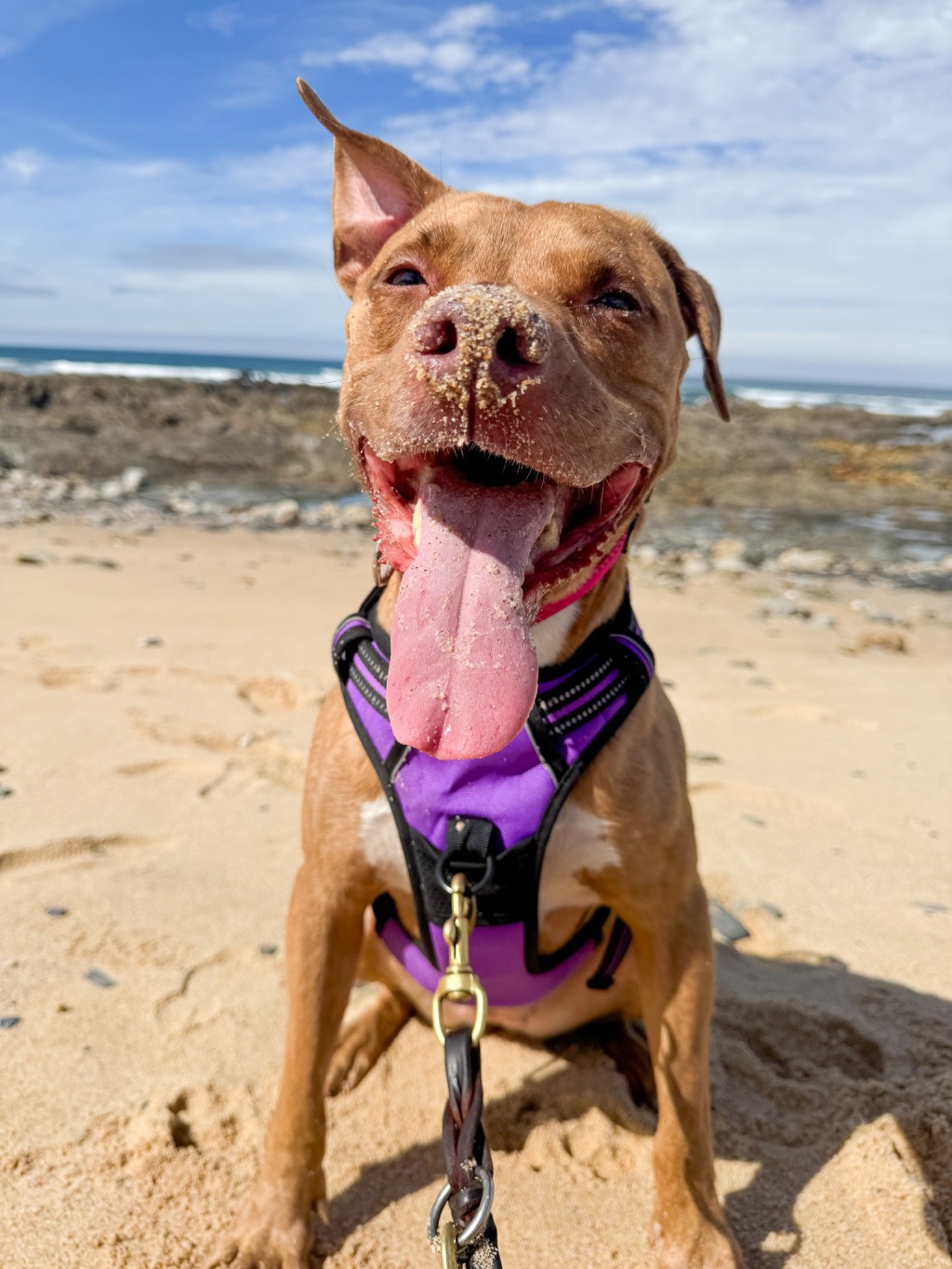
When we decided to move to Portugal, one of the first, and most emotional, questions was: “Can we bring Matcha?”
She’s our 7-year-old pit bull mix, 56 pounds of love and wiggles, and there was no way we were leaving her behind. But moving a “potentially dangerous breed” to Europe is a whole extra process — full of paperwork, logistics, and deep dives into airline policies.
Here’s exactly how we did it — what worked, what we’d do differently, and what you need to know if you’re planning to move abroad with your dog.
📝 Step 1: Check Import Rules for Your Destination
The good news: Portugal allows pitbulls and other “restricted” breeds (like Rottweilers and Staffies) — they are not banned here.
The catch? They’re classified as “potentially dangerous”, so you’ll need to follow some extra steps to enter legally.
✅ What’s required:
- ISO-compliant microchip – This must be registered before their rabies vaccine.
- Rabies vaccine – Must be given at least 21 days before travel, and no more than a year out. We got it re-done just to simplify the paperwork process.
- EU Health Certificate – Must be completed by a USDA-accredited vet within 10 days of travel. The timing of this is definitely nerve-wracking and you’ll want to work with your vet to time everything right.
- USDA Endorsement – The health certificate needs to be officially stamped by your state’s USDA office (your vet handles the mailing + return).
- Request for Entry – Email this form + documents to the entry airport at least 48 hours before landing. For us, that was Lisbon.
🔗 USDA Pet Travel Requirements for Portugal
🛫 Step 2: Choosing a Flight + Airline
Here’s the hard part: most U.S. airlines no longer fly large dogs, especially restricted breeds — even in cargo.
We had originally planned to fly Matcha to NYC, let her rest, then fly to Lisbon. But no domestic airline would fly her.
So we had to get creative.
After a ton of research, we discovered TAP Air Portugal allows snub-nosed and restricted breeds in the hold. That made our decision easy — we booked a direct flight from San Francisco to Lisbon and drove from Seattle to SF just to get her on board.
💡 Tip: Call the airline before you book to make sure there’s space in the hold for pets. (Matcha’s cargo ticket was €230.)
From Lisbon, we rented a car and drove the rest of the way to Porto.
Was it easy? No.
Was it worth it? Absolutely.
We also priced out international pet relocation services that handle everything — some even offered private charters — but they quoted us $8k–$15k, so we DIY’ed it.
🕐 Timing note: Some airlines have animal embargos in Jan–Feb and June–July due to extreme temps. We flew in early December and had no weather issues.
💼 Step 3: Meet Airline Requirements
This part stressed us out the most — because if your crate isn’t approved, your dog can’t fly. No exceptions.
1. ✅ CR82-Approved Crate (Required for restricted breeds)
Restricted breeds must fly in a CR82-compliant crate — it’s like a Fort Knox version of a regular kennel.
🔹 Matcha is ~56 lbs. TAP’s crate + pet weight limit was 45kg (99 lbs), and we just barely squeaked under with her crate.
🔹 She had to be able to stand up, turn, and lie down comfortably.
🔹 We bought a Zinger Winger 4500 crate (24”W x 30”H x 38”L).
Cost: $1,296 (crate + rubber mat + wheels — which we didn’t end up using because they’re not allowed during the flight and were hard to remove).
We searched everywhere for a used one but had no luck. It was a big expense, but 100% worth it for peace of mind.
2. ✏️ Accessory Requirements (Non-negotiable)
TAP required:
- Food & water bowls securely attached to the inside of the crate door
- No leash or collar inside the crate (we taped it in a Ziploc on top)
- Absorbent lining on the bottom (we used a rubber mat + pee pad)
- “Live Animal” stickers (came with our crate)
- Enough food/water for the whole flight — we zip-tied a bottle outside the crate and taped a meal portion on top (not used)
💩 Yes, Matcha went #1 and #2 during the flight — so bring wet wipes for cleanup when you land.
3. 💡 Optional, but so worth it
These aren’t required, but they gave us serious peace of mind:
- Letter to the Captain – Thanking them, noting Matcha was in cargo, and sharing our seat numbers. A flight attendant came by before takeoff to let us know she was on board — such a kind touch.
- Comfort blanket – We added a blanket that smelled like us to help her feel safe.
- Crate info sheet – With her name, photo, flight info, and emergency contact. We also added a friendly note:
“Hi, I’m Matcha. I’m moving to Portugal with my family. This is my first flight, and I’m a little nervous — but I love people. Thanks for taking care of me!”
We dropped her off at the cargo terminal 4 hours before takeoff. Thankfully, our experience with TAP was smooth — no issues at all, and they seemed pretty laid-back compared to what we’d expected.
🔗 TAP Portugal: Traveling with Pets

🛬 What Happens Once You Land in Portugal
We headed to Baggage Claim 9 in Lisbon, where pets are delivered. A fellow pet owner told us dogs are always last off the plane — and they were right. We waited about an hour.
Here’s how it went down:
- We kept her in the crate and wheeled her to the airport vet/import clinic (right next to Baggage Claim 9).
- The vet checked her paperwork, scanned her microchip, and confirmed everything matched.
- We paid a small fee and got a stamped receipt.
💡 That stamped paper is your key to exit. A customs officer may ask to see it before letting you out….but no one asked us for anything.
We walked Matcha out on leash and loaded her into the rental car. Tired, a little smelly, but safe.
🐾 Living in Portugal with a “Potentially Dangerous” Dog
Once you’re in, you’ll still need to do a few things to stay compliant:
📋 What You’ll Need to Do:
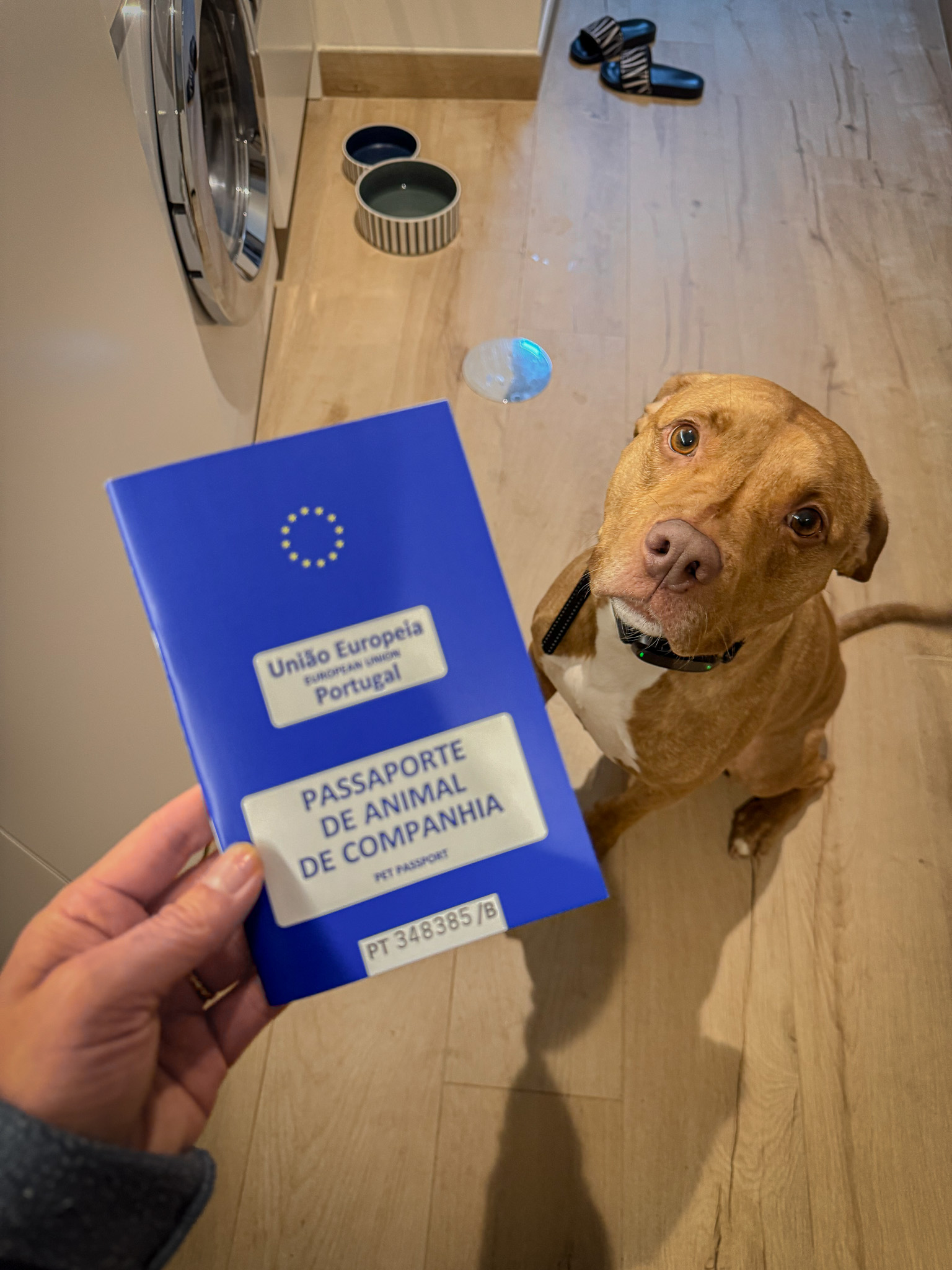
- Vet appointment: Get registered in the SIAC database + apply for an EU Pet Passport. We booked ours before arrival. Cost: €50 euros for vet visit and €12 for the pet passport.
- Register your dog locally: Within 30 days of SIAC registration, license your dog at your local Junta de Freguesia (civil parish office). This will need to be renewed annually.
➝ Cost: €17.20 + €9 for proof of residence. 🔗 Info here - Get pet liability insurance: Required for “potentially dangerous breeds.”
➝ We use Fidelidade (€21.90/month for €100K coverage) - Know leash & muzzle rules: Muzzle not required, but your dog must be leashed at 1 meter max in public spaces.
- Complete mandatory training: Owners of “dangerous” breeds must take a certified PSP course. Register with Public Security Police and wait for confirmation (can take months).
➝ After payment (€35.89), you’ll be added to a session. It’s in Portuguese, but they gave us an English PowerPoint and translated during the session.
➝ It’s about 3 hours, followed by a short 20-question test. You only need 50% to pass. Certification cost: €11.99
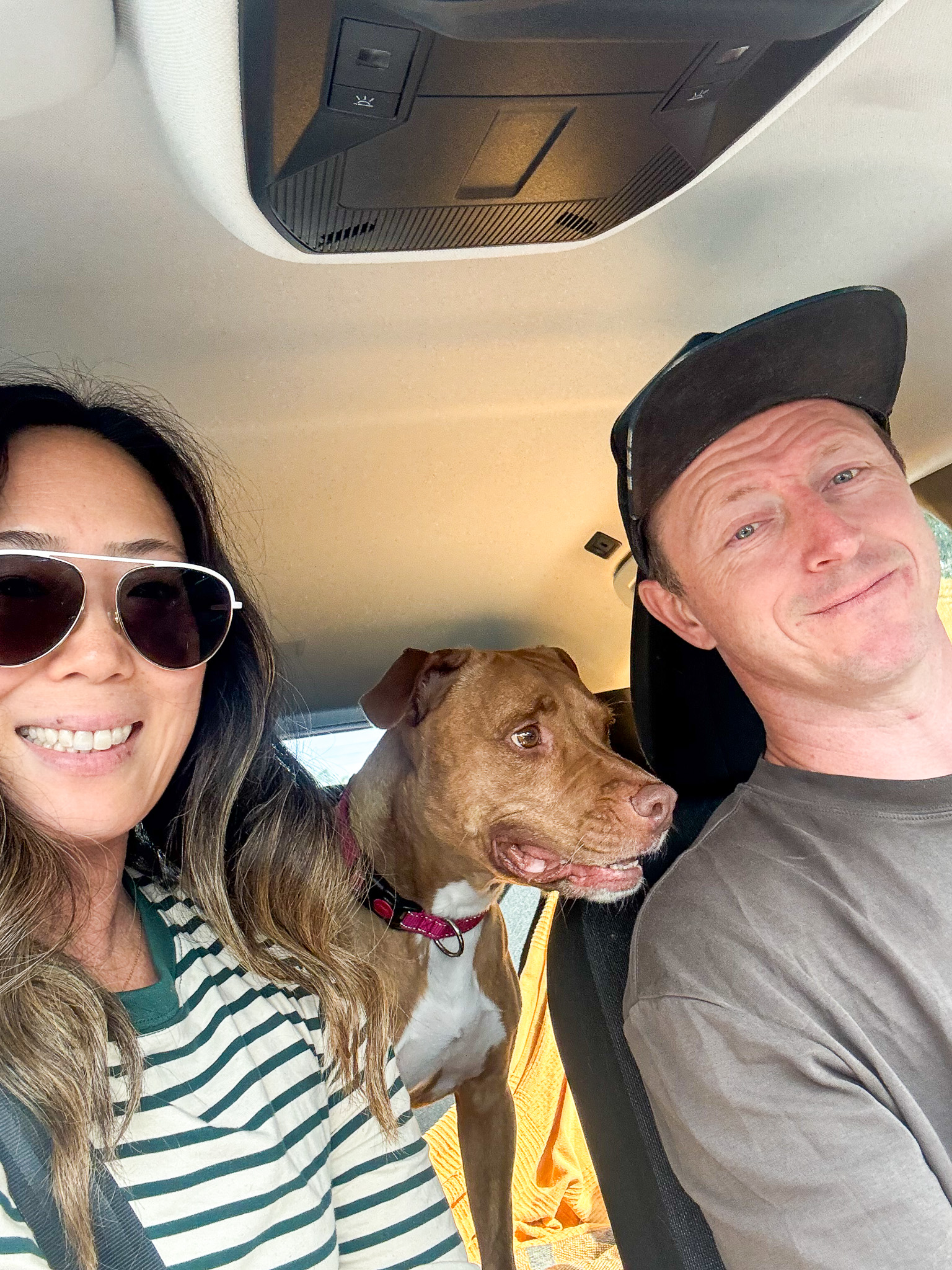
🐶 Final Thoughts
Bringing your dog abroad — especially a restricted breed — is a lot. But with the right planning, it’s totally doable.
Portugal is a very dog-friendly country, but pitbulls are rare here — so we get a mix of curiosity, hesitation, and love from strangers (honestly, just like in the U.S.).
If you’re planning a move and thinking about bringing your pup, we hope this helped. Drop us a question anytime — we’re happy to share what we’ve learned.

Leave a comment