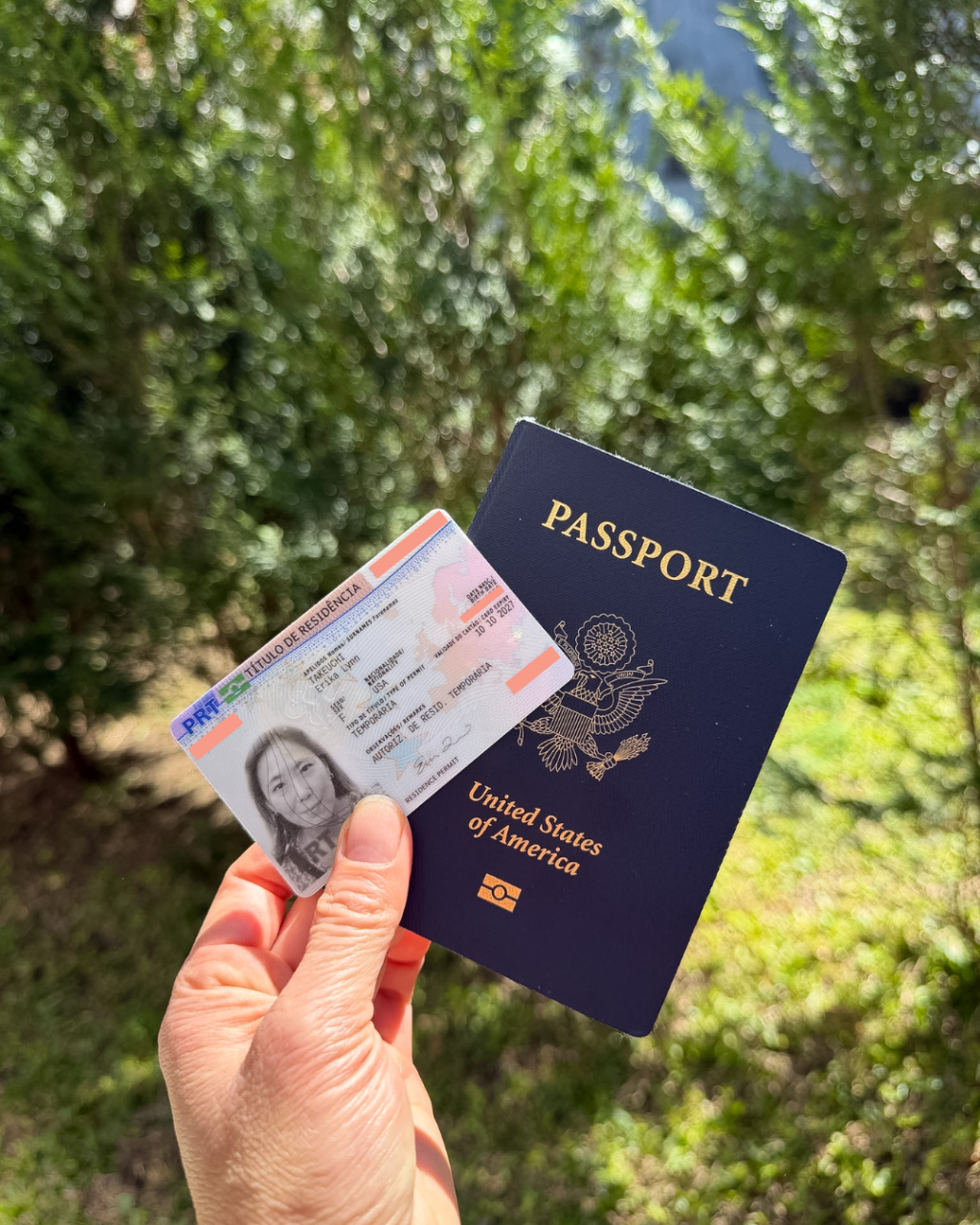
It’s one of the most common questions we get: How long did the whole thing take?
The honest answer is: longer than we expected, longer than it should have, and long enough that there were real moments of “are we actually going to pull this off?”
We’re not saying that to be dramatic. We’re saying it because we wish someone had told us upfront. Most of the timelines you find online are either best-case scenarios or vague enough to be useless. So here’s ours — the actual dates, the setbacks, the waiting, and the moments where it felt like the whole thing was unraveling.
The Short Version
From our first visa appointment to the day we both had Portuguese residence cards in hand: seventeen months.
That’s not seventeen months of smooth sailing. That’s a visa denial, a forced departure, a scramble to re-apply under a different visa category, and then a true test of patience with AIMA — Portugal’s immigration authority — where appointments kept getting cancelled and rescheduled across multiple cities before we finally got through them.
If you’re planning a move to Portugal and hoping to be fully settled, cards in hand, within six or eight months of your first appointment? Budget for more. A lot more.
The Full Breakdown
October 3, 2024 — VFS Appointment (D8 Visa)
This was our first step into the formal process — our appointment at VFS Global, the third-party service that handles visa applications on behalf of the Portuguese Consulate. We applied under the D8 Digital Nomad Visa. We’d done our homework, had our documents together, and felt reasonably prepared. We submitted everything and waited.
💡 Tip: Getting a VFS appointment is genuinely hard. Slots are released inconsistently, vary by VFS center, and disappear fast. People check the website at all hours. Allow 3–6 months just for this step — don’t assume you’ll get something quickly.
December 7, 2024 — We Move to Portugal
We didn’t wait for visa approval before moving. We entered on a standard tourist visa and started our 90-day clock. We also had a lease that had started December 1st — signed sight unseen, based on a video walkthrough, before we’d ever set foot in the apartment. One of those classic chicken-and-egg situations: you need a lease to get a visa, but you don’t have a visa yet when you need to sign it.
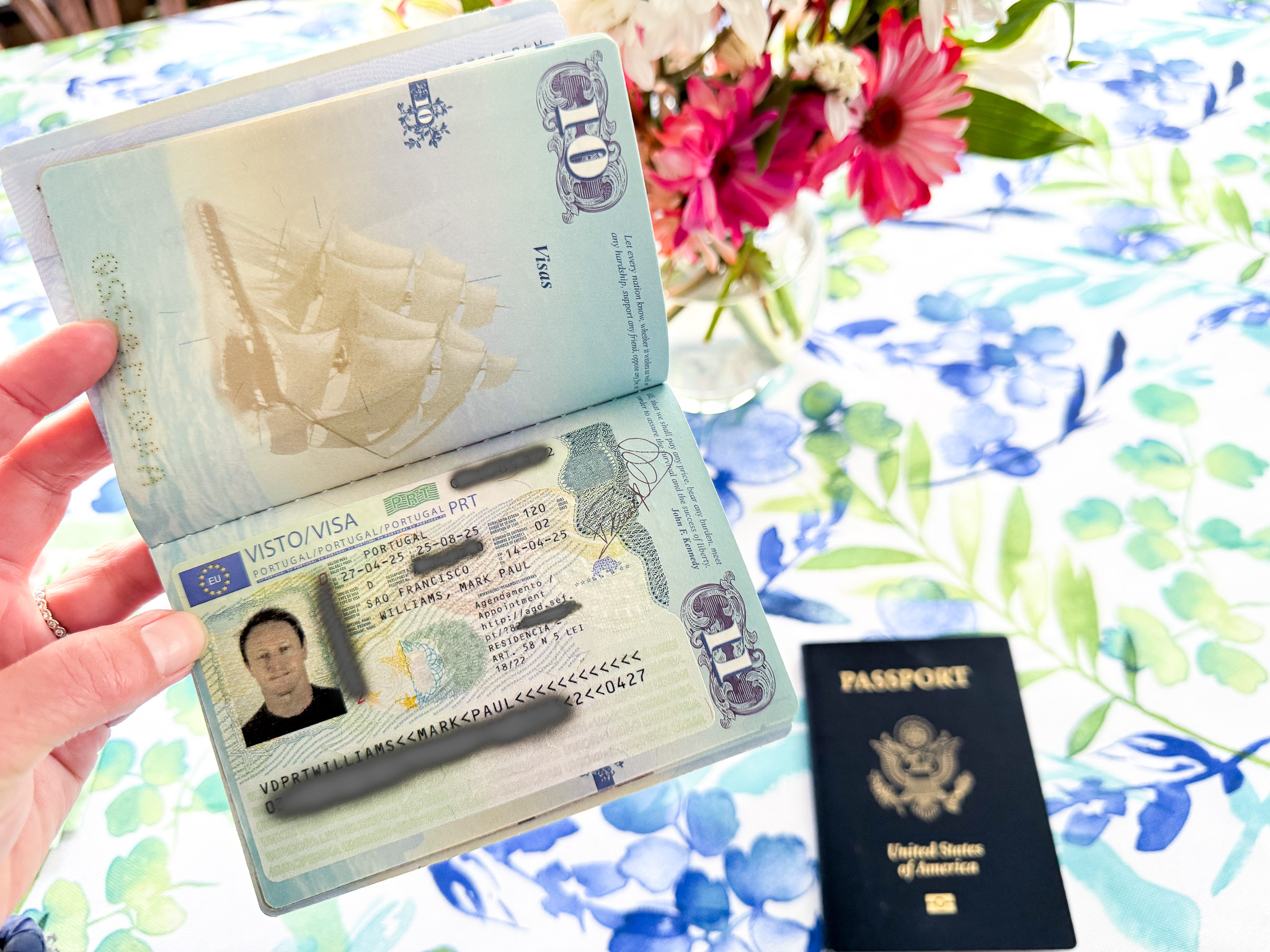
⚠️ Important: We thought we could enter Portugal as tourists and have the visa mailed to us once approved. That’s not how it works. The visa has to be in your passport before you enter. We didn’t know this, and it ended up being central to the whole situation that followed.
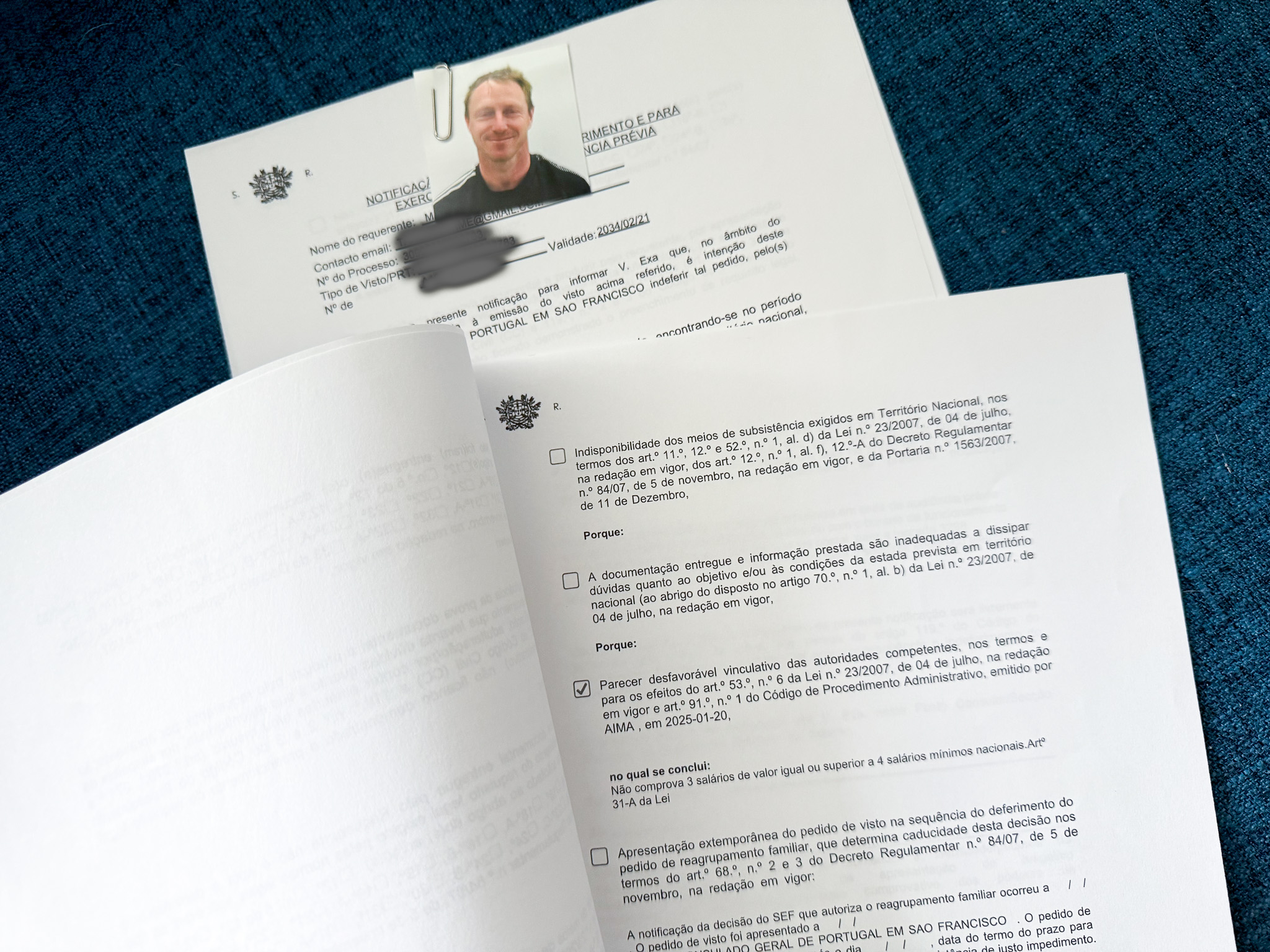
January 22, 2025 — Visa Denied
The D8 application came back denied. The full story is in our D7 post, but getting that rejection while we were already living in Porto — with a lease signed and a life being built — was genuinely devastating.
With our tourist visa clockruning quickly out, we started the re-application process immediately, and doing it from Portugal was significantly harder than doing it from the US would have been. Everything had to be overnighted back to the US, organized with the help of a friend there who printed and sorted about 50 pages of documents for each of us, then sent on to the Consulate. The communication with the Consulate during this period was maddening — emails, phone calls, trying to get clear answers on exactly what needed to be resubmitted and how.
One concrete example of the Portugal-specific friction: getting fingerprints to the FBI. In the US it’s simple — digital options are everywhere. From Portugal, we were running around to police stations, shipping via DHL, using Monument Visa to rush the processing.
We also made a decision we should have made from the start: we hired an immigration lawyer. Not to file for us, but to advise — should we appeal the denial or start fresh? And if we start fresh, what do we need to do differently? It was a lifesaver. We were kicking ourselves for not doing it sooner. More on that below.
March 10, 2025 — Re-Apply Under the D7 Visa
While still in Portugal, we overnighted everything to the consulate on March 10th. The consulate made an exception and allowed us to bypass VFS entirely this time, which saved time but came with its own chaos. It was a sprint.
March 15, 2025 — We Leave Portugal (Via Turkey)
Our tourist visa had run its course and we needed to exit the Schengen zone. We flew to Istanbul on March 15th, spent a few weeks there, then headed back to Seattle. We could have brought our dog 🐾 — she’d made the original move with us — but after such a long journey the first time, we didn’t want to put her through it again. She stayed in Porto with friends who flew over from Seattle and stepped up in a big way.
💡 Tip: When you enter Portugal on an approved visa, you have two entries into the Schengen region. Factor that into your travel planning.
April 14, 2025 — D7 Visa Approved
Six weeks after reapplying, the D7 came through. We flew back to Portugal on April 27th.
AIMA: A Different Kind of Waiting
Once you’re in Portugal on a valid visa, the next step is your AIMA appointment — that’s where your official residence card gets processed. We were lucky in one respect: when our visa was approved, we were automatically assigned AIMA appointments. Not everyone gets that. Some people have to request one independently, which can add significant time.
The catch: Mark and I were assigned to different cities, even though he’s listed as a dependent on my visa.
⚠️ Heads up: Dependents being assigned to different AIMA locations than the primary visa holder is unfortunately very common — it happens even with families with young kids. It makes no practical sense, but it’s the reality right now.
August 14, 2025 — AIMA Appointment Take 1: Cancelled 😤
Both appointments were scheduled. We traveled from Porto to Vila Real. Waited two hours. Then were told the appointment was cancelled — my name was on the list, and it still didn’t matter. This was after our lawyer had confirmed by email and received written confirmation the week before.
Our lawyer had also found out Mark’s appointment was cancelled. No explanation.
October 31, 2025 — AIMA Appointment Take 2: Erika Gets Through ✅
This one was in Figueira da Foz. Having our lawyer with us made all the difference — they came in person, helped prep all our documents, and the appointment itself went smoothly. We’ve seen plenty of accounts online of AIMA officers asking for things that aren’t even on the official requirements list. That didn’t happen to us, and we genuinely think having proper legal representation in the room helped.
Mark’s appointment was cancelled again.
January 15, 2026 — AIMA Appointment Take 3: Mark Finally Gets Through ✅
Third appointment, this time in Braga. Five months of delays, three cities. Our lawyer came again. It went smoothly.
January 21, 2026 — Erika’s Residence Card Arrives 🎉
February 27, 2026 — Mark’s Card: Picked Up by Our Lawyer
We missed the mail delivery on Mark’s card — and our lawyer picked it up in person on our behalf. Not the triumphant “card in hand” moment we pictured, but it counts.
Both officially residents. Done. 🎉
A Realistic Timeline to Plan Around
Our situation had some unusual wrinkles, but even without them, the underlying timeline is genuinely long. Here’s what we’d plan for:
Getting your VFS appointment: 3–6 months Slots are released inconsistently and vary by VFS center, time of year, and current backlog. Check the site constantly. Don’t assume this happens quickly.
VFS appointment to visa approval: 3–4 months Once you’ve submitted, you’re waiting. Make sure your documents are solid before you go in.
Visa approval to residence card in hand: 7–12 months This is the AIMA phase — and as our experience shows, it can stretch. Between the appointment queue, cancellations, and processing time, give yourself a full year for this leg.
Renewal submission to new card: 6–10 months (often longer) Residency has to be renewed, and the process isn’t fast the second time either.
⚠️ Important: Once your visa has technically lapsed and you’re waiting for your AIMA appointment, you’re legally supposed to stay in Portugal until your residence permit is approved. Make sure you understand your status before booking any travel.

What We’d Tell You
Understand the entry rules before you travel. The visa has to be in your passport when you enter — you can’t enter as a tourist and receive it later. We didn’t know this. Now you do.
Hire a lawyer — it’s your sanity over saving some money. The cost is worth it compared to what a mistake or a bad strategy costs you in time and stress. We’re happy to share who we used.
The visa approval is not the finish line. It’s the start of the next phase. AIMA runs on its own clock.
Patience and resilience matter more than anything. You can do everything right and still get a cancelled appointment, a confusing email, a week of silence. That’s the process. It eventually resolves.
We’ve written in much more detail about the D7 process — the denial, the re-application, what we did differently — in We Got Our D7 Visas! (Take Two). If you’re in the visa prep stage, that’s the one to read next.
Seventeen months. Two visas, one denial, three cities, both cards finally in hand.

Leave a comment