
Spain was genuinely on the table for us. Not just as an idea — as an actual option. Erika had a job offer that would have moved us to Barcelona. We spent real time there. We researched it seriously. So when people ask why we ended up in Portugal instead of Spain, the answer isn’t “Portugal is better.” It’s more complicated than that — and more personal.
This post is our honest breakdown of how we thought through it. Not to tell you what to choose, but to share the framework that helped us land on a decision we’re still confident in.
We Looked at Everything First
We didn’t start with Portugal. We started with a blank map and a list of what mattered to us.
We got married in Italy, and for a while it was on the shortlist — we had a romantic attachment to it, and there’s something to be said for that. We looked into golden visa programs, one euro housing programs, and had a spreadsheet comparing European countries before we started narrowing down. What kept Portugal and Spain at the top was a combination of cost of living, safety, healthcare, and the sense that both were genuinely livable for the long haul. From there it became a real comparison.
The Citizenship Question Was a Dealbreaker
This deserves to be said plainly: the dual citizenship situation in Spain was ultimately a dealbreaker for us.
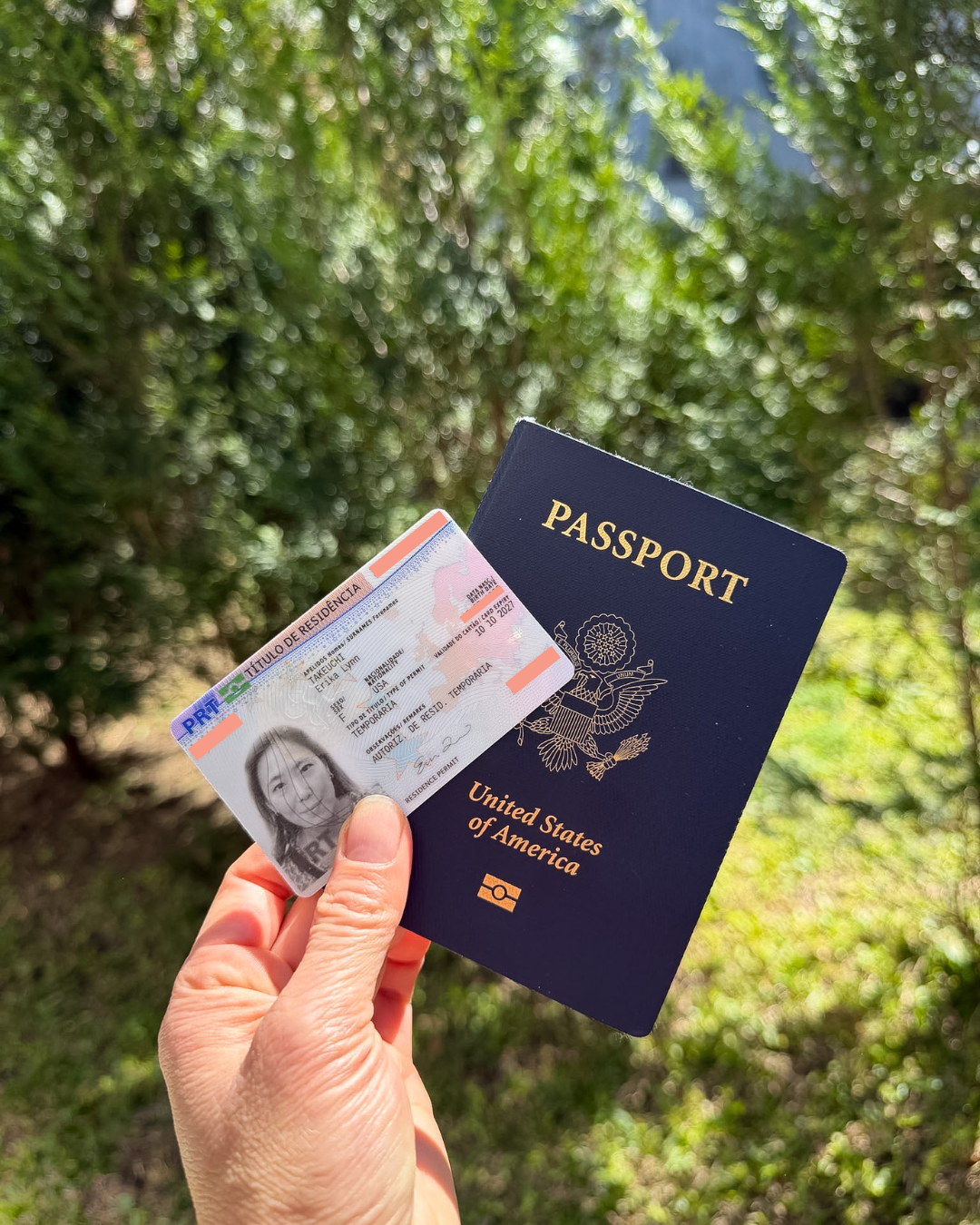
Portugal allows dual citizenship. Once you meet the residency requirements — five years of legal residency, in theory — you can apply for a Portuguese passport and keep your American one. You’re not choosing between identities.
Spain’s path is more complicated. For most Americans, Spain requires you to renounce your US citizenship to become a Spanish citizen. That wasn’t something we were willing to do. EU citizenship was a core priority for us — not a nice-to-have — and we weren’t going to get there by giving up something we can’t get back.
One important caveat here: the “five years” framing is technically accurate but practically misleading right now. The AIMA backlog in Portugal is real — appointments are hard to get, residency cards are delayed, and the clock on your citizenship eligibility doesn’t start until your residency is officially established. On top of that, there are active conversations in Portugal about potentially extending the citizenship timeline to ten years, which would significantly change the math. We’re not going to pretend otherwise. If citizenship is your primary driver, go in with eyes open and track what’s actually happening legislatively.
That said, EU citizenship versus no realistic path to dual citizenship still kept Portugal firmly ahead of Spain for us.
And it’s worth saying: for a lot of people, long-term residency is the goal — not citizenship. If you’re moving for lifestyle, retirement, or the experience of living abroad, and you’re not particularly focused on a passport at the end of it, this factor matters a lot less. Figure out what you actually want before you let citizenship timelines drive your decision.
The Visa Picture
The visa landscape isn’t the same in both countries, and understanding that shaped our decision early.
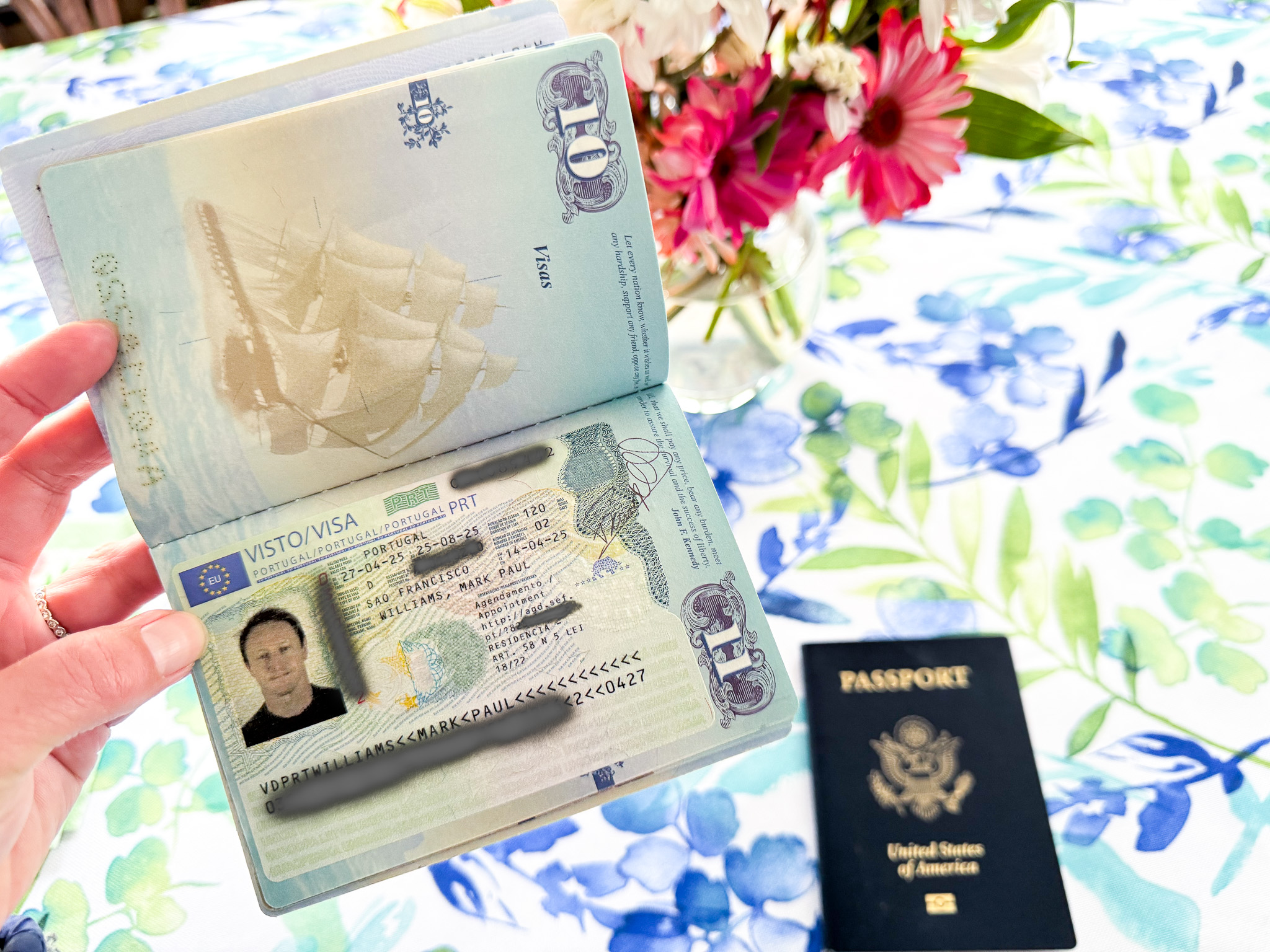
Portugal’s D7 Passive Income Visa is genuinely well-suited to people like us — a couple moving abroad without a traditional employer, with a mix of remote work and passive income. The bar is essentially: can you sustain yourself financially without drawing on Portugal’s economy? If you can demonstrate that, you’re in the right territory.
Spain has similar offerings, but the D7 doesn’t have a direct equivalent. The Digital Nomad Visa is newer and the landscape was, at the time of our research, still being worked out in practice. We didn’t want to be early adopters on the visa side. We’d rather be slightly behind the curve on a proven path than out front on an uncertain one.

Taxes
This one matters more than people realize until they’re deep in the research.
Portugal no longer has the NHR (Non-Habitual Resident) regime in its original form — it’s been replaced with a more limited successor program — but there are still meaningful tax advantages worth understanding. Portugal has no wealth tax, no inheritance tax, and allows married couples to file jointly. For people moving with a mix of income types — remote work, passive income, investments — those structural differences can add up to real money compared to Spain and a number of other EU countries.
Spain has the Beckham Law as its main offering for incoming foreign residents, but eligibility requirements are specific and it doesn’t fit everyone’s situation. When we modeled our own numbers, Portugal came out ahead.
Tax isn’t the most romantic part of this decision, but it’s a real one. Get a cross-border tax advisor involved early — ideally someone who works with US expats specifically. We work with a US expat tax company and a separate Portuguese advisor, and the coordination between the two is genuinely important.
The Job Offer and the Honest Reason We Passed
Here’s the thing about the Barcelona job offer: it was real, and it was tempting. Having a company move you abroad removes a lot of friction — the logistics, the financial cushion, the built-in structure. That’s genuinely appealing when you’re staring down an international move.
But it would have meant committing to a full-time role at a point when Erika wasn’t ready to do that. The whole point of this move, for us, was more autonomy — more control over our time and how we work. Arriving in Barcelona tethered to a company’s timeline felt like the wrong foot to start on.
This is also worth naming for anyone in a similar position: if you have a strong job offer in Spain — and Barcelona specifically has a thriving job market, strong salaries, and a concentration of industries you won’t find in Porto — that changes the calculus significantly. Spain has more traditional employment infrastructure, and if that’s relevant to your situation, don’t discount it.
We passed because we were deliberately stepping away from that model. But it’s a real advantage for the right person.
Cost of Living
Portugal is, on balance, meaningfully more affordable than Spain — and the gap widens when you compare Porto to Barcelona specifically.
Housing was a notable difference. Day-to-day life — groceries, dining, healthcare costs — added up in Portugal’s favor. We weren’t moving abroad to live extravagantly. We were moving for sustainability and a pace that made sense long-term. Portugal made that math work more comfortably.



Language
Both countries have their own language, and neither one is English — so on paper this was a wash.
In practice, English proficiency is measurably higher in Portugal. According to the EF English Proficiency Index, Portugal consistently ranks among the top countries globally for English proficiency, while Spain ranks notably lower. That’s not a knock on Spain — it’s just a real difference that affects day-to-day life, especially in year one when you’re still finding your footing.
We both took Spanish in school, so that would have given us a bit of a head start. Learning Portuguese has been genuinely humbling, and Spanish would have been a faster ramp linguistically. We’re committed to Portuguese and don’t regret it — we just went in clear-eyed about what we were signing up for.
The Vibe — And the Tension That’s Also Real
We want to be honest here, because the “Portugal is a hidden gem full of welcoming locals” narrative is getting stale — and it’s not the full picture.
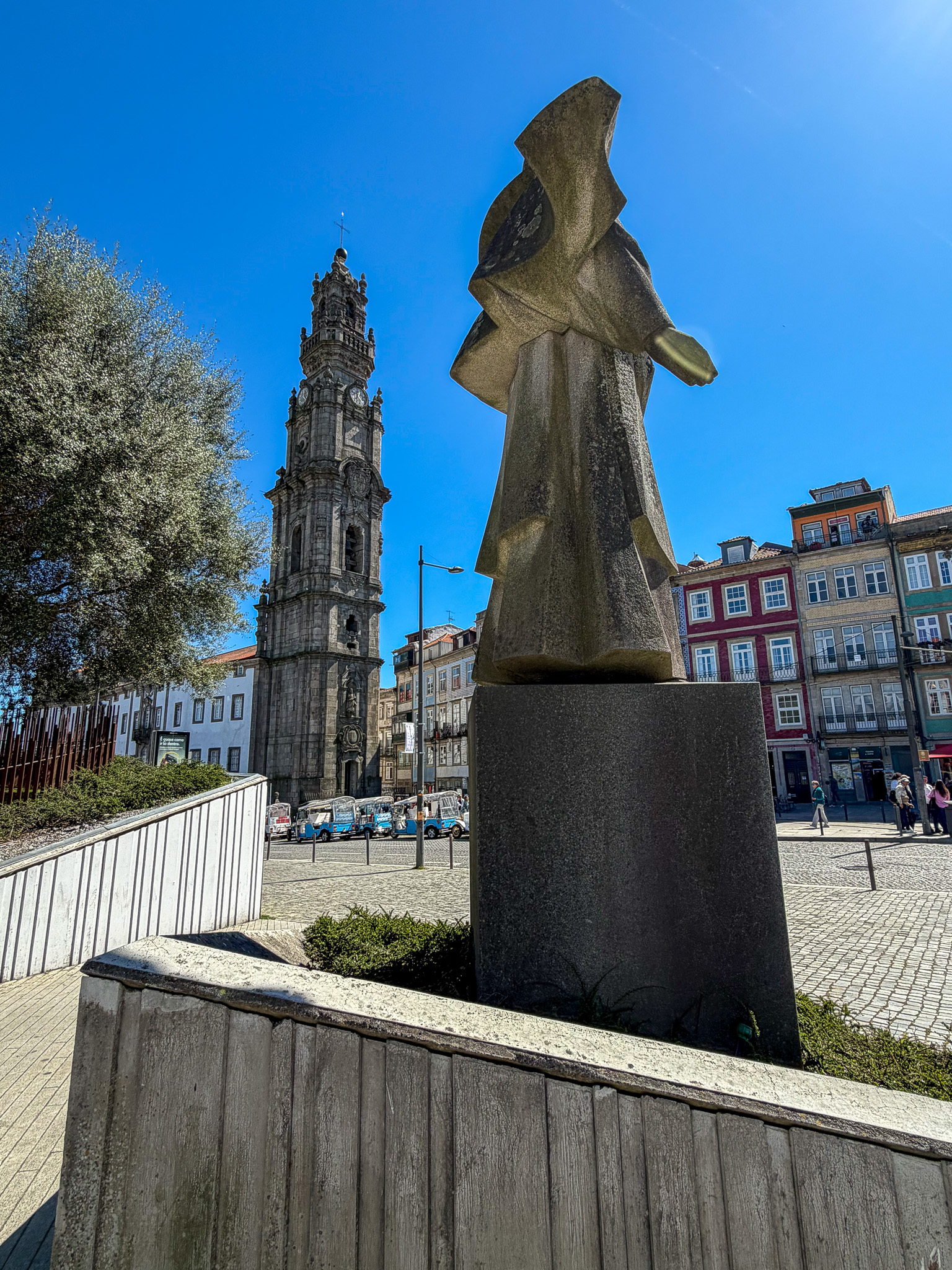
We genuinely think we would have been happy in either city. Barcelona is a world-class place to live. Porto is too, just differently. As West Coasters, Porto fit us in ways that are hard to fully articulate — a more human scale, a slower pace, a working city that happens to be beautiful rather than one built around being seen.
But there is real tension in Porto right now, and it would be dishonest not to say so. Housing costs have risen sharply, local salaries haven’t kept pace, and younger Portuguese people are increasingly priced out of cities they grew up in. Chega — Portugal’s far-right political party — has grown significantly on the back of that frustration, and that frustration is legitimate.
The full picture is more complicated than “too many foreigners,” though. Americans represent less than 1% of Portugal’s foreign population. The housing crisis has many drivers — undocumented immigration, foreign investment, and a government that was slow to put affordable housing protections in place as all of that was happening. It’s a structural and political problem more than an expat one, even if expats are the most visible piece of it.
We’re aware of our role in the dynamic and try to be thoughtful about how we show up here. Barcelona has had its own version of this — it’s a pattern playing out across a lot of desirable European cities right now, not something unique to Portugal.

Questions That Might Help You Decide
If you’re just starting to research where to move — whether that’s Spain, Portugal, or anywhere else — these are the questions we’d start with:
- What does your visa path look like, given how you earn?
- Do you care about EU citizenship? If yes, are you willing to renounce your US passport — and are you tracking what’s happening with Portugal’s timeline?
- If long-term residency is the goal rather than citizenship, does that change which country makes more sense?
- What’s your tax situation, and have you modeled it for both countries with someone who actually knows cross-border US expat tax?
- Is there a job offer or traditional employment in the picture? If yes, Spain may have more to offer.
- Are you moving for lifestyle, retirement, remote work, or some combination?
- Do you want a major-city energy, or something smaller and slower?
Neither country is the right answer for everyone. We chose Portugal and we’re happy we did. But the goal was never to find the objectively better place — it was to find the right one for where we were in life and what we actually needed.
For us, that was Porto. It still is.
We wrote more about the full decision-making process — how we got from “somewhere in Europe” to actually having a plan — in We Talked About Moving Abroad for Years. Here’s What Actually Made It Happen.

Leave a comment