When we first started looking into different visa types for our move, figuring out which one we actually needed was genuinely confusing. After doing a lot of research, we were pretty sure we had it figured out. We were both still working — Mark in real estate, and I was starting to do some freelance marketing — and we knew we’d likely be working in some capacity in Portugal. So obviously the D7 wasn’t for us. That was the retirement visa. The one for people with pensions and investment portfolios and nowhere to be on a Tuesday.
We applied for the D8. And we got denied. (You can read the full story of how we eventually got our D7 approved — on the second try — here.)
What followed was a lot of frantic Googling, a lot of late-night immigration law rabbit holes, and eventually a conversation with our immigration lawyer that reframed everything. Turns out, we had the D7 completely wrong. And based on the DMs we get, we are far from the only ones.
So let’s clear this up — because if you’re researching a move to Portugal and you’re still working (or planning to work), you may be making the same assumption we did.
First, a Note on How This Works
Before we get into the visas themselves: if you’re moving to Portugal from the US, you’re applying for what’s called a national long stay visa — specifically a D-type visa. This is not a tourist visa or a short-stay visa. It’s the entry point for legal long-term residency.
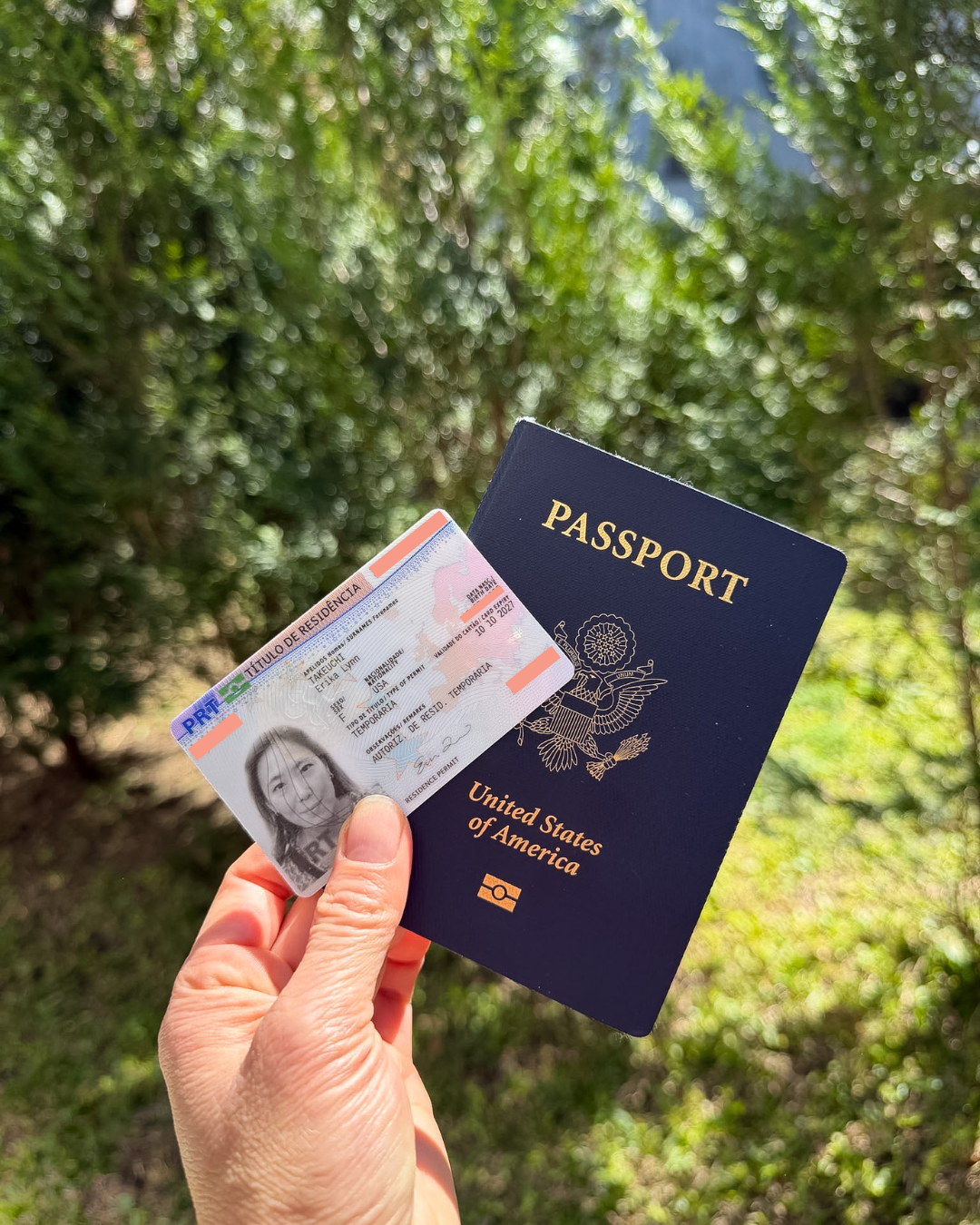
And it’s always a two-step process: first you get the visa to enter Portugal, then you apply for a residence permit that allows you to stay long-term. The visa itself is valid for 4 months — theoretically just enough time to get into the country and schedule your AIMA appointment. We say “theoretically” because AIMA is notoriously backlogged. Our visa was approved in April 2024, and we didn’t receive our residence permit cards until January and February 2025. We wrote about the full timeline in detail here — so build in a lot of patience for this part of the process.
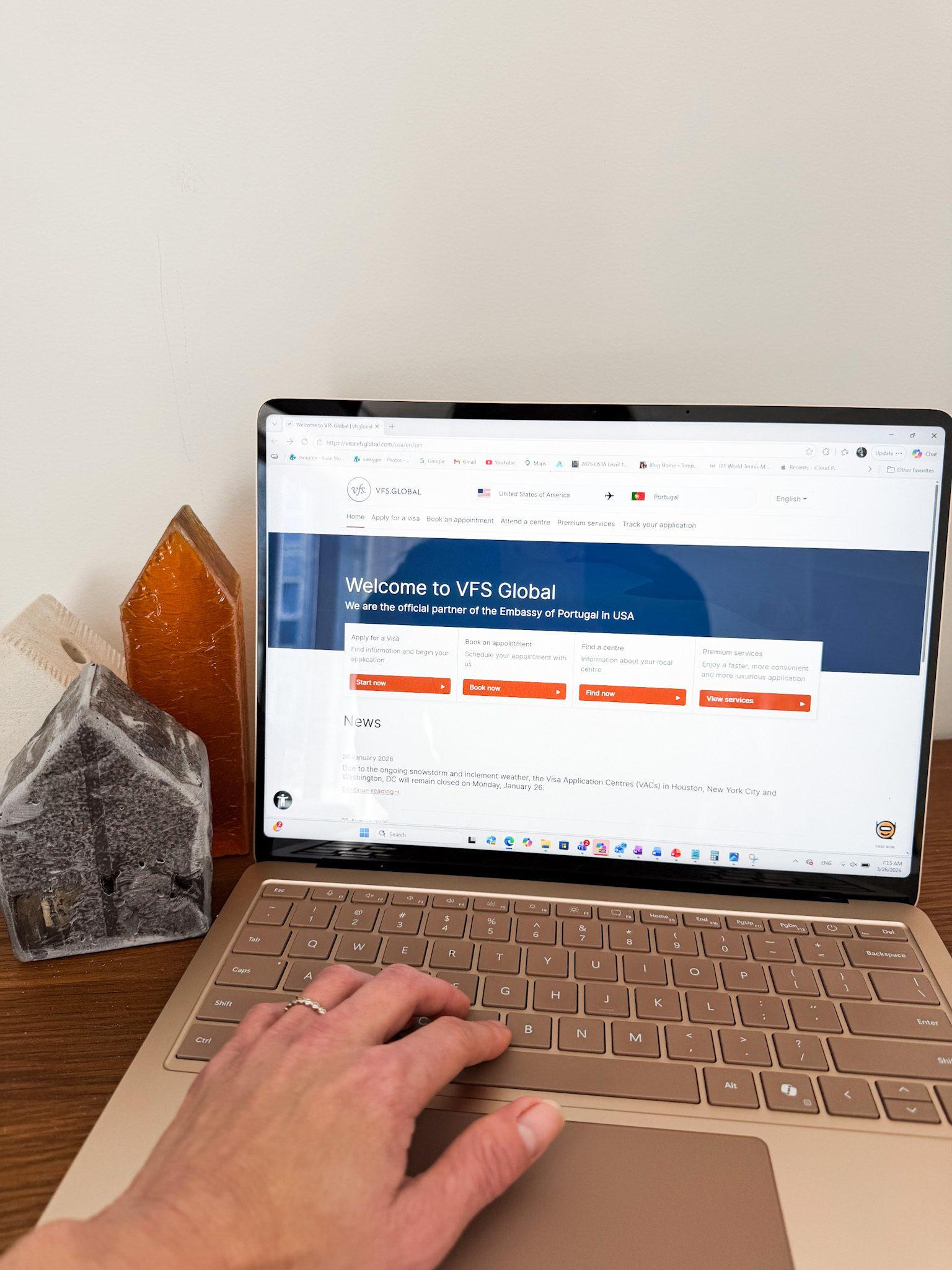
💡 Requirements can and do change. Always verify current requirements directly with the official source: VFS Global Portugal (for US applicants) and AIMA — Agência para a Integração, Migrações e Asilo, the Portuguese immigration authority that replaced SEF in 2023. Applying for residence in Portugal is always a two-step process: a visa to enter, followed by a residence permit to stay long-term.
The Myth: The D7 Is Only for Retirees
This one is everywhere. It’s in forums, in Facebook groups, in well-meaning advice from people who moved years ago. The D7 is commonly called the “Passive Income Visa” — and sometimes even the “Retirement Visa” — so the assumption makes sense.
But it’s not accurate.
AIMA officially describes the D7 as a “Residency Visa for Establishment of Residence for Pensioners, Religious Purposes, or People Living on Their Own Income.” That last category — people living on their own income — is doing a lot of work. It explicitly includes people with income from movable or immovable property, intellectual property, and financial investments. That’s a wide net, and it extends well beyond retirees with pensions.
Let’s break down what passive income actually means in this context — and then get to the part everyone wants to know: can you still work?
What “Passive Income” Actually Means for the D7
The D7 requires you to demonstrate a minimum monthly income of €920 (as of 2026, tied to Portugal’s minimum wage) for the main applicant. For a couple, add 50% — so €1,380/month. Add 30% per dependent child beyond that.
You’ll also want to show savings. The official guideline is 12 months of the minimum wage in a Portuguese bank account: €11,040 for a single applicant, with proportional increases for a spouse (+50%) and each child (+30%).
A pension absolutely qualifies. But so do all of these:
- Rental income from property you own — in the US, Portugal, or anywhere else. You’ll need lease agreements and bank statements showing regular deposits.
- Dividends from stocks, mutual funds, or investment accounts. Brokerage statements are your documentation here.
- Interest income from savings accounts, bonds, or other financial instruments.
- Royalties or licensing fees — from intellectual property, creative work, or similar sources.
- Business profits or investment distributions — if structured as passive income rather than active salary. Worth discussing carefully with an immigration lawyer to make sure it’s documented correctly.
⚠️ Important: The income needs to be consistent and provable. Consulates want to see regular, recurring deposits — not a one-time lump sum. Stability and documentation matter as much as hitting the number.
How We Strengthened Our D7 Application
Our situation was a little complicated. My freelance marketing income was too sporadic at the time to lean on — which was part of why the D8 route felt risky even as an appeal. So our lawyer helped us build a D7 case that leaned on financial stability and a documented income stream instead.
Here’s what we did:
1. We deposited €30,000 into our Portuguese bank account. This showed that our first two years of living expenses were covered. The rough rule of thumb our lawyer referenced: €10,000 per year for the main applicant, plus €5,000 per year for each dependent. Having that money sitting in a Portuguese account made a meaningful difference.
2. We set up a recurring monthly transfer of $3,500 from our Fidelity investment account into our US checking account. We hadn’t officially retired, so we weren’t pulling a pension — but this created a consistent, documentable paper trail that functioned as close to passive income as we could get. Recurring and traceable was the goal.
These two pieces — funds on hand and a regular income transfer — worked together under the D7 criteria in a way that a spotty freelance income history simply wouldn’t have.
And Can You Work on a D7?
Here’s the part that surprised us most: once you have your D7 residence permit, you are legally allowed to work in Portugal. You can take on employment. You can do business activity. You are not prohibited from working.
The key distinction is that your visa application needs to be built on passive income — the consulate needs to be satisfied that you can support yourself without depending on a local Portuguese paycheck. But after you have residency, working is permitted.
Remote work from a foreign employer is a grayer area at the application stage. Some consulates will accept it as supporting documentation if it’s clearly location-independent. Others will point you toward the D8. This is one of those cases where having a lawyer who knows the current consulate you’re applying through really matters.
💡 Our honest take: If active remote work income is your only source and you don’t have other passive or investment income meeting the threshold, the D8 is likely the cleaner path — if you qualify. But if you have a combination of investment income, savings, rental income, or recurring distributions alongside remote work, the D7 may be more accessible than you think.
So What’s the D8?
The D8 is Portugal’s Residency Visa for Remote Work — “Digital Nomads.” AIMA designed it specifically for people whose primary income is active remote work: employees with a foreign employer, freelancers, independent consultants, and self-employed professionals with international clients.
The documentation requirements are different: for employment, you’ll need a contract or declaration from your employer; for self-employment, articles of association, a service contract, or documentation of services provided to clients.
The income threshold is also significantly higher. The D8 requires proof of average monthly income over the last three months at a minimum of four times Portugal’s minimum wage — €3,680/month as of 2026, whether you’re employed or self-employed. That’s a meaningfully higher bar than the D7.
So there’s a real irony here: the visa that sounds more relevant to people who are still working is also the one that’s harder to qualify for financially.
The Short Version, If You’re Skimming
- D7 = Residency visa for pensioners and people living on their own income. Minimum €920/month from passive sources. Rental income, dividends, interest, royalties, and investment distributions all count. You can work once you have your residence permit.
- D8 = Residency visa for remote workers and digital nomads. Minimum €3,680/month from active remote work. Higher bar, different documentation.
- The D7 is not just for retirees. If you have passive or investment income streams — even alongside other work — it may be the more accessible path.
- Always verify current requirements at VFS Global and AIMA. Requirements change, and consulate interpretation can vary.
- Talk to an immigration lawyer. What worked for us may not map exactly to your situation.
We’re not lawyers or immigration advisors — just two people who learned some of this the hard way. If you’re in the thick of the research phase, we hope this saves you some of the confusion it caused us.
Questions about our visa process? Drop them in the comments or send us a DM — we try to answer everything. And if you’re just starting to research a move to Portugal, our post on how we chose Portugal over Spain is a good place to start.

Leave a comment