Finding an apartment in a new country is one of those things that sounds manageable until you’re actually doing it. Especially when you’re doing it as a foreigner, in a market that moves fast, in a language you’re still learning, with a dog in tow.
We’ve done it twice now — both times using Idealista, both times landing fully furnished apartments in the same neighborhood we fell in love with on day one. Here’s the honest version of how it went, and what we wish someone had told us first.
Start with Idealista
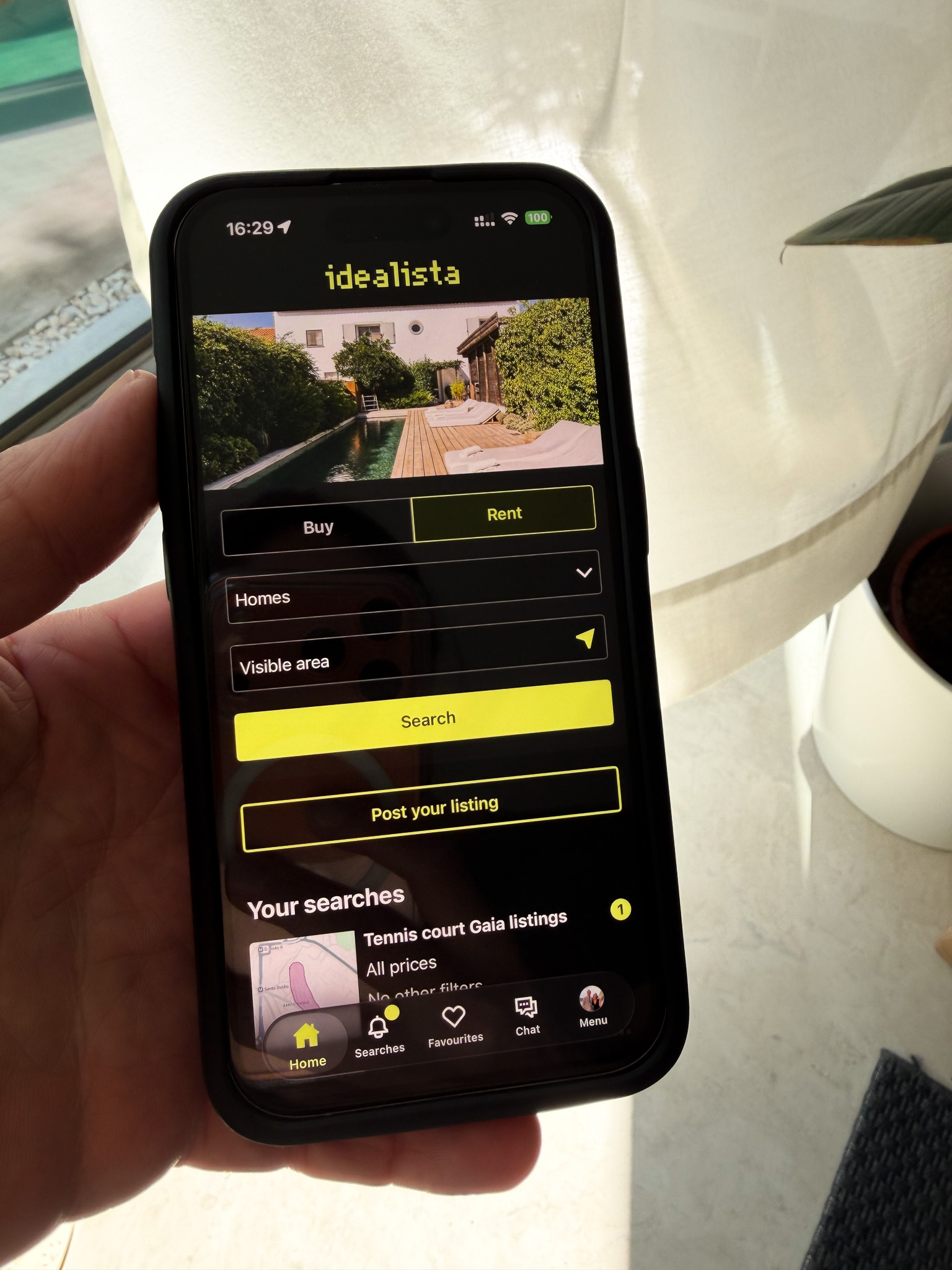
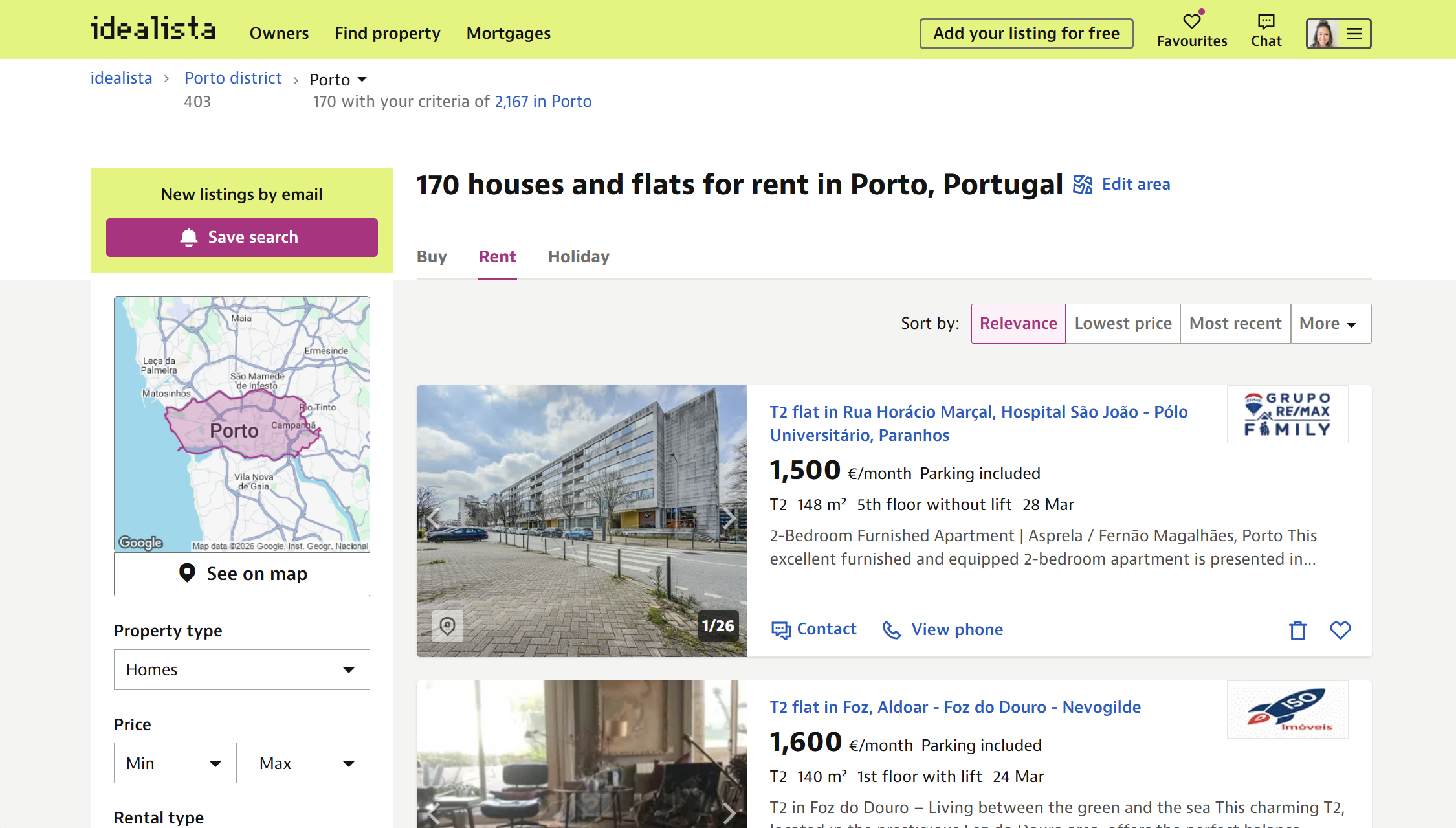
Idealista is the dominant real estate platform in Portugal — the app and website are both easy to use and genuinely good. It’s where we found both of our apartments, and it’s also our go-to for checking what the market looks like at any given moment. If you want to get a read on current rents before you move, it’s the most useful real-time tool we’ve found.
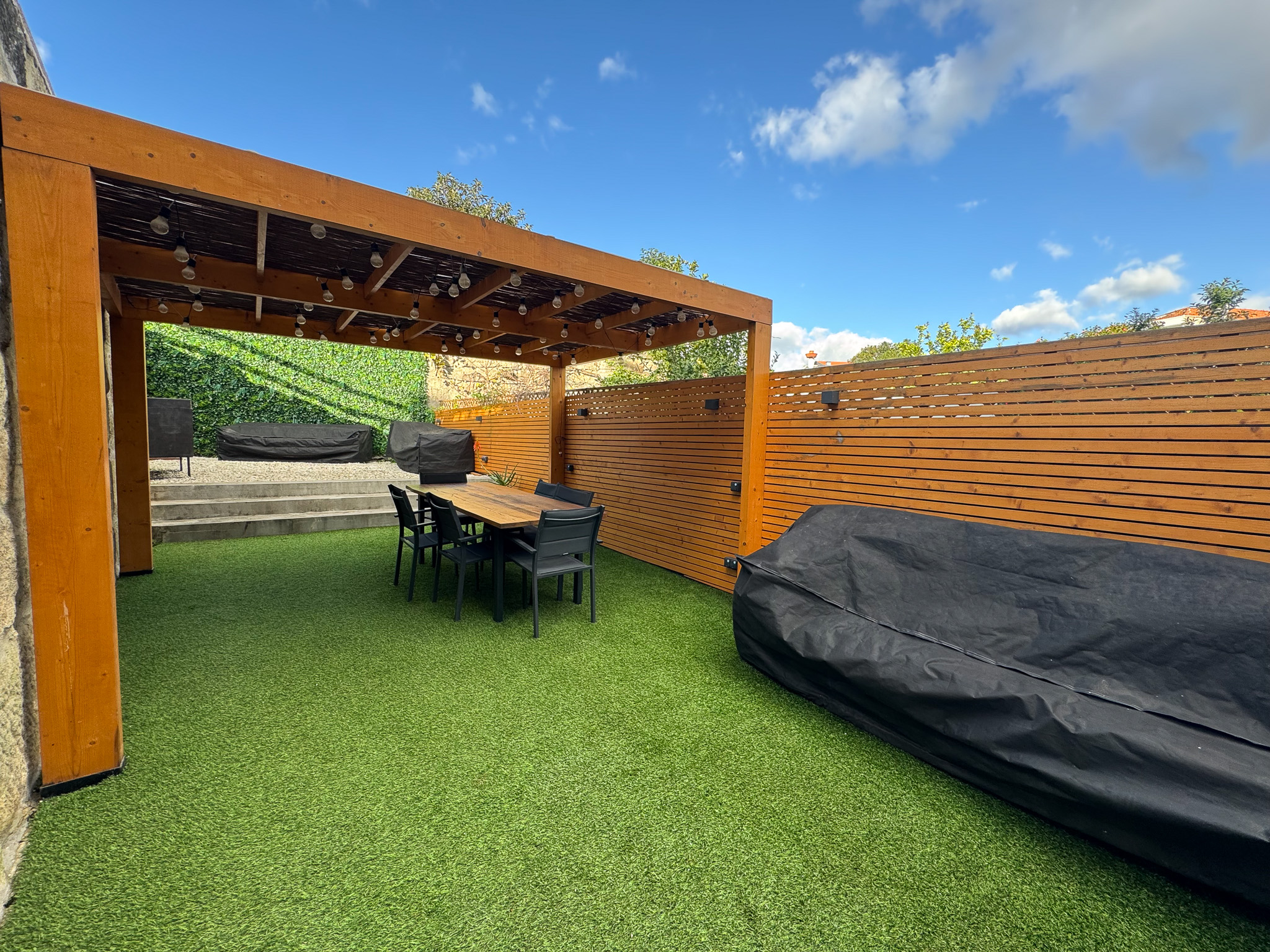
Our first apartment we found and signed entirely remotely. We were still in Seattle, searching from across an ocean, under a hard deadline — we needed a signed one-year lease in hand for our VFS appointment. We found a recently renovated T2 on Idealista — in Portugal, “T” refers to the number of bedrooms, so a T2 is a 2-bedroom apartment: 160 square meters, one full bath and one half bath, fully furnished, with a large backyard. We did a video walkthrough with the landlord, asked as many questions as we could think of, and signed. When we landed in Porto, we honestly didn’t know what we were walking into. We just hoped the landlords were legit and that an actual apartment would be there. It was. But we wouldn’t recommend this path to anyone — more on why below.
As of early 2026, for a furnished 2-bedroom in central Porto, you’re generally looking at €1,800–€2,200 for something nice and move-in ready — though the range is wide. We’ve seen listings anywhere from €1,200 to €2,750+ depending on size, condition, and neighborhood. The lower end usually means an older building, small square footage, or a location a bit further out. The higher end gets you recent renovations, outdoor space, or a short walk to the metro.
Know What You Can’t Compromise On
Before you start scrolling, get clear on your list. Decision fatigue is real when you’re comparing 40 apartments that are all technically fine.
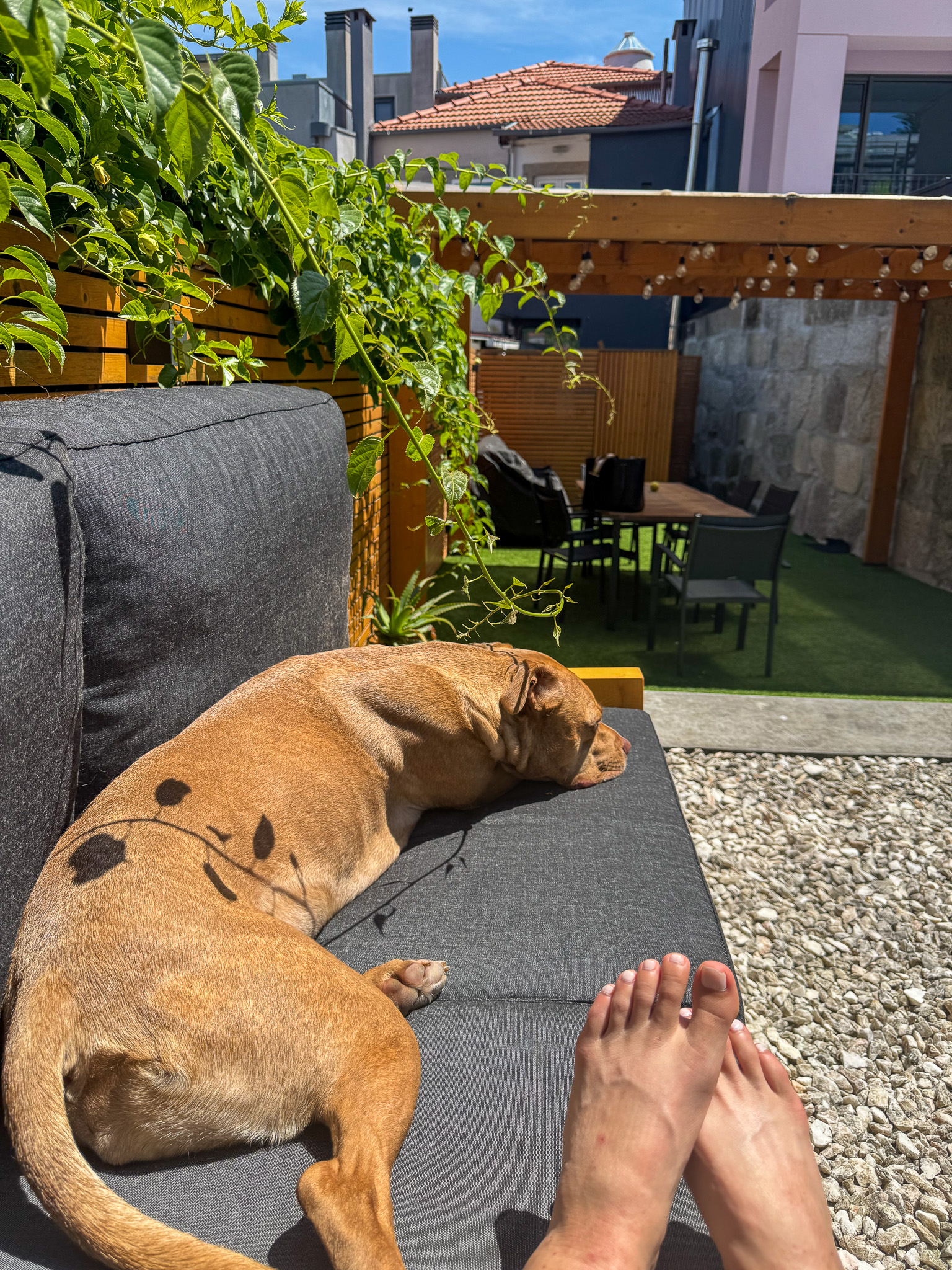
Our non-negotiables: over 100 square meters, dog-friendly 🐾, outdoor space, AC, fully furnished, and staying under €2,000 a month. We knew we’d be traveling a lot and didn’t want a high fixed cost anchoring us. Neighborhood mattered too — we wanted to be walkable to central Porto, with real life nearby. We’re a 9-minute walk from Livraria Lello, and within a few blocks we have more restaurants and cafes than we can keep up with, a good mix of local spots and international ones.
We held that same list when it came time to find our second apartment — and tested it properly. We toured seven places across Matosinhos, Gaia, Boavista, and near the stadium. There were some good options in the mix, but when a 1-bedroom detached two-story came up a block and a half from our first place, it checked every box: two full baths, tons of natural light, great layout, a lot of outdoor space. Hard to argue with. Know your list before you open the app — it’ll keep you anchored when you’re deep in the scroll.
Make the Landing Easier: Go Fully Furnished, and Find All-In Utilities If You Can
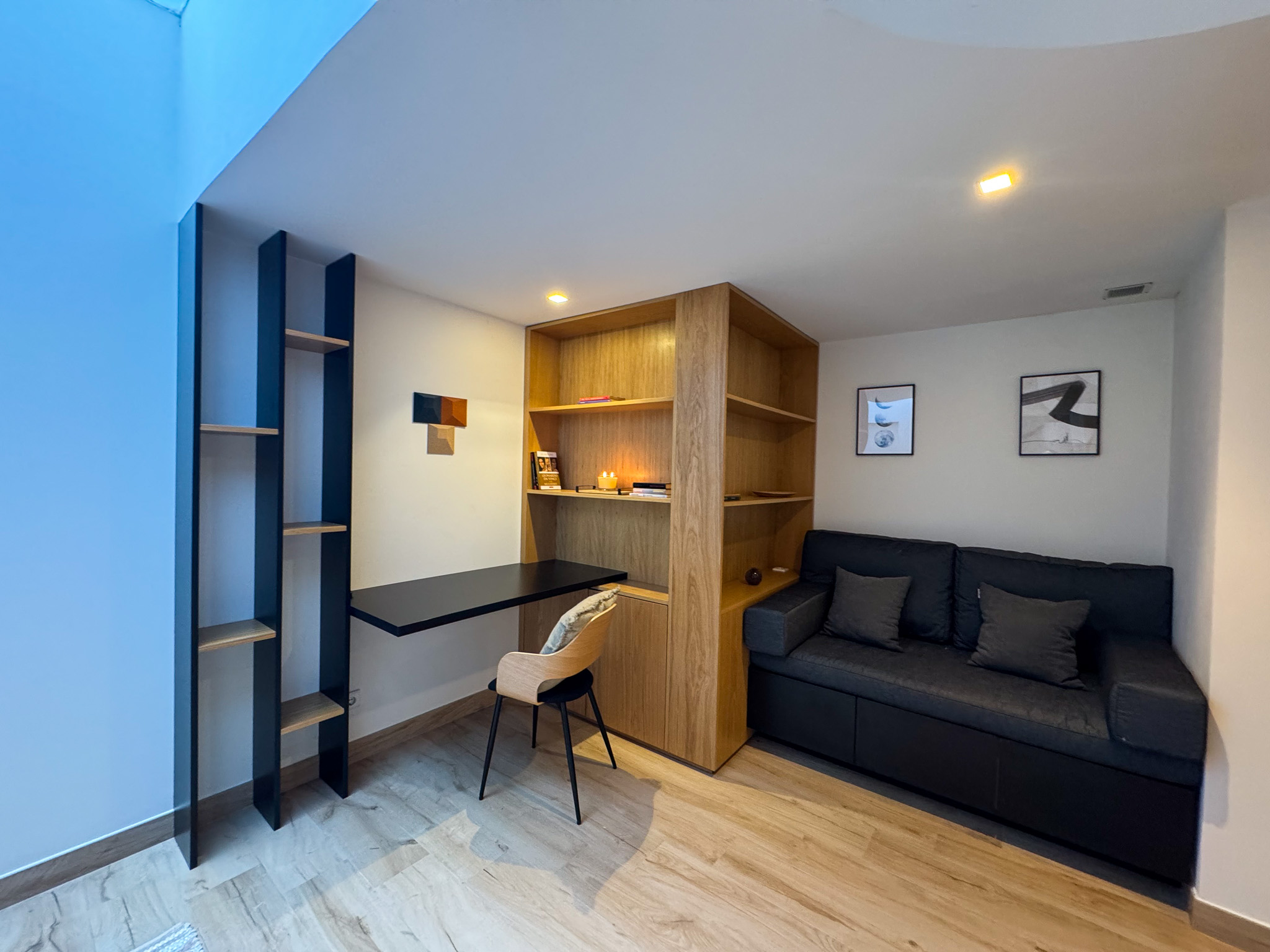
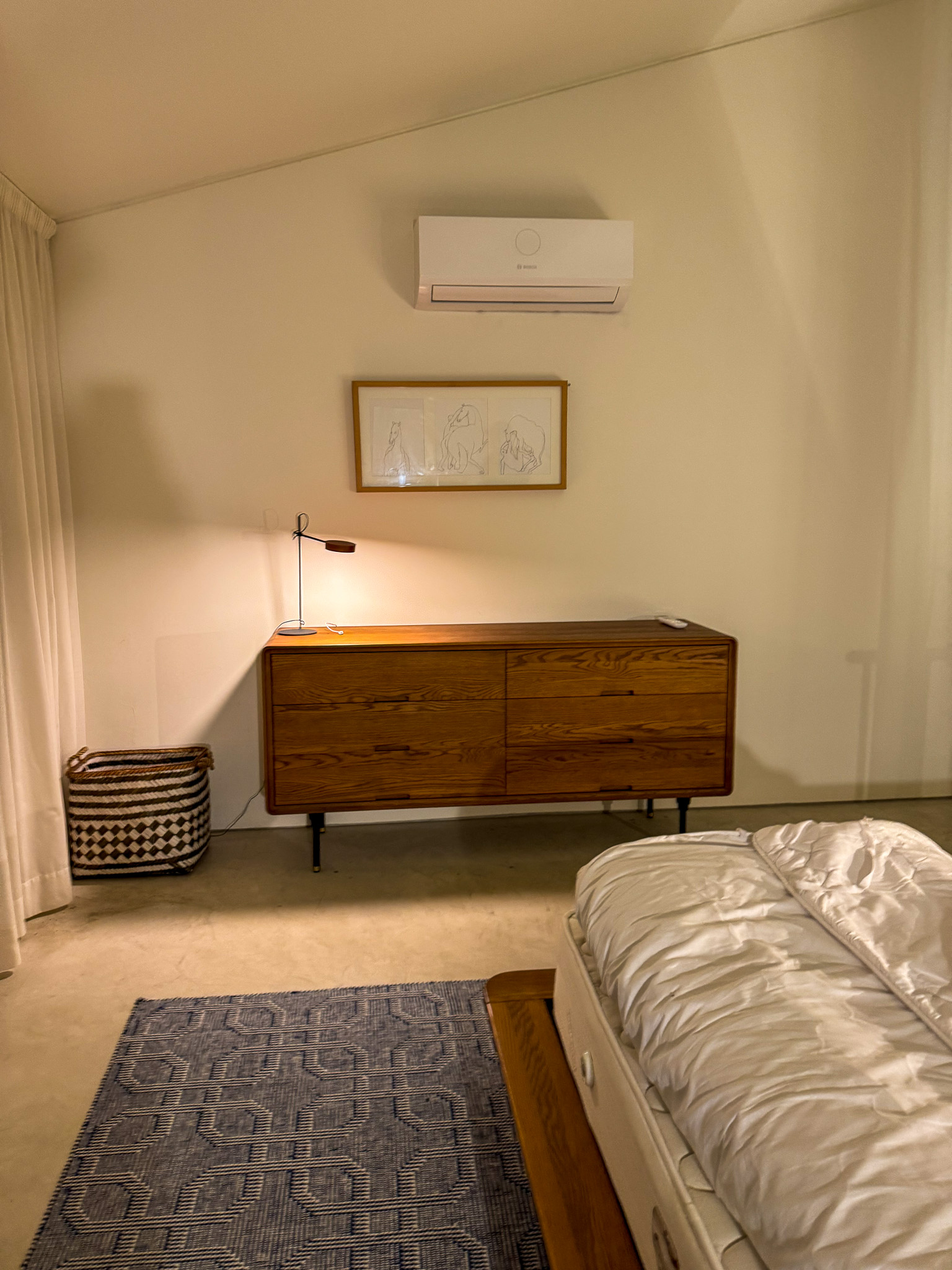
If you’re making the big move, one thing that was a lifesaver for us was renting a fully furnished apartment. Landing in a new country jetlagged and immediately hunting for a bed frame is not the move. Move-in ready takes one enormous thing off your plate at the worst possible moment. Most furnished listings on Idealista are genuinely equipped — kitchen appliances, beds, sofas, the basics. Some go further. Read listings carefully and ask questions before you commit.
And if you can find a place where utilities are already set up — internet, water, electricity all running, paid through your landlord — jump on it. Our first apartment worked this way and we didn’t fully appreciate how rare it was until we talked to other expats. Setting up utilities in Portugal as a new resident is notoriously painful: language barrier, waiting periods, administrative loops that can stretch for weeks. A landlord who handles all of that is worth real money in time and stress saved. It’s not the norm. It’s a feature worth hunting for.
What We Learned the Hard Way
This is the section we actually needed before we started.
🏛️ Ask about Finanças registration upfront. In Portugal, landlords are legally required to register rental contracts with Finanças — the Portuguese tax authority — and as a tenant, you can verify it’s been done. For expats on a D7 or D8 visa, a registered lease isn’t optional: AIMA won’t accept your residency application without it, even if you have a signed contract. Some landlords avoid registering to skirt taxes on rental income, so ask early — before you fall in love with a place. And if your landlord drags their feet after you’ve moved in, as of August 2025 you have the legal right to register it yourself through the Portal das Finanças.
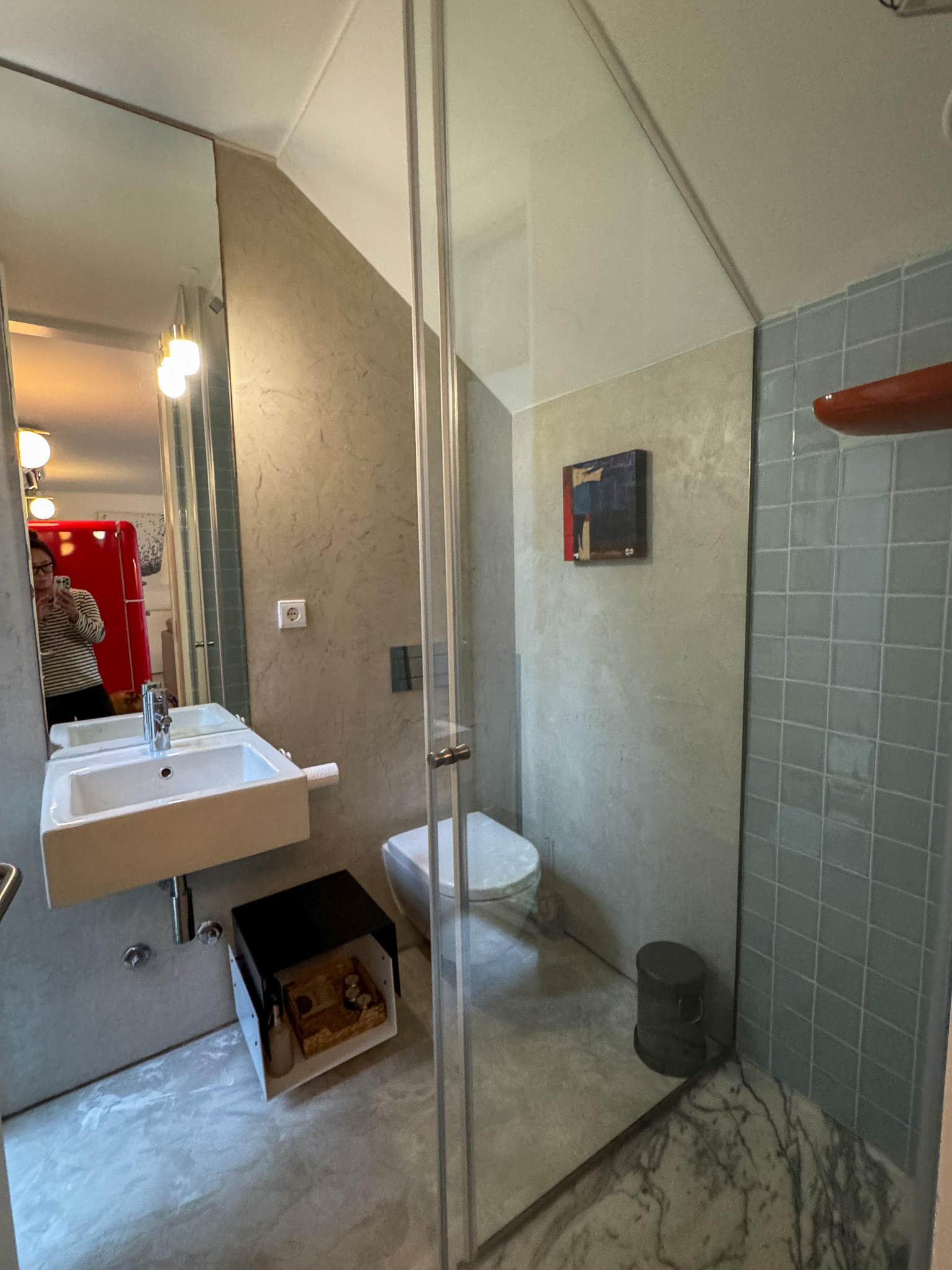
⚡ Energy ratings are not a detail. The scale in Portugal runs from A+ down to F, and it’s primarily about insulation and how efficiently the building retains heat and manages moisture — not just your electricity bill. A low-rated apartment can mean poor insulation, damp walls, and mold problems. Our first place had a low rating, and that’s exactly what we got — serious mold issues on top of an apartment that happened to have very little natural airflow and limited natural light. It made for a rough combination. Aim for B or higher, ask about the building’s insulation and ventilation, and see it in person if at all possible — photos hide a lot.
✈️ Renting sight unseen is a last resort. We did it because we had to — we needed a signed lease for our VFS appointment and couldn’t be on the ground first. A video walkthrough with the landlord helped, but it’s not the same as being there. If there’s any way to see the apartment in person before you commit, do it. If you can’t make it yourself, see if someone you trust can walk through it for you.
⏳ Timing is its own puzzle. We started looking about four months out and still lost an apartment we really loved — the timing didn’t line up with our existing lease end date, and double-paying rent for three months wasn’t workable. Speaking of which: leaving a lease early in Portugal isn’t simple. On a one-year contract, you can only terminate after the first third has passed, and even then you’re required to give 120 days’ notice. Build real flexibility into your timeline.
📋 Get a lawyer to review your rental contract — and read the details carefully. This was news to us, but it’s standard practice here and absolutely worth doing. Portuguese contracts can contain terms that aren’t obvious to a foreign eye. We had an apartment we were ready to sign on until our lawyer flagged some non-standard terms. We walked away. The right call — but only because a professional eye caught it for us.
💶 You can negotiate. If a listing has been on Idealista for more than a few months and you’re seeing it’s higher than other comparable listings, that’s your opening. We negotiated on our second apartment after seeing it had been posted for over four months. Doesn’t hurt to ask.
🗂️ What you’ll need to apply. For both of our apartments, the landlord needed our passports, our NIF numbers, and a deposit. We weren’t asked to show proof of income — but requirements vary by landlord, so it’s worth asking early what they need from you so you’re not scrambling.
If you’re in the thick of apartment hunting in Portugal, drop your questions in the comments. We’re happy to share what we know.

Leave a comment