We’d been eyeing Seville for a while. Living in Porto, Spain is right there — and after more than a year in Portugal, we were genuinely curious about what was just across the border. Seville felt like the natural first stop: an easy drive from the Algarve, and one of the most storied cities in all of Iberia.
Three days, one slightly damp Tuesday, a flamenco performance we didn’t plan for, and more frozen yogurt than we probably needed. Here’s everything you need to know.
Why Seville
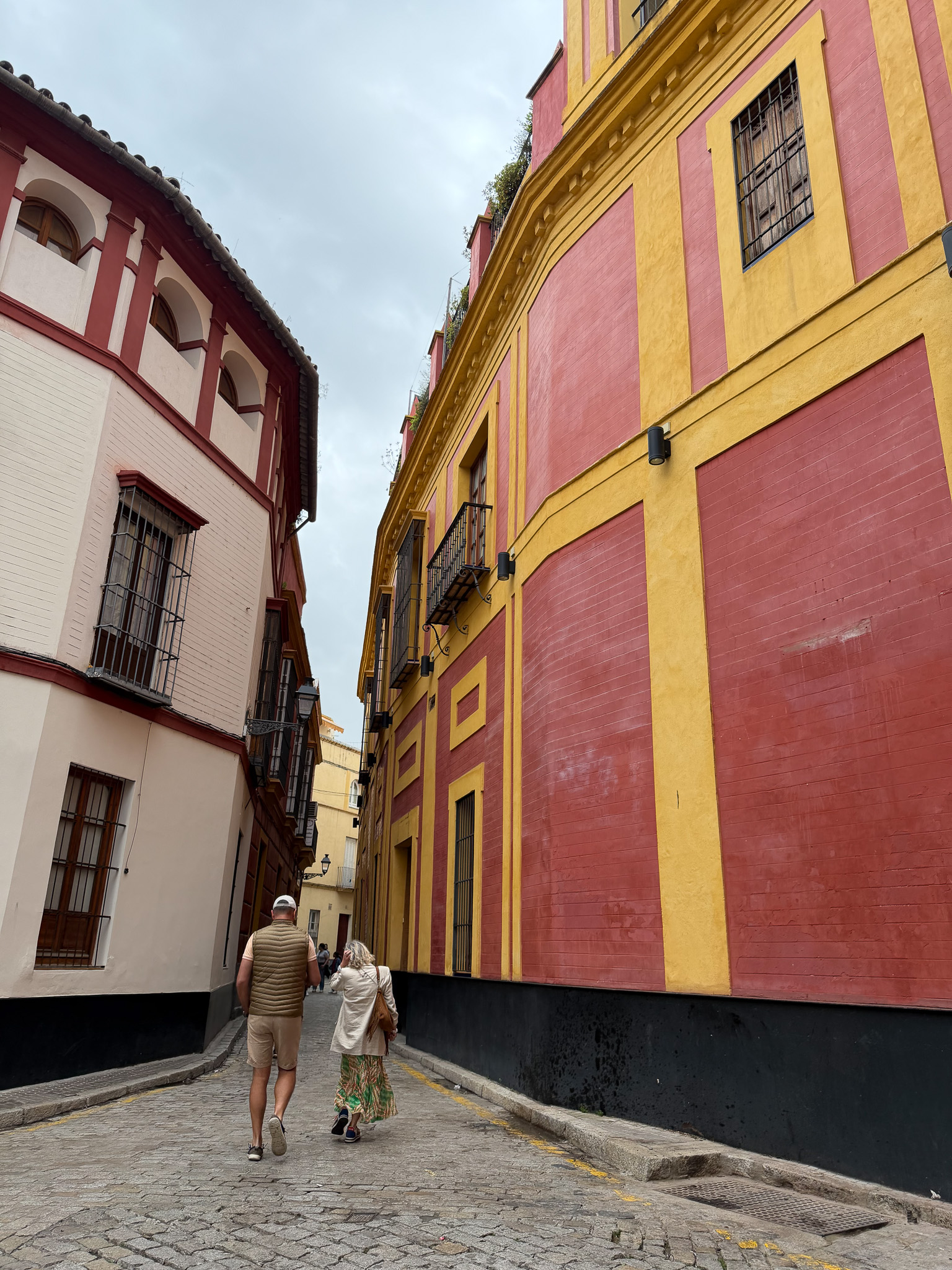
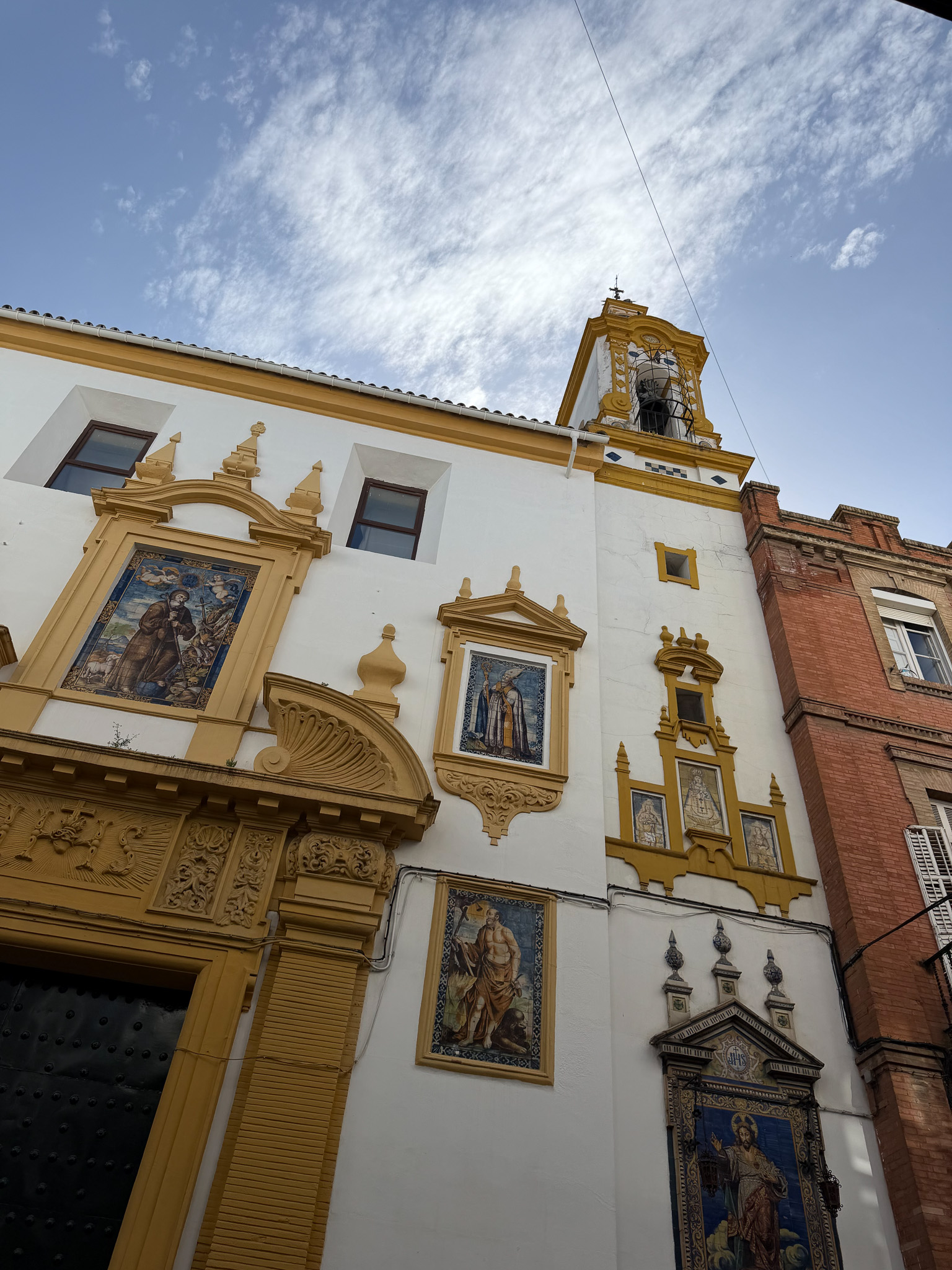
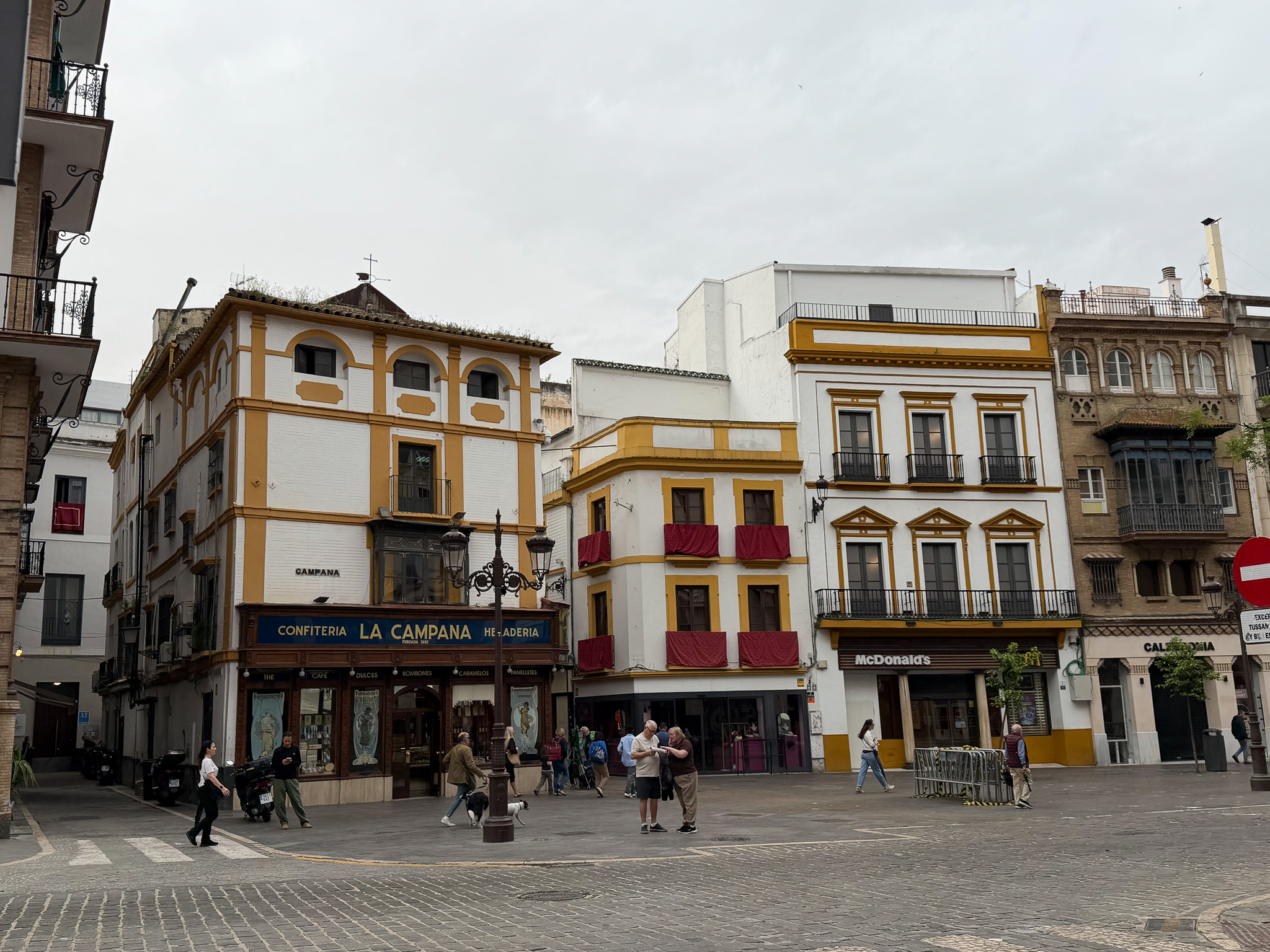
Seville is visually unlike anywhere else we’ve been. The color palette of the city is something you feel before you fully register it — warm orange-yellow buildings that seem to glow even on overcast days, deep coral and terracotta facades, and vivid blue-and-white azulejo tiles woven into the architecture everywhere you look. Frescoes, fountains, ornate ironwork. It’s layered and rich and very, very photogenic.
Beyond the aesthetics, the city has an energy that’s hard to put a finger on. The streets are alive from morning until late at night, the food scene punches well above the city’s size, and the density of genuinely world-class sights in a small walkable area is remarkable. We logged 18–22k steps a day without it ever feeling like effort.
How to Get There
🚗 By car from Portugal: One of the most accessible Spanish cities from Portugal. We drove down through the Algarve first, making the Seville leg a quick 1.5–2 hours from Lagos. From Porto, it’s roughly 4.5 hours direct. The drive through the Alentejo and into Spanish Extremadura is beautiful, and the border crossing is seamless.
🚆 By train: Seville is well connected via Spain’s AVE high-speed rail network. From Madrid, about 2.5 hours; from Málaga, under 2 hours. There’s also a direct train from Faro (Algarve) that takes around 3.5 hours — a great option if you’re not driving.
✈️ By plane: Seville Airport (SVQ) has solid connections across Europe, including direct routes from several UK and Portuguese cities. It’s a small, easy airport about 20 minutes from the city center by taxi or bus.
Where to Stay
Seville’s Barrio Santa Cruz — the old Jewish quarter clustered around the Cathedral and Alcázar — is the neighborhood to aim for. You’re walking distance from virtually every major sight, surrounded by some of the best tapas bars in the city, and in the most characterful streets Seville has to offer.
A few options across different budgets:
- Hotel Alfonso XIII — the grand Seville hotel. Moorish-influenced architecture, beautiful interior courtyard, full luxury experience. A splurge, but if you’re celebrating something, this is the one.
- EME Catedral Hotel — boutique hotel directly facing the Cathedral. Multiple rooftop terraces, stylish rooms, exceptional location. Mid-to-high range.
- Hotel Casa 1800 — elegant 19th-century palace conversion in Barrio Santa Cruz. Beautiful interiors, rooftop terrace, consistently well-reviewed.
- Hospes Las Casas del Rey de Baeza — tucked into a quieter corner near Casa de Pilatos. Serene courtyard, slightly removed from the main tourist bustle.
We had limited options because we were traveling with our dog Matcha, so we ended up at Hotel y Apartamentos Doña Lola — a simpler property, but perfectly located in Barrio Santa Cruz and one of the few pet-friendly options in the area.
What to See & Do
🏰 Royal Alcázar
Allow: 2–2.5 hours
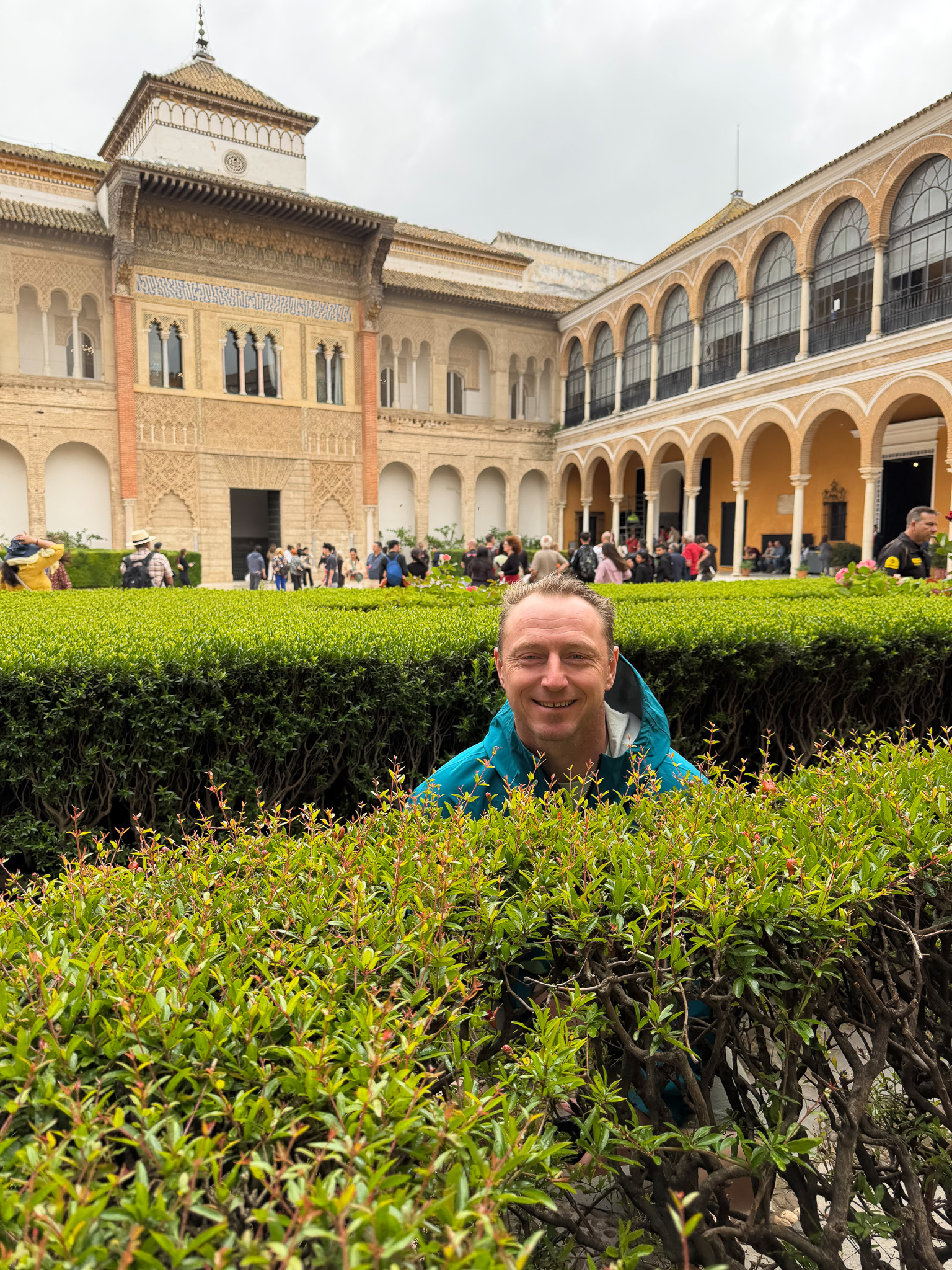
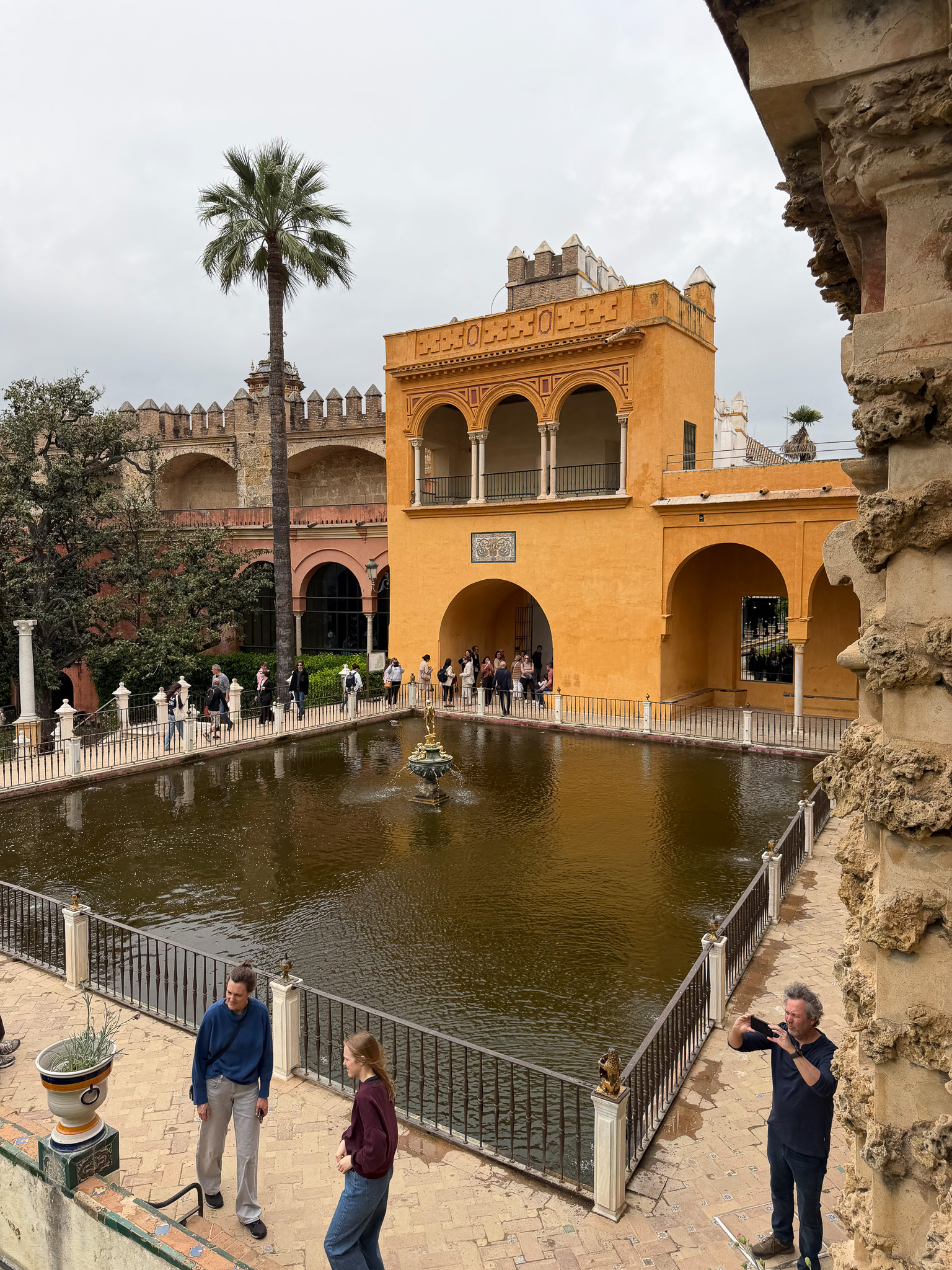
The undisputed highlight of the trip. The Royal Alcázar is a still-functioning royal palace and one of the finest examples of Mudéjar architecture anywhere in the world. Even under grey skies, the grounds were staggering — intricate tiled interiors, a garden maze, fountains at every turn, and ducks that very much own the place. The elevated gallery that wraps around part of the upper level gives you a beautiful view down over the gardens and courtyard below. It’s the kind of place you move through slowly and still feel like you missed things.
📅 Book your tickets well in advance at alcazarsevilla.org. They sell out weeks ahead, especially for weekends and peak season. Don’t assume you can turn up on the day — you can’t.
🌟 Plaza de España
Allow: 45 minutes – 1 hour
A very close second to the Alcázar as the highlight of the trip.
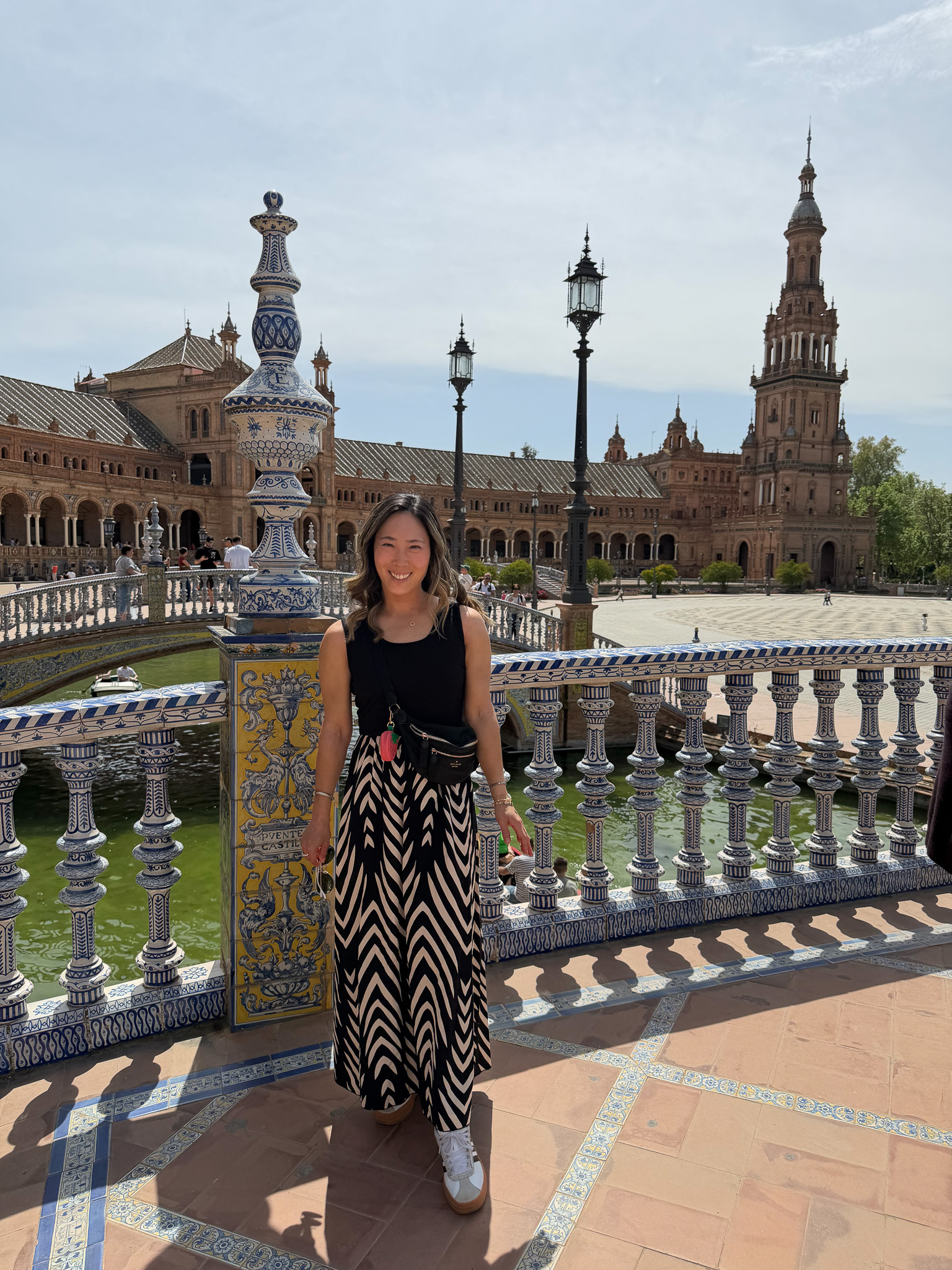
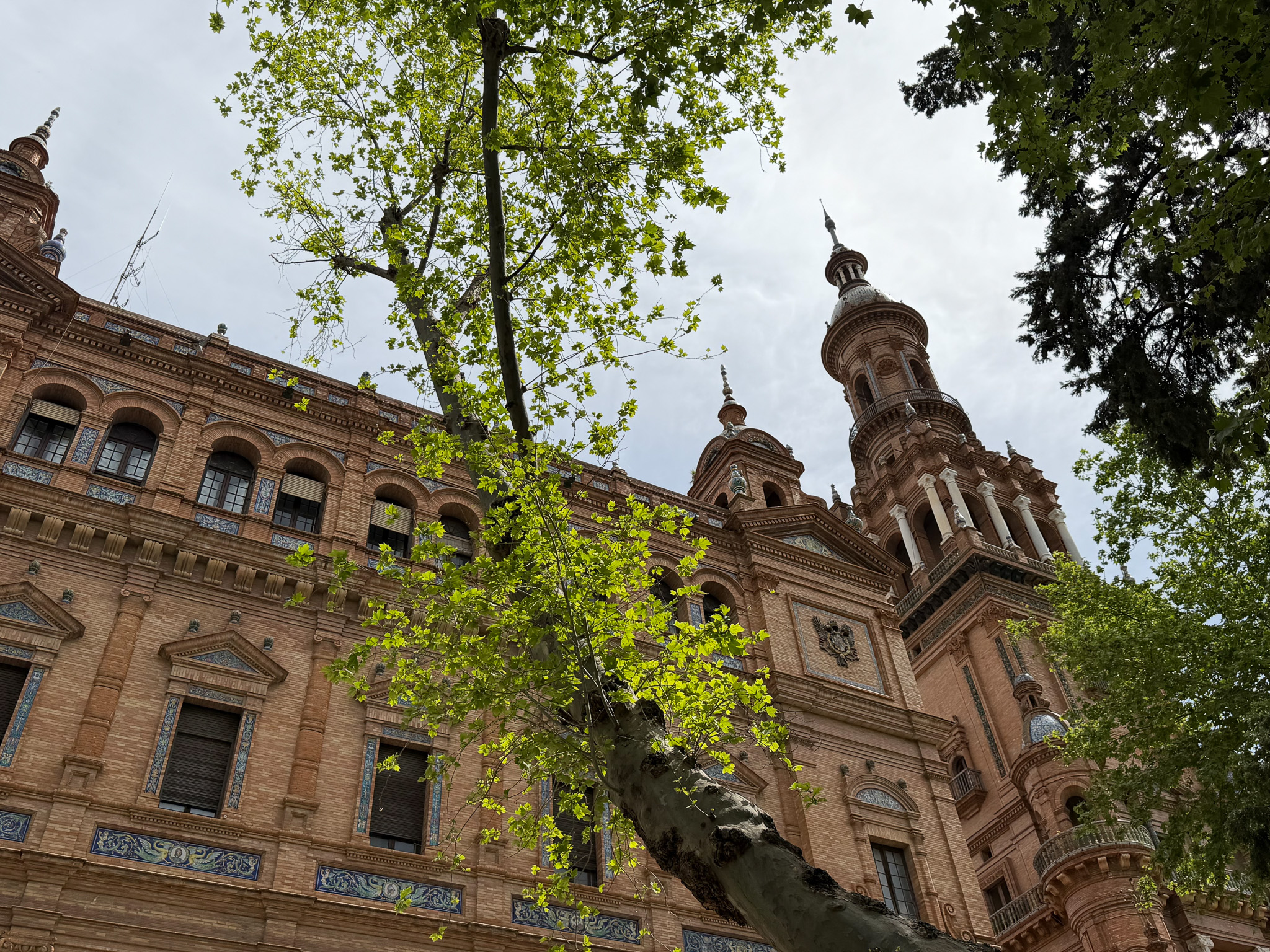
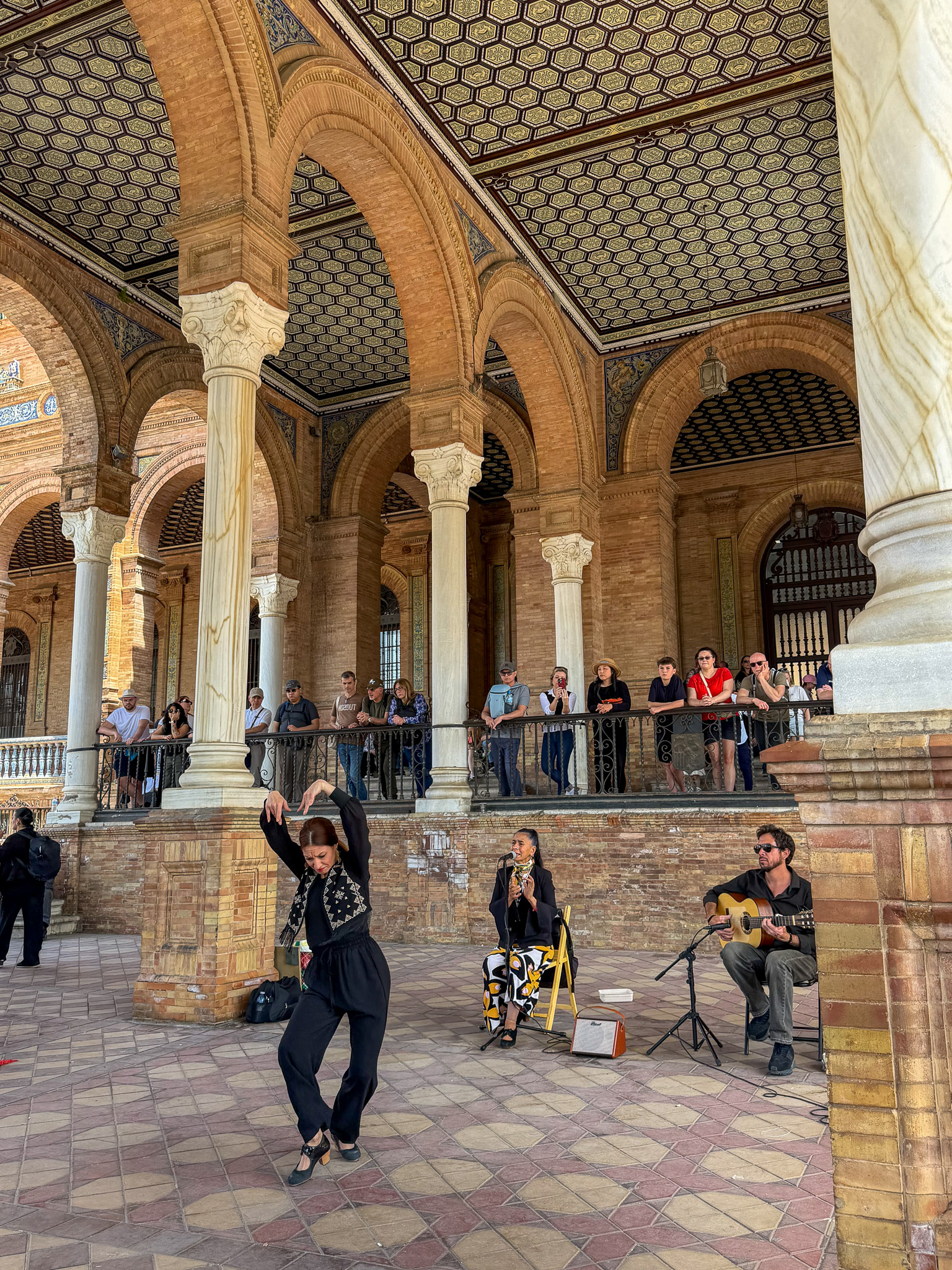
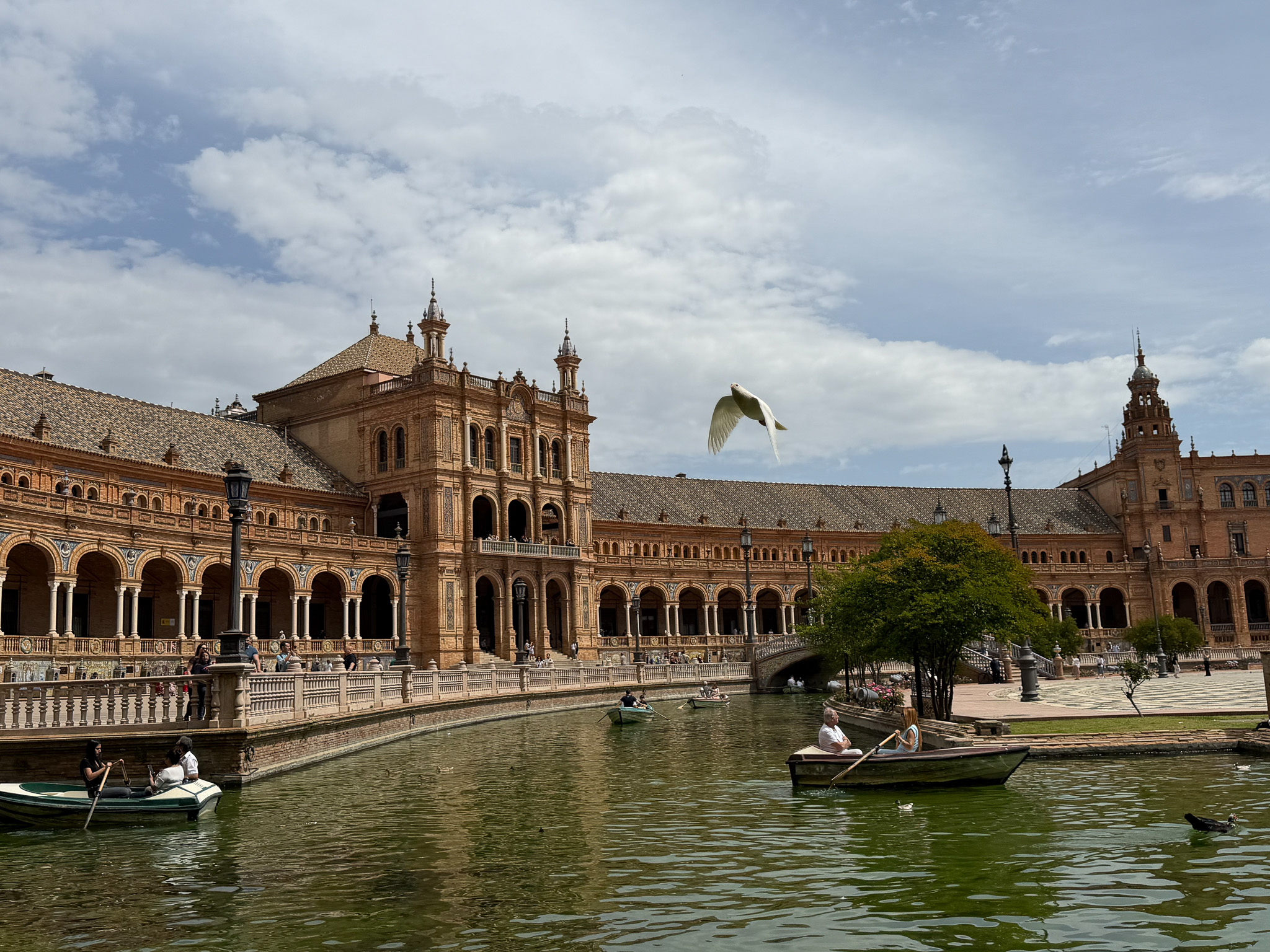
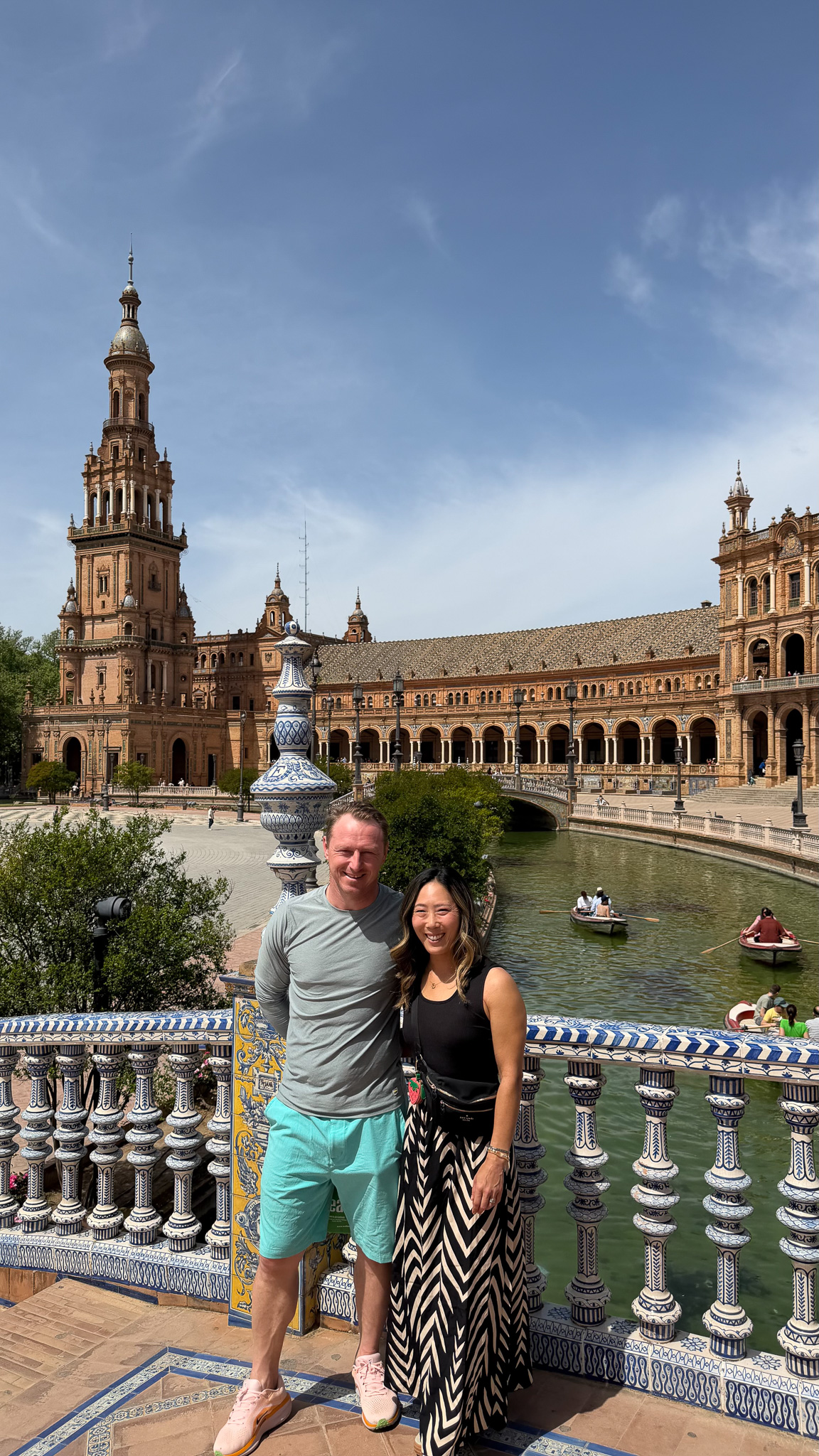
Built for the 1929 Ibero-American Exposition, Plaza de España is spectacular from every angle — the sweeping tiled semi-circular promenade, ornate bridges, a canal running through the middle, and hand-painted ceramic panels representing every Spanish province. The blue and gold tiles are exactly the kind of color that photographs beautifully and looks even better in person. While we were there, a flamenco performance started up in the plaza — one of those spontaneous travel moments that happen in a beautiful setting and just stay with you. Free to visit. Don’t rush it.
⛪ Seville Cathedral & La Giralda
Allow: 1.5–2 hours (exterior + surroundings)
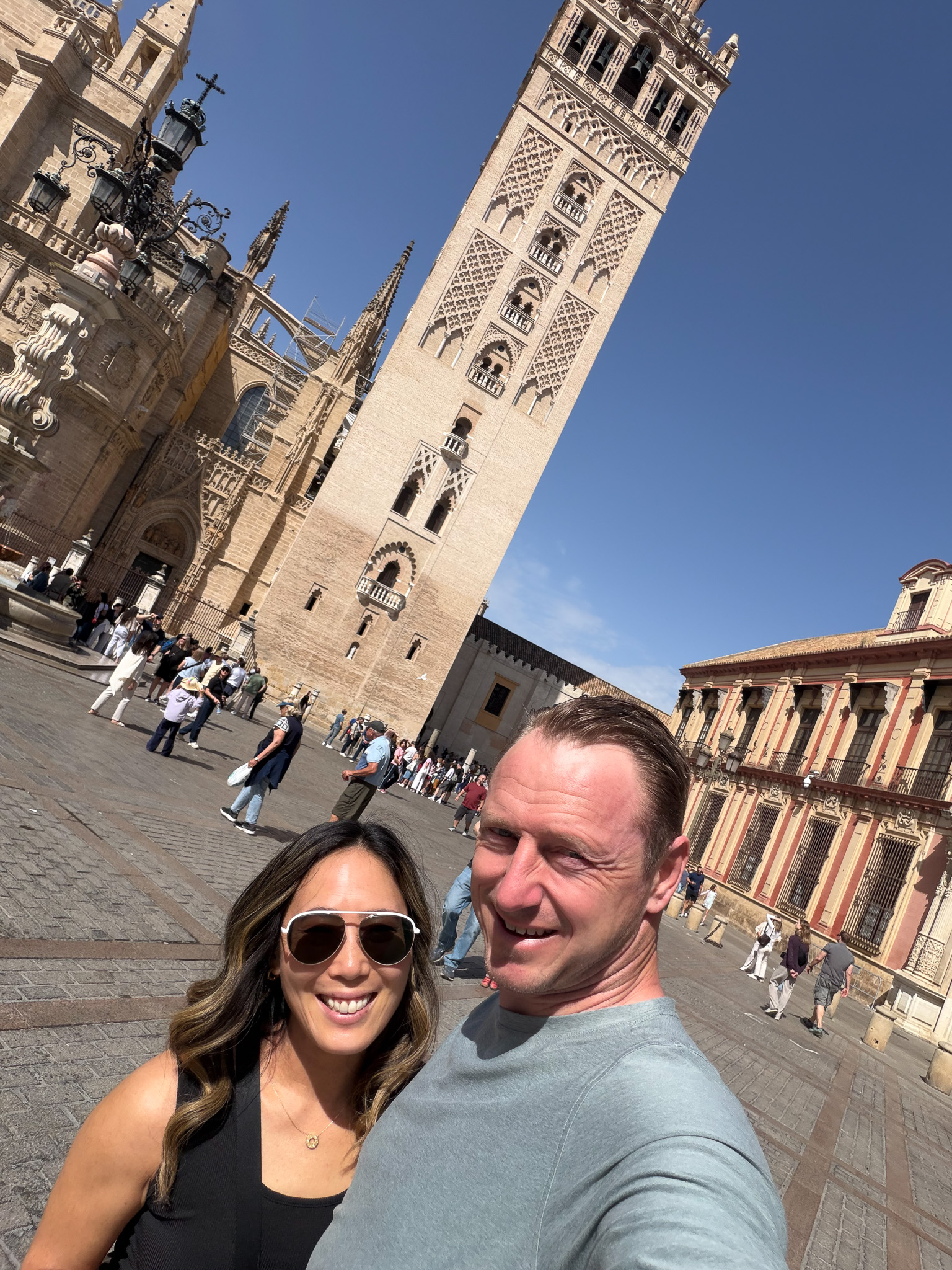
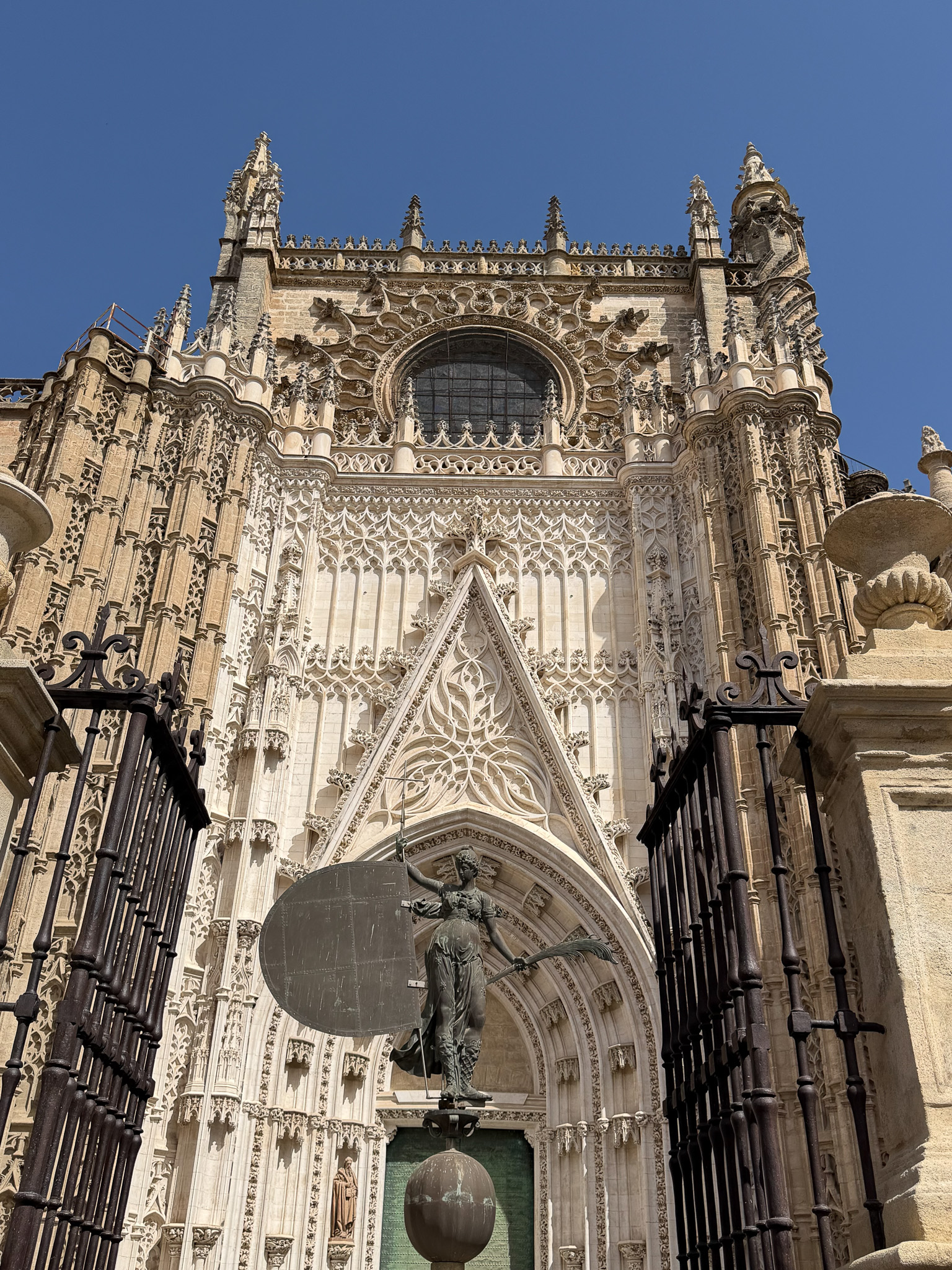
One of the largest Gothic cathedrals in the world, and the exterior alone demands your time. We didn’t make it inside — even booking 3–4 weeks out wasn’t early enough, which genuinely surprised us. Walk the full perimeter regardless. The scale only hits you once you’re standing next to it. The Giralda tower (a former minaret converted into a bell tower) is spectacular from the outside, and there are tour guides stationed near the entrance running spot-joinable tours if you missed out on getting an entrance ticket.
One note: the Patio de los Naranjos (orange tree courtyard) is not free — you need a Cathedral ticket to get in.
📅 Book Cathedral tickets as early as possible at catedraldesevilla.es. Plan further ahead than you think you need to.
📜 Archivo de Indias
Allow: 30–45 minutes
Right next to the Cathedral in the same UNESCO complex. The archive that houses Spain’s original documents from the colonization of the Americas — maps, letters, contracts, expedition logs. The building itself is a stunning Renaissance structure, and it’s free to enter. There was a short queue when we visited but we waited no more than 15 minutes.
🍄 Metropol Parasol (Las Setas)
Allow: 30–45 minutes
The modern counterpoint to all the Moorish architecture — a massive undulating wooden structure in Plaza de la Encarnación that feels like it arrived from a completely different era. Striking and a little surreal against the surrounding old town. You can pay to go up on the elevated walkway for panoramic city views.
🌅 Go at sunset for the best experience.
🎨 Mercado de Artesanía
Allow: 30–45 minutes
A happy accident — we stumbled across this artisan market and ended up lingering. Handmade jewelry, watercolor paintings of the city, hand-painted fans, ceramics. Much more interesting for browsing than the food markets if you’re after something to bring home.
🐟 Mercado de Triana
Allow: 30–45 minutes | Go mid-morning
Seville’s oldest market, over in the Triana neighborhood across the river. We arrived around 10am and it was still too early — aim for closer to 11 for it to be properly in swing. The fresh produce looked incredible.
Honest take: it’s not the most impressive market we’ve visited. Worth a stop if you’re in Triana, but don’t build your day around it.
🍪 Convento San Leandro
Allow: 15 minutes (but you’ll be thinking about it for days)
One of those experiences that felt very Seville — not just something to see, but something that’s still part of everyday life here. The nuns at Convento de San Leandro are cloistered, meaning they live a secluded life within the convent. They’ve been making and selling sweets for centuries as a way to support themselves — all without direct contact.
You ring a bell at the door, a voice asks what you’d like, and your order arrives through a rotating wooden lazy susan. You never see who’s on the other side. We went with the pestiños — a traditional Andalusian pastry, fried and coated in honey with a hint of anise, a box of 14 for €10. We visited a few days after Easter, when pestiños are traditionally made, which made it feel especially fitting. The yemas (egg yolk sweets) are the other thing they’re known for, though if you’ve spent time in Portugal you’ll find them familiar and very sweet.
Such a cool way to experience a piece of local history that’s still very much alive. 🩵
Where to Eat & Drink
One of our approaches when traveling is to skip the hotel breakfast and seek out real local spots instead — and Seville rewarded that instinct immediately.
🍳 Breakfast
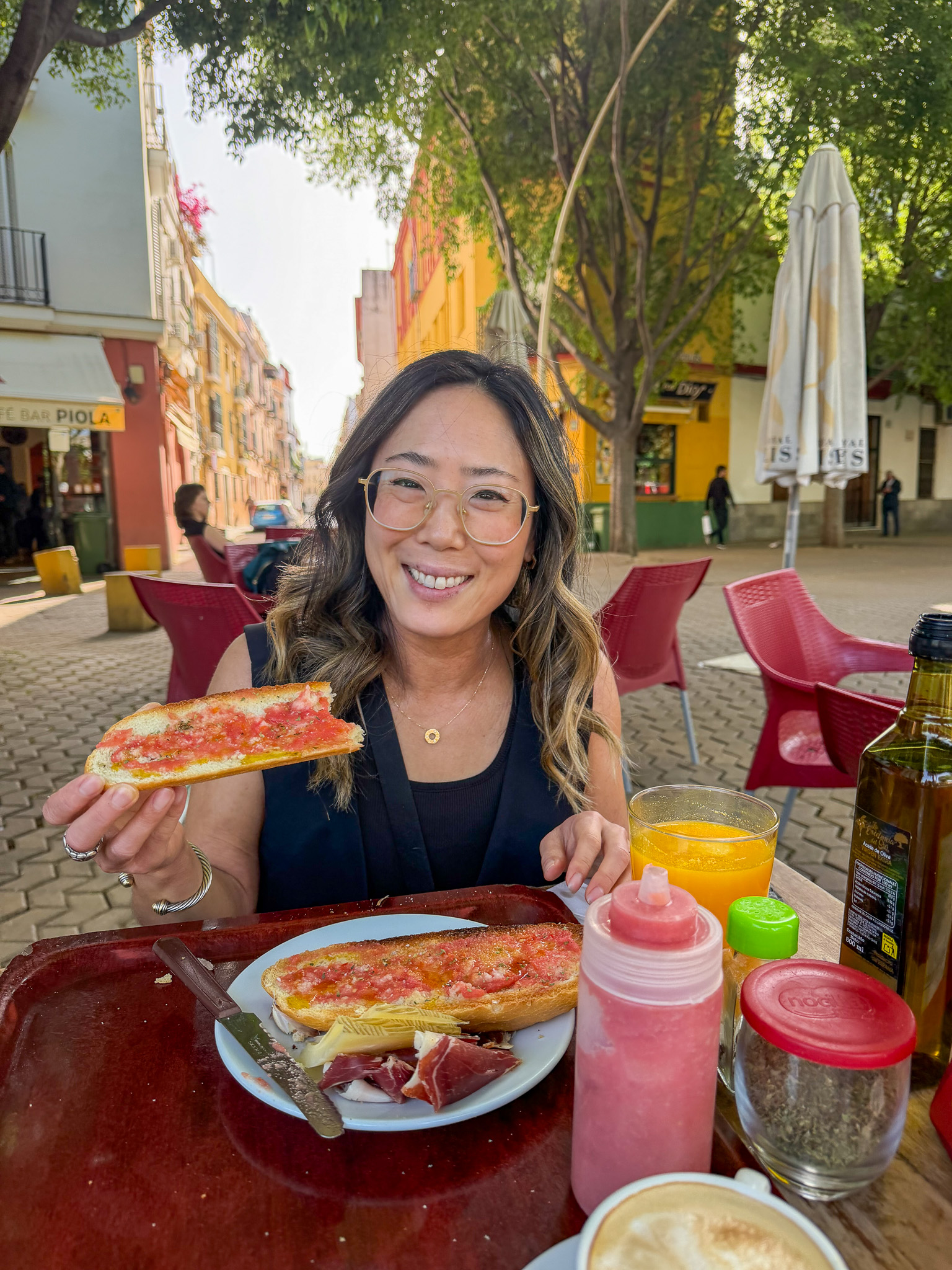
- Café Bar Piola — nice outdoor seating on the main walkway through Barrio Santa Cruz, with a fun DIY setup: choose your bread type and load your own toppings from the bar. We went classic — garlic, tomato, and olive oil. Relaxed pace, very local.
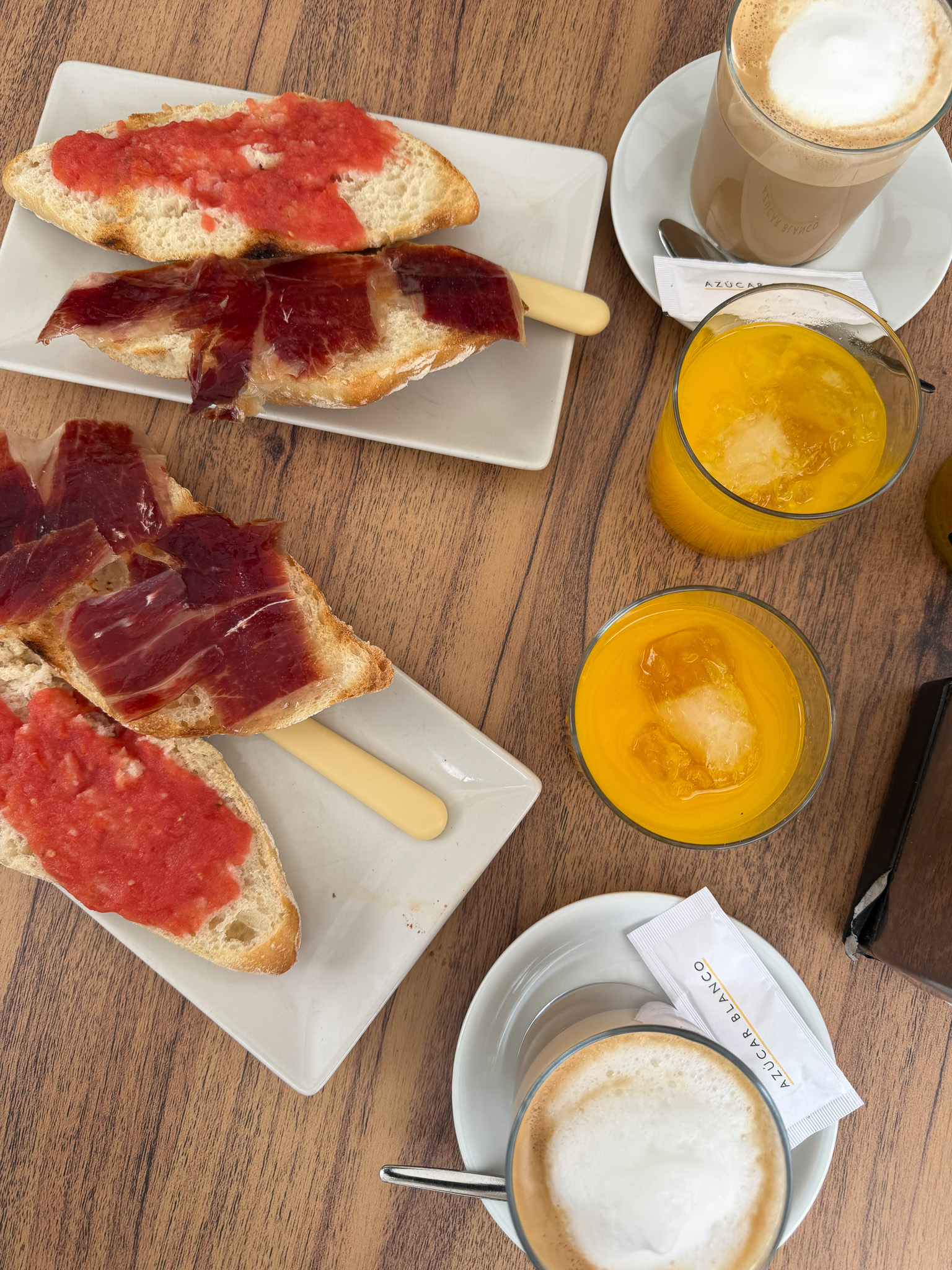
- Cruzcampo desde 1904 — a proper neighborhood bar with zero tourist energy. Tomato bread and jamón. Exactly what breakfast in Andalusia should be.
🥘 Tapas & Meals
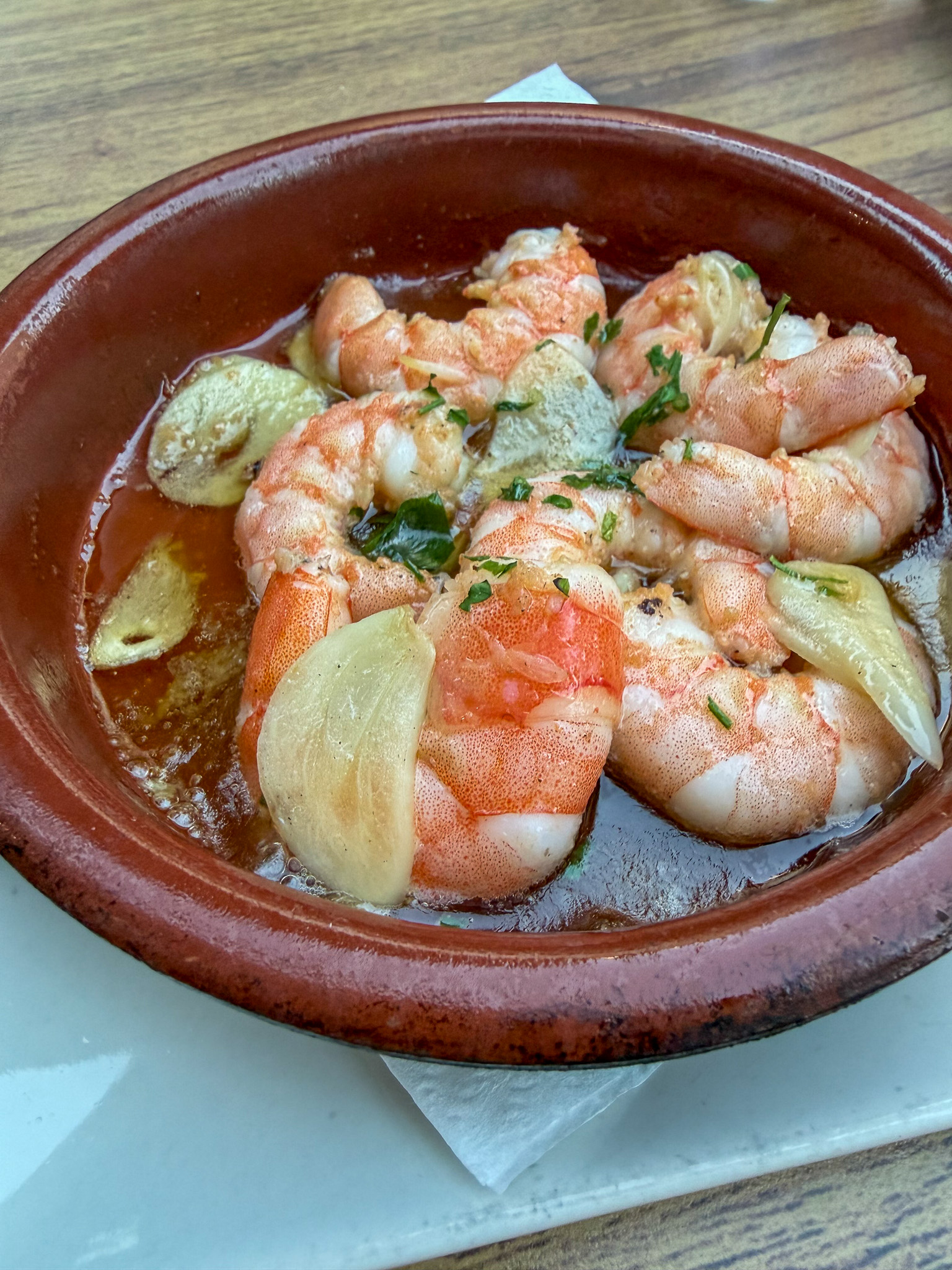
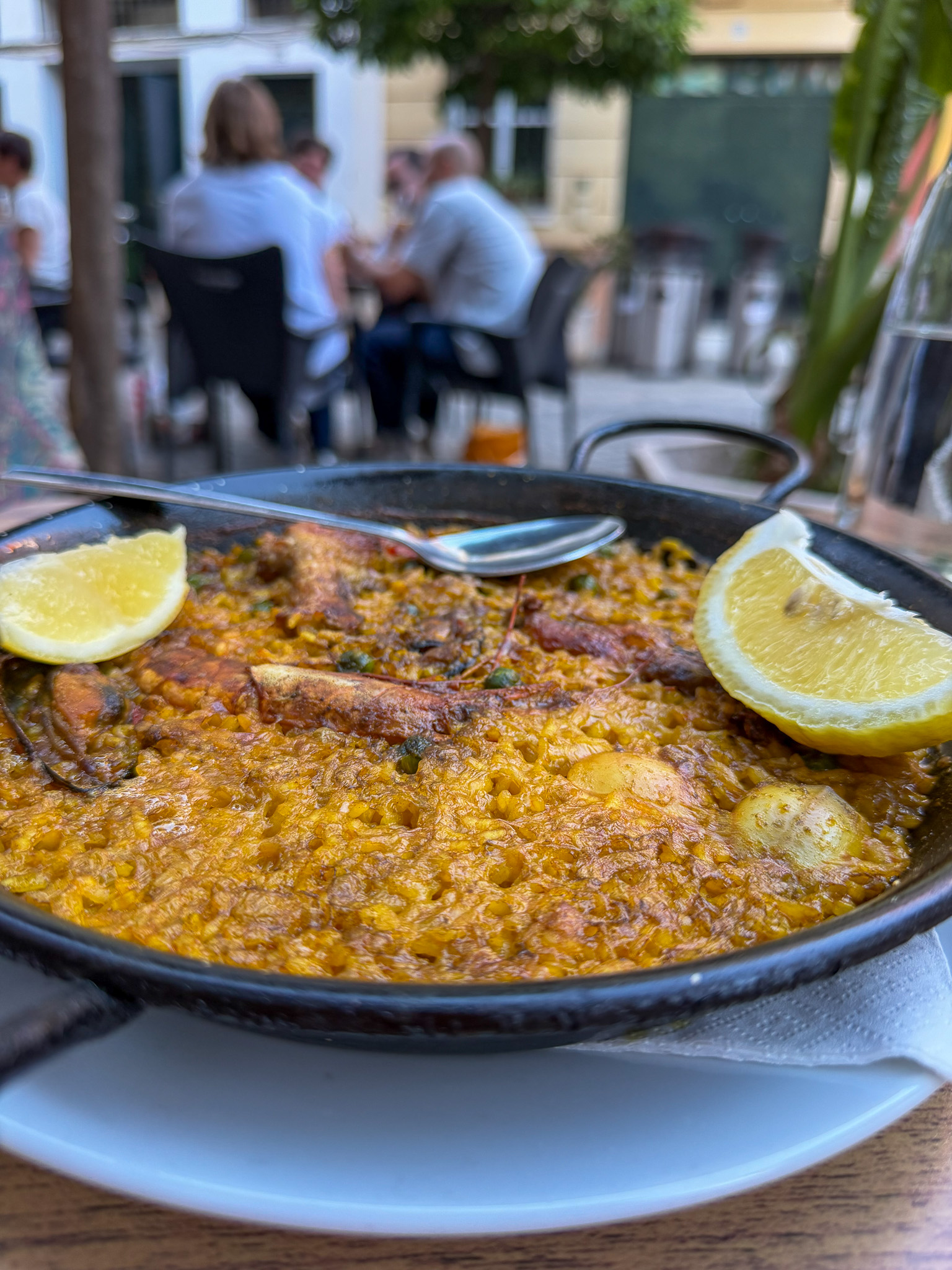
- Alcázar Andalusí Tapas — beautiful outdoor patio right near the Alcázar. Garlic prawns, eggplant (incredible — order it), and paella. The right move for a first dinner in the city. Sit outside if you can.
- El Rinconcillo — Seville’s oldest tavern. We had clams and pork loin, and the atmosphere alone is worth the visit. Standing bar area or a seated section — if you want a table, make a reservation.
- La Bartola — where we landed for lunch one day, and one of the best meals of the trip. Grilled baby squid and Iberian pork cheeks, both beautifully done.
- Malasaña Triana — over in Triana, and it feels like a neighborhood spot that happens to cook really well. Elevated without being fussy. The hot plate steak and patatas bravas were unbelievable.
- La Sacristía (street) — a street lined with little restaurants, perfect for an impromptu stop. Great sangria. The kind of lunch that ends up taking longer than you planned, in the best way.
🍦 Non-Negotiable
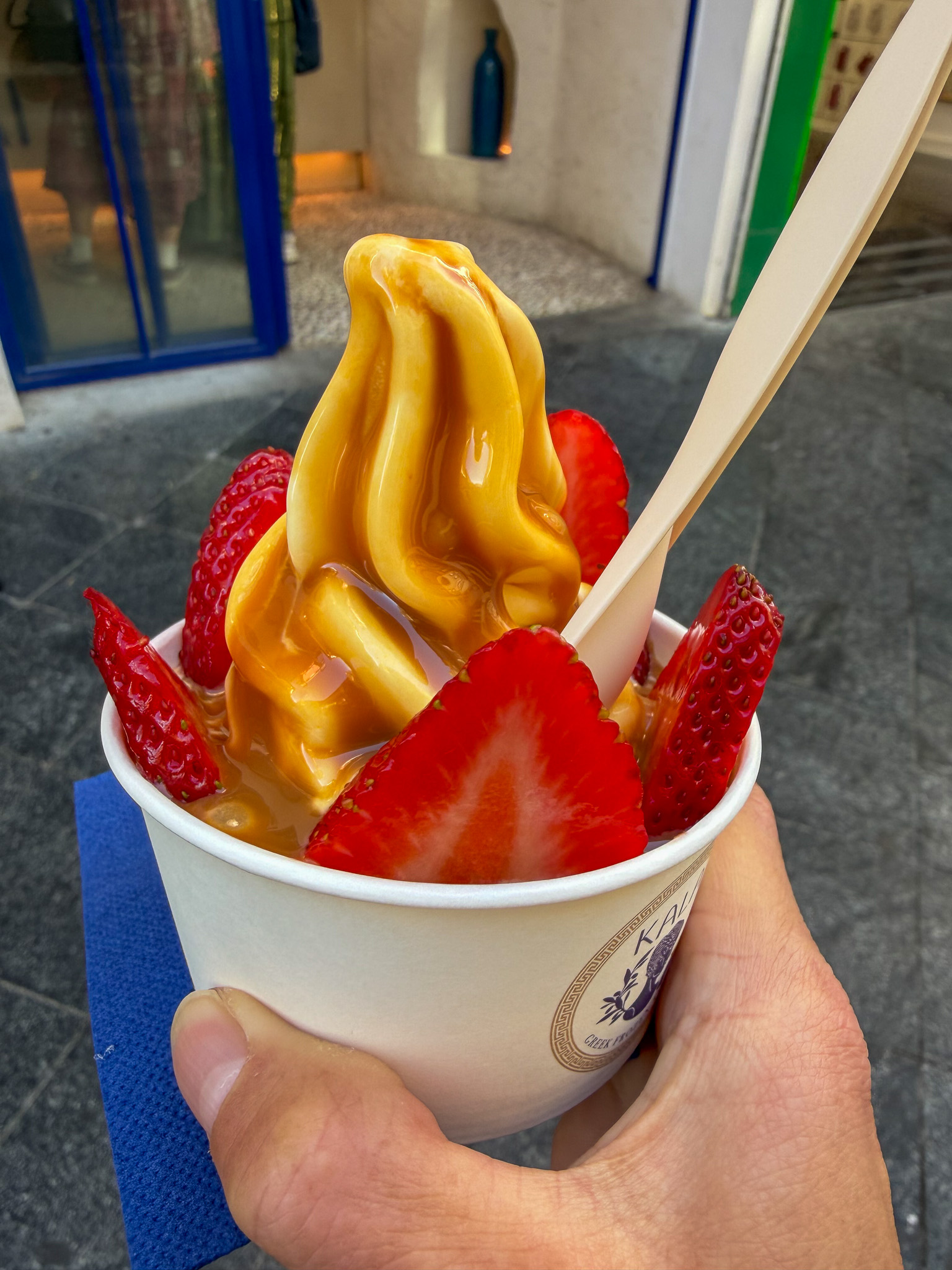
- KALA Greek Frozen Yogurt — we went every single day. The mixto (natural yogurt swirled with mango and coconut) is our standing recommendation, but if the dulce de leche is available when you visit, get it. It is heavenly. There are a couple of locations in the city — plan your walks accordingly.
Where to Shop
Seville is a genuinely good shopping city. The main pedestrian streets — Calle Tetuán and Calle Sierpes — running north from the Cathedral area are the place to start, with a mix of Spanish brands, boutiques, and specialty shops. Barrio Santa Cruz has more artisan and one-off shopping woven through the lanes. And going to the source for Spanish brands is part of the fun — better selection and generally easier on the wallet than shopping for them back in the US.
What to look for: espadrilles (Toni Pons is the brand), hand-painted flamenco fans, Andalusian ceramics and tiles, football kits for Sevilla FC or Real Betis, and Spanish fashion chains with much better selection than you’ll find outside of Spain.
Tips & Things to Know
🗓️ Book the Alcázar and Cathedral early — very early. Four weeks out wasn’t enough for the Cathedral. Do this the moment you book your trip. Alcázar: alcazarsevilla.org | Cathedral: catedraldesevilla.es.
🚶 Walking is often faster than waiting for a ride. The historic center is compact, but the one-way streets make Ubers and taxis take longer routes than you’d expect. For most destinations within the old town, your feet will get you there quicker.
🅿️ Driving in? Don’t try to park in the historic center. Leave your car at a car park on the edge of the old town and walk from there. Navigating the narrow one-way streets with nowhere to park is not worth the stress.
🌡️ Seville gets hot — seriously hot. In summer, temperatures regularly hit 40°C (104°F). Spring and autumn are the sweet spots for visiting. We were there in early April and it was perfect.
👟 Wear comfortable shoes. You will walk a lot on cobblestones. This is not the trip for new shoes.
💬 A little Spanish goes a long way. While you’ll get by fine in the tourist areas, venturing into local spots with even basic Spanish is genuinely appreciated — especially at the breakfast bars.
Final Thoughts
Three days in Seville goes fast. We left wishing we had one more. The combination of the architecture, the food, the energy of the streets, and a few genuinely unexpected moments made it one of the most memorable trips we’ve taken since moving to Europe.
If you’re based in or passing through Portugal and looking for a Spanish city to make the drive for, Seville is the one. Close enough to feel accessible, different enough to feel like a real trip.
Have questions about the trip or want more detail on any of the above? Drop them in the comments.




Leave a Reply