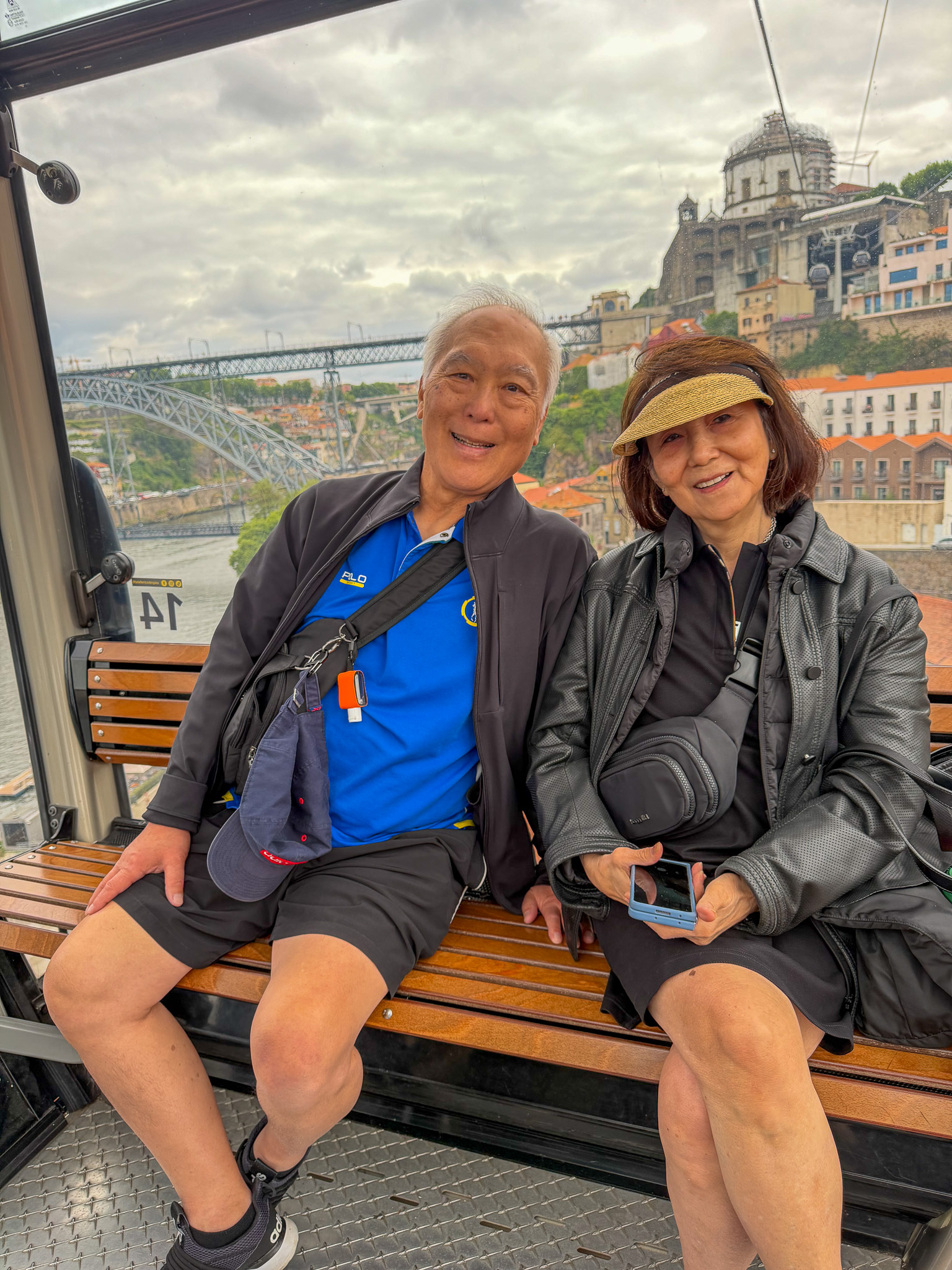
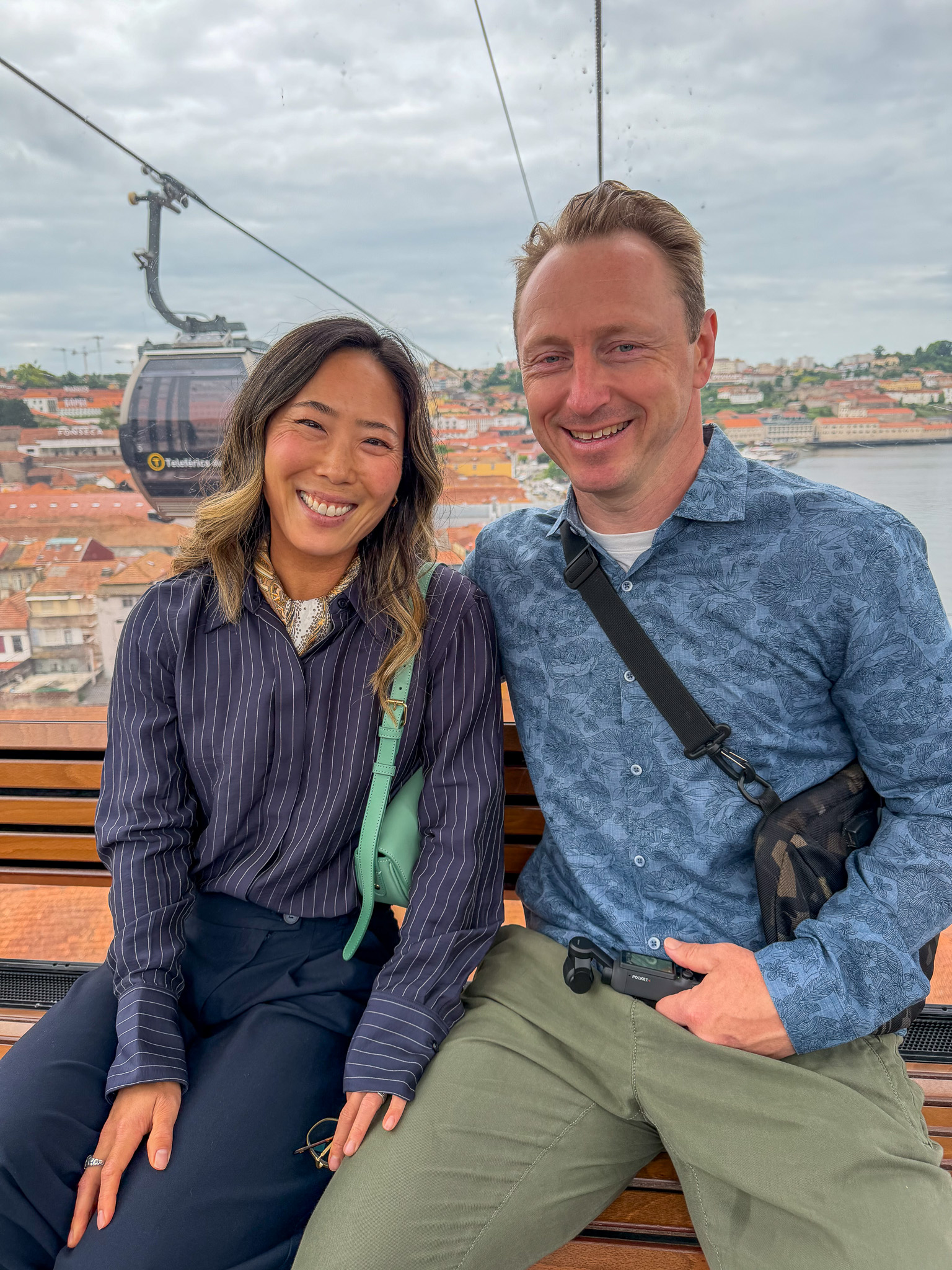
My parents visited Porto for the first time — four days, both in their mid-70s, my dad with chronic back pain and limited mobility. We’ve been living here for over a year, and I wanted to get it right: some of the must-see sights, but also a real sense of the city we’ve fallen in love with. Here’s the full itinerary, what worked, what we called audibles on, and a few helpful tips if you’re traveling with anyone who has mobility issues.
Logistics Worth Knowing
- We rented a car for the last two days and it was one of the best decisions of the trip — especially for covering more ground and doing a day trip to Guimarães and Braga without a lot of walking.
- Uber works extremely well in Porto. We used it whenever a destination was too far or my dad had already done enough on foot for the day.
- We booked a few restaurants in advance but otherwise went with the flow, reading how everyone was feeling. We also had to adapt around a special police event on Apr 30 and Labor Day (May 1) closures — cafés near tourist areas stayed open but a lot of shops and smaller spots were closed. Worth checking if there are any major local events or public holidays around your travel dates before you finalize plans.
- Weather in Porto changes fast. Even in spring, you can get full sun, cool wind, and a brief downpour all in the same afternoon. Layers and a light rain jacket are genuinely useful — not just precautionary.
💡 Two money tips worth knowing:
- When using an ATM, look for a Multibanco machine and avoid Euronet — the fees and rates are much worse. You can search “Multibanco ATM” in Google Maps to find the closest one. ➡️ We made a quick video on this if you want the full breakdown.
- When paying by card anywhere, always choose to pay in euros and decline the conversion to your home currency. The merchant’s conversion rate is almost always worse.
Day 1 · Thursday
Porto views + our neighborhood
Morning — Lower City
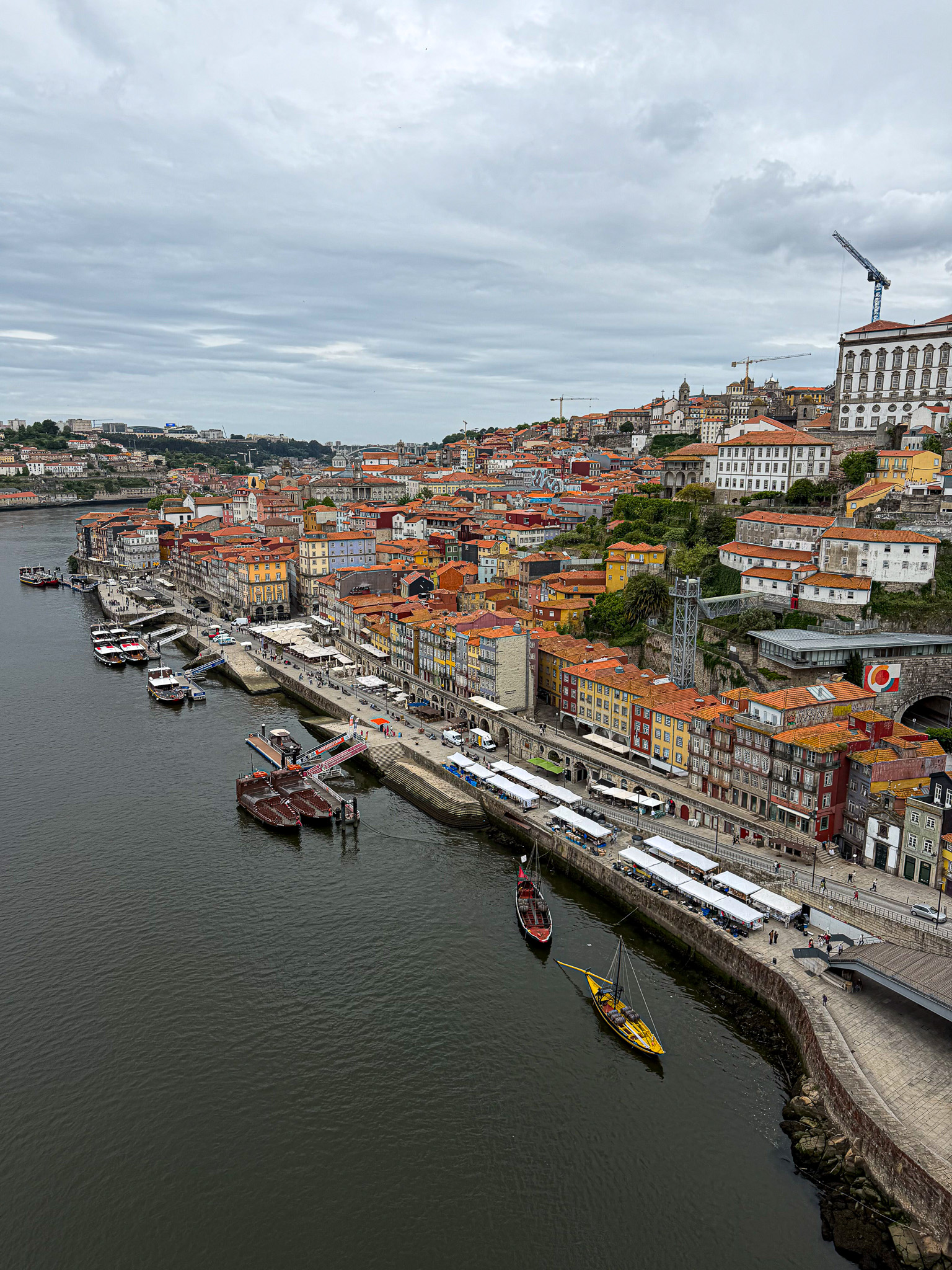
My parents stayed at Sé Cathedral Hotel — central, quiet at night, contemporary rooms with a coffee machine, and a good size. We walked over every morning and started each day from there.
We’d originally planned to start at the Porto Cathedral, but there was a special police event happening and it wasn’t accessible. We saved it for the next morning instead.
Dom Luís I Bridge
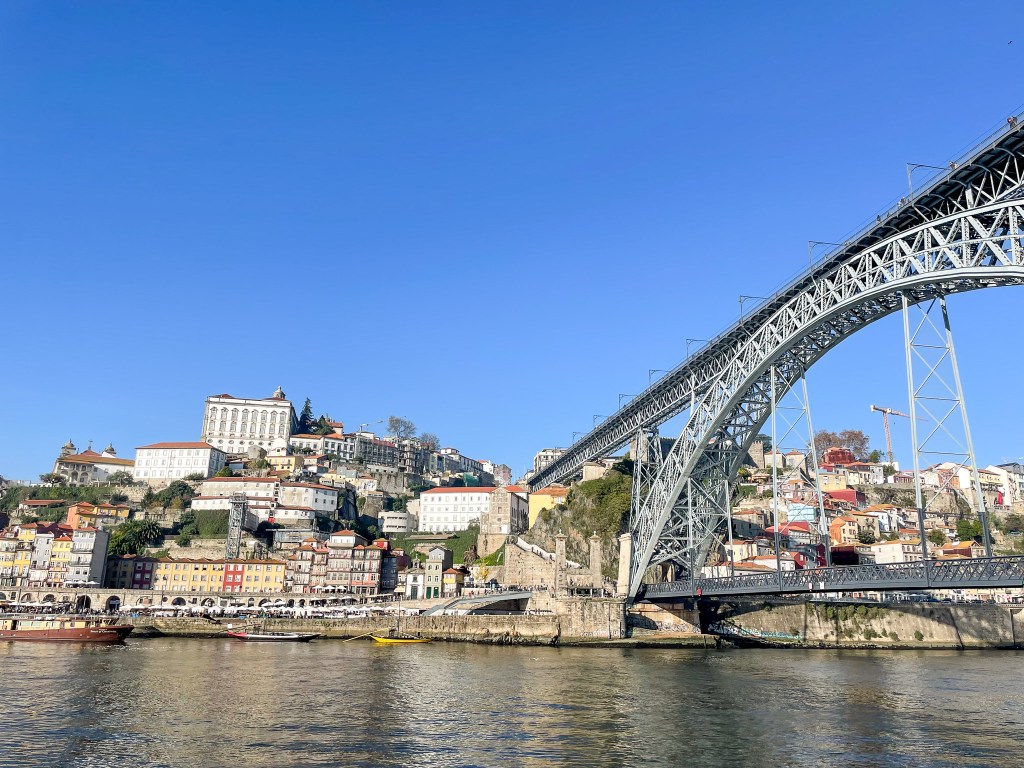
We crossed the upper deck into Gaia. It’s flat, the views over the Douro are stunning, and it’s completely free. My dad, a former commercial architect, was immediately drawn into the structure — the double-deck design, the iron arch, the way it reads as both engineering and sculpture. Built in 1886 and designed by Théophile Seyrig (a former partner of Gustave Eiffel — yes, that Eiffel), it was one of the longest iron arch bridges in the world when it was completed. The resemblance to Eiffel’s work isn’t a coincidence; Seyrig actually submitted the winning design in direct competition with his old collaborator. For someone who spent a career thinking about how structures are built, it’s a lot to take in.
Funicular dos Guindais
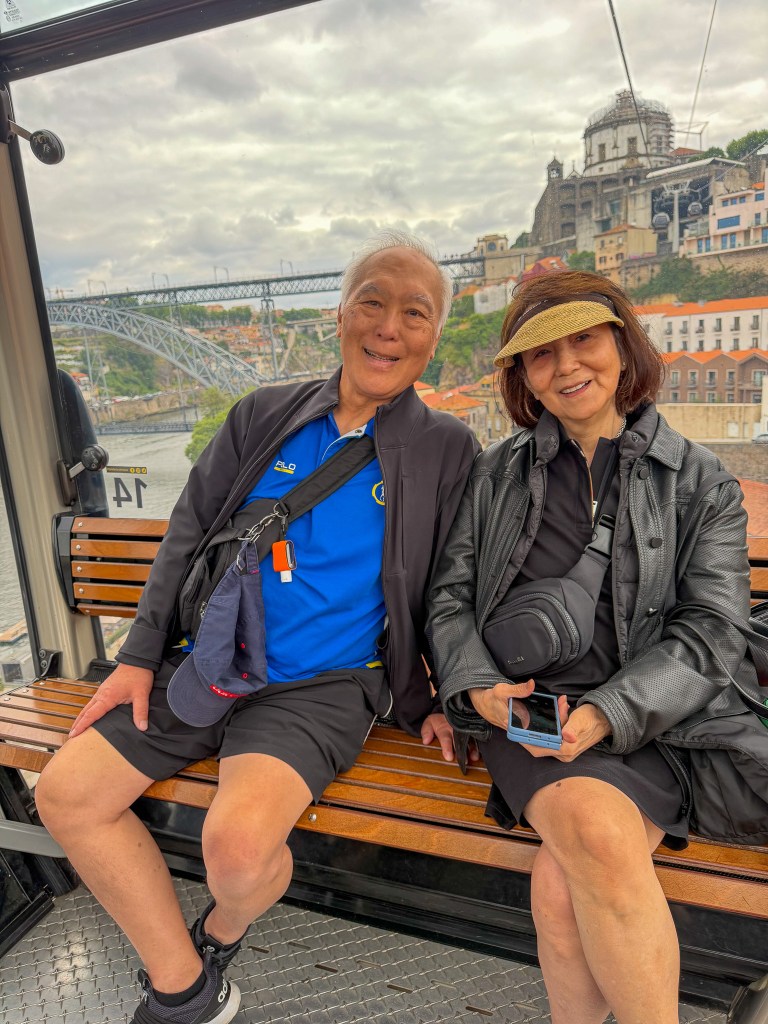
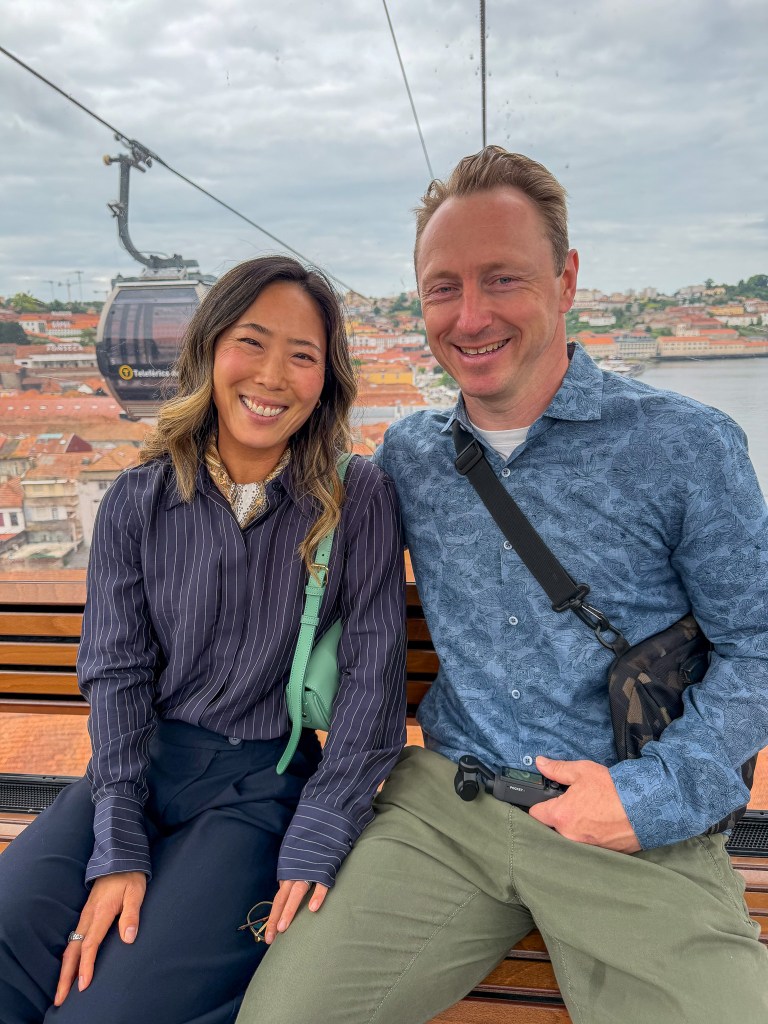
We’d been looking for a local bakery but ended up in a touristy stretch, so we hopped on the funicular to head to the Mercado Beira-Rio. The original line dates to 1891 — built to solve Porto’s eternally steep hills — though it closed after an accident just two years later and didn’t reopen until 2004. The current ride is only a few minutes, but the perspective it gives as you descend — tiled rooftops, port lodges, the Douro below — is really special. My parents both loved it.
Natas D’Ouro + Mercado Beira-Rio
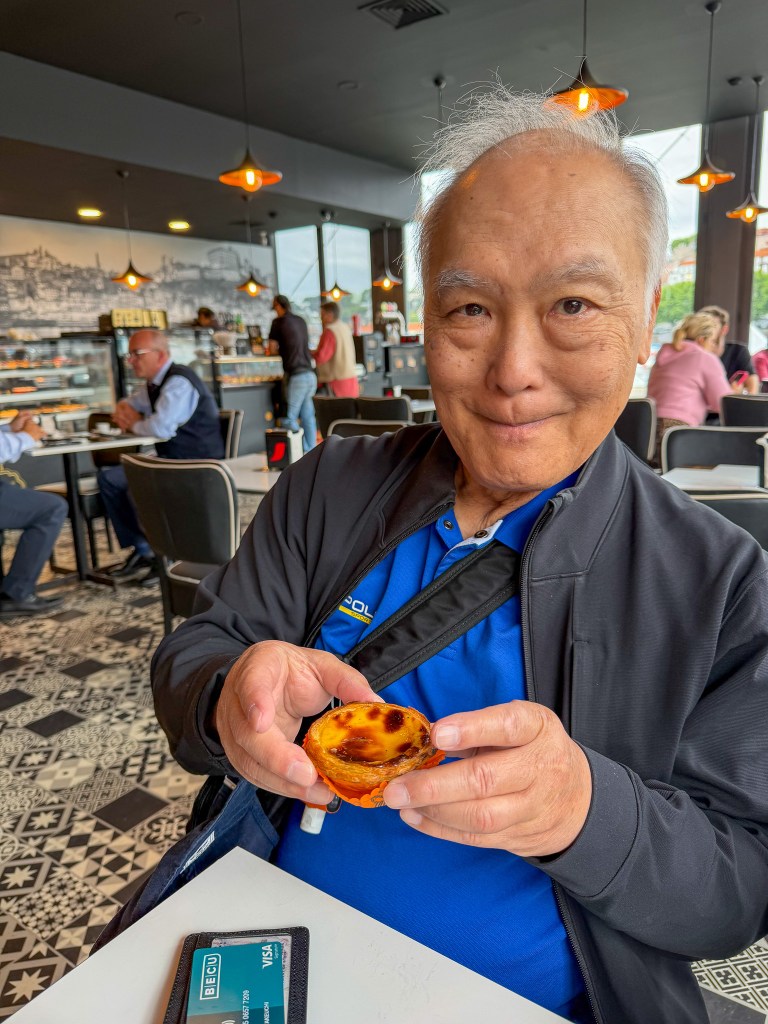
The Mercado wasn’t open yet when we arrived, so we grabbed pastéis de nata at Natas D’Ouro, a tip from our favorite wine tour guide. Unlike the city’s historic pastelarias — some of which date back to the 1800s — this is a contemporary concept with an innovative take: flavored natas. Port wine, orange, caipirinha, chocolate. We got an original and a port-flavored one. We walked through the Mercado afterward to show my parents the food stalls and let them see the prices on fresh fruit.
Half Rabbit + The Fantastic World of Portuguese Sardines
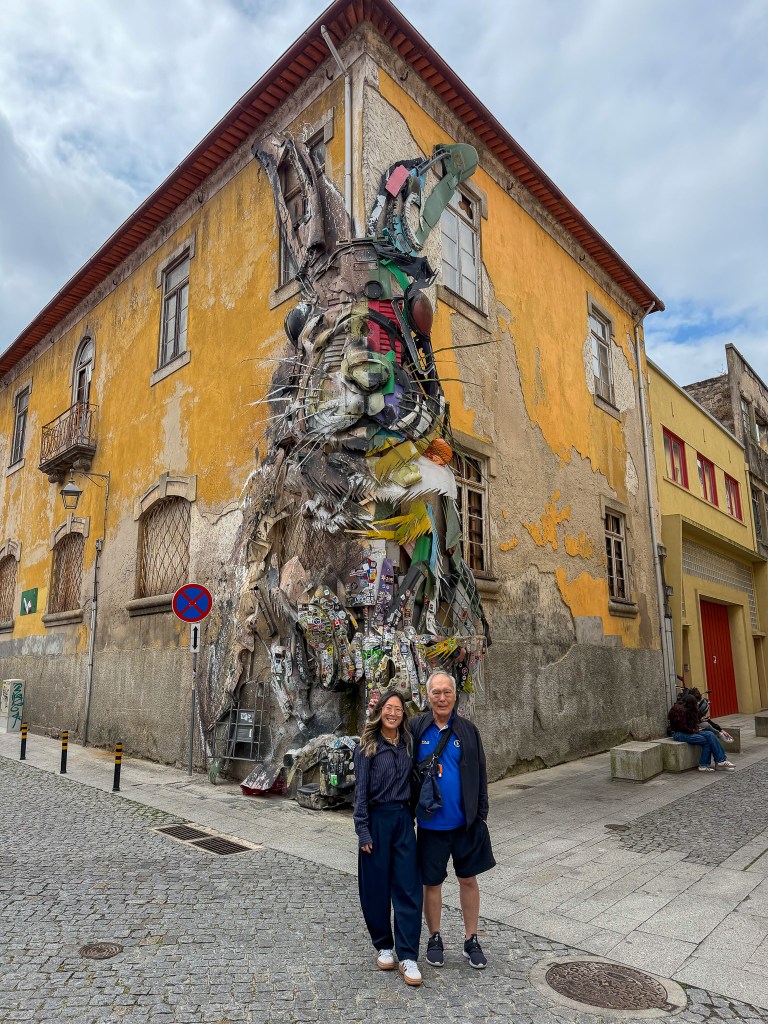
The Half Rabbit is a massive sculpture on a street corner among the port lodges — the work of Portuguese artist Bordalo II (Artur Bordalo), who has been creating large-scale animal sculptures from recycled materials and urban trash since 2012 as a statement on ecological wastefulness. Half of the rabbit is painted in vivid color; the other half is left in the raw tones of the scrap metal, street signs, and plastic containers it’s made from — which is where the name comes from. It’s striking in a way that a photo doesn’t fully capture. My mom was completely in love with it. Nearby, we spotted a local woman cleaning fish and carrying them in a large basket balanced on her head — one of those quietly remarkable sights. We also stopped into The Fantastic World of Portuguese Sardines, which is touristy but worth a quick look. My mom sampled smoked sardines and immediately loved them.
Midday — Gaia
Vinum at Graham’s Lodge
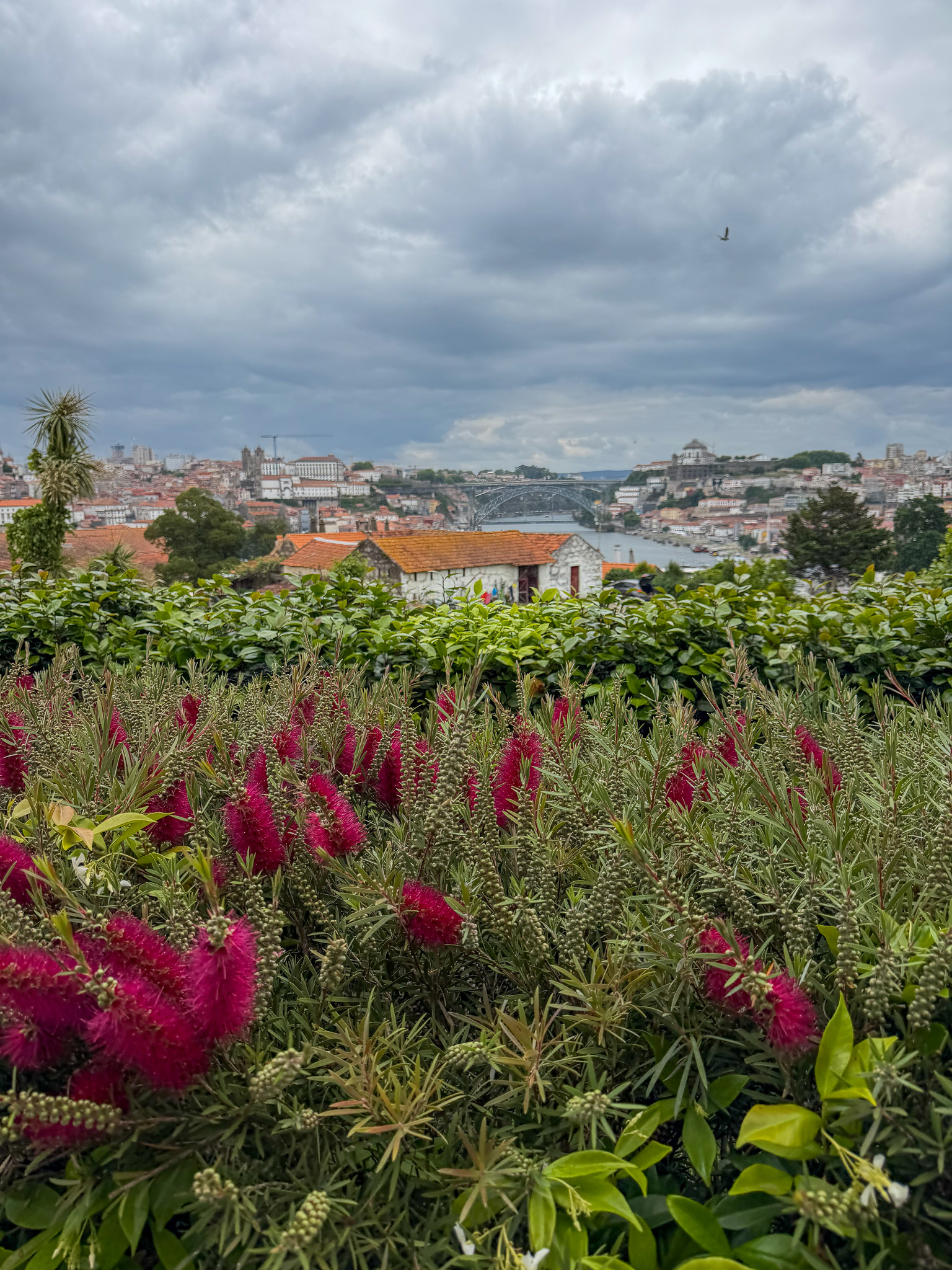
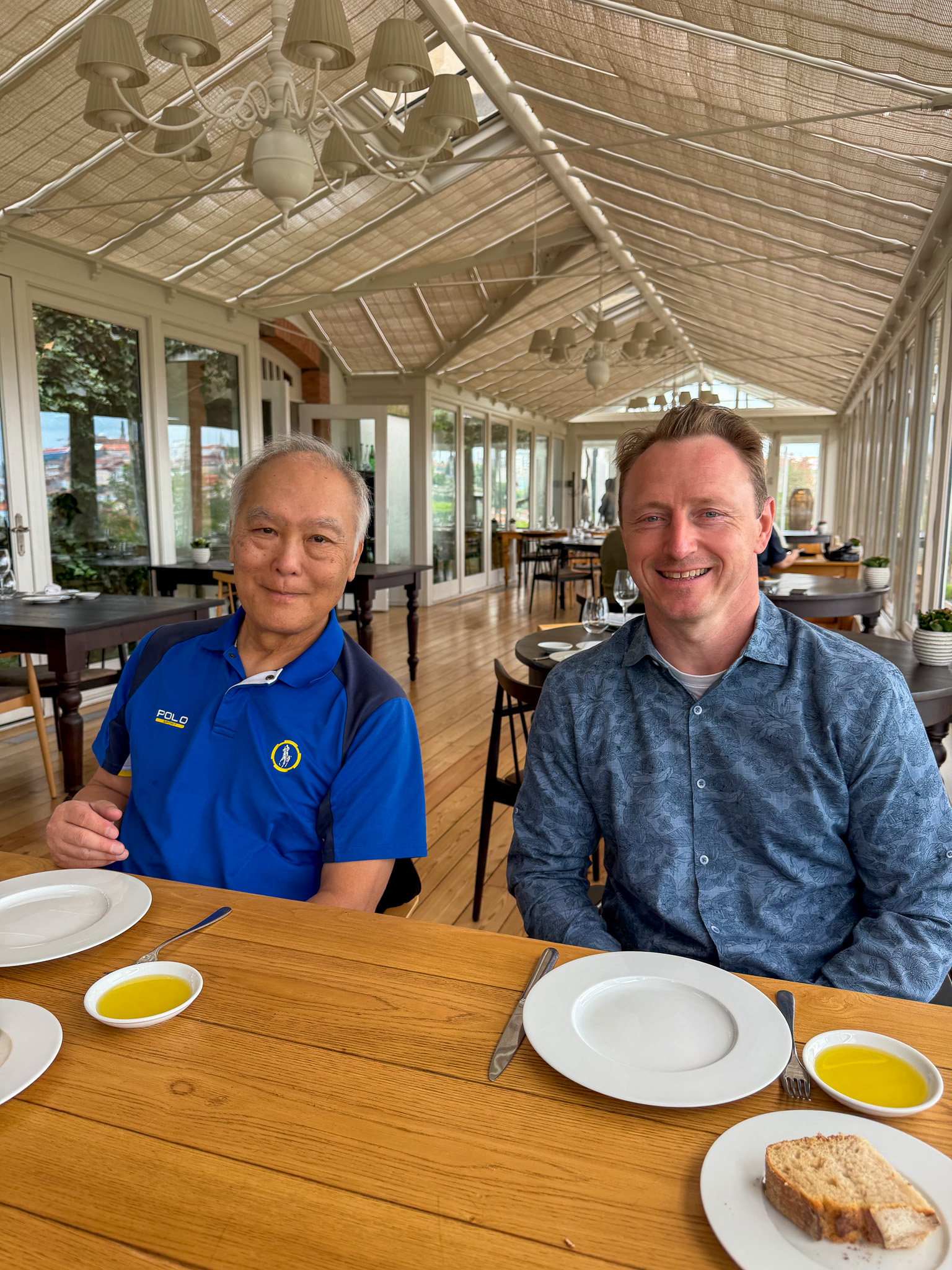
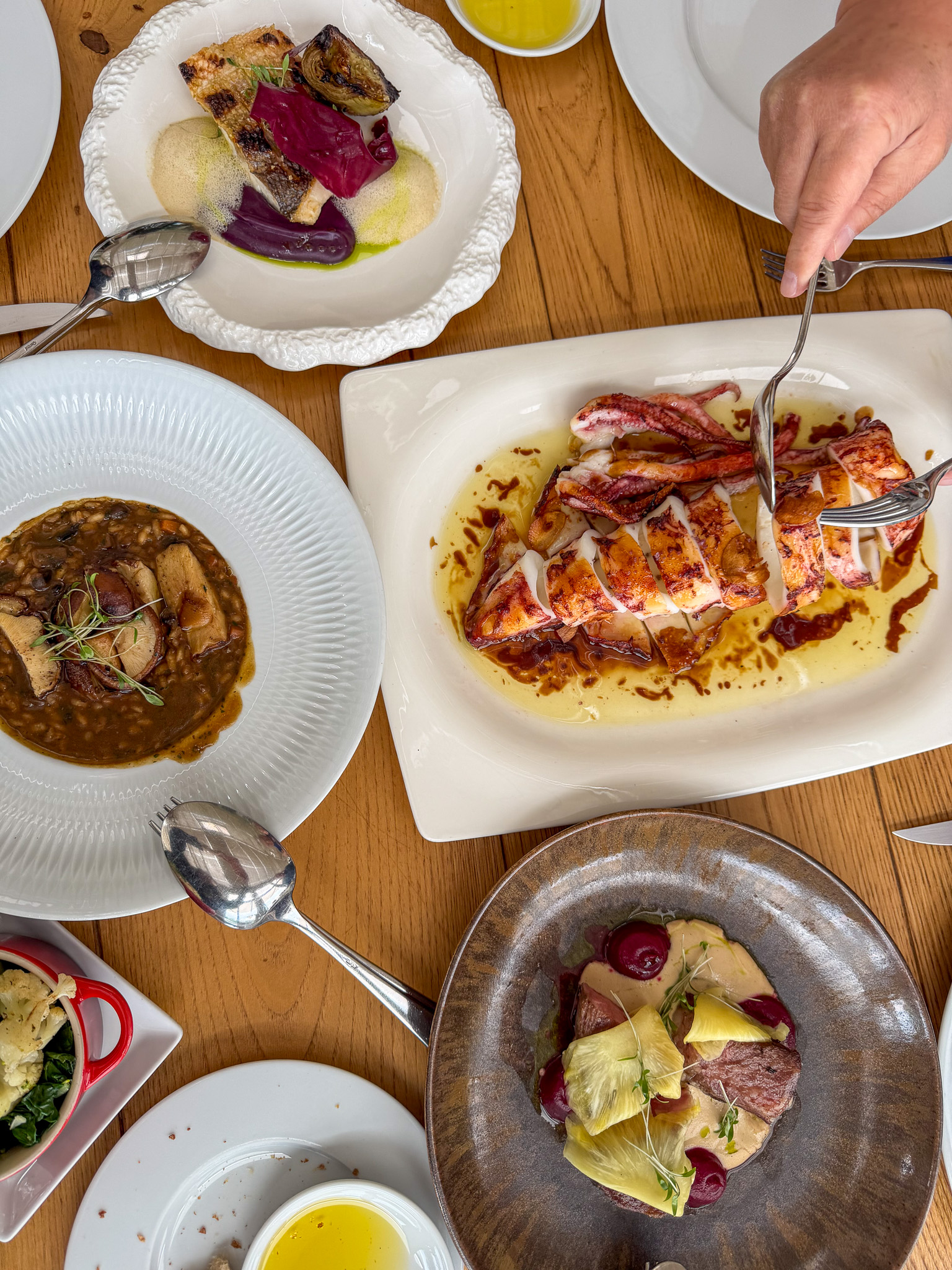
We booked lunch here for the Douro views and the Porto skyline — it does not disappoint. Since neither of my parents drink, it was also a great way to visit one of the major historical port lodges without doing a tasting. They are known for their grilled items, so we ordered grilled squid that had been caught that morning (huge, flavor incredible), mushroom rice (more like a stew than expected), and Iberian pork. The squid was the surprise standout.
Afternoon — Miguel Bombarda
We came back to our apartment so my parents could see where we live and say hi to our pup, Matcha, take a breather, and have tea. They were genuinely surprised by how much private outdoor space we have — front and back — and by the character of the detached unit. Sometimes showing people where you actually live is the best part of a visit.
Cork Matters
One of our favorite shops in the neighborhood — a design shop entirely dedicated to cork: art, furniture, sustainable housewares. Carlos, one of the designers, is warm and incredibly knowledgeable. He walked us through where the cork is sourced, how it’s produced, and their studio. My parents, both lovers of architecture and design, were absorbed, and trying to figure out how to bring back one of the wall arts.
➡️ Miguel Bombarda has wonderful shops, cafés, and art galleries all along the street — easy to make a full afternoon of it.
Jardins do Palácio de Cristal
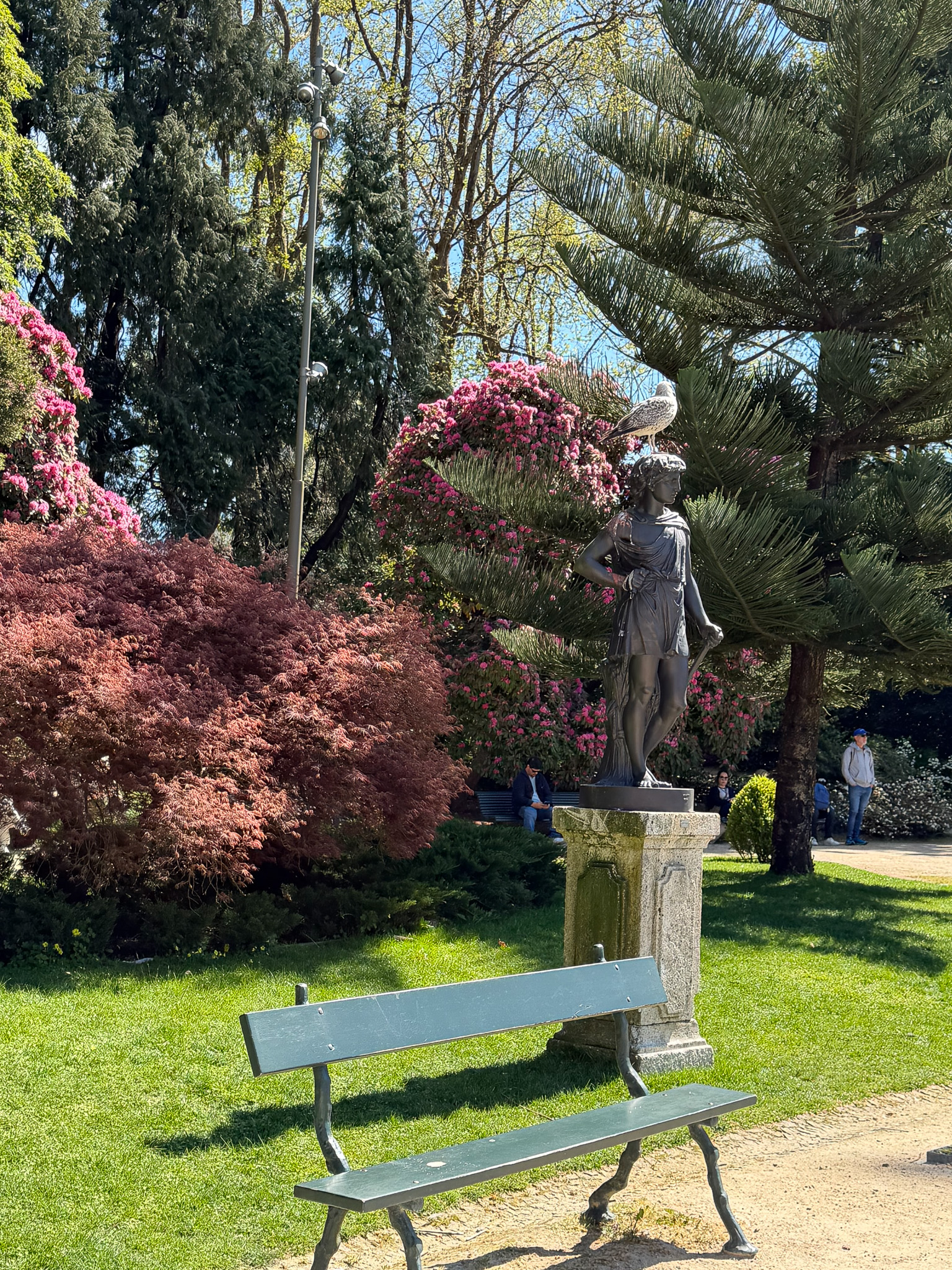
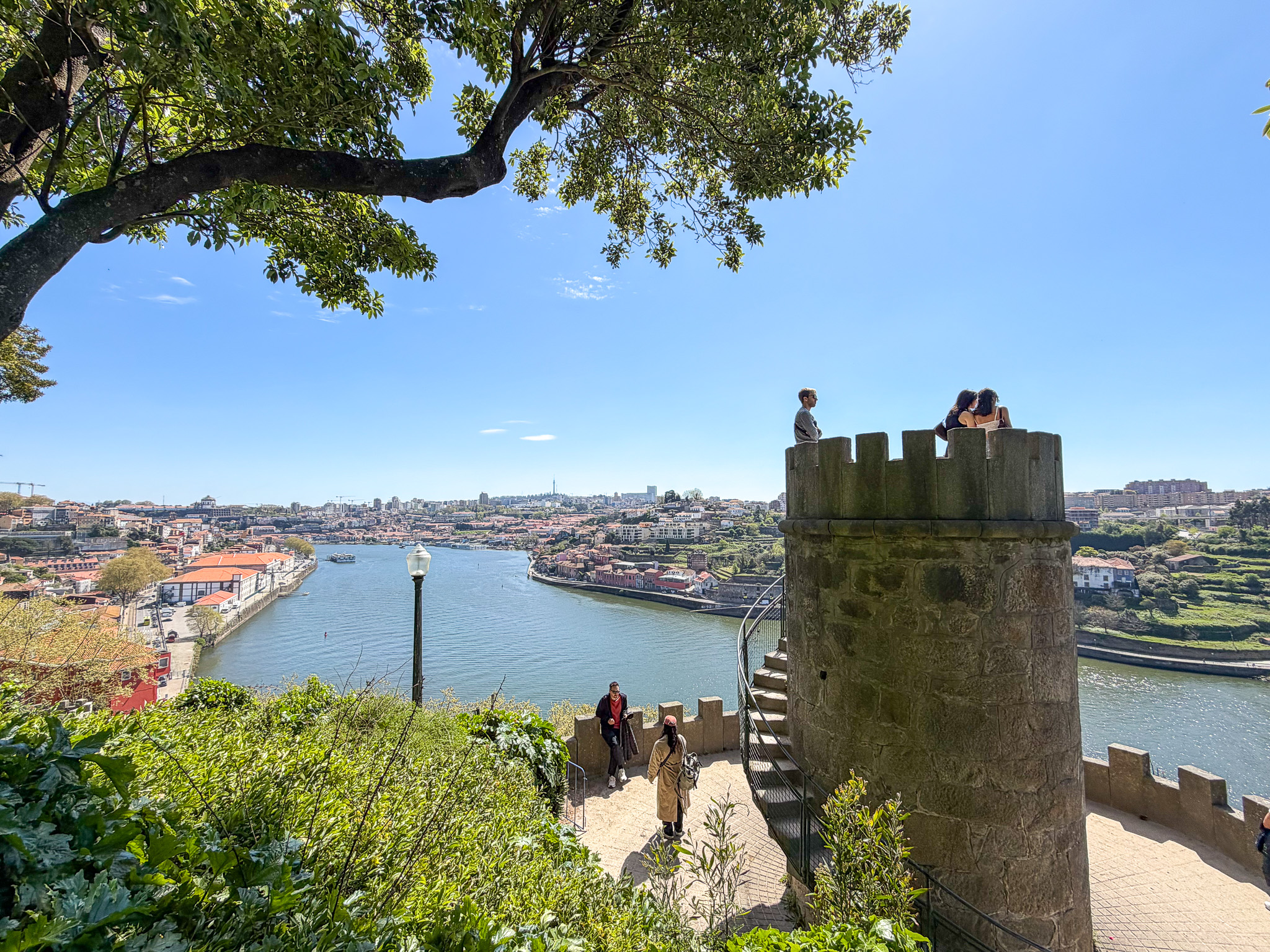
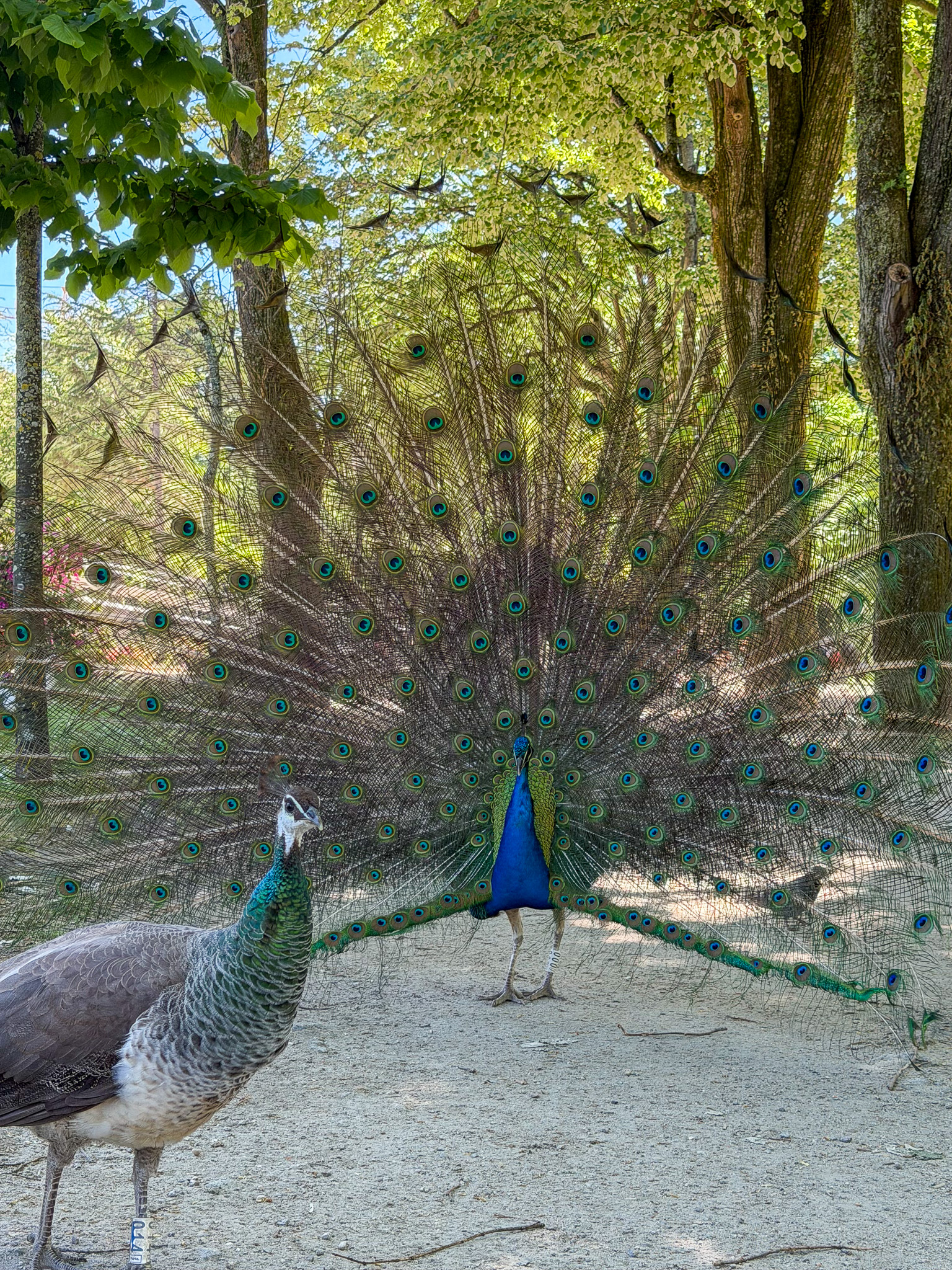
Five minutes from Miguel Bombarda, mostly flat paths, peacocks roaming freely, and Douro views from the main lookout. The gardens surround a 19th-century pavilion — the original crystal-and-iron structure was replaced in the 1950s with the current domed arena, though the name stuck — and spread across a hillside with multiple viewpoints at different elevations. My dad didn’t want to walk much so we kept it short and just did the main lookout. There’s also an incredible tower with a whole separate set of river views if you have more time — worth it if your group has the energy.
Dinner — Armazém do Peixe
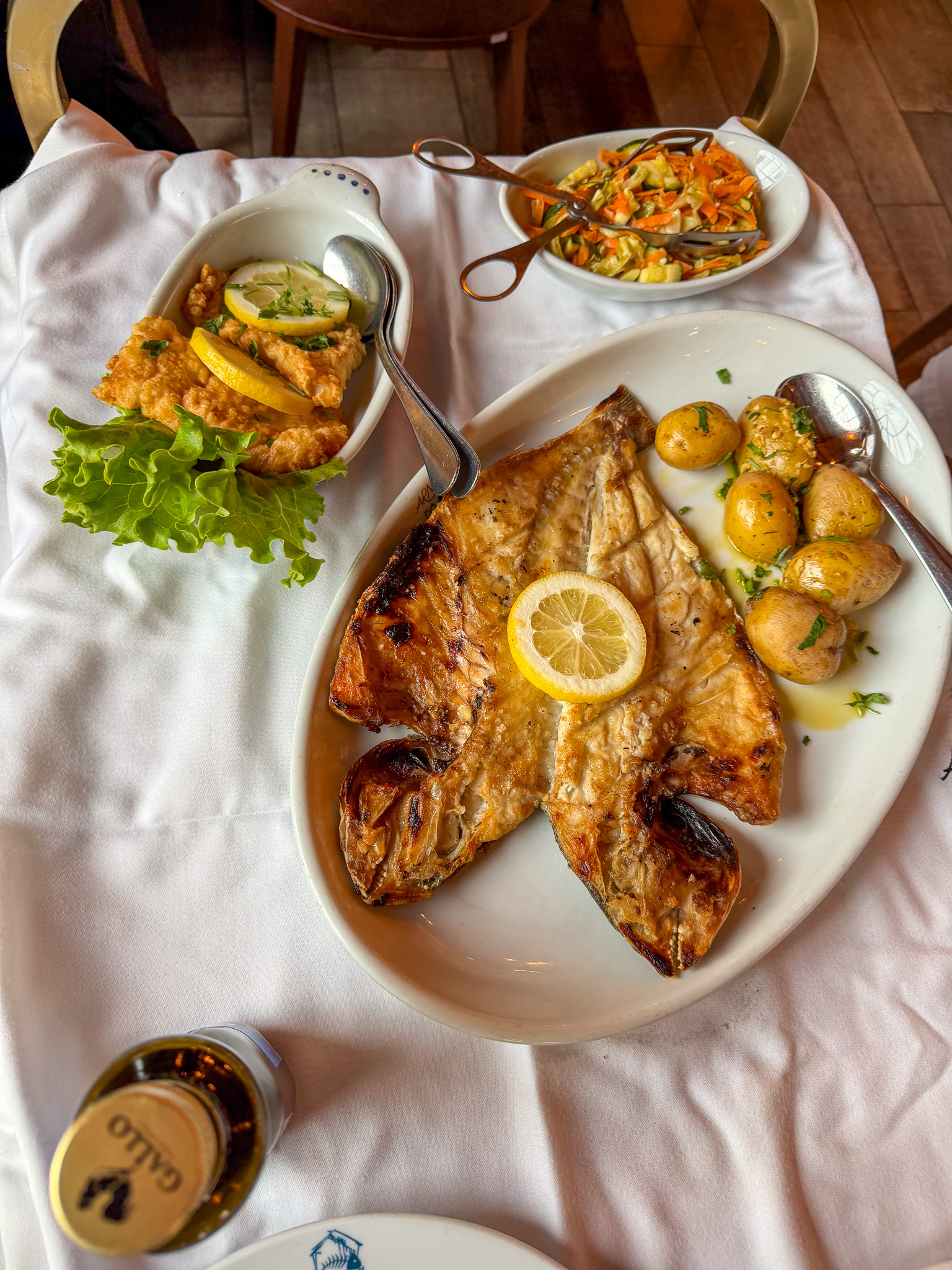
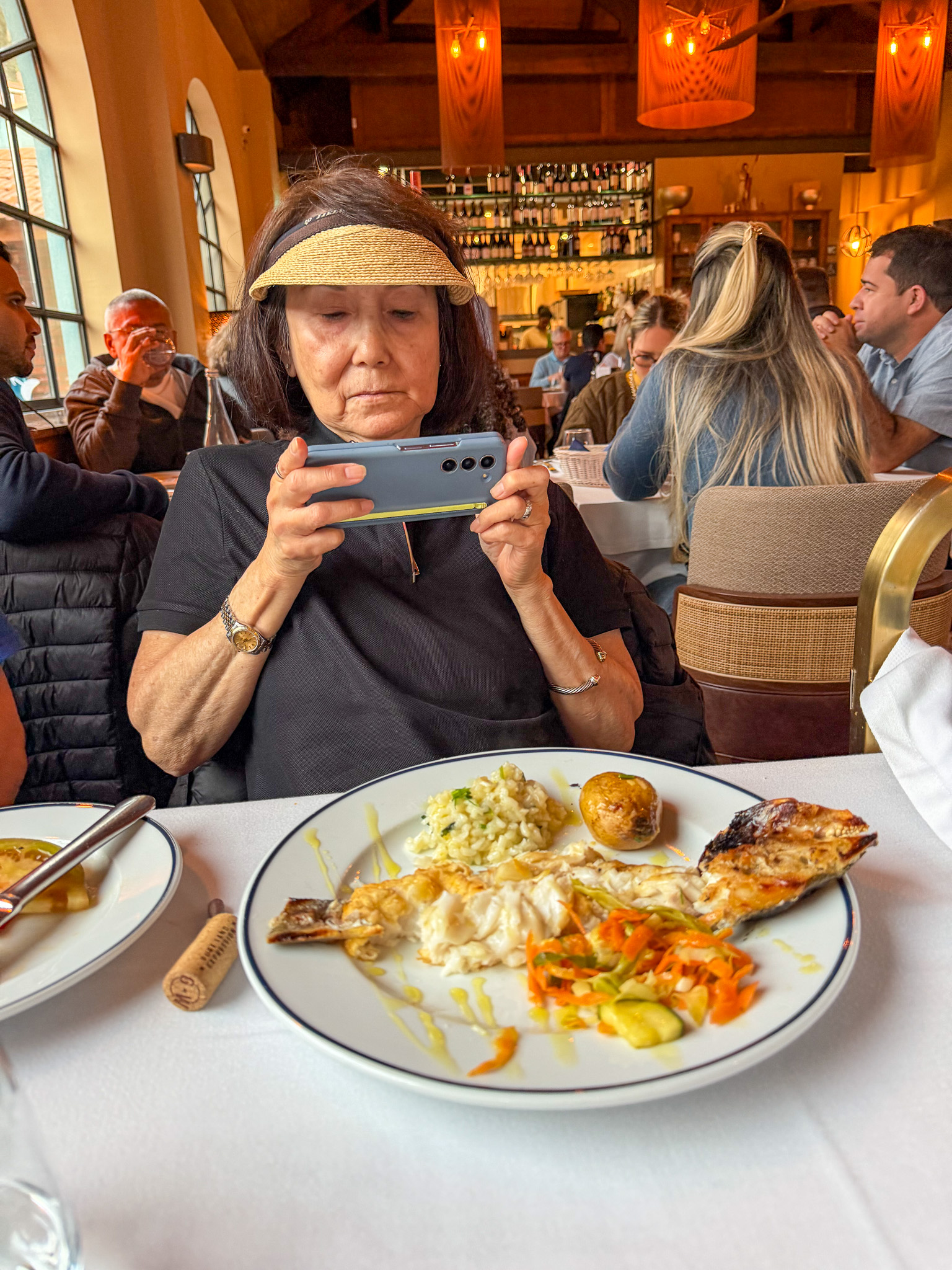
A riverside fish restaurant and one of our go-tos for first-night dinners — unpretentious, very Porto, and reliable. The highlights were freshly caught grilled sea bream with potatoes and sautéed vegetables, and clam rice. We walked through the neighborhood after, which is dotted with local restaurants and houses covered in beautiful, unique tiles.
Day 2 · Friday (Public Holiday)
Central Porto + Matosinhos
Labor Day meant most shops were closed, so we leaned into outdoor and coastal options. It worked out better than the original plan.
Porto Cathedral (Sé do Porto)
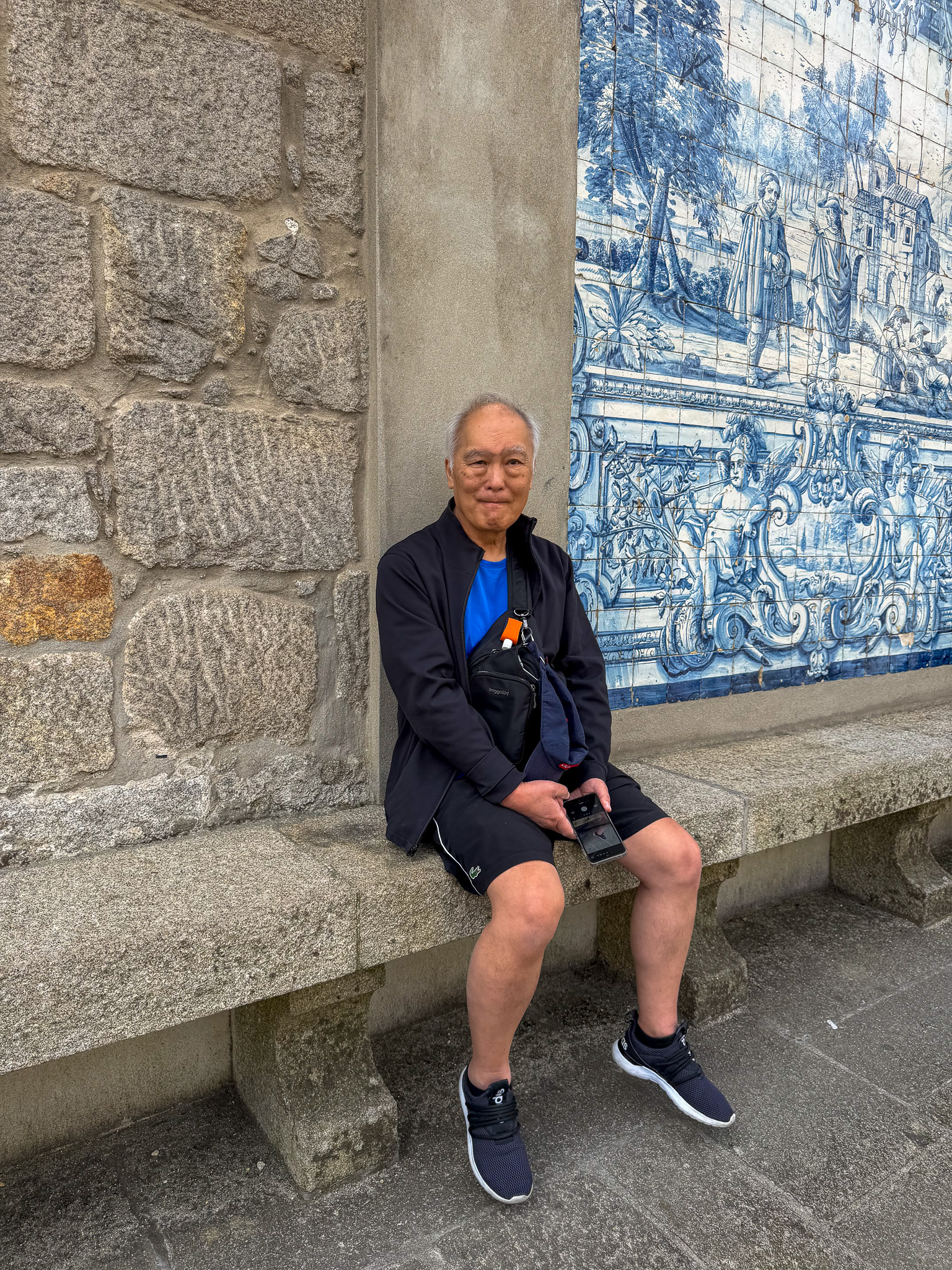
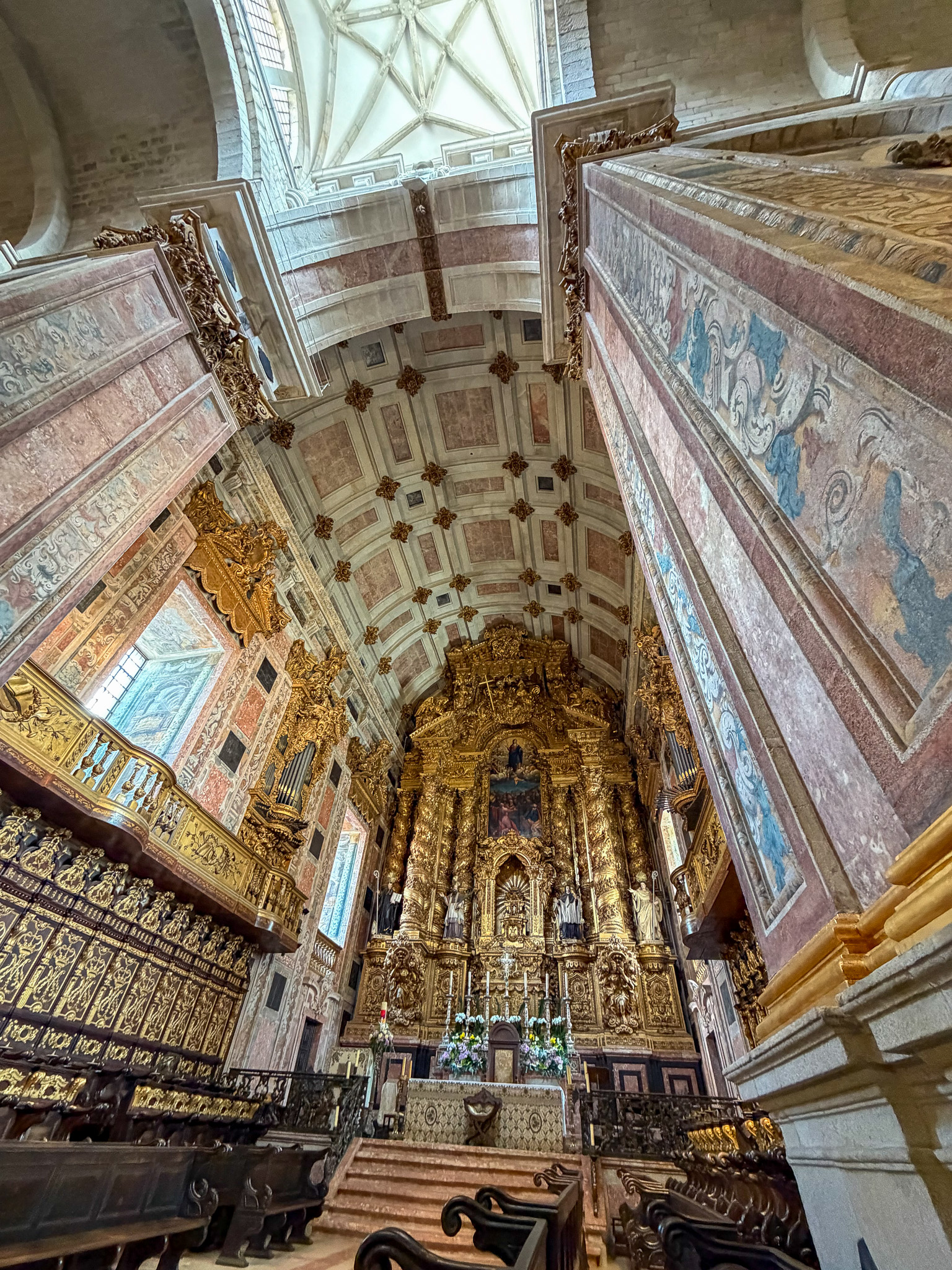
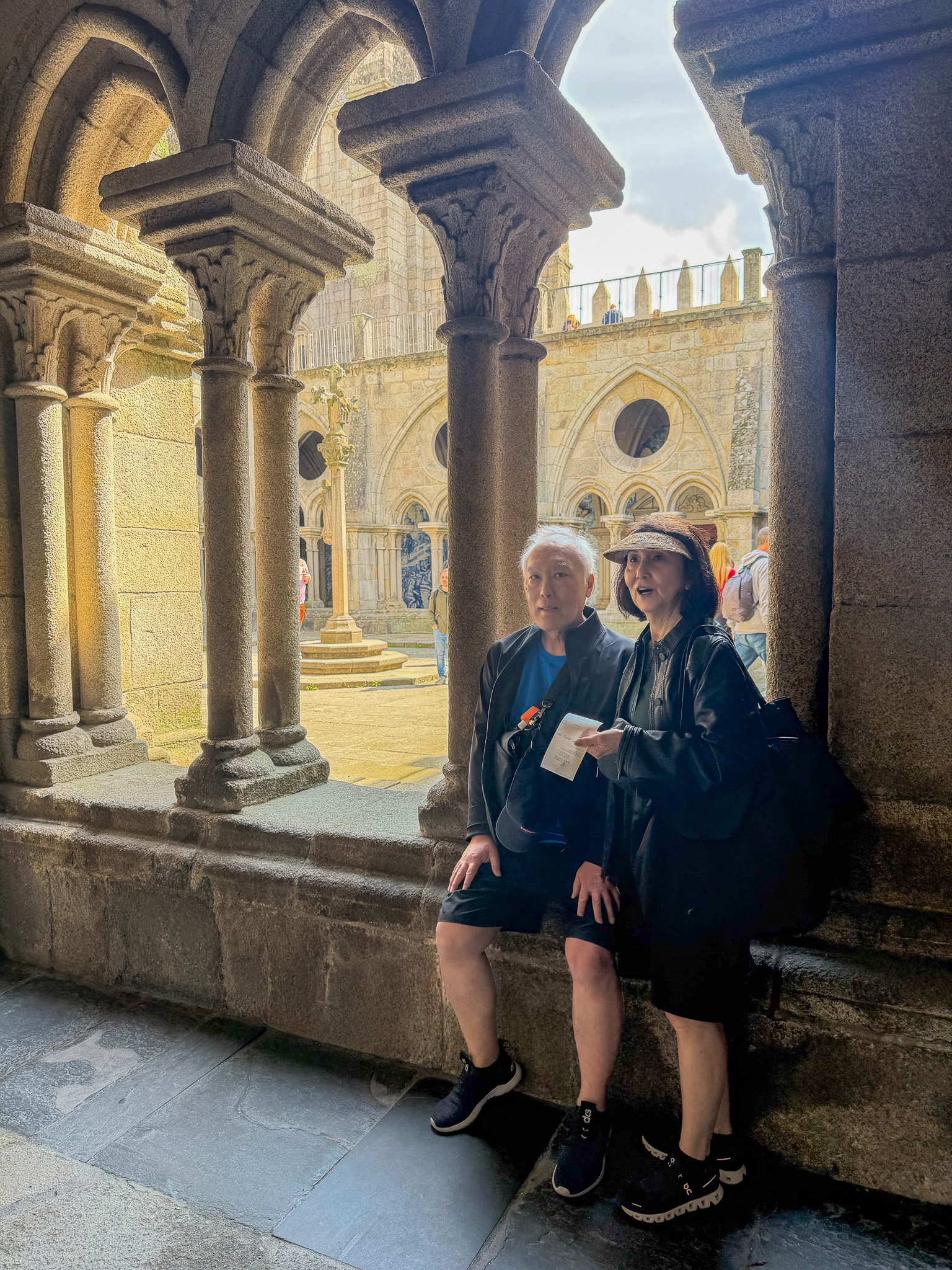
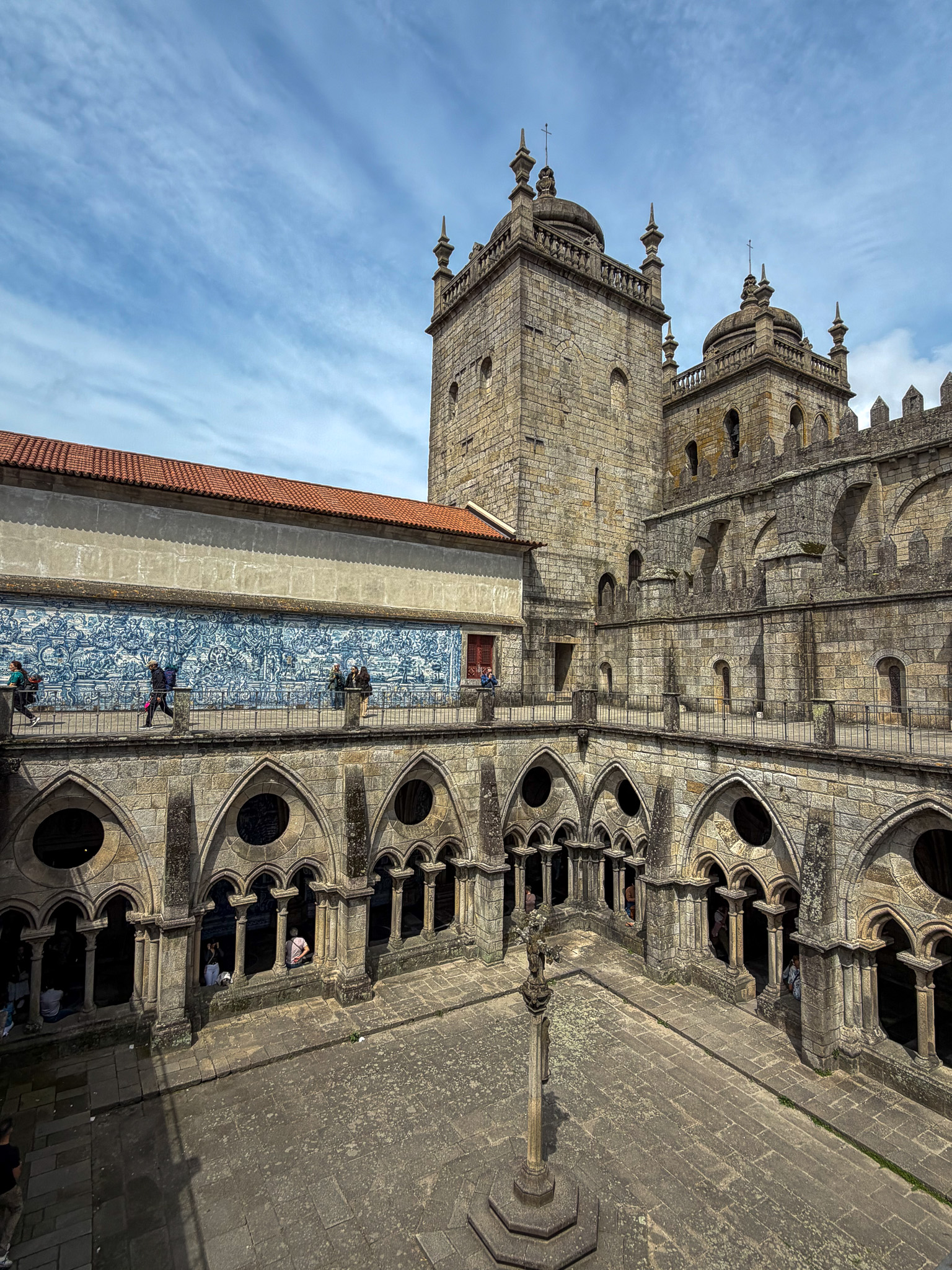
Even if you’re not religious, this one is worth your time. The Sé is one of the oldest and most important monuments in the city — Romanesque at its core, dating to the 12th century, with Gothic cloisters, a Baroque altar, and azulejo panels that cover entire walls of the interior. It’s visually layered in a way that rewards slow looking. The line outside looked daunting but moved quickly. A cellist was performing on the steps, which was genuinely lovely. My mom wanted to give coins to every musician and every person asking for help along the way — which tells you everything about her.
One thing that helped: even though it was busy, there are so many distinct rooms, chapels, and levels to explore that the crowd spreads out naturally. Mark went up to the top of the tower for the views while my parents and I took a breather in the shade of the cloisters.
➡️ Senior discount available. The cloisters and the tower views are worth the entry fee.
Vagas, Matosinhos
Panoramic ocean views from a fully glass restaurant right on the beach. We reserved inside — it was too hot for the terrace — and all reservations default to inside anyway. The food was just okay, but the setting absolutely justifies the trip and it’s nice for an unfussy lunch. About 20 minutes from central Porto by Uber.
Castelo do Queijo (Foz)
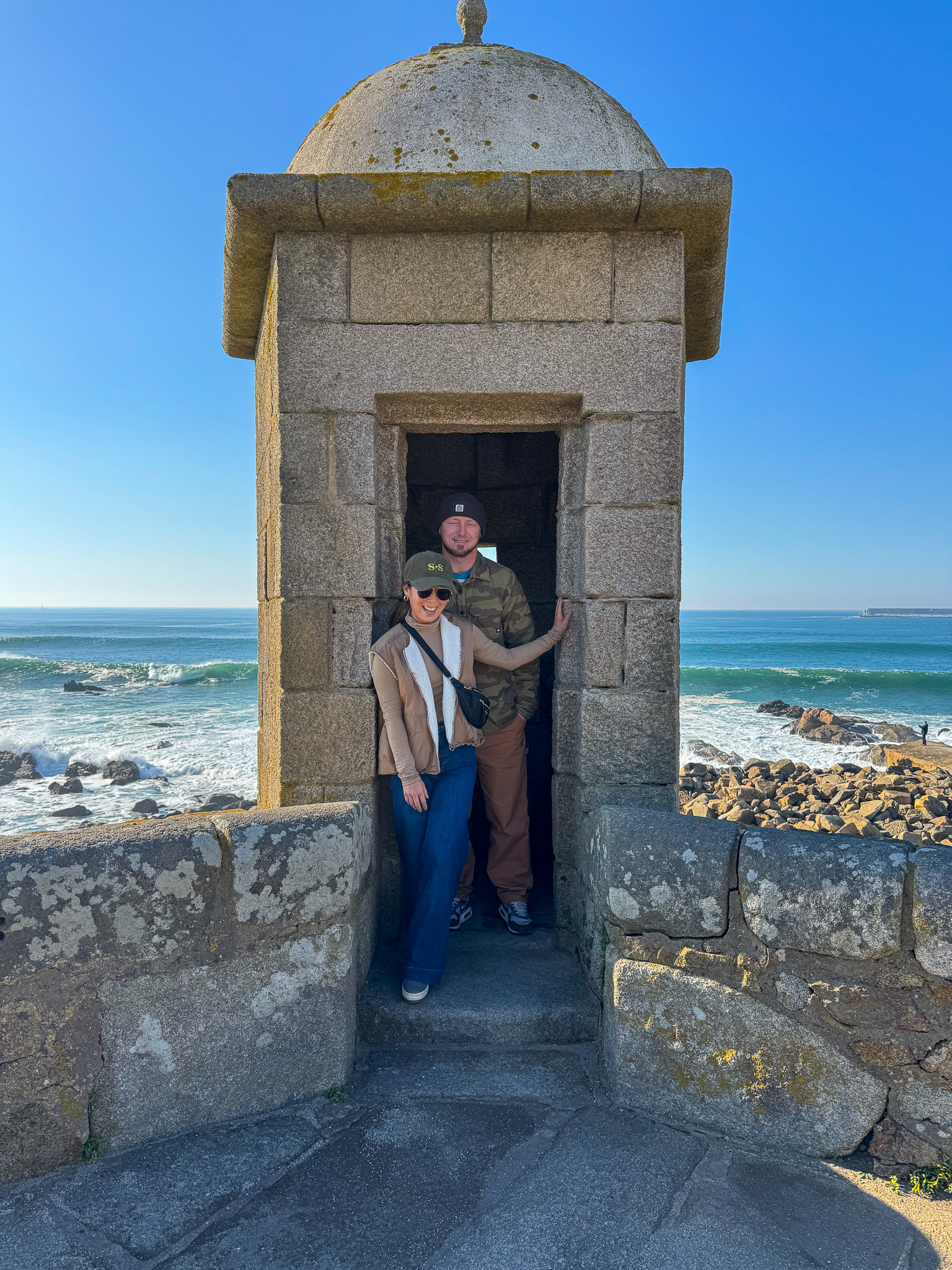
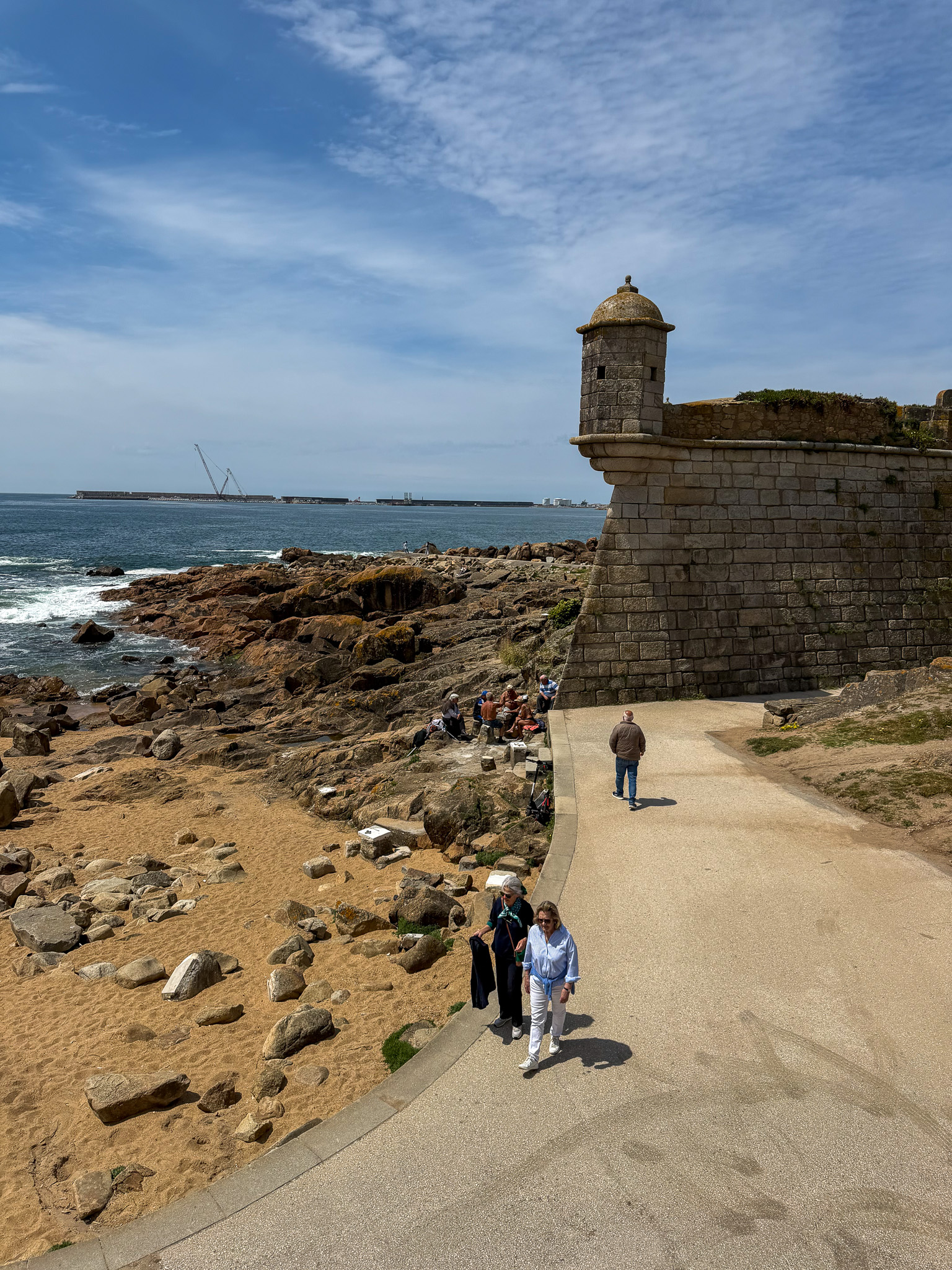
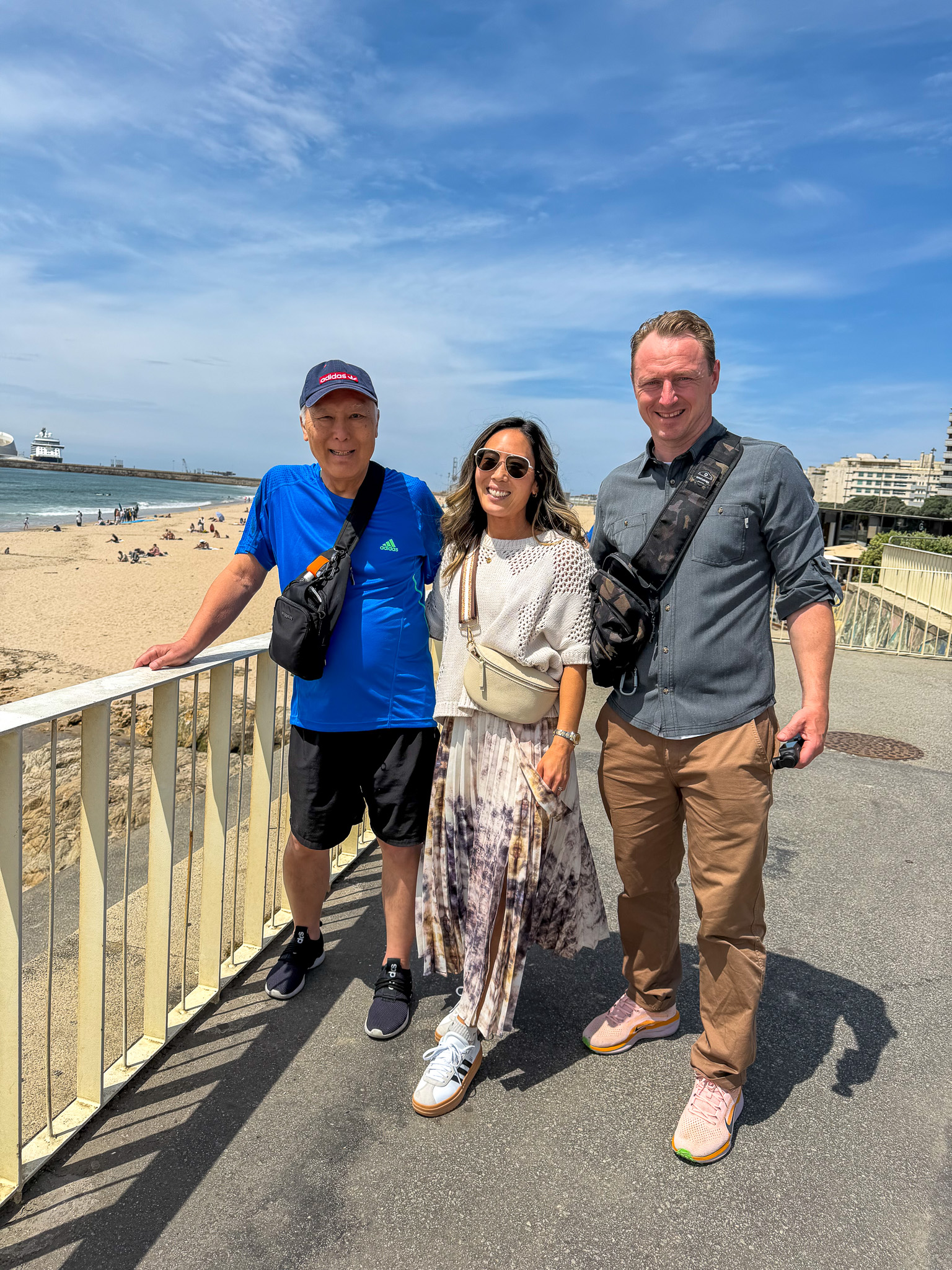
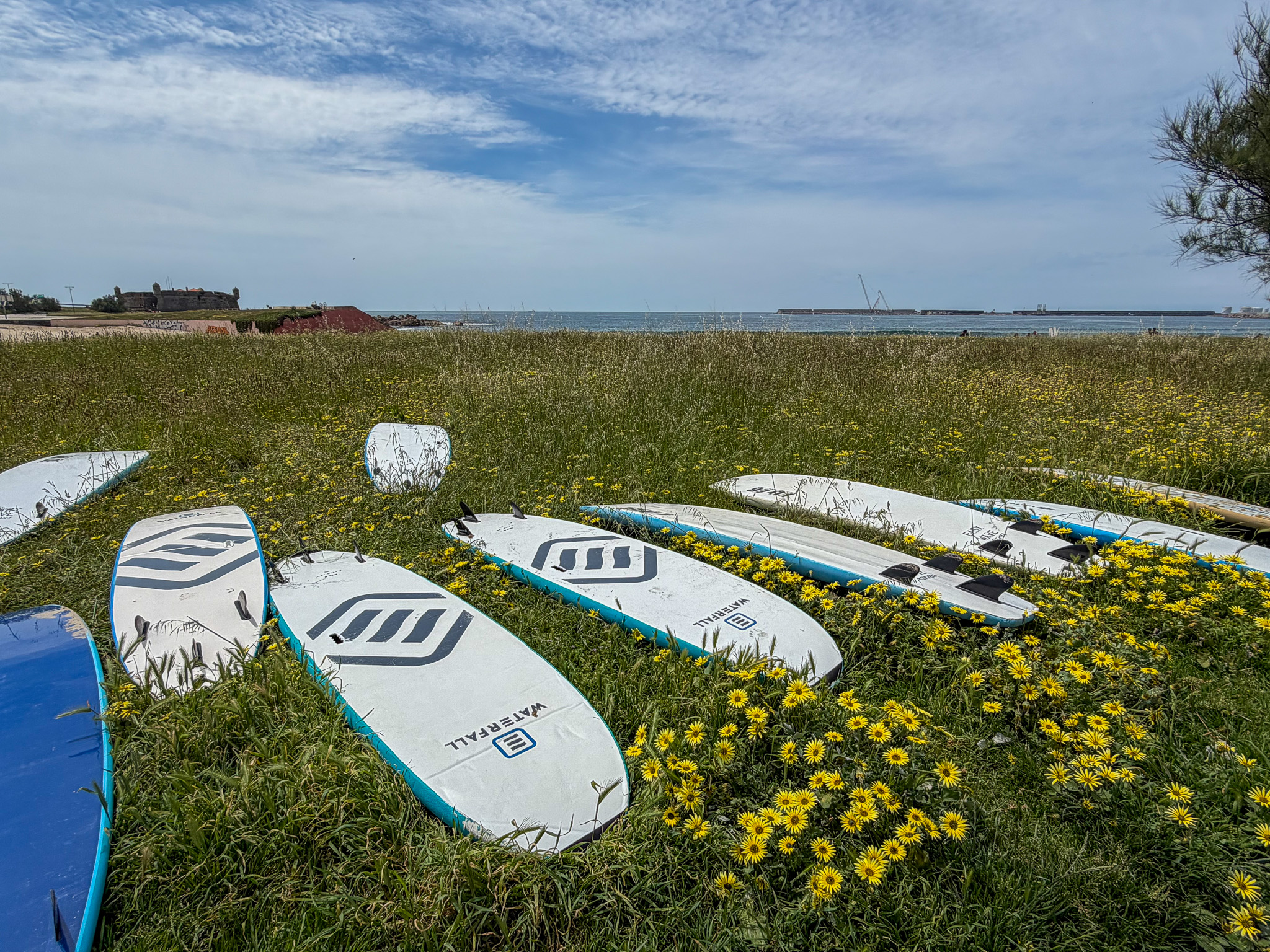
We walked from Vagas to this tiny fort sitting right on the rocks at the mouth of the Douro. We didn’t go inside but have done it before — it’s only €0.50 entry, about 30 minutes, and the coastal views are great.
➡️ Check hours before you go; closed Mondays.
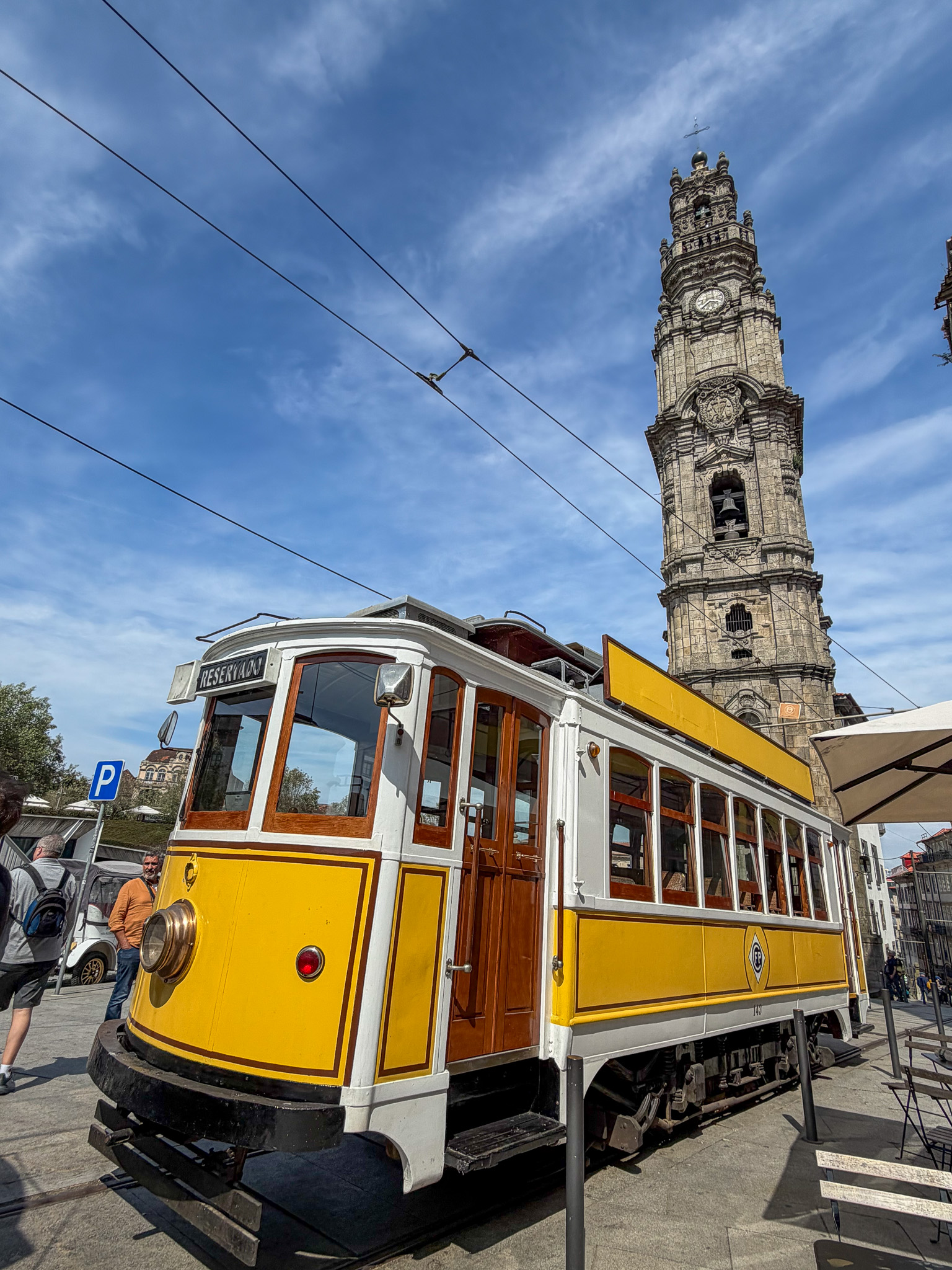
Historic Tram Line 1 (Foz → City Center)
Catch it at the Foz end and ride all the way in. It fills up fast — we got the last two seats. The driver took a cigarette break somewhere in the middle of the route. Perfectly Portuguese. My parents had specifically wanted to ride a tram in Porto and this delivered completely.
➡️ Arrive early to guarantee a seat.
Chapel of Souls (Rua de Santa Catarina)
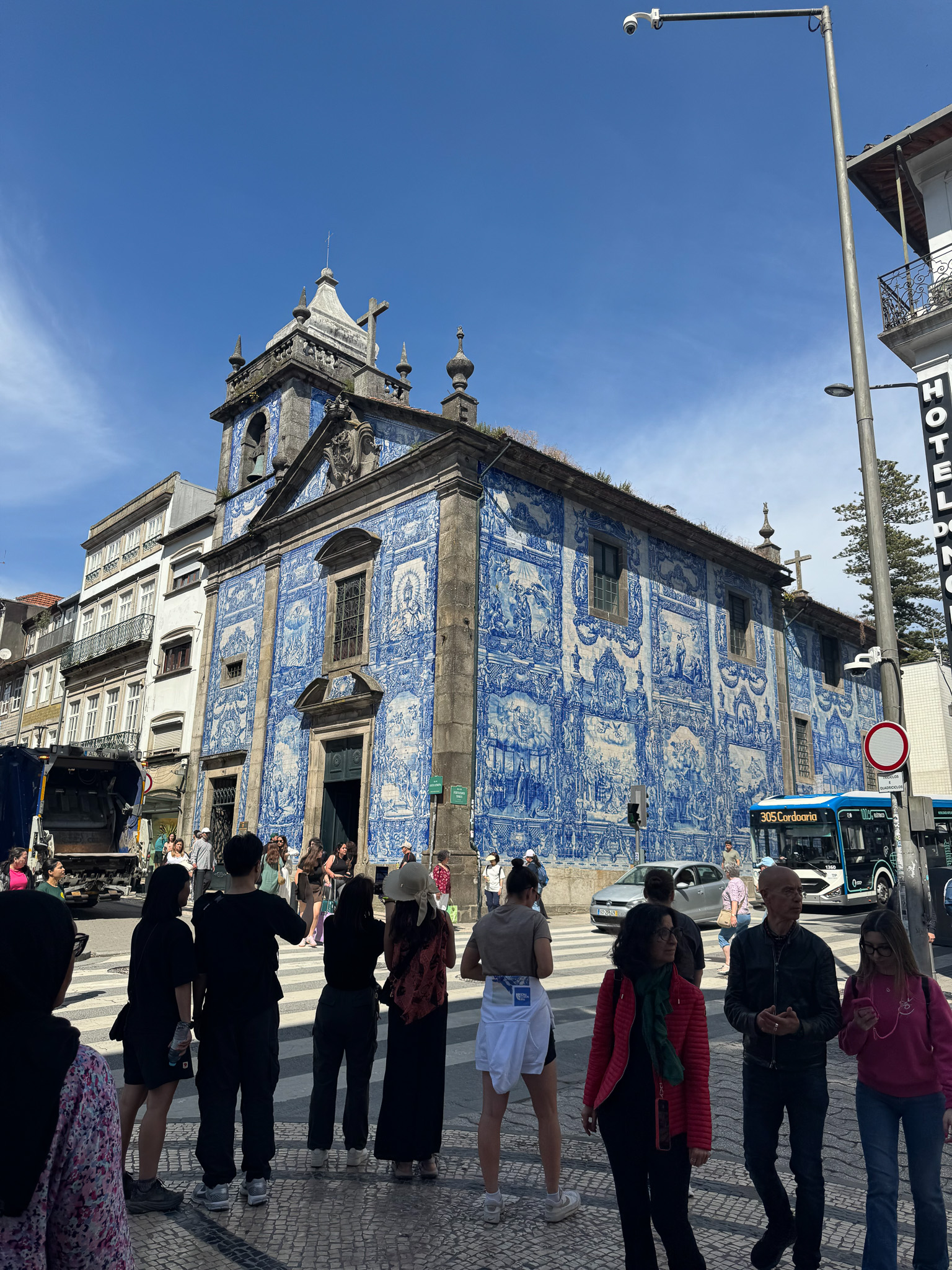
One of the most photographed facades in Porto — the exterior is entirely covered in blue azulejo tiles depicting the life of St. Francis and scenes from the martyrdom of St. Catherine, installed in the early 20th century. Free to visit, right on the main pedestrian shopping street, and takes only a few minutes.
Mercado do Bolhão
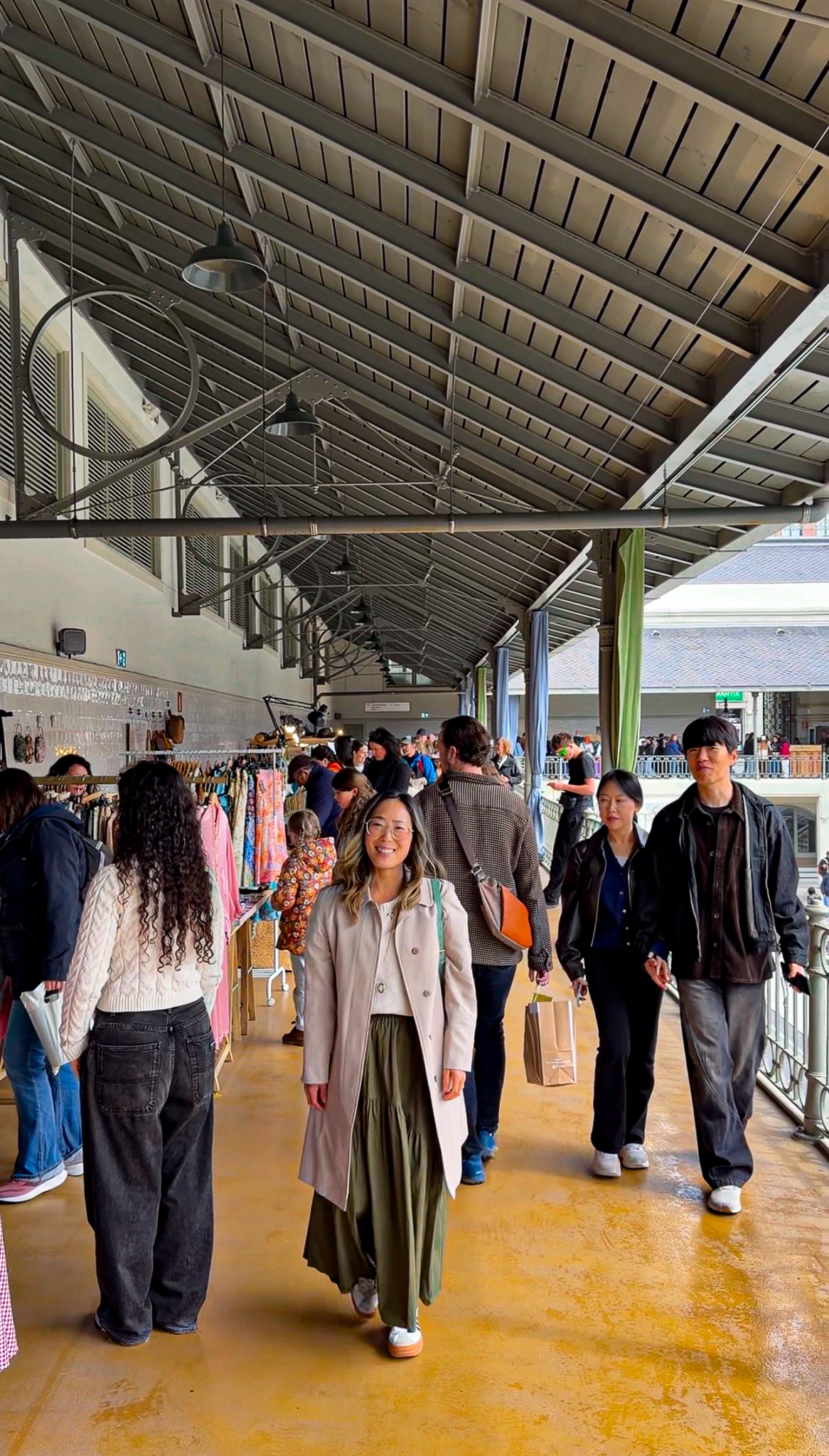
We walked up to the market and discovered it was closed for the holiday — the artisan stalls on the upper level were open and my mom and I enjoyed seeing the variety of art, clothing, jewelry, and other locally-made crafts on display. The 1914 iron-and-stone market building was completely restored and reopened in 2022 after years of renovation, and it’s beautiful. There are restaurants on the upper level as well and then on lower level, a range of the food stalls, including fresh produce, flower stands, snacks you can eat on the spot, and more.
Prometeu
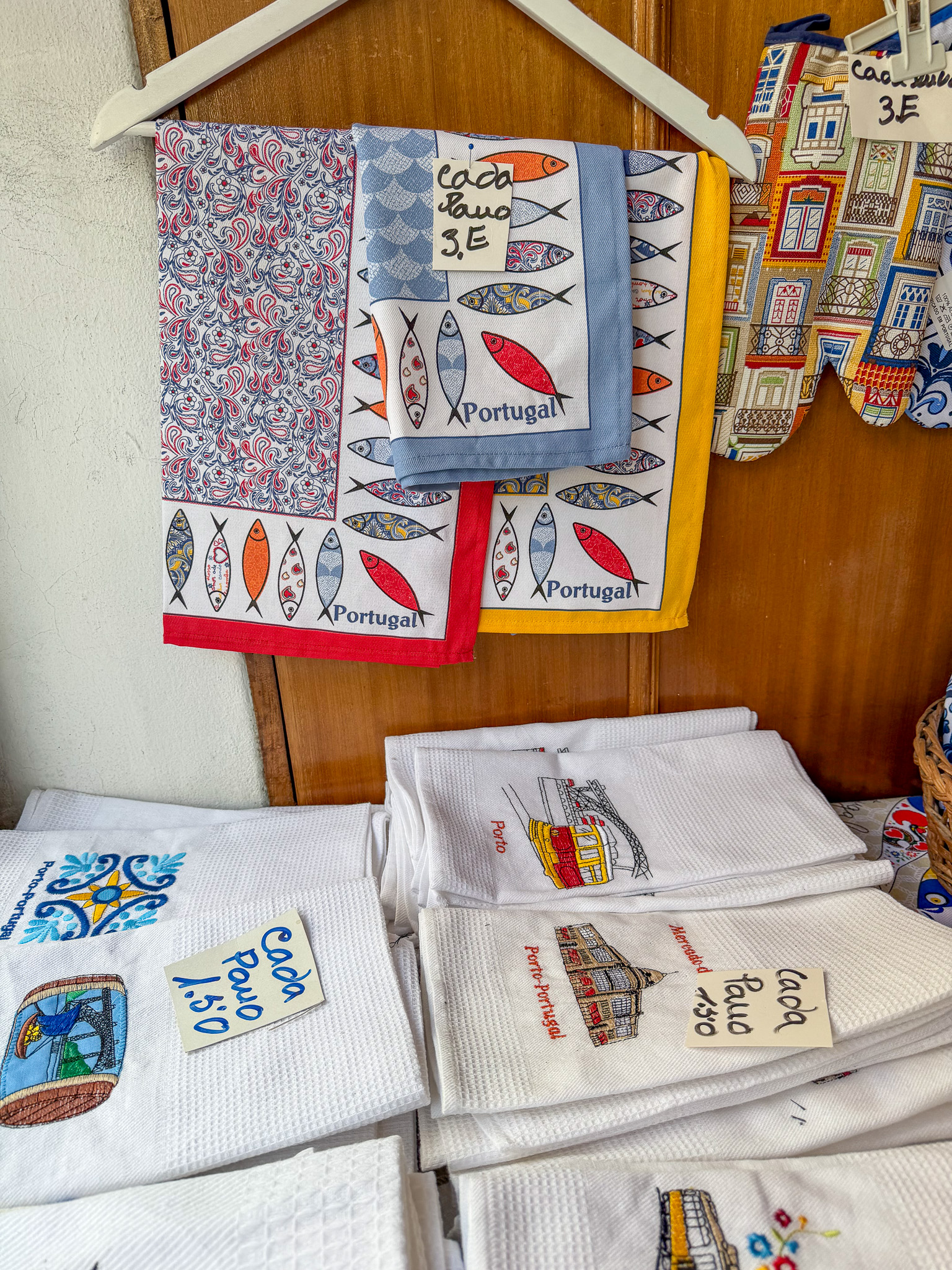
A few steps from Bolhão — this is our go-to for authentic Portuguese tiles and souvenirs. We love it because everything feels genuinely local, and the selection goes beyond the generic azulejo magnet. I picked up a few pieces for my mom for Mother’s Day and they did a wonderful job wrapping everything for safe travel. Highly recommend if you’re looking for something to bring home that will actually survive the journey. They have multiple locations within Porto.
Manteigaria
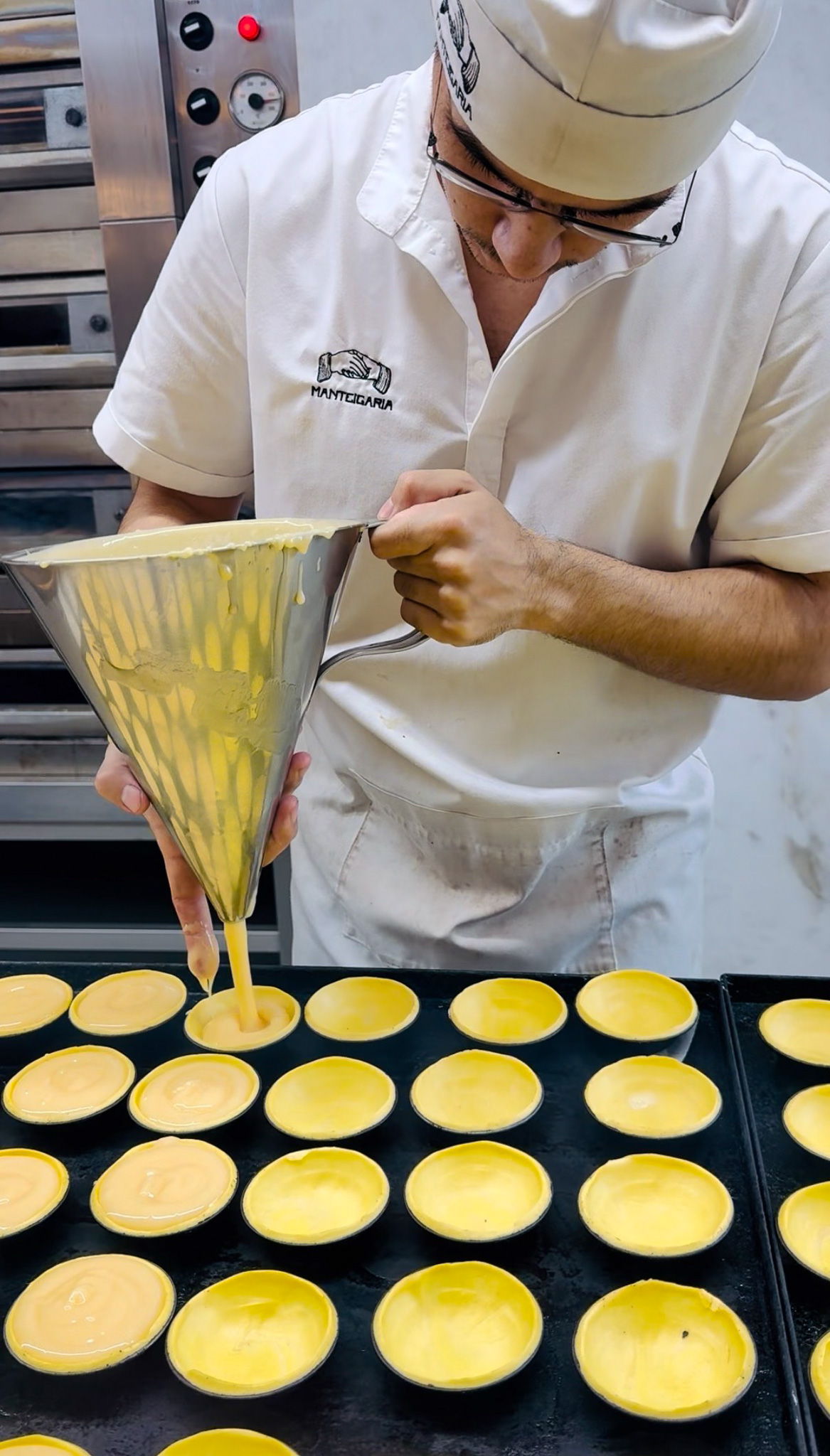
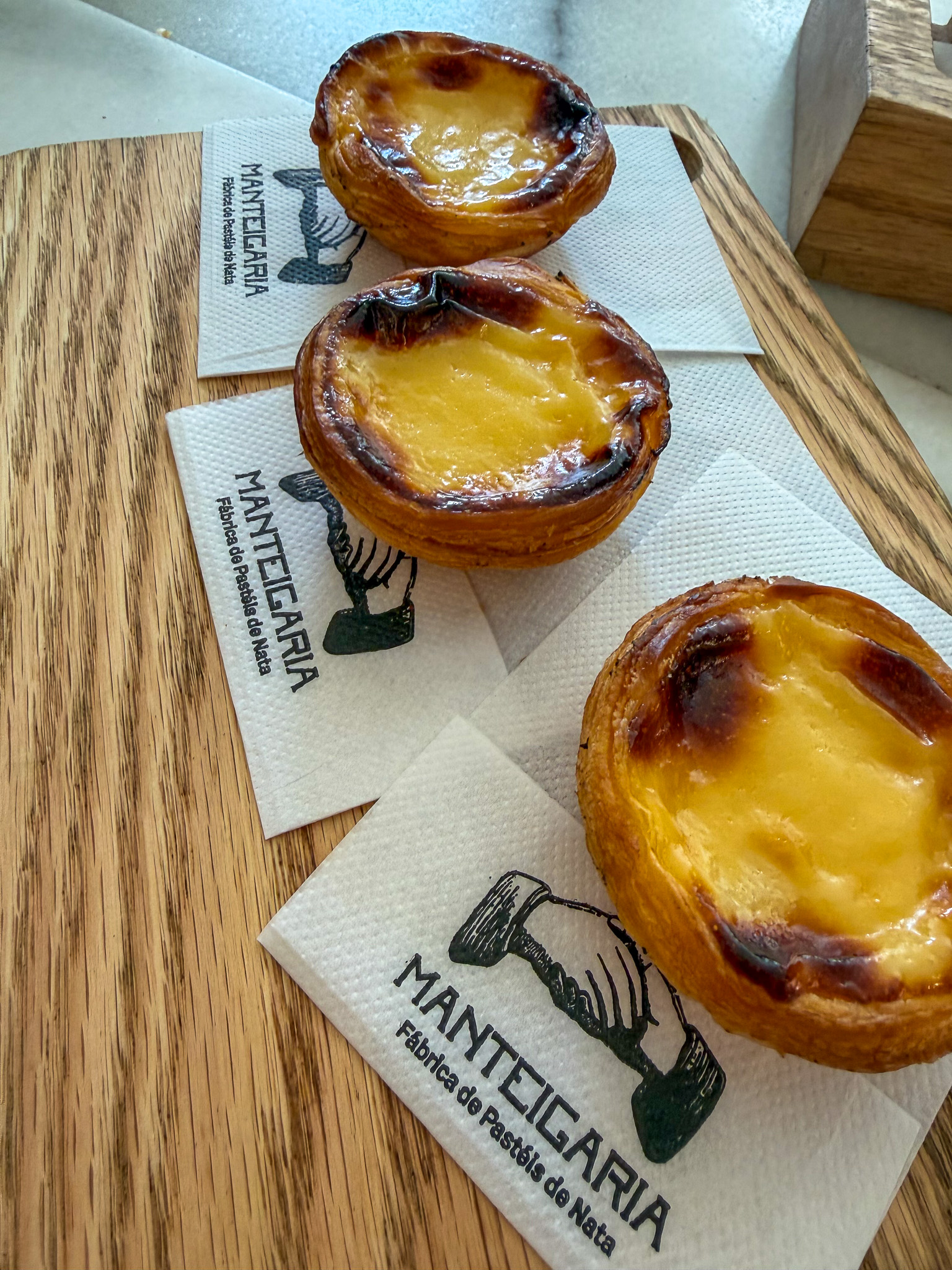
Watch pastéis de nata being made through the glass, then eat them hot with cinnamon and powdered sugar. My mom, who had already had natas earlier in the trip, said the difference was enormous. Fresh out of the oven is a completely different thing.
➡️ TIP: We like this location next to the Mercado specifically because there’s a café sharing the space — you can sit down, order a coffee or tea, and take a proper break rather than eating standing up at the counter.
Dinner — Barro (Rua Miguel Bombarda 38)
We headed back to our house to rest a bit and then went to Barro, a cozy modern Portuguese restaurant close to our apartment. The flavors were exceptional and very thoughtfully done. Octopus with sweet potato, garlic shrimp, beautiful mushrooms. A little more refined than my parents would typically go for, but they really appreciated the meal.
Day 3 · Saturday (Car Day)
Gaia + Coastal Drive
A car day is genuinely a gift for anyone with mobility limitations. Almost no walking required — you’re seeing more of the city and coastline from the passenger seat, with a few easy stops built in.
Gaia Neighborhood
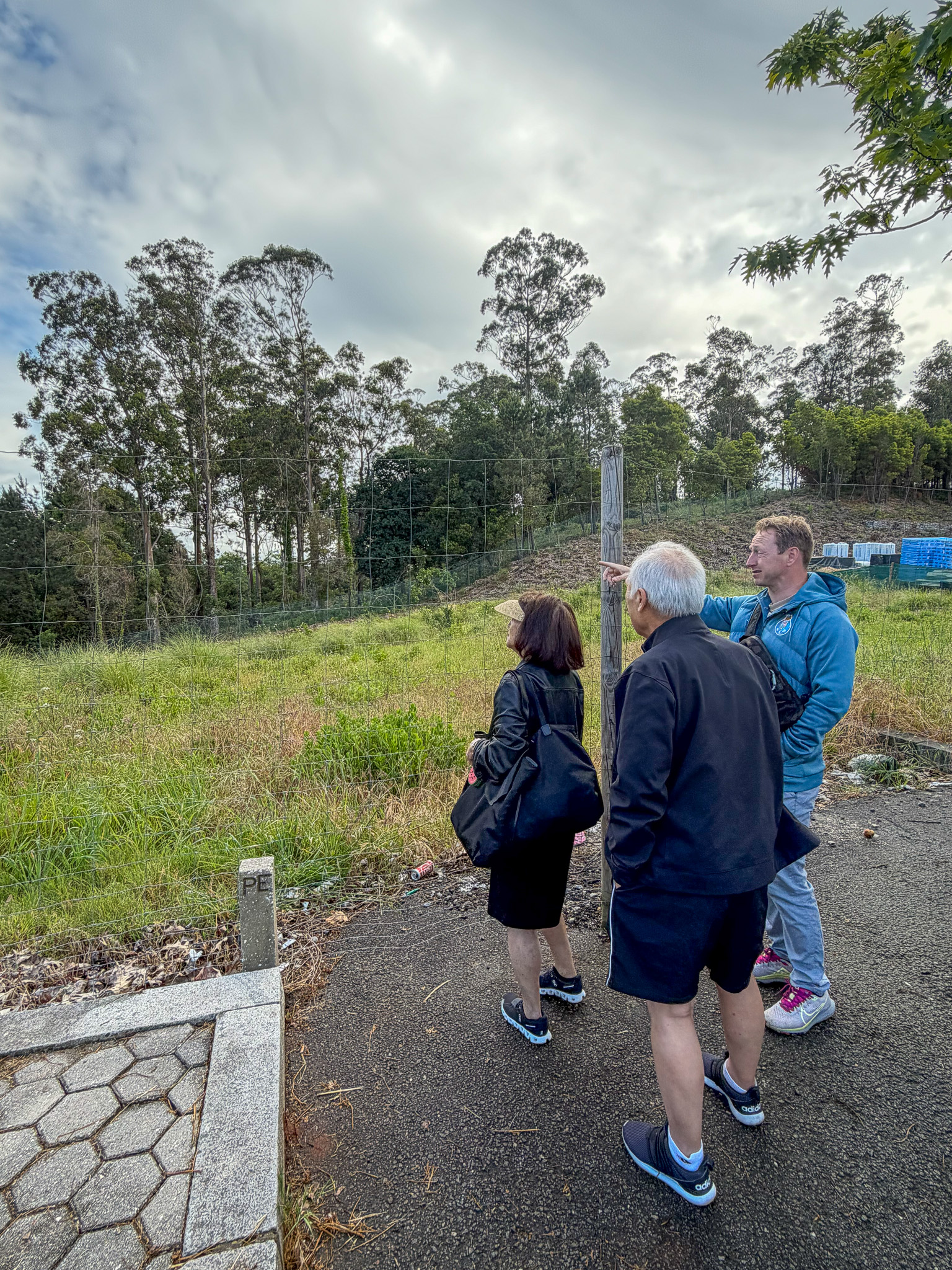
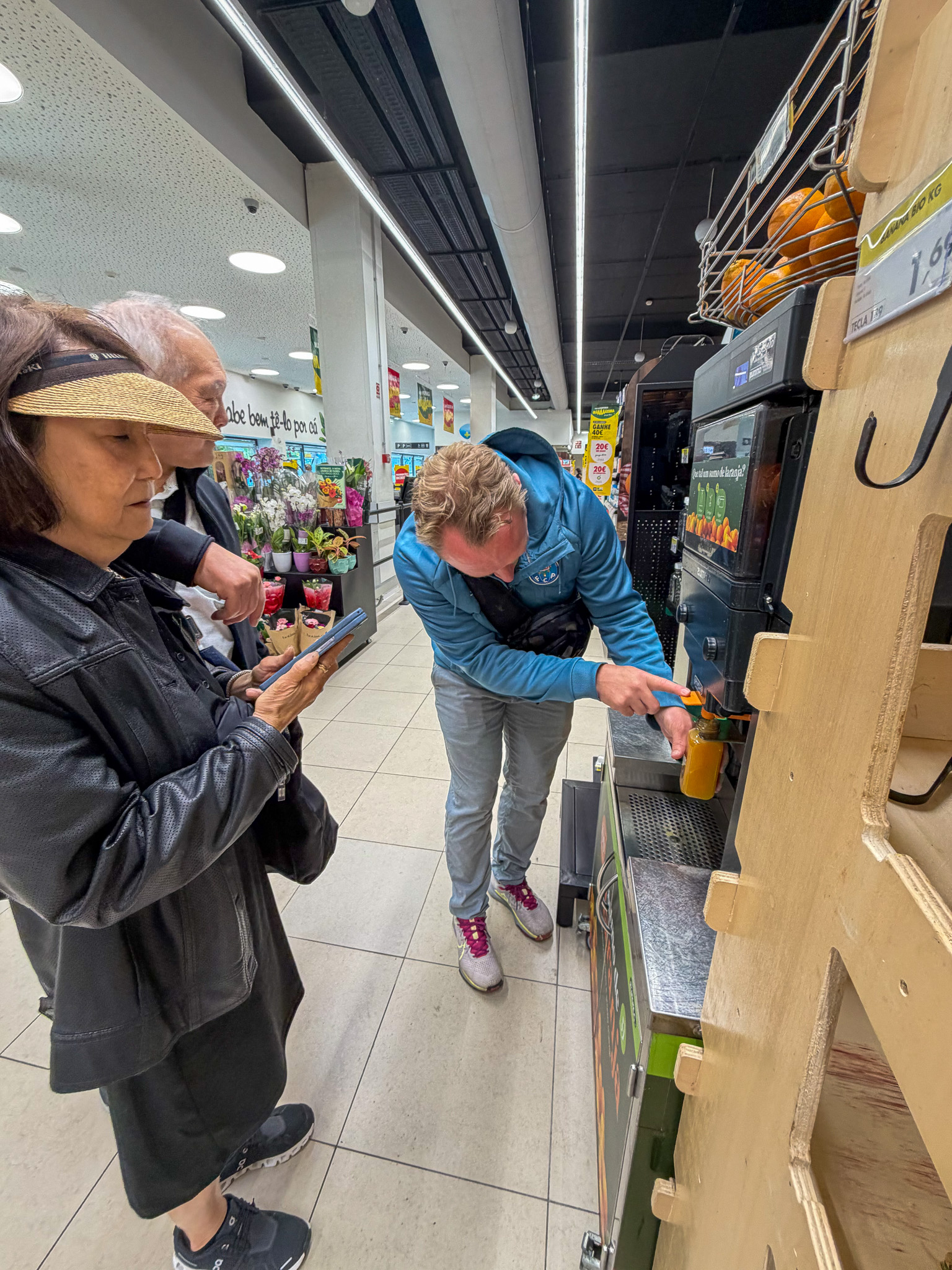
We’ve been seriously looking at a condo development in central Gaia, so we wanted to show my parents the area. Right across from the development is a Pingo Doce — one of the main local supermarket chains — so we stopped in for a quick breakfast.
The fresh-squeezed orange juice machines at Portuguese supermarkets genuinely delight first-timers. My mom tried her first espresso alongside a pastel de nata. “It’s so strong!” is a direct quote. We appreciated having a chance to show them what a typical morning here actually looks like.
Monte da Virgem Imaculada
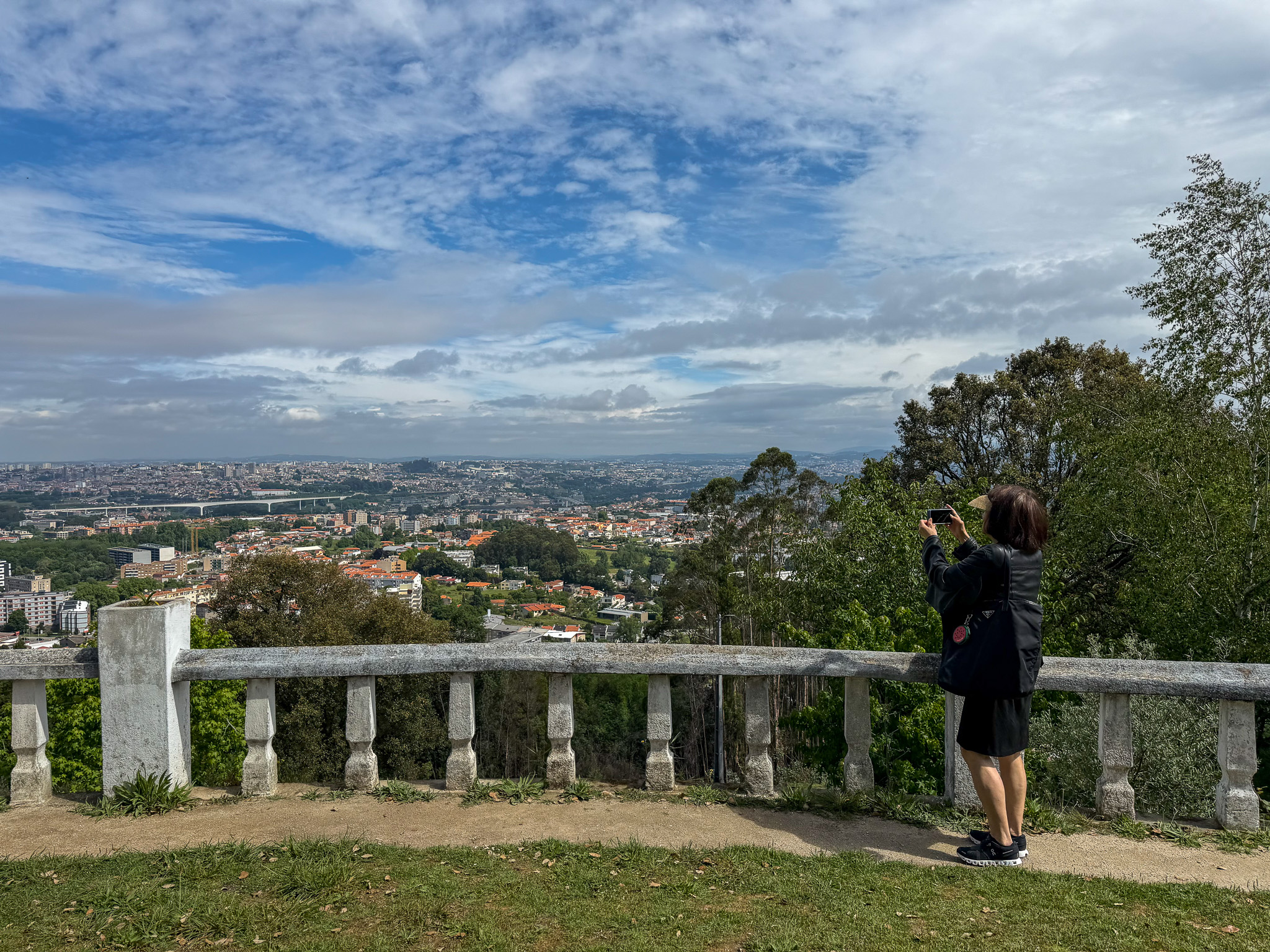
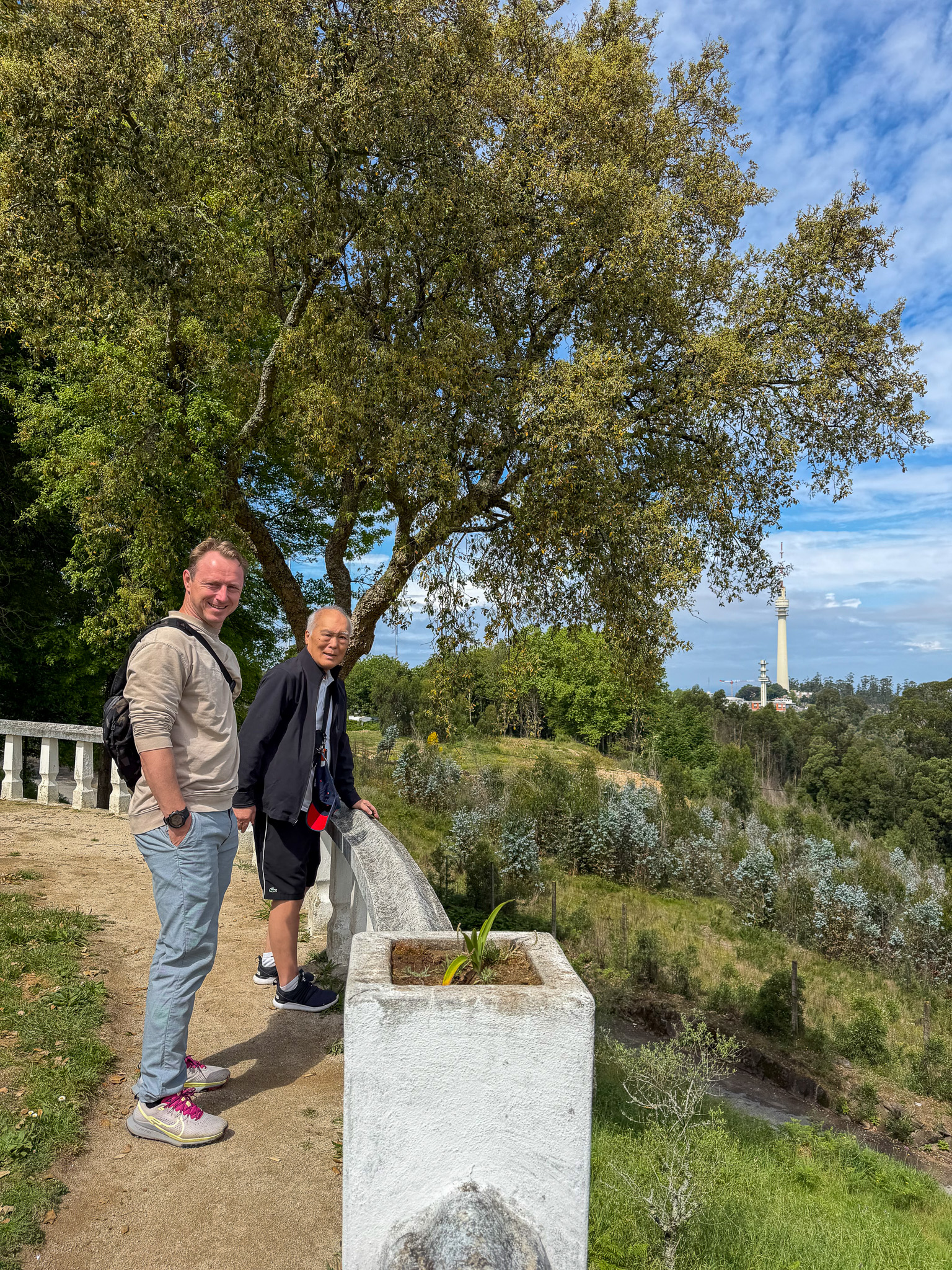
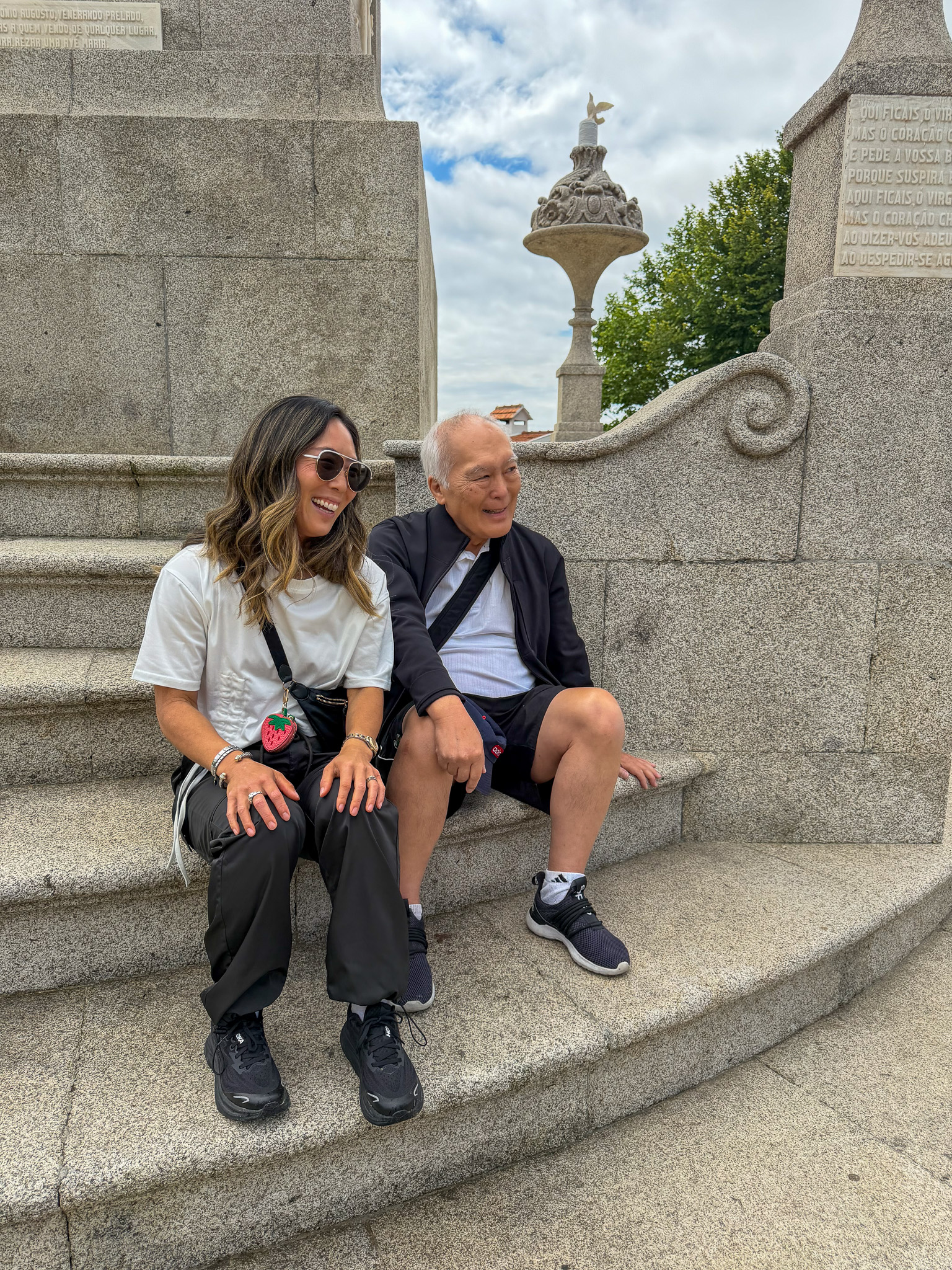
Six minutes by car from the Gaia waterfront, and almost nobody knows about it. Panoramic views over Porto, the coast, and the Douro. You can drive right up, park, and take in the view. My dad was surprised by how uncluttered the skyline is — no towers, no high-rises dominating the horizon, the topography flat and wide open. We hadn’t visited before either, and it’s deeply underrated.
Porto Tennis Club
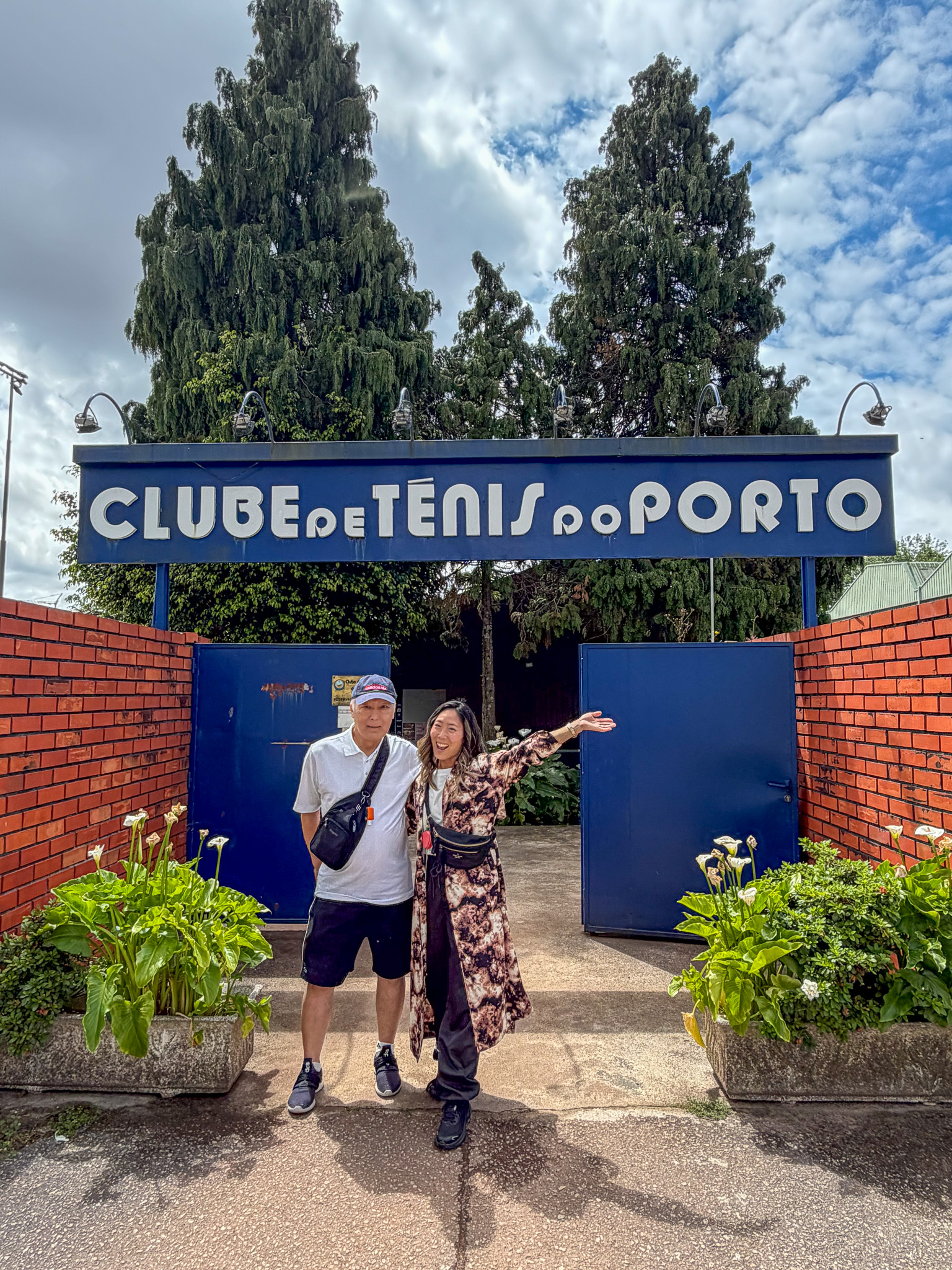
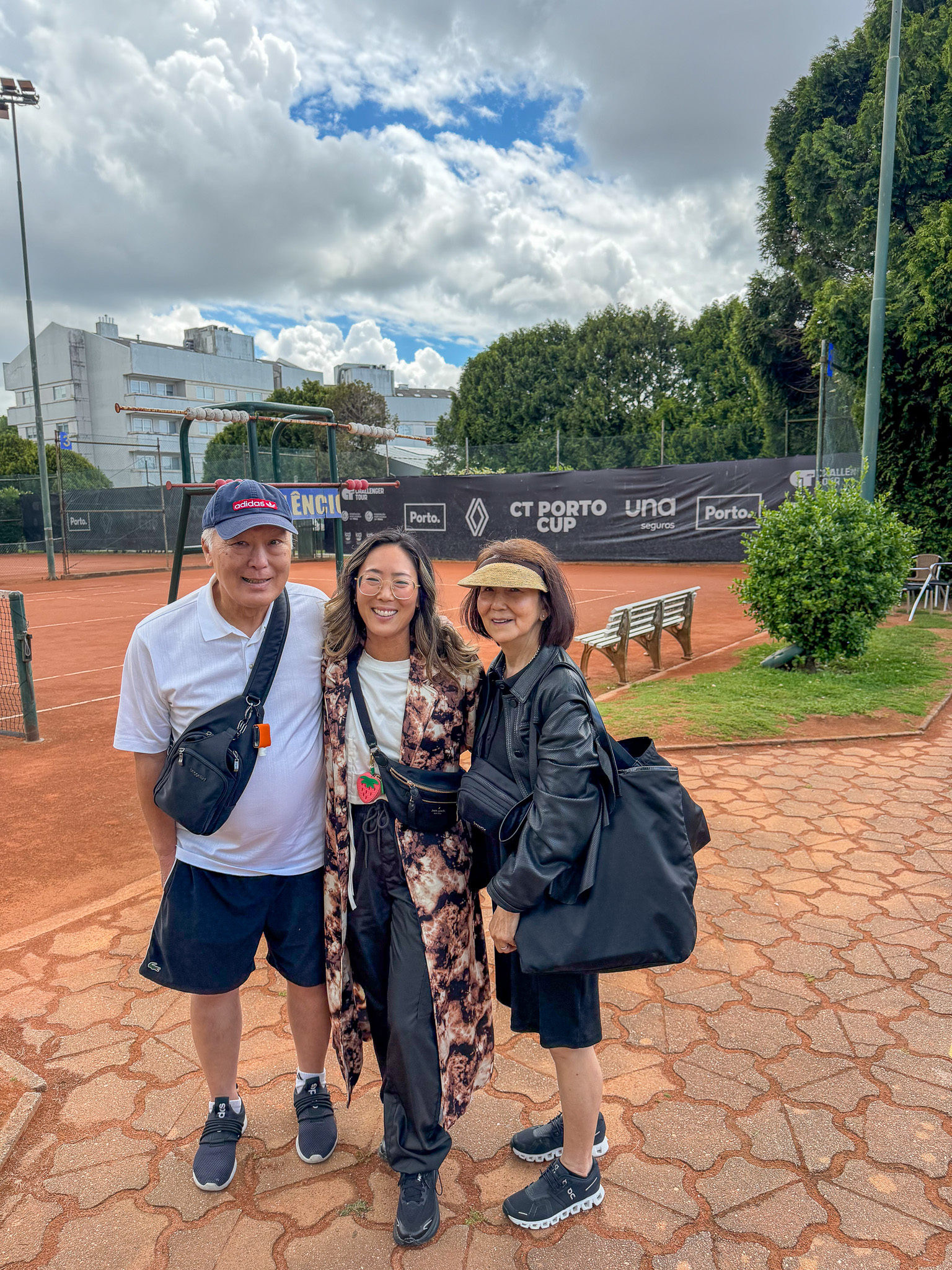
A quick stop to show my parents one of the clubs where I play. They loved seeing the clay courts — something you just don’t see much of in the US — and we happened to run into one of the women I hit with regularly and her father, which turned into one of those nice unplanned moments that makes a trip feel real rather than tourist-y.
Mercado Bom Sucesso
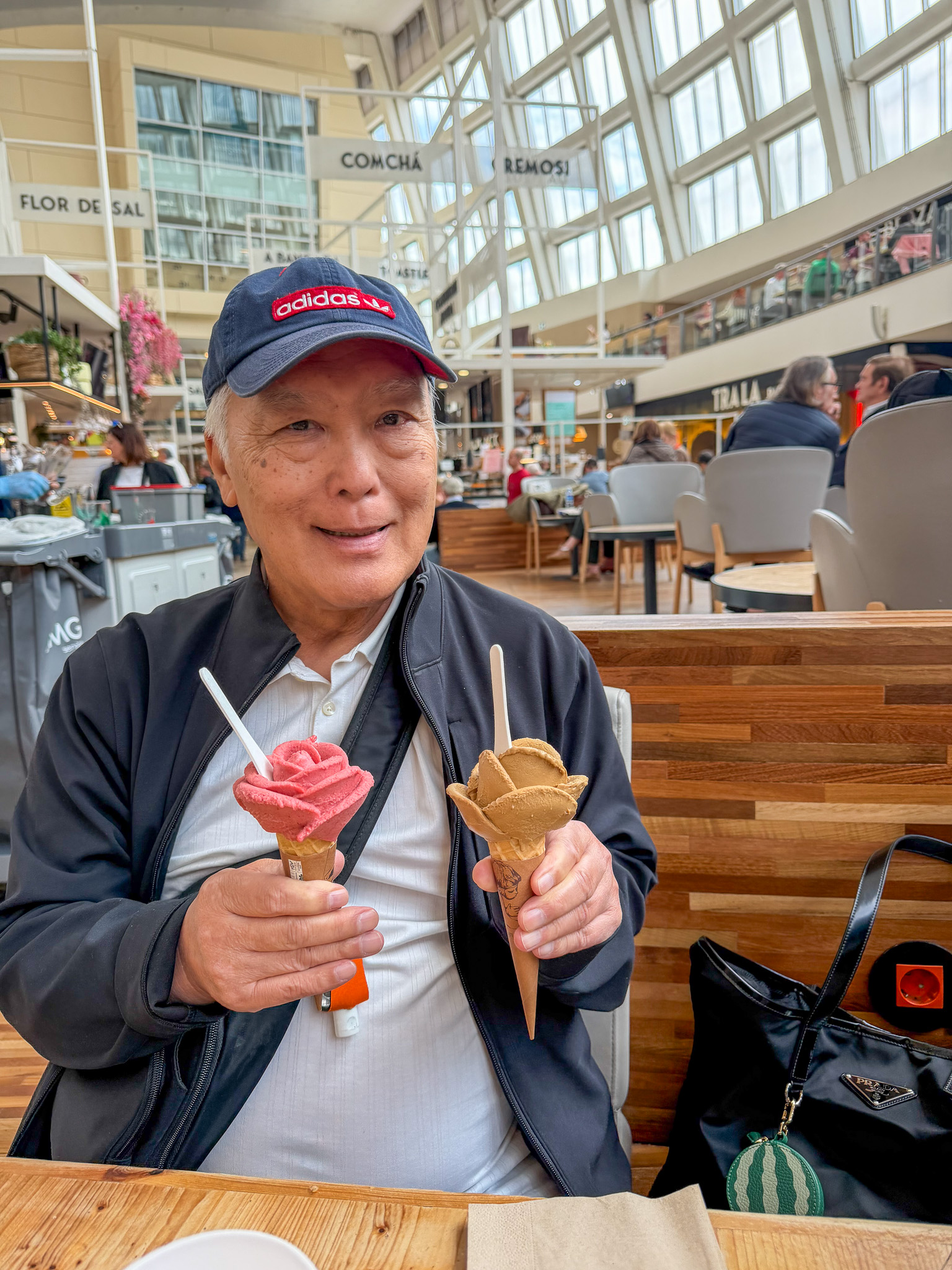
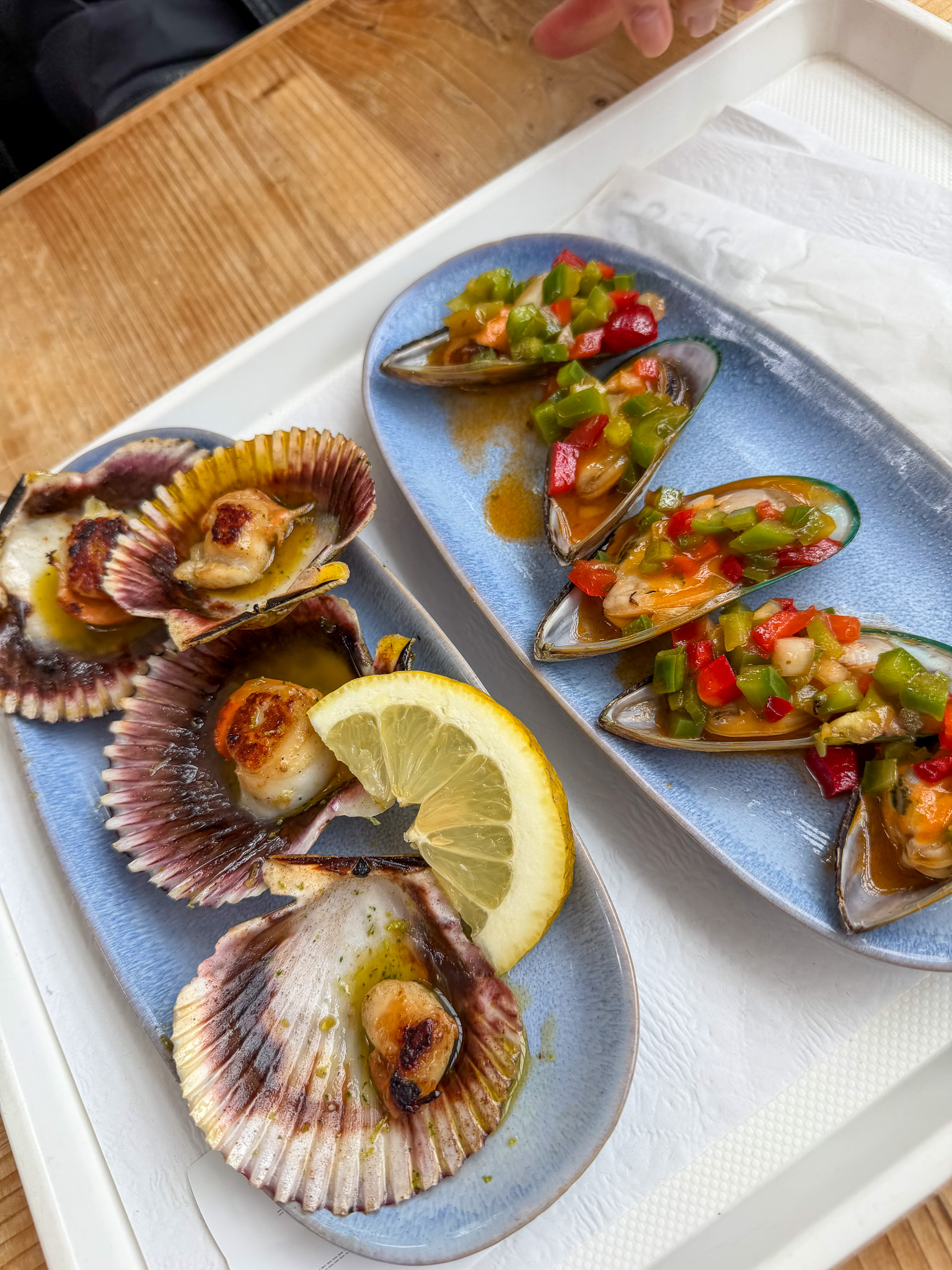
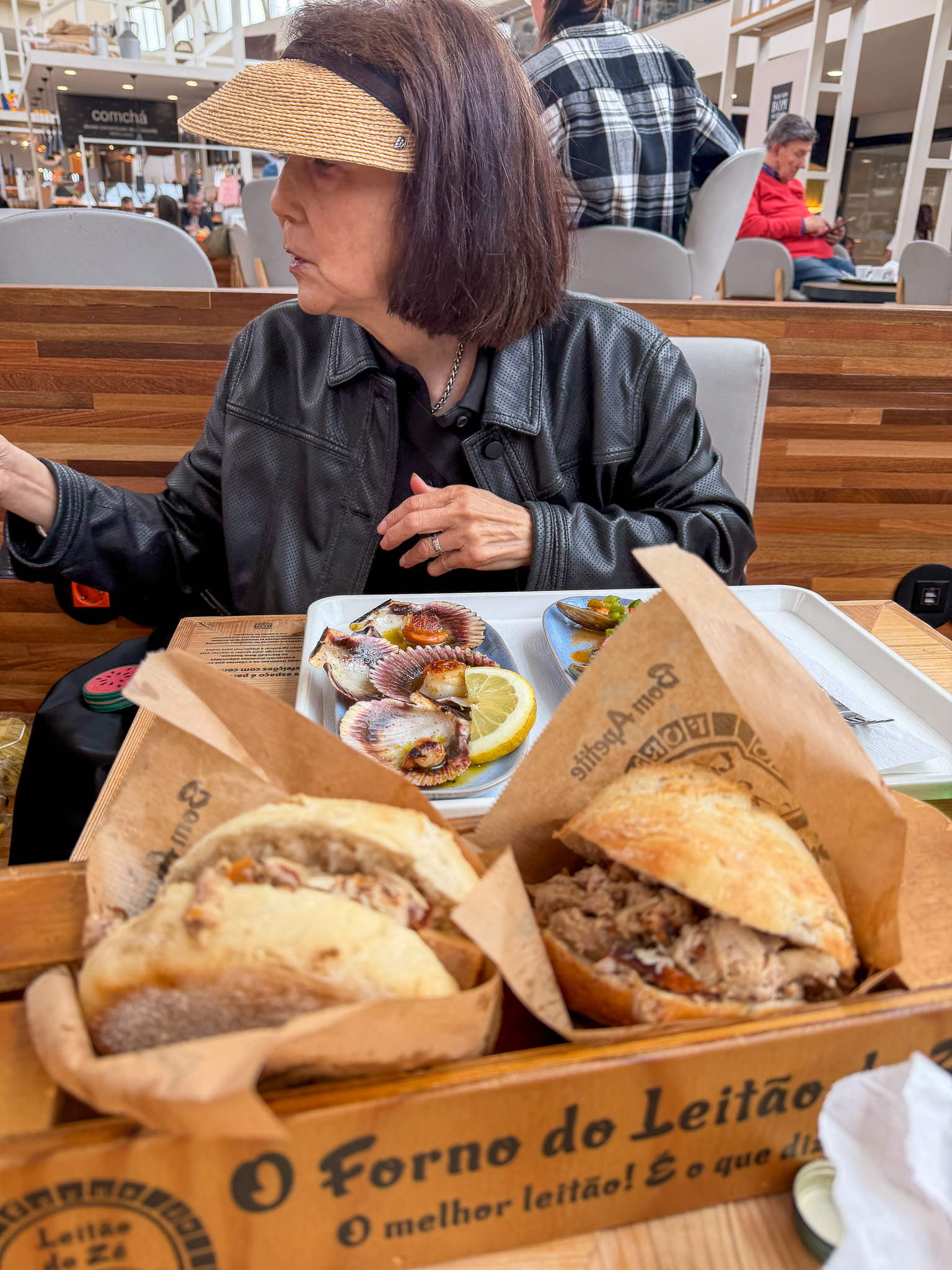
We then headed to the Mercado Bom Sucesso for lunch — I wanted my dad to try one of my favorite sandwiches in Portugal. The Mercado is a covered food hall with a mix of stalls, a great place to wander and pick out what looks good. We headed to O Forno do Leitão do Zé to order the leitão (suckling pig) sandwich and it was a big hit…it’s so simply done but absolutely delicious. My mom had never seen rose petal gelato before and stood transfixed watching it being made at one of the other stalls. We also grabbed scallops and mussels from the adjacent seafood counter; she kept the scallop shell as a souvenir. Classic Porto lunch, very little walking, extremely satisfying.
Coastal Drive Toward Espinho
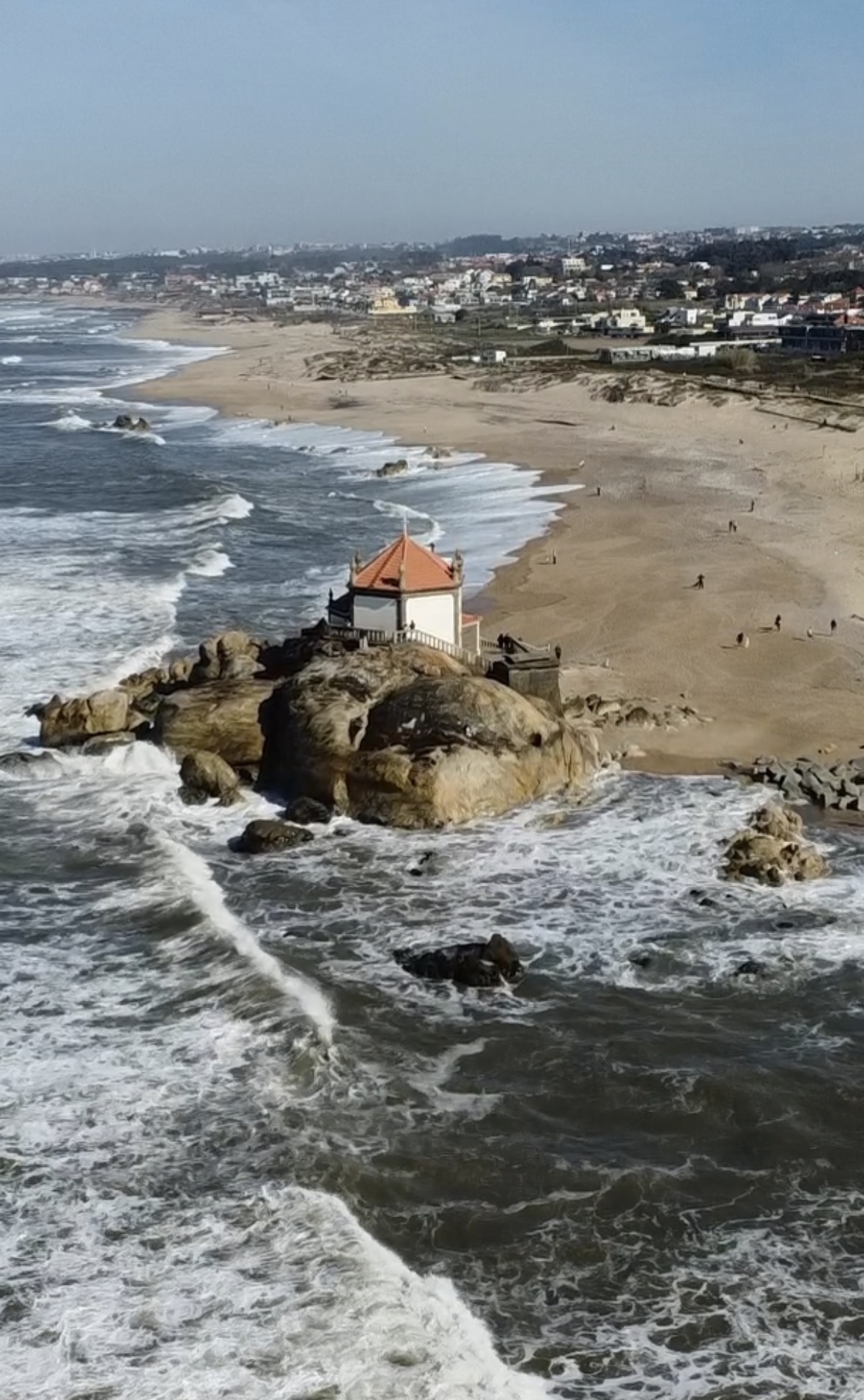
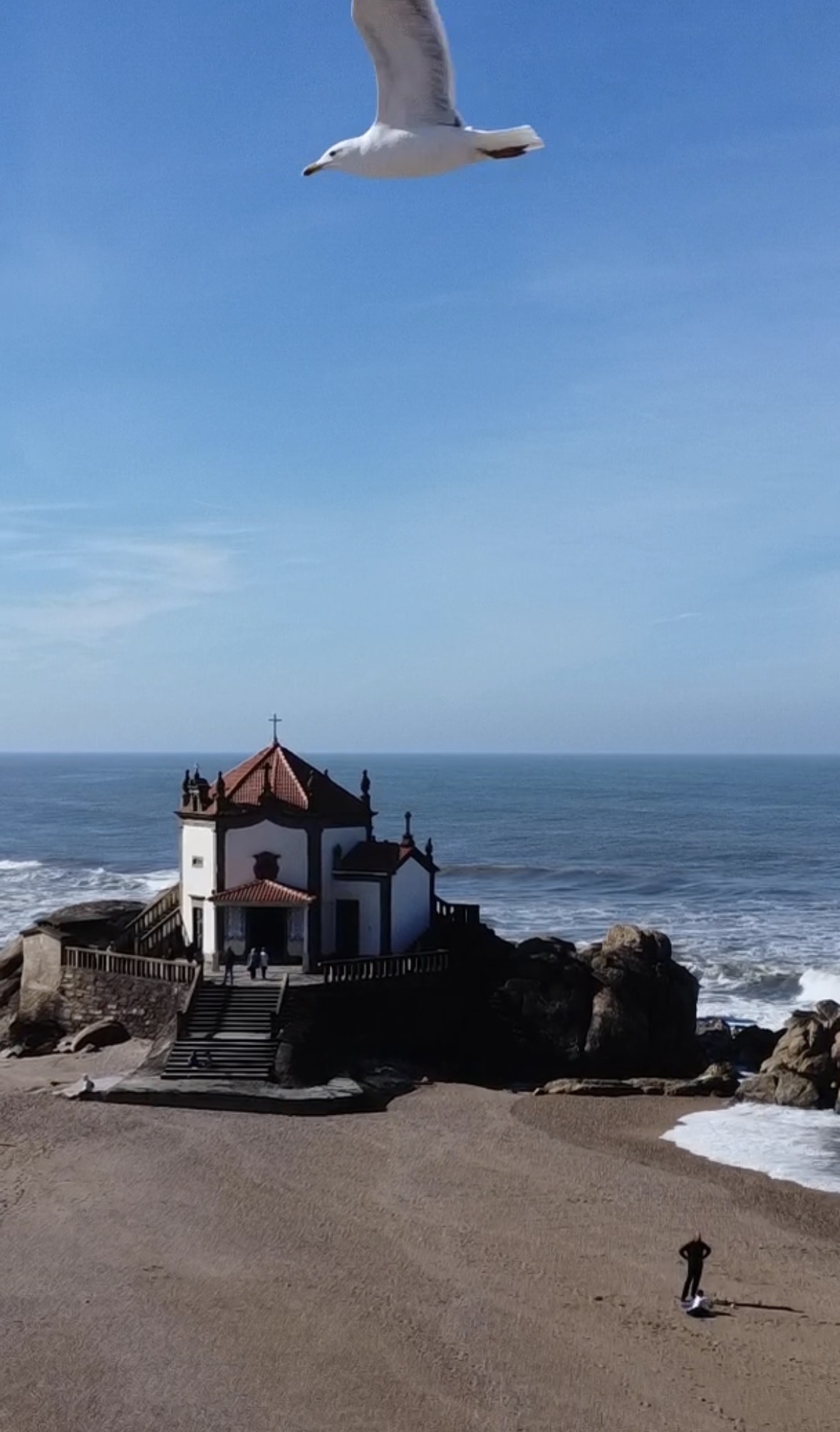
Next, Mark took us on a scenic drive down the Gaia and Espinho coast — no walking required unless you want it. We were all surprised by how much development is happening along this stretch and how beautiful the beach views are, with a boardwalk that goes on for miles. The Capela do Senhor da Pedra is a small chapel sitting literally on the beach — worth a stop if you’re feeling it, and there are a few local cafés nearby. We also came across a cherry stand and of course, had to pick some up!
Dinner — Pizza Night at Home (Generosa)
My dad requested a break from the “fancy dinners.” We ordered from Generosa, our favorite pizza shop, made a salad, and watched a movie together. By day three, everyone was pleasantly full and pleasantly tired. We’d originally planned to take them to Meia-Nau in Matosinhos — and we’ll save that for next time.
Day 4 · Sunday (Car Day)
Guimarães + Braga
Guimarães Historic Center
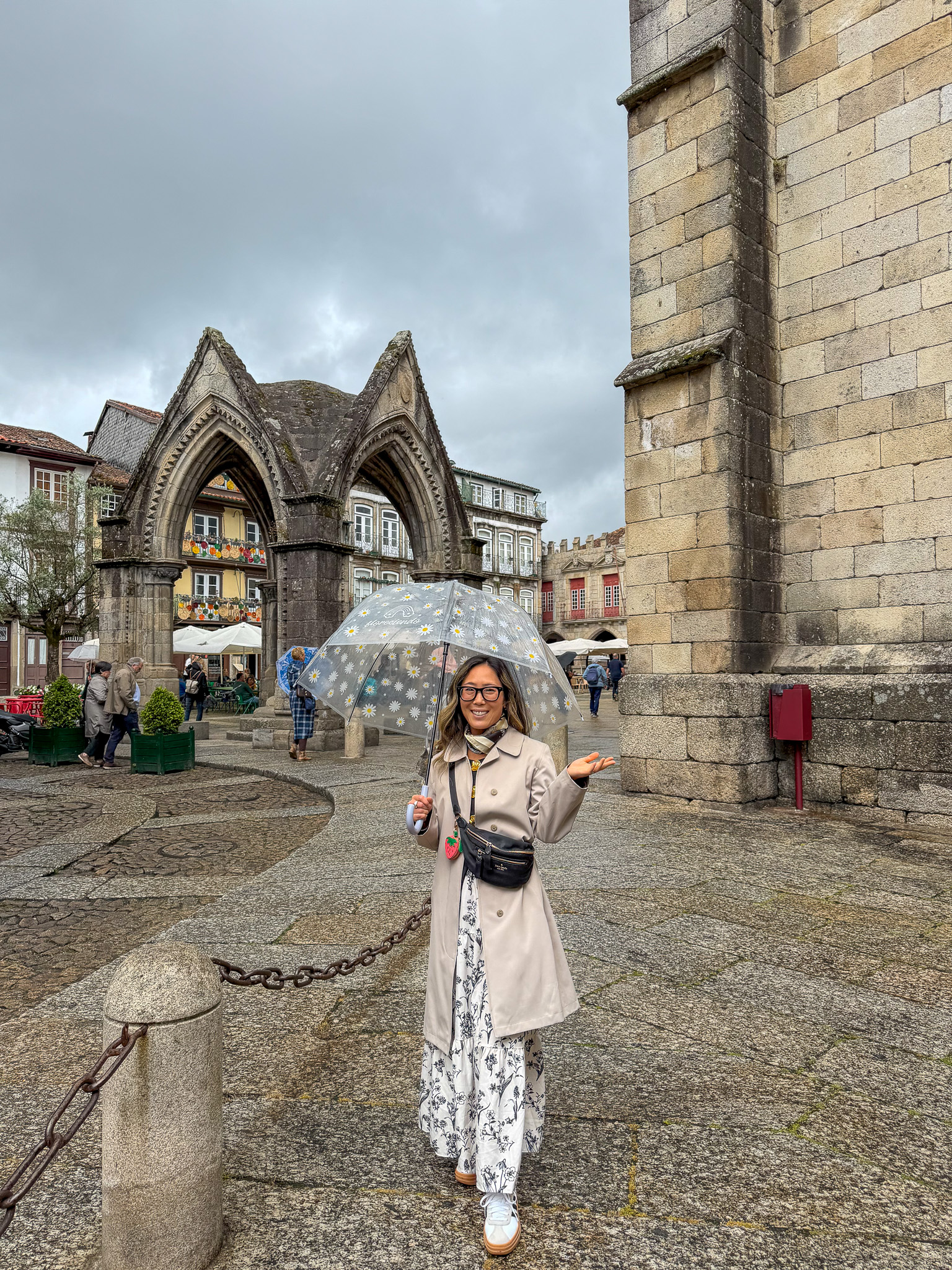
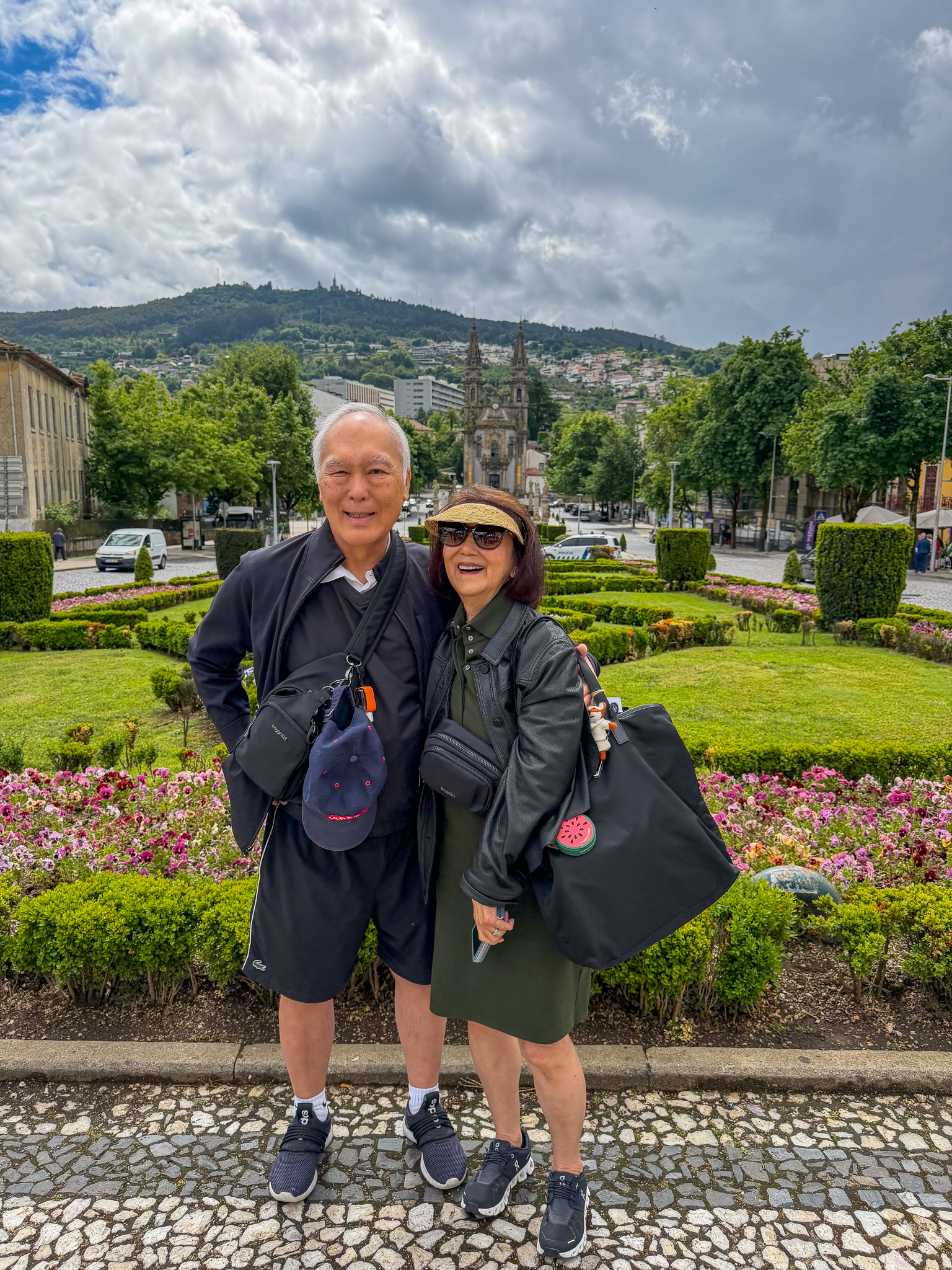
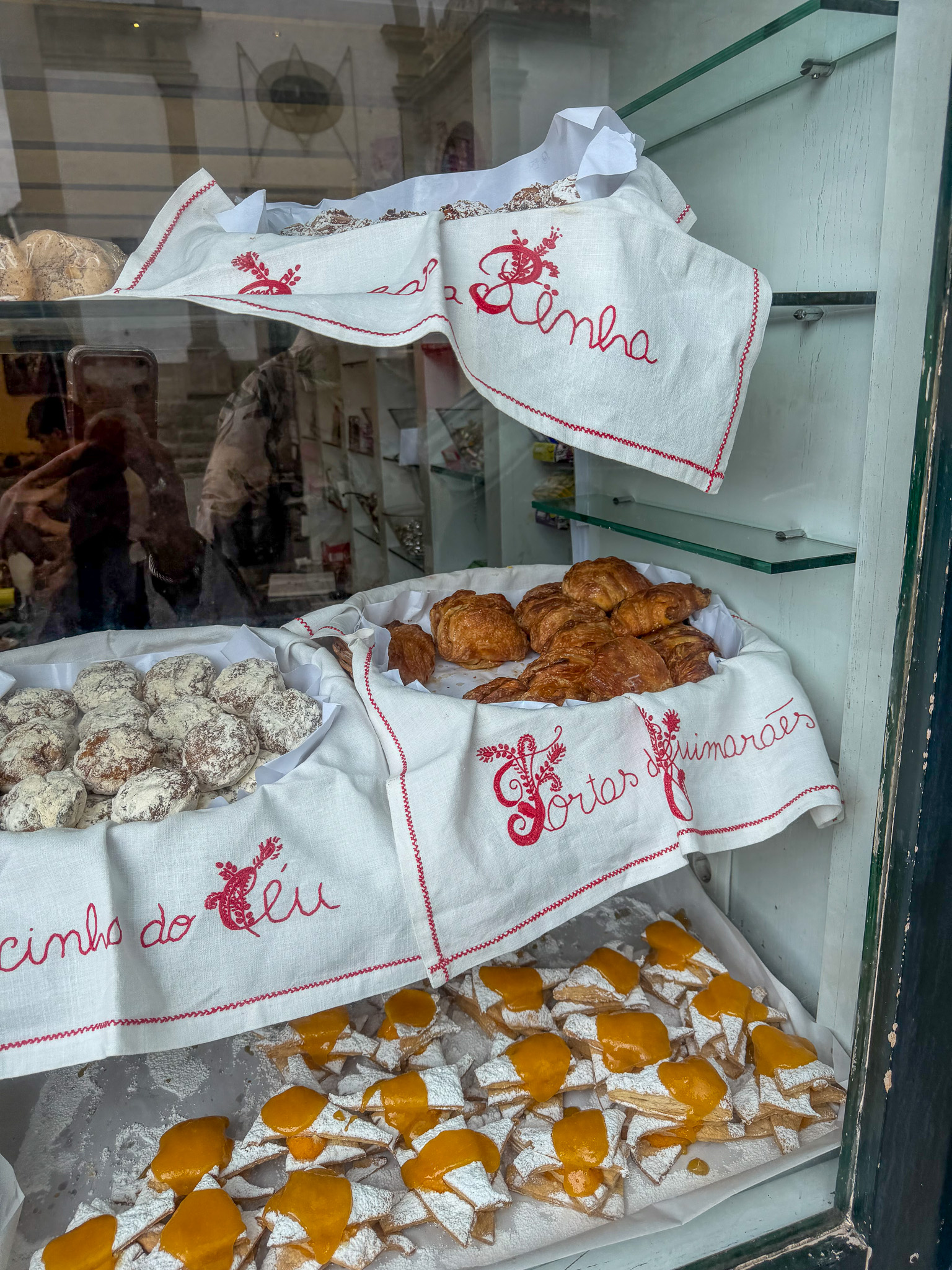
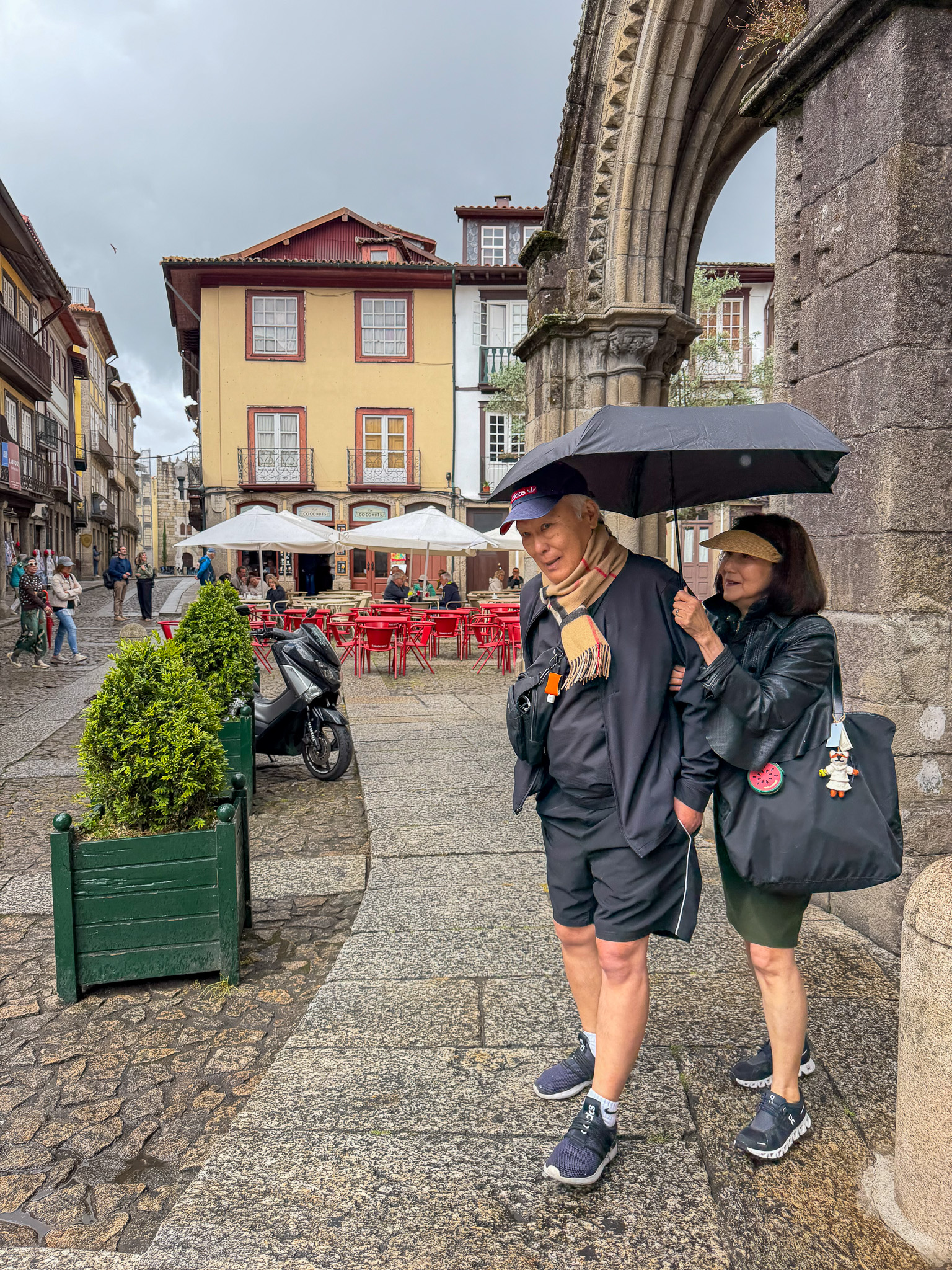
For their last day, we took a quick day trip up to Guimarães, the birthplace of Portugal, and Braga. The main square in Guimarães is anchored by the beautiful Igreja e Oratórios de Nossa Senhora da Consolação e Santos Passos — an 18th-century baroque church with an ornate tiled facade with manicured flowers and grass in front that stops you in your tracks. The whole town feels quieter and less visited than Braga, and the square and Padrão do Salado monument is lovely. It poured while we were there, so we ducked into a café to try some of the local pastries — very sweet, but my dad, who loves pastries, was completely happy. And we drove past the Guimarães Castle on the way out.
Bom Jesus do Monte, Braga
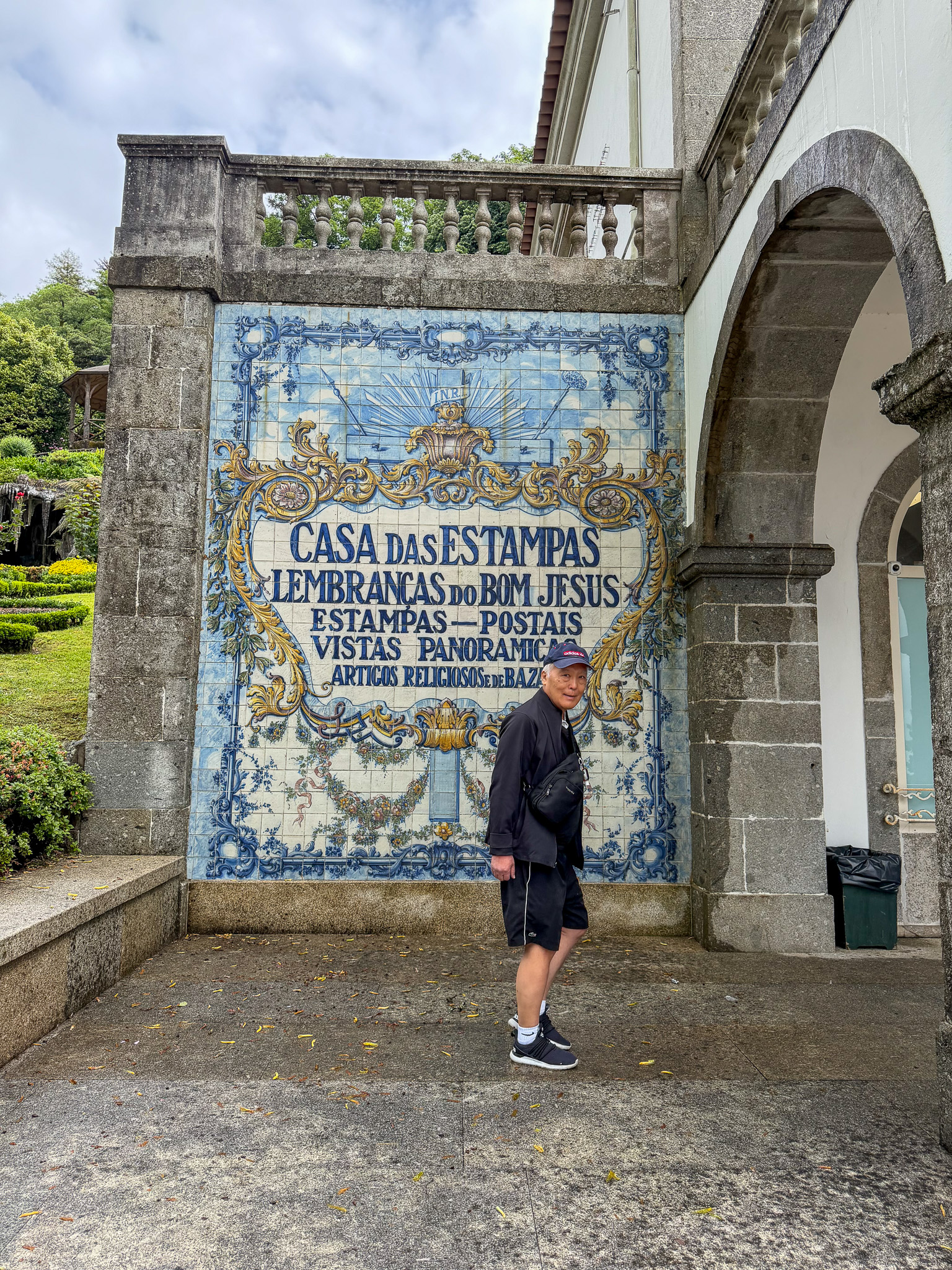
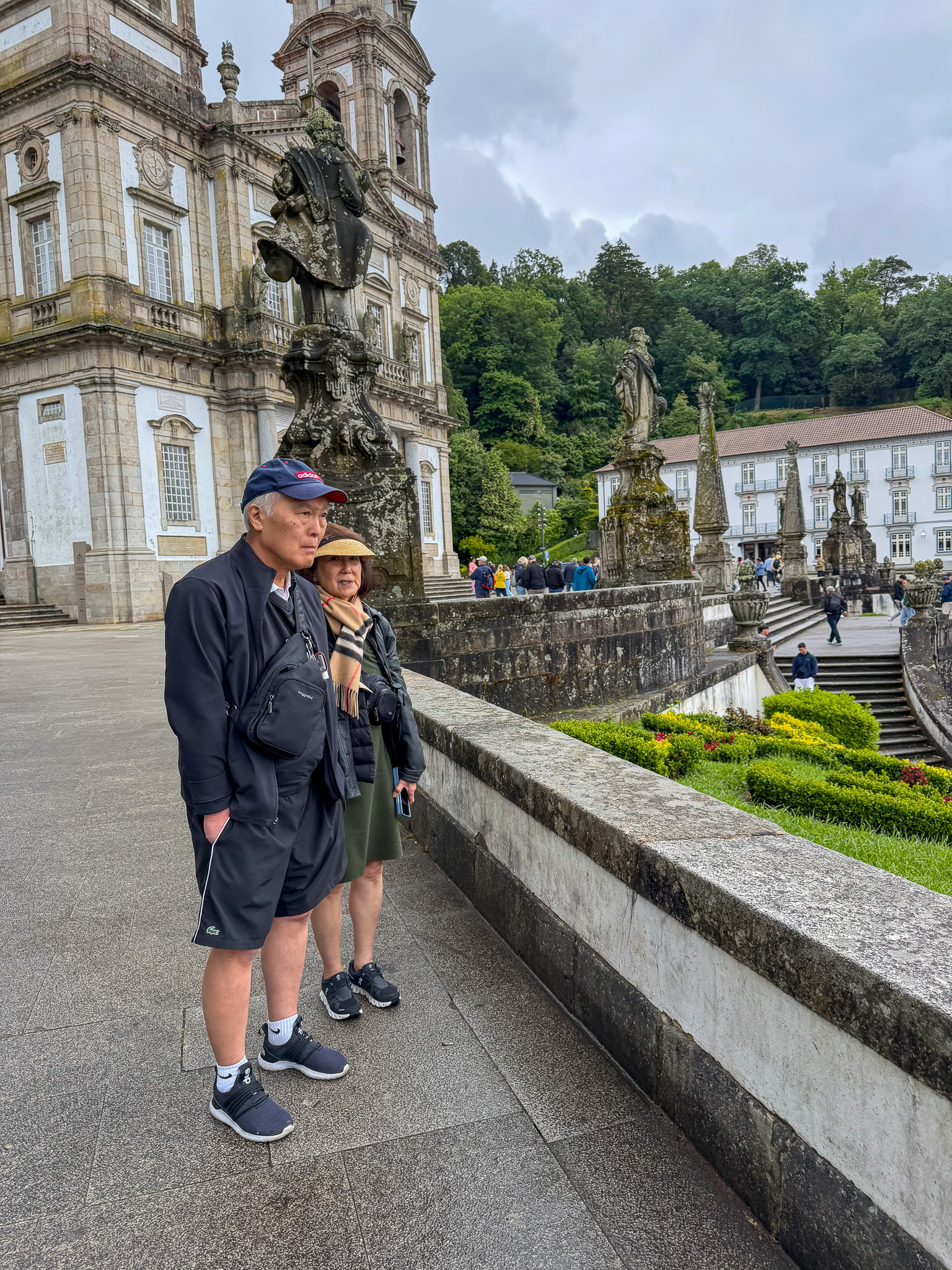
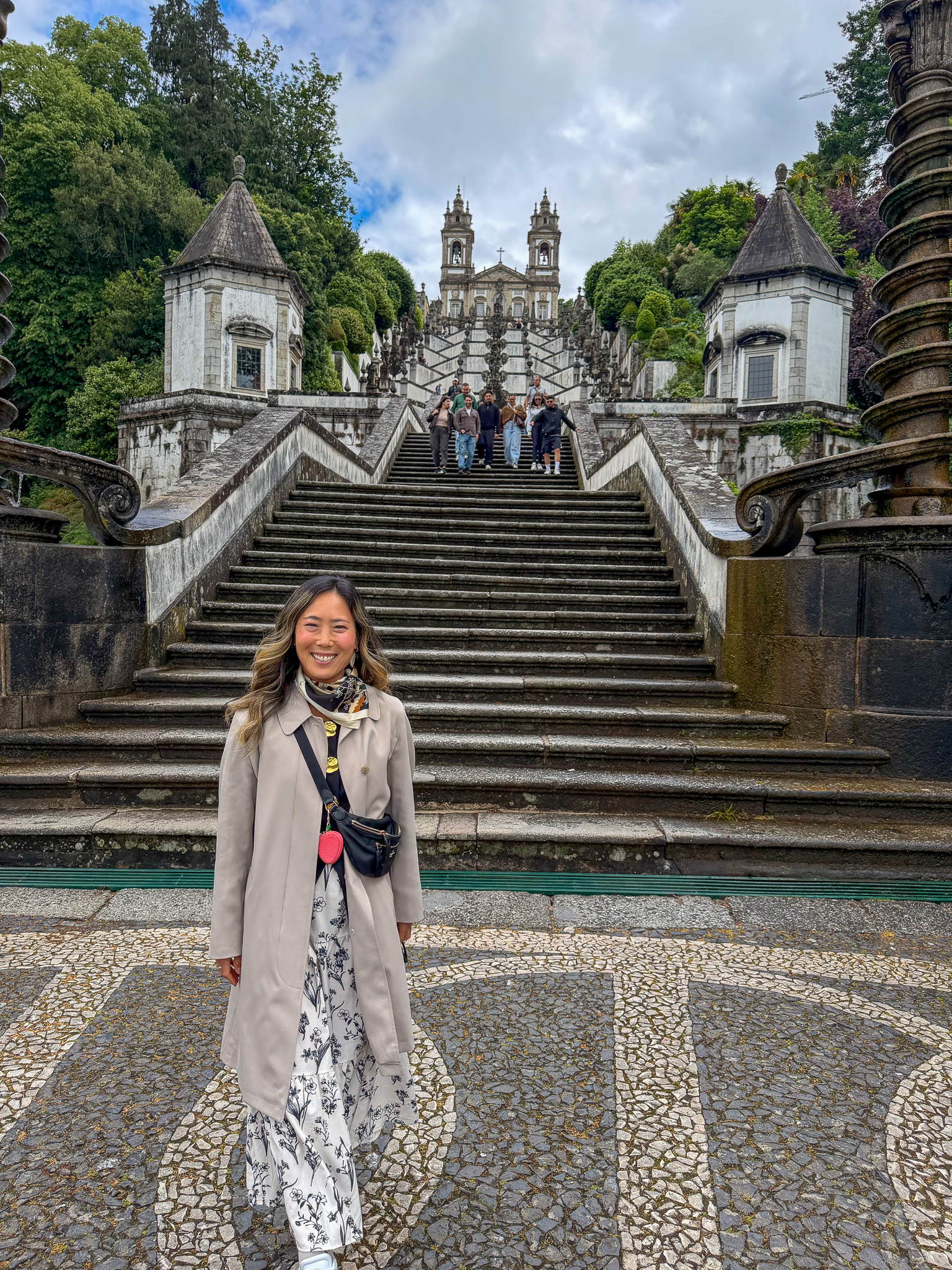
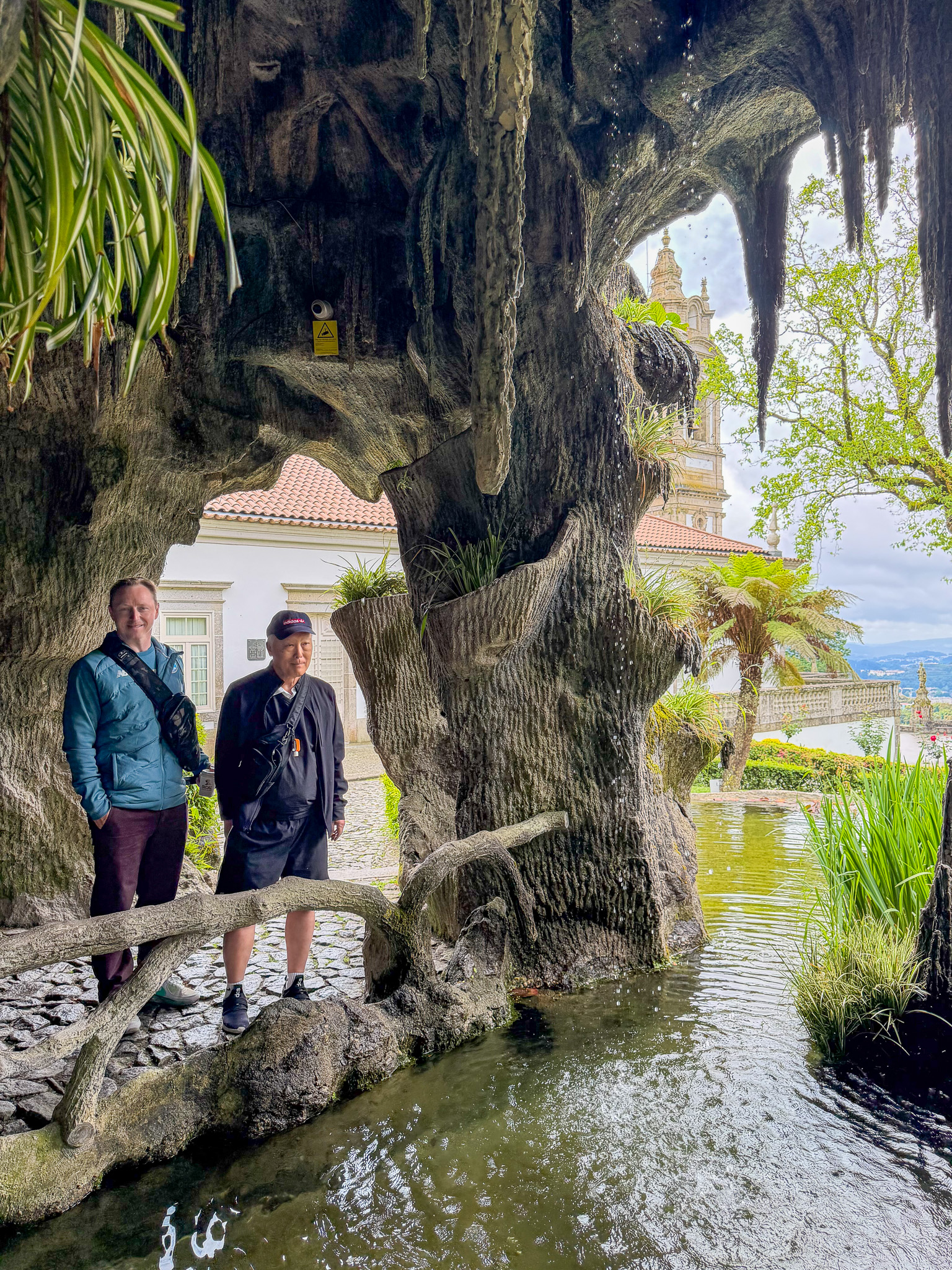
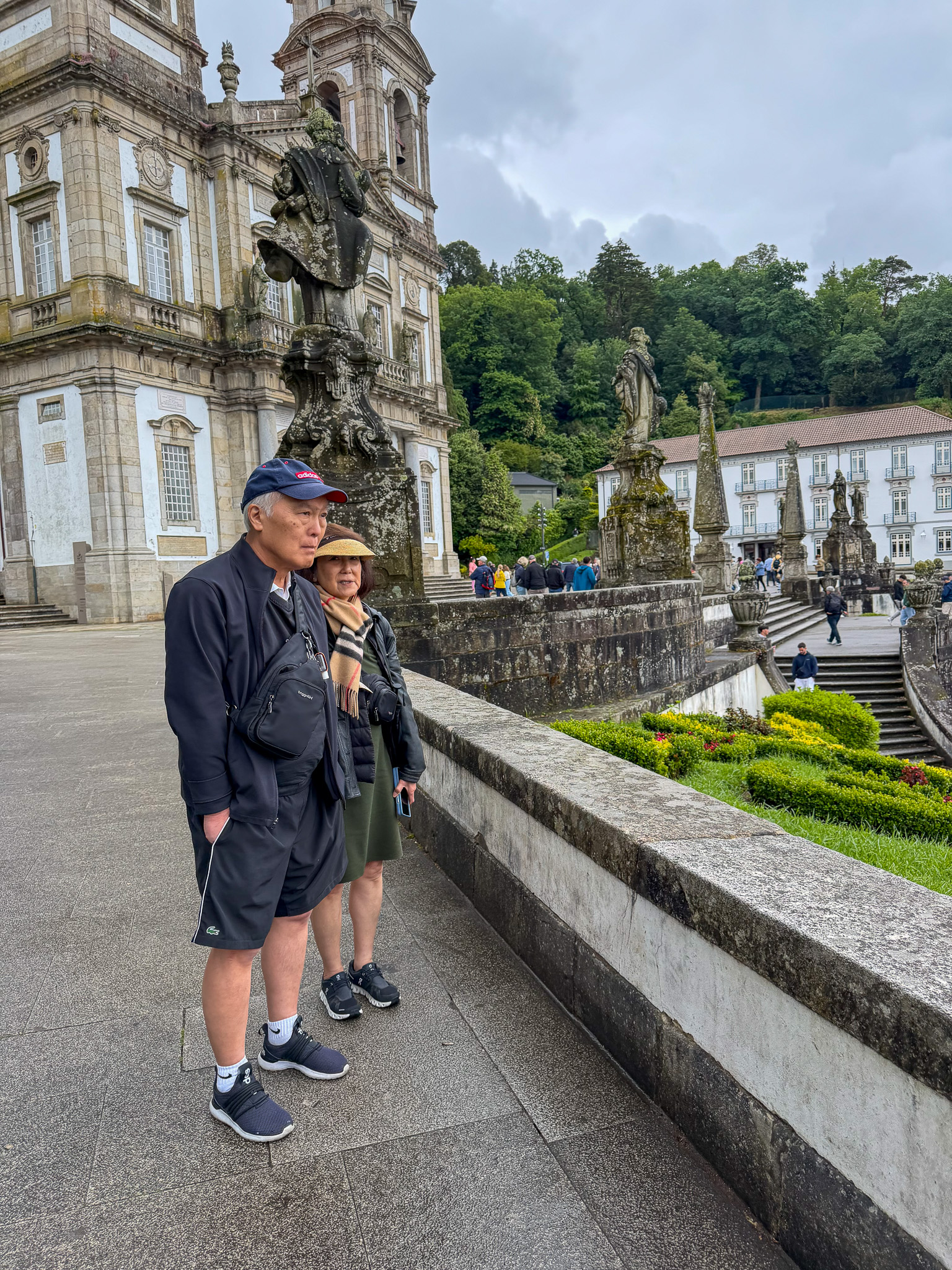
One of Portugal’s most spectacular sights. The baroque staircase sanctuary — formally the Santuário do Bom Jesus do Monte — rises dramatically up a forested hillside outside the city, with its famous zigzagging staircase flanked by chapels representing the Stations of the Cross. We drove to the top, walked through the artificial cave (Gruta Artificial de Ernesto Korrodi) and the church itself (open and free), then drove back down so my parents could look up at the famous staircase from below. No stairs required — the entire visit was done by car with a short, easy walk. Peaceful and absolutely worth it.
➡️ The funicular was closed on our visit, but it’s a great option when operating. There are also beautiful gardens behind the church if your group is up for it.
Churrasqueira Angolana, Braga
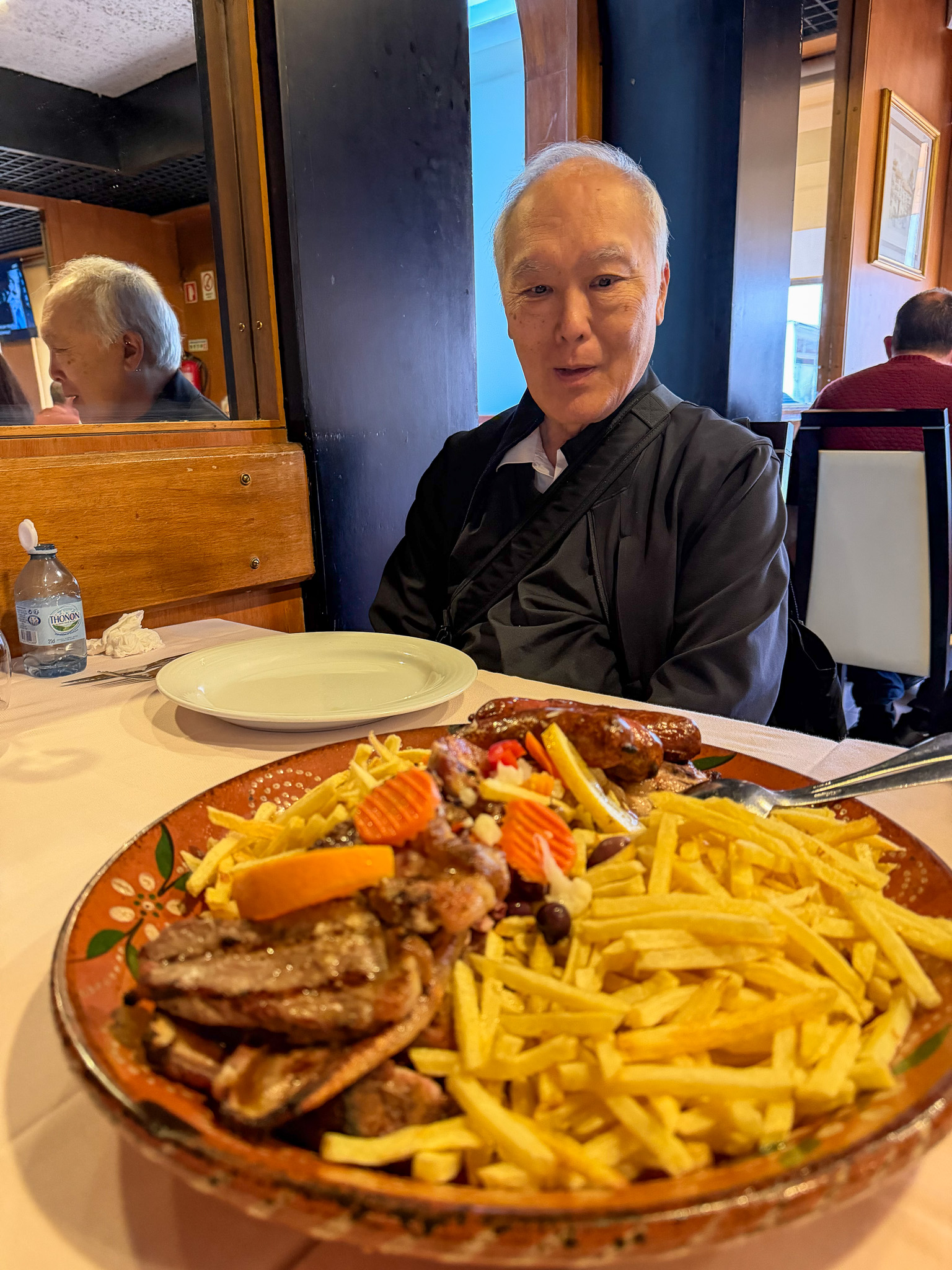
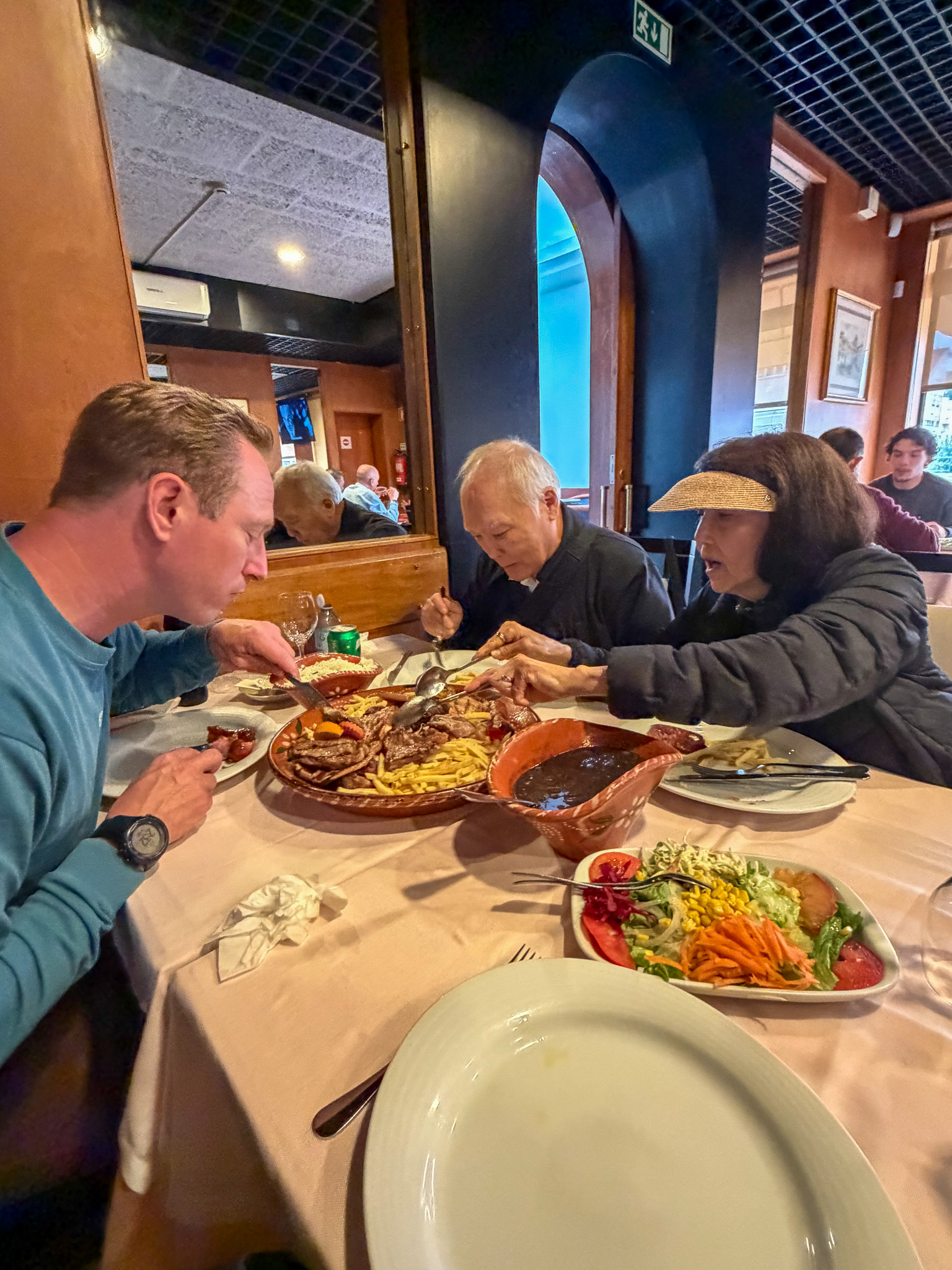
We wanted to take my dad to a local churrasqueira (think family-run BBQ spot) and were the only foreigners in the restaurant. Mixed grill plate for three: ribs, chicken, beef, sausage, a mountain of fries, and a pot of black beans and rice we barely put a dent in. Great value, enormous, and the server was very kind. My parents were surprised by how nice the setting was with white pressed white tablecloths…not typical of your normal US BBQ joint ;).
Dinner — Mercado Bom Sucesso (again)
We came back to the Mercado (Dad request) for a light Sunday dinner — my parents had an early flight the next morning and nobody was particularly hungry after the churrascaria. The nice thing about the Mercado is that everyone can pick something different: we each grabbed a little something from different stalls, found a table, and called it a night. Low-key and exactly right for the last evening.
What We Didn’t Have Time For
Worth adding to a longer visit or a return trip:
- More of Braga — We only scratched the surface. The city deserves at least a half day on its own: the cathedral (Sé de Braga) is one of the oldest in Portugal, and the arcaded Praça da República in the historic center is a beautiful spot for a coffee.
- Jardim Botânico do Porto — Beautiful grounds, genuinely a hidden gem, great for a slow afternoon. They have a café that does fresh cakes, scones, and a good daily lunch. ➡️ See our reel here.
- Meia-Nau, Matosinhos — We swapped it for pizza night; zero regrets. The seafood rice is supposed to be excellent and we’ll go back.
- Pinhais Sardine Tour — we popped into the store but there’s a full sardine experience worth doing properly on a return visit. ➡️ We made a reel about it here.
- Casa da Música — Porto’s landmark concert hall designed by Rem Koolhaas is worth a tour even if you’re not catching a performance. The architecture alone is worth the trip.
- Fernandes, Mattos & Ca., Lda. — a wonderful shop for authentic local products; on our list for next time.
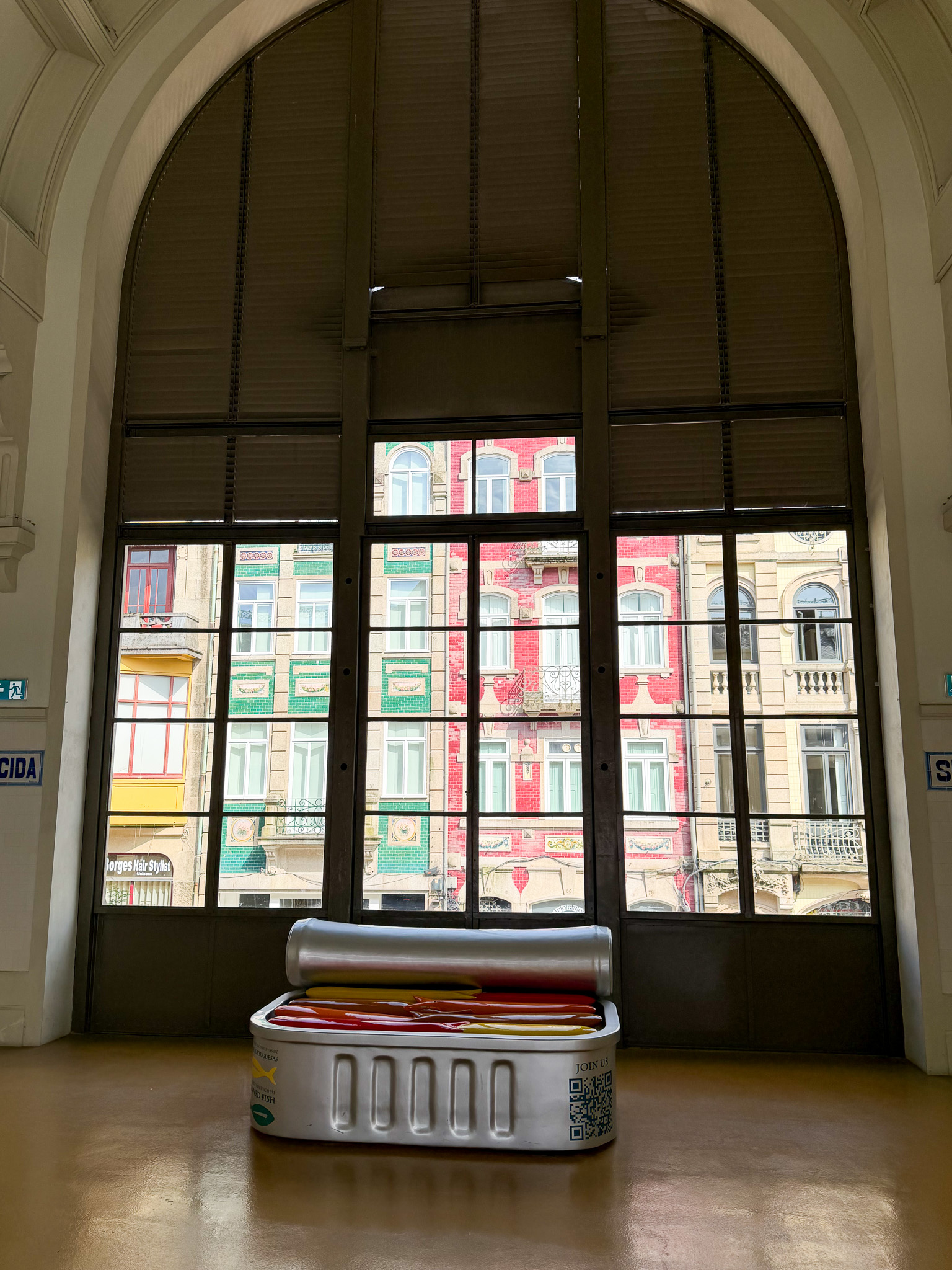
- São Bento Train Station — One of the most beautiful train stations in the world, with 20,000 azulejo tiles covering the main hall depicting scenes from Portuguese history. Even if you’re not catching a train, it’s worth walking through.
- Time Out Market — A well-curated food hall in a renovated market space, good for a browse or a quick bite if you’re in the area.
A Few Honest Takeaways
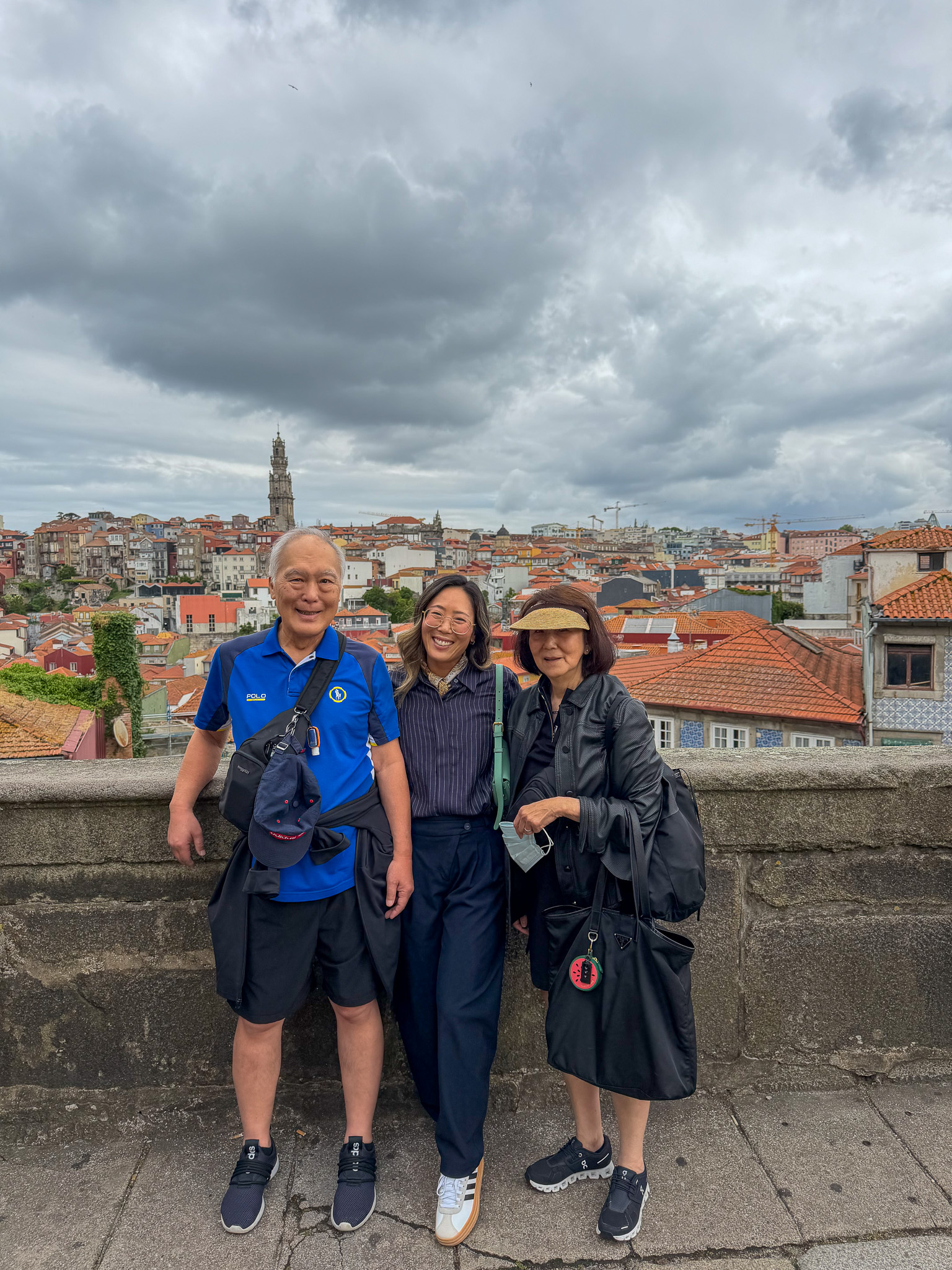
Porto is a genuinely easy city to show off to people of all ages. It’s compact, Uber-friendly, and the mix of car days with shorter on-foot mornings meant my dad never had to push past his limits. The key is not over-scheduling: build in rest time after lunch, keep the first dinner close to where you’re staying, and leave room for the unplanned moments.
The moments I’ll remember most aren’t the big sights. My dad stopping mid-sentence on a street corner to look at a building. My mom marveling at lingueirão (razor clams with long narrow shells). Both of them asleep in the back seat on the way home from Braga.
Porto does that to people. Even people who’ve seen a lot of the world.
Loved this? We’ve put together a full Porto Travel Guide with where to stay, what to do, and our favorite hidden gems to help you plan the perfect trip. And if you’re thinking about a road trip, check out our 7 Best Road Trips from Porto for routes worth the drive.




Leave a Reply