This post contains affiliate links. If you book through our links, we may earn a small commission at no extra cost to you — it helps us keep creating content like this. We only recommend experiences we’ve done ourselves and genuinely loved.
Iceland is the kind of place you could spend weeks exploring — the highlands, the Westfjords, the volcanic interior, the far north. There’s genuinely no end to it. But four days gives you a real introduction: the South Coast, the Golden Circle, a glacier, and Reykjavík, done properly and without rushing. It’s absolutely worth doing even if you know you’ll be back for more.
One thing worth knowing: Iceland works beautifully as a stopover destination. If you’re flying between North America and Europe, many transatlantic routes can route through Reykjavík, which is how we ended up here — a few days in Iceland on the way between London and Seattle.
🗓️ When to Go
Iceland is a year-round destination, and each season offers something different.
- June–August is peak season — long daylight hours, the warmest weather, and the most tourists. Popular stops get crowded and accommodation books out early. If this is your window, go, just plan ahead.
- September–October brings fewer crowds, autumn colors, and the first real chances of seeing the Northern Lights as the nights get darker.
- November–February is Northern Lights season in earnest — dark skies, snow-covered landscapes, and a more dramatic, quieter Iceland. Winter driving requires care and a 4WD rental.
- March–May is the shoulder season sweet spot — tourist levels are lower, prices are better, daylight is growing daily, and the landscape is green and dramatic. Puffin season starts in May.
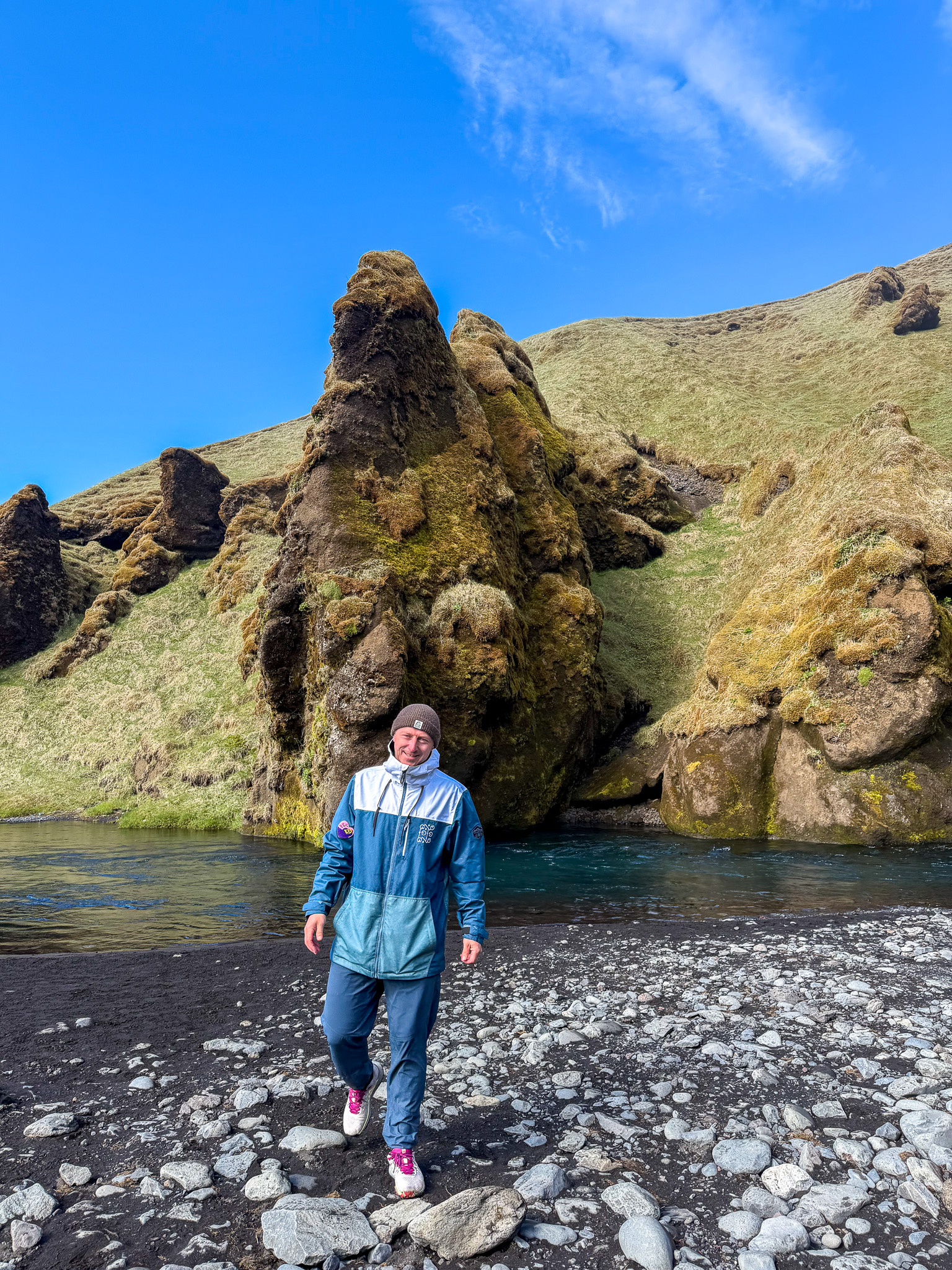
➡️ We went in May and loved it. Manageable crowds, some stops almost to ourselves, and the start of puffin nesting season. One thing to know going in: the weather shifts fast. We had moments of full sun where we both got more sunburned than expected — then hours later it was cold and windy. Pack for both ends of the spectrum on the same day.
🚗 Getting Around
There are great guided tours out of Reykjavík covering both the South Coast and the Golden Circle — if you’d rather not drive, or want local commentary, that’s a completely legitimate way to do it. On Erika’s first trip to Iceland, she did a full-day Golden Circle tour from Reykjavík and then explored the South Coast independently — a great combination if it’s your first time and you want a guided introduction to the loop before going solo on the coast.
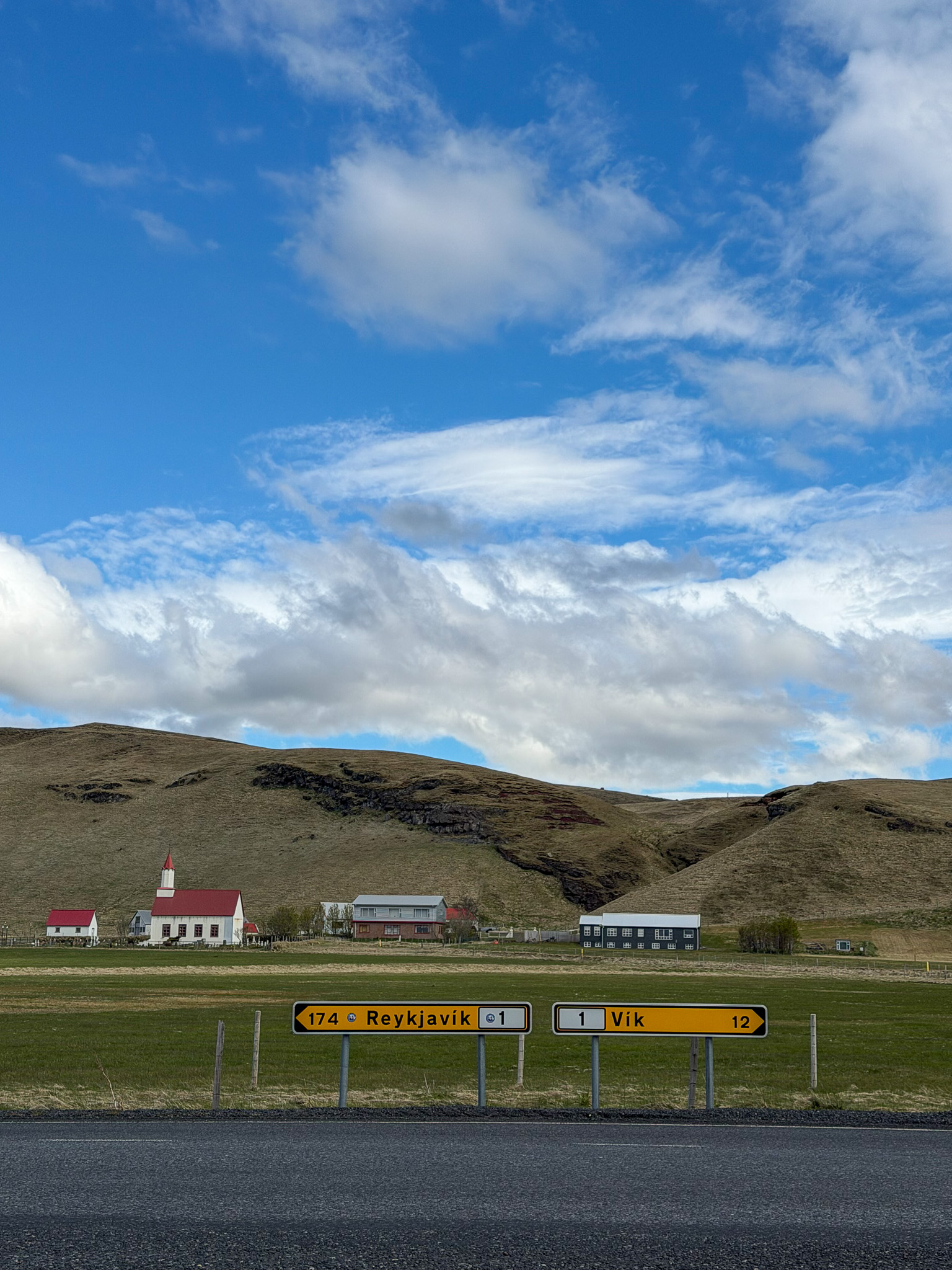
This time around, we drove ourselves and loved the flexibility. The South Coast is very easy to self-drive — it’s essentially one road heading in one direction, with the major stops lined up in sequence. No backtracking, no complicated navigation. If you’re comfortable with road trips, a rental car gives you control over how long you stay at each stop.
➡️ Tip: Parking is paid at most major sights — budget around $8 flat rate per stop — and is camera-enforced, so don’t skip it. Also plan your gas stops in advance; sights are spread out and stations aren’t always nearby when you need them.
🌋 The Golden Circle
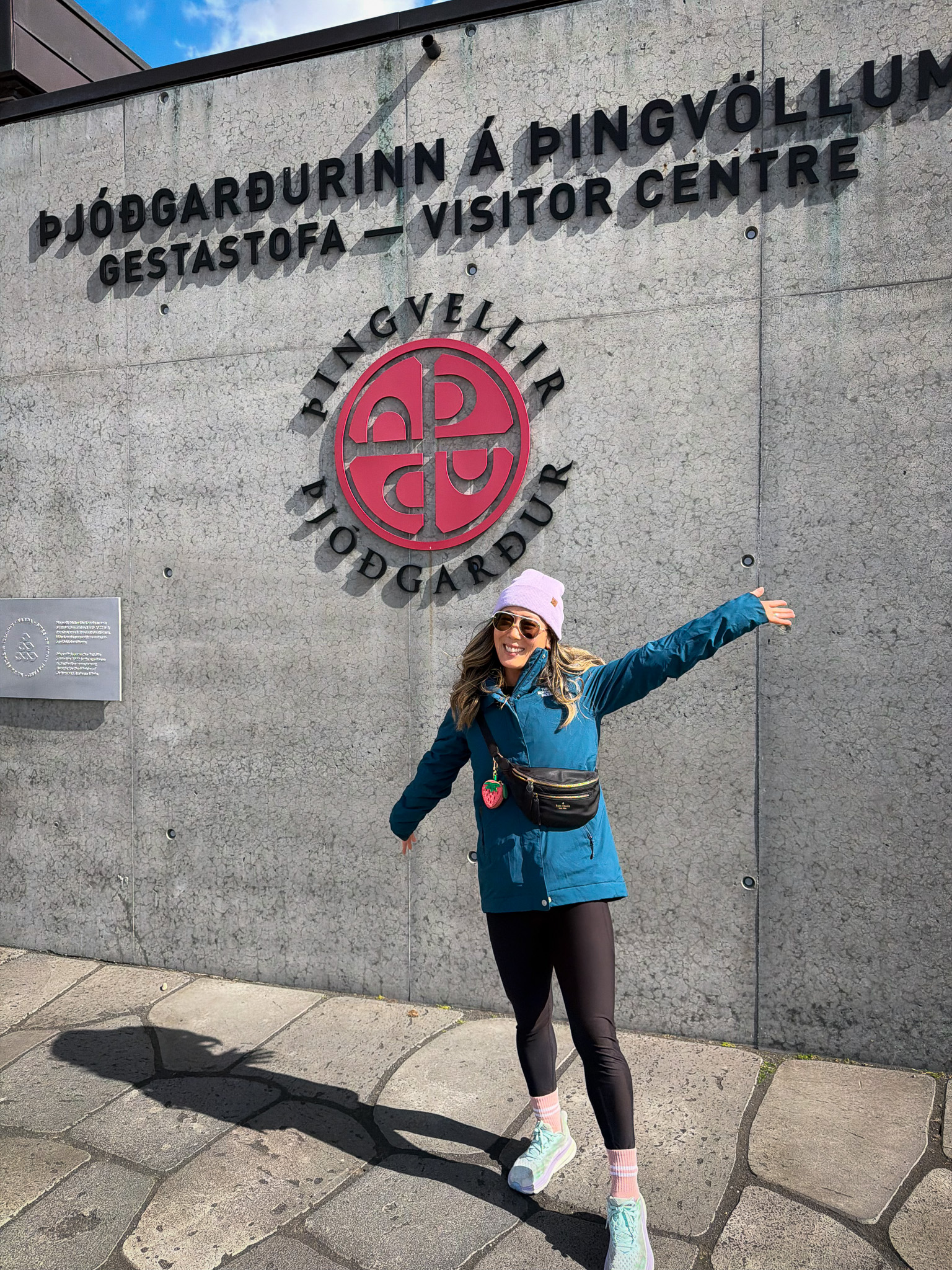
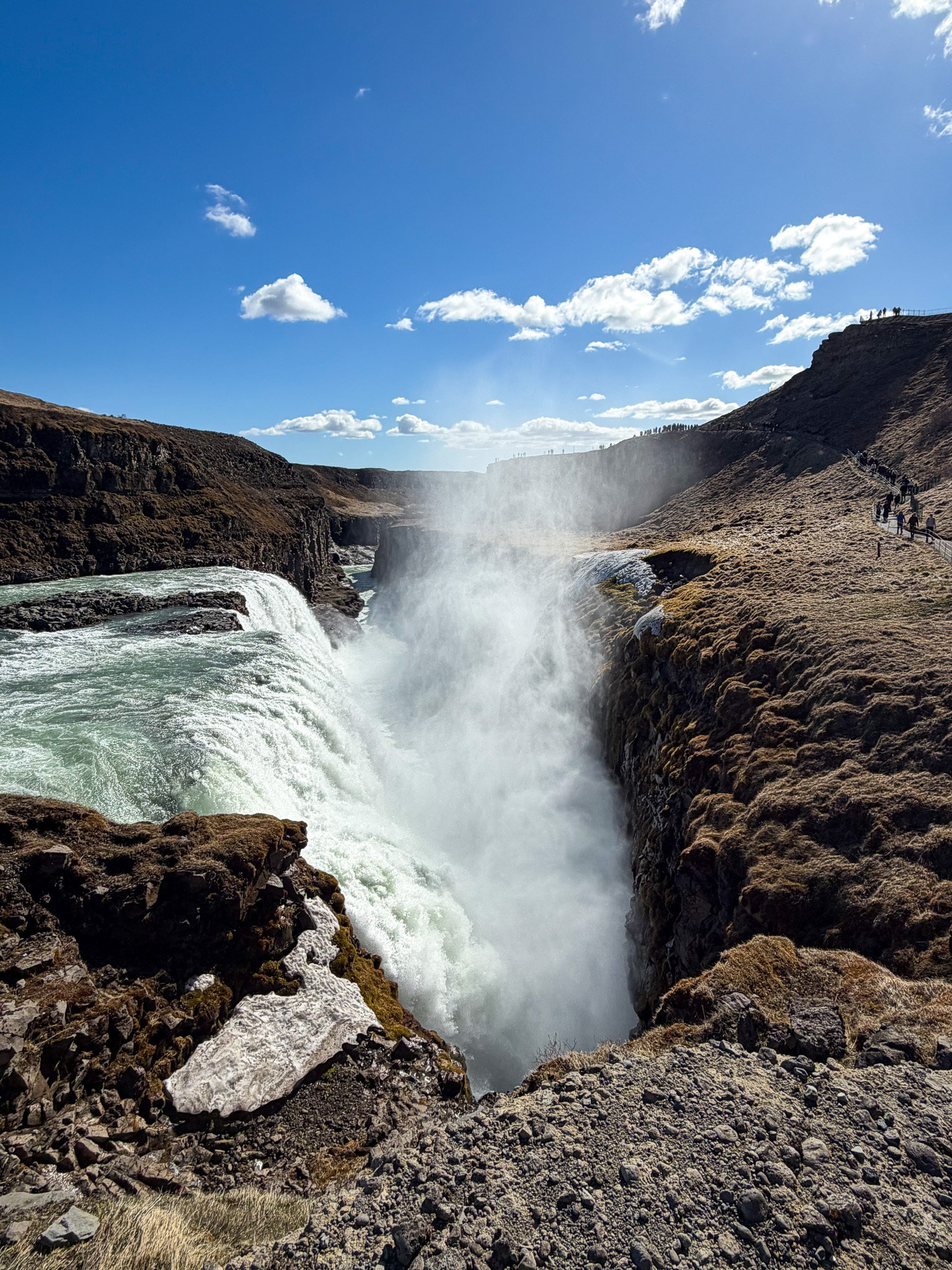
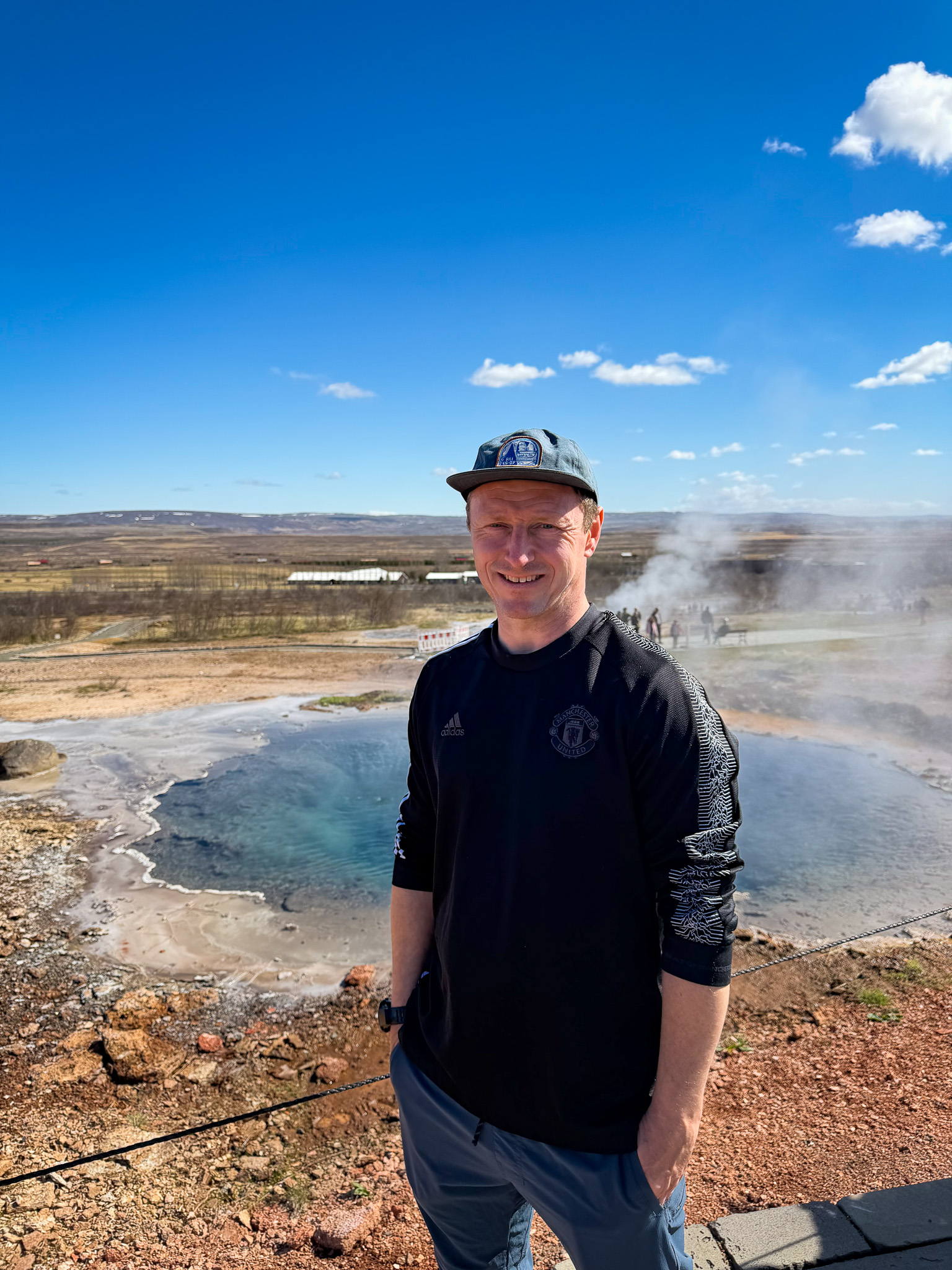
The Golden Circle is a roughly 300km loop from Reykjavík that connects three distinct natural wonders. It’s very doable in a day and makes a great starting point for the trip. The major stops all have good cafes, restrooms, and gift shops, so you’re well taken care of along the route.
- Þingvellir National Park — UNESCO World Heritage Site where the North American and Eurasian tectonic plates meet. Start at the visitor center to get your bearings — it’s well done with interactive maps and gives great context before you head out. From there, walk through the actual rift valley along the Almannagjá gorge. If you have time, the walk out to Öxarárfoss waterfall is about 20 minutes each way and very worthwhile. You can make the total walk as short or as long as you like — we did about 3 miles and it didn’t feel like enough.
- ⏱ Allow 1.5–2 hours minimum — more if you want to explore
- 🅿️ Parking at P1 is around $8. If you’re heading straight to the waterfall, P2 puts you much closer
- 💡 Free and self-guided — no tickets needed
- Geysir Geothermal Area — The area is named after the original Great Geysir, which actually gave all geysers their name worldwide — but it’s now largely dormant. The active star is Strokkur, which erupts every 5–10 minutes, shooting boiling water 15–20 meters into the air (and occasionally up to 40 meters on a big one). Each eruption is a little different, and there’s something about watching it that doesn’t get old — we stayed for four or five cycles and could have stayed longer. Beyond Strokkur there’s a whole geothermal field to wander: bubbling hot pools, fumaroles, and mud pots along the path.
- ⏱ Allow 45–60 minutes
- 💡 Free to visit
- ➡️ Stand upwind of Strokkur — the spray carries.
- Gullfoss (Golden Falls) — A massive two-tiered waterfall dropping into a canyon. Walk all the way down to get right up close to the cascades — the scale and the mist up close is something else.
- ⏱ Allow 45–60 minutes
- ➡️ Bring a light waterproof layer — the mist reaches the viewing paths
Those three are the core, but there are some popular add-ons worth knowing about:
- Kerið Crater — A vivid volcanic crater lake that many tours include as a fourth stop. Small entrance fee, easy walk around the rim.
- Brúarfoss — Often called Iceland’s bluest waterfall. Requires a short hike but the color of the water is striking.
- Laugarvatn Fontana — A geothermal spa with hot tubs and steam rooms right on a lake. Great if you want a soak without Blue Lagoon crowds or prices.
- Secret Lagoon (Gamla Laugin), Flúðir — A smaller, more natural geothermal pool that fits neatly into a Golden Circle day.
➡️ Tip: If you plan to continue south to the coast after the Golden Circle, drive the loop in one direction rather than returning to Reykjavík — it saves time and you’re already partway there. That’s what we did this time around and stayed in Vík our second night.
🏔️ The South Coast
The South Coast is the stretch most people come to Iceland for. Starting from Vík and heading west, everything lines up along Route 1 in order — no backtracking required.
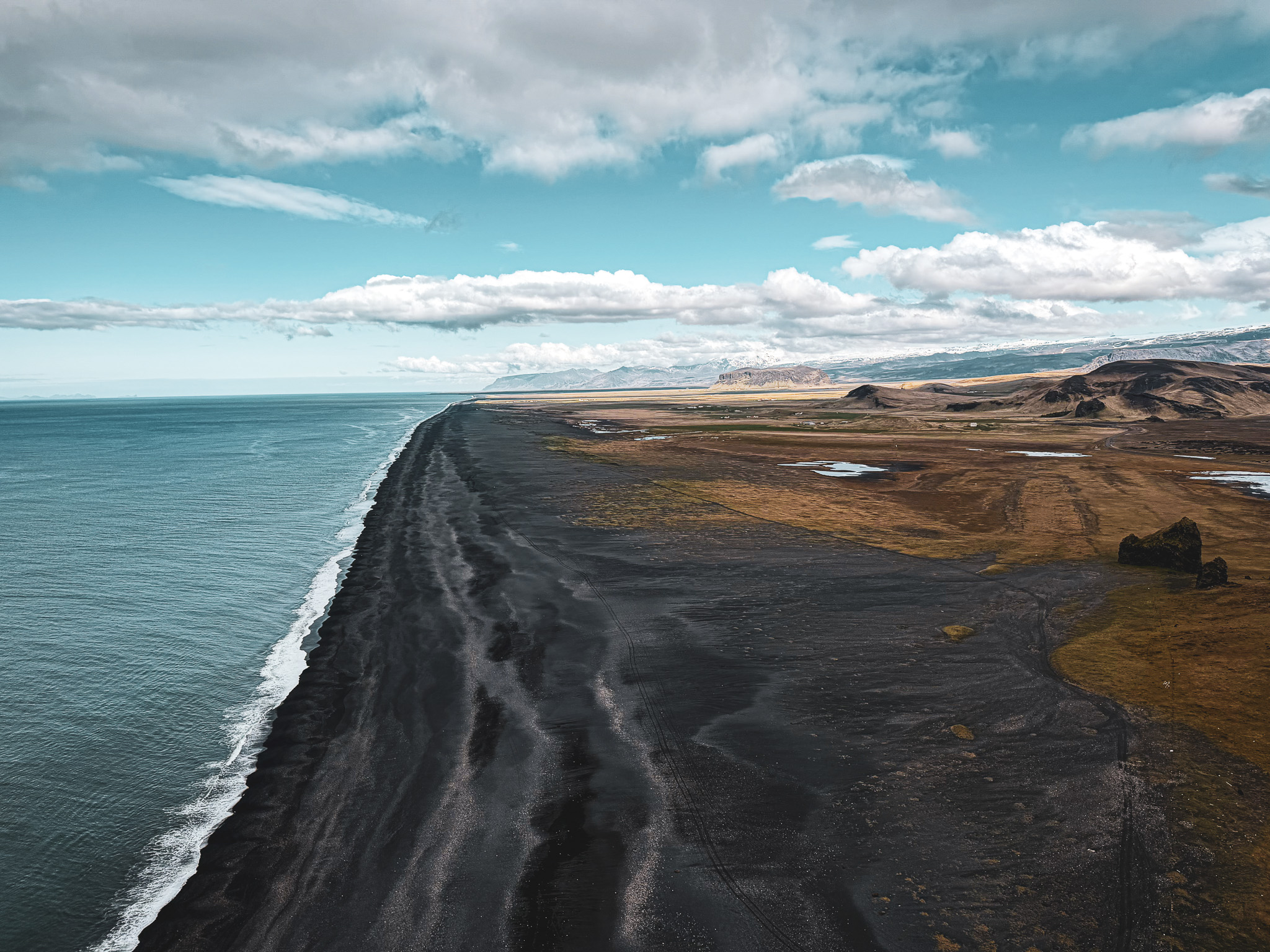
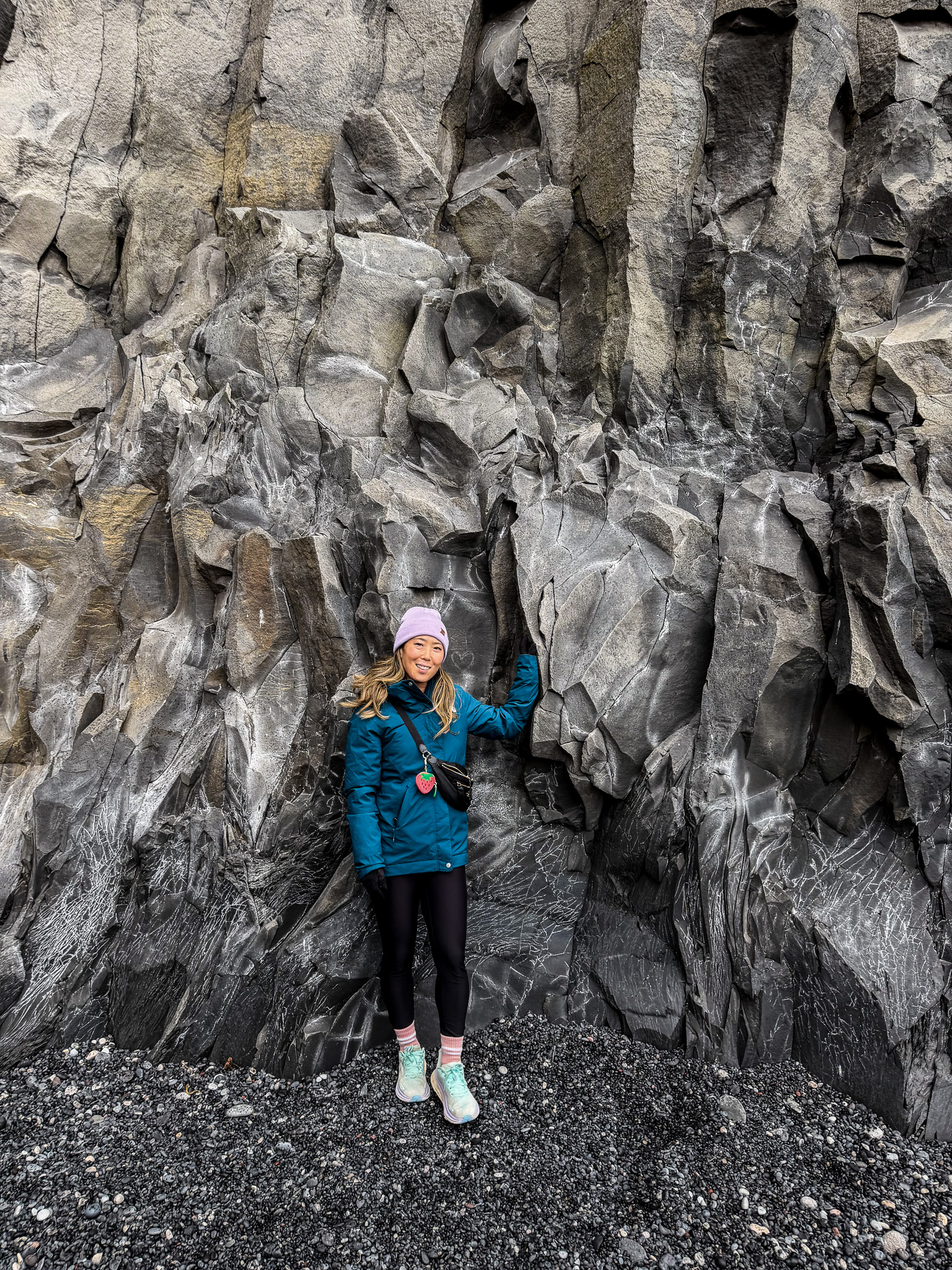
- Reynisfjara (Black Sand Beach) — The basalt column formations rising out of the sea, dramatic caves and cliffs, black sand against white waves. One of those places that feels otherworldly. Both times we visited it was intensely windy — that’s just the nature of the spot.
- ⚠️ Stay well back from the water — sneaker waves and rip currents here can be very dangerous.
- Skógafoss ⭐ — Erika’s favorite stop in all of Iceland, and honestly it might be the best waterfall in the country. Standing nearly 200 feet tall, Skógafoss barely feels real until you’re in front of it getting completely soaked by the mist. What surprised us most wasn’t just the size — it was how powerful the whole area feels. The sound of the water, the constant mist in the air, the cliffs surrounding it — it’s unreal in the best way. The 527 steps up the side are absolutely worth climbing for the view of the falls from above, and from the top you can continue along a trail that connects to seven or more additional waterfalls if you want to keep going.
- ⏱ Allow 45–60 minutes minimum, more if you climb
- ➡️ Go early or later in the evening for a quieter experience — it’s one of the more popular South Coast stops
- ➡️ Bring a proper waterproof layer — the mist carries much farther than you expect, especially if you’re getting up close.
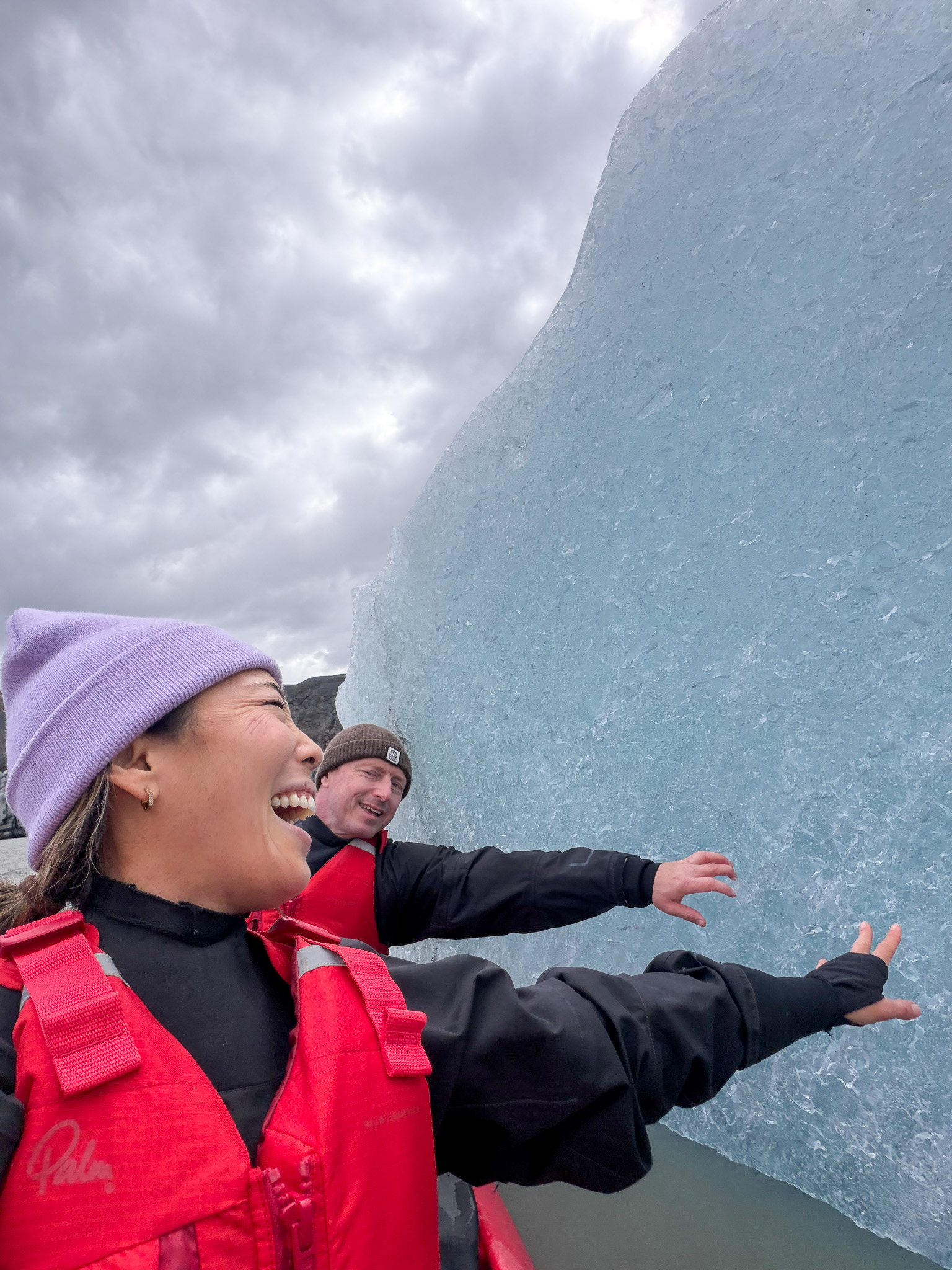
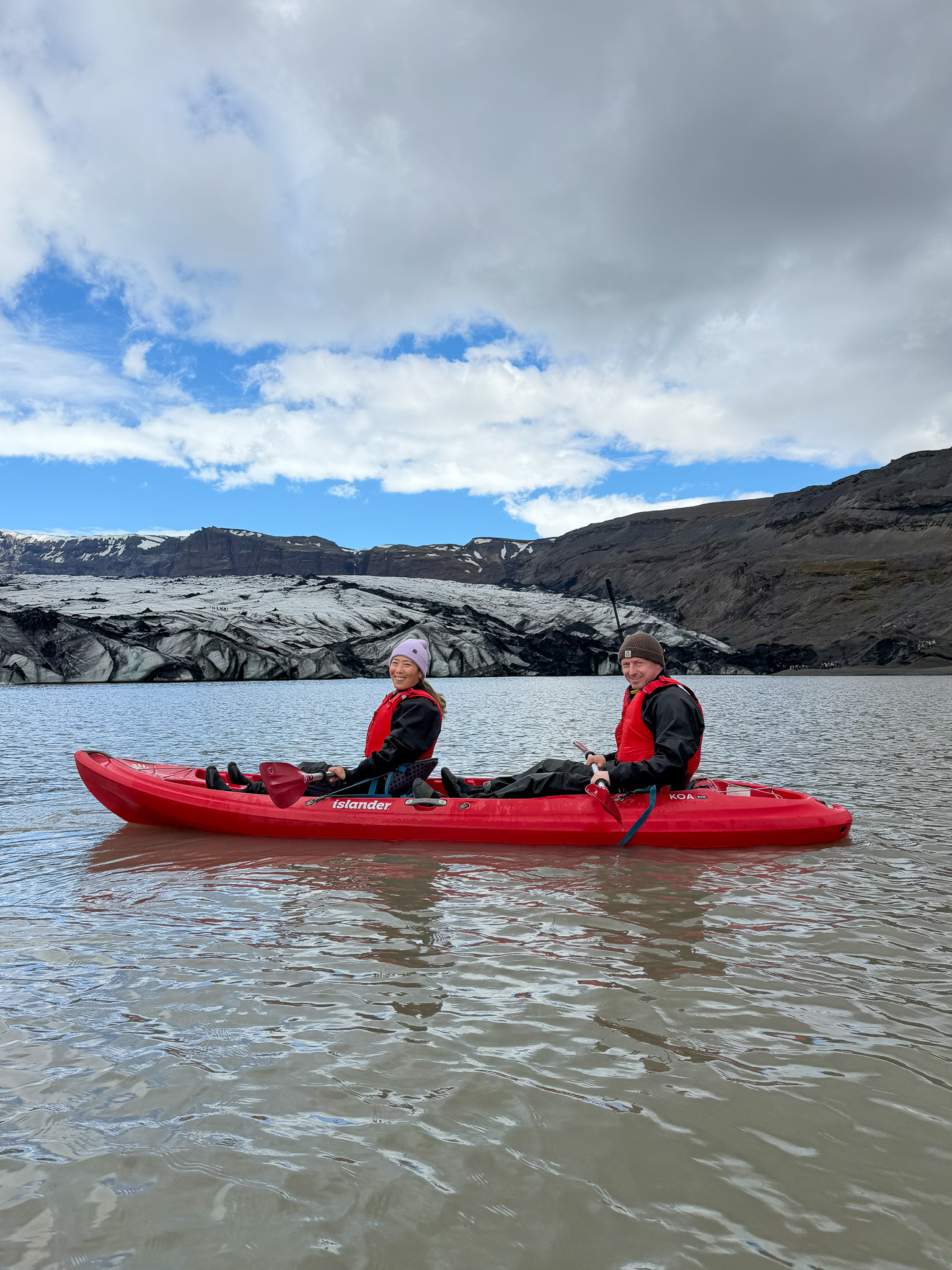
- Sólheimajökull Glacier — One of the most accessible glaciers on the South Coast. You can walk right up to the viewpoint at the glacier’s edge without booking anything — it’s an easy trail from the car park and impressive on its own. If you want to get further, guided glacier hikes and kayaking tours take you directly onto the ice and into the lagoon. We did the kayaking tour and spent about three hours paddling between floating chunks of ice with the glacier wall in front of us — layers of volcanic ash streaked through the ice, deep blue color on freshly broken formations, trapped air bubbles, the whole thing. Our guide pointed out where the glacier’s edge sat 15 years ago, which puts the scale of retreat into sobering perspective. One of those experiences that’s hard to describe until you see it for yourself.
- ⏱ Allow 1 hour for the viewpoint walk; 3+ hours if you book a tour
- ➡️ Book the glacier kayaking tour here — book well in advance, especially May through summer. Our guide was Paz (@wild_women_travel) — highly recommend seeking her out.
- ➡️ Expect wet feet; bring extra socks and layer up underneath your gear
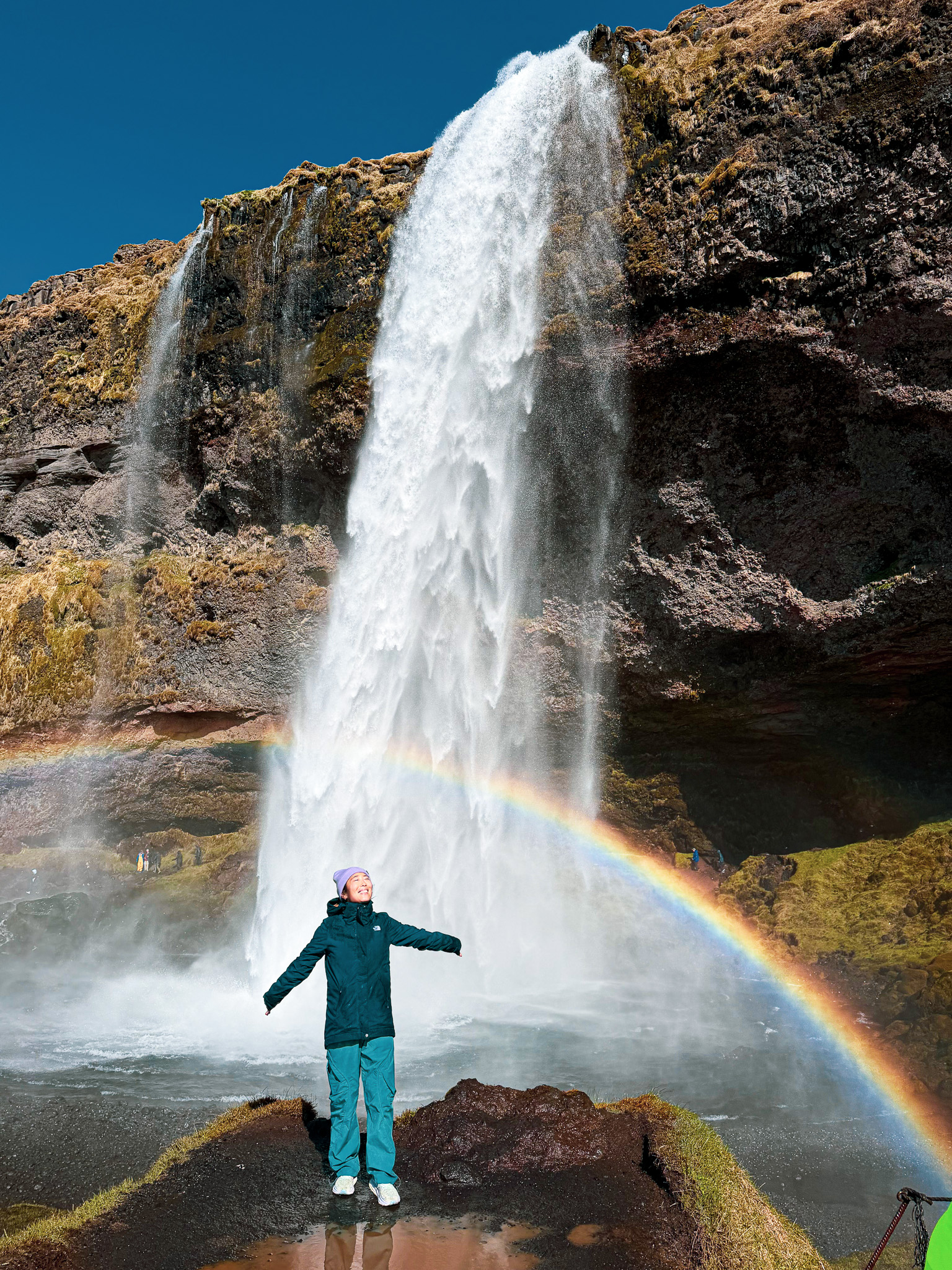
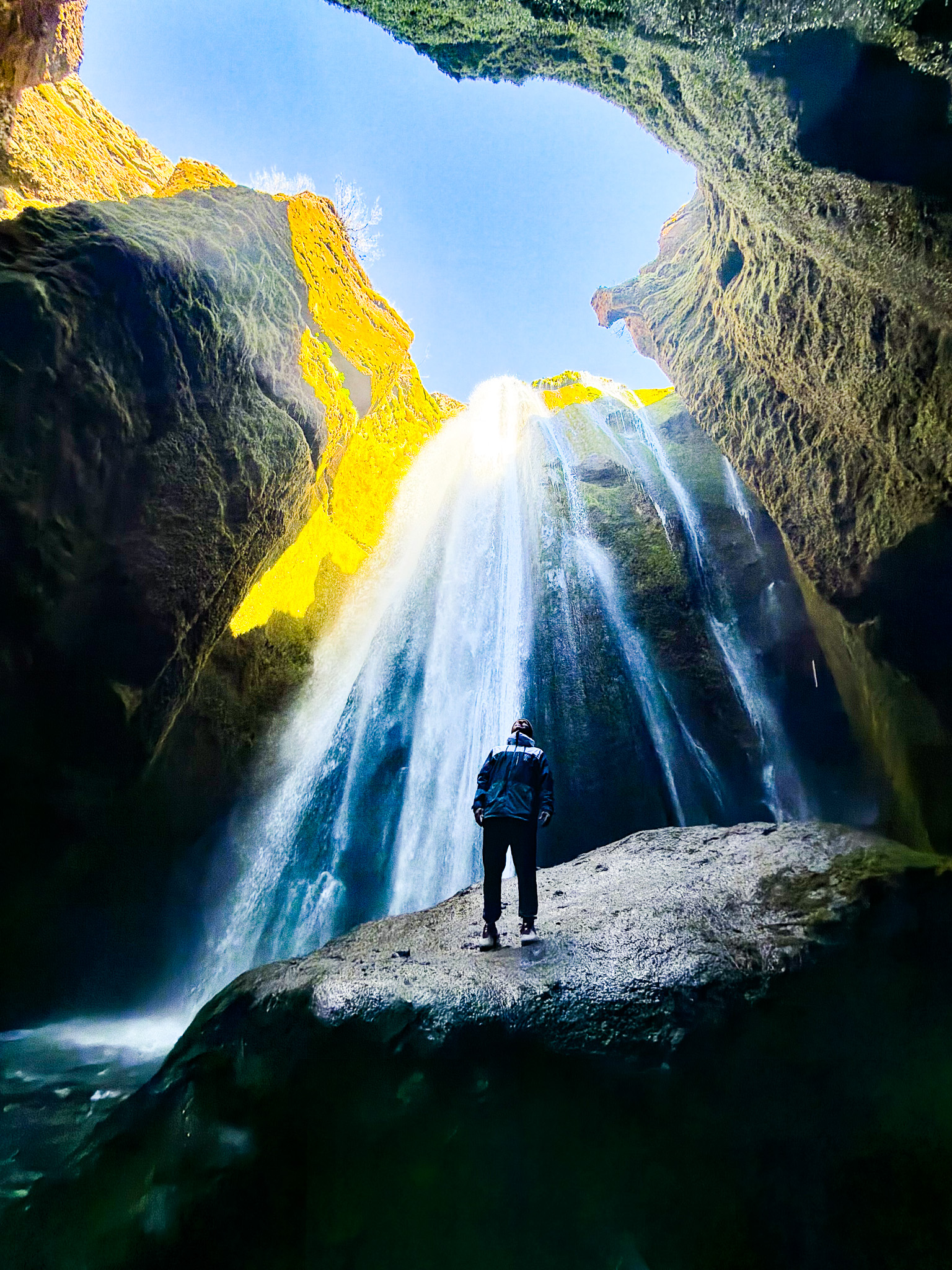
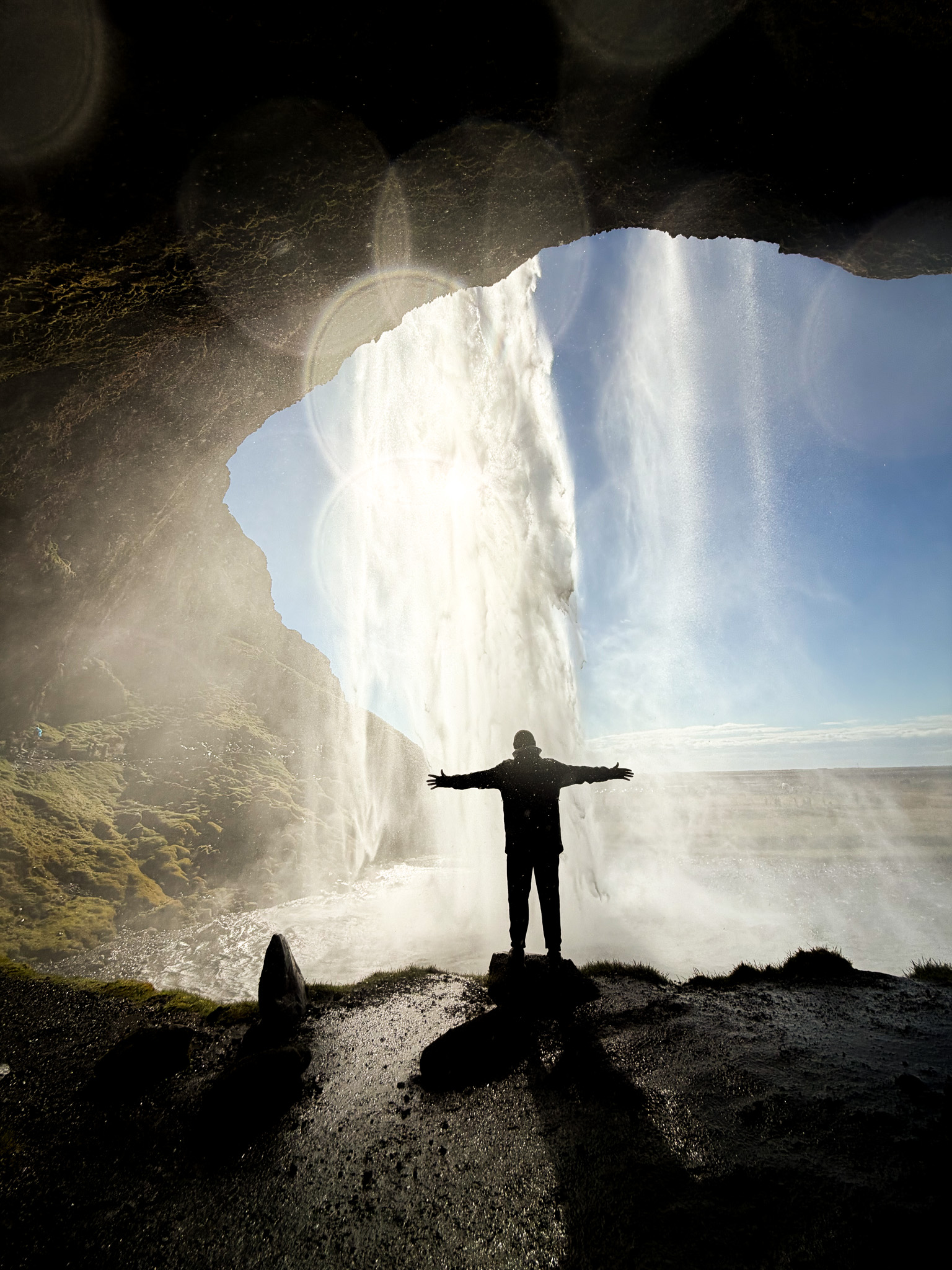
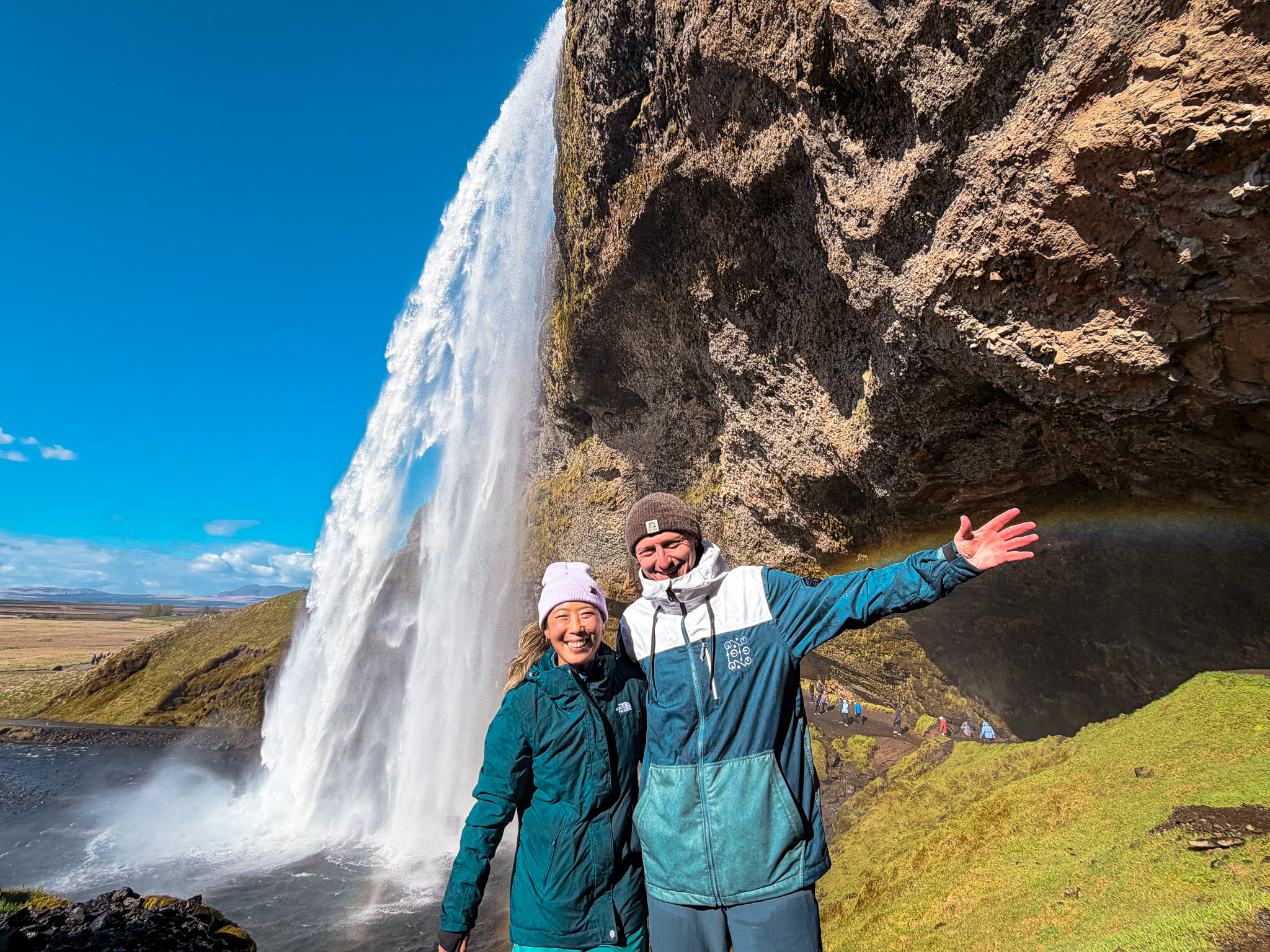
- Seljalandsfoss + Gljúfrabúi — Seljalandsfoss is one of the few waterfalls in the world where you can walk completely behind the curtain of water — and the only one in Iceland where it’s possible. The waterfall drops 60 meters from cliffs that were once Iceland’s ancient coastline, fed by glacial meltwater from Eyjafjallajökull. Walking behind it is exactly as surreal as it sounds — you’re looking out through a roaring veil of water at the South Coast landscape beyond. Five minutes away is Gljúfrabúi, a hidden waterfall tucked inside a narrow canyon slot that most people walk right past.
- ⏱ Allow 1–1.5 hours for both
- ➡️ Bring a poncho or full waterproofs — we were soaked after walking fully behind it….but it was so worth it!
- Dyrhólaey — A protected nature reserve with two levels. The lower viewpoint has a dramatic sea arch and rock formations at the water’s edge. Drive up to the lighthouse for a panoramic sweep of the entire South Coast — Reynisfjara’s black sand beach spread out below you, glacier in the distance — it’s genuinely one of the best views in Iceland. May to June is puffin nesting season; they nest in the grassy clifftops near the upper viewpoint. We sadly didn’t see them at 7 pm or the next morning, but we hear timing really varies since they’re out fishing most of the day.
- ⏱ Worth 1–1.5 hours if you do both levels
- ➡️ During nesting season (mid-May through June), the upper area closes overnight 7pm–9am for bird protection — plan accordingly
🛁 Blue Lagoon
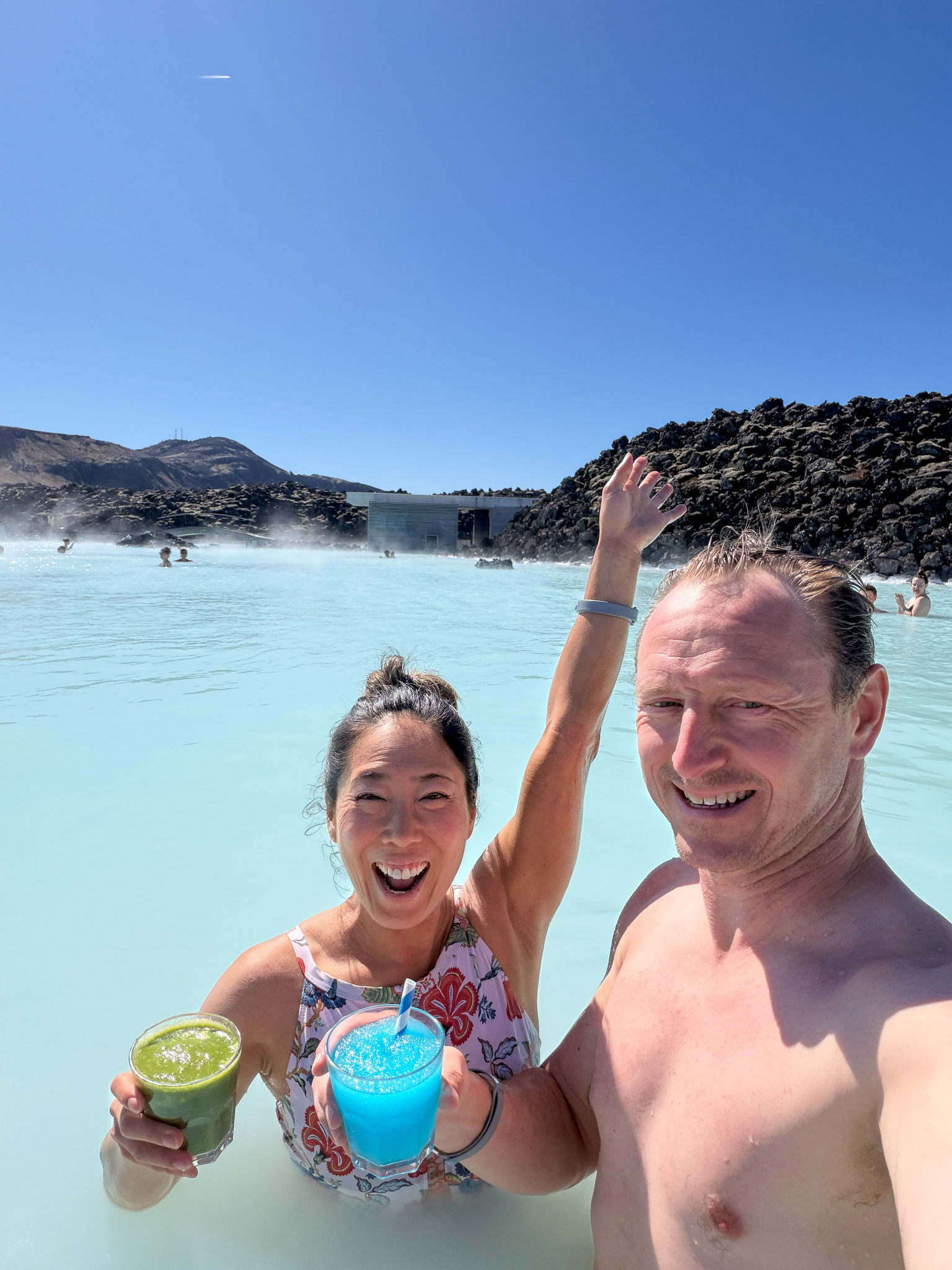
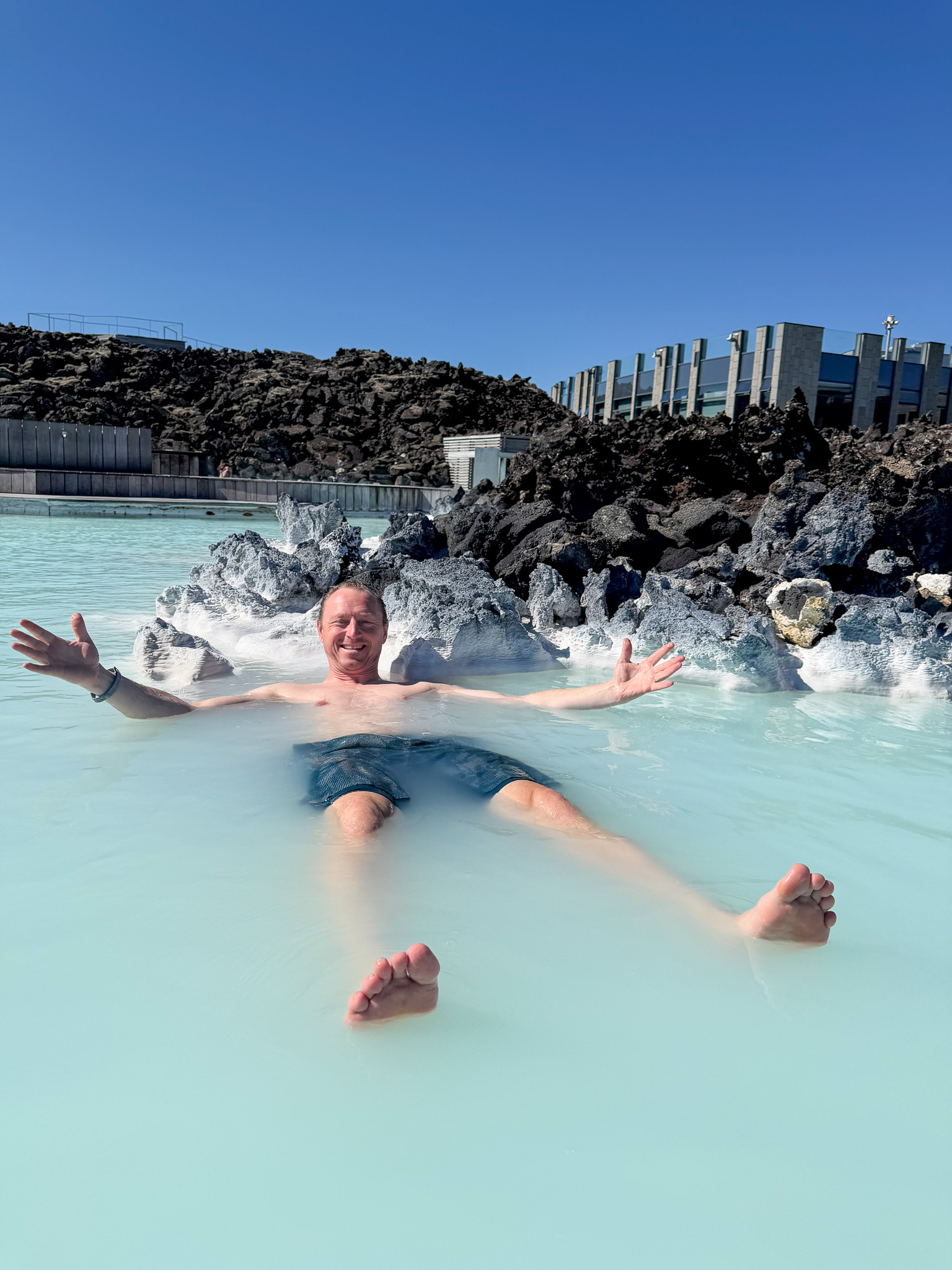
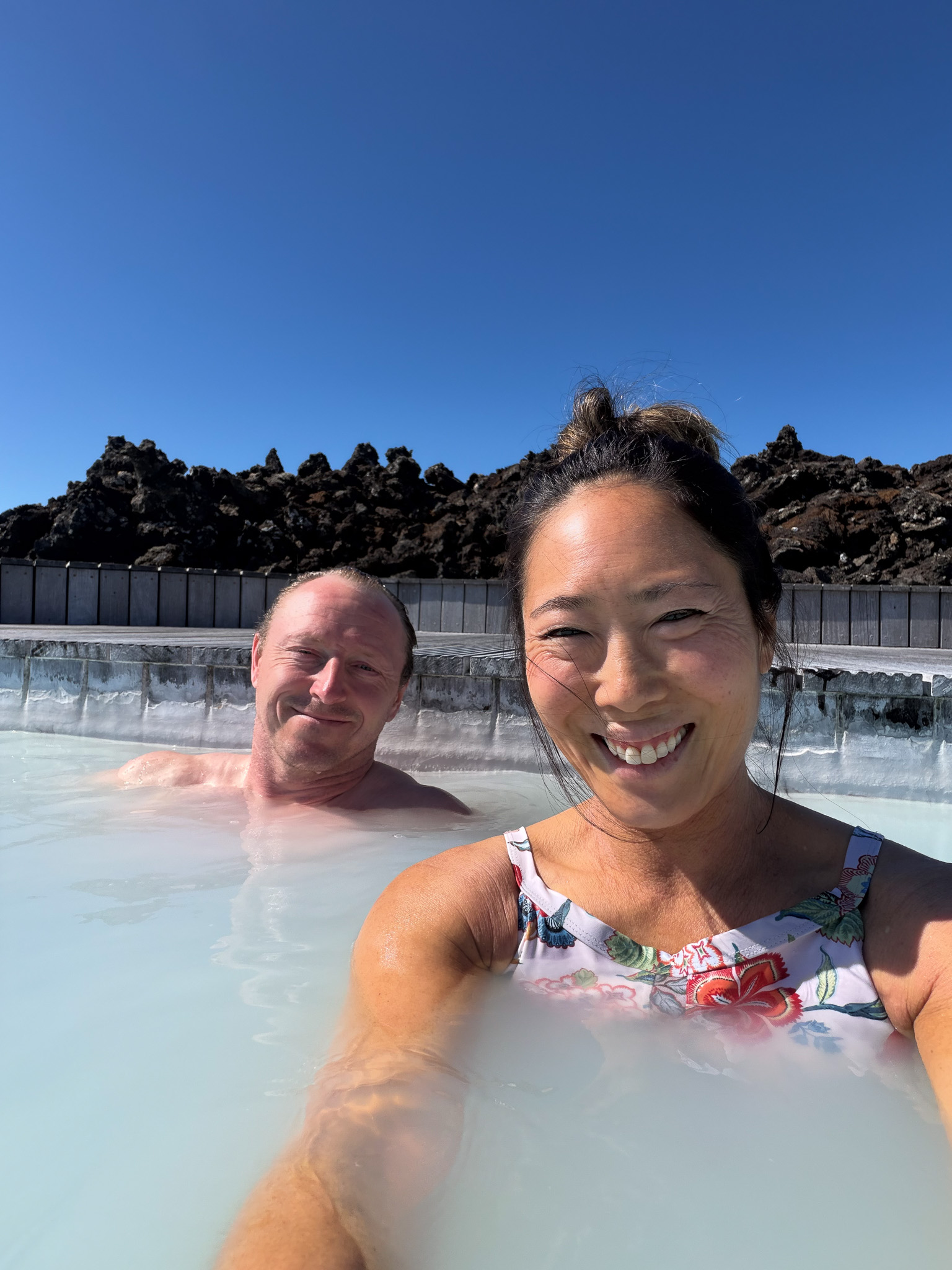
The Blue Lagoon is one of Iceland’s most iconic experiences, and it lives up to it. The water gets its vivid, otherworldly blue-white color from silica minerals suspended in the geothermal seawater — the same silica that makes the famous mud masks so good for your skin. The water temperature sits at a comfortable 98–102°F (37–39°C) year-round, and the mineral-rich water is genuinely lovely to soak in for an extended stretch. There are steam rooms and a sauna included with entry, plus a swim-up bar if you want a drink in the water.
It’s perfectly positioned right between Reykjavík and Keflavík airport — about 20 minutes from each. That makes it equally good as a first-day arrival activity (decompress after the flight before heading into the city) or a last-morning send-off before your flight home. Either works beautifully.
The Comfort package covers everything you actually need: entry, locker, towel, silica mud mask, and one drink. Allow 2–2.5 hours for the full experience.
A few tips:
- Book in advance — it sells out weeks ahead, especially in peak season
- Bring a headband if you’re doing the silica face mask — keeps it out of your hair. I didn’t do this as you probably saw in our video, but looked enviously at the pros around me
- Don’t forget sunscreen and sunglasses on a sunny day — you’ll be outside in open water and the reflection is intense
- The steam rooms and sauna are included and worth using
🏙️ Reykjavík
A lot of people use Reykjavík purely as a base and rush through it — which is a shame, because it’s a genuinely enjoyable city to spend time in. Even half a day of proper wandering is worth building in.
What to See
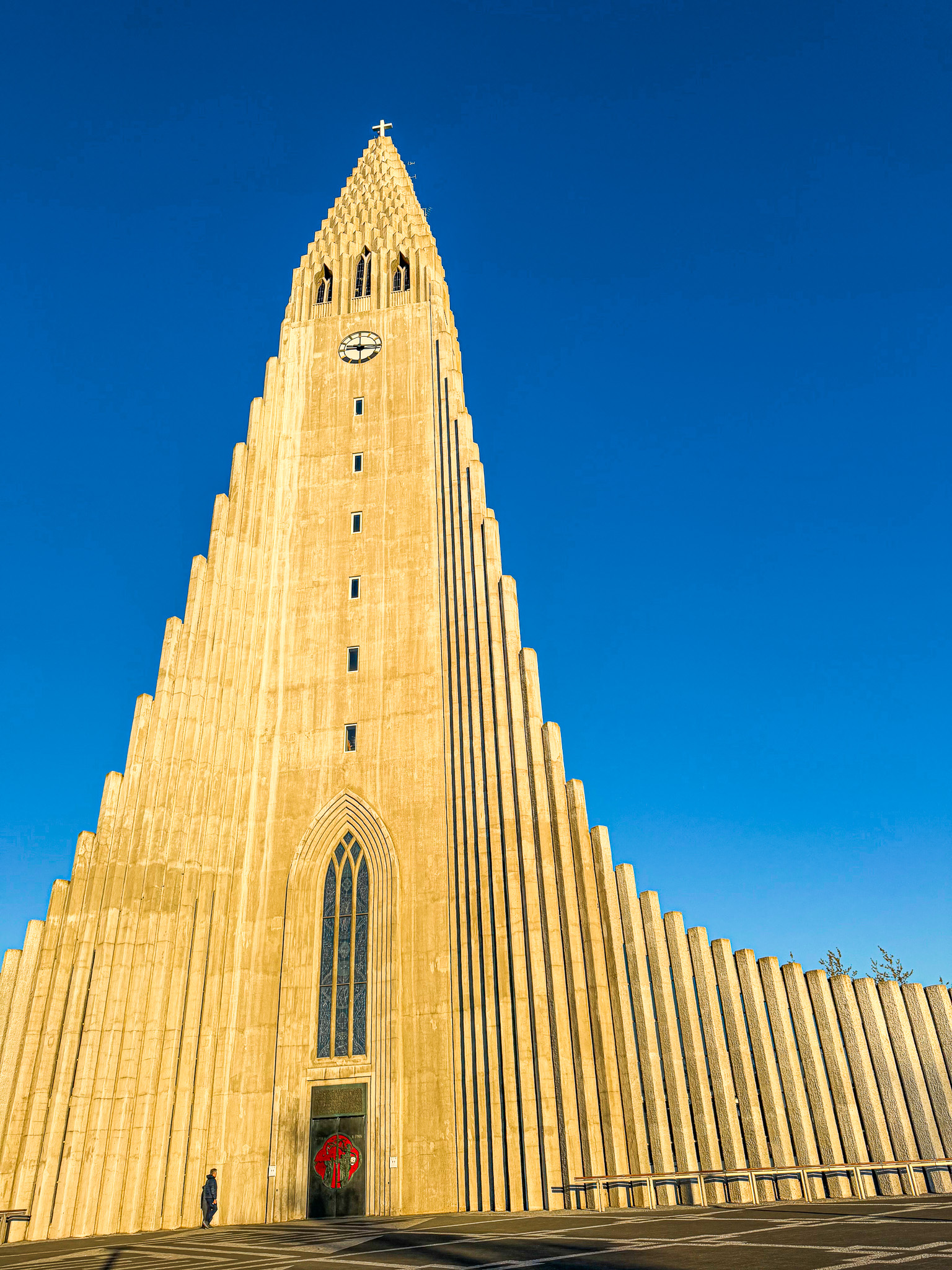
- Hallgrímskirkja is the massive church that defines the city’s skyline — even more striking in person than in photos, and the tower has views over the rooftops that are worth going up for.
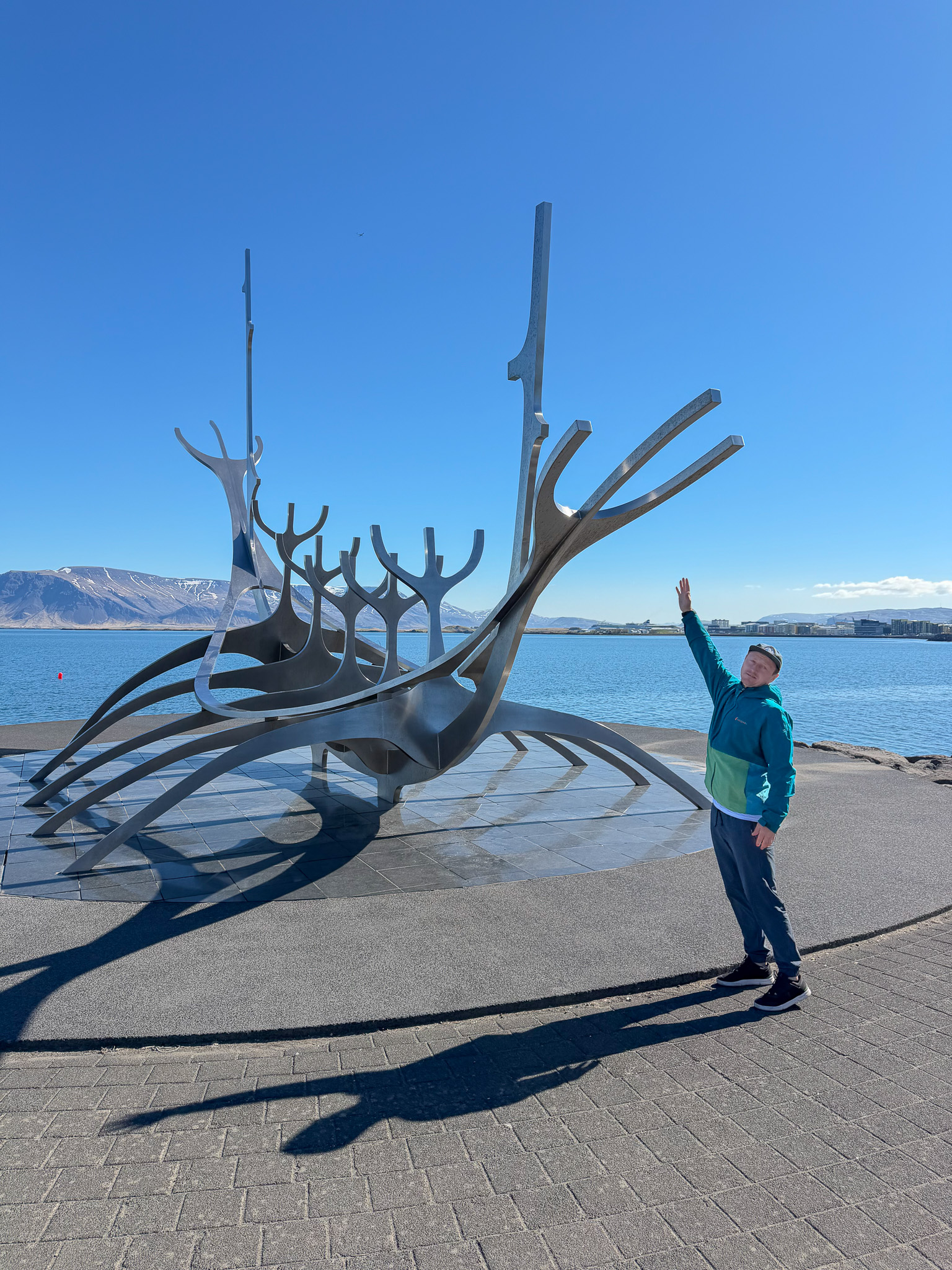
- Sólfar (Sun Voyager) is the Viking boat sculpture right on the waterfront, framed beautifully by the mountains and water behind it. It’s one of those spots that looks great in photos and feels equally good in person — and you can pull right up to it.
- Rainbow Street (Skólavörðustígur) runs up from the city center toward Hallgrímskirkja — colorful, lively, and lined with great shops and cafes. A nice stretch to wander.
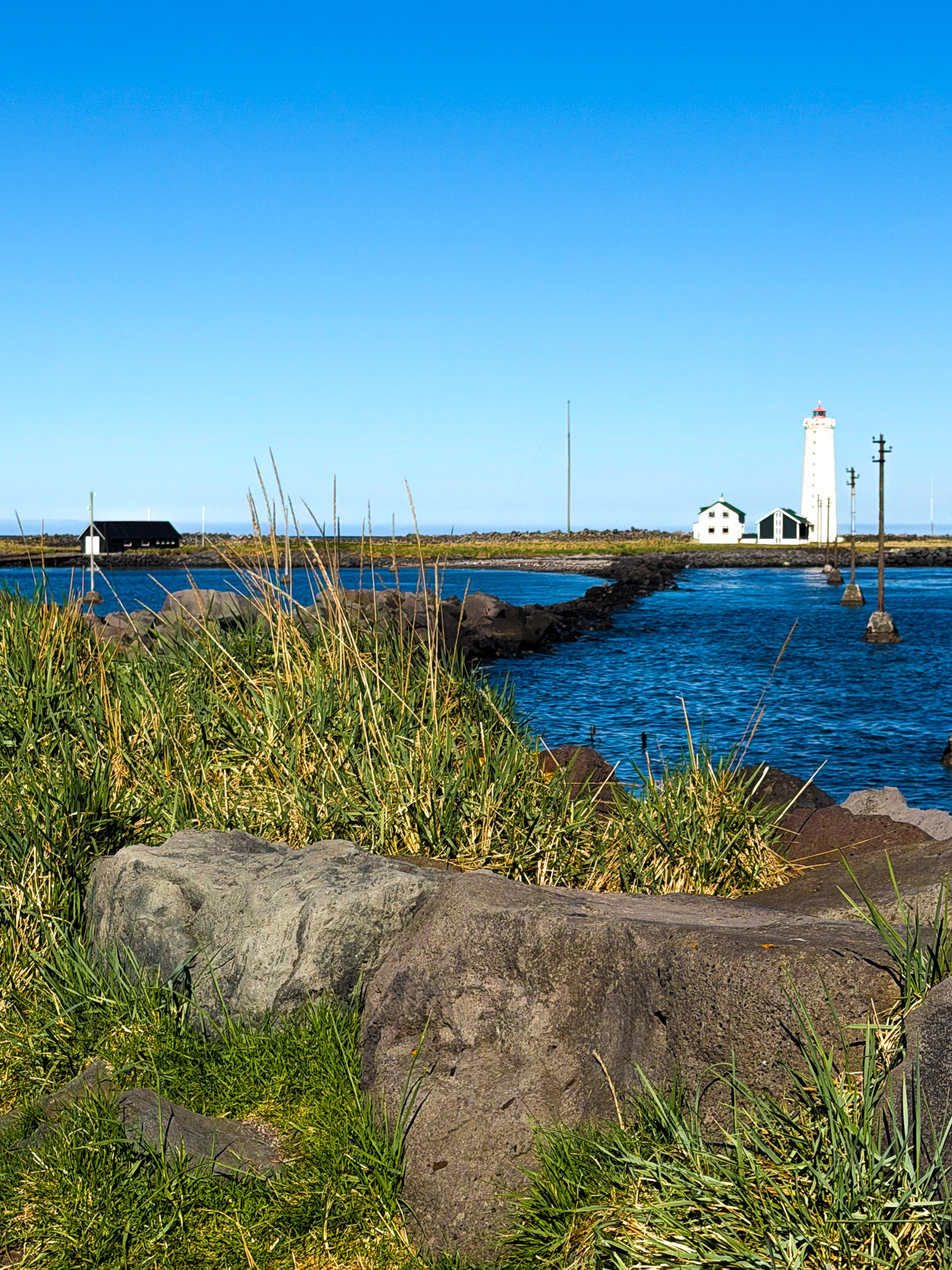
- Grotta Lighthouse at the tip of the Seltjarnarnes peninsula is a short drive from the city center and worth the trip for the scenery and the sea air. Note that it closes during bird protection season, but the area around it is still a nice escape.
🍽️ Where to Eat & Drink
Iceland is not a foodie destination in the way that, say, France or Italy is — eating out is expensive, and outside of Reykjavík the options are limited. That said, there are some genuinely good spots worth knowing about.
Along the South Coast
- La Cucina (near Sólheimajökull) — a highlight we didn’t expect. Amazing grilled paninis and great lattes in a food truck in the parking lot for the glacier. Perfect fuel between stops.
- Crepes.is (Vík) — a tiny crepe stand that people line up for. Sweet and savory crepes, both excellent. The Nutella banana with Prince Polo wafer is the move. Great quick stop.
- Black Crust Pizzeria (Vík) — the charcoal black dough is genuinely good, not just a gimmick. After a long day on the South Coast, pizza is often exactly the right answer.
- Strondin Pub (Vík) — great pub atmosphere and views of the black sand beach. Good spot for a beer and pub food — Erika had a great Arctic char and Mark got a solid cheeseburger.
- Drangar Restaurant (Hotel Kria, Vík) — a proper sit-down option with an ever-changing menu built around fresh local ingredients. Icelandic lamb and seafood are the focus.
- Berg Restaurant (Hotel Vík i Myrdal) — modern Icelandic cuisine with large windows and stunning cliffside views. One of the better dinner options in Vík.
In Reykjavík (and nearby)
- Sandholt Bakery — a must for breakfast or a pastry. One of the best bakeries in the city.
- Kokulist — an excellent bakery that’s not too far from the KEF airport. We picked up some of the fluffiest donuts we’ve ever had and a great selection of cookies for the plane ride home. They also had some great looking sandwiches and cakes.
- Bæjarins Beztu Pylsur — the iconic hot dog stand near the harbour, open since 1937. Made with lamb, pork, and beef. Order ein með öllu (one with everything): mustard, remoulade, ketchup, crispy fried onions, raw onions. Bill Clinton stopped here in 2004 and a hot dog with just mustard has been called a Clinton ever since. A rite of passage and genuinely good for under $5.
- Sægreifinn (The Sea Baron) — casual, no-frills spot by the old harbour famous for its lobster soup. Creamy, well-seasoned, great lunch stop.
- Tilveran (Hafnarfjörður, ~15 min from Reykjavík) — one of our favorite meals of the whole trip. A family-owned spot right by the harbour, warm and unpretentious, with exceptional seafood. The lobster fettucini was outstanding and we’d go back without hesitation.
- Kopar — proper sit-down dinner with harbour views. Known for fresh local seafood; lobster risotto and salted cod are standout dishes.
- Matur og Drykkur — for a special dinner, this spot celebrates traditional Icelandic recipes with a modern approach. Good if you want to understand what Icelandic cuisine actually is.
- Raðagerði Veitingahús (on our list for next time) — a cozy Italian-inspired restaurant in a historic timber house right next to Grotta lighthouse. Neapolitan pizzas with local toppings like smoked lamb and mushrooms, and the setting is so beautiful.
➡️ Alcohol in Iceland is expensive across the board (e.g. a local beer was $15). Picking up a bottle from duty-free at the airport on arrival is worth doing if you plan to drink.
📋 Practical Notes
- Book ahead. Blue Lagoon and glacier activities fill up weeks in advance, especially in May and summer. Don’t arrive hoping to wing it.
- Waterproofs are non-negotiable. Bring a proper shell — top and bottom — and expect to use it multiple times regardless of what the morning forecast says.
- Sunscreen too. The clear days are deceptive — long daylight hours and reflective landscapes mean more sun exposure than you expect.
- Drink the tap water. Iceland’s water is excellent — just refill your bottle throughout the trip and save yourself the cost and plastic.
- Plan your gas stops. Sights are spread out and stations aren’t always conveniently placed. Check the map before you leave a town, especially after remote stops like the glacier.
✈️ Final Thoughts
Four days in Iceland left us with a long list of things we want to come back for. The highlands, the Westfjords, the Diamond Circle in the north — we barely scratched the surface. But we saw the South Coast and the Golden Circle properly, kayaked on a glacier, soaked in the Blue Lagoon, and left genuinely in love with the country.
If you’re flying between North America and Europe, seriously consider building in a stopover. It was one of the best travel decisions we’ve made, and Iceland rewards even a short visit in a way few places do.




Leave a comment