Why does no one talk about Alentejo? After road-tripping through this huge region of Portugal, we genuinely couldn’t understand how it flies so far under the radar.
Medieval hilltop towns, ancient Roman ruins, wine fermented in clay pots the way it was 2,000 years ago, pottery villages, and a wild Atlantic coastline, all without the crowds you find in Portugal’s better-known destinations.
We did, however, choose to visit when it was approximately one million degrees outside. We’d absolutely do this trip again. We’d just pick spring or fall next time.
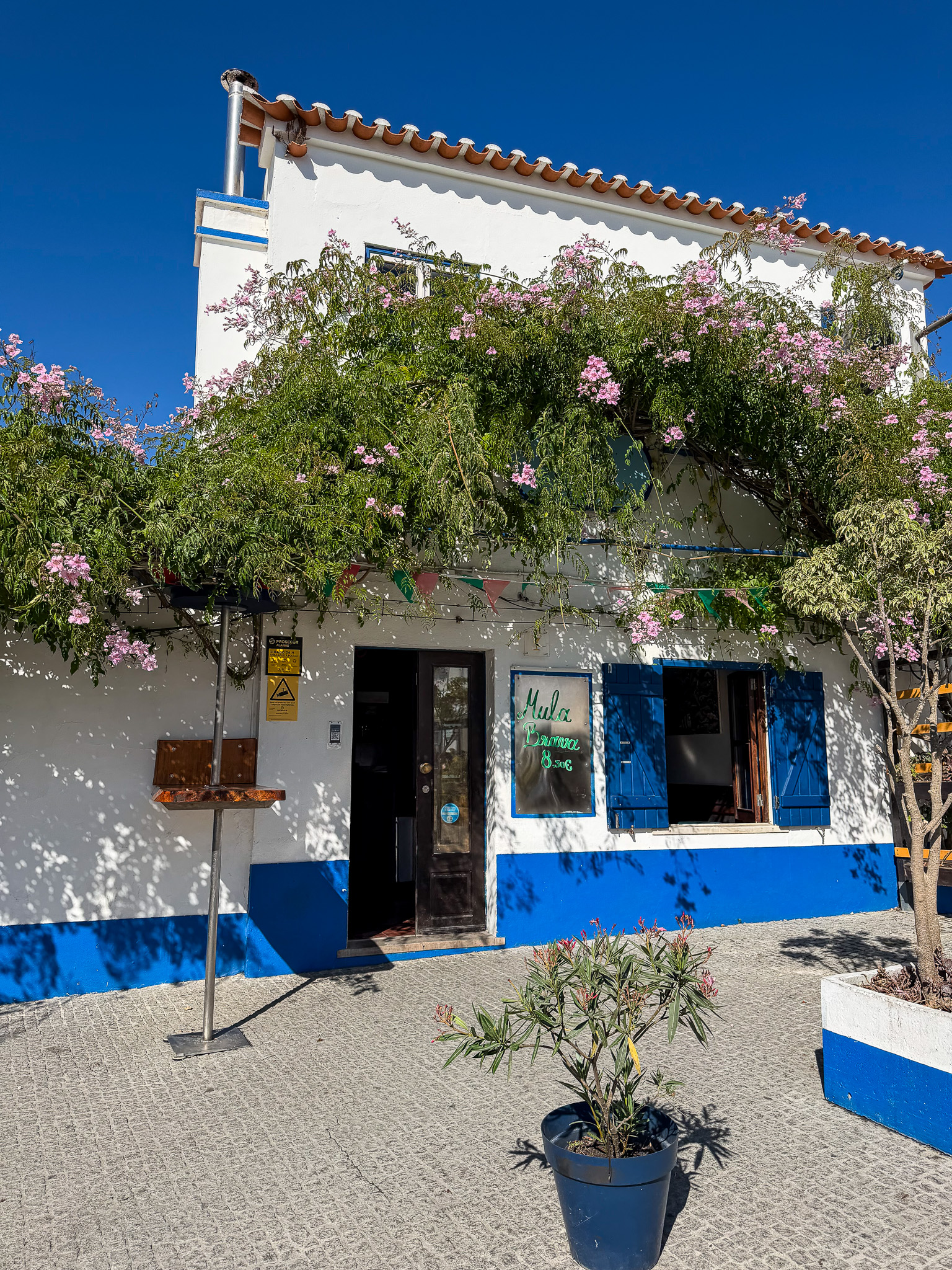

Alentejo at a Glance
- 📍 Region: Central-southern Portugal, spanning from just below Lisbon to the Algarve border
- 🏛️ Known for: UNESCO-listed Évora, Roman ruins, fortified hilltop towns, marble, azulejos, cork oaks, and endless golden plains
- 🍷 Local flavor: Bold Alentejo reds, vinho de talha (clay-pot wine), olive oil, black pork, açorda (Alentejo’s bread soup), and sericaia (cinnamon egg pudding)
- ⏳ Recommended stay: 4–5 days minimum, a full week to combine inland and coast
- 🚗 Getting around: A rental car, full stop
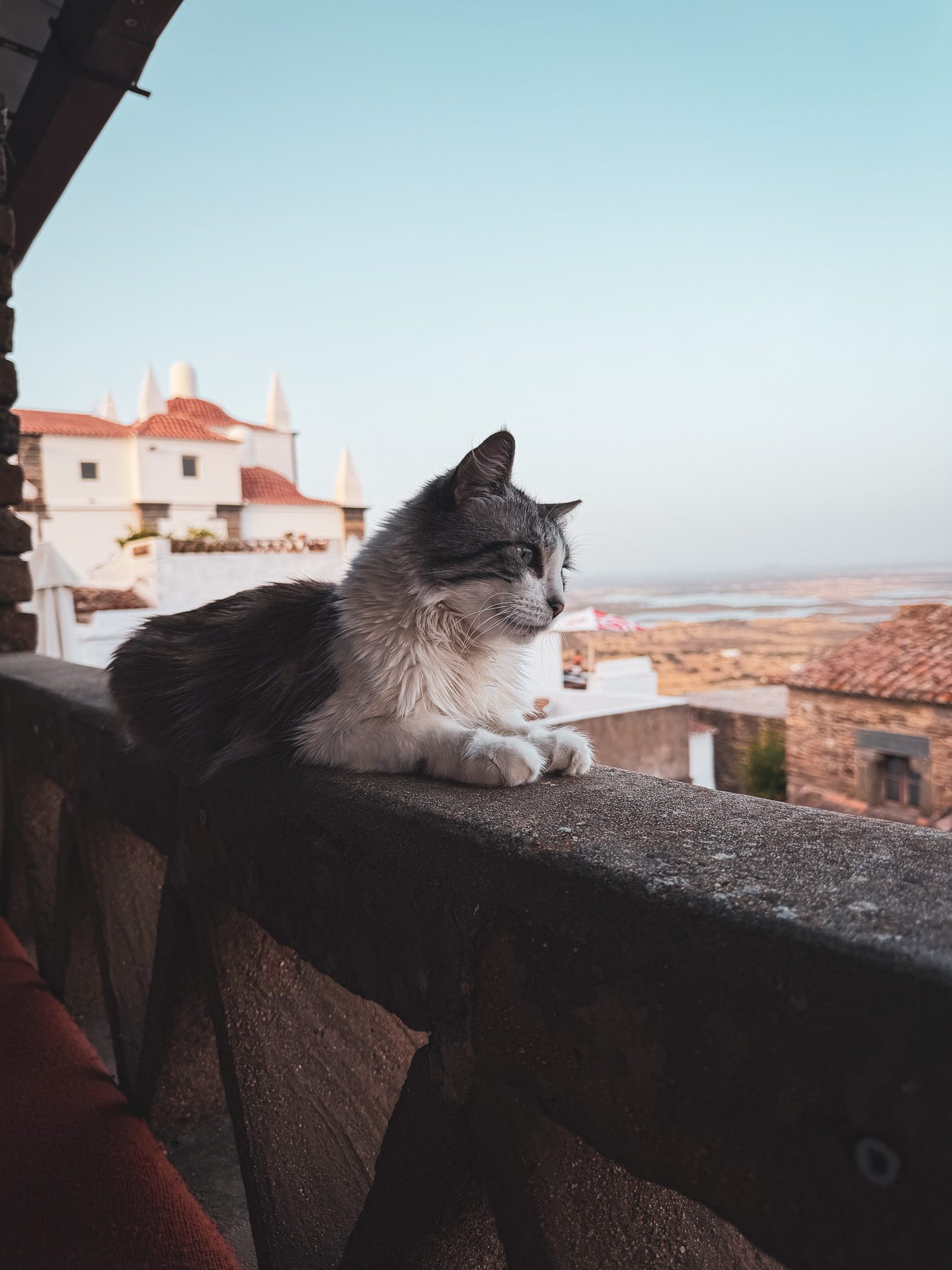
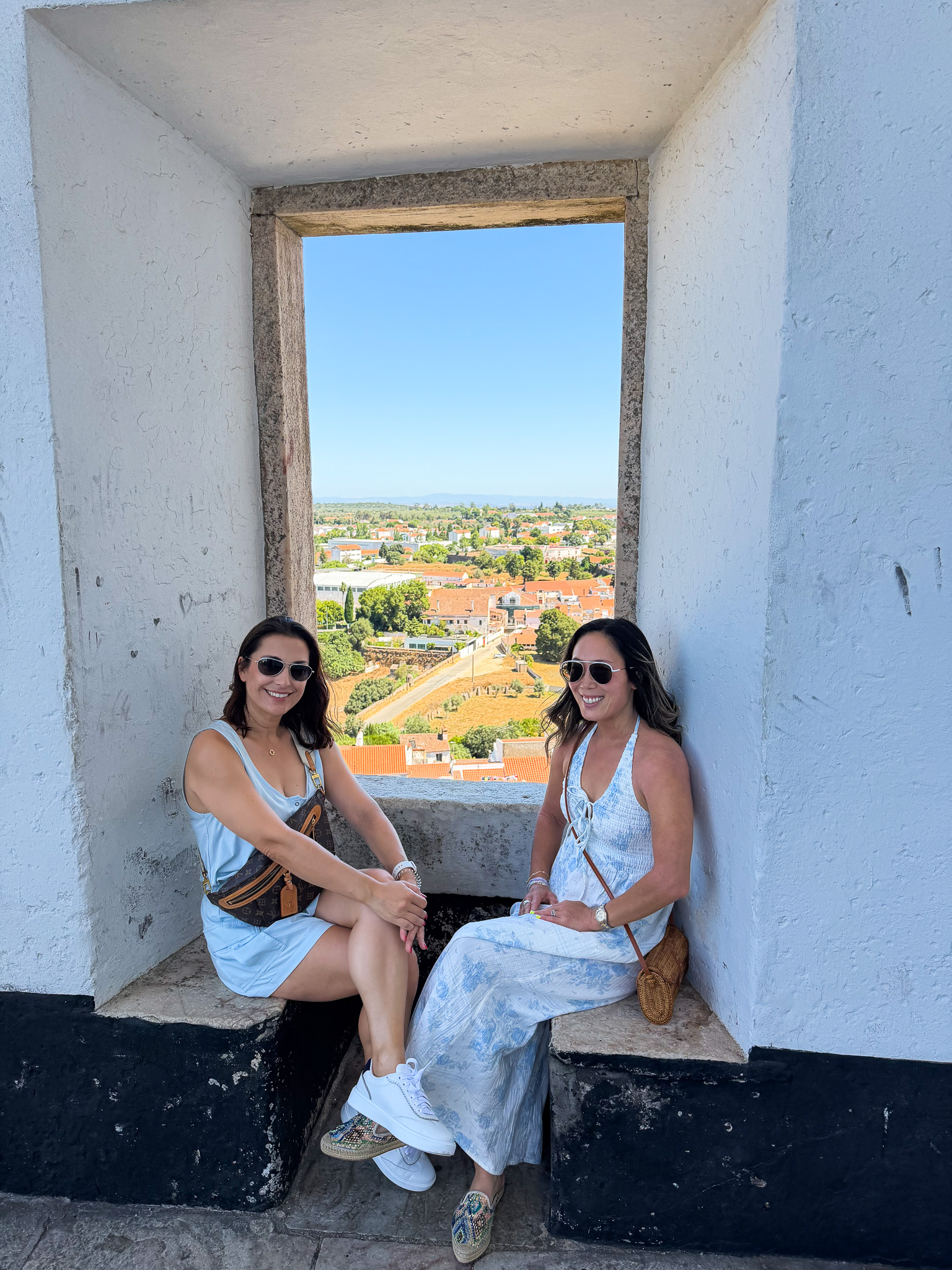
The Three Alentejos
Alentejo is huge, so don’t think of it as one destination. Our trip really broke down into three very different areas:
- 🍷 Évora & Alentejo Wine Country: History, wineries, medieval villages, and pottery
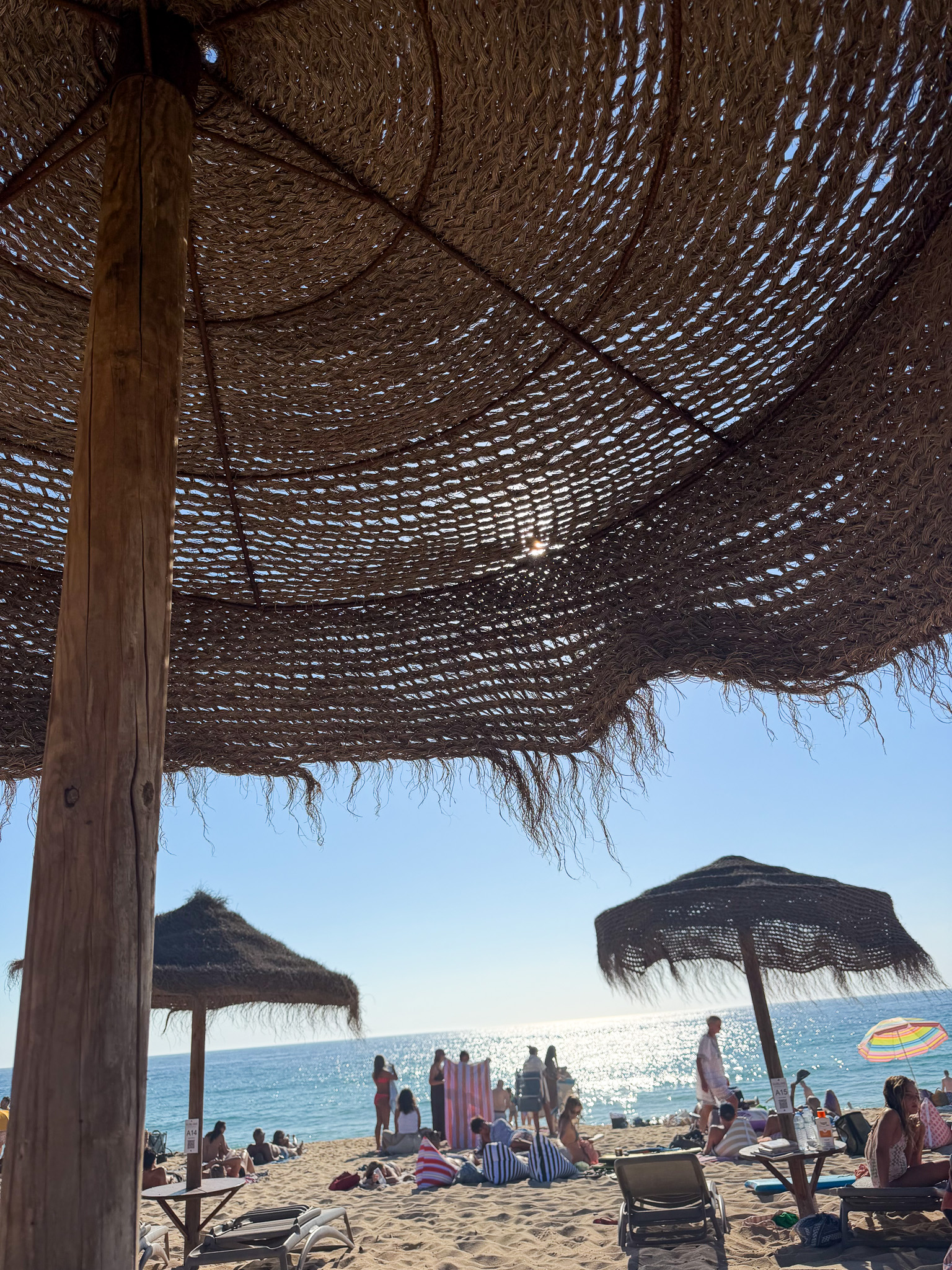
- 🌊 The Wild Alentejo Coast: Rugged beaches, fishing towns, seafood, and Atlantic surf
- 🌾 Comporta: Beach clubs, design-forward stays, rice fields, and a more stylish seaside scene

How Long Do You Need?
If it’s your first trip, give yourself at least 4–5 days. A week lets you combine inland Alentejo and the coast without spending the whole trip in the car.
🚗 Rent a car. Some of our favorite places were wineries, tiny villages, and restaurants that would be difficult, or even impossible, to string together on public transportation. Parking was easy nearly everywhere we went.
How to Get There
🚗 Driving: Lisbon to Évora is breezy, about 1 hour 15 minutes. From Porto, budget around 4 hours to Évora; from Faro, about 2 hours 15 minutes.
✈️ Flying: Lisbon (LIS) is the practical gateway for Alentejo, and it’s where you could easily pick up a car. Faro (FAO) works if you’re combining Alentejo with the Algarve.
🚆 By train: Intercidades trains run from Lisbon (Santa Apolónia or Gare do Oriente) to Évora in about 1 hour 30 minutes, four times daily, starting around €12. Great if Évora is your only stop. Not as practical if you want the wineries, villages, and coast.
🚌 By bus: Rede Expressos runs from Lisbon’s Sete Rios terminal to Évora in about 1 hour 45 minutes, from around €12 one way.

When to Visit
Spring (March–May) and fall (September–October) are the sweet spots. In spring the plains are green and covered in wildflowers before the summer heat sets in. Fall brings the wine harvest and warm water on the coast without August prices.
Summer (July–August) is when we went, and inland Alentejo gets genuinely extreme, regularly hitting 35–40°C (95–105°F) in the afternoon. The coast is noticeably cooler thanks to the Atlantic wind, but Évora, Monsaraz, and Estremoz are hot enough that we planned our days around it: sights in the morning, pool or long lunch mid-afternoon, back out after 5pm.
Winter is mild, very quiet, and beautiful in a moody way, but know that some smaller wineries and restaurants close or cut hours.
🌡️ If you’re visiting in summer, book a hotel with a pool. We’re not usually pool people. In August in Alentejo, it was a survival requirement.

🍽️ What to Eat in Alentejo
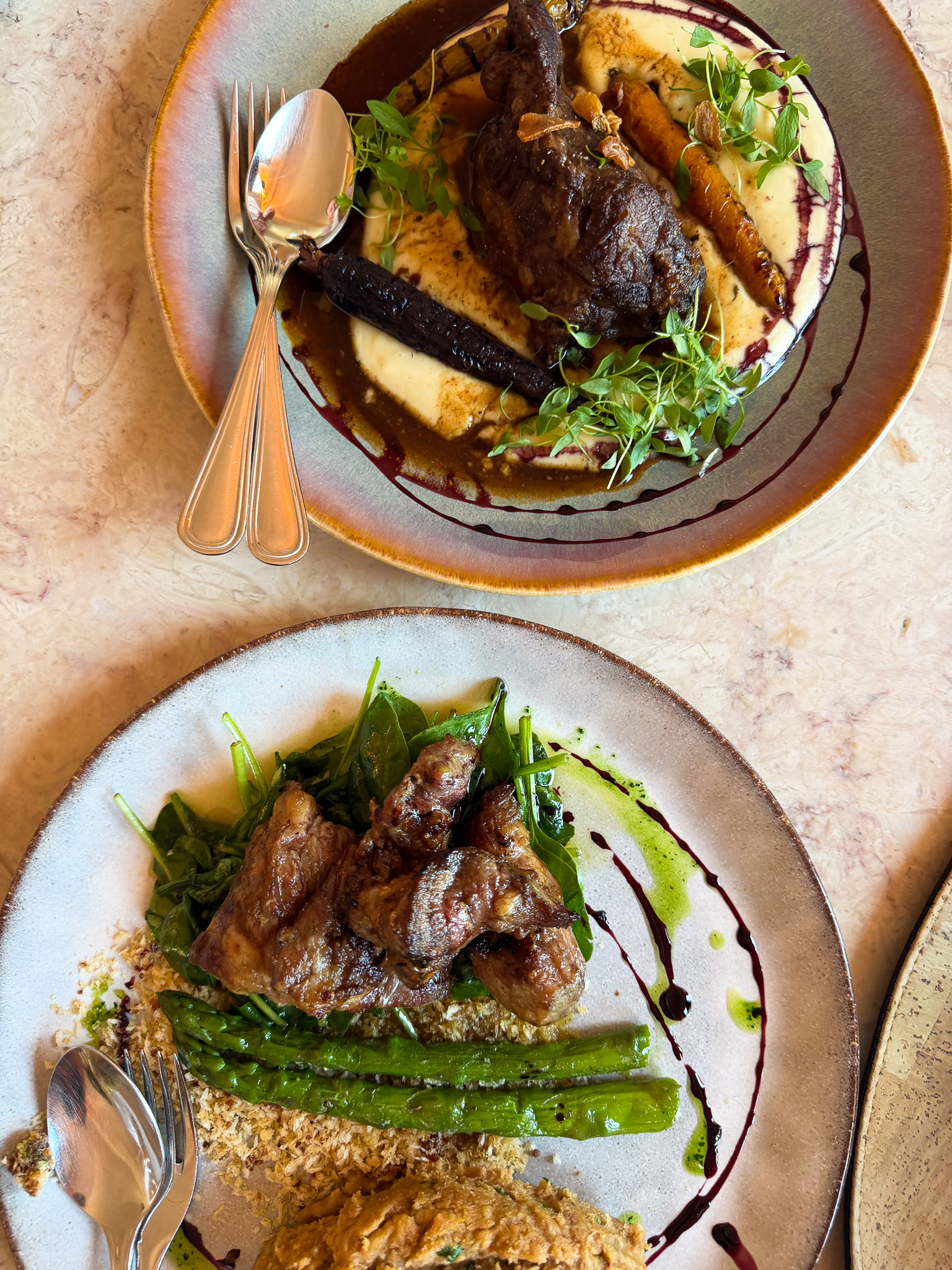
Bread, pork, olive oil, and garlic are the foundation, and the traditional dishes built on them are still some of the best eating in Portugal. But Alentejo isn’t only a rustic-food region. It has Michelin stars, ambitious wine estate restaurants, and chefs building menus almost entirely from what the region grows and raises.
We ate across that entire spectrum on this trip and had some incredible meals. Here are a few classic Alentejo dishes to know so you recognize them on menus, followed by our favorite restaurants from each stop along the way.
🥘 Savory
- Açorda alentejana – Bread soup with garlic, coriander, olive oil, and a poached egg. Absurdly simple, and somehow the dish I think about most.
- Sopa de cação – Dogfish soup, heavy on garlic and coriander. Very Alentejo, and rarely on menus elsewhere in Portugal.
- Migas – Bread fried with garlic and olive oil until it lands somewhere between stuffing and polenta. Usually served alongside pork.
- Porco preto – Acorn-fed black Iberian pork. Look for secretos or plumas on menus.
- Ensopado de borrego – Lamb stew ladled over slices of bread.
- Carne de porco à alentejana – Pork and clams. Named for the region, though the pairing most likely came from the coast.
- Pão alentejano – The dense, chewy regional bread that half of these dishes are built on.
🧀 Cheese
- Queijo de Serpa – Buttery, pungent DOP sheep’s milk cheese, soft enough to spoon out of the rind.
- Queijo de Nisa and Queijo de Évora – Firmer sheep’s milk options, both excellent with an Alentejo red.
🍮 Sweet
- Sericaia – Cinnamon egg pudding, traditionally served with Elvas plums. Order it every time you see it.
- Encharcada – An egg-yolk and sugar convent dessert from Évora. Extremely sweet, extremely worth it.
- Queijadas de Évora – Small cheese-and-egg tarts, perfect with coffee.
🍷 Drink
- Alentejo reds – Big, warm, and generous. Look for Alicante Bouschet, Trincadeira, and Aragonez.
- Antão Vaz whites – The regional white grape, fuller-bodied than you’d expect.
- Vinho de talha – Wine fermented in clay vessels. More on this below.
- Olive oil – Alentejo produces the vast majority of Portugal’s, and the DOP oils are worth bringing home.

🍷 Part 1: Évora & Alentejo Wine Country
If you only have time for one part of Alentejo, we’d start here. Évora brings the history, while the surrounding countryside is where you’ll find the wineries, medieval hilltop towns, pottery villages, and some seriously good food.
🏨 Where to Stay
Convento do Espinheiro (just outside Évora)
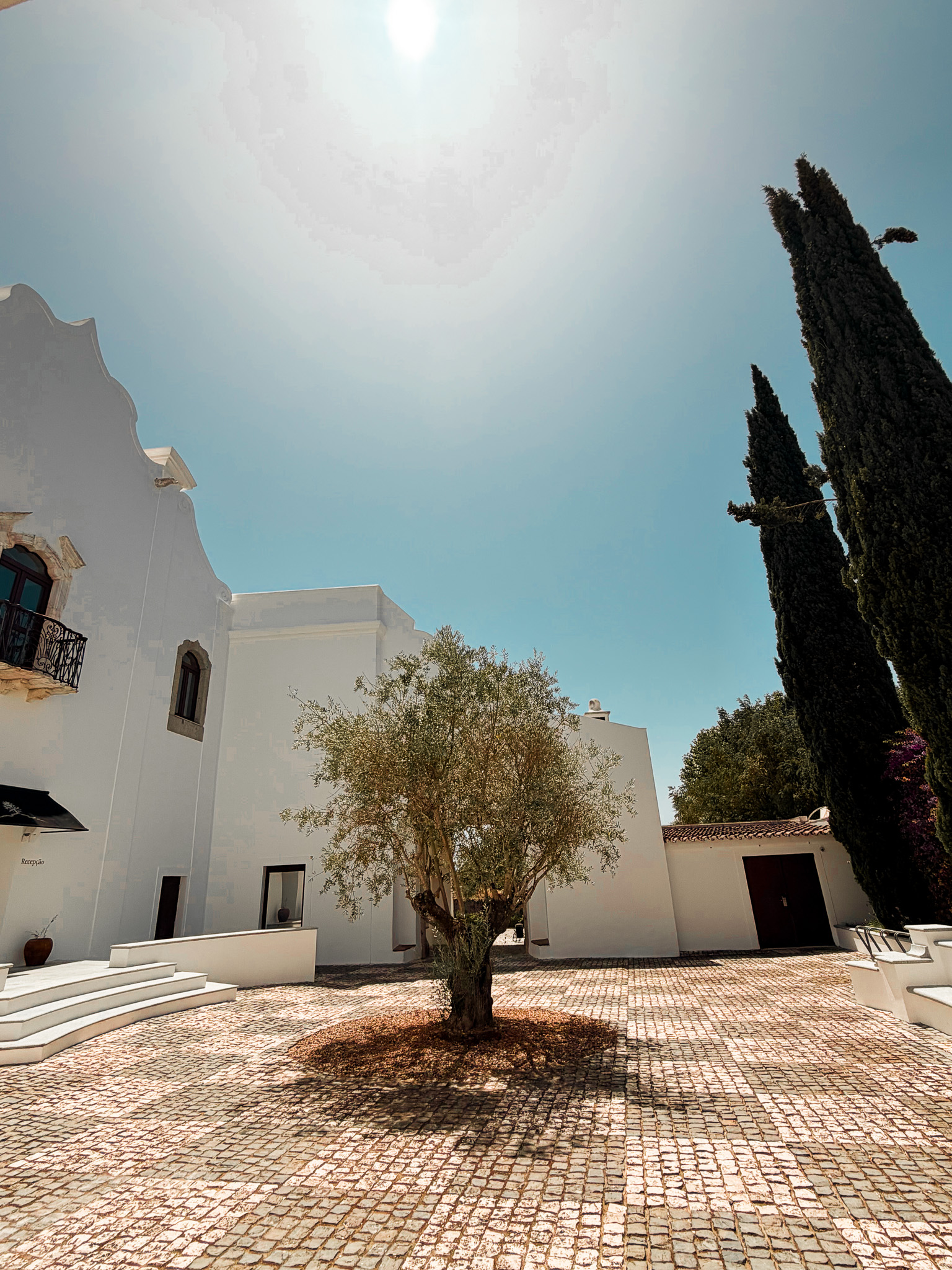
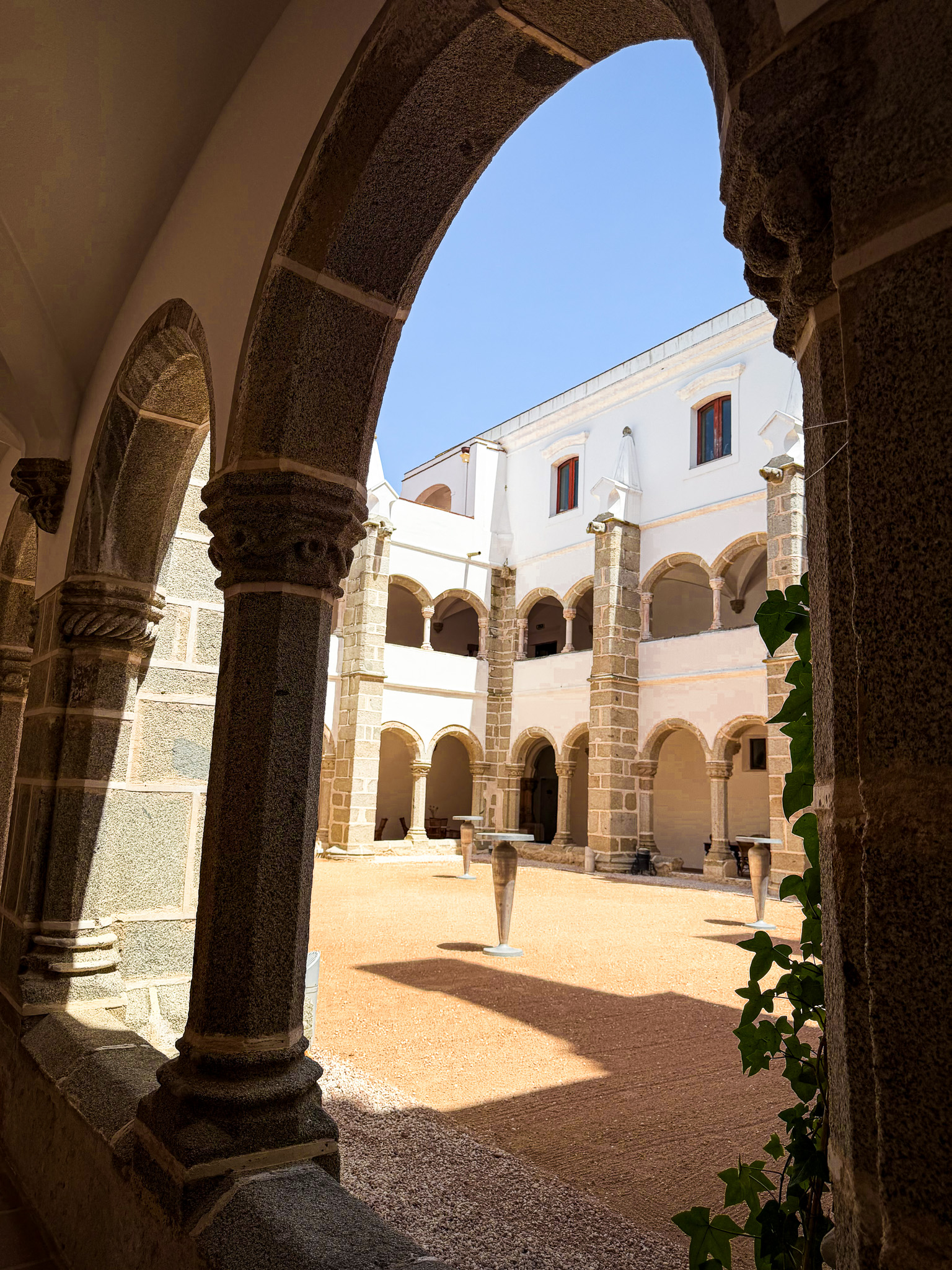
We loved this hotel. Set in a beautifully restored 15th-century convent, the property still has its original chapel, cloisters, and historic spaces woven throughout. The grounds are gorgeous, breakfast was excellent, and it felt much more reasonably priced than we expected for a historic luxury property.
There’s also a large outdoor pool with plenty of loungers, which was non-negotiable during our August visit. We’d absolutely stay here again.
📍 What to See & Do
🏛️ Explore Évora
Allow: Half a day
Évora’s entire historic center is a UNESCO World Heritage Site, and there’s a lot of history packed into a small, walkable area.
Our must-sees:
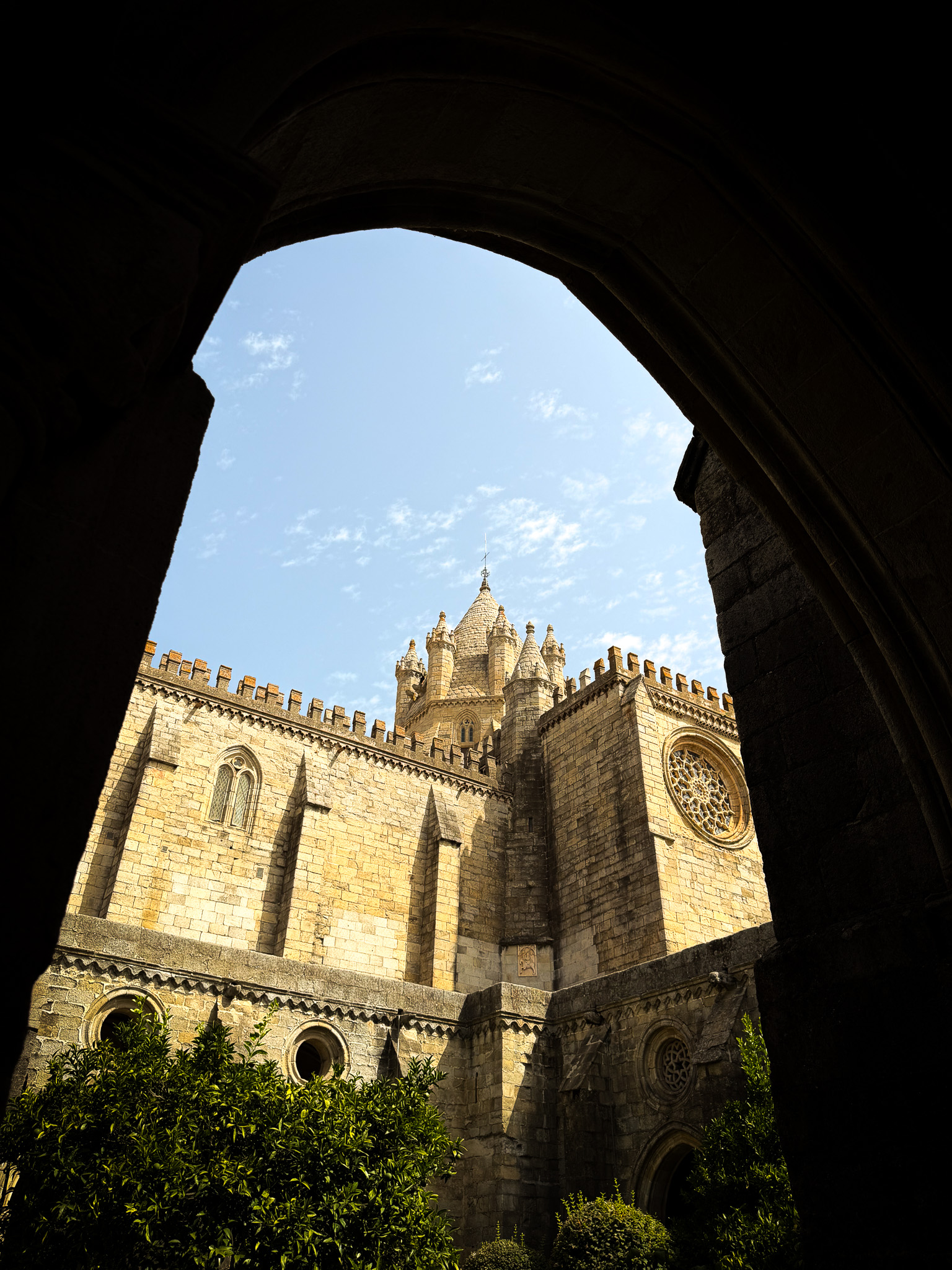
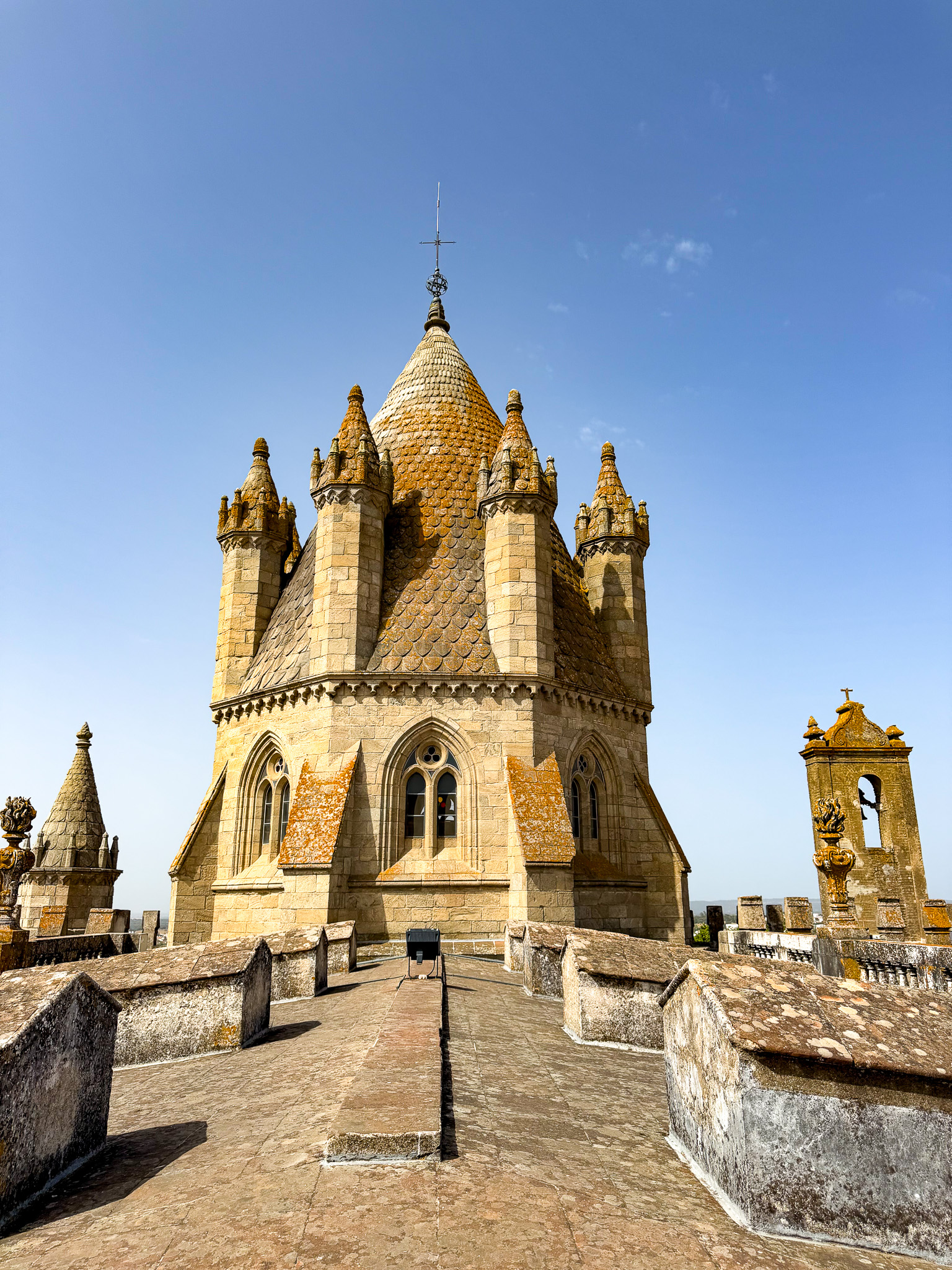
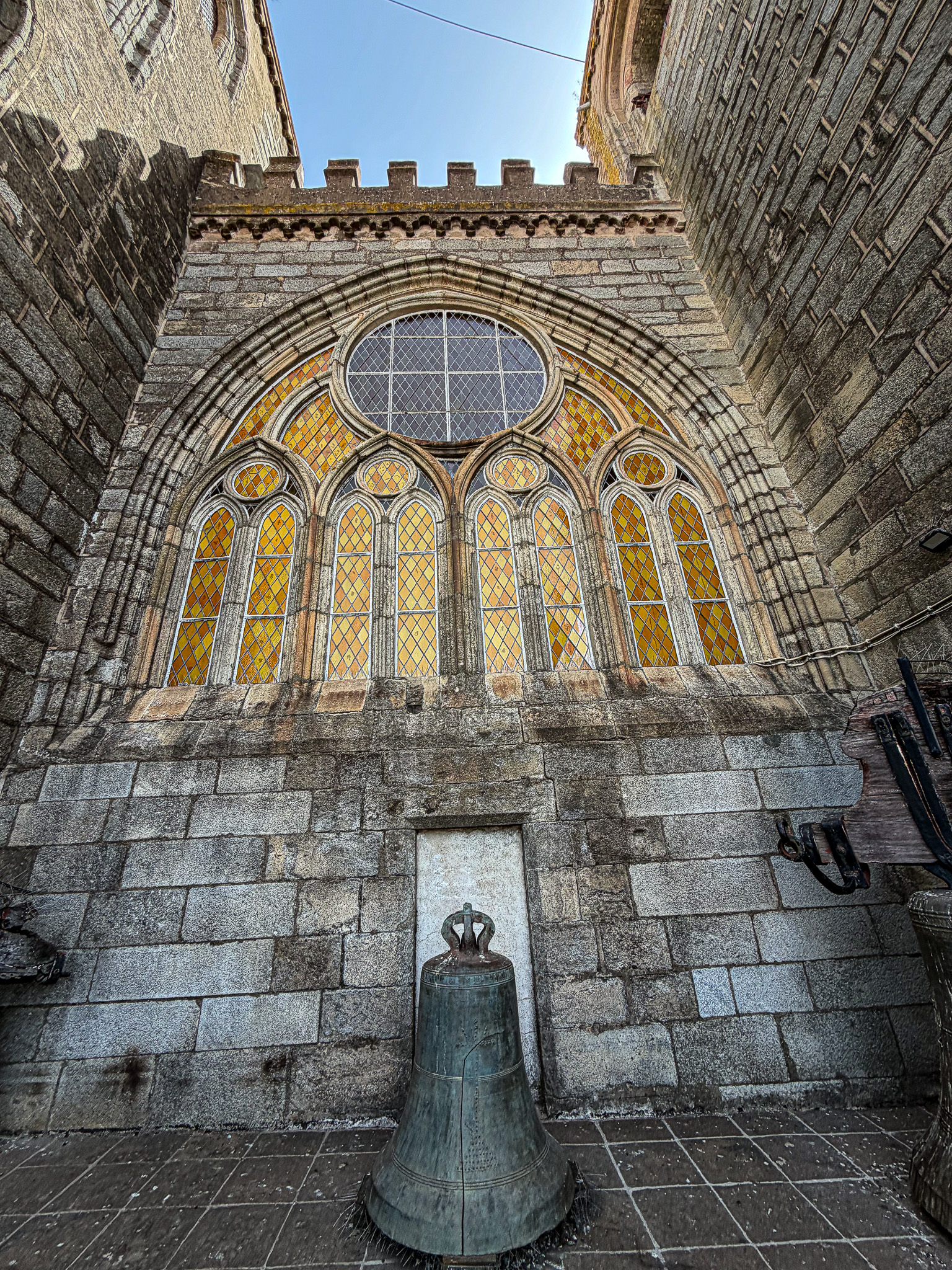
- Évora Cathedral – Dating to the 12th century, this is Portugal’s largest medieval cathedral. Don’t skip the rooftop. You can walk around the top with incredible views over Évora’s terracotta roofs and the Alentejo plains.
- Roman Temple – One of Évora’s most recognizable landmarks, with columns dating back nearly 2,000 years sitting right in the middle of the historic center. It’s free and completely open to the surrounding square.
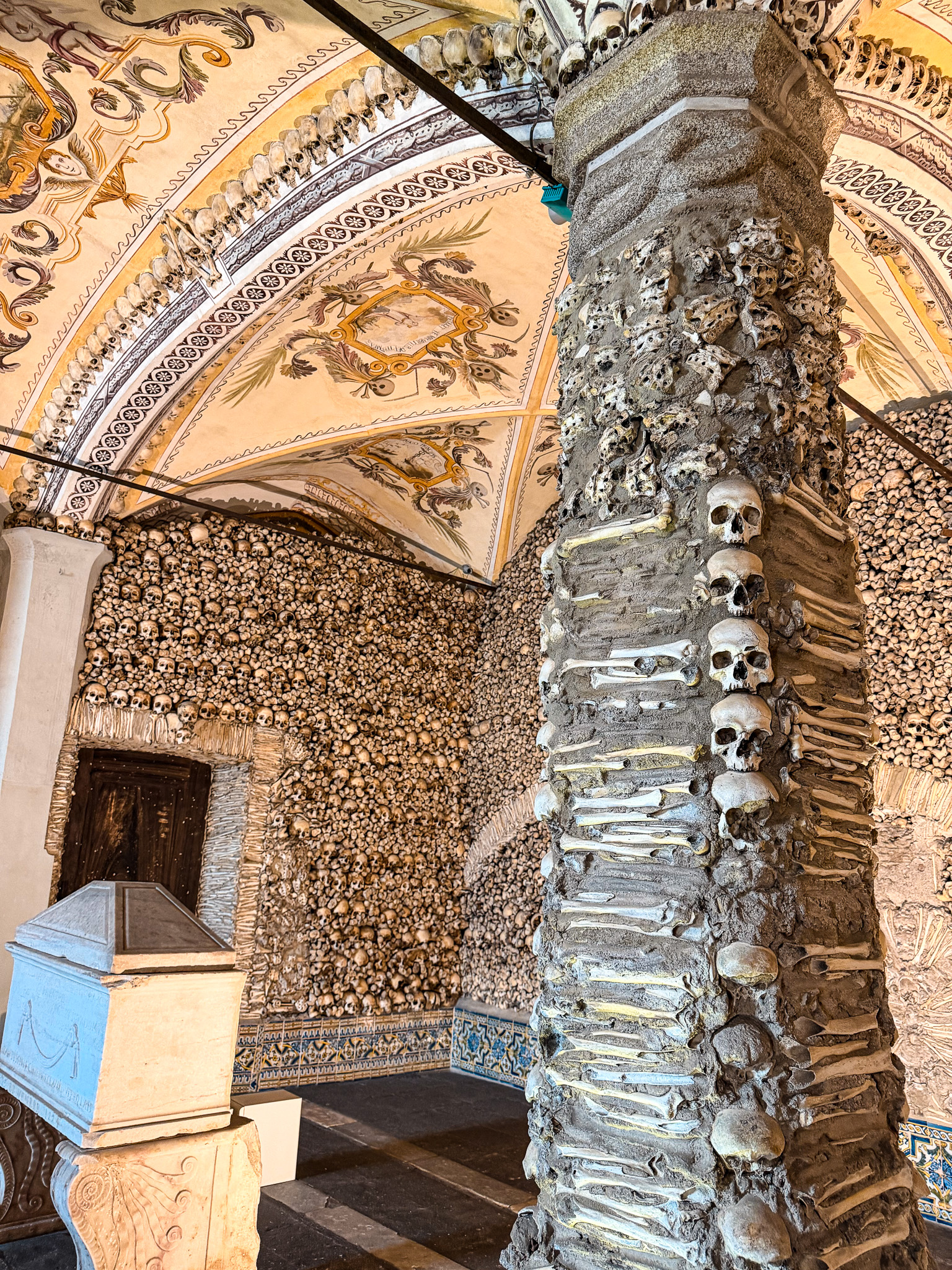
- Chapel of Bones – Inside the Church of São Francisco, this 17th-century chapel is one of Évora’s most unusual historic sites. It was created by Franciscan monks at a time when the city had dozens of monastic cemeteries, bringing remains from across Évora together into one space. But there was a deeper purpose too: the chapel was meant as a reflection on how fleeting life is, very much in keeping with the religious thinking of the time. Knowing that history before you walk in gives the chapel a lot more meaning beyond what you see at first glance. Allow 30–45 minutes.
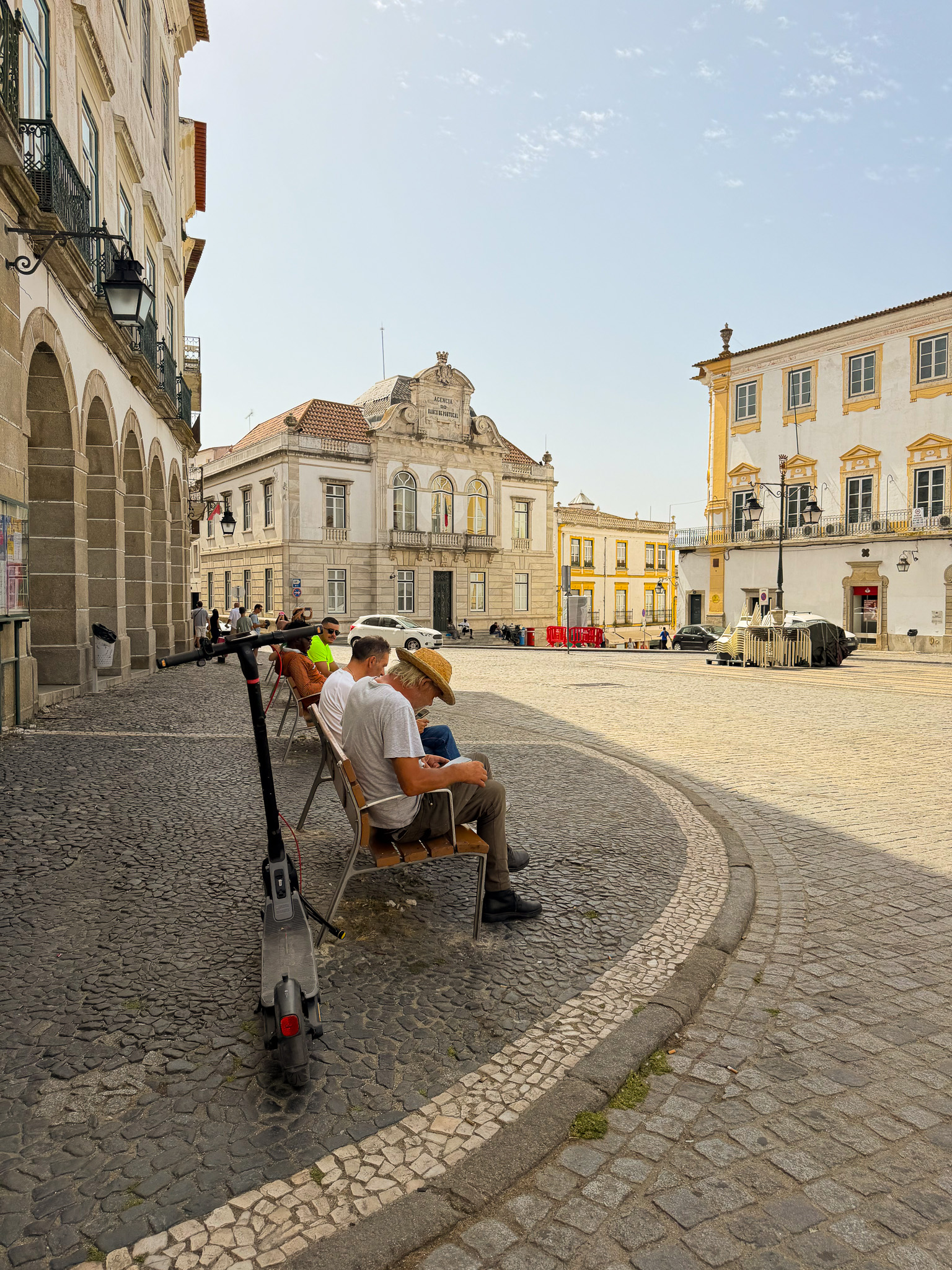
- Old Town – Leave time to wander without a destination. Whitewashed buildings, yellow trim, marble streets, little squares, and ceramic shops are as much a part of Évora as the major sights.
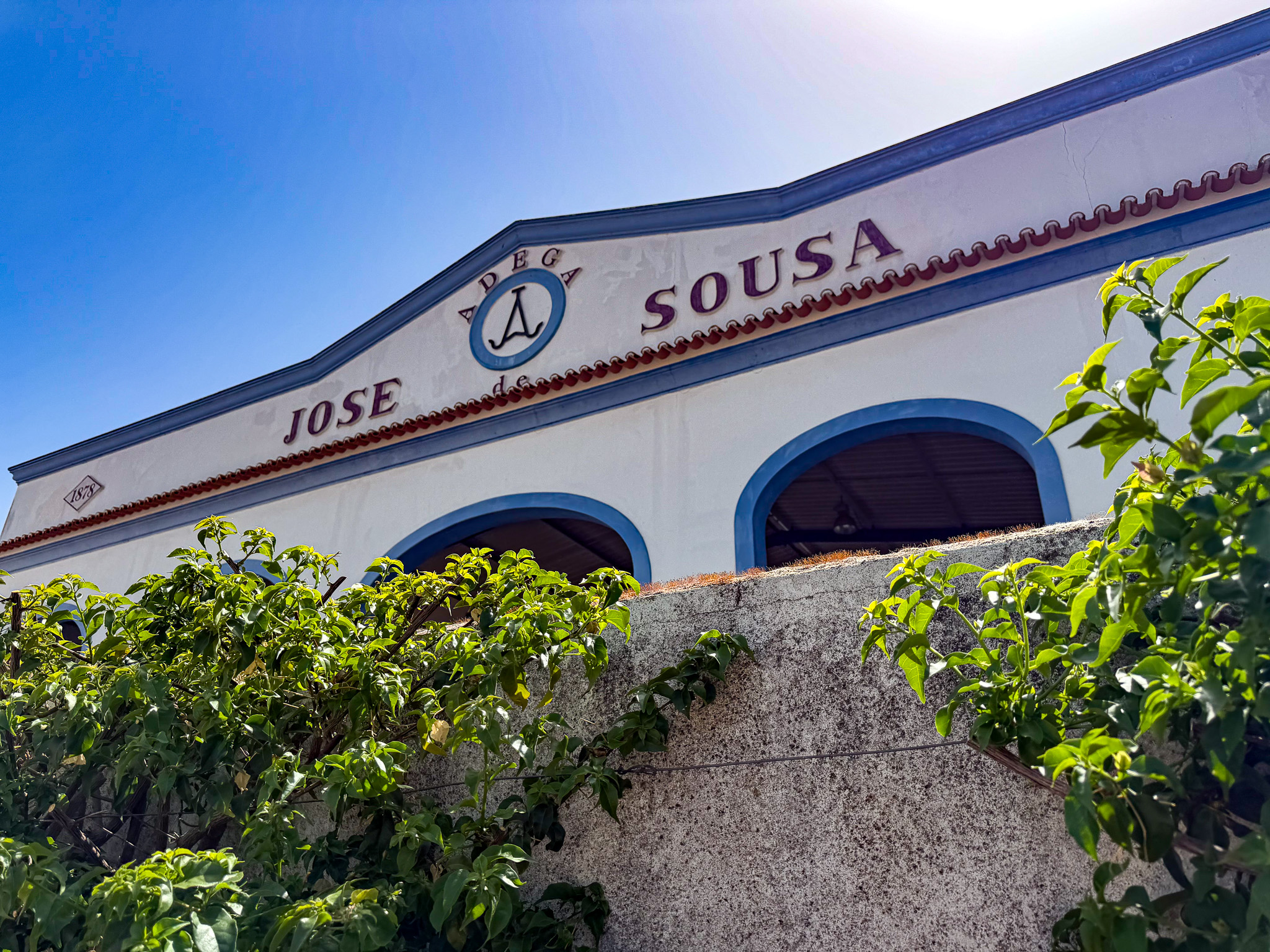
🍷 Experience Vinho de Talha at Adega José de Sousa
Allow: 1.5–2 hours
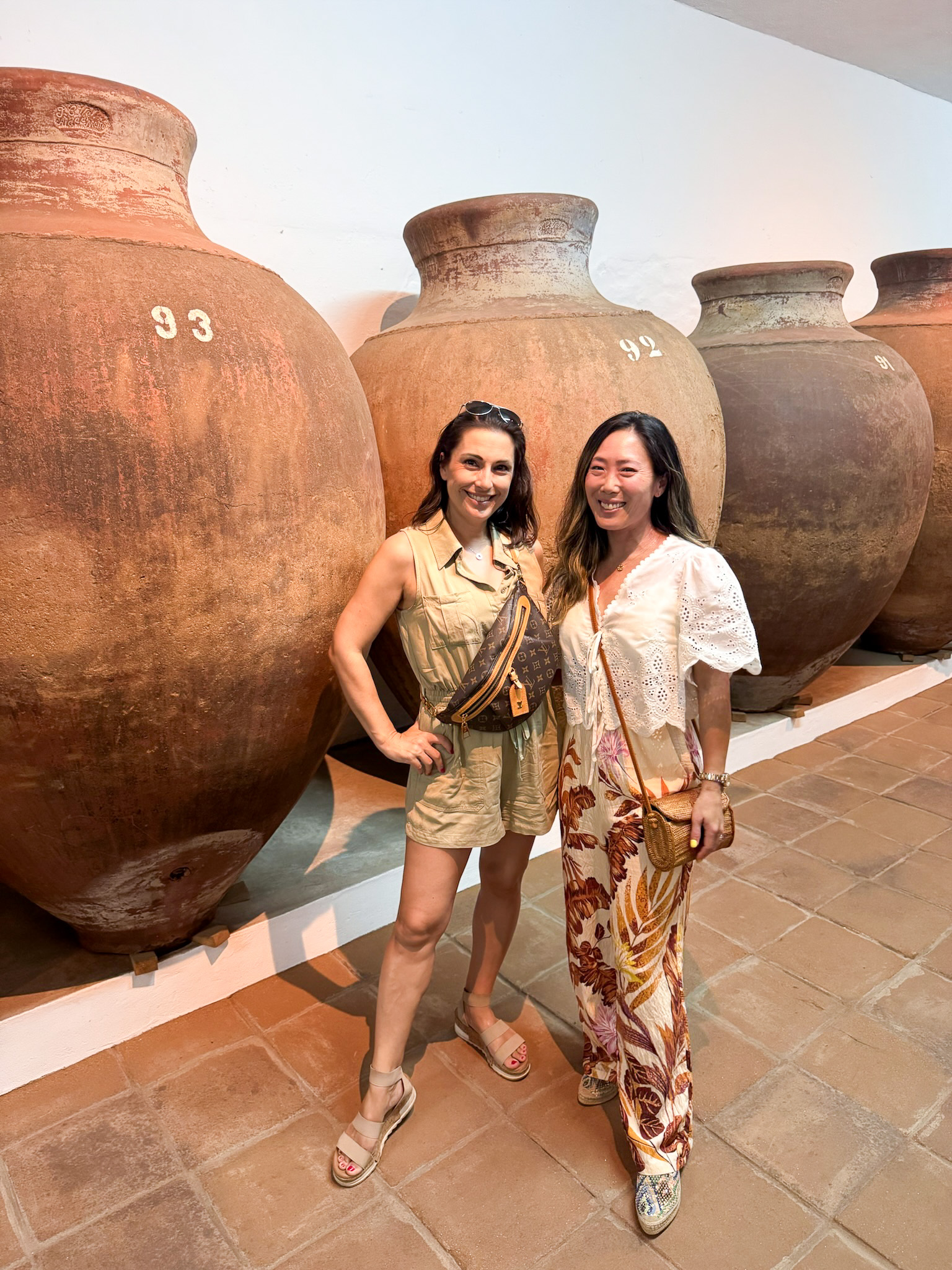
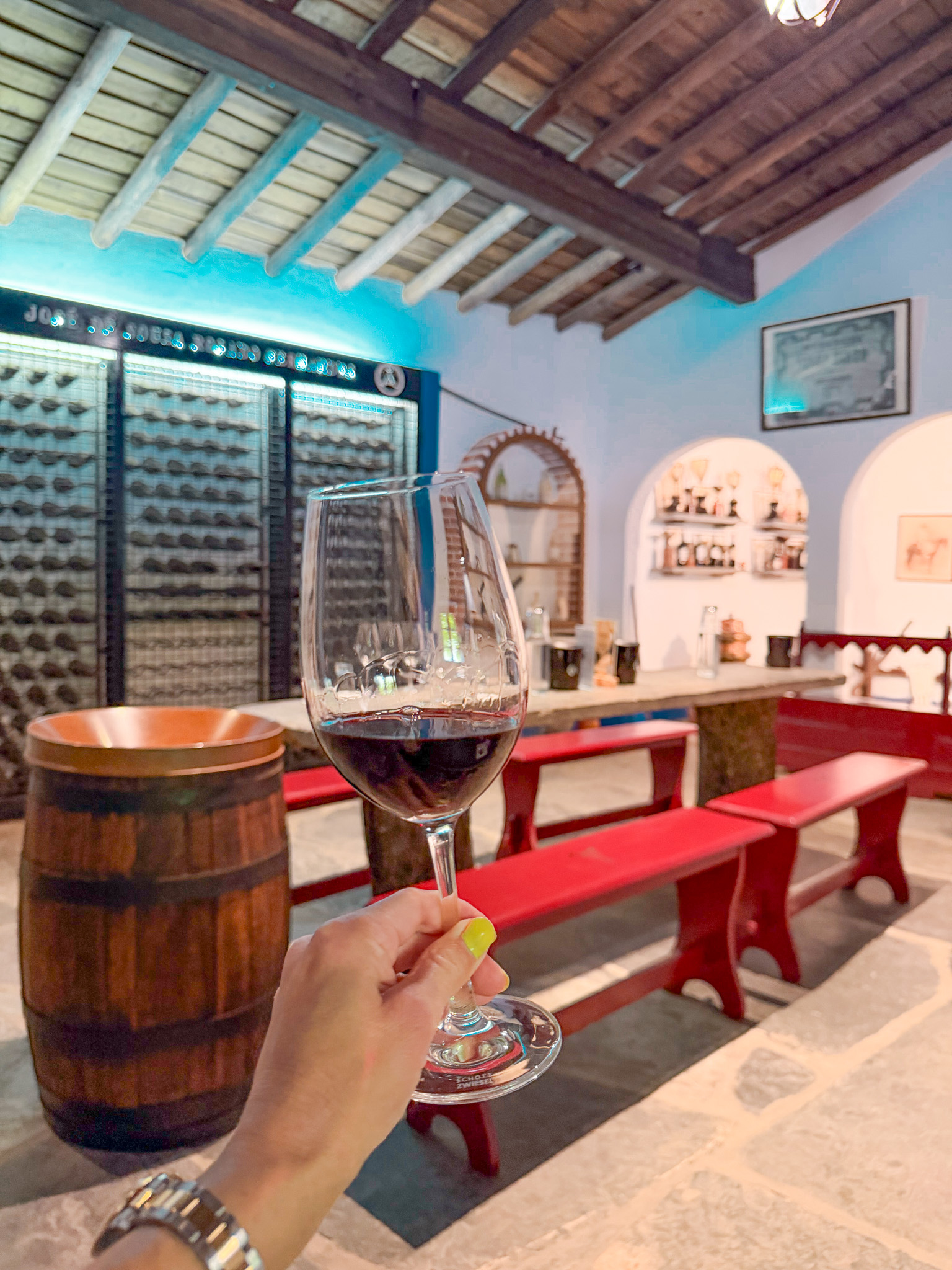
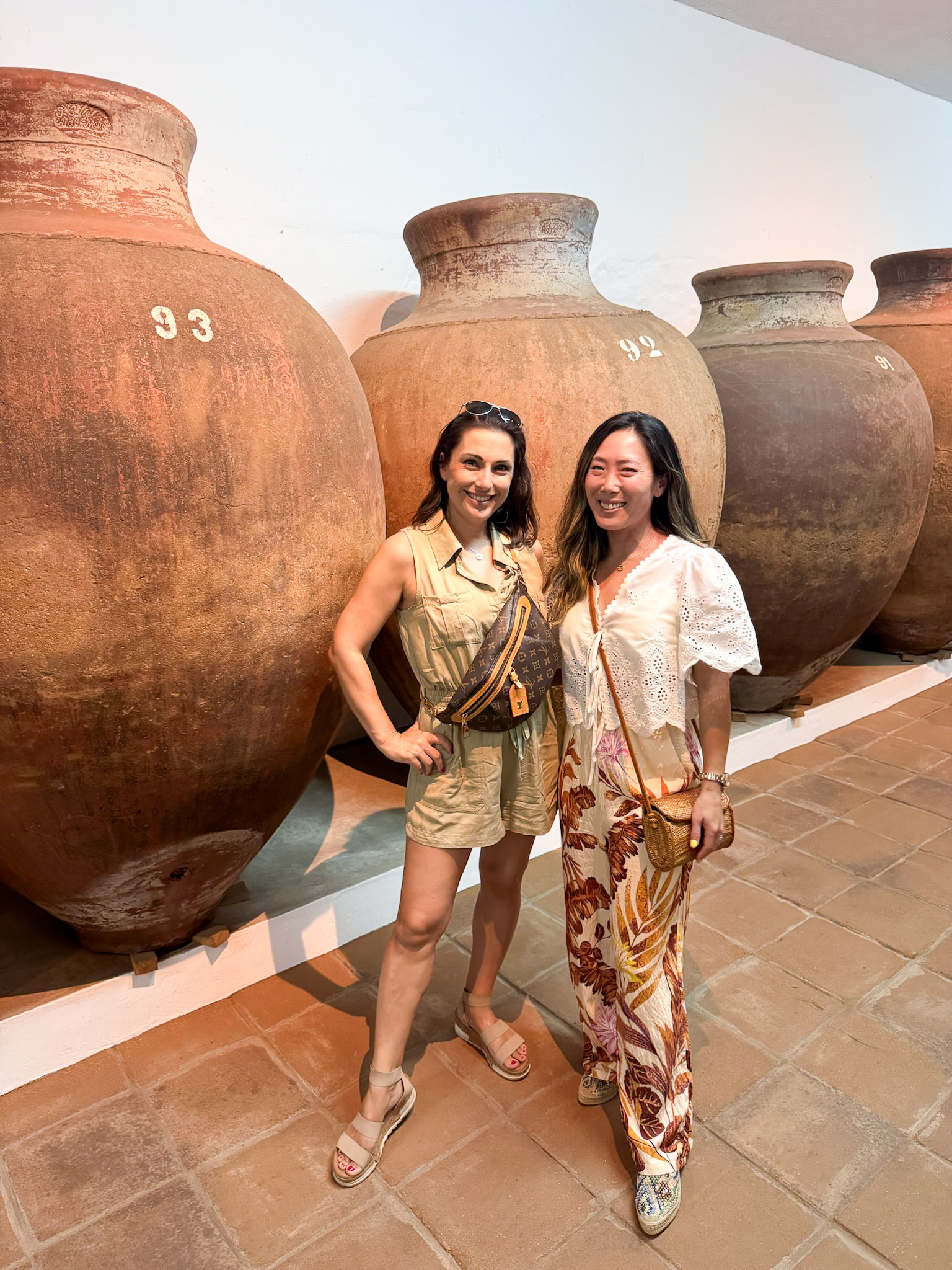
We’d tasted plenty of Alentejo wine before this trip, but José de Sousa was our first introduction to vinho de Talha. Instead of fermenting in the stainless-steel tanks or barrels we’re used to seeing, vinho de talha is made inside enormous clay vessels, using a method with roots stretching back thousands of years.
José de Sousa has the biggest collection in the region with 114 talhas, many handmade locally in the 19th century. Each can hold roughly 1,200–1,600 liters, although they use only 15-20 for a given winemaking year.
The wines themselves were just as memorable. We tried a really unusual white that looked and smelled almost like an orange wine, but tasted completely different—bright and mineral…such a cool surprise. We loved the reds even more. They reminded us a little of an earthy Pinot Noir, but with this unexpected savory, almost umami quality. Incredibly unique and a must if you’re in the region.
🗓️ Book ahead. Guided tours and tastings here aren’t something to count on walking in for, especially in summer.
🏺 Shop for Pottery in São Pedro do Corval
Allow: 1–2 hours
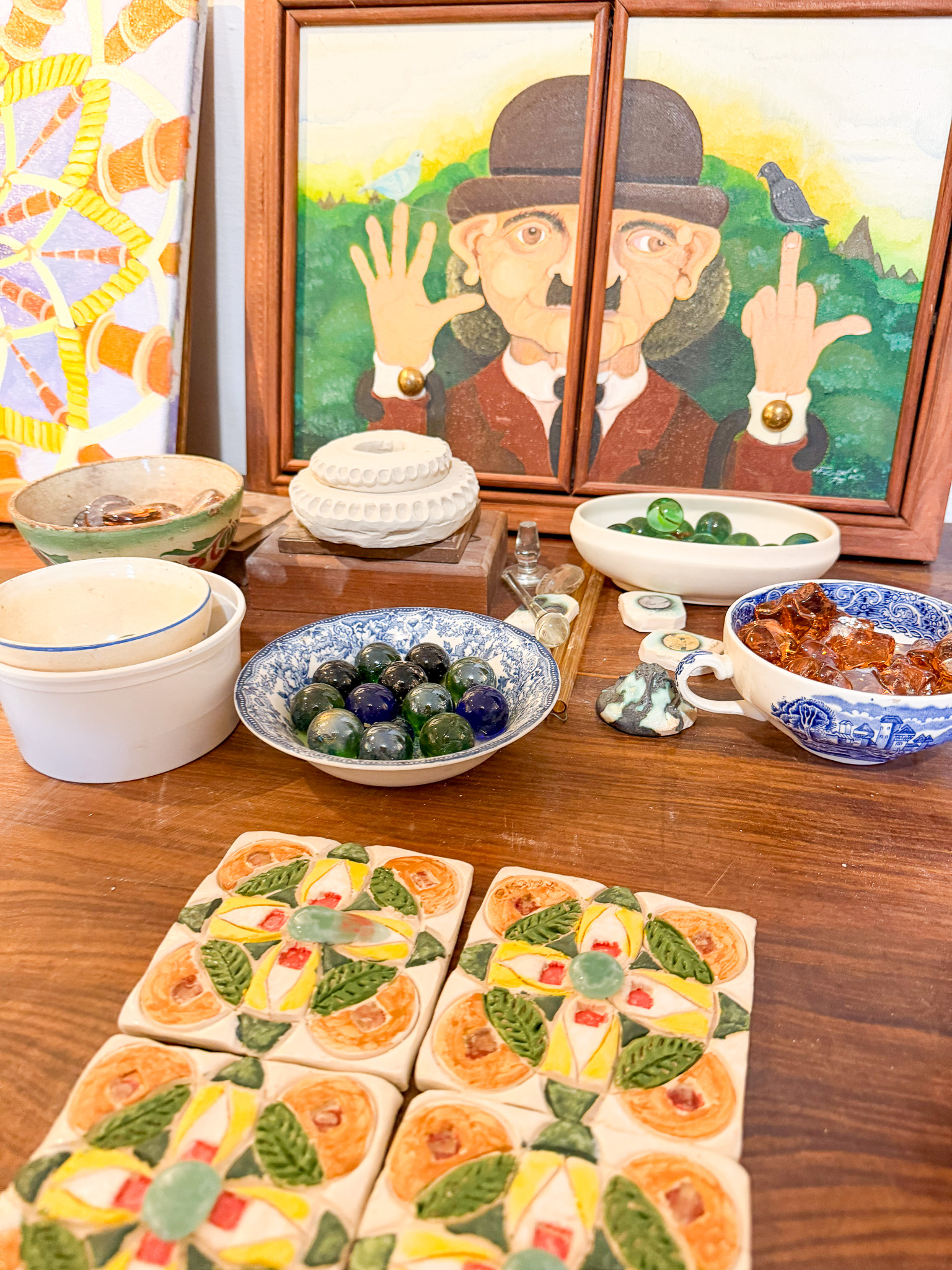
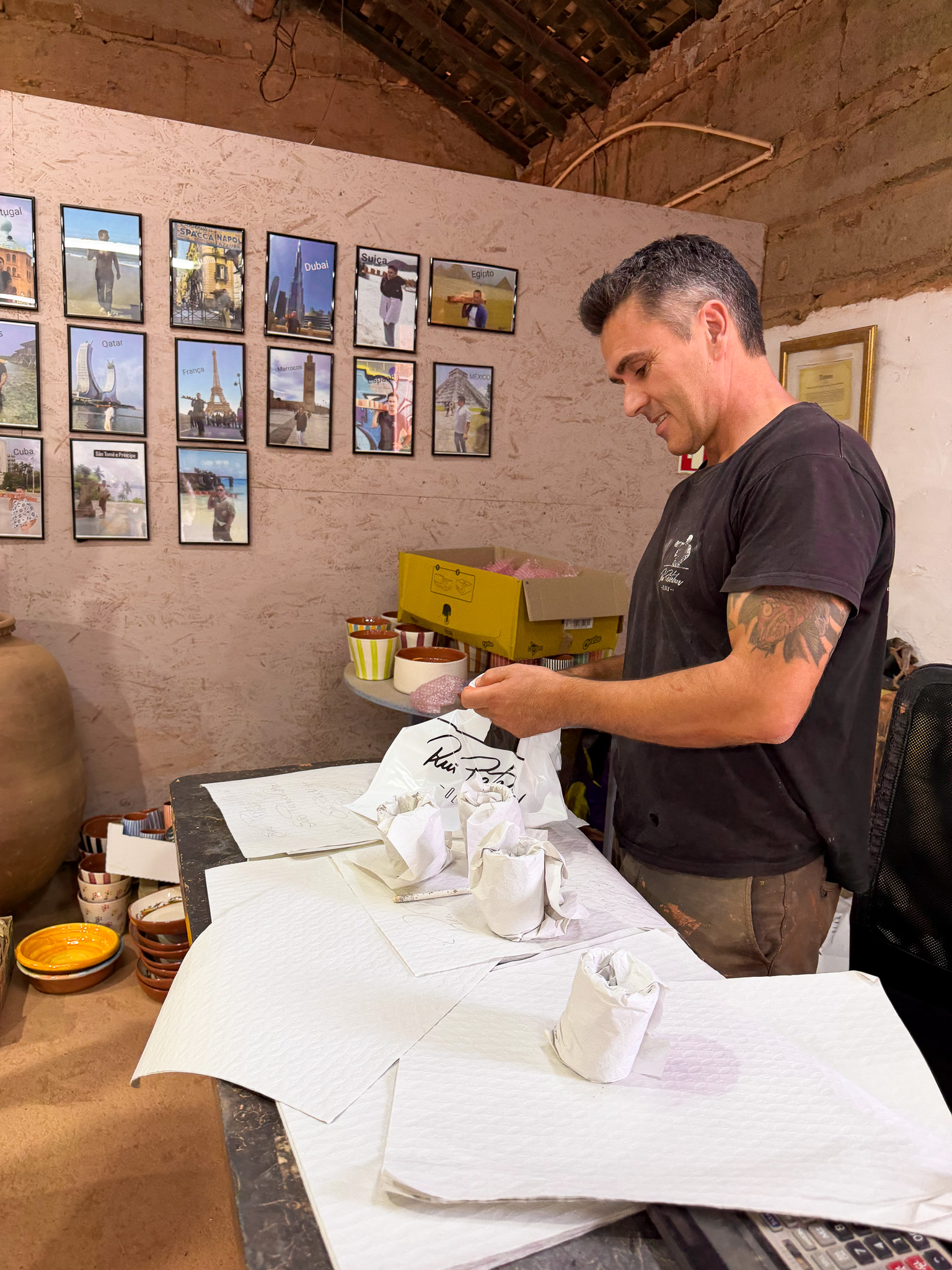
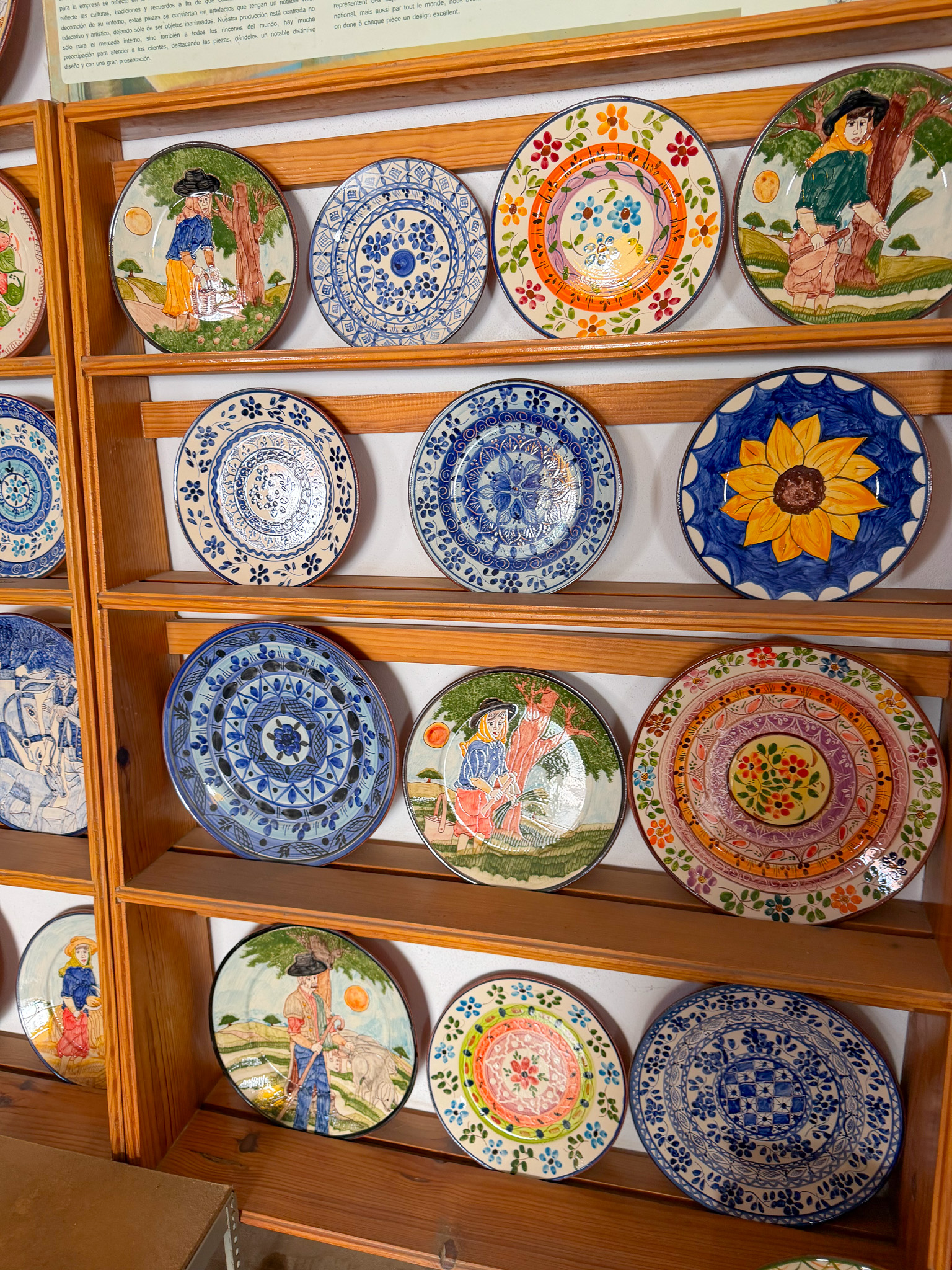
This stop wasn’t on our itinerary at all. During our tasting at José de Sousa, our guide mentioned that many of the huge clay talhas historically came from nearby São Pedro do Corval, a village with a long pottery tradition. So naturally, we had to go check it out.
The main street is lined with workshops, and we loved how different they all were, from traditional Alentejo patterns to much more contemporary designs. Prices were surprisingly reasonable, which is how I left with considerably more pottery than planned.
Olaria O Patalim was our favorite, but you’ll definitely want to pop into several shops along the main road rather than heading to just one.
📍 Olaria O Patalim | R. de Monsaraz 12, São Pedro do Corval

🏰 See Monsaraz at Golden Hour
Allow: 1.5–2 hours
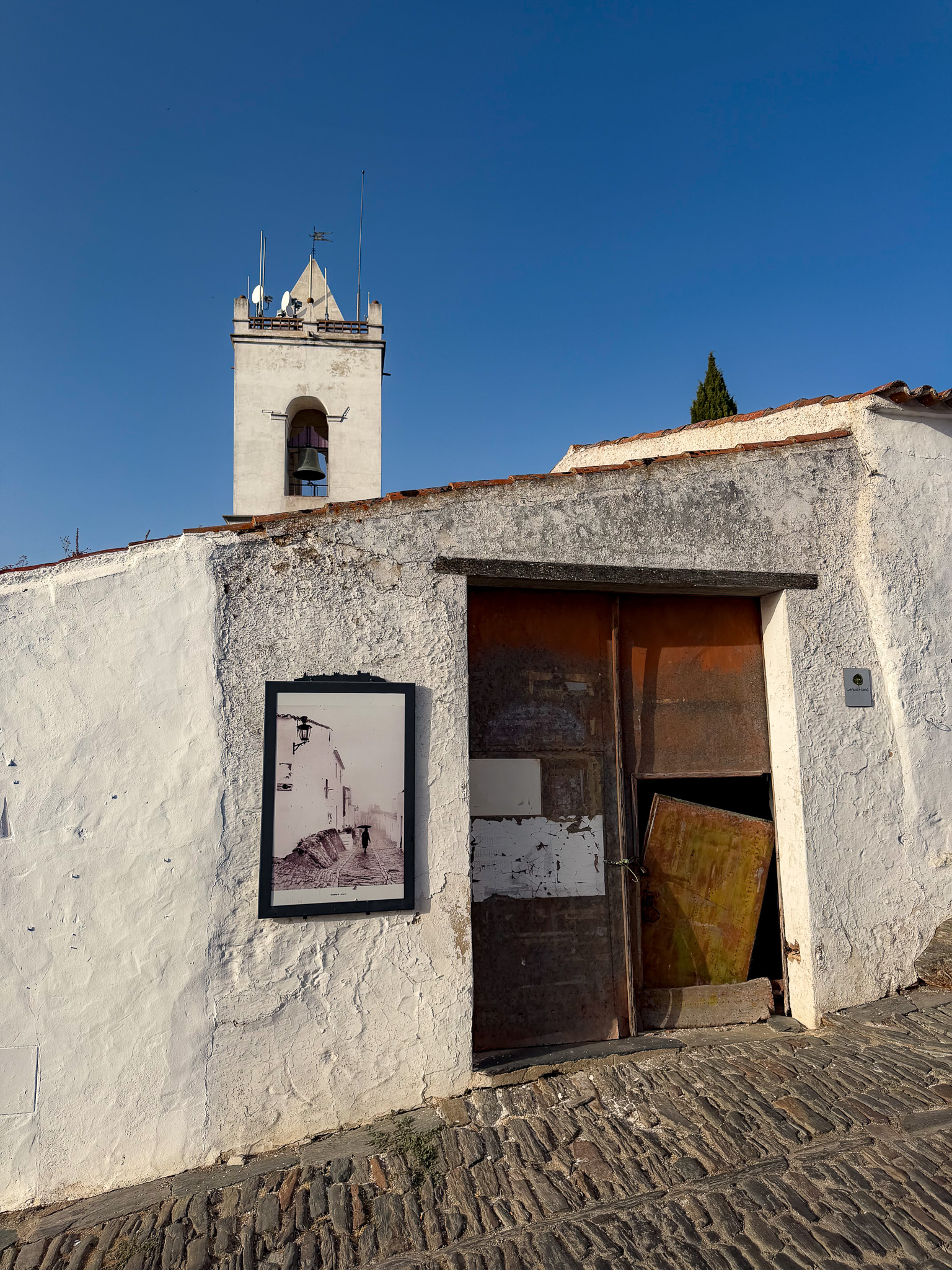
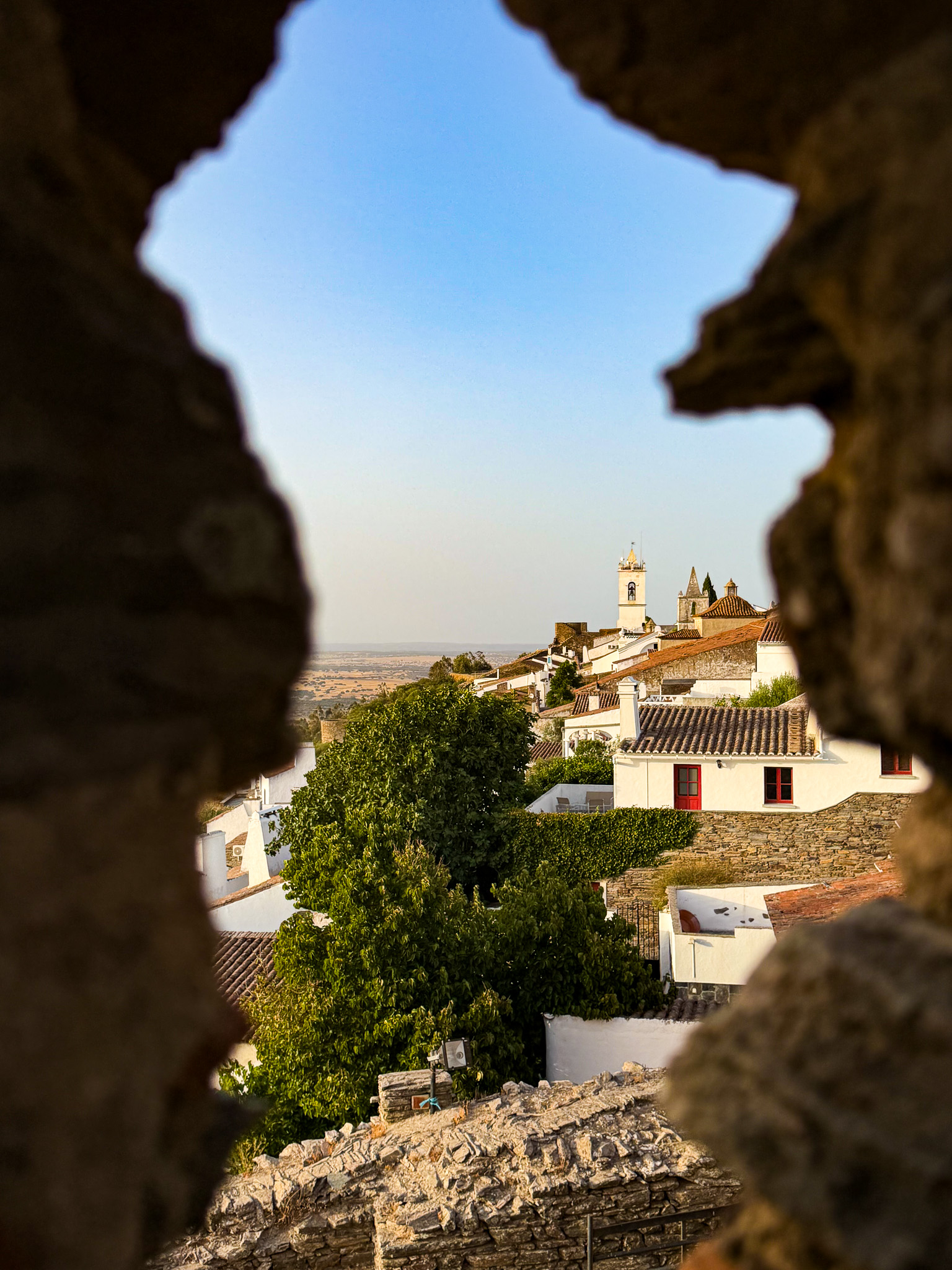
Perched high above the plains near the Spanish border, Monsaraz is one of those fortified Alentejo towns where the history and the setting are equally compelling. Its strategic position made it an important defensive stronghold for centuries, and the tiny village still sits almost entirely within its medieval walls.
We arrived around 5pm, which ended up being perfect. The heat was finally breaking, the stone streets were glowing in the late-afternoon light, and we explored the castle and its very cool bullring, built right inside the old castle walls, at golden hour.
Beyond the castle, wander the narrow whitewashed streets, pop into the little shops, and stop at the viewpoints over Lake Alqueva and the surrounding countryside. It’s small, so you don’t need hours here, but time it for later in the day if you can.
We stayed for dinner at SAHIDA, which made for an easy end to the day.
🌌 This is Dark Sky country. Monsaraz sits inside the Dark Sky Alqueva reserve, one of the first certified starlight tourism destinations in the world. If you’re already staying nearby, it’s worth looking into a stargazing session. We didn’t, and I’m still annoyed about it.

🏛️ Spend Half a Day in Estremoz
Allow: Half a day
Estremoz surprised us.
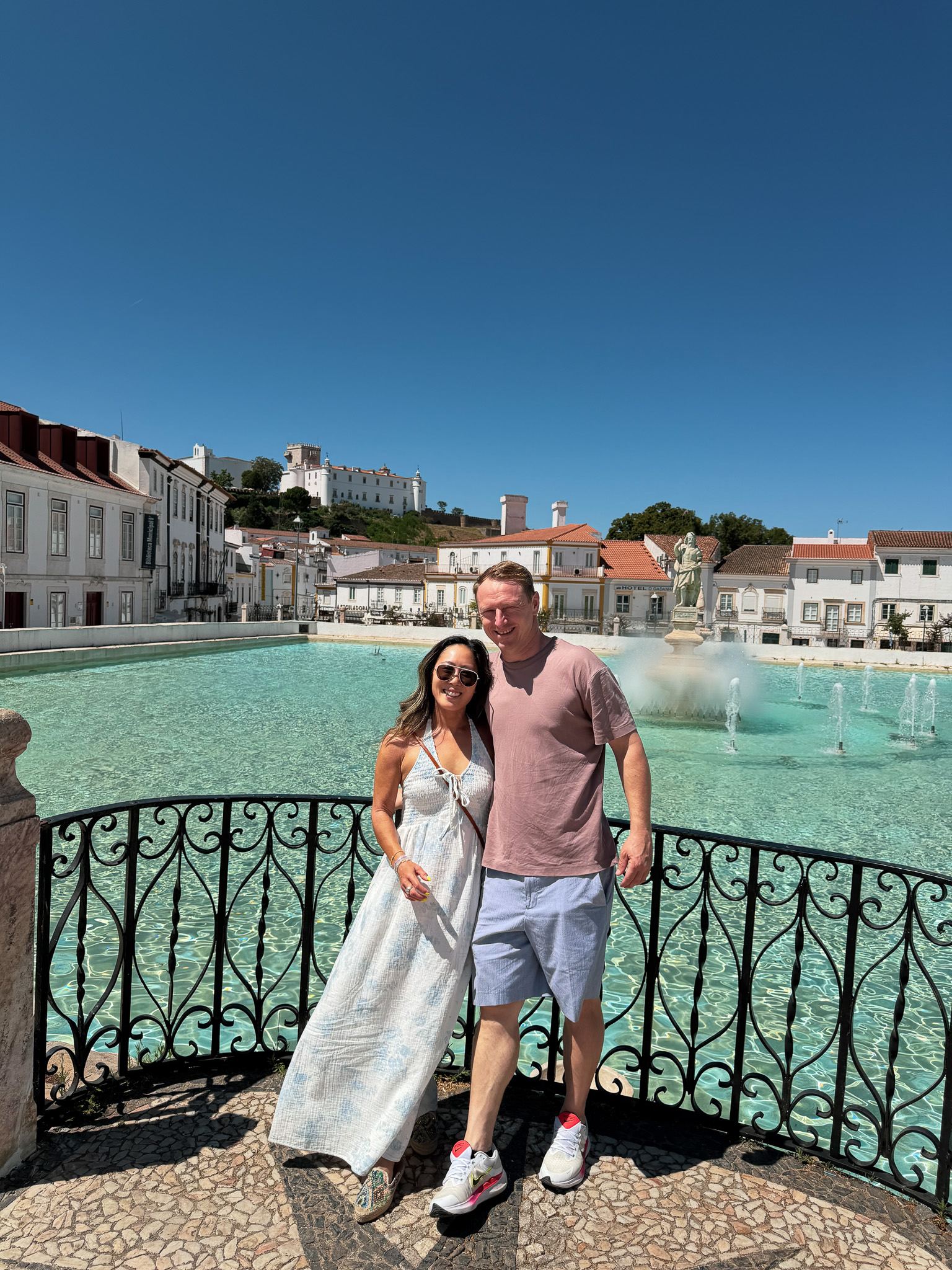
It’s one of Portugal’s famous marble towns, and once you know that, you start noticing white marble everywhere: not just in monuments, but in streets, fountains, doorways, and ordinary buildings.
Head into the fortified upper town for the 13th-century castle and the Torre das Três Coroas. But don’t make the mistake of treating Estremoz as a quick castle stop.
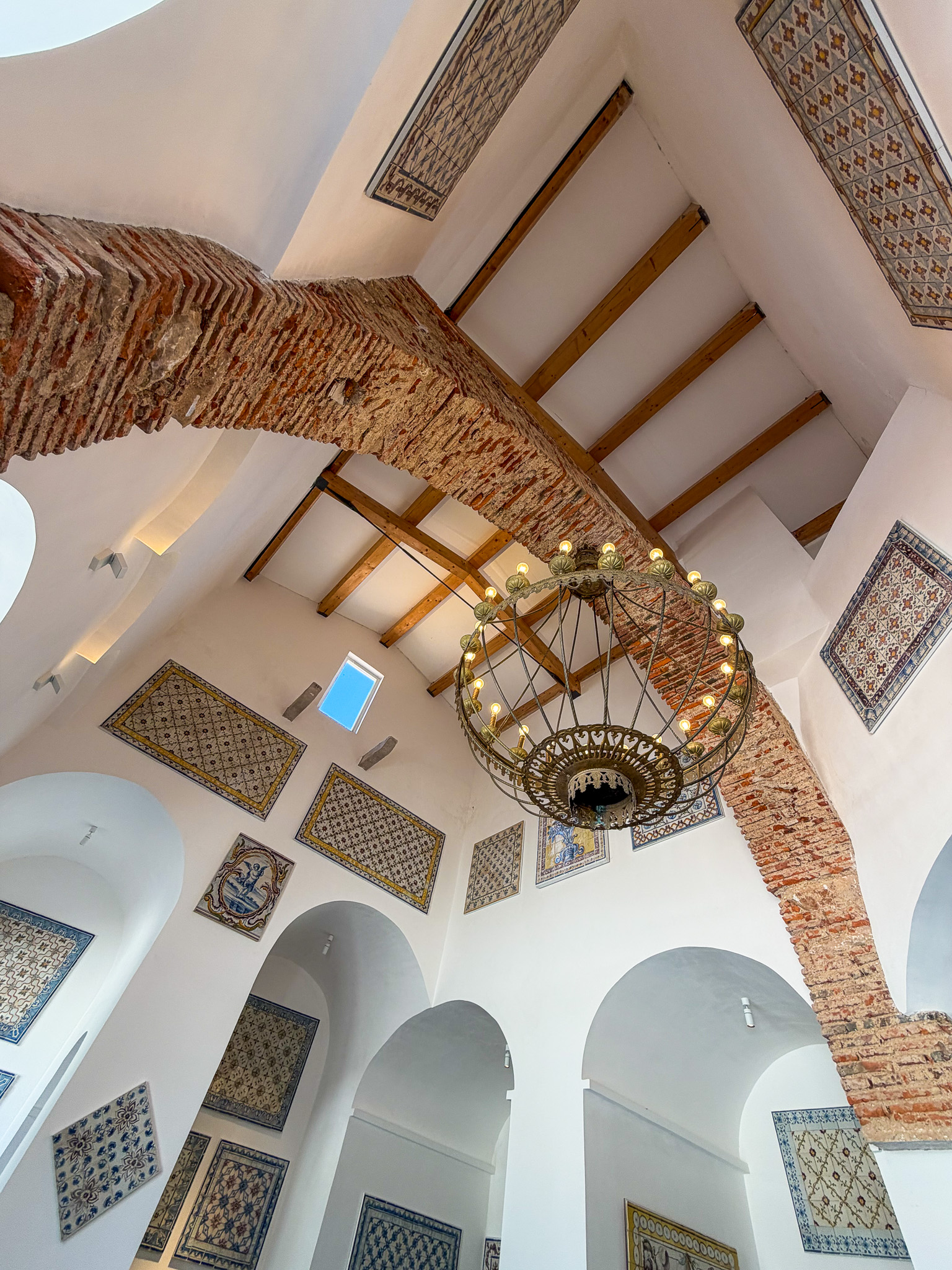
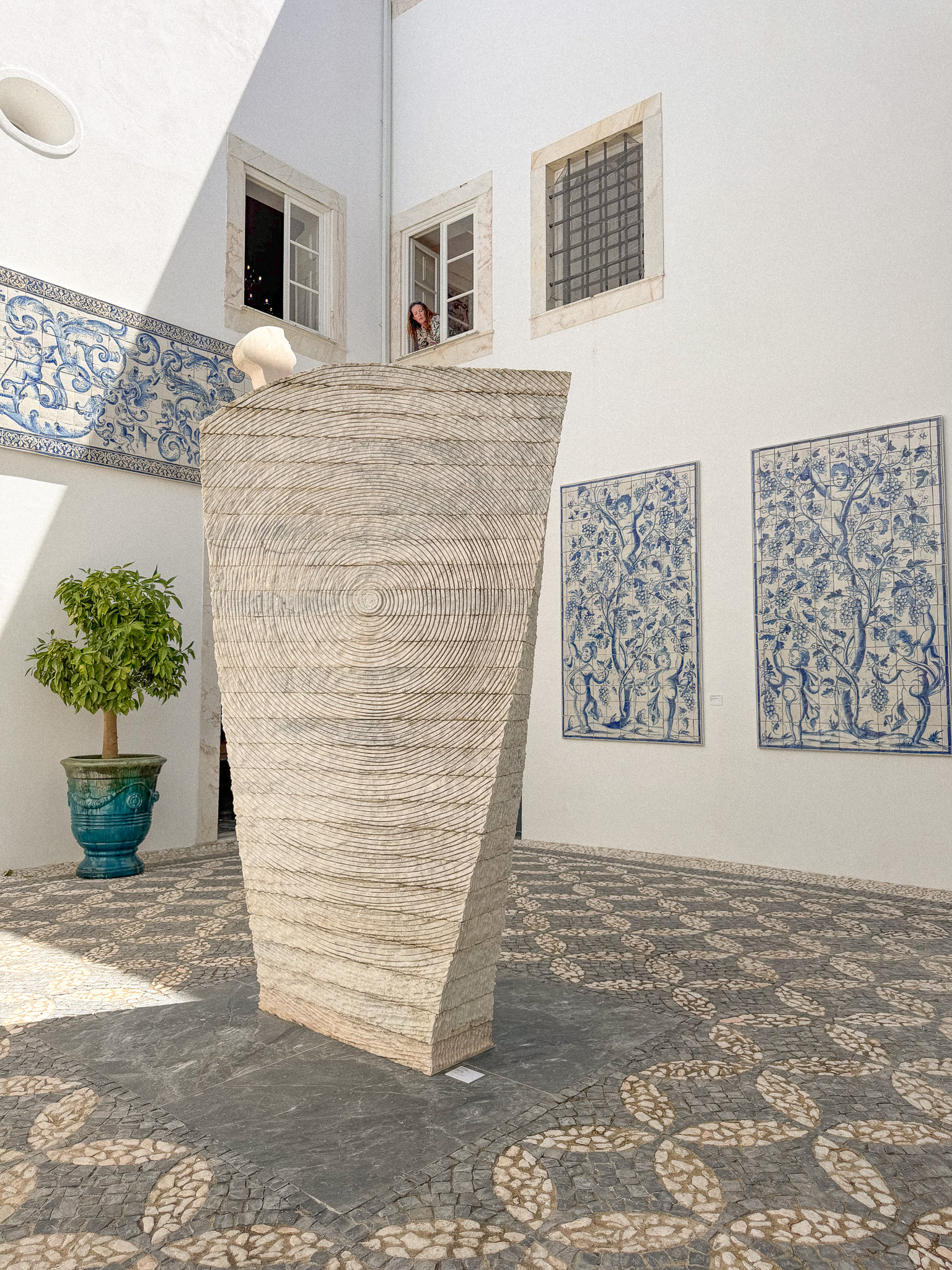
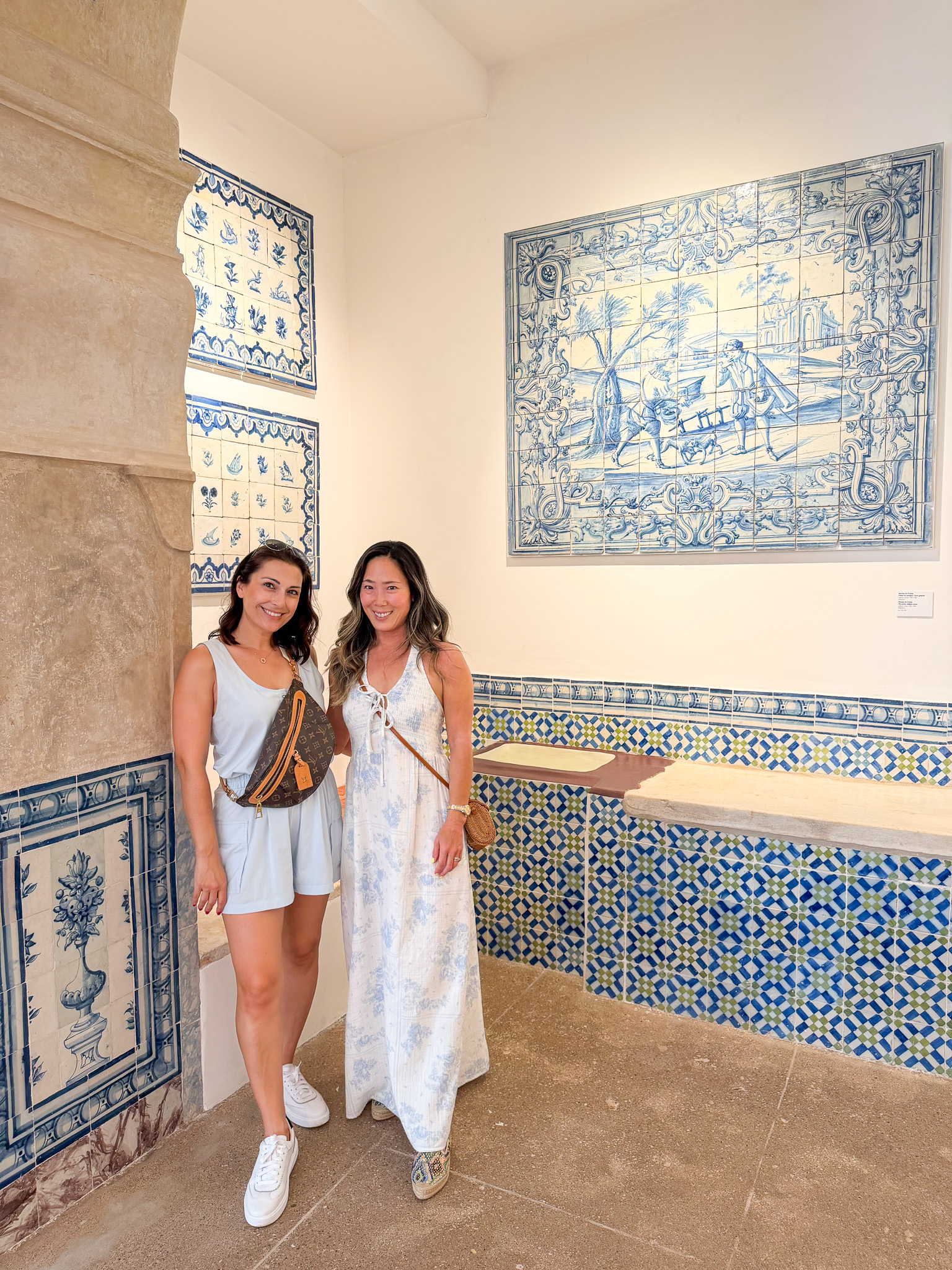
🖼️ Museu Berardo Estremoz
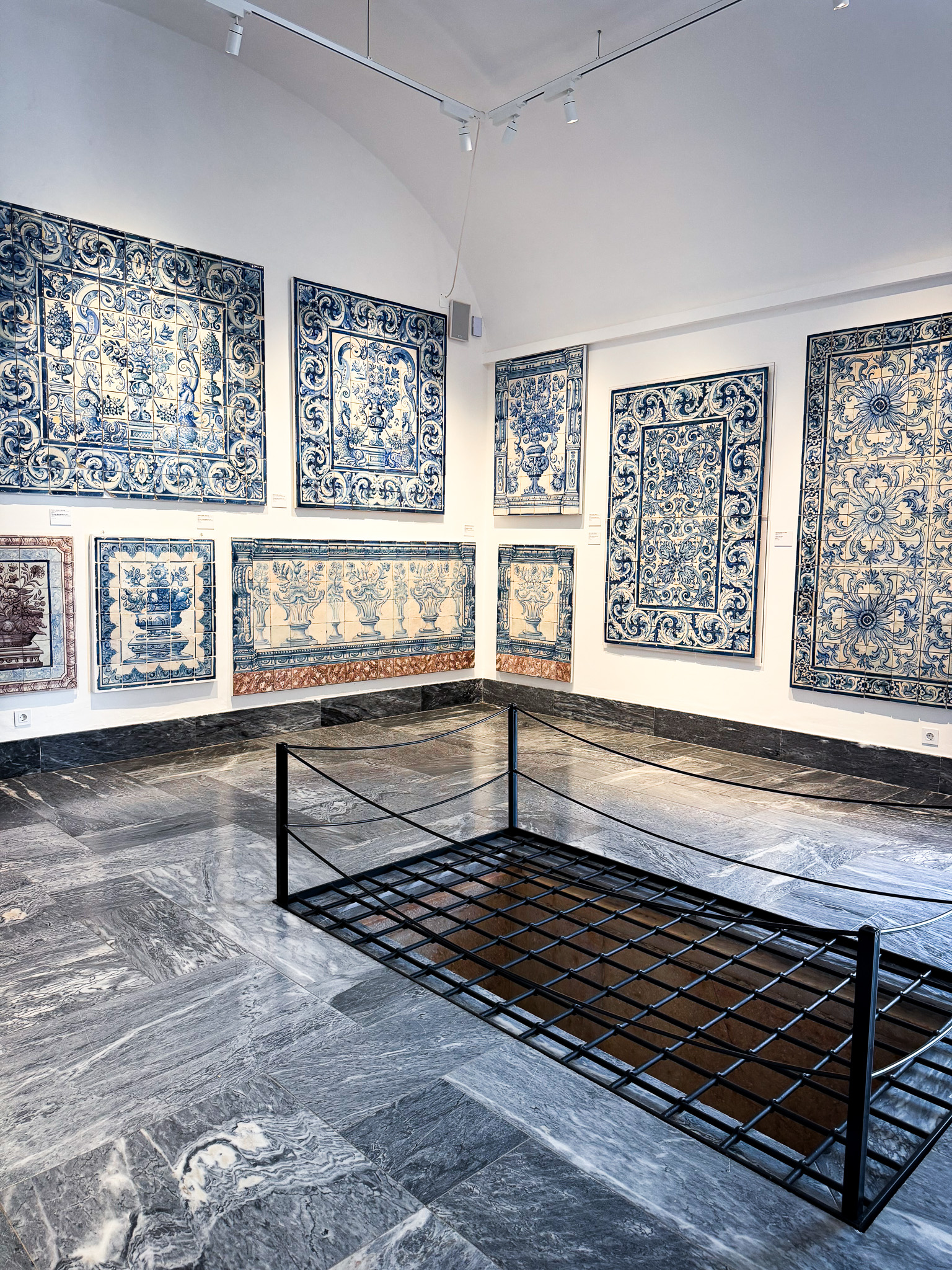
This was stunning, and easily one of the best museums we’ve come across in Portugal.
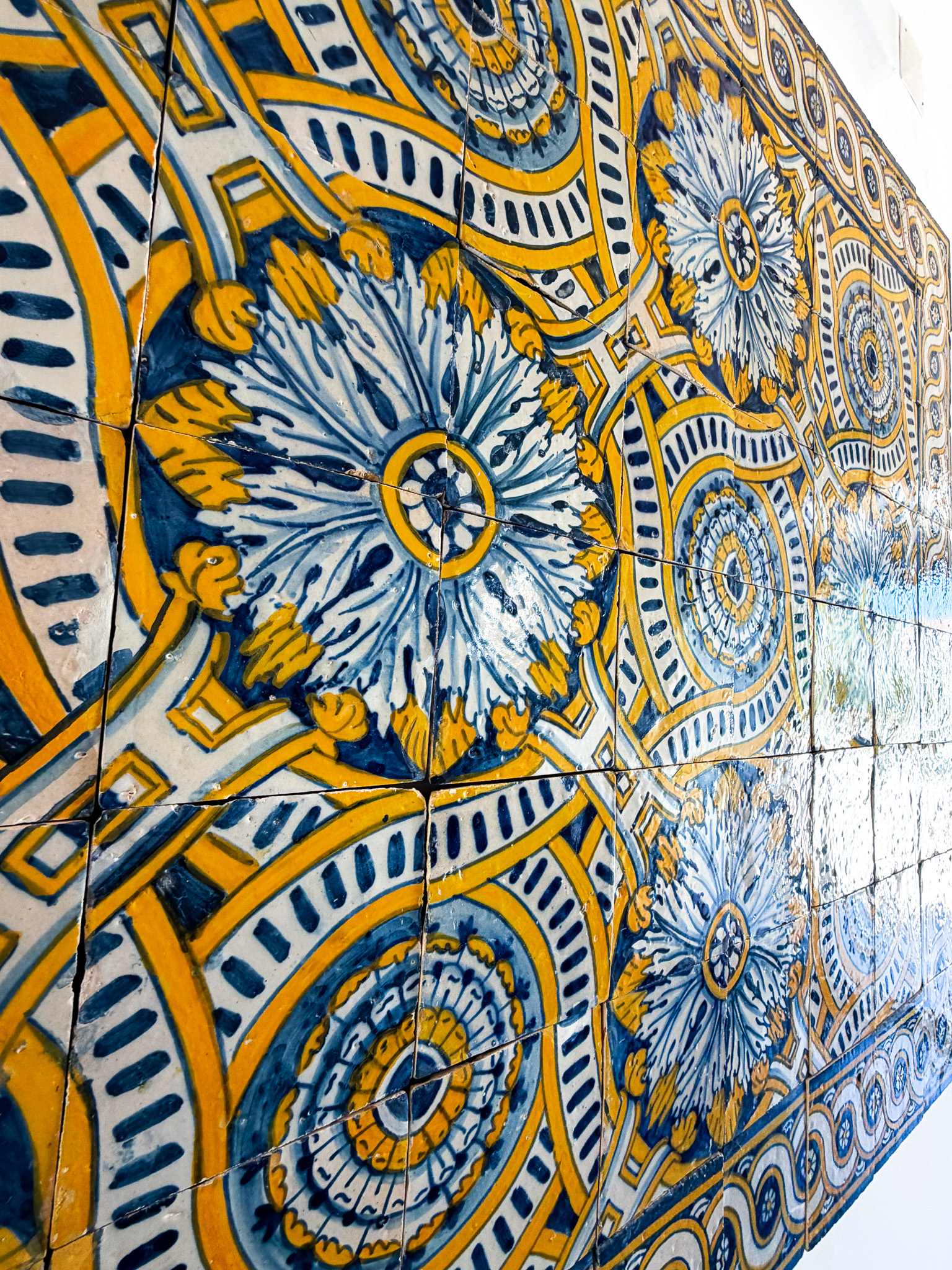
The collection traces roughly 800 years of tile history, with thousands of pieces spanning centuries of Portuguese and Iberian tilemaking. It’s housed inside the historic Palácio Tocha, where the building’s own Baroque and Rococo tile panels become part of the experience.
We’ve seen a lot of azulejos since moving to Portugal, and we were still completely blown away. Even if you’re not someone who builds trips around museums, make time for this one.
⛪ Hotel Convento de São Paulo
Worth knowing about nearby even if you’re not staying there. Stop in to walk through the historic convent and admire its incredible collection of azulejos and art. It’s the kind of place where the building itself is the attraction, and an easy cultural detour if you’re already exploring this part of Alentejo.
⏱️ Give Estremoz more time than you think you need. Between the upper town, Museu Berardo, and a long lunch or winery visit, there’s far more here than we expected.
✅ Don’t Miss
- The rooftop walk at Évora Cathedral
- Standing in a room full of 19th-century talhas at José de Sousa
- Golden hour inside the walls at Monsaraz
- The tile collection at Museu Berardo Estremoz
- Buying more pottery than you can reasonably fit in the car in São Pedro do Corval

🍽️ Where to Eat & Drink
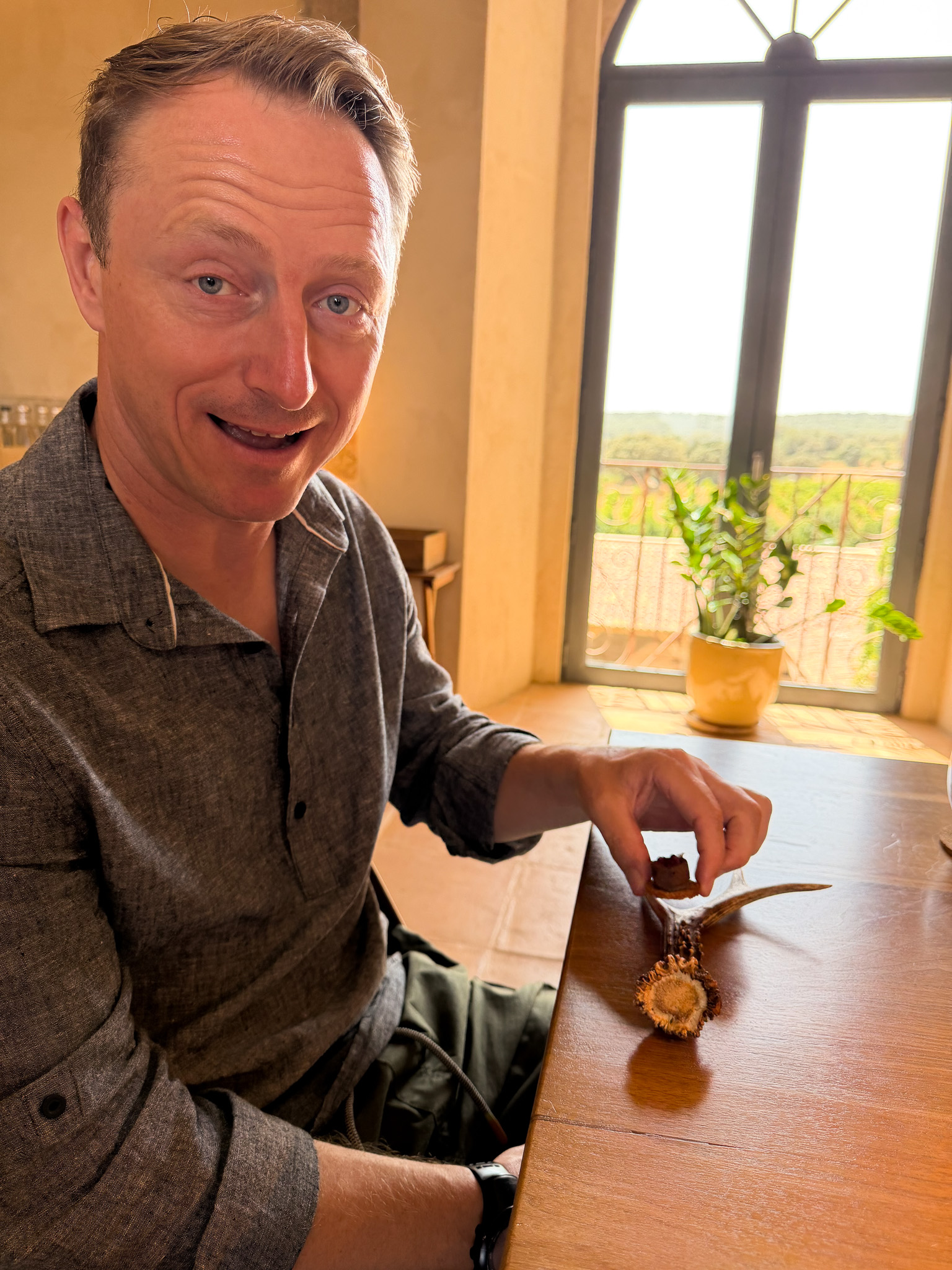
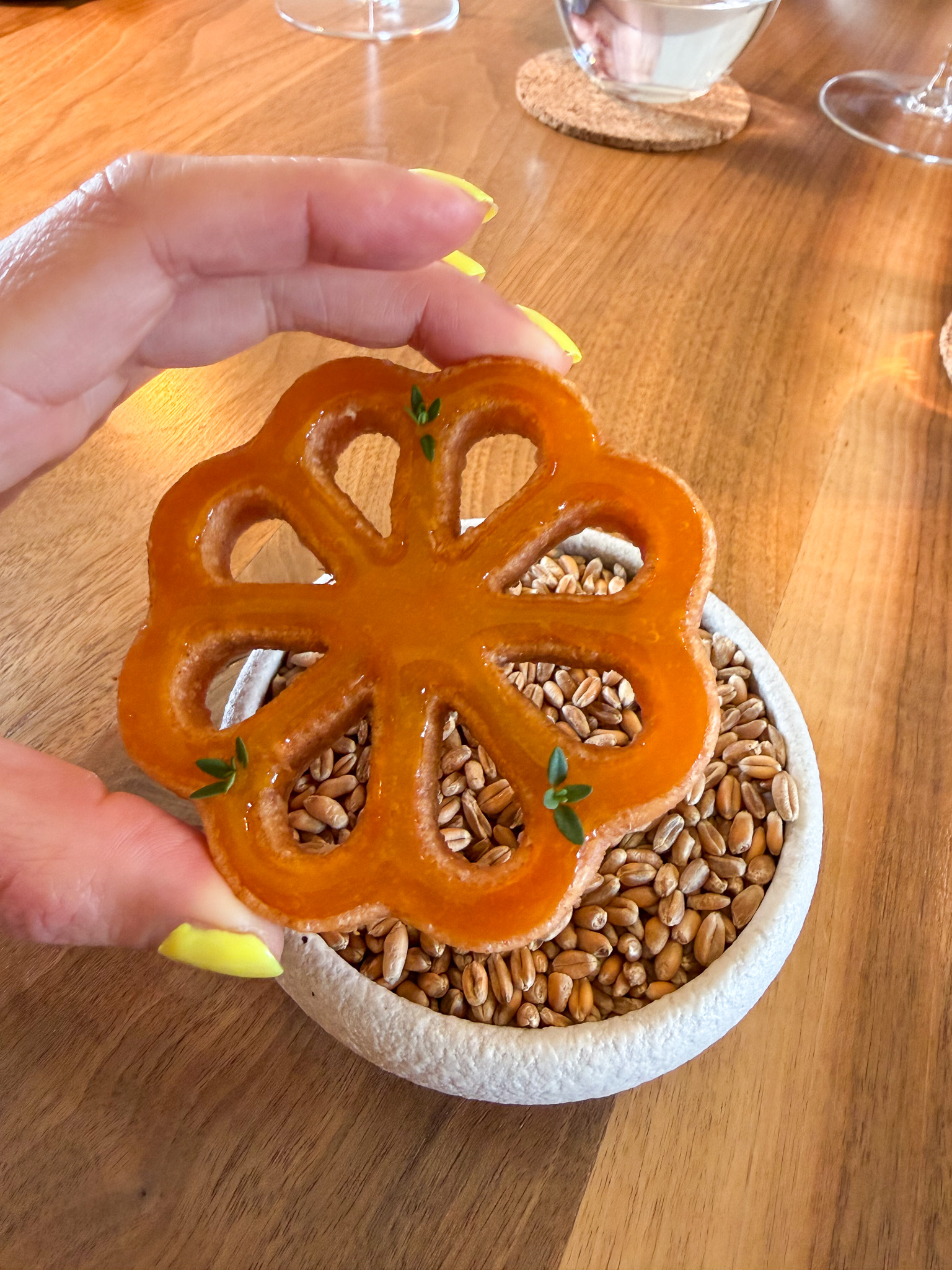
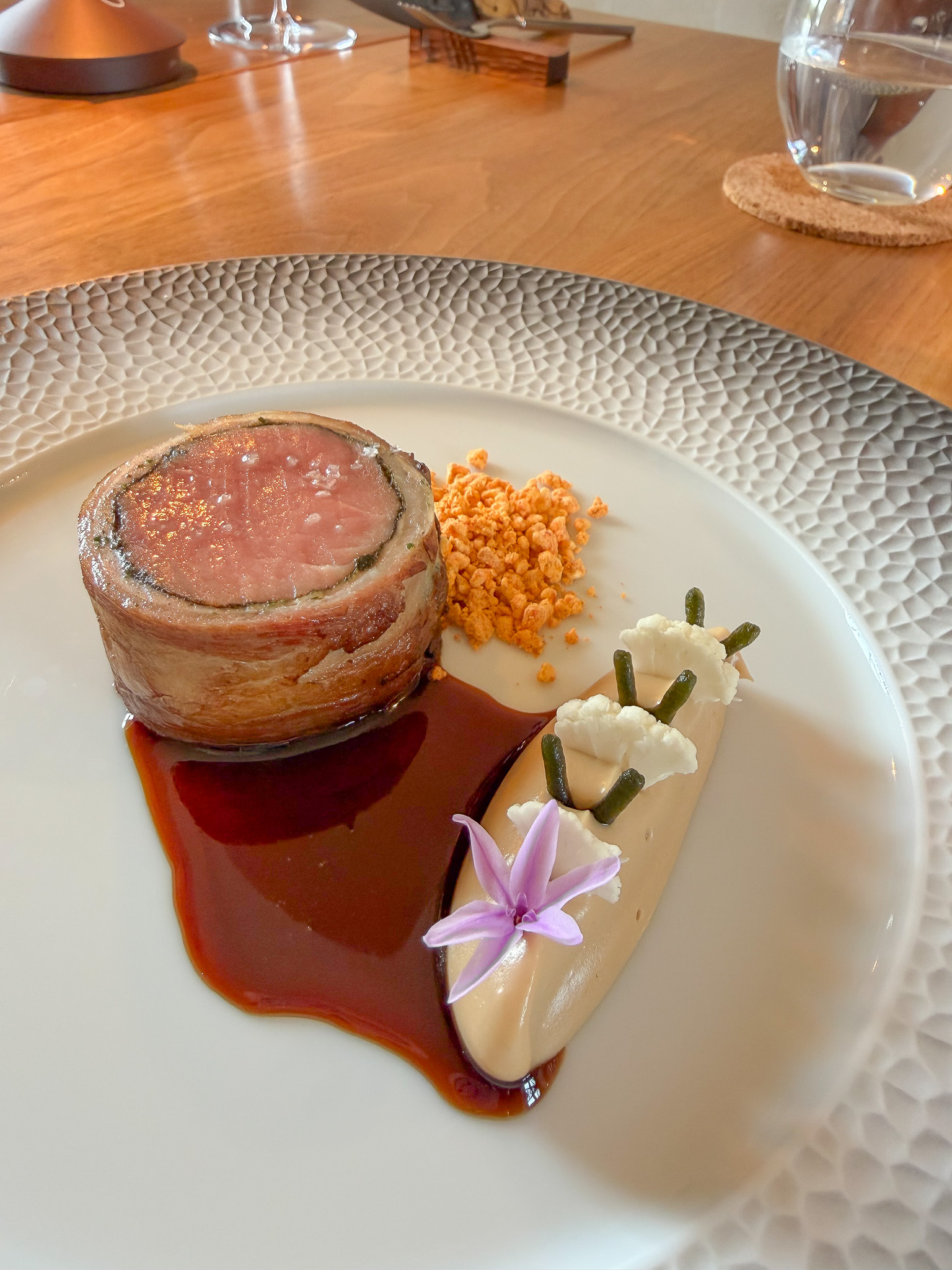
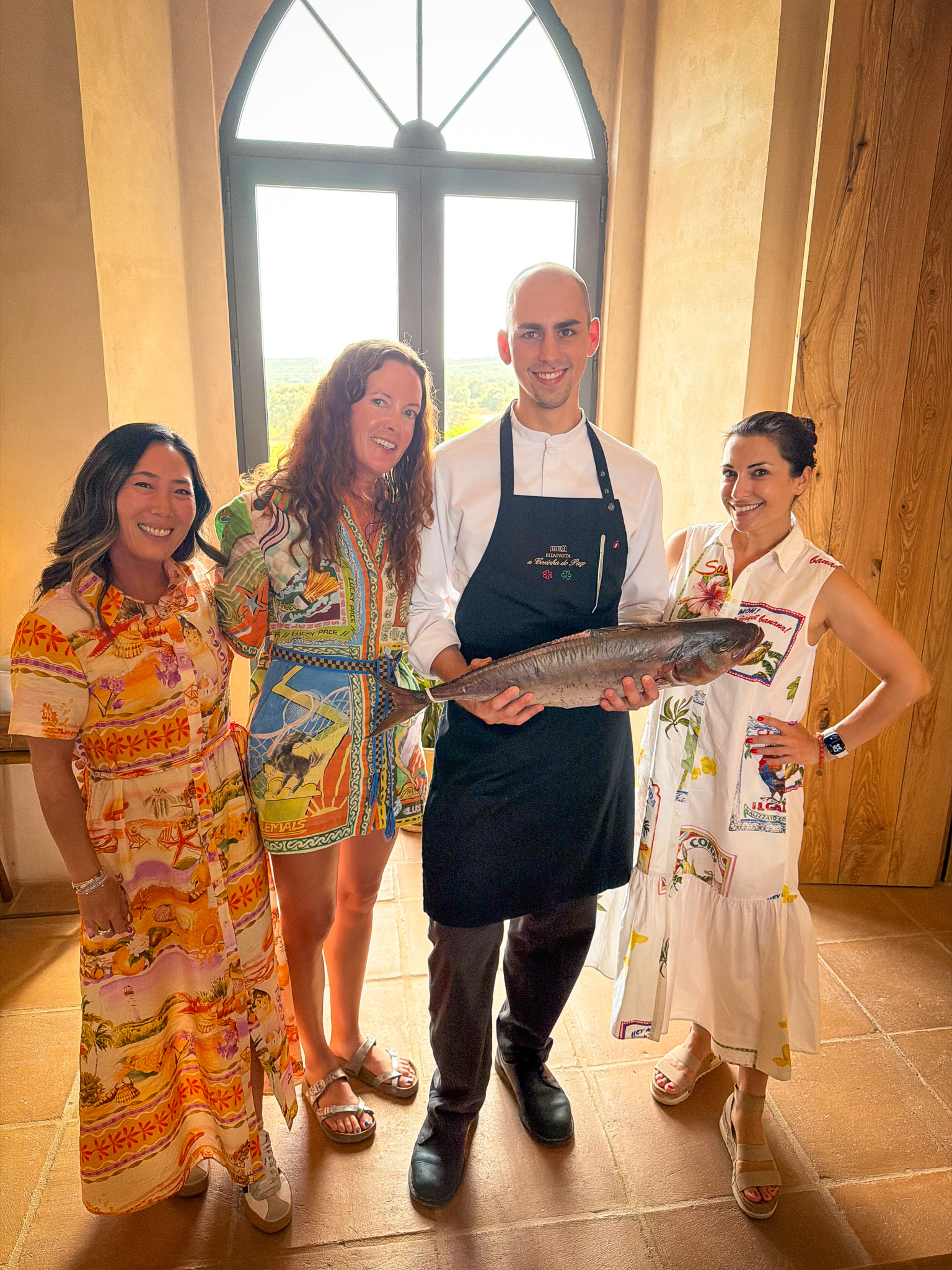
⭐ A Cozinha do Paço (Michelin Star & Michelin Green Star)
If you’re celebrating something, or you just love incredible food, this is worth the splurge.
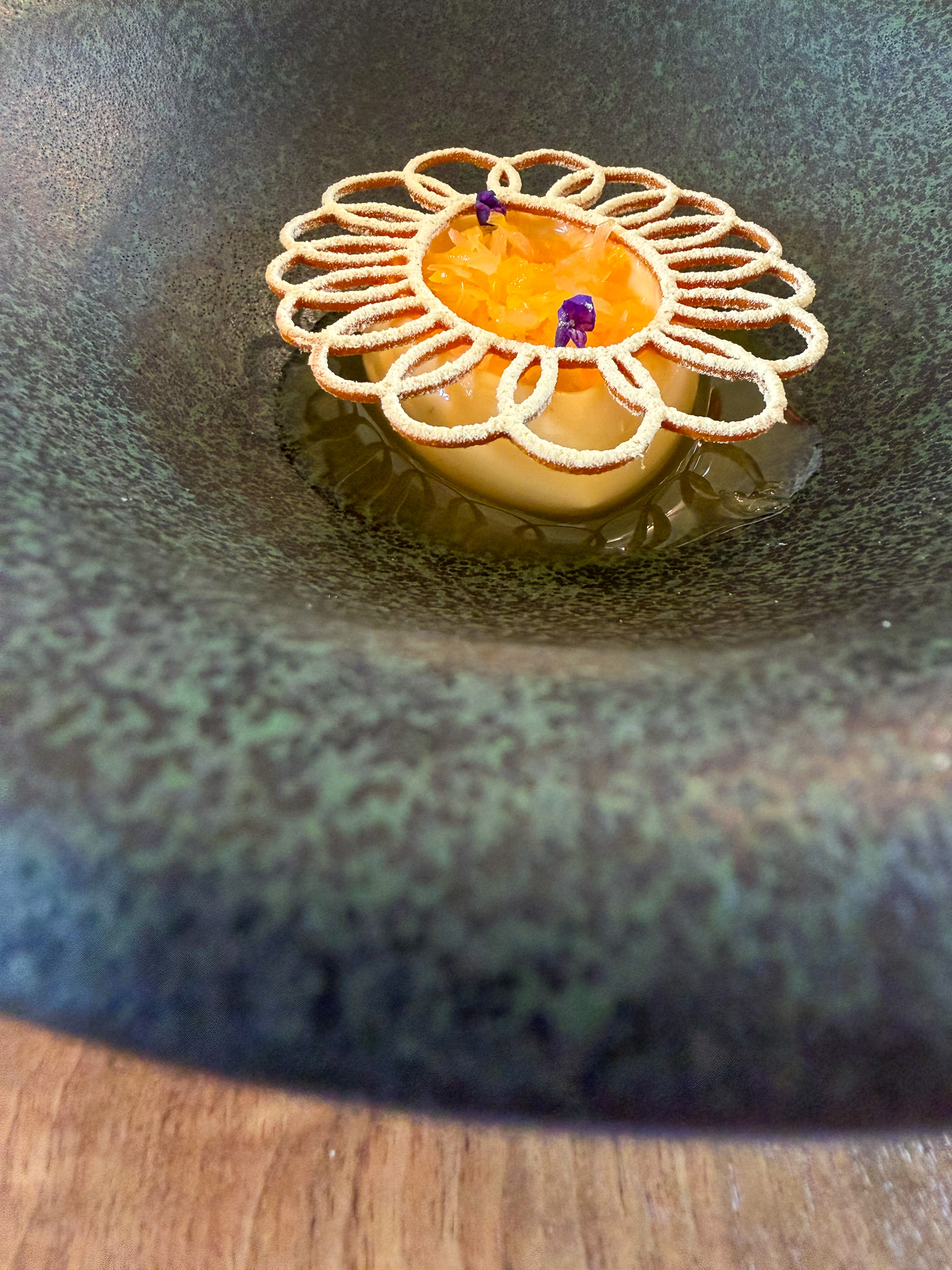
It’s hard to believe they only opened in 2025 and went on to earn both a Michelin Star and a Michelin Green Star. This wasn’t a quick fancy lunch. We were there for four hours, and the whole experience is designed to make you slow down and settle in.
The food was excellent, but Chef Afonso Dantas was a huge part of what made the meal memorable. He was incredibly approachable and came out throughout the afternoon to talk with us and answer our many questions, including our attempts to reverse engineer the insanely crispy fried amberjack skin we’d just eaten.
The wine pairing and selection were top-notch, and the experience extended beyond the table with a tour of the historic building and wine estate. It made the whole afternoon feel connected to the place, rather than a tasting menu we could have eaten anywhere.
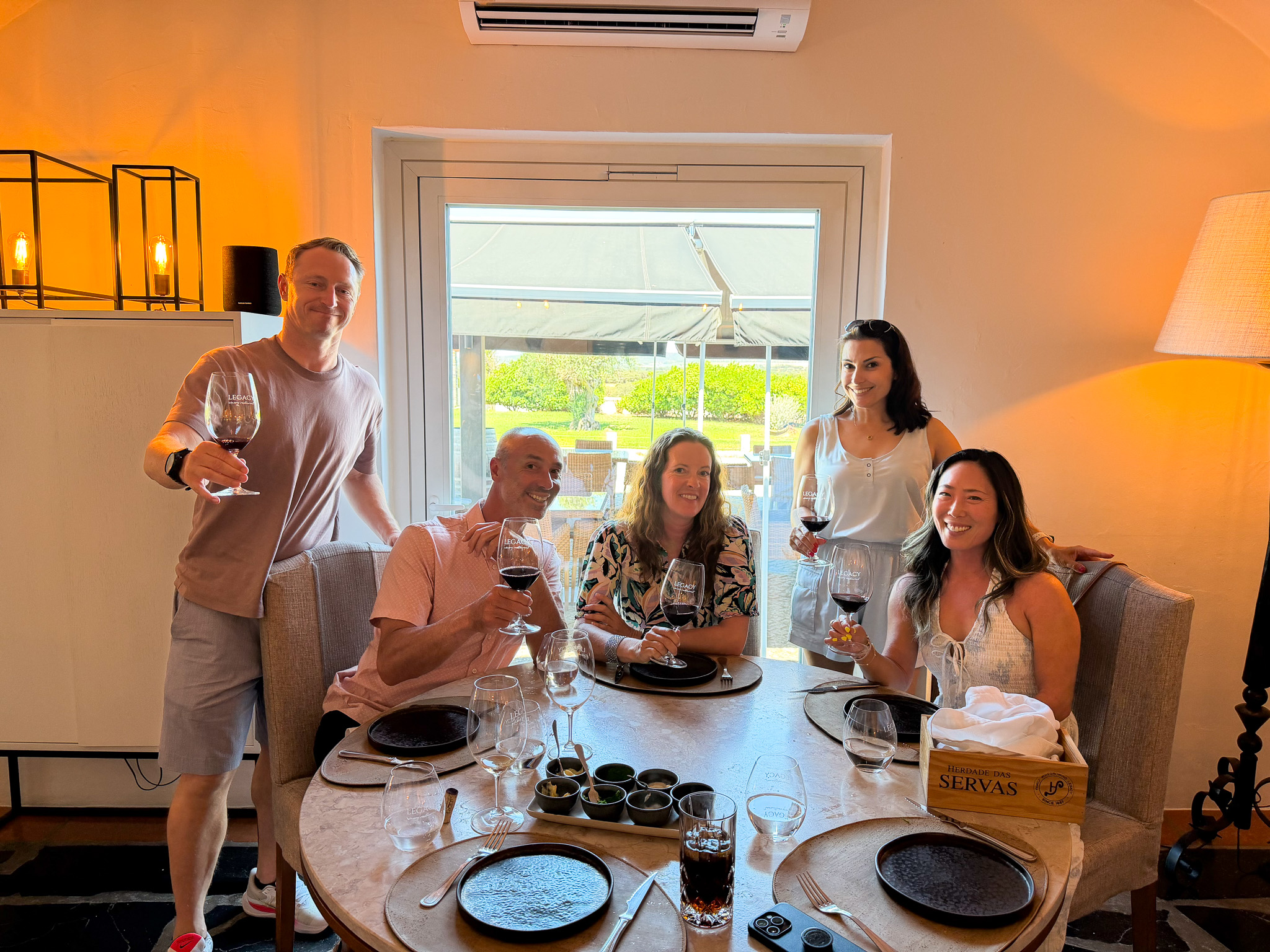
🍷 Legacy Winery
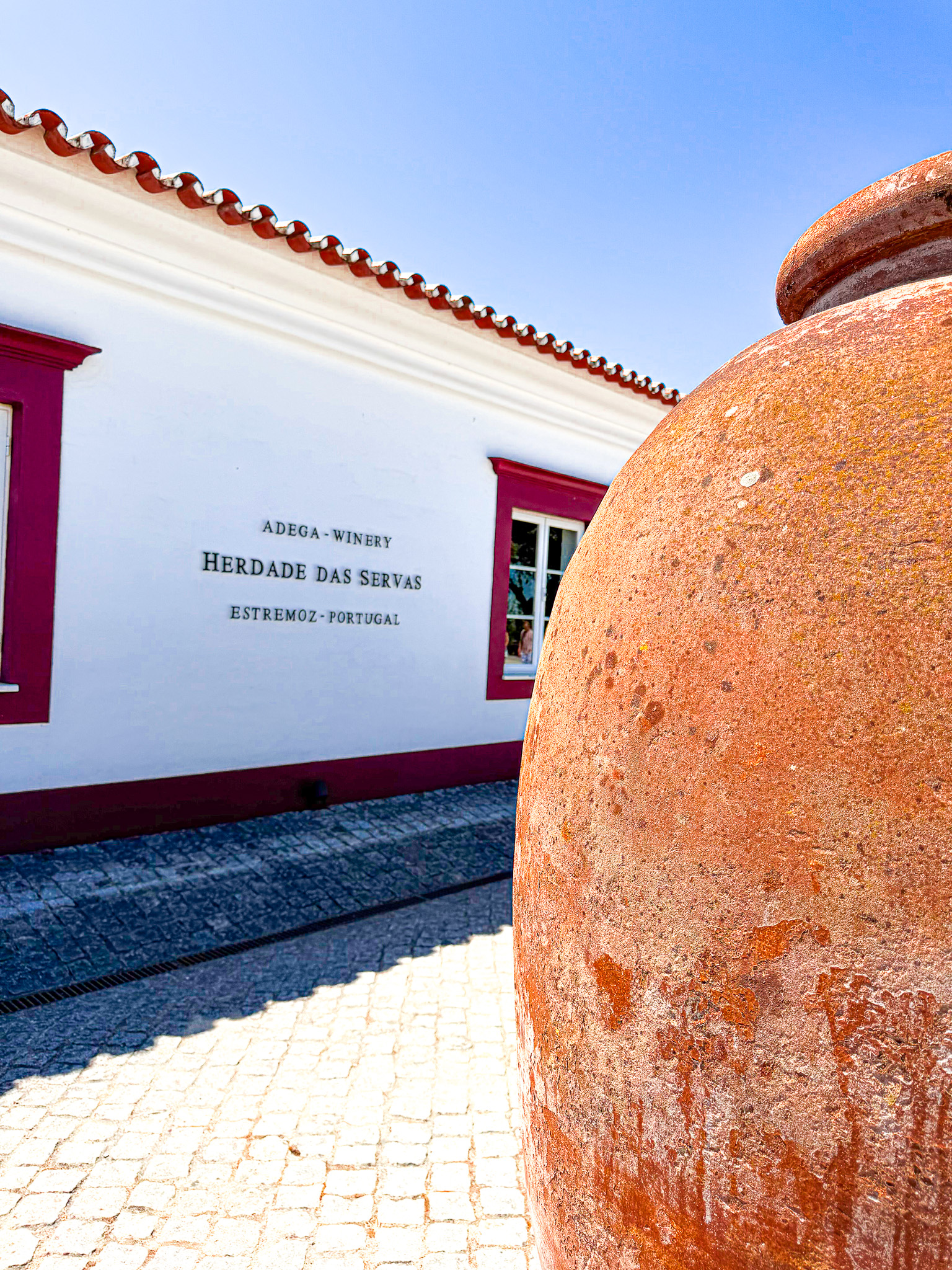
Another meal we’d absolutely build the day around. Legacy sits at Herdade das Servas, where the Serrano Mira family’s winemaking history dates all the way back to 1667—13 generations. That history is actually where the restaurant gets its name.
The food pays homage to Alentejo too, taking regional ingredients and traditions and giving them a more elevated, modern interpretation. It felt refined without losing its connection to the region.
The food and wine were excellent, the service was phenomenal, and it was reasonable for all the dishes and desserts we got to try.
🌅 SAHIDA (Monsaraz)
We ate here after exploring Monsaraz, and we’d recommend it as a solid dinner option if you’re already spending the afternoon there.
The biggest draw is the view, especially later in the day. The food was good, and pairing it with golden hour in Monsaraz made for a really nice evening. We wouldn’t drive across Alentejo specifically for the meal. But as part of a Monsaraz day? Absolutely.
🍽️ Divinus (at Convento do Espinheiro)
One night we took the easy option and ate at the hotel restaurant, and we were pleasantly surprised by how good it was. If you’re staying at Convento do Espinheiro, we’d happily plan a dinner here, especially after a full day of exploring, when the last thing you want is to get back in the car.
💡 What We Missed
We had way more saved than we could fit, so these are still firmly on our list.
More Towns & Culture
- Moura – A fortified town with a historic Moorish quarter (Mouraria) and the ruins of a medieval castle. The narrow streets and whitewashed houses look beautiful, and it seems much less touristy than some of Alentejo’s better-known towns. We’d allow 1–1.5 hours and pair it with a local lunch.
- Arraiolos – Known for traditional hand-embroidered wool rugs and an unusual circular castle.
More Wine 🍷
- Herdade do Esporão – One of Alentejo’s best-known estates, with both wine and olive oil experiences.
- Tiago Cabaço – We actually had this booked, but one of our lunches ran long and we unfortunately missed it.
- Quetzal – Recommended to us in Vidigueira for the combination of wine, food, and contemporary art.
- Mainova – A modern, woman-owned winery that came recommended.
- Adega XXVI – Another producer we’d saved for this trip.
- Howard’s Folly – An Estremoz winery we couldn’t squeeze in.
More Food 🍽️
- Taberna Típica Quarta-Feira – A family-run Évora tavern with no traditional menu and a parade of dishes brought to the table. We’ve heard it’s gotten quite popular with visitors, but I’m still curious.
- Botequim da Mouraria – Tiny Évora institution with only a handful of counter seats. Expect a wait.
- Tua Madre – A lighter Italian-Portuguese option using local and organic ingredients.
- O Vermelhudo – One we’d try if we make it to Moura.
- MAPA (Montemor-o-Novo) – The other Alentejo restaurant to pick up a Michelin Star recently. Next trip.
🌊 Part 2: The Wild Alentejo Coast
After several days of medieval towns, wineries, and seemingly endless golden countryside, we headed west, and Alentejo suddenly felt like a completely different trip.
This stretch of coast is wild, windswept, and far less developed than the beach destinations farther south. Think huge stretches of sand, Atlantic surf, working fishing towns, and very good seafood.
We spent time around Vila Nova de Milfontes and Sines, using both as bases.
🏨 Where to Stay
HS Milfontes Beach Hotel (Vila Nova de Milfontes)
We’ll start with the positive: the location is excellent. You’re right near the beach and well positioned for exploring Milfontes.
Unfortunately, that’s about where the positives ended for us. The hotel felt very run-down and dated, and the walls and doors were so thin that we could hear pretty much everything around us. The room never felt particularly quiet or comfortable, and the very basic door and lock didn’t make us feel especially secure either.
We don’t expect every road-trip hotel to be fancy, but we do expect it to feel comfortable, quiet and secure. The town is also very cute, so we would choose something more inland over beachside next time.
Hotel AP Sines Costa Alentejana (Sines)
This one we’d book again for sure and was a big jump up from Milfontes. Contemporary, comfortable, and the breakfast spread was great. The location is convenient too—you can walk to the historic center, Sines Castle and Vasco da Gama Beach, while some of the best beaches along this stretch of coast are an easy drive away. There’s no dedicated hotel parking, but we found a public lot nearby and it wasn’t much of an issue.
📍 What to See & Do
🏘️ Explore Vila Nova de Milfontes
Allow: Half a day
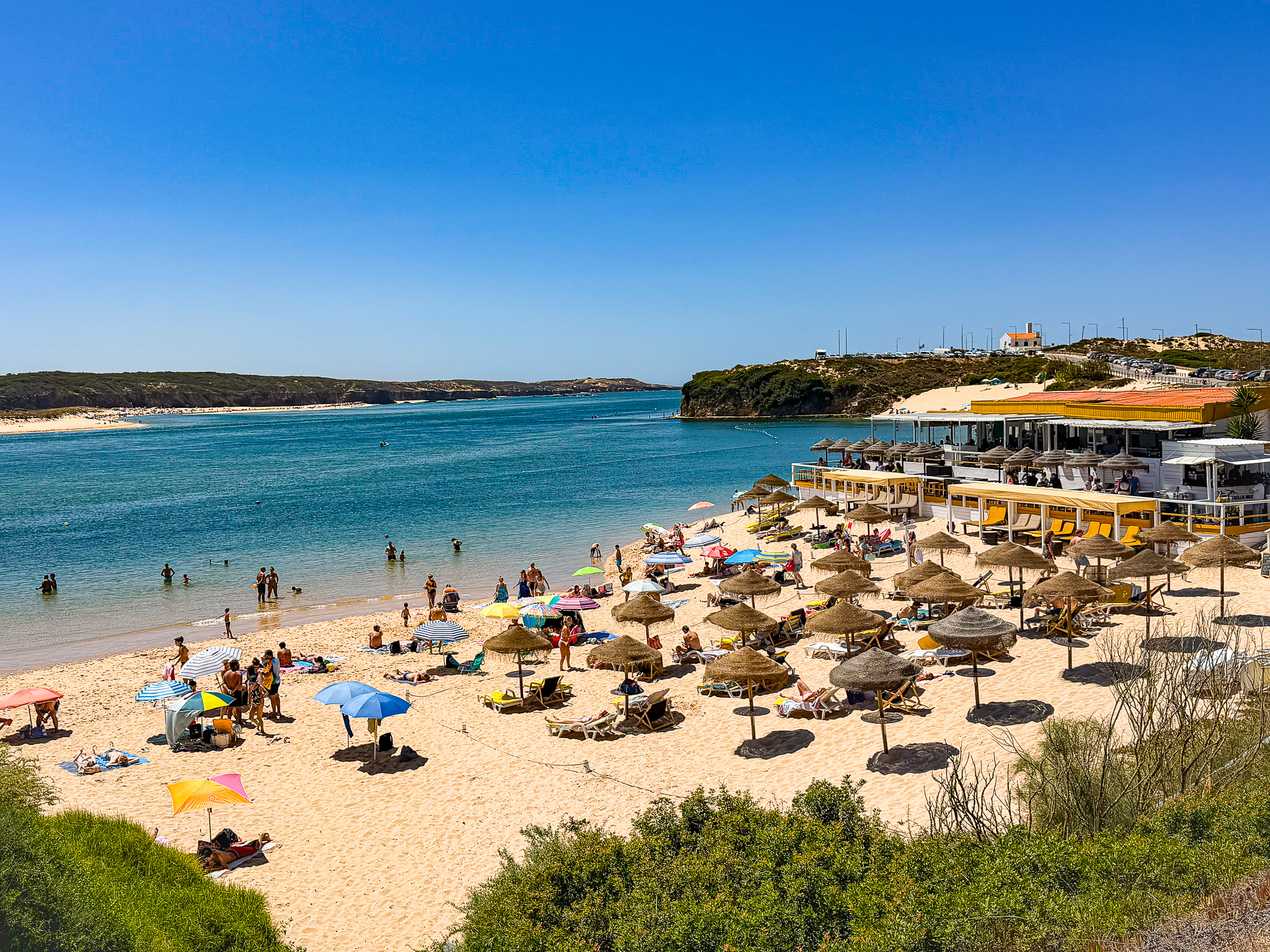
Vila Nova de Milfontes sits where the Mira River meets the Atlantic, which gives you both calm river beaches and much wilder ocean coastline nearby.
You don’t need a packed sightseeing itinerary here. Walk the waterfront, explore the town, and spend the rest of the day at the beaches.
⚓ Explore Sines
Allow: 2–3 hours
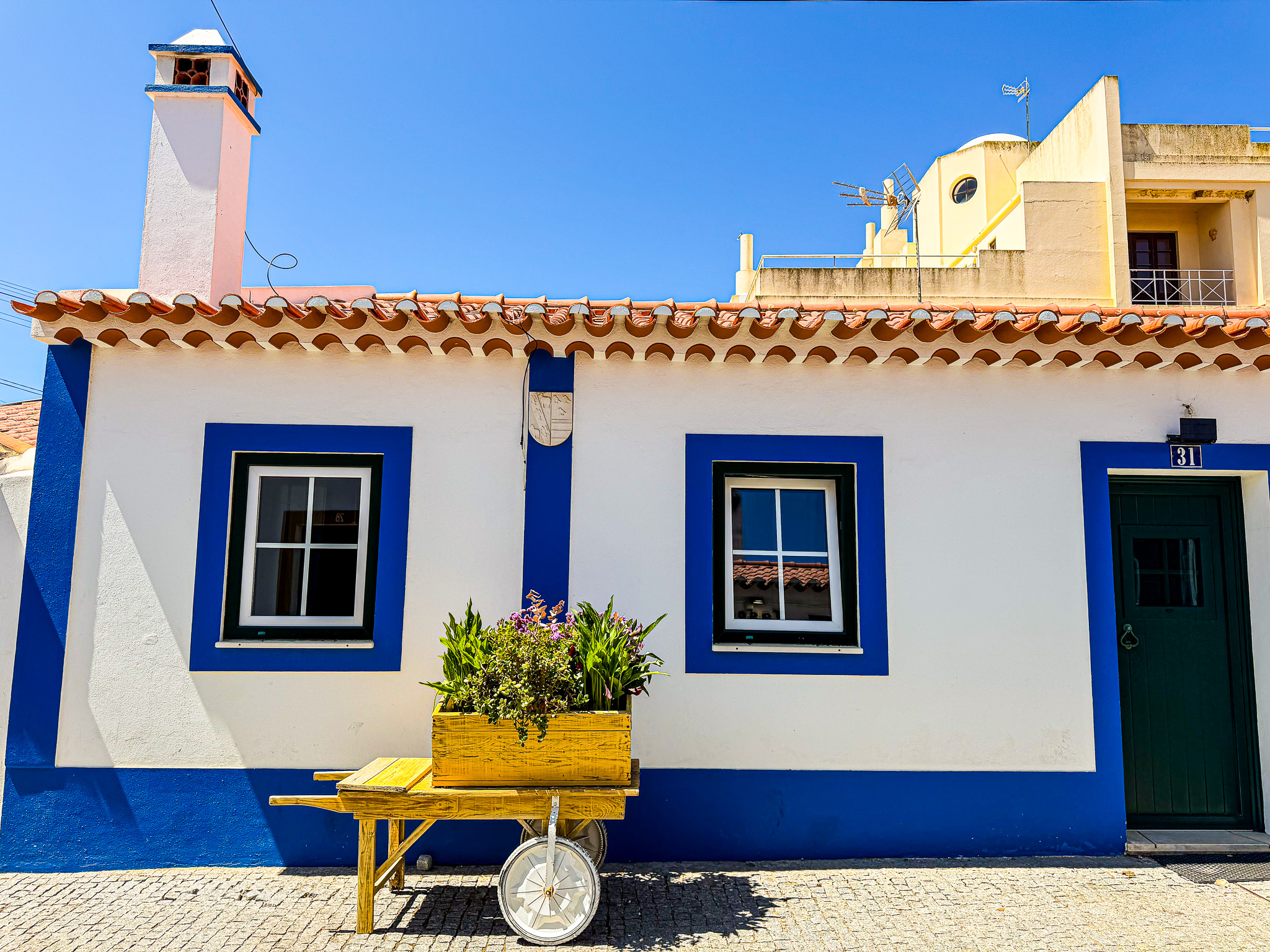
Sines has a grittier, more lived-in feel than Milfontes or Comporta, and we liked that about it. It’s a historic port town and a useful base for this stretch of the coast.
And, importantly, it gave us an excuse to go back to Lamelas.
🏖️ Beach Hop Along the Coast
Allow: As long as you’ve got
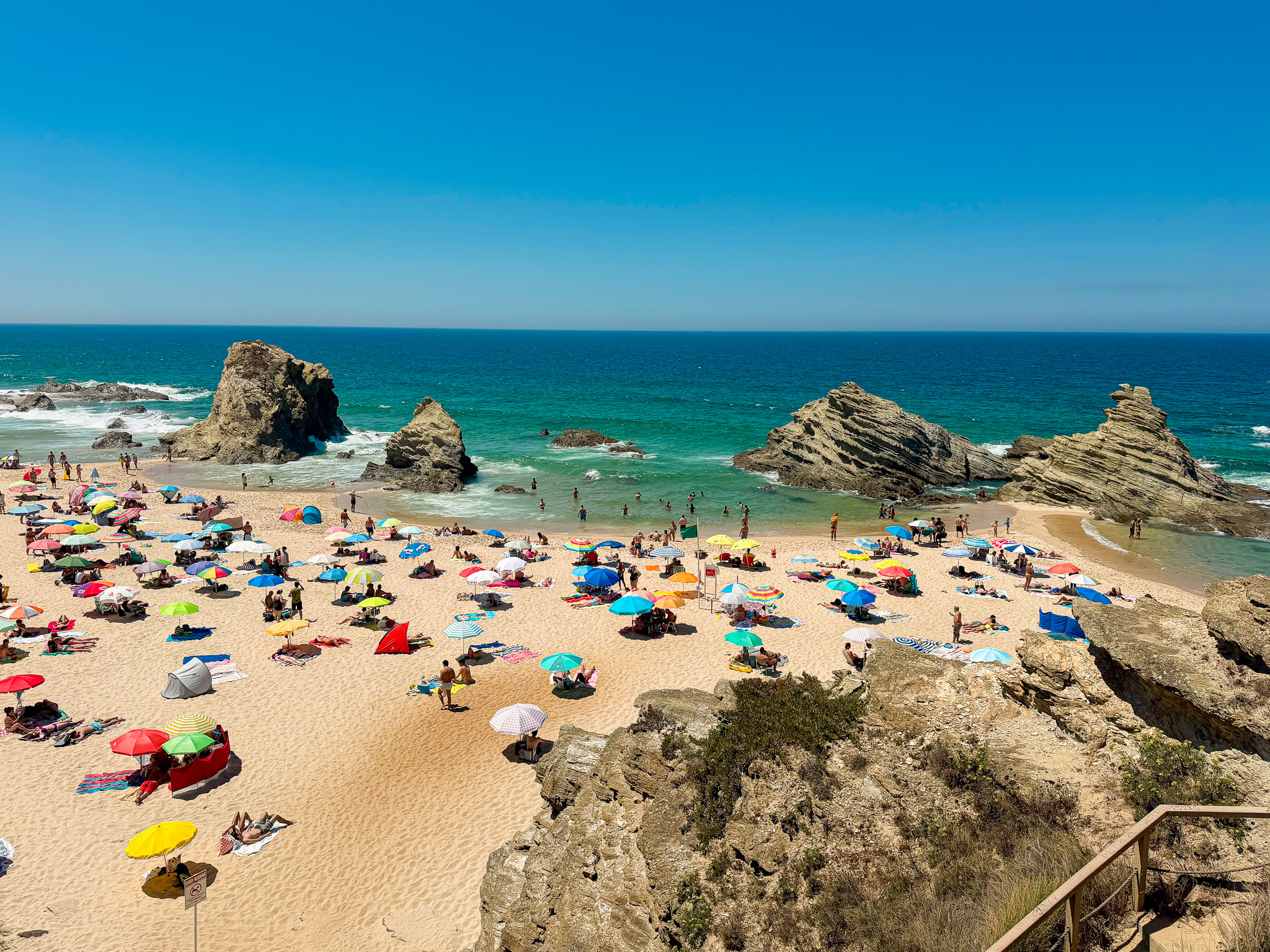
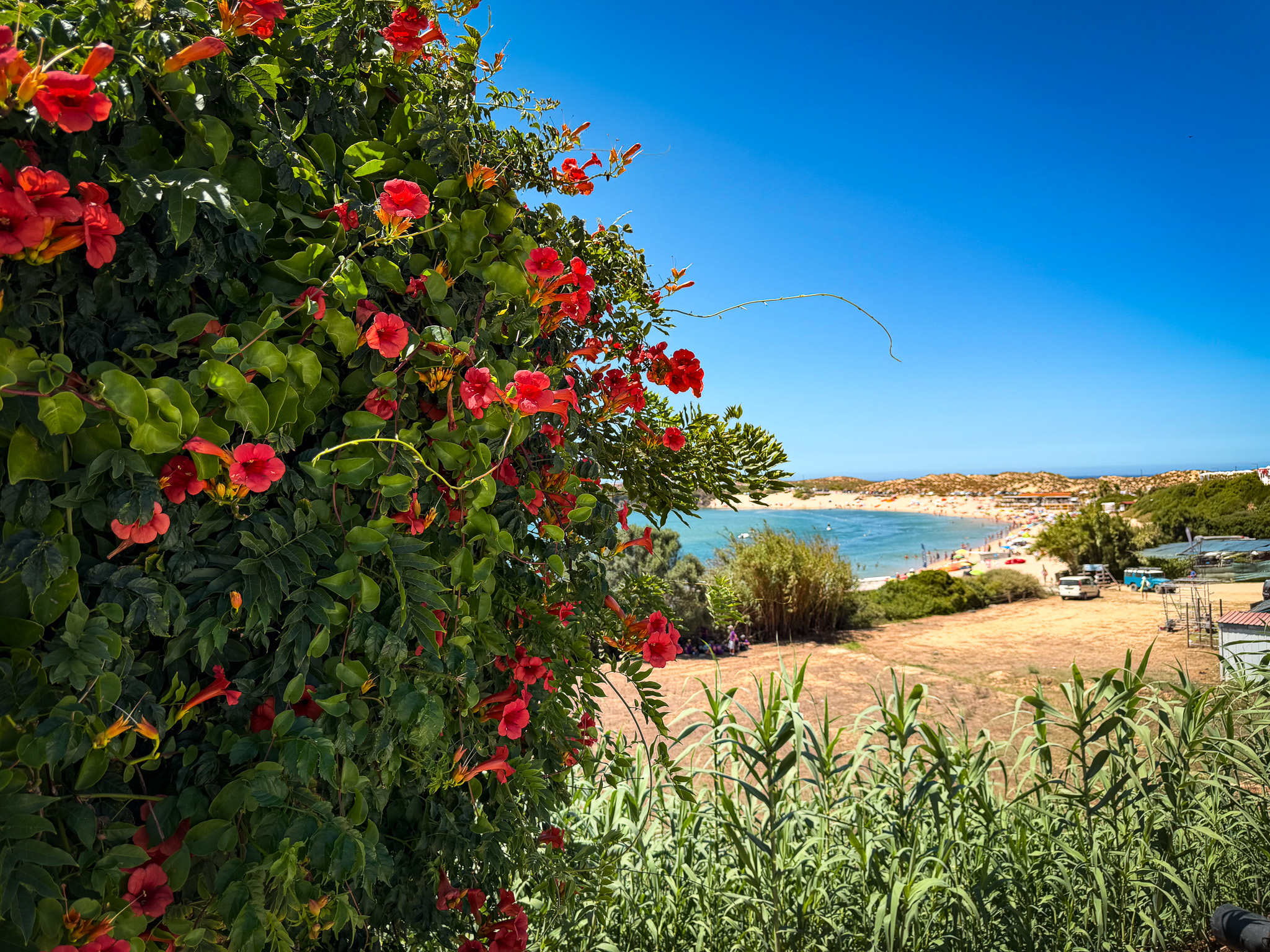
The beaches were one of the biggest contrasts with the Algarve for us. This isn’t the coastline of little golden coves tucked between limestone cliffs. It’s Atlantic—long stretches of sand, big waves, rugged coastline and far less development.
One we really liked was Praia da Samoqueira, where huge rock formations break up the beach into little pockets and make it fun to explore. When you get down to the sand, head all the way to the left—we found that end much quieter and loved wandering around the rocks.
We didn’t make it to nearly as many beaches as we’d planned, which is probably the best reason we have to come back.
✅ Don’t Miss
- A long seafood lunch overlooking the water
- The walk along the Mira River estuary in Vila Nova de Milfontes
- Dinner at Lamelas in Sines
- At least one properly wild Atlantic beach
🍽️ Where to Eat & Drink
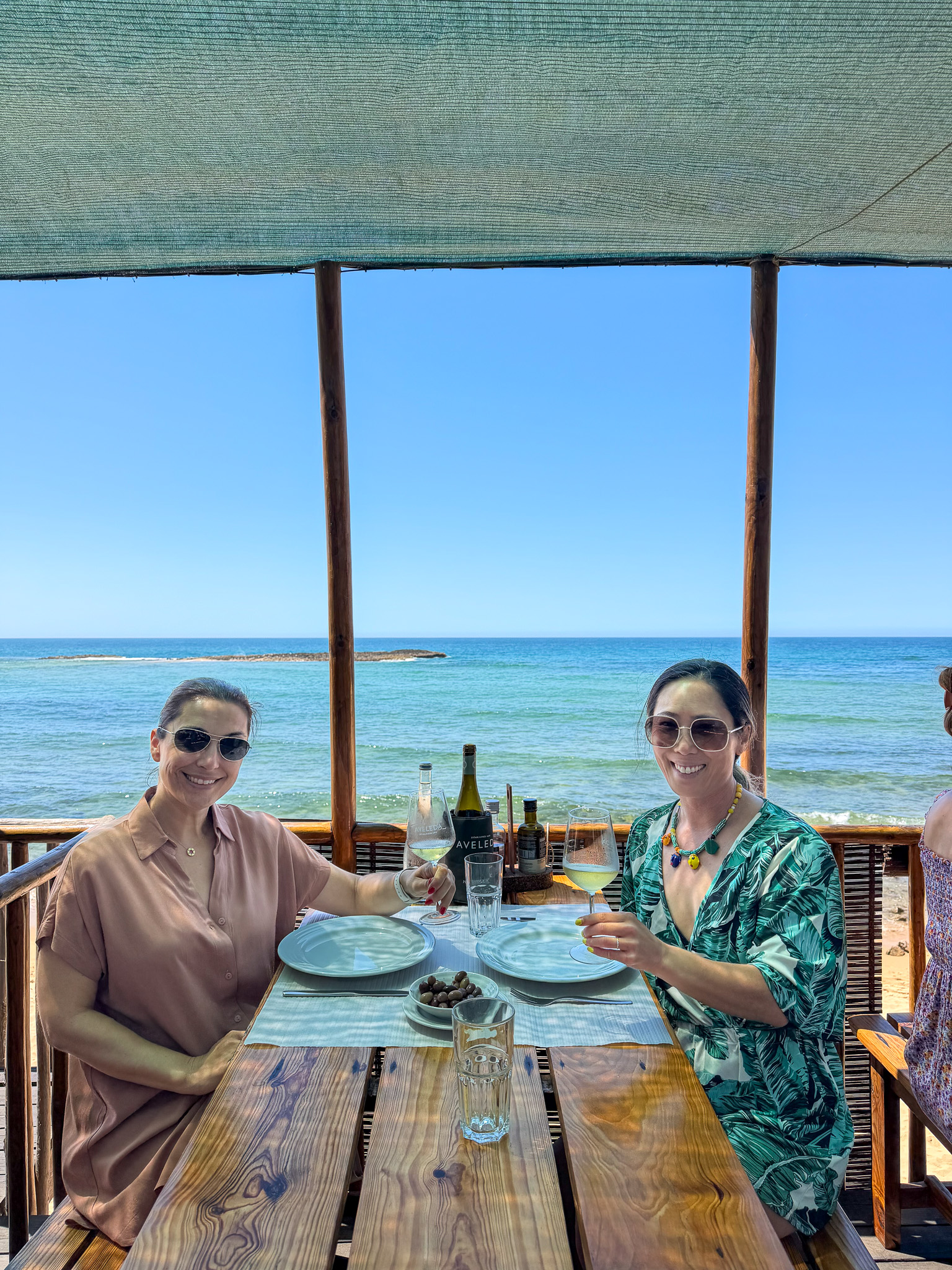
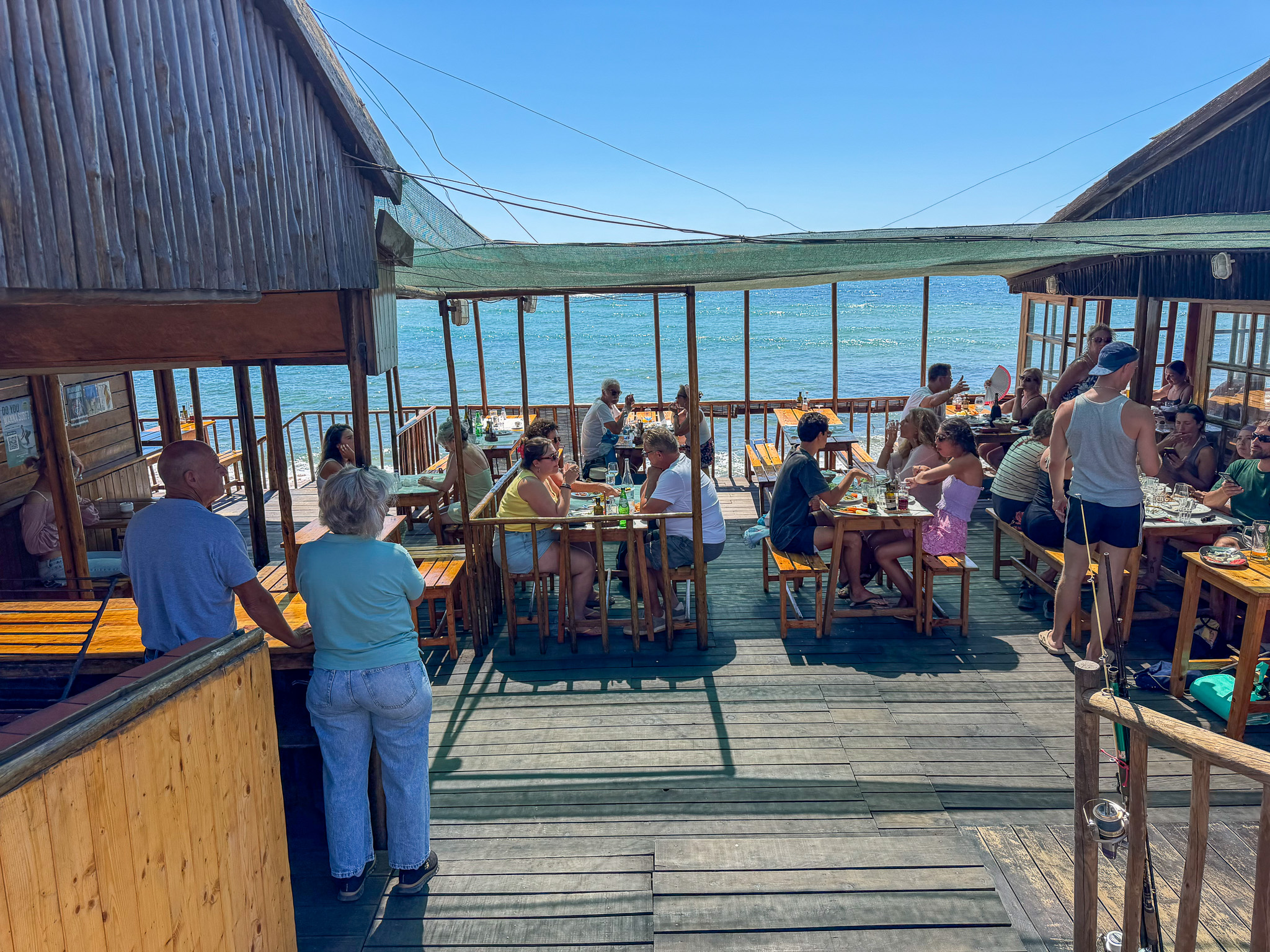
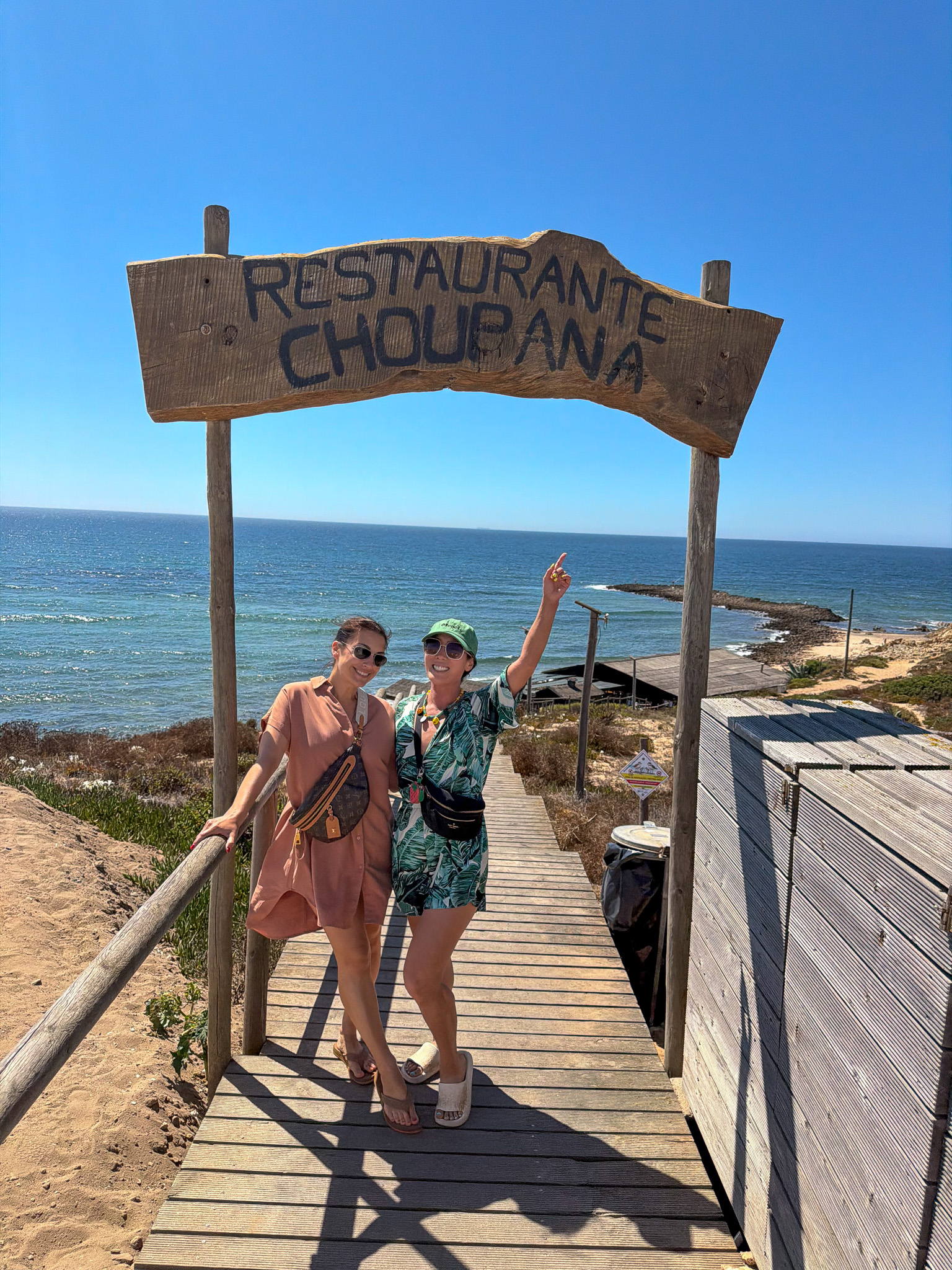
🐟 A Choupana
A Choupana is all about the setting. We had fresh grilled sardines, fish, and chicken overlooking the water, and it was exactly the kind of lunch we wanted on this coast.
It’s a little pricey for what it is, but watching the waves while sipping wine made it worth it.
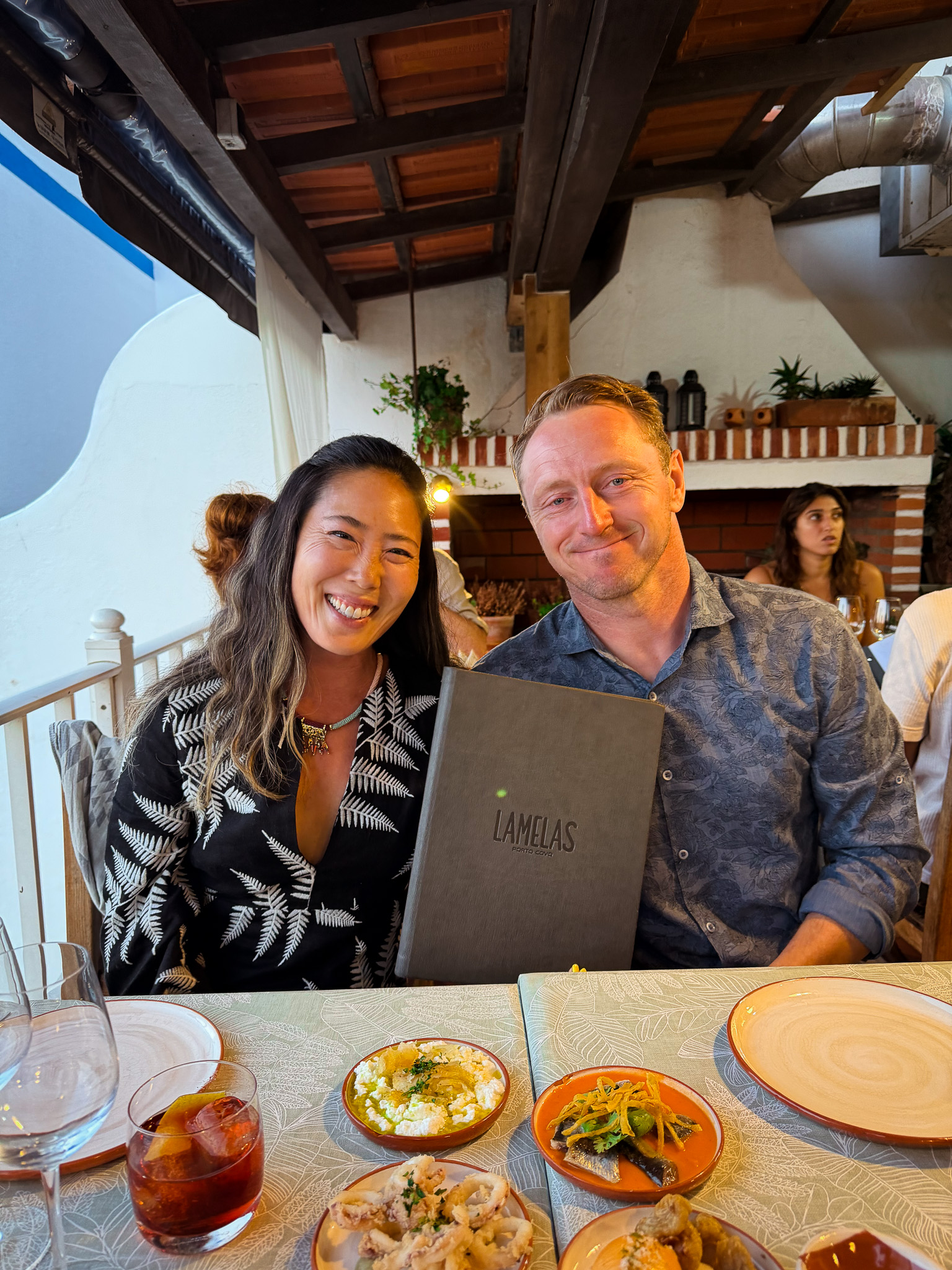
🍽️ Lamelas (Michelin Guide)
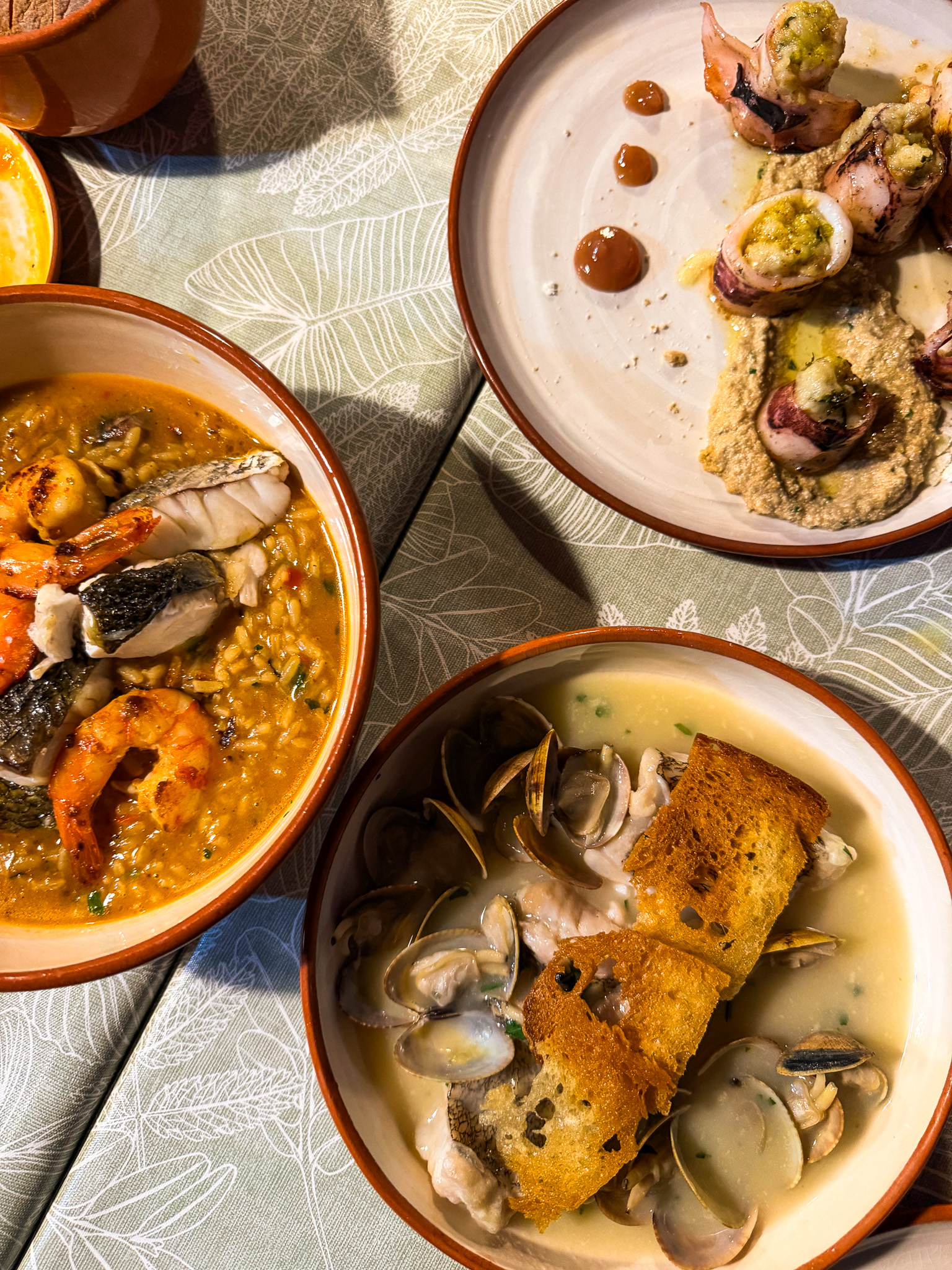
This was our second time at Lamelas, and we’d happily go back again. It’s exactly the kind of place we love: seriously good cooking without the formality of a full tasting-menu experience. It’s a little pricey, but the flavors, craft and creativity that go into the dishes make it worth it.
Don’t skip the couvert—the lard and pork rind might be the best we’ve had. And order several of the seasonal starters. The portions are small, so don’t hold back; this is a great place to order a bunch of dishes for the table and share.
🎶 Bom Remédio Café
This one was more about the vibe, and we really liked it. Live music, fresh juice, wine, coffee, and an easy place to hang out for a while rather than rushing to the next stop.
The burgers were just okay, so we’d come back for the drinks, music, and atmosphere rather than the food.
💡 What We Missed
- Tasca do Celso – We tried to eat here and it was completely booked. We walked inside and immediately understood why it had been on our list. Reserve ahead.
- Porto Covo – The little whitewashed fishing village sits along one of the prettiest stretches of the Alentejo coast, surrounded by small coves, beaches and rugged cliffs. We’d love to come back, stay a night or two, explore the village, and actually spend some time beach hopping along this part of the coast instead of doing what we always seem to do: arrive for an amazing meal and leave.
- Costa Alentejana – We had this saved as a casual lunch option near the beach.
🌾 Part 3: Comporta, the Chic Side of the Alentejo Coast
Comporta is technically part of the Alentejo coast too, but it feels different enough from the wilder stretch around Vila Nova de Milfontes and Sines that it deserves its own section.
Think rice fields, gorgeous beaches, design-forward hotels, beach clubs, and stylish restaurants. It’s the chic side of the Alentejo coast, and noticeably pricier.
🏨 Where to Stay
Independente Comporta
We didn’t stay at the hotel, but after coming here for dinner at Maroto, we could absolutely see the appeal. The property and setting are beautiful, and it’s somewhere we’d consider staying on a longer Comporta trip.
Our dinner was more mixed. Some things were solid, others were a miss. And then there were the mosquitoes. So many mosquitoes.
📍 What to See & Do
🏖️ Have a Proper Beach Day
Allow: A full day
The beaches are one of the main reasons to come to Comporta: enormous stretches of sand backed by dunes, with far less development than you’d expect from somewhere this fashionable.
This is where we’d intentionally leave more space in the itinerary. Come to the beach, have a long lunch, go back to the water, and don’t worry about fitting five other things into the day.
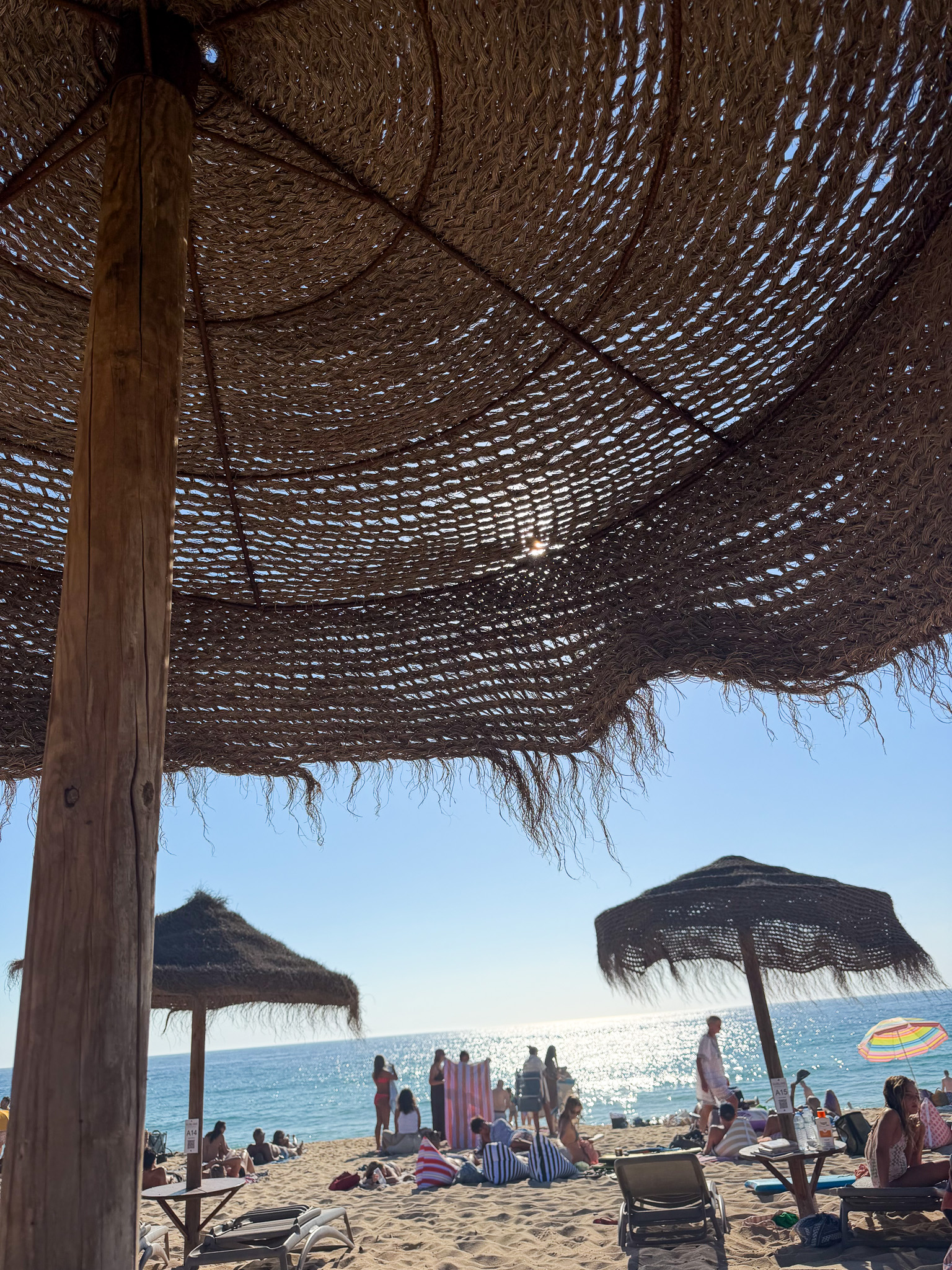
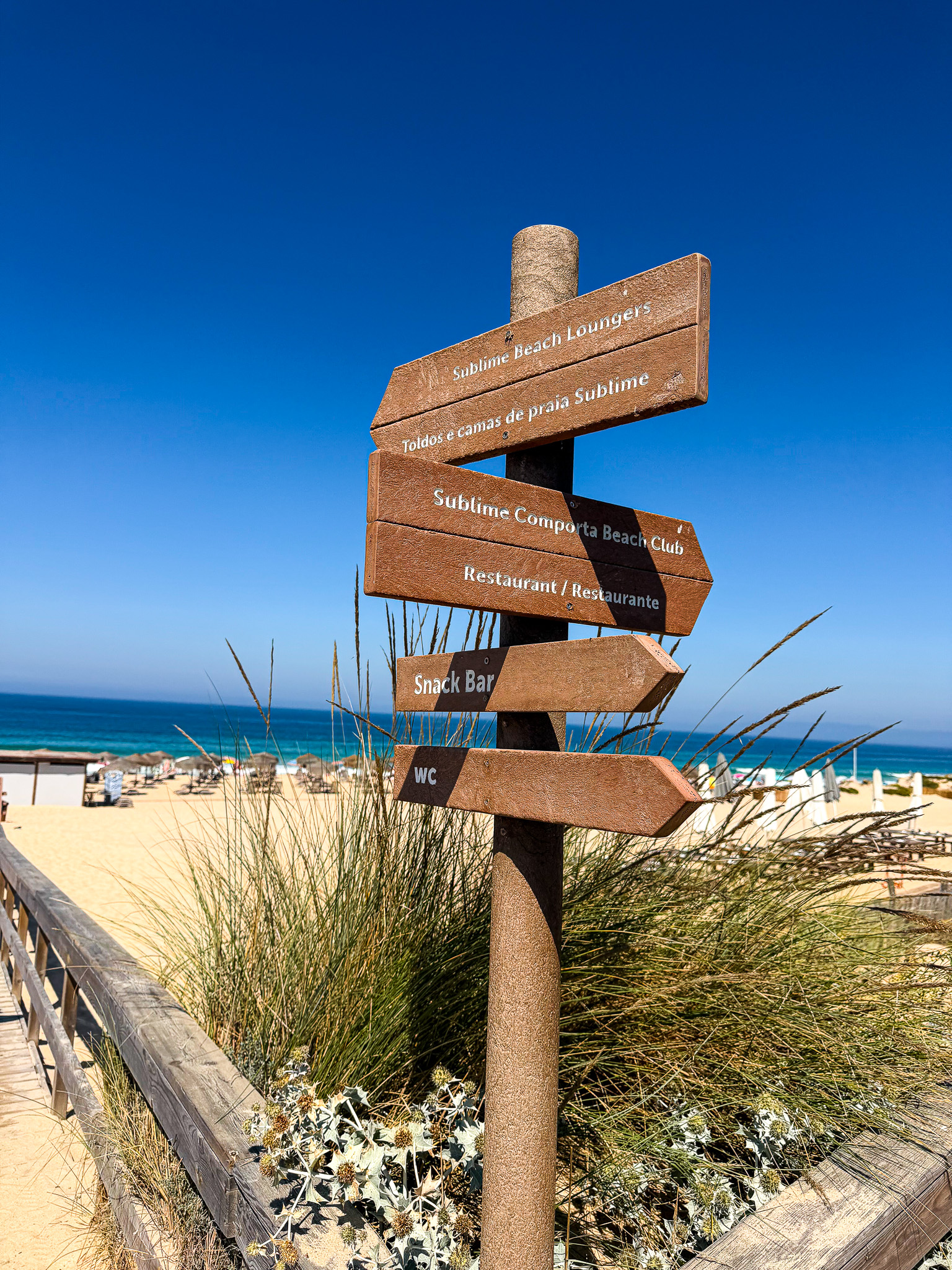
🌊 Sublime Comporta Beach Club
Allow: Half a day
Beautiful. The beach club has the stylish, laid-back aesthetic Comporta has become known for, right on a huge stretch of Atlantic beach.
We spent the full day here and had lunch at Sublime’s restaurant. We thought the food was just okay, particularly given the price. We’d come back for the setting and the beach experience rather than the meal.
The ocean, however, provided our entertainment for the afternoon. The waves were massive when we visited, and I got absolutely washing-machined by one of them. Naturally, this did not stop Mark and me from going straight back in….and yes getting tossed around again haha.
🌊 Check the surf before you plan a swim day. Ocean conditions change constantly here, but the waves were powerful when we visited. If you’re traveling with small kids, don’t assume this will be a calm swimming beach and it might be worth picking a different spot.
✅ Don’t Miss
- A full, unhurried beach day
- Driving past the rice fields between Comporta and Carvalhal
- Lunch with your feet in the sand at a beach club, for the setting if not the food
🍽️ Where to Eat & Drink
🌊 Sublime Comporta Beach Club – Come for the setting, beach, and overall experience. The food didn’t land for us, especially at the price.
🍽️ Marot – Beautiful property, mixed meal. Worth it for the setting, not worth planning your evening around.
❌ Not Worth the Hype
We loved this trip. A few things still didn’t live up to their billing, and we’d rather tell you now.
- HS Milfontes Beach Hotel – Excellent location, and that’s the whole pitch. Run-down, paper-thin walls, limited parking. If you’re picking one coastal base, make it Sines.
- Lunch at Sublime Comporta Beach Club – The setting deserves every bit of its reputation. The food doesn’t, especially at those prices. Come for the beach and eat somewhere else.
- Dinner at Maroto – Gorgeous property, uneven plates. We’d come back to stay, not to eat.
- Visiting in August – Not a place, but the single thing we’d change about this entire trip.
Tips & Things to Know
🚗 Rent a car. The wineries, villages, and beaches that made this trip aren’t on any train line. Parking was easy nearly everywhere.
🌡️ Don’t go in August if you can help it. Inland Alentejo regularly hits 35–40°C in summer. Spring and fall are the move.
🗓️ Book wineries and tastings in advance. Even at larger estates, we’d reserve rather than rely on same-day availability, and many of the smaller producers require appointments. Restaurants like Legacy and A Cozinha do Paço are also worth booking well ahead.
🕕 Plan hilltop towns for late afternoon. Monsaraz and Estremoz are both better after 5pm: cooler, emptier, and much better light.
🍽️ Reserve dinner, especially on the coast. Tasca do Celso was fully booked when we tried to walk in, and the good spots in small coastal towns fill fast in summer.
💰 Comporta is a different price tier. Budget accordingly if you’re combining it with inland Alentejo, where your money goes considerably further.

Final Thoughts
Would we go back to Alentejo? Absolutely.
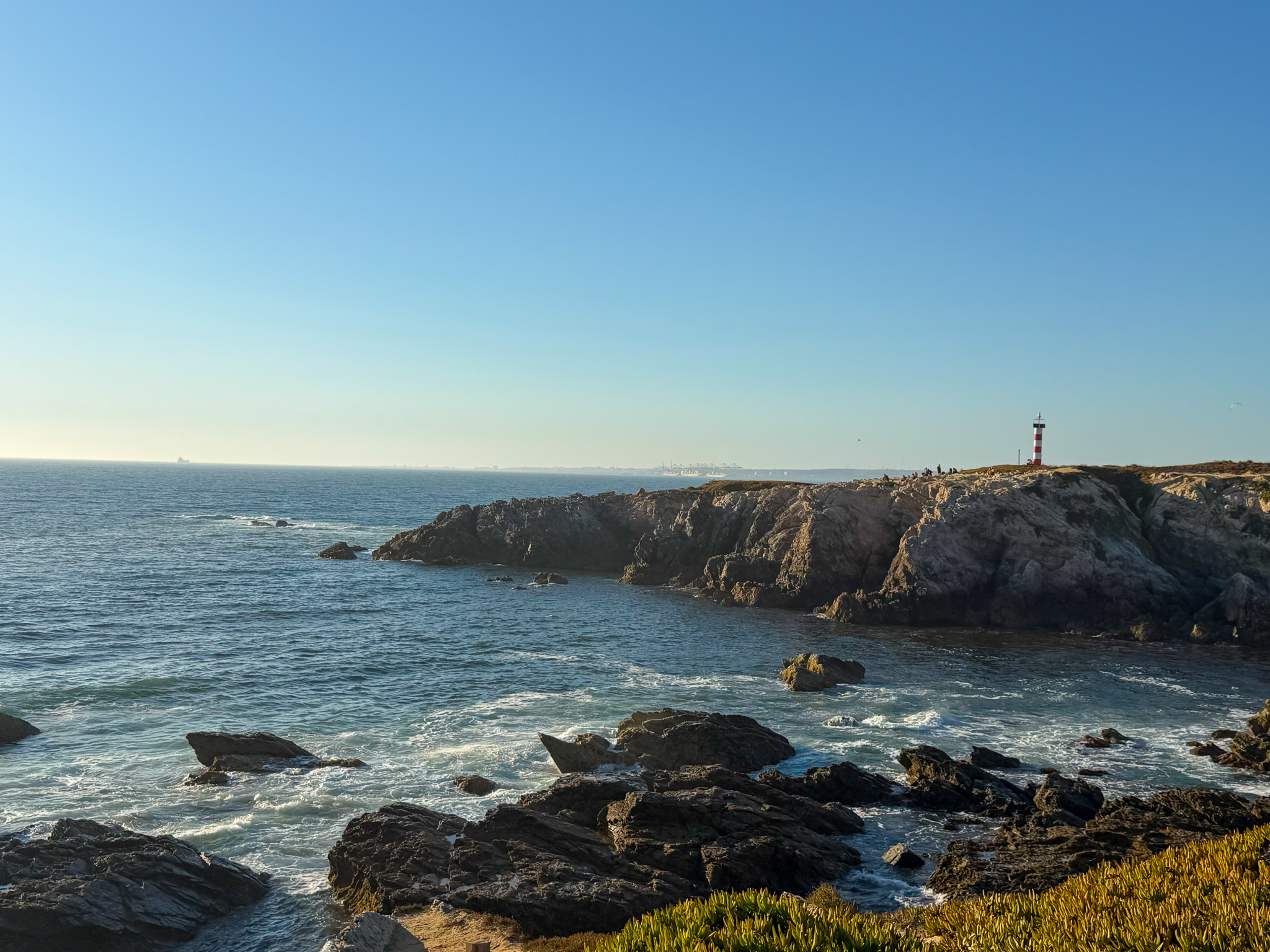
What surprised me most was how different each part of the trip felt. One day we were walking through Roman and medieval Évora. The next we were learning about wine fermented in enormous clay pots, buying pottery we hadn’t planned on buying, and watching golden hour from a castle bullring. A few days later we were eating grilled sardines beside the Atlantic.
And then there’s the food and wine, which honestly could be reason enough to plan the trip. From centuries-old winemaking traditions and some seriously interesting Alentejo reds to long winery lunches, Michelin-level meals, and simple grilled fish by the ocean, we ate and drank very well here.
And somehow this huge, incredibly varied part of Portugal still gets left off so many itineraries.
If you’re planning a Portugal road trip and already have Lisbon, Porto, and the Algarve on your radar, don’t overlook Alentejo.
Have questions about planning an Alentejo road trip? Drop them in the comments. We’re happy to help.
For more curated travel tips, hotel picks, and itinerary inspo, follow @erikaandmark and subscribe to the blog so you never miss a new adventure. ✨
More Portugal Guides
Eastern Algarve: Portugal’s Best-Kept Coastal Secret
The Perfect 4-Day Silver Coast Road Trip (From Porto to Lisbon)





Leave a comment