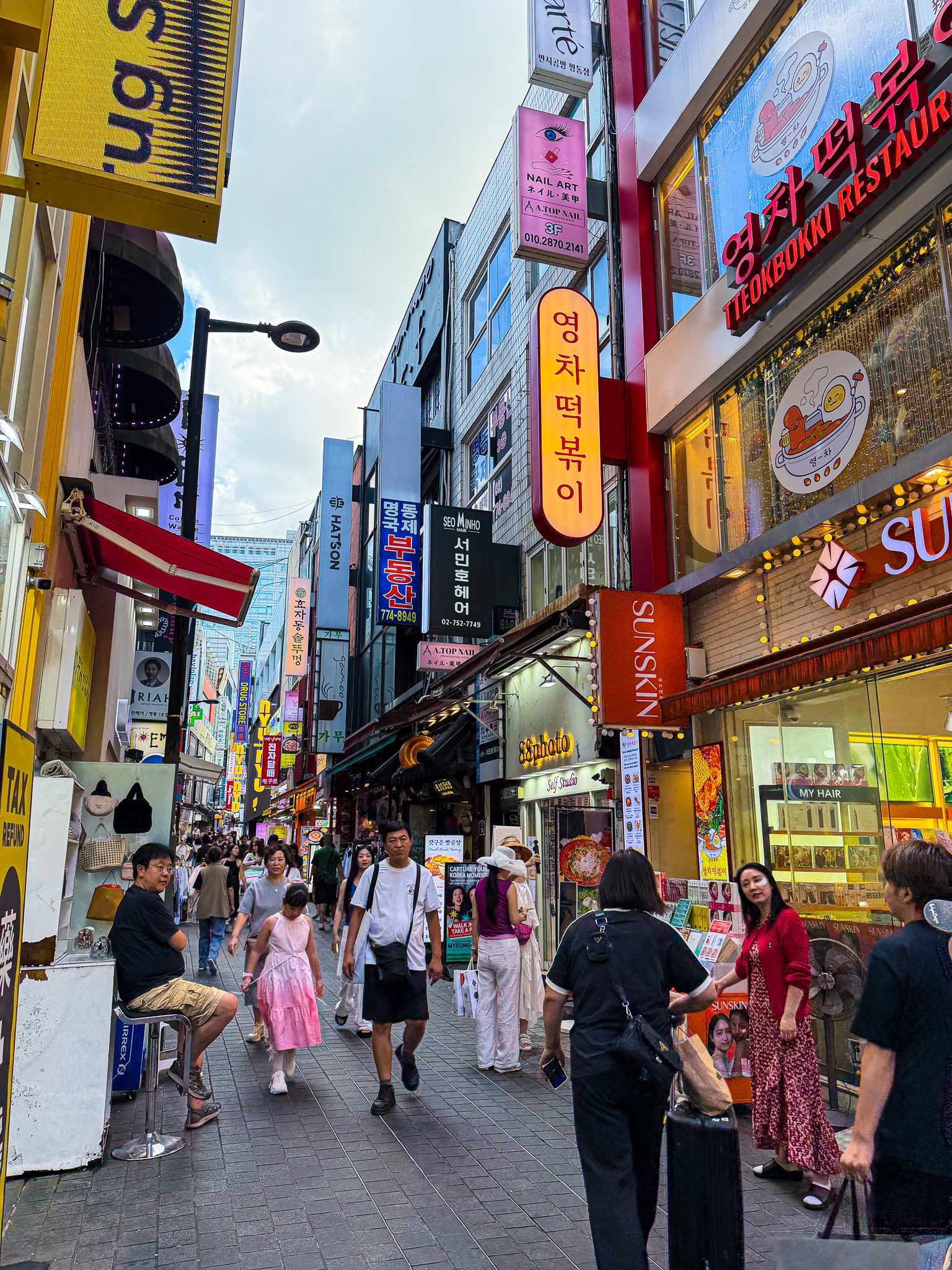
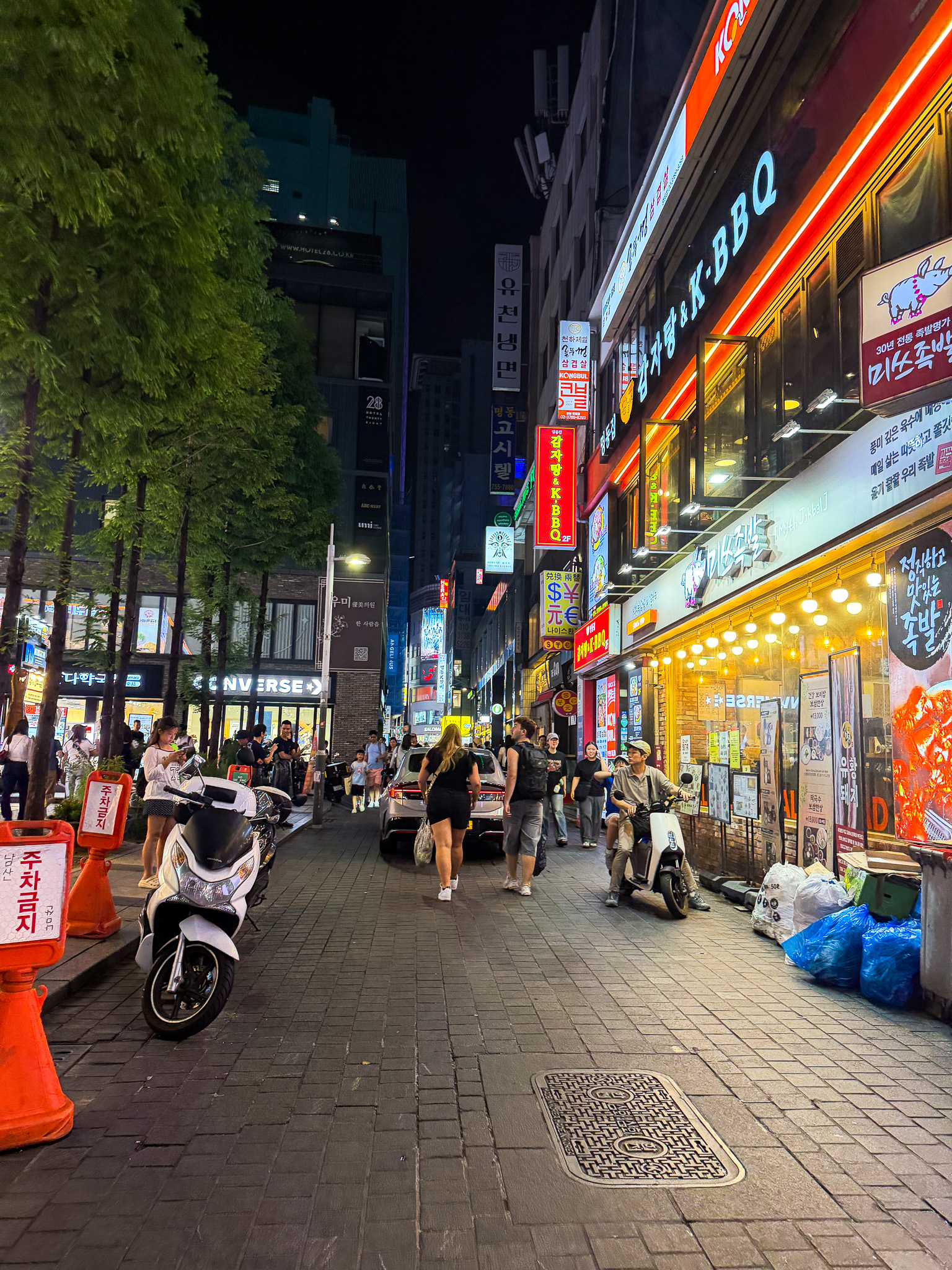
We loved Seoul. Before arriving, we pictured a chaotic city packed with people, flashing neon signs and sensory overload. And sure, you can find all of that, but the city felt surprisingly more peaceful and manageable than we expected.
It’s huge, but it’s also a place where you can spend the morning wandering through a centuries-old palace, stop at a beautifully designed café, shop Korean brands all afternoon and finish the day around a table of Korean BBQ.
We spent four nights here on our first trip to South Korea, and staying in Myeongdong turned out to be one of the best pieces of advice we got from our friend. It’s central and well connected by metro, but it’s also a dynamic neighborhood in its own right, with great shopping, restaurants, cafés, skincare clinics and plenty happening into the evening.
We packed a lot into our time here, changed our plans more than once, found a few viral spots that weren’t worth the hype and discovered plenty of places we loved. Here’s what we’d recommend for your first trip to Seoul.
📅 How Many Days Do You Need in Seoul?
We spent four nights in Seoul, arriving in the evening and taking the KTX to Busan on our fifth morning. For a first trip, we’d recommend at least three full days, but ideally four to five.
Seoul is enormous. Don’t make the mistake of looking at a map and assuming you can easily bounce between neighborhoods all day. You can, but you’ll spend a lot of that day on the metro or sitting in traffic. We found it much easier to group things geographically and spend larger chunks of time in different parts of the city.
Three days gives you the highlights. Four or five gives you room for neighborhoods, shopping, cafés, beauty treatments or a hike without feeling like you’re racing across Seoul.
→ TIP: If we could give you one piece of Seoul advice, it’s this: build your days around neighborhoods, not attractions. We rejiggered our itinerary more than once so we weren’t zigzagging across the city, and it saved us hours.
🏨 Where to Stay in Seoul
Myeongdong: Our Pick for a First Trip
A friend recommended Myeongdong because of how central it is, and we’re really glad we listened. It’s easy to get almost anywhere by subway or bus, relatively close to the palace district and Bukchon, and you have a huge number of shops, restaurants, cafés and skincare clinics right outside your door.
We stayed at Hotel28 Myeongdong and loved it. The beds were super comfortable, the rooms were a good size, and the complimentary minibar and dyson hairdryer was a nice perk. But the location was the real winner. We could walk to cafés, restaurants, shopping, Olive Young, Myeongdong Night Market and even our facial appointment around the corner.
Fun bit we didn’t know when we booked: the hotel was founded by Shin Young-kyun, a leading man in Korean film in the 1950s and 60s, and it’s named after his birth year, 1928. There’s film-inspired artwork on every floor and a small gallery of his festival trophies and old movie posters, which we ended up wandering through after check-in.
Myeongdong felt lively and dynamic without feeling overwhelmingly chaotic. For a first trip when you want to experience a lot of different parts of Seoul, we’d stay here again.
Other Seoul Neighborhoods to Consider
Itaewon is much more international, with a wider variety of global food and good nightlife. Hongdae is young, hip and energetic, with cafés, nightlife, shopping and a big university crowd, but it’s farther from many of the historic sights. Gangnam is modern and more upscale, with higher-end restaurants and shopping, while Seongsu is one of Seoul’s trendiest areas for Korean brands, concept stores, pop-ups and cafés.
🏯 Historic & Cultural Things to Do in Seoul
Gyeongbokgung Palace
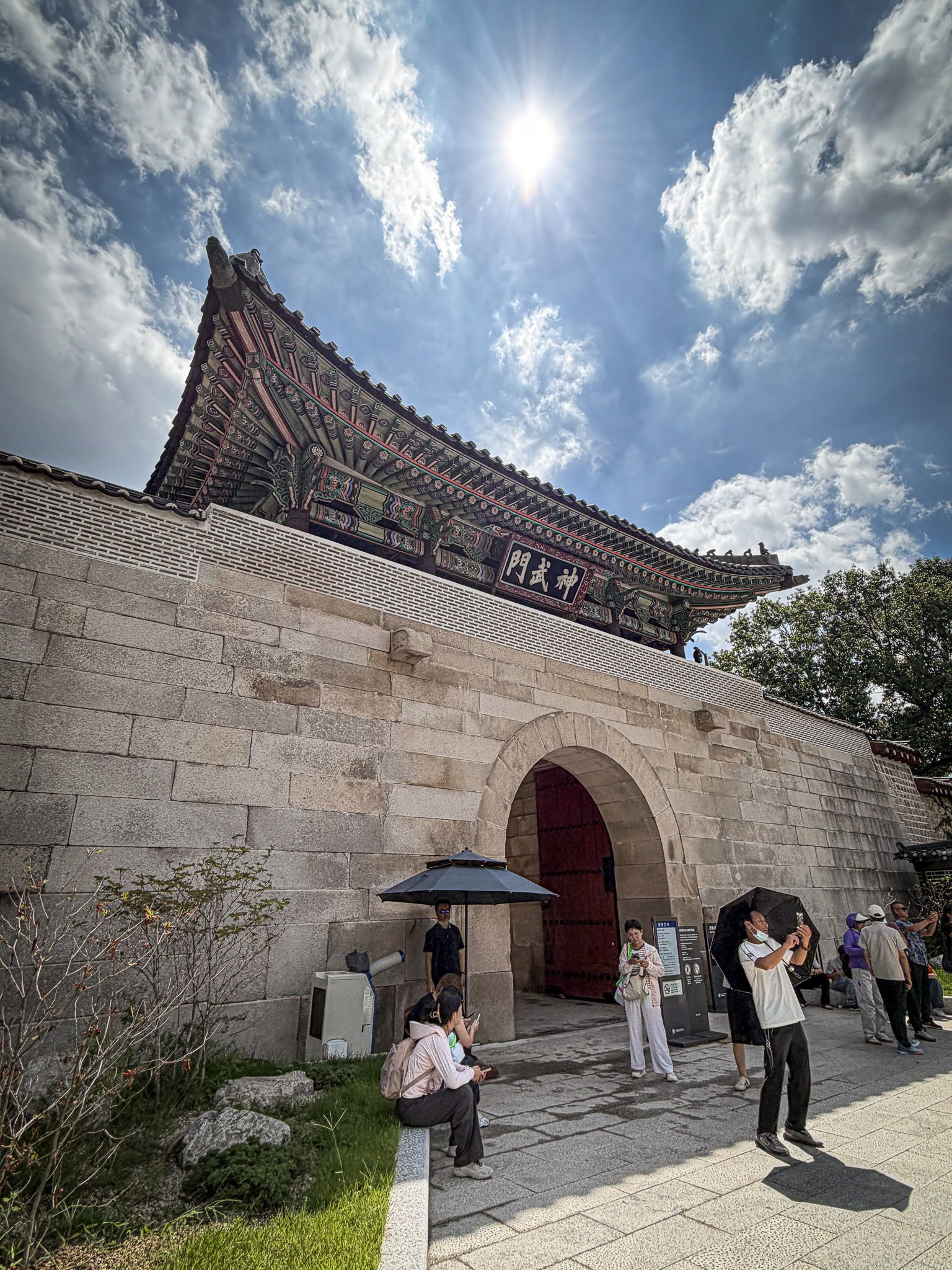
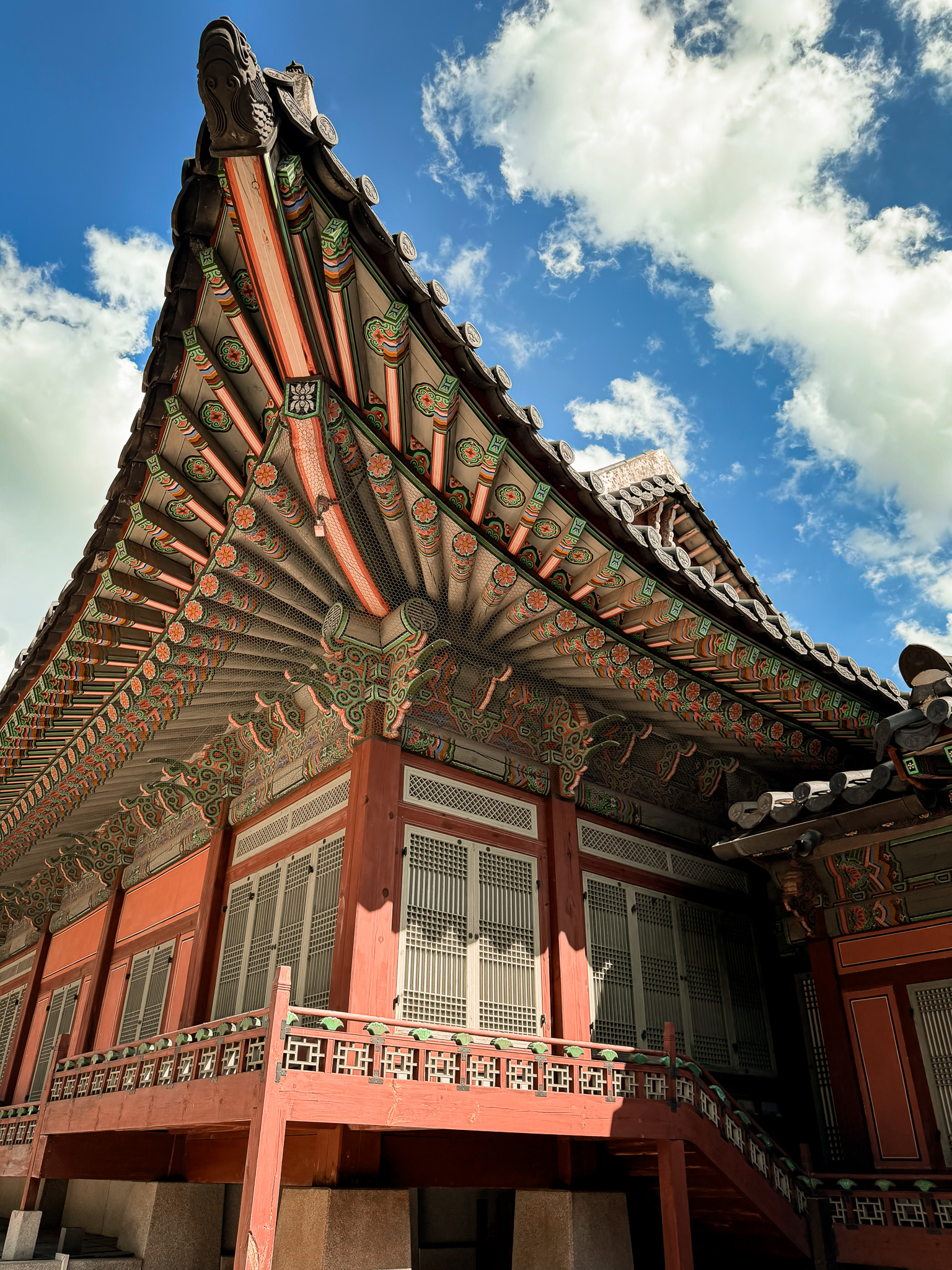
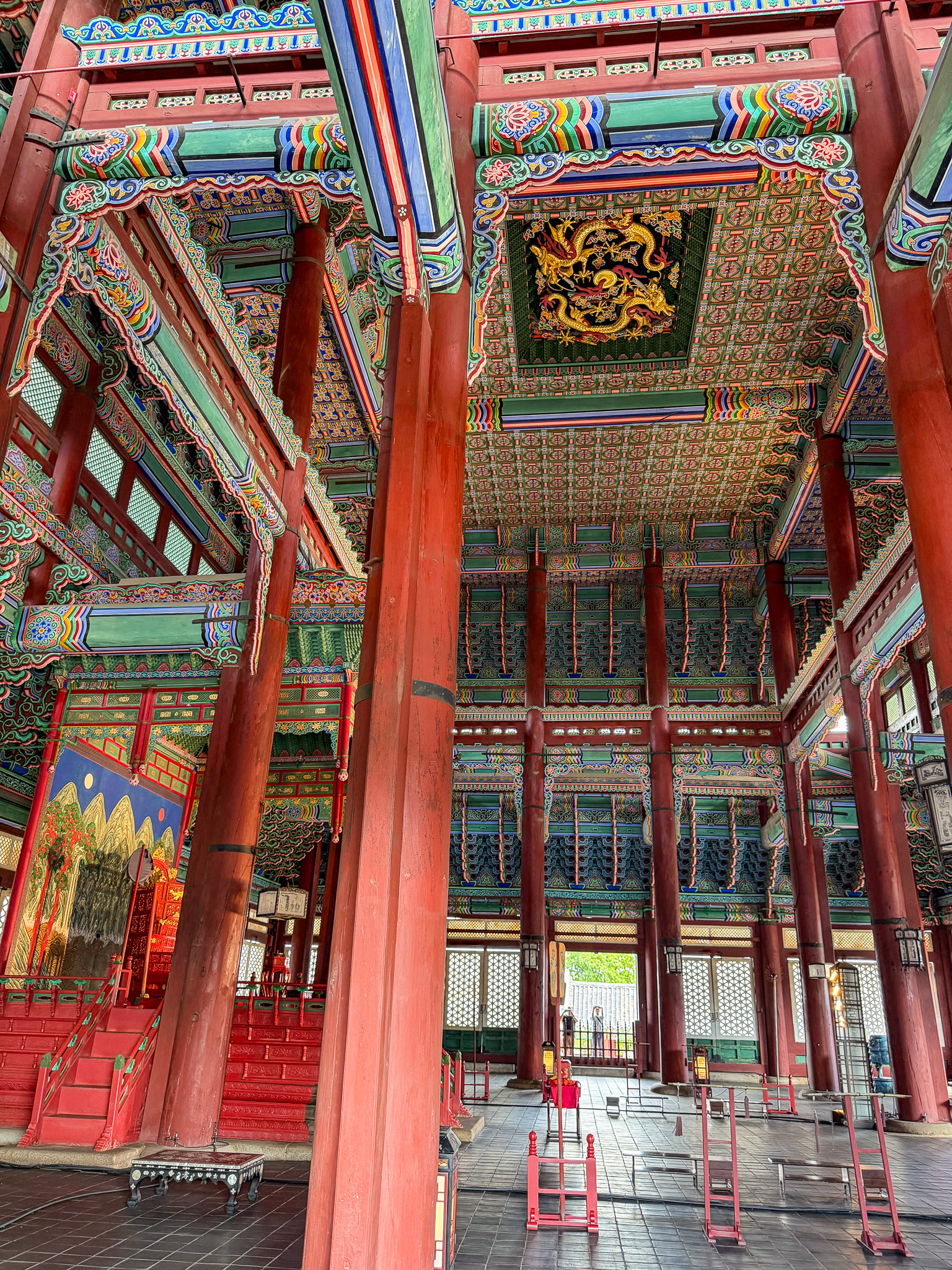
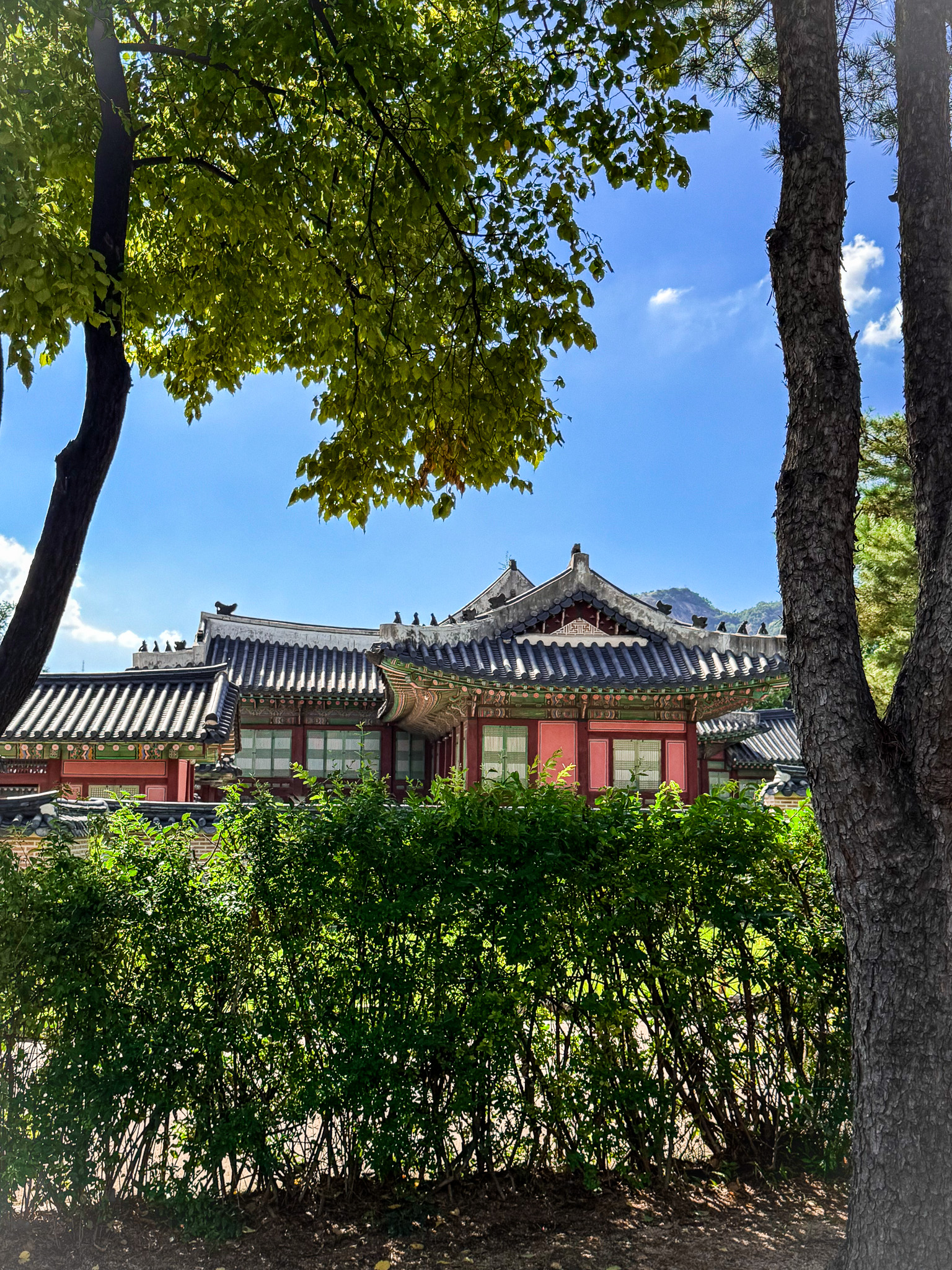
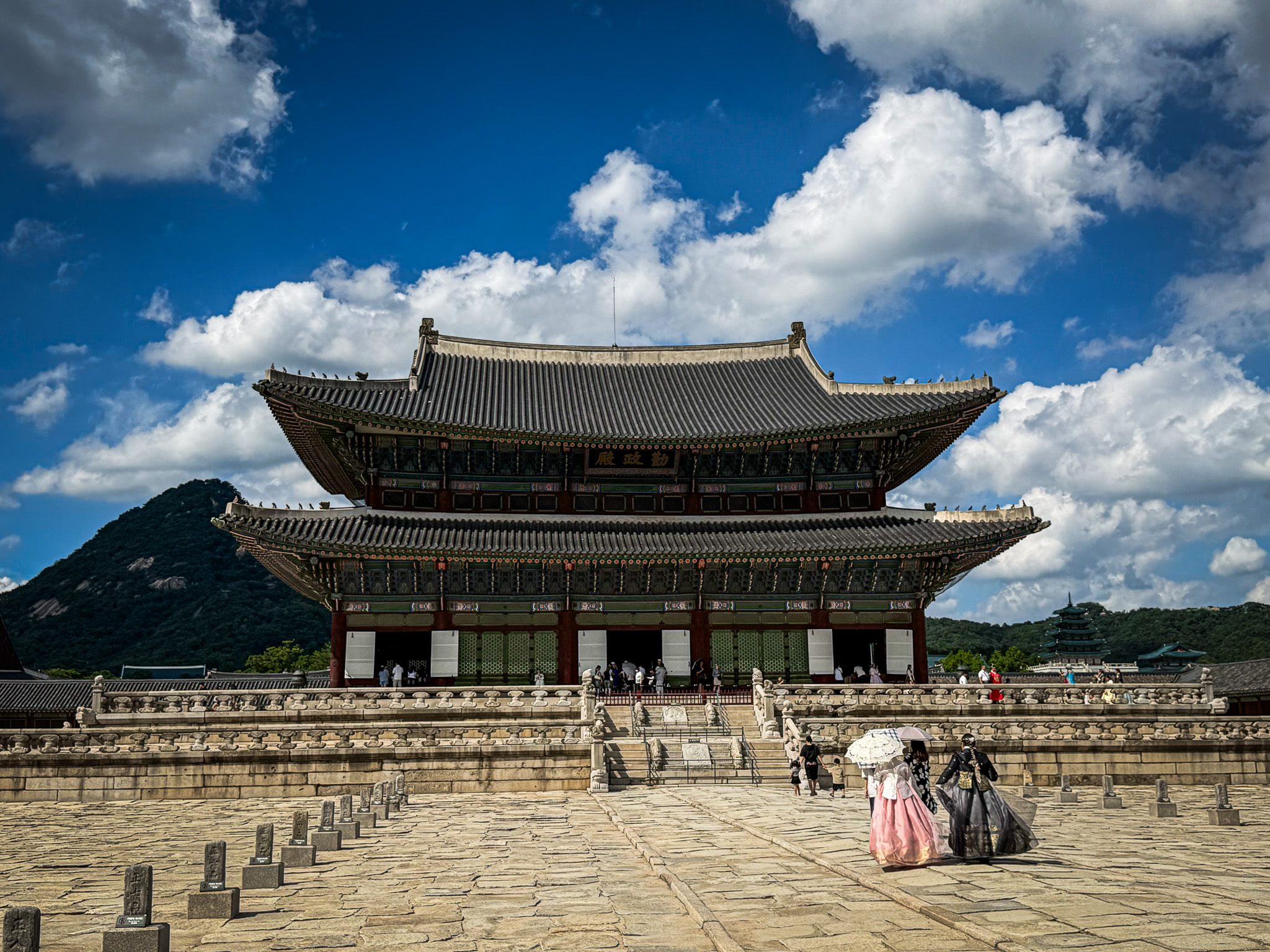
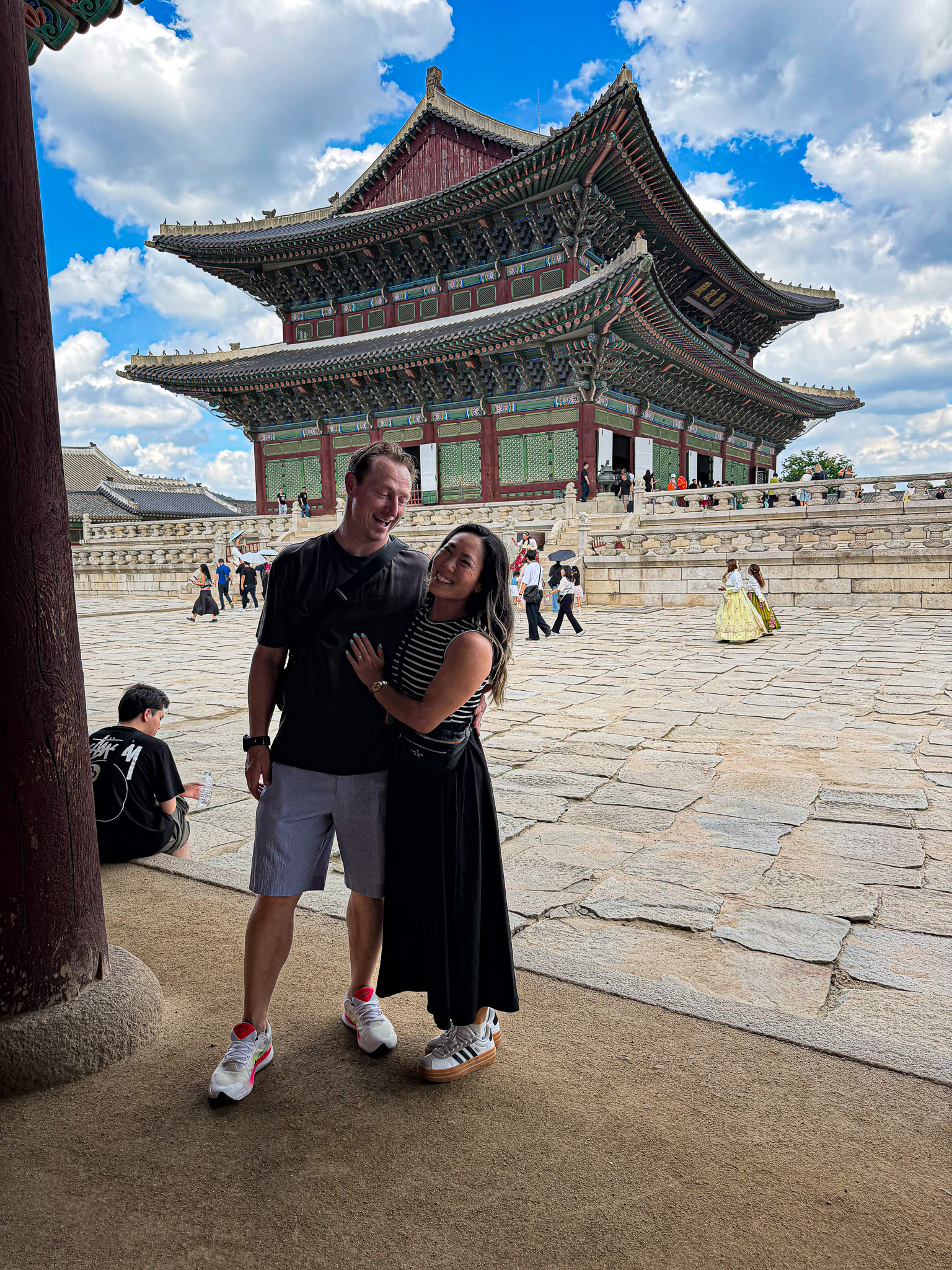
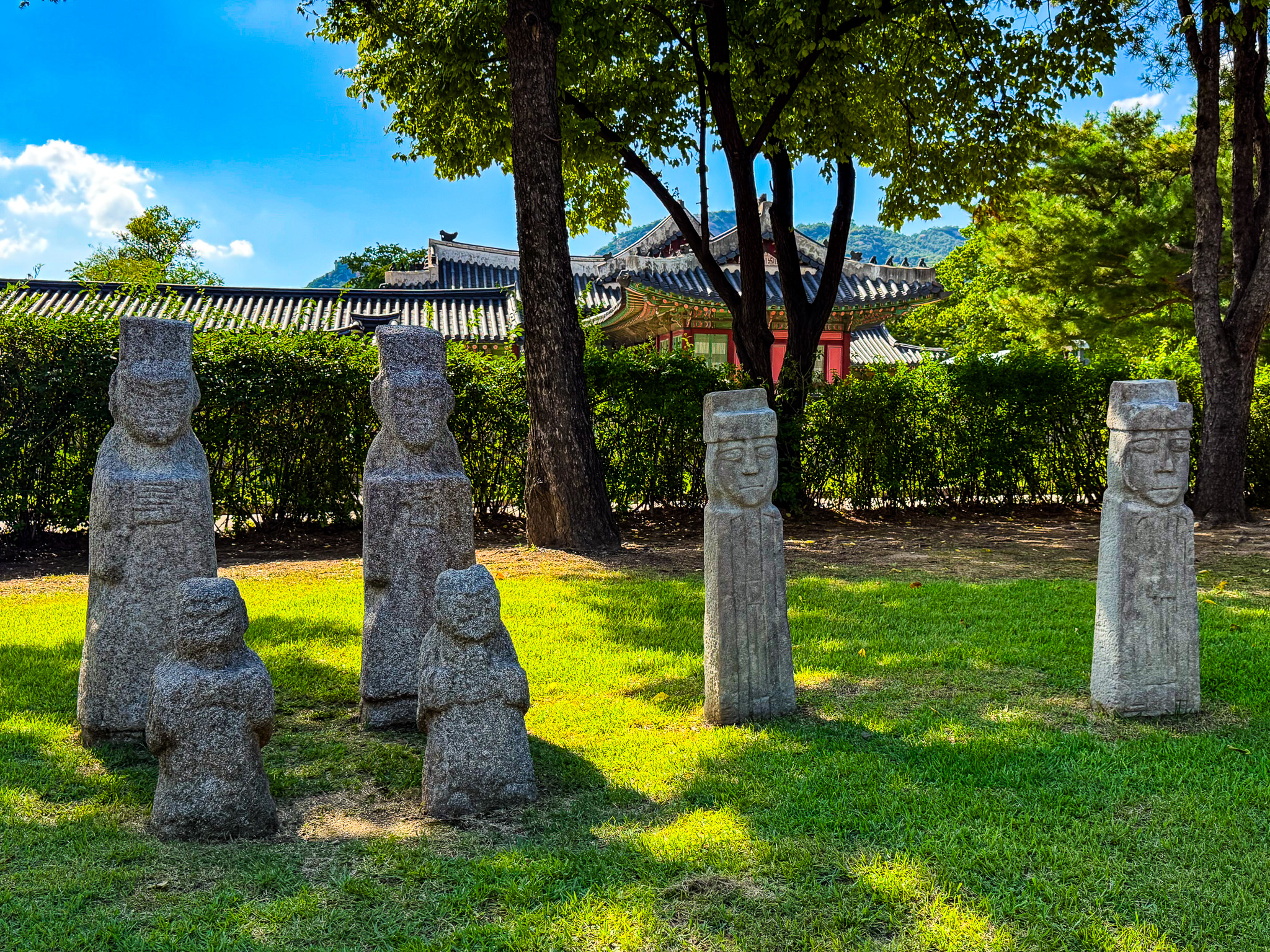
Put Gyeongbokgung Palace on your list. We loved the traditional curved tiled rooftops, sweeping eaves and incredibly detailed painted woodwork. The colorful decorative painting you’ll see under the roofs is called dancheong, a traditional Korean style used on important wooden buildings like palaces and temples. Once you notice it, you start seeing it everywhere.
Built in 1395, it was the main royal palace of the Joseon Dynasty, which ruled Korea for more than 500 years. The complex has been destroyed and rebuilt multiple times throughout its history, but today it’s one of the best places in Seoul to get a sense of Korea’s royal past.
The grounds were WAY larger than we expected, so don’t treat this like a quick photo stop. Give yourself at least 1.5 to 2 hours.
→ TIP: Try to coordinate your visit with the Changing of the Royal Palace Guard Ceremony, generally held at Gwanghwamun Gate at 10 AM and 2 PM. Gyeongbokgung is closed on Tuesdays, and ceremony schedules can change because of weather or special events. Check the official palace site before you go so you don’t build a whole morning around a closed gate.
Rent a Hanbok, and Maybe a Photographer
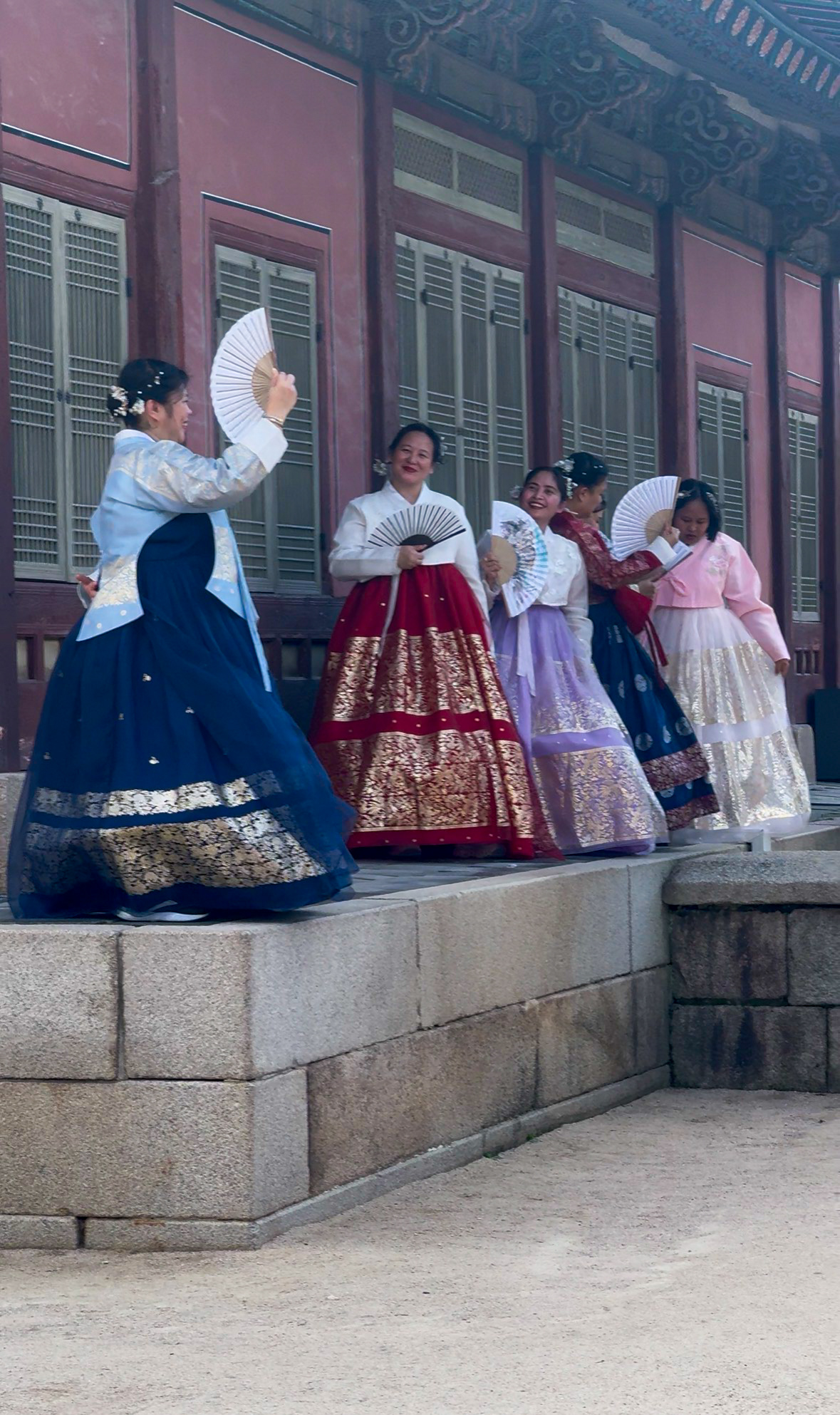
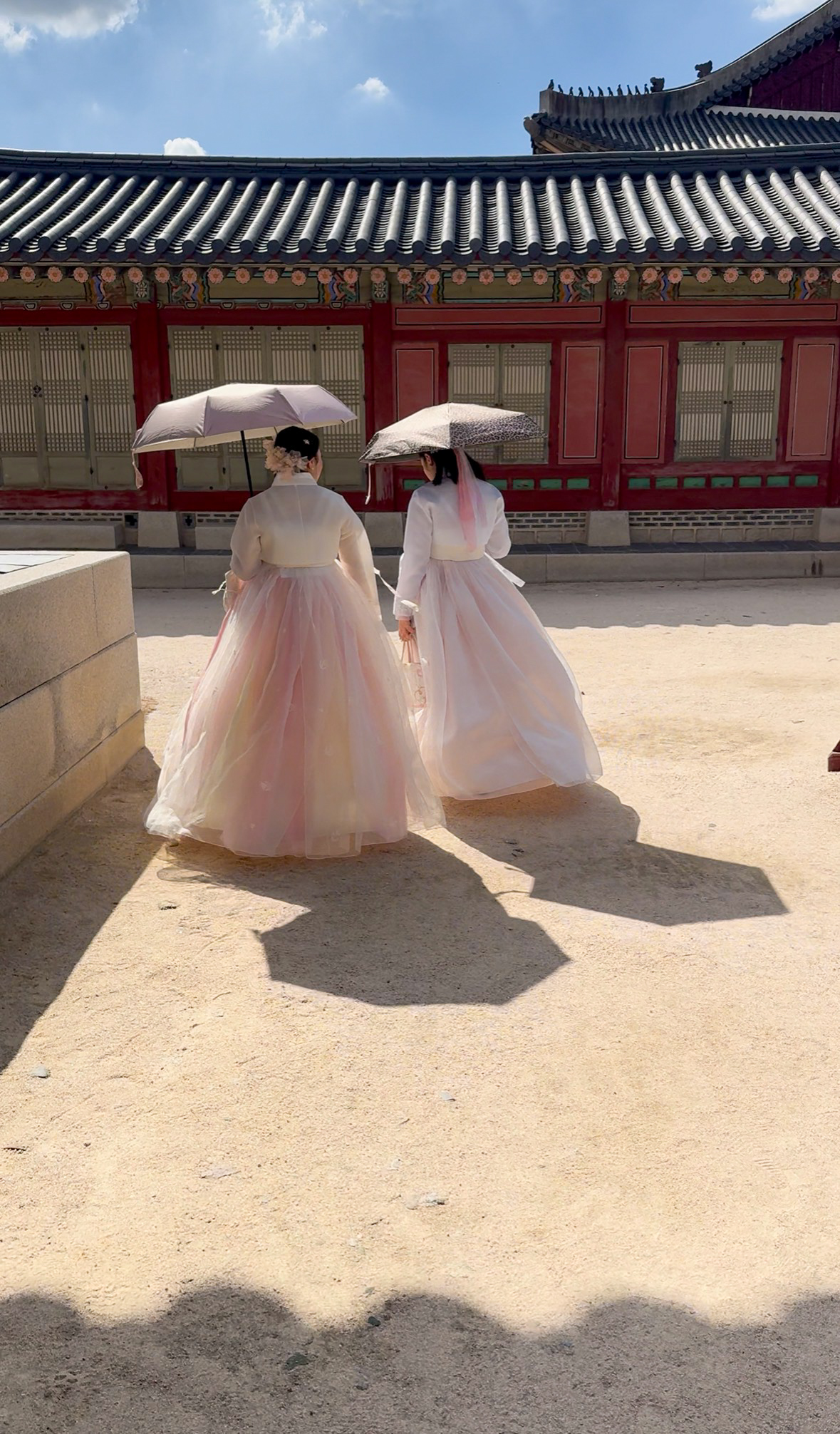
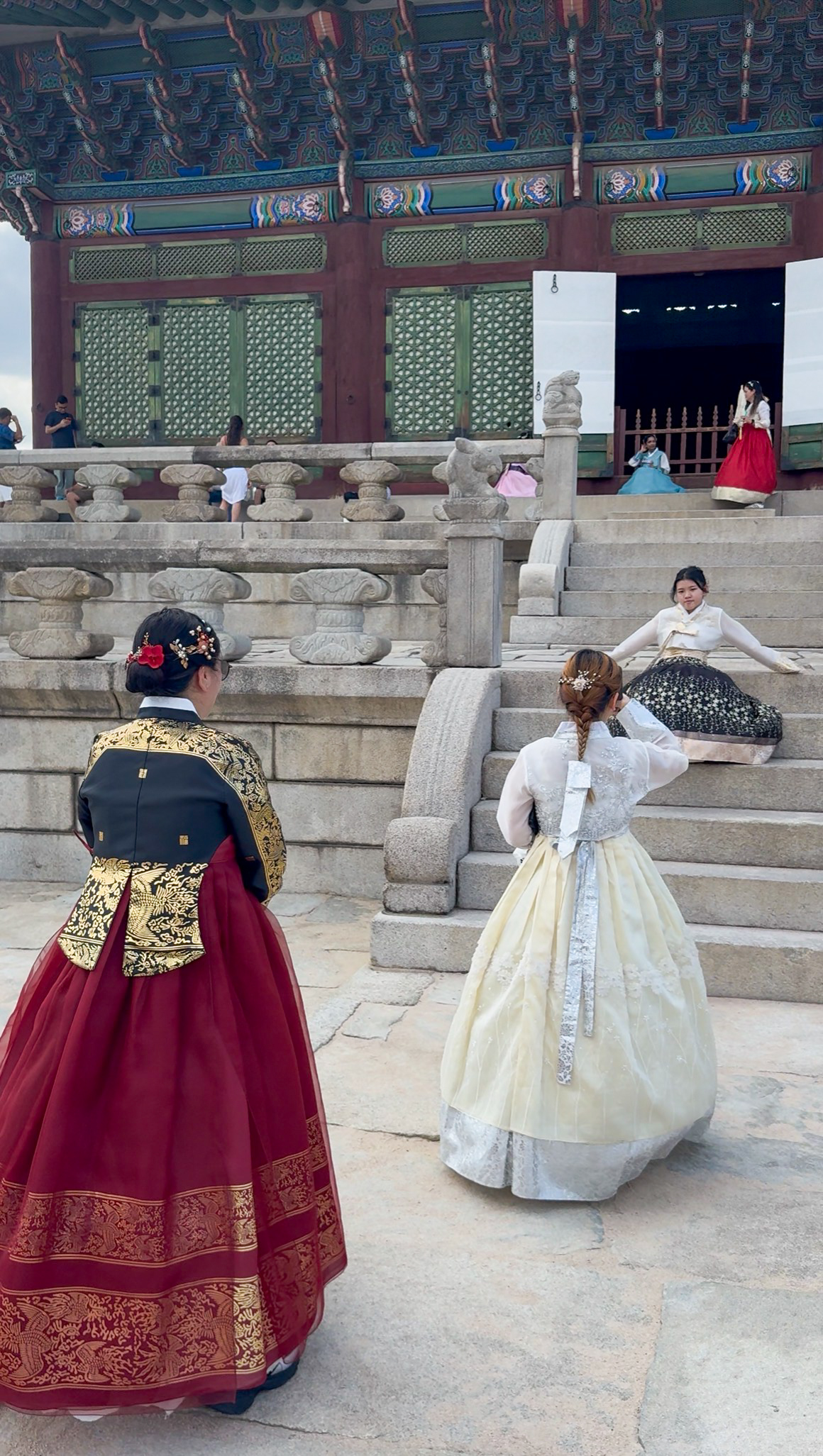
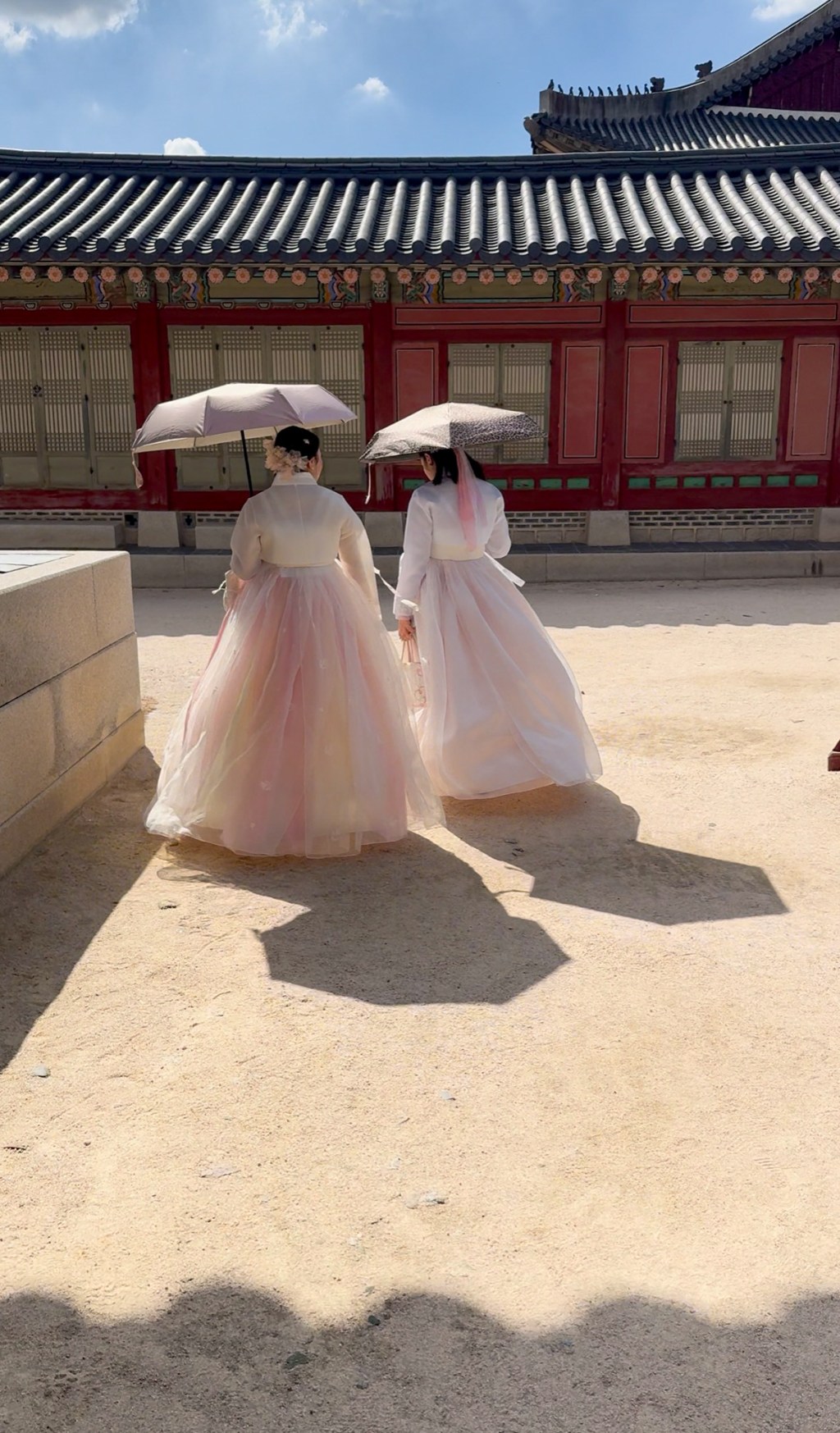
One of the most popular things to do around Gyeongbokgung is rent a traditional Korean hanbok. There are rental shops all around the palace with different types of hanbok and hair accessories, and wearing a hanbok also gets you free admission.
We planned to do it, but Seoul in August was brutally hot and adding extra layers didn’t sound especially appealing.
What was fun was watching people who had also hired photographers. We saw photographers directing people toward the best angles, helping with poses and figuring out exactly where to stand around the palace. In cooler weather, we’d absolutely consider doing the full hanbok plus photographer experience.
Bukchon Hanok Village
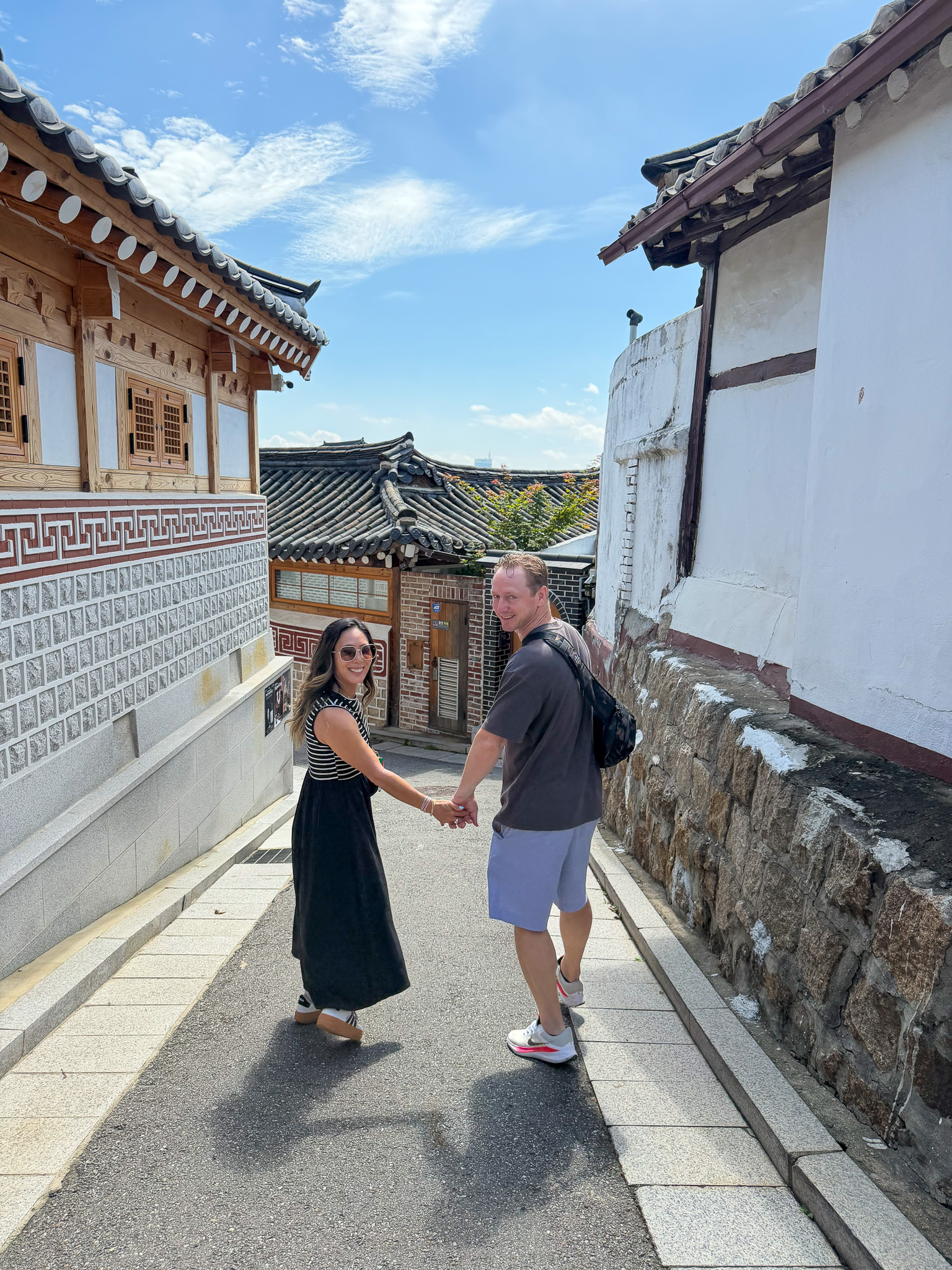
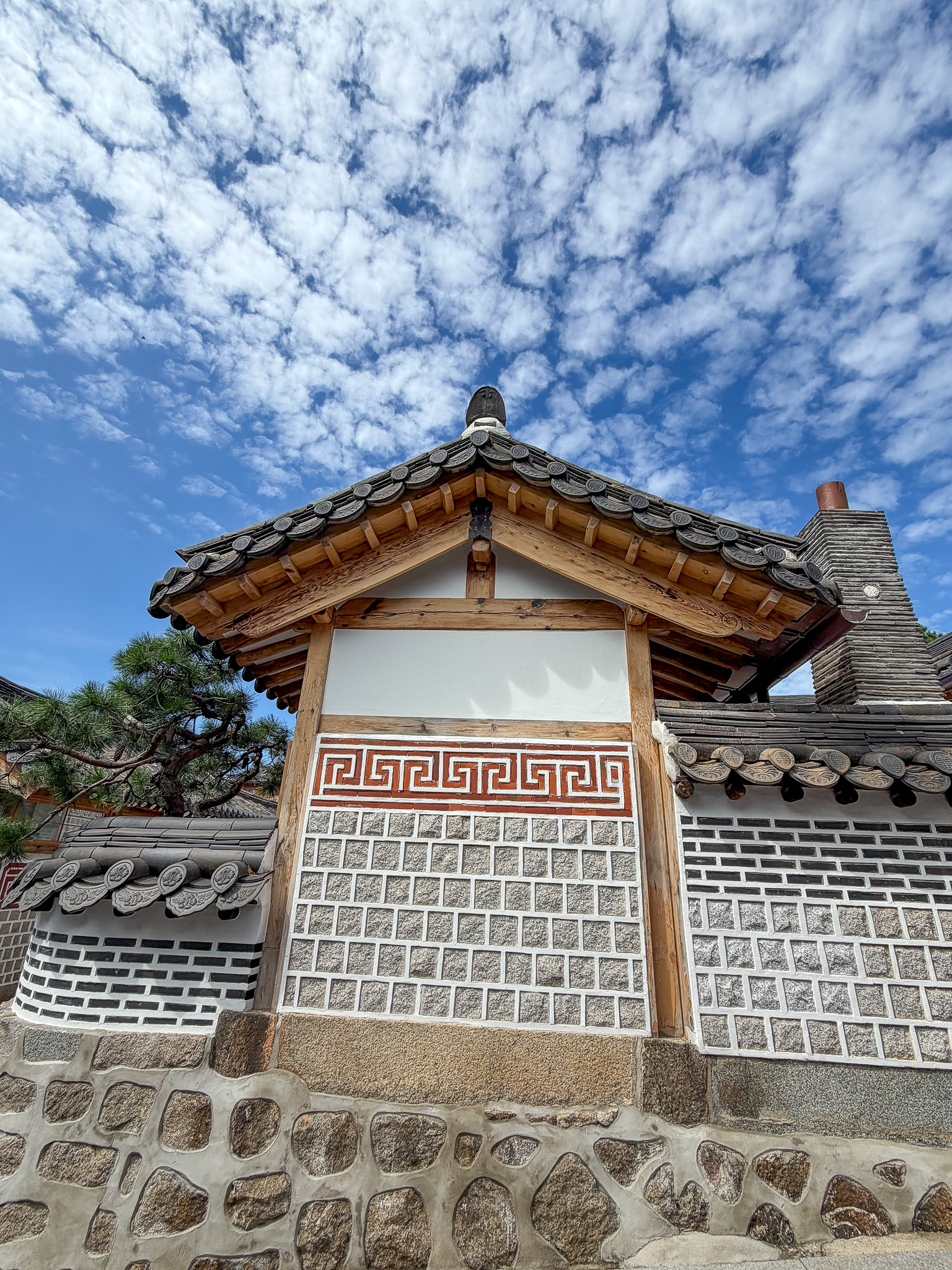
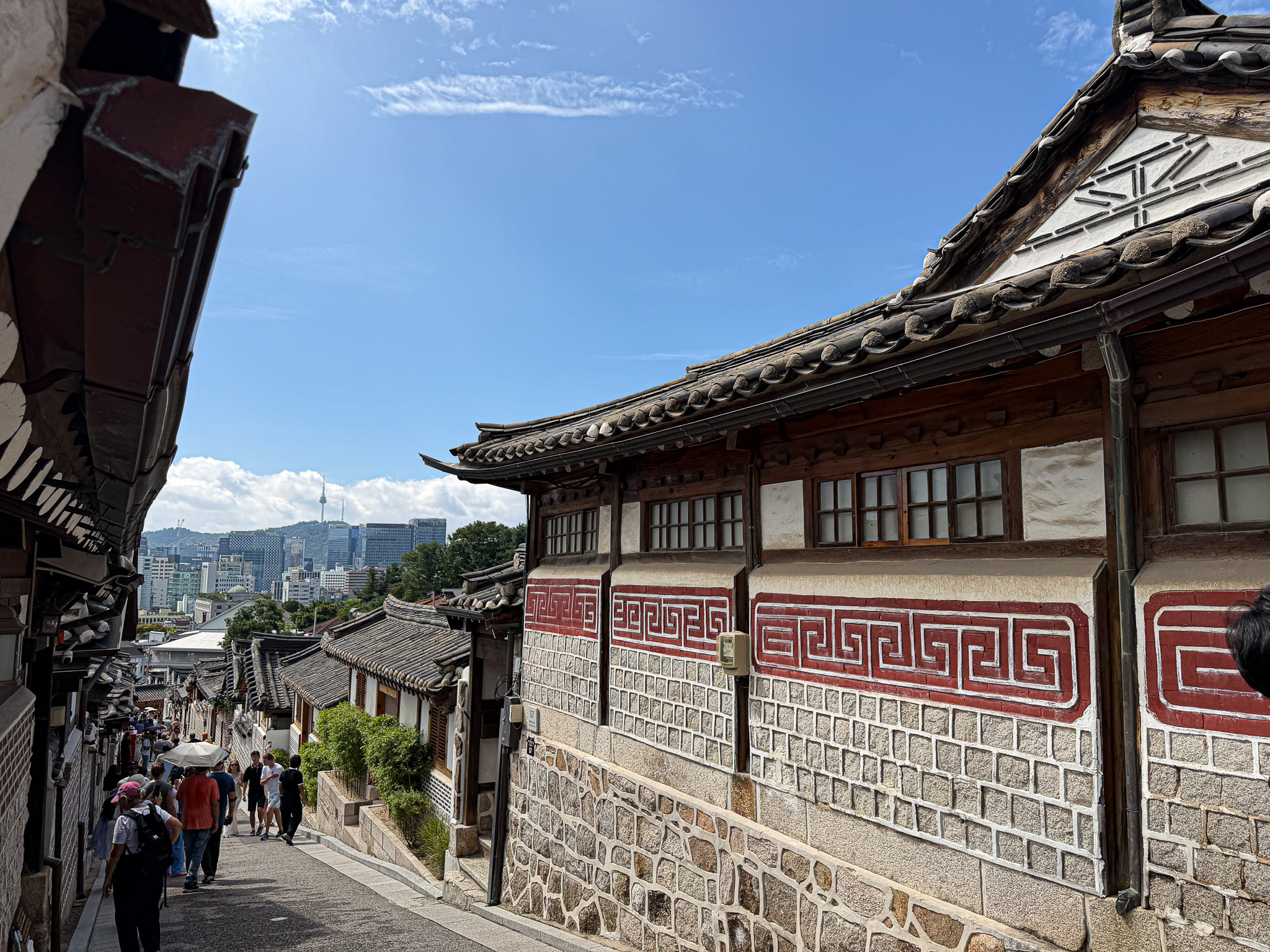
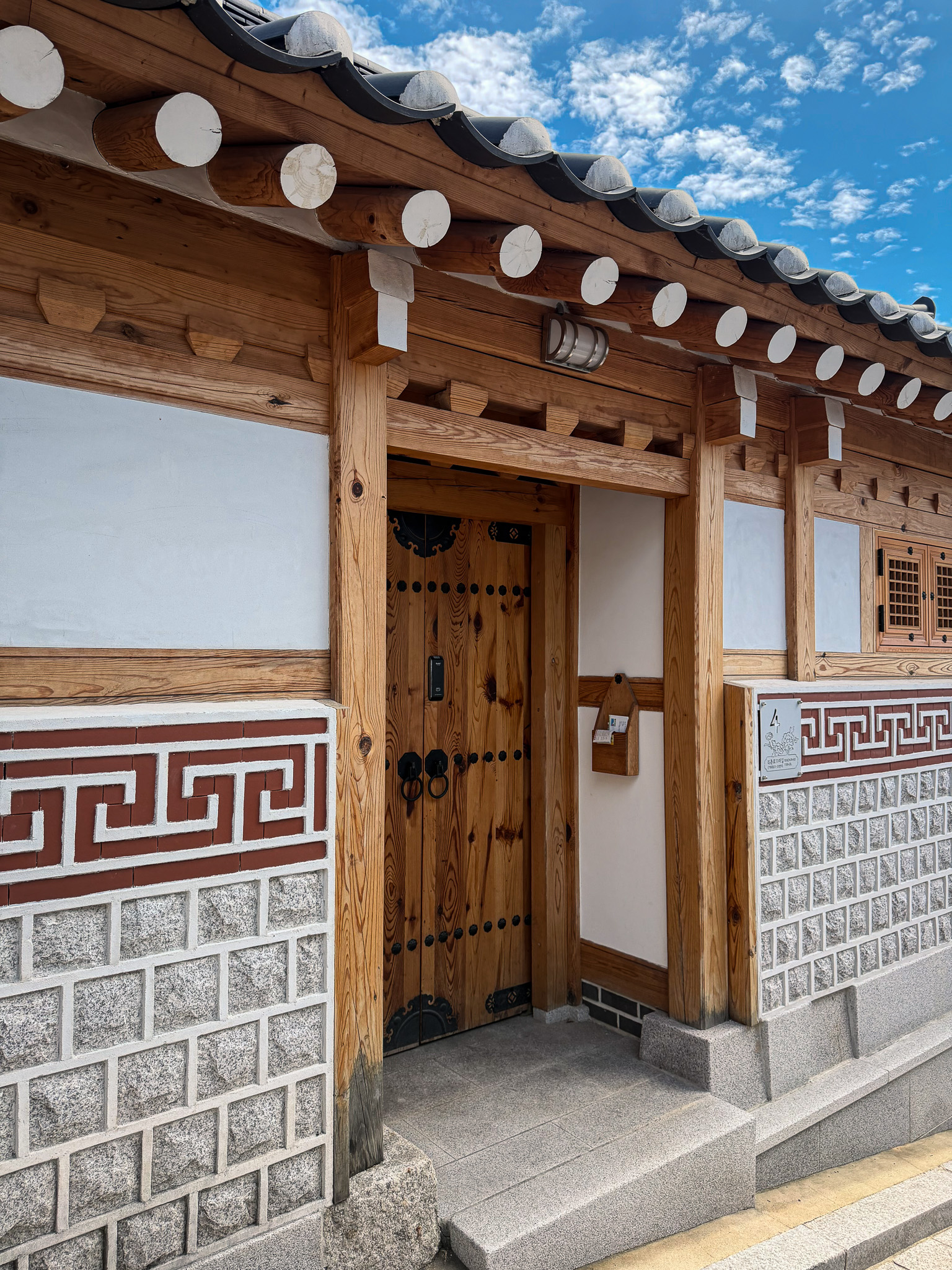
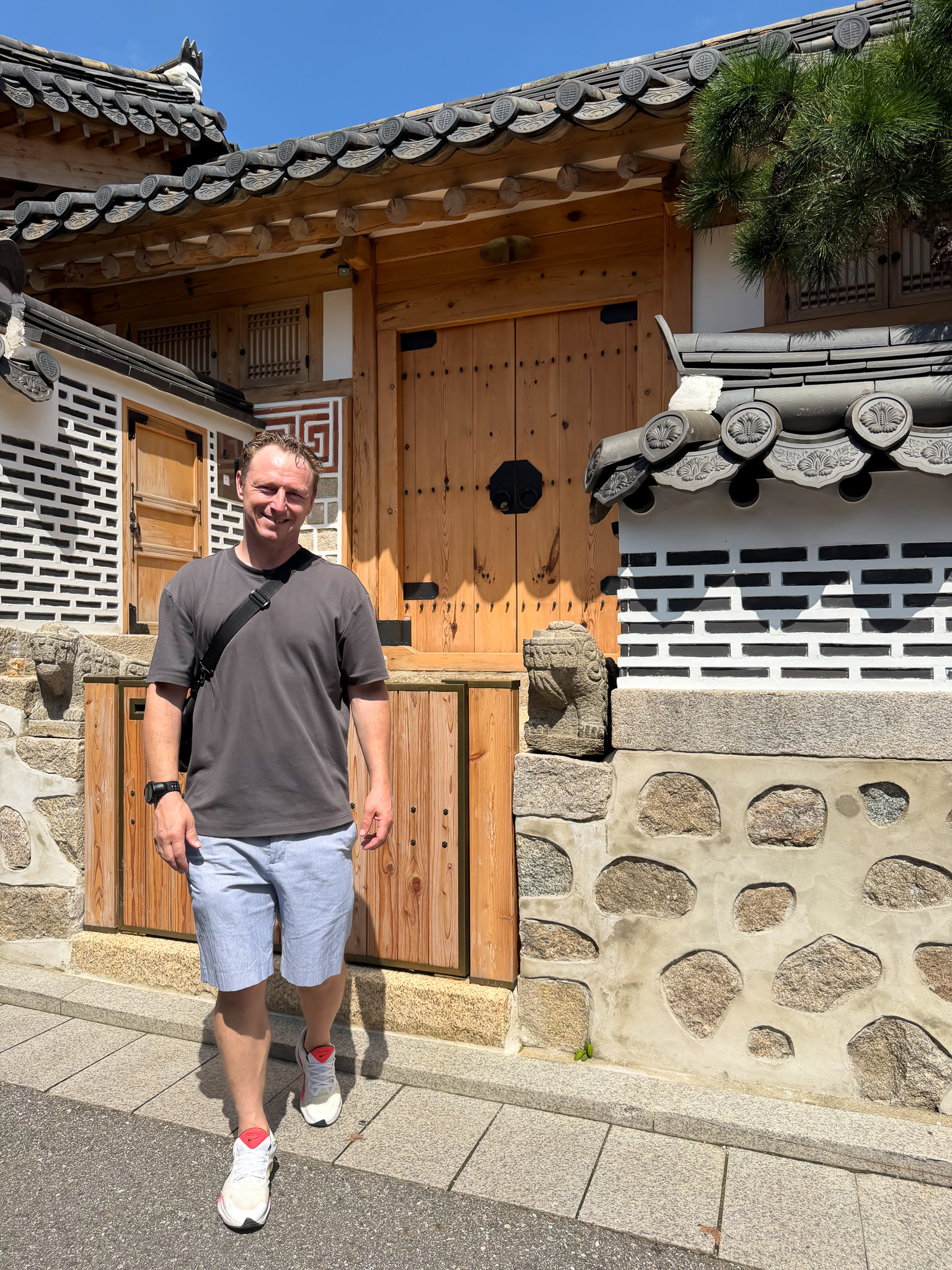
Near the palace district, Bukchon Hanok Village gives you another glimpse of traditional Korean architecture, this time in a residential neighborhood. Narrow lanes wind between hanok houses with curved tiled roofs, and the farther uphill you walk, the better the views get looking back over the rooftops toward modern Seoul.
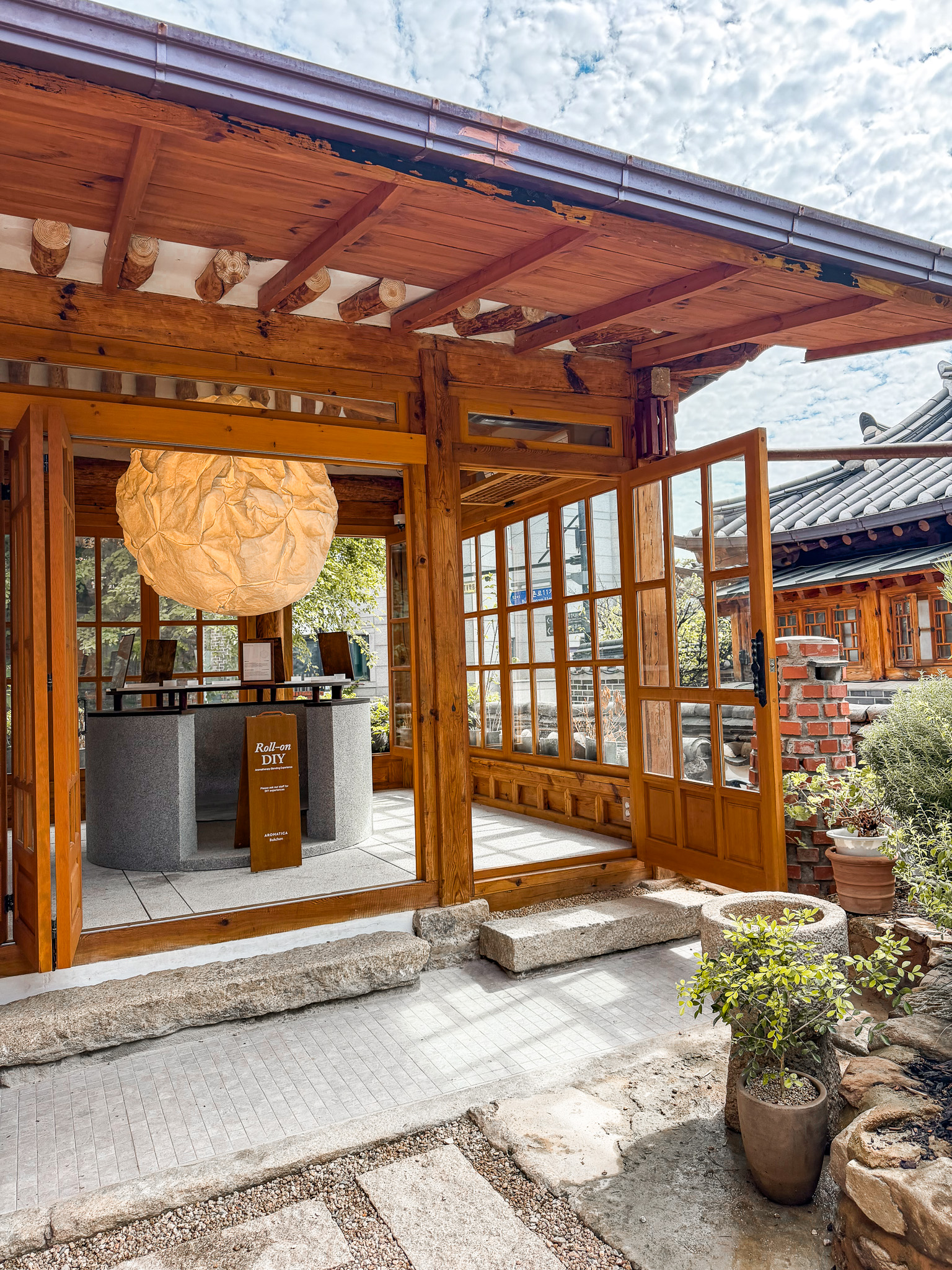
We arrived around 10:30 AM and thought the timing worked really well. Aim for around 10 AM, when visitor access begins to avoid the crowds. We also loved stopping in some of the small shops and they made for welcomed AC breaks.
→ TIP: These are real homes. Keep your voice down, respect the posted signs and stay out of private spaces. We saw neighborhood monitors politely reminding people to stay quiet, which was a good reminder that this isn’t a historic set built for visitors.
✨ Unique Things to Do in Seoul
Make Your Own Souvenir at Wappen House
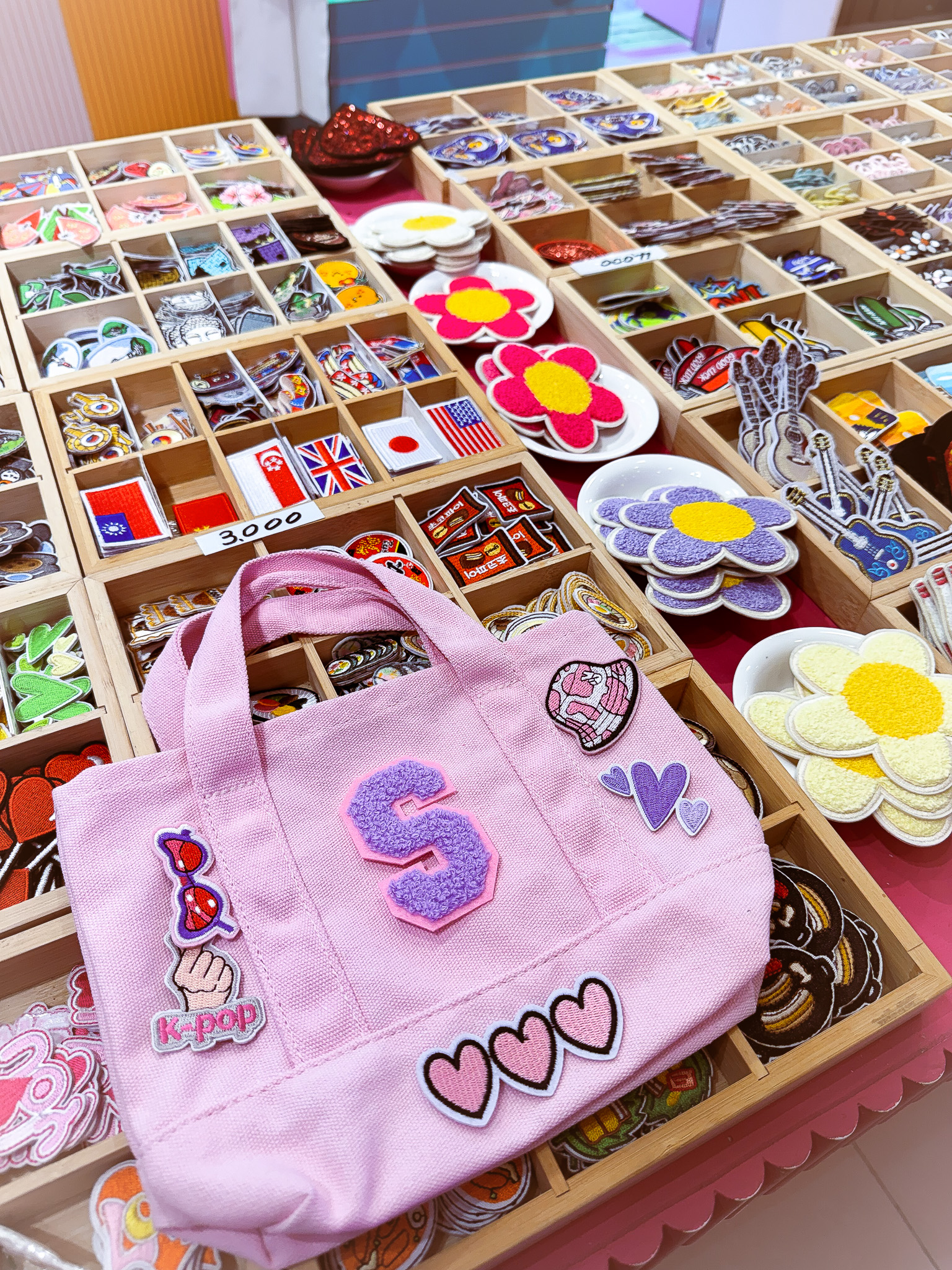
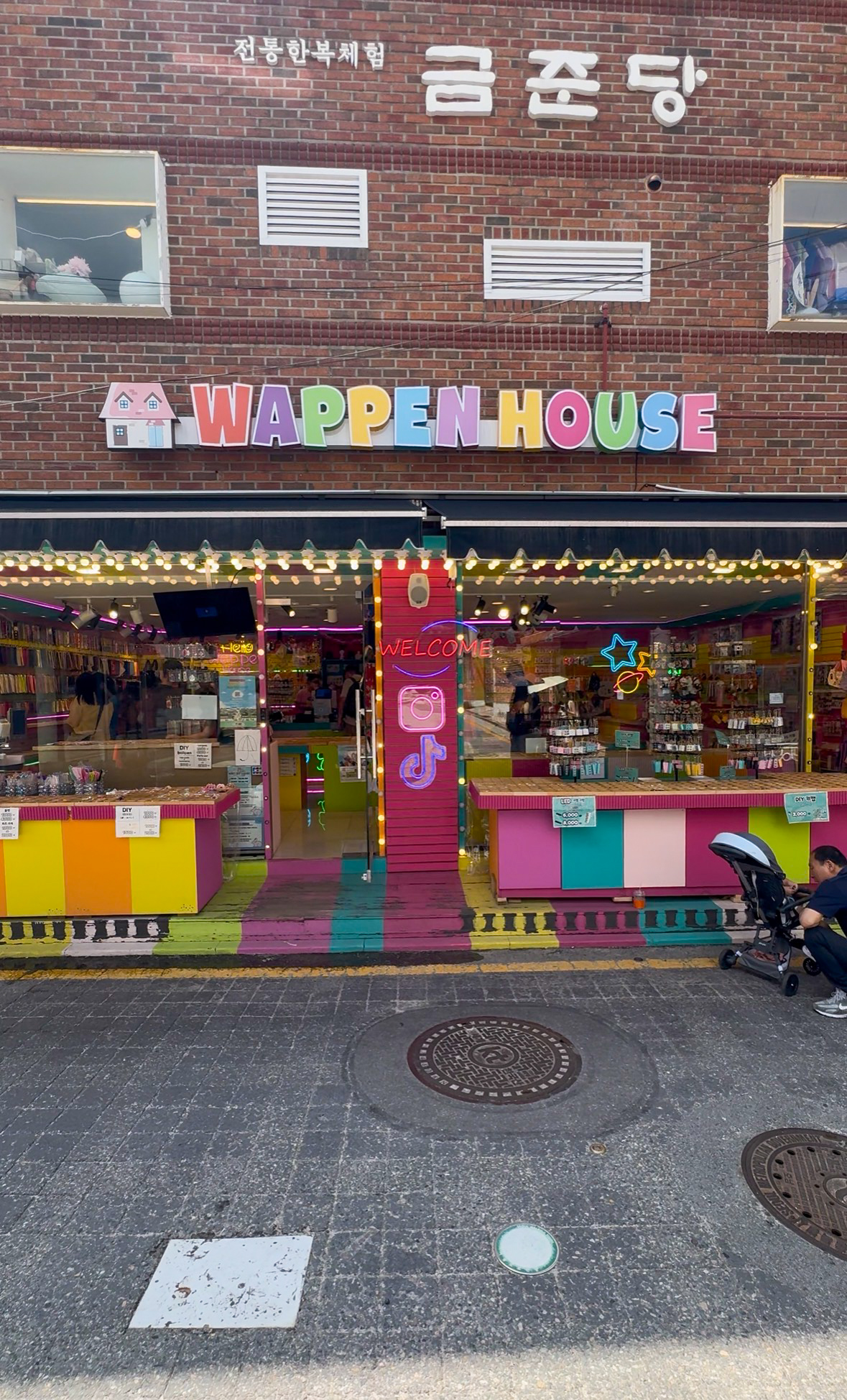
This was SO much fun. At Wappen House, you choose something like a bag, pouch or fidget-style toy and customize it with patches. There are letters, characters, symbols and all kinds of little decorative patches, and you can even spell your name in Korean. It makes the whole thing feel much more personal than buying another standard souvenir off a shelf. We also think these are great gifts because you can customize each one for the person you’re bringing it home to.
Write a Letter to Your Future Self at Nuldam Space
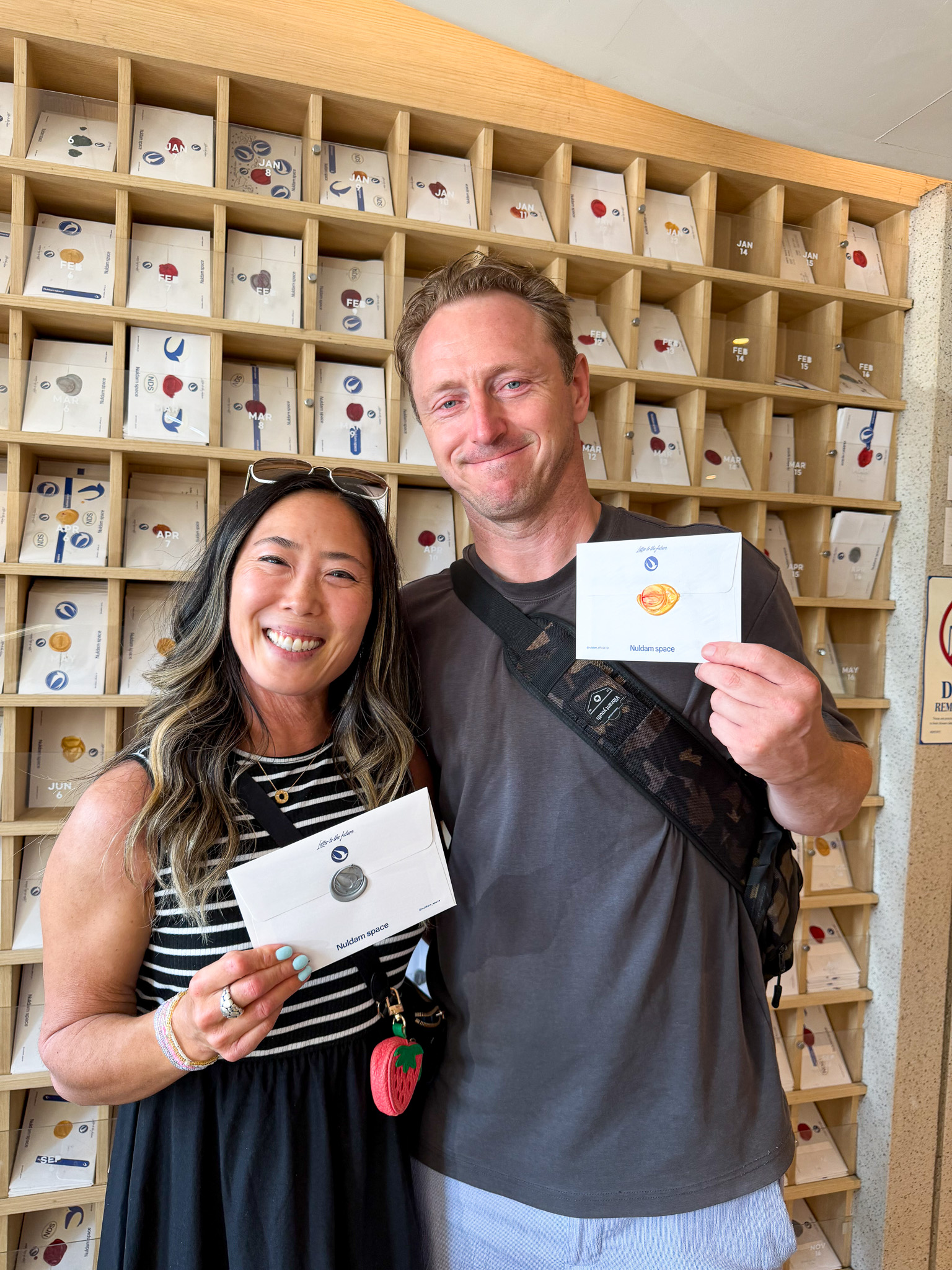
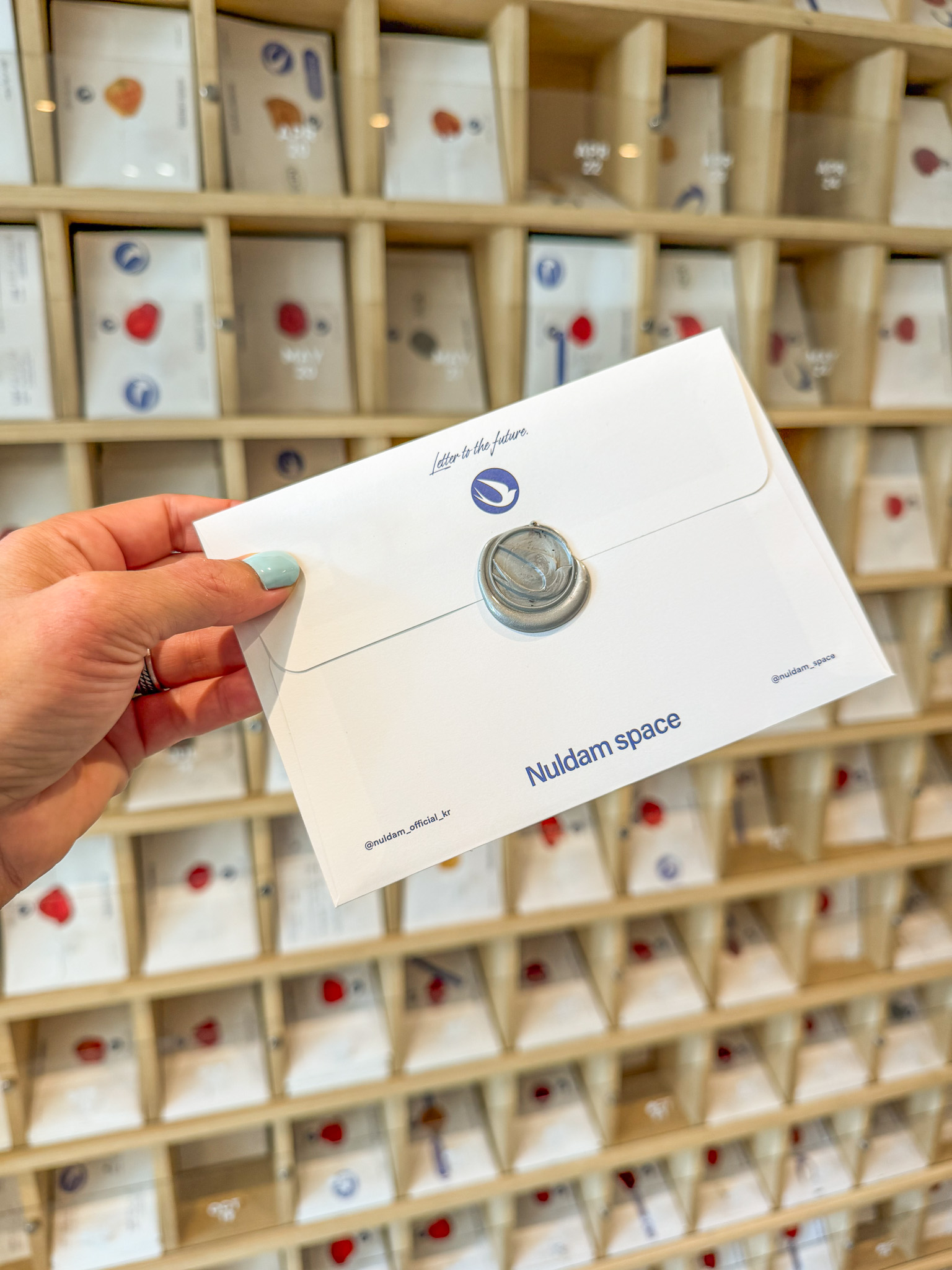
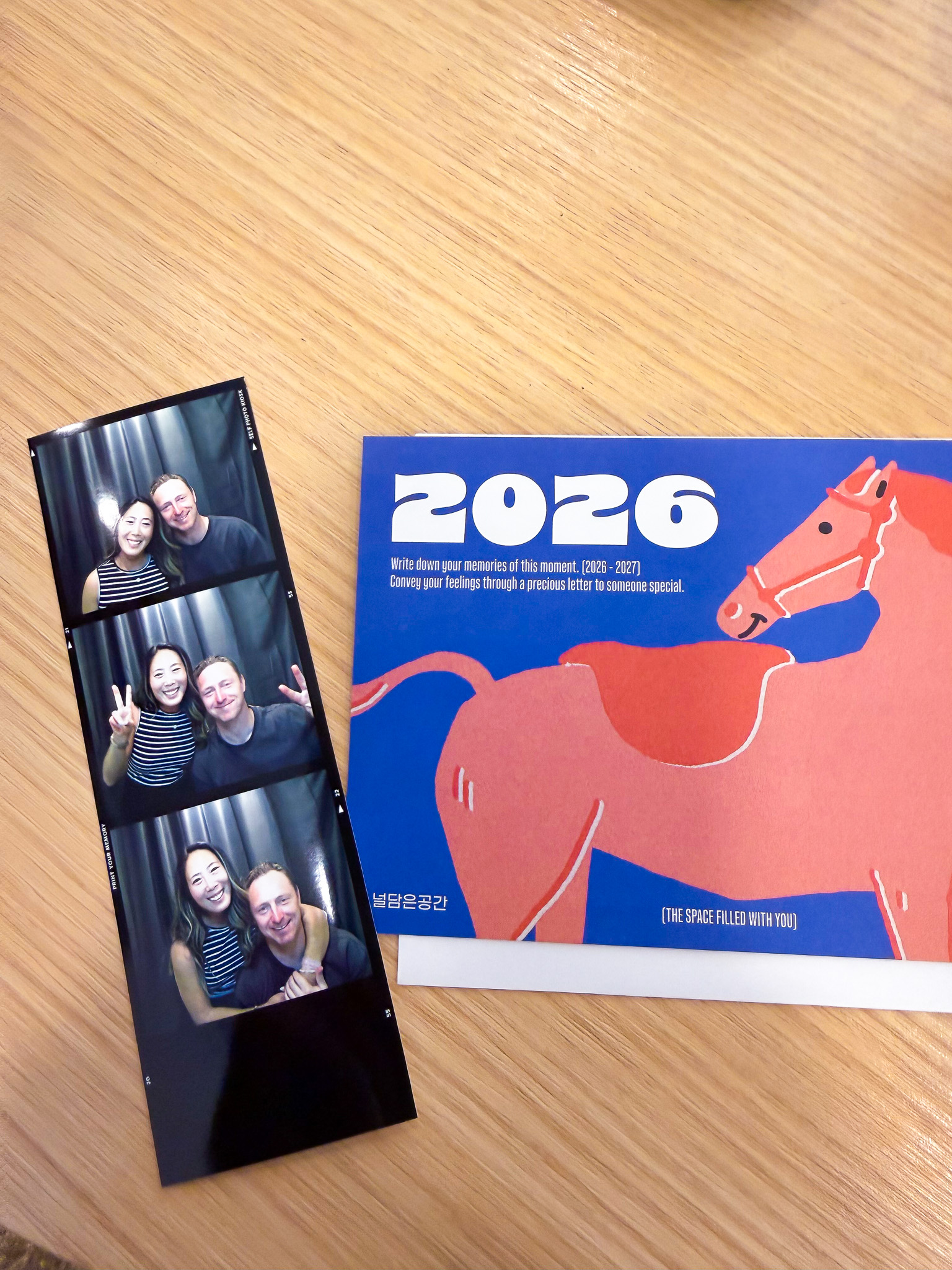
At Nuldam Space, you sit down and write a letter to your future self that gets mailed to you a year later. We also took photo booth pictures to tuck inside upstairs, then finished our letter with a wax seal. It sounds simple, but in the middle of a packed sightseeing day, it was actually really nice to stop and reflect for a bit. It’s also close to Gyeongbokgung, so it’s easy to work into your palace day. Unexpected bonus: the drinks we all ordered were all VERY good too.
Try a Personal Color Analysis
Korean personal color analysis has become hugely popular, and studios such as Color of You in Hongdae analyze your coloring and help identify which shades work best for your skin tone, hair and eyes. Sessions were around $150, which felt a little pricey for us, but if you’re really into fashion or beauty, it’s a fun Seoul-specific experience.
→ TIP: The popular studios book out well in advance, and most English-language sessions go first. If this is a priority, reserve before you land.
Make a Custom Korean Stamp
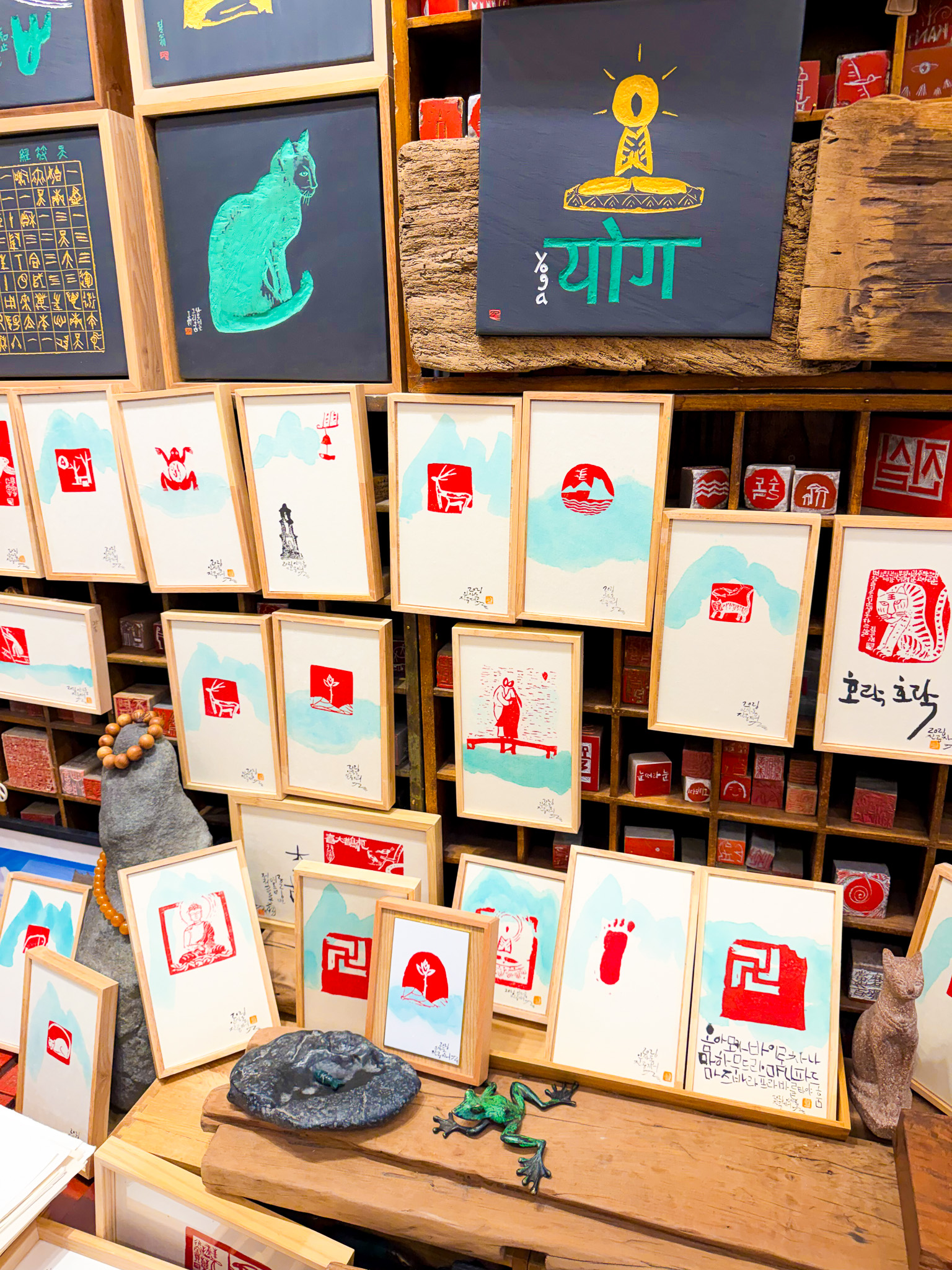
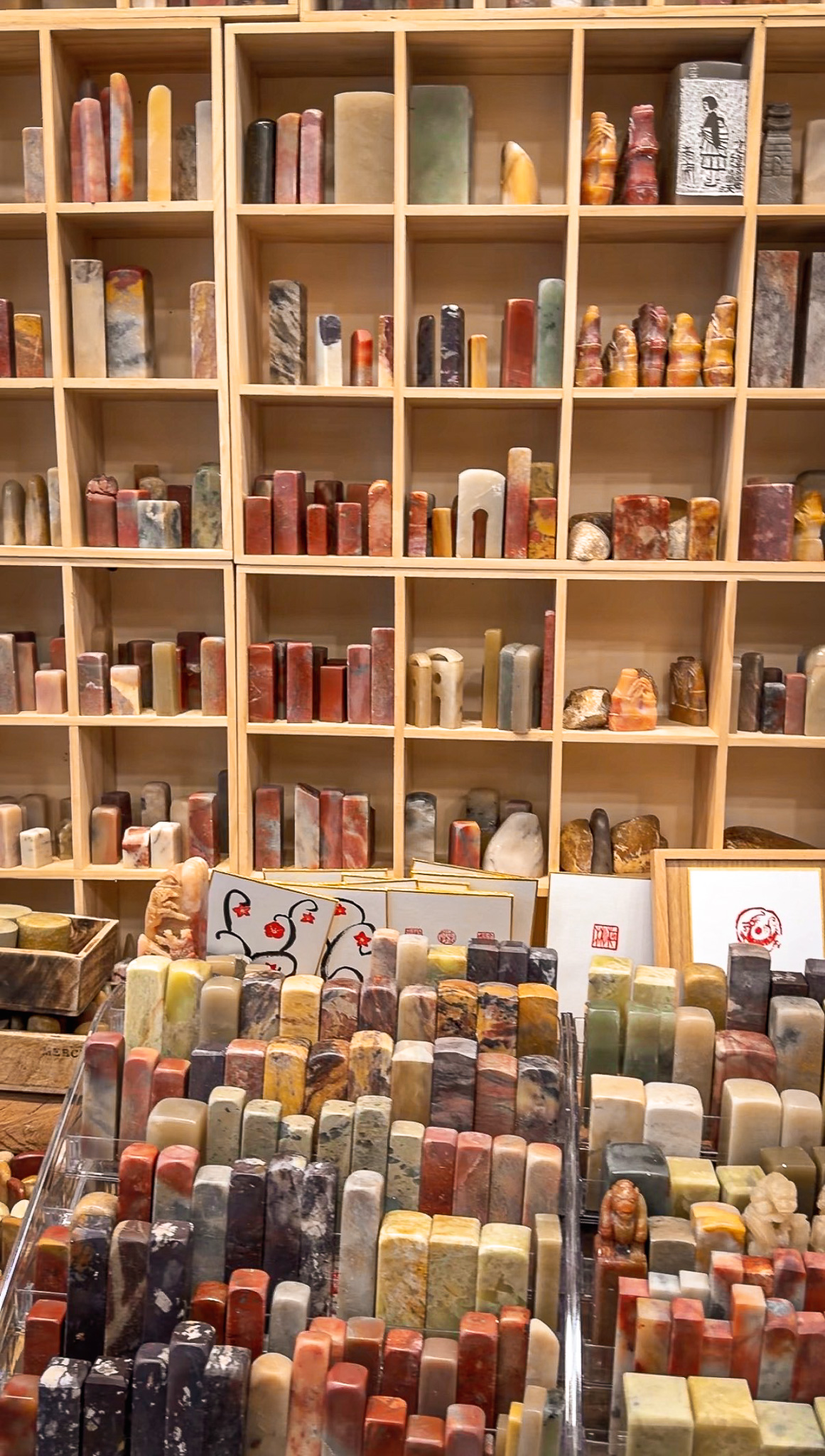
A dojang is a traditional Korean personal seal used as a signature or stamp. There are a lot of shops that offer this, but we really fell in love with Jeon Gong Jae Gallery, a traditional Korean calligraphy and seal stamp shop. They’re carved into beautiful stone, so it feels less like a souvenir and more like an object you’d actually keep out on a desk. Get your name on one and it becomes a keepsake that’s genuinely specific to you and your trip, or it makes a really good gift too.
Try a Korean Facial or Skincare Treatment
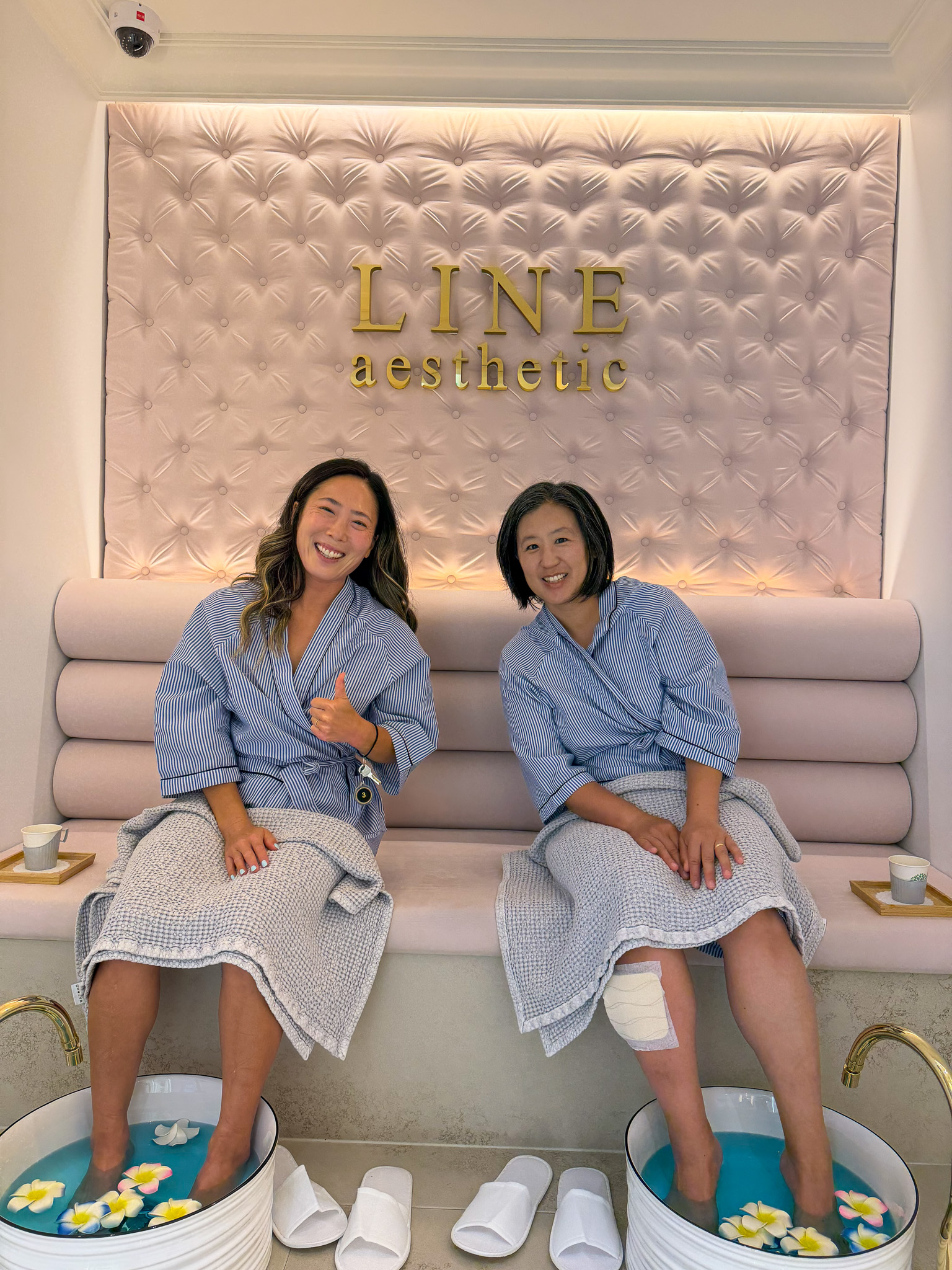
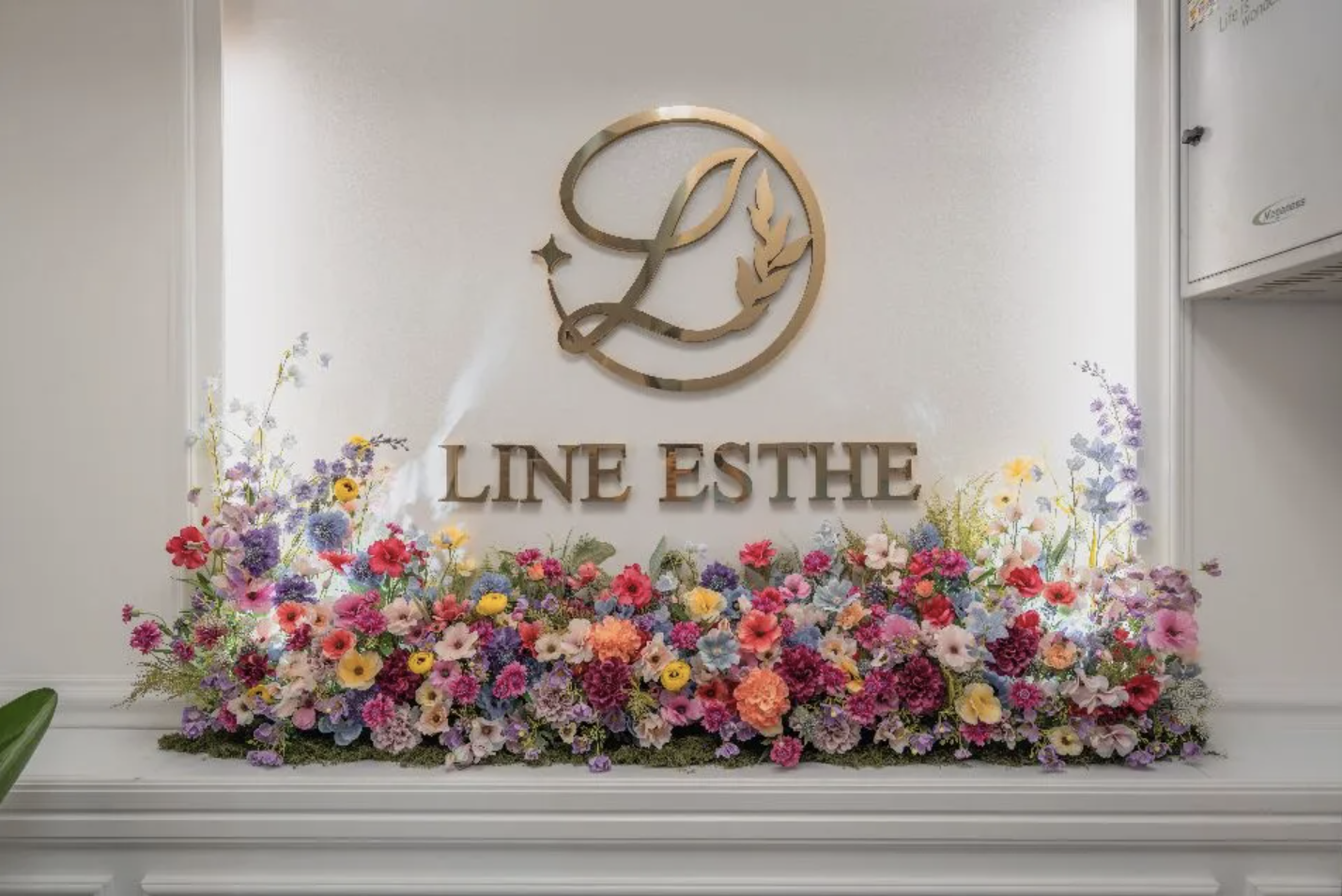
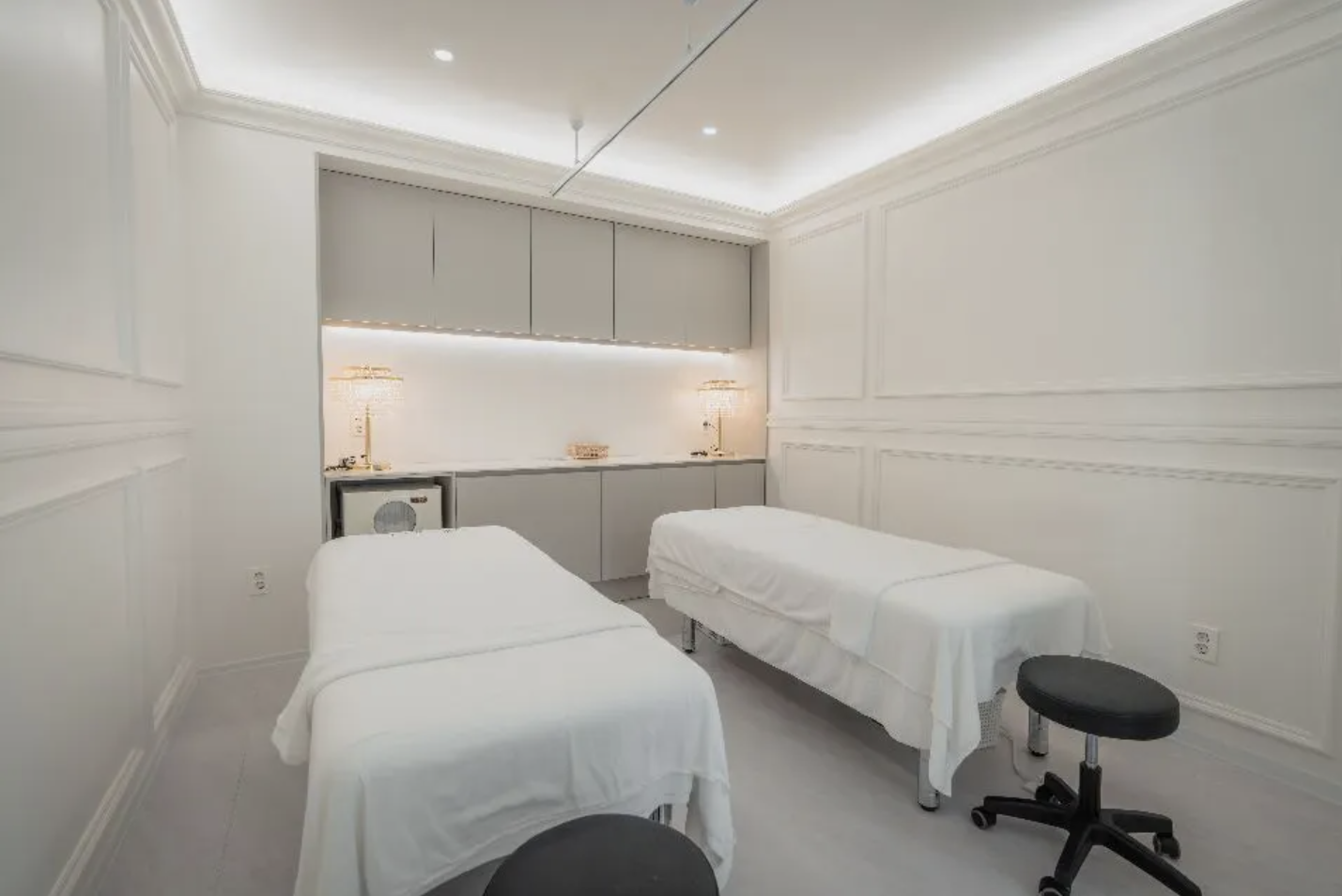
We did 90-minute treatments at Line Esthe, right around the corner from our hotel, for around ₩180,000 ($131). Compared with similar treatments we’ve done elsewhere, that felt like a good value. Our treatment included an Aqua Peel, which felt almost like tiny cooling suction cups moving across the skin, plus a neck and upper-back massage. It was incredibly relaxing.
If I’d had more time in Seoul, I definitely would have looked into some of the other non-invasive Korean facial and skincare techniques available here. Korea has such a huge beauty industry that it felt like a missed opportunity not to experiment a little more.
☕ Don’t Sleep on Seoul’s Café Culture
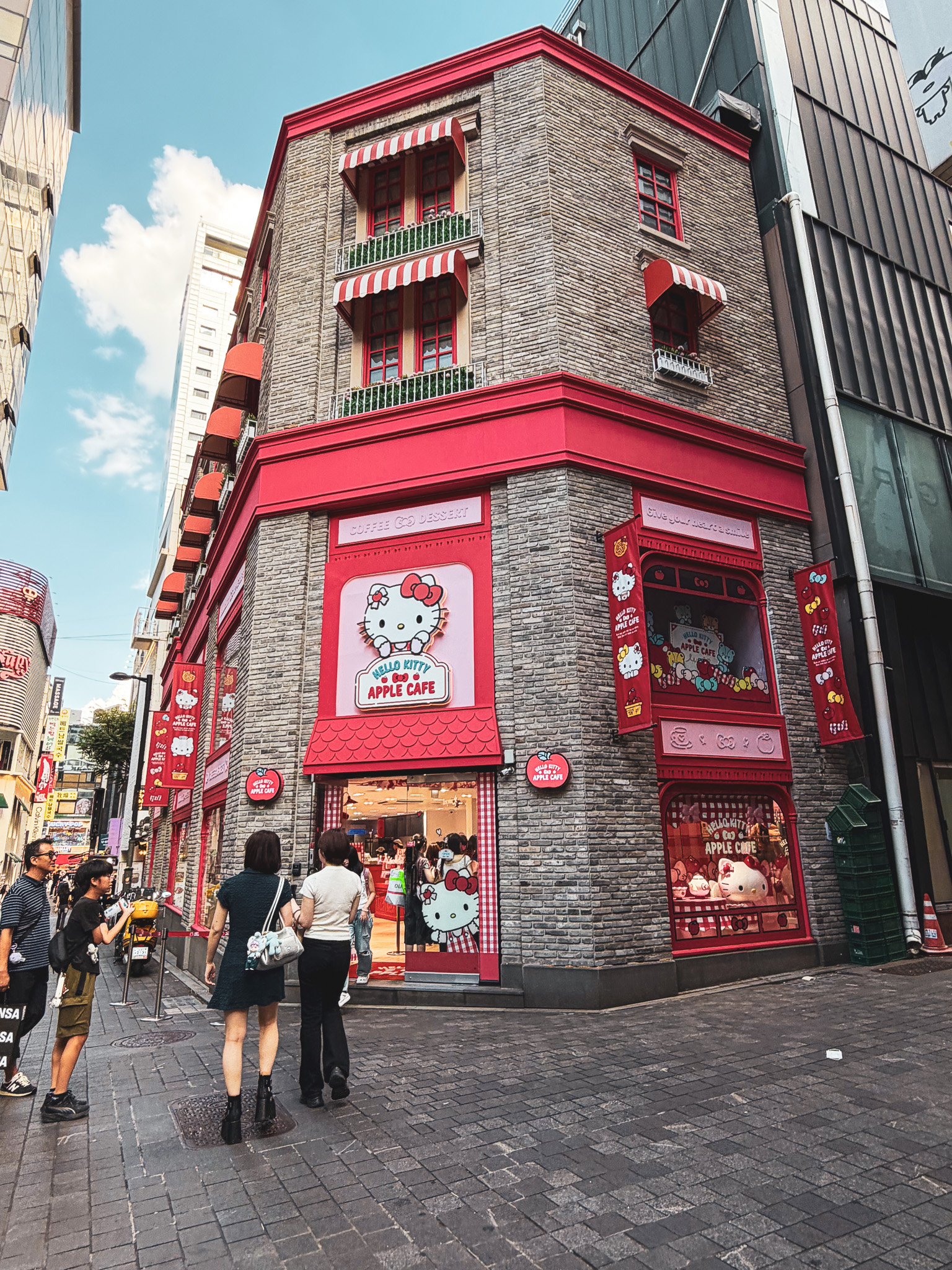
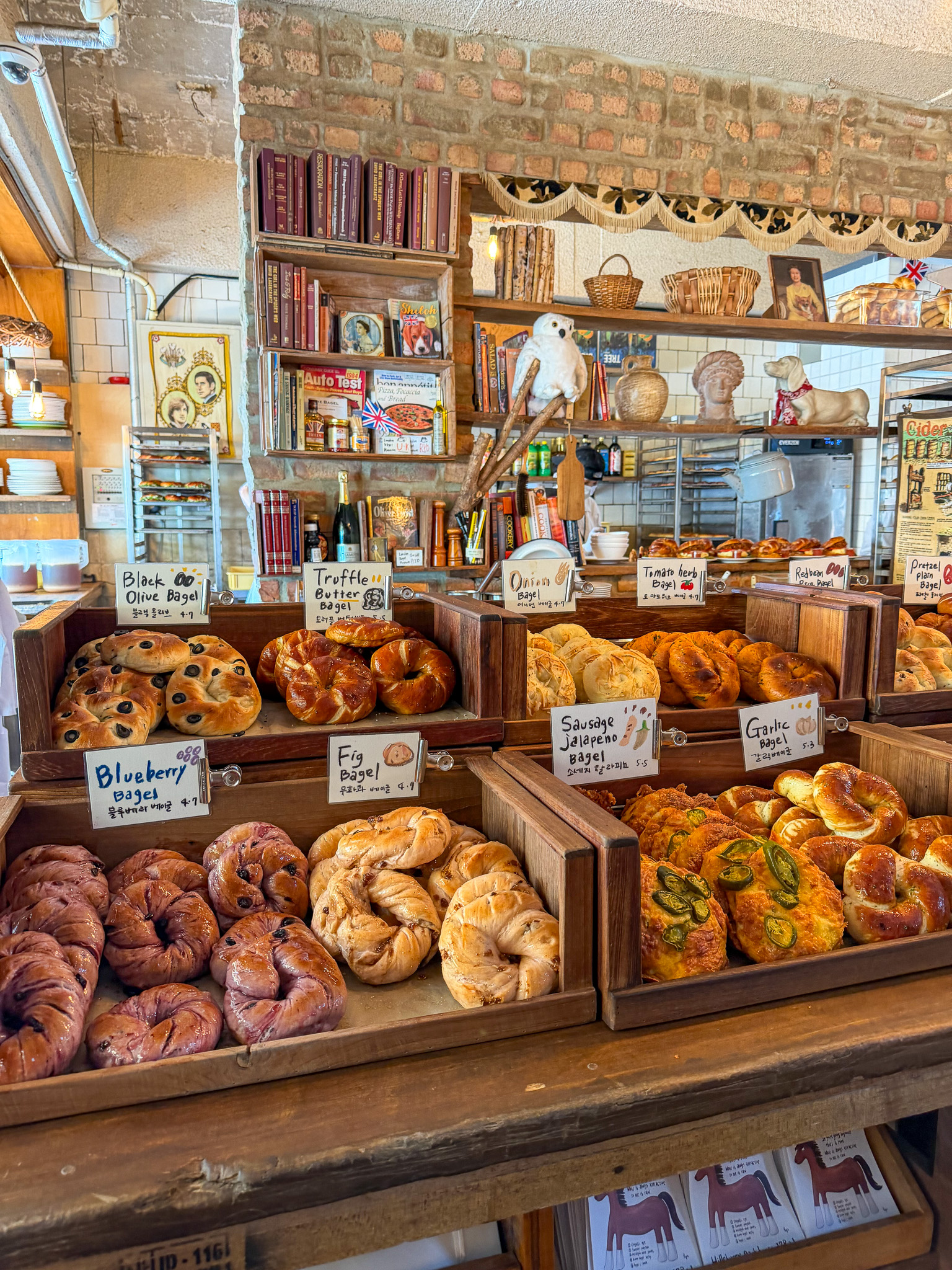
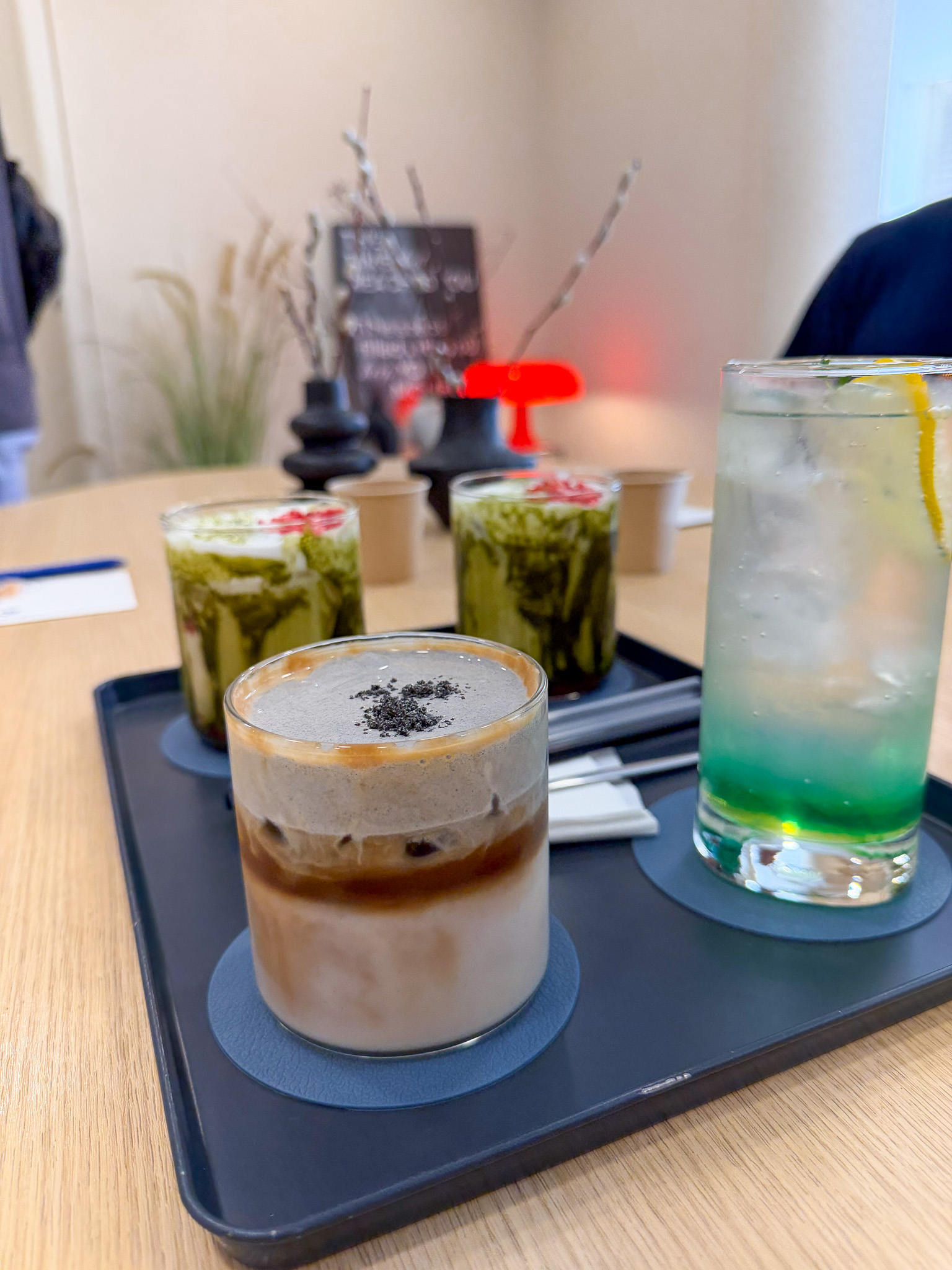
We knew Seoul had good cafés. We didn’t realize how much of a thing café culture is here. These aren’t simply places to grab coffee. You’ll find enormous bakeries, beautifully designed concept cafés, specialty matcha shops and cafés built around everything from salt bread to waterfall views. You could genuinely plan an entire trip around cafés.
METCHA
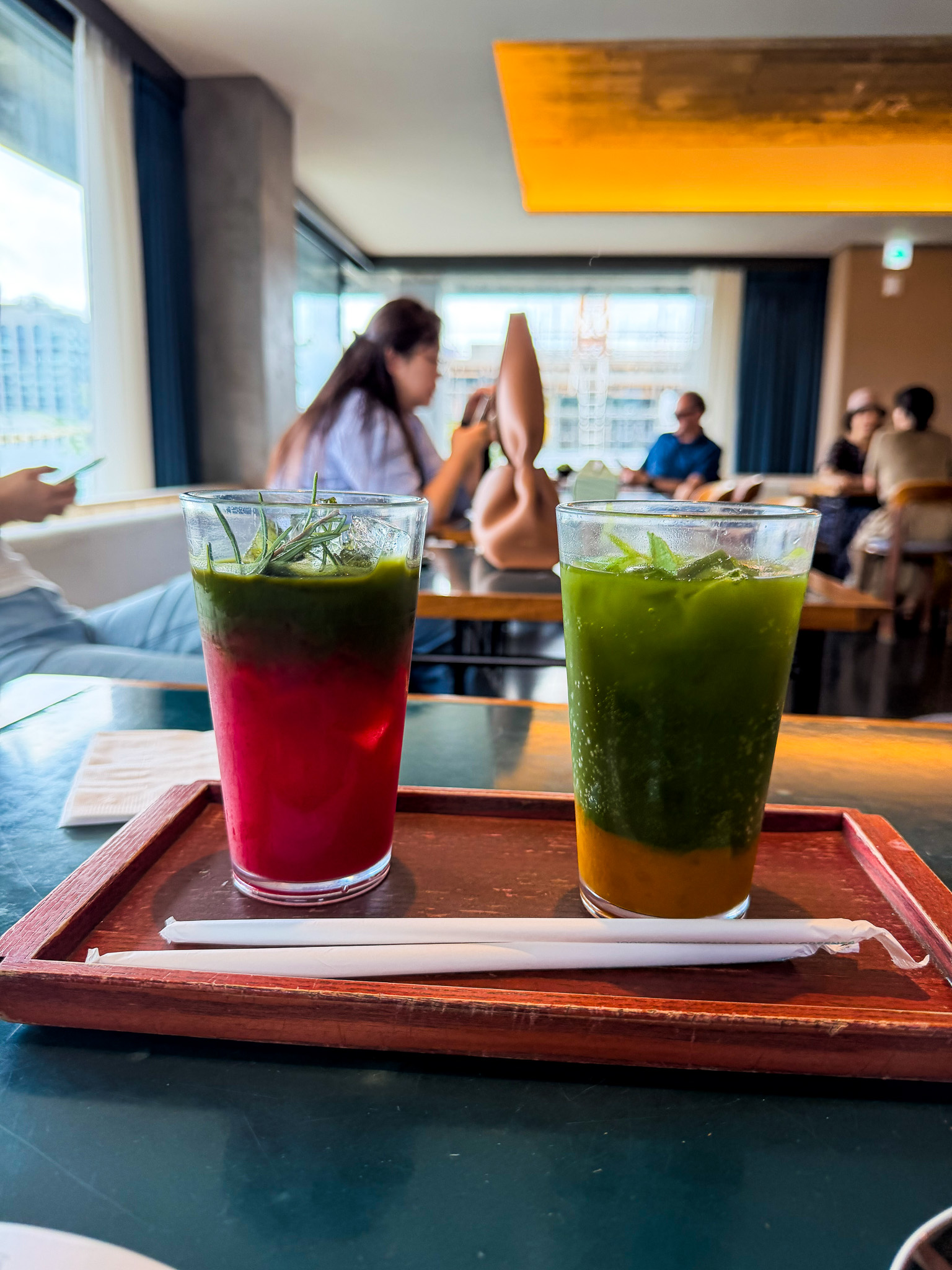
METCHA became our go-to because it was steps from our hotel, but we kept returning because the matcha was genuinely excellent. The name is a mashup of matcha and maetdol (맷돌), the traditional Korean stone hand-mill, and once you know that, the whole place makes sense. They don’t buy matcha powder. They grow the tea organically on Jeju and grind it right there on the ground floor, in full view of the line, so you’re basically watching your drink get made from the leaf up.
This wasn’t one of those viral Instagram cafés where you’re mostly there for a photo. It was just really solid matcha, had vegan milk options, which we learned you can’t take for granted everywhere in Seoul, and had four floors of seating. We went back three times. Enough said…
Soha Salt Pond
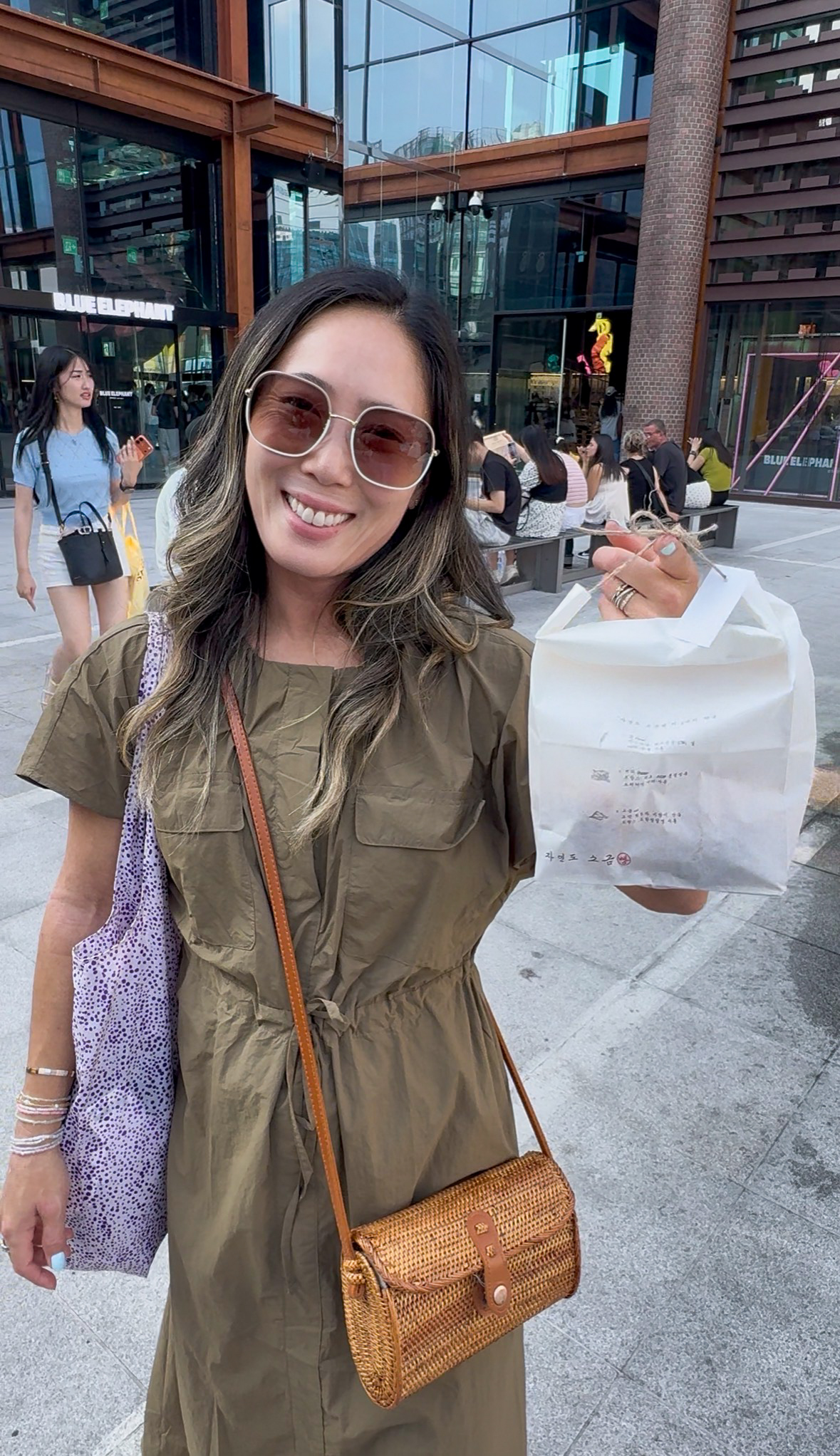
The viral salt bread at Soha Salt Pond actually delivered. We tried it while exploring Seongsu, and ours came out piping hot. I can’t even begin to describe the soft, buttery wonder that is salt bread….it’s like a croissant and brioche had a baby. There was a line, but it moved quickly, and this was one social-media-famous food stop we were happy we made.
O’sulloc Tea House
We stopped at the O’sulloc in Bukchon and it turned out to be a perfect break after our hanok village walk. O’sulloc is Korea’s best-known tea brand, with everything grown on Jeju Island, and the Bukchon location spreads across three floors. The ground floor is a shop stacked with beautifully packaged teas and tea goods, which makes it a very easy gift stop. The second floor is the café, with big windows looking out over Bukchon’s tiled rooftops. The third floor has Bar Sulloc for tea cocktails plus a seasonal tea tasting. If you’re already doing Bukchon and Gyeongbokgung, this is a genuinely nice place to sit down and cool off partway through.
→ TIP: The third-floor tea tasting is reservation only, so book ahead on the O’sulloc site if that’s the part you want. Walking in for the café on the second floor is fine, and what we ended up doing.
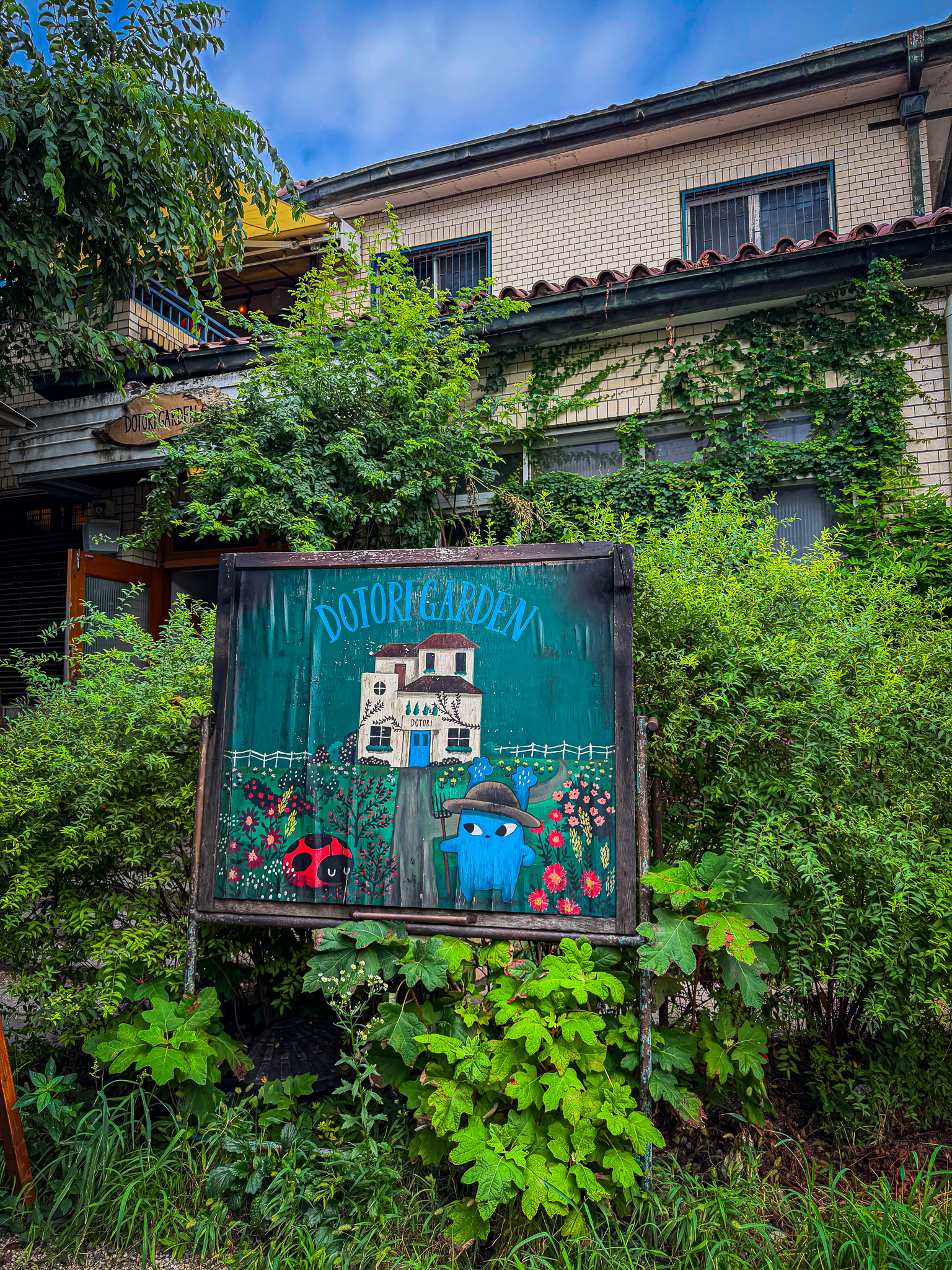
Dotori Garden
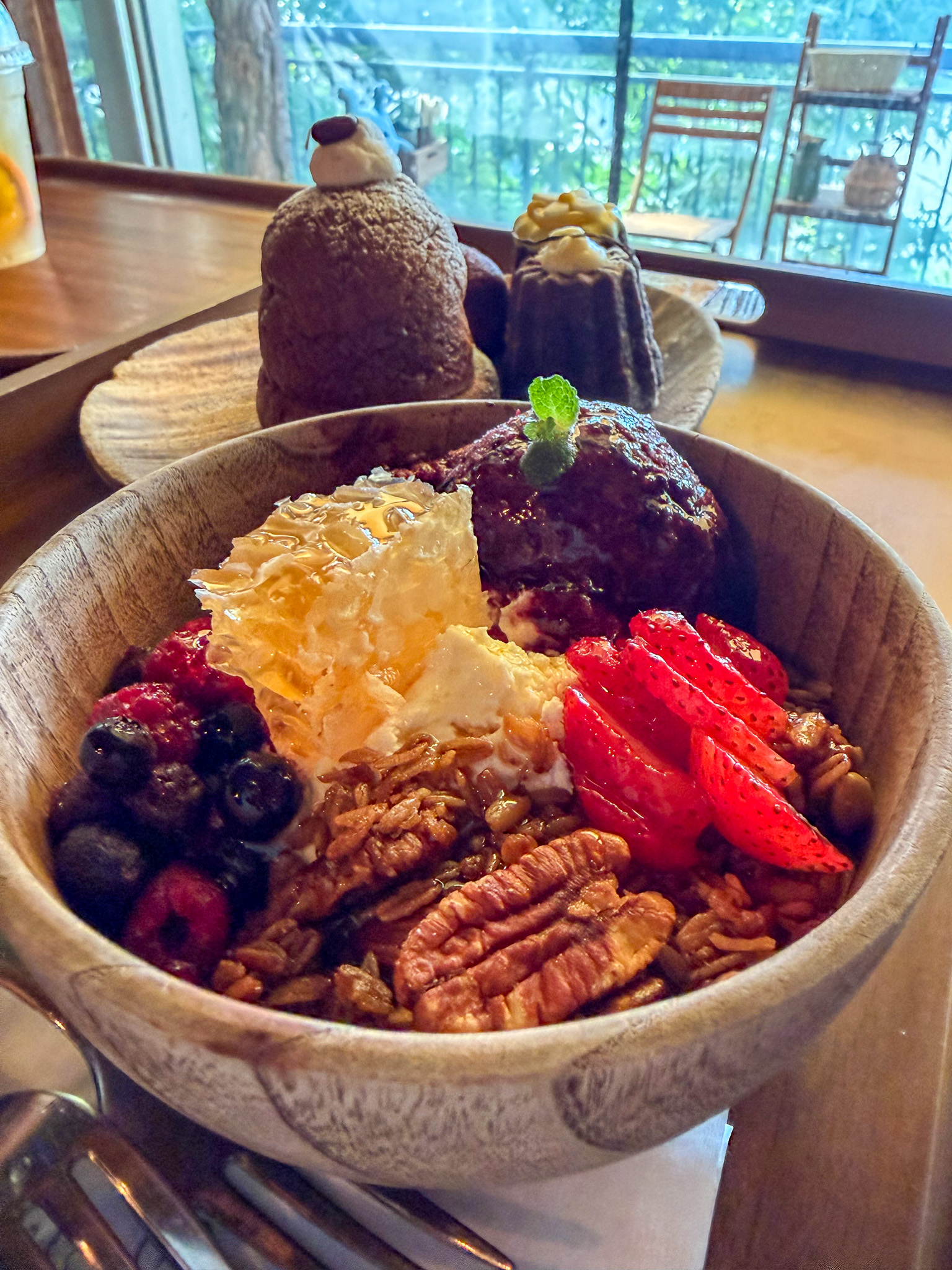
We enjoyed Dotori Garden, but this one comes with a qualifier. The fresh yogurt with honeycomb and granola was lovely, the bakery room itself is cool to see and the baked goods were solid. They had kind of an annoying checkout process and the ambience was just okay for us. Would we cross the city or wait in a massive queue for it? Probably not.
Still on Our Café List
We also had Cafe Onion, Pokpo Café for its waterfall views, Rain Report, Standard Bread and Mil Toast saved but simply ran out of mornings.
→ TIP: If there’s a trendy café you really want to try, expect a line. We started keeping a backup café in mind for our morning stops because we didn’t want to burn half the day queuing, especially in the August heat.
🛍️ Shopping in Seoul
Shopping ended up being a much bigger part of our Seoul trip than we expected. We knew we’d browse, but we didn’t realize how many Korean brands, Seoul exclusives and completely random finds we’d come across.
What made shopping here so much fun wasn’t just the massive malls. It was the mix of affordable Korean fashion, emerging labels, K-beauty, sportswear and familiar global brands doing products or collections we don’t normally see elsewhere.
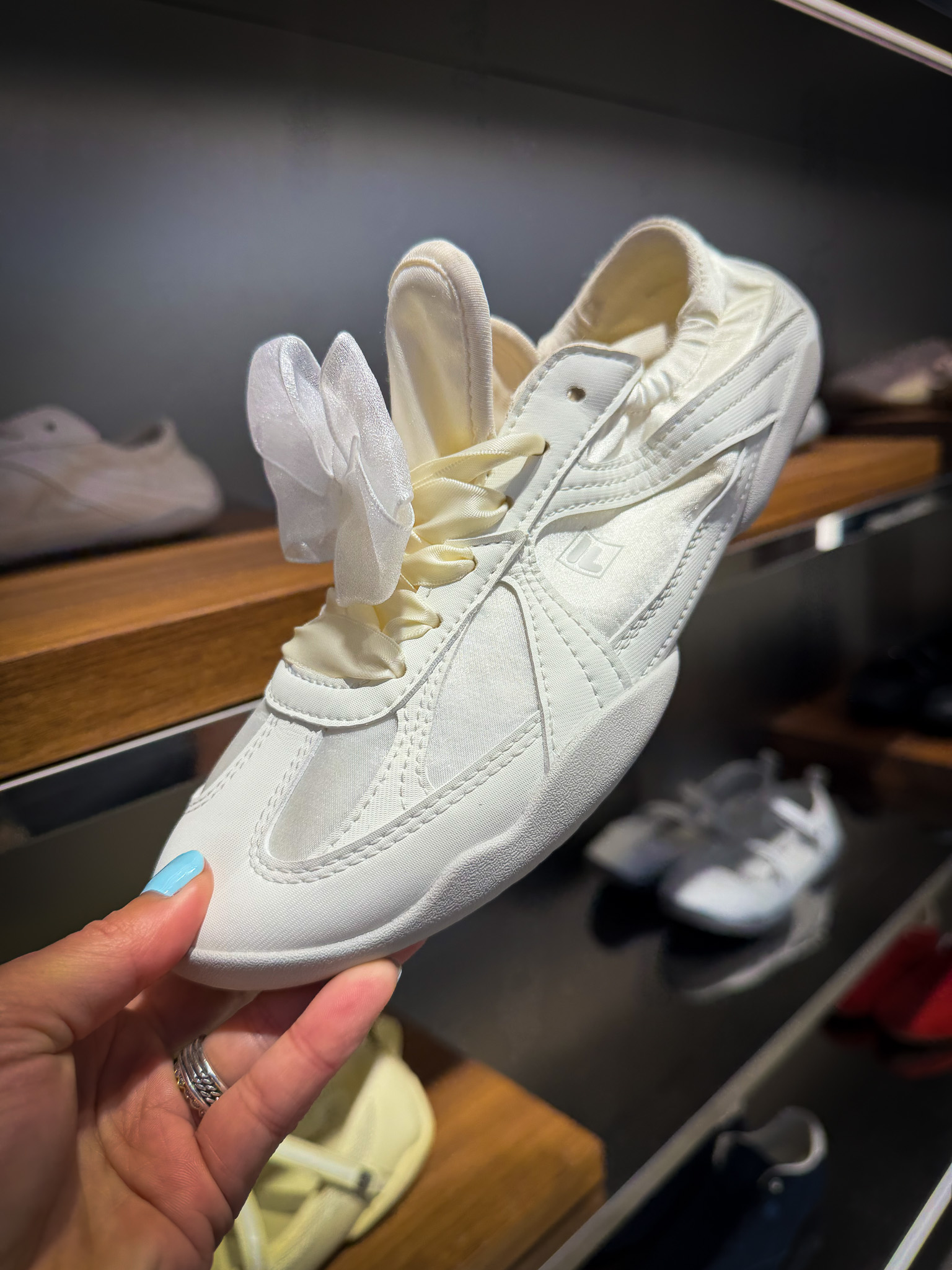
One thing we also became slightly obsessed with was the fabric. Seoul was incredibly hot and humid, and people were wearing these impossibly lightweight clothes. We kept seeing sheer, almost parachute-like nylon, along with feather-light quick-dry fabrics being used for dresses, shirts, pants and jackets. Once you experience a Seoul summer, it makes complete sense.
If shopping is a priority, deliberately leave some open space in your itinerary. We changed our plans to spend more time shopping and STILL could have used another half day.
→ TIP: Carry your passport while shopping. Tons of stores in Seoul offer tax-free shopping for tourists over a minimum spend, and many of them process an immediate refund right at the register instead of making you deal with it at the airport. Look for the tax-free signage at the counter and just ask. You need the physical passport, not a photo of it, so we got in the habit of bringing ours out with us any day we knew we’d be shopping.
Korean Brands Worth Your Time
For accessible, affordable Korean fashion, you’ll see 8 Seconds, SPAO and TOPTEN all over the city. Think Korean versions of Zara or Uniqlo, each with a slightly different point of view. I picked up an incredibly lightweight white UV jacket and some fun shirts with Korean phrases at SPAO, plus solid basics at TOPTEN. MUSINSA STANDARD gets recommended constantly, but it wasn’t really our thing.
ALAND, a multi-brand retailer full of emerging and independent Korean designers, is the easiest place to discover labels you’ve never heard of, and I came away from the COEX location with pieces from 3.3 Field Trip, Vivacious and Dearstalker. Two others worth seeking out: Blue Elephant, the much more affordable answer to Gentle Monster, where we paid around $35 for sunglasses that felt like a steal and where a lot of the frames are designed for lower nose bridges (the difference in fit was immediately noticeable for me), and VERISH, the one for wireless bras, built-in bra tops and comfortable basics if you like that barely-there support trend that’s everywhere in Korea.
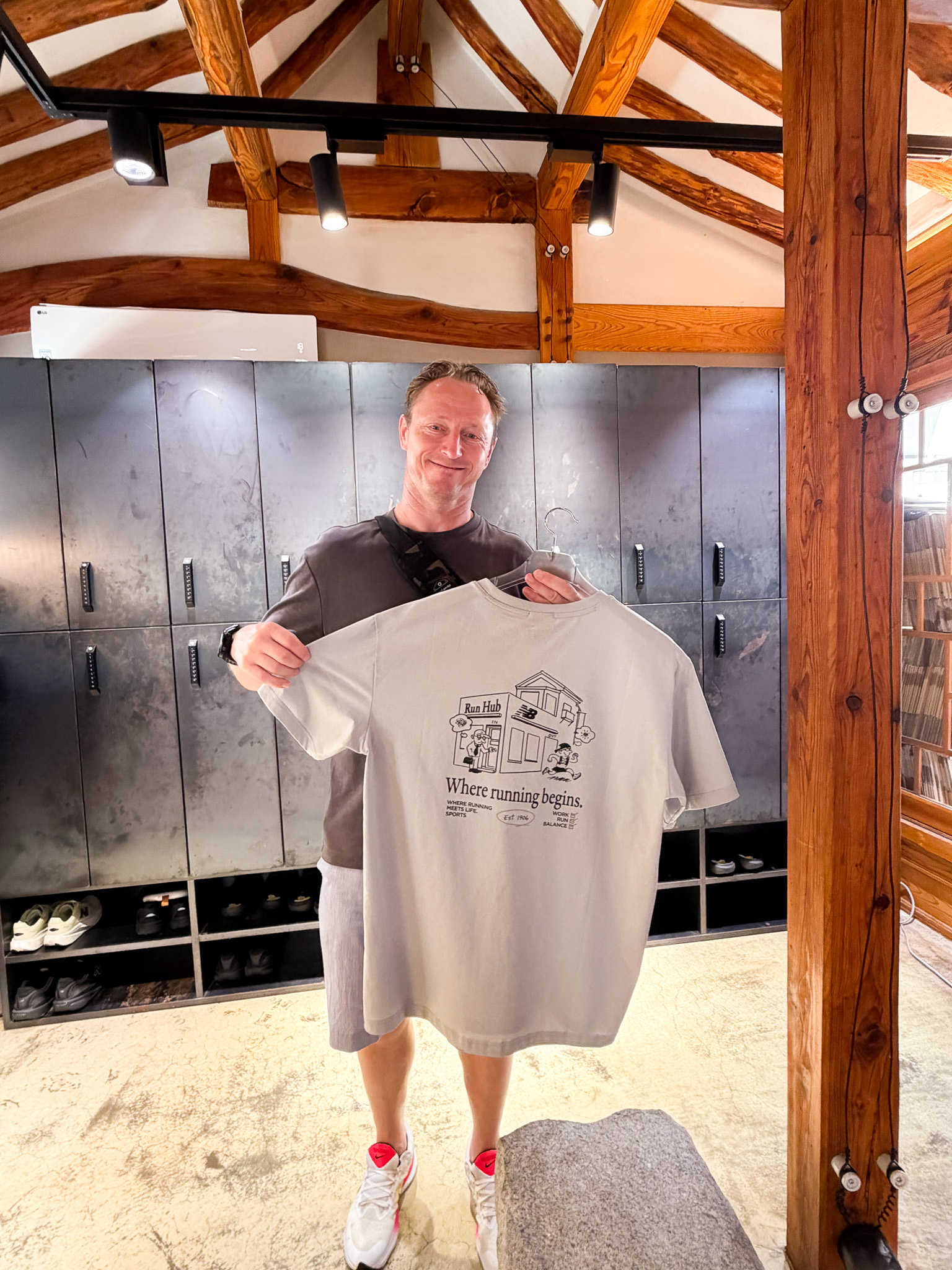
For outdoor and lifestyle, Mark had especially good luck with The North Face White Label, Kolon Sport, New Balance and 24/7, particularly for pants and lightweight outerwear. We also browsed Snow Peak, which is Japanese rather than Korean but worth a look if you like that outdoors-meets-everyday aesthetic.
Don’t Skip the Brands You Already Know
Some of our most fun shopping was seeing what global brands were doing specifically for Seoul or the Korean market. We loved the Adidas and New Balance stores around Bukchon-ro for Seoul-specific styles we weren’t seeing anywhere else, and the ballet-flat-inspired flats and jellies were so fun to see. Wilson was my biggest win: one of the coolest, lightest tennis backpacks I’ve seen, unique skirts including a bright purple ombré one, and an adorable tennis-bear keychain. Then there were the brands we never expected to care about, like Fruit of the Loom, which had genuinely cute bags, shirts and socks that felt nothing like what we associate with it at home, and Kodak Apparel, which turned the photography name we grew up with into cool clothing and lifestyle pieces.
Olive Young & K-Beauty
Olive Young absolutely belongs on your Seoul shopping list, even if you’re not particularly into makeup or skincare. It’s also one of the easiest places to stock up on gifts.
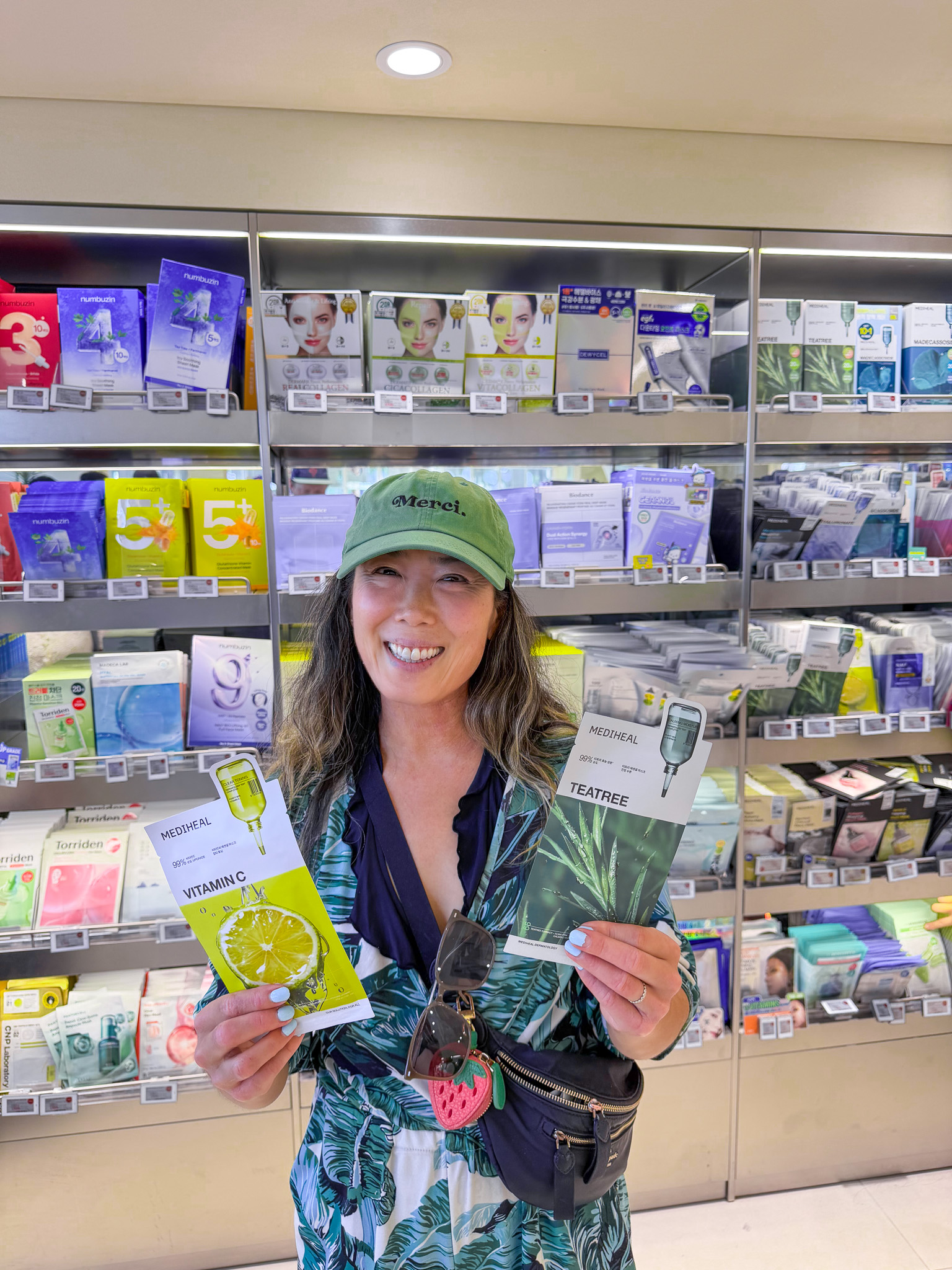
I’m pretty clueless when it comes to makeup and I have very sensitive skin, so I didn’t want to just buy whatever was trending on TikTok. I asked the staff for help instead, which was SO much more useful. They helped me navigate the thousands of products filling the multi-level store based on what I was actually looking for, and I walked out with sunscreen and a whole new set of makeup. Mark somehow got sucked in too and left with toner, lotion, face masks and a pimple spot treatment.
And even if you buy nothing else, try Korean sunscreen. Korea is famous for incredibly lightweight daily sunscreens, and the ones we tried felt completely different from the thick, greasy stuff we grew up with. Light, non-greasy and they actually make you want to put sunscreen on every day.
→ TIP: Only certain Olive Young locations offer a formal skincare or makeup consultation, but simply asking the staff for recommendations worked great for us. Visit the flagship stores in Myeongdong or Hongdae for the widest selection, and save space in your suitcase 😊
Where We Had the Best Shopping
Myeongdong was fantastic for convenience because we could wander in and out of stores whenever we were back near the hotel. Seongsu was better for trendier Korean brands, concept stores and pop-ups, and we wished we’d given ourselves more time there. COEX was great for combining shopping with Starfield Library and lunch, though if your only goal is discovering interesting Korean brands, choose Seongsu.
Our shortlist: ALAND, Blue Elephant, VERISH, SPAO, Wilson, Kolon Sport, The North Face White Label and Olive Young, plus whatever Seoul-exclusive pieces you stumble across.
Starfield Library & COEX
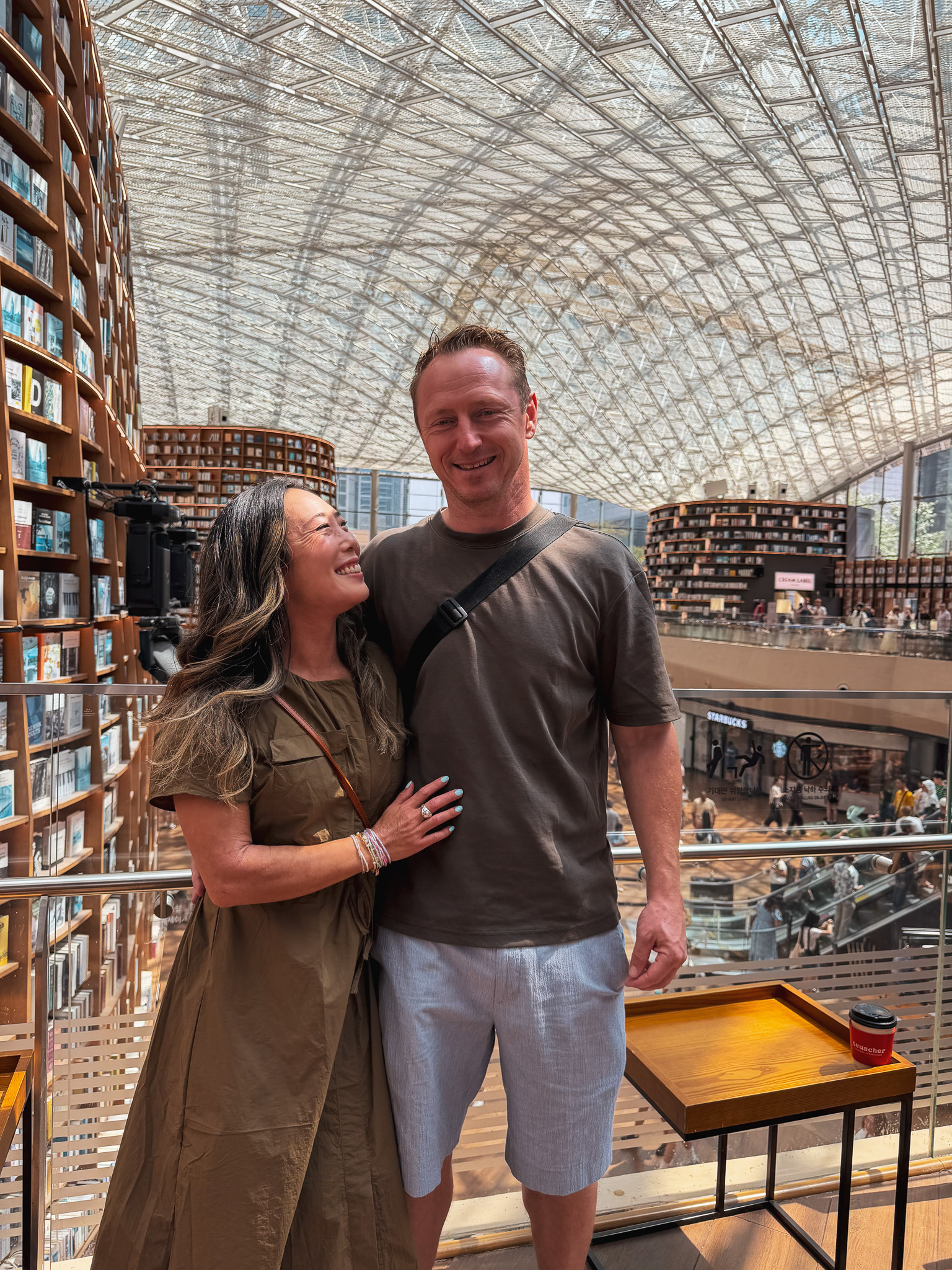
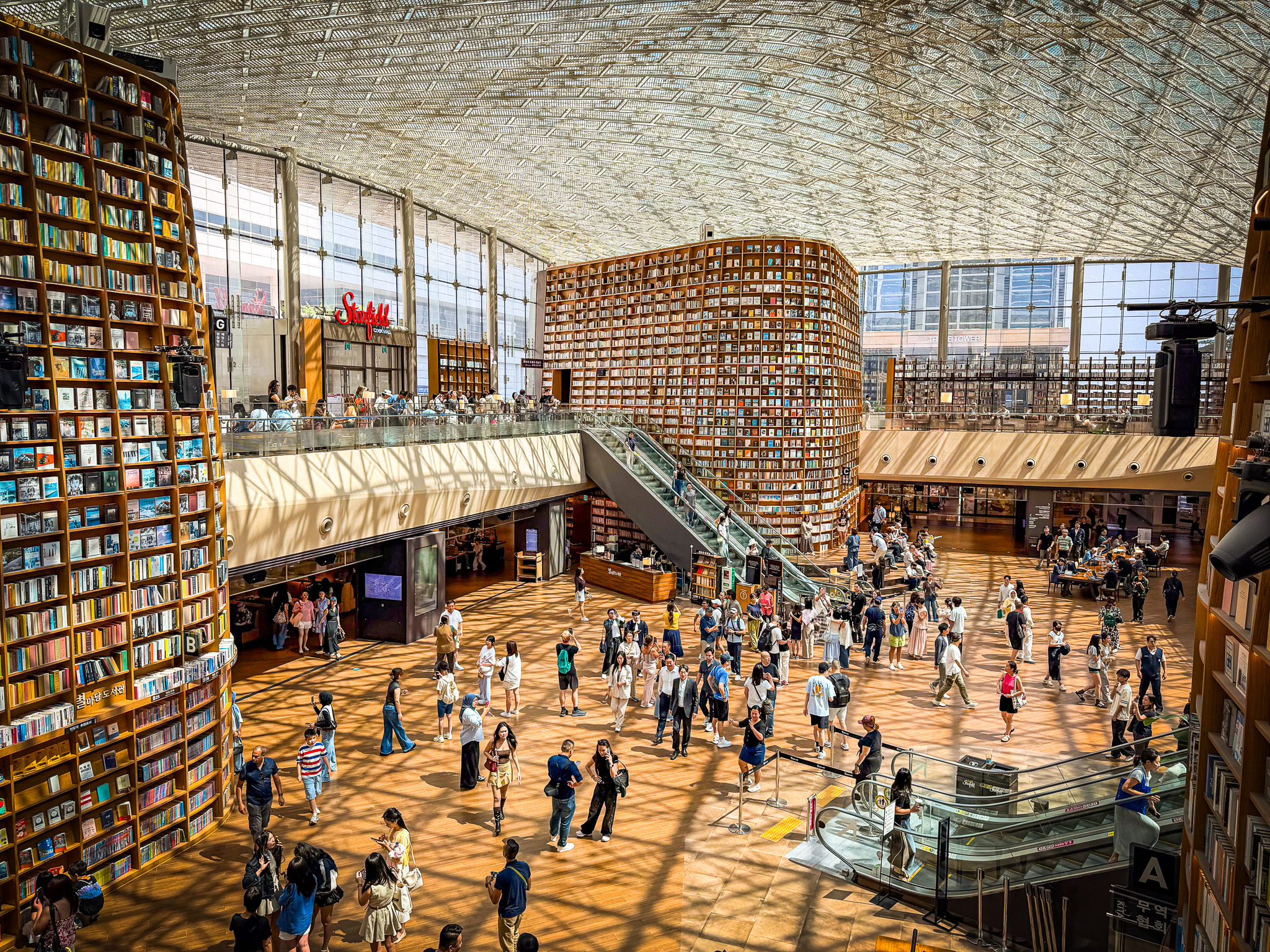
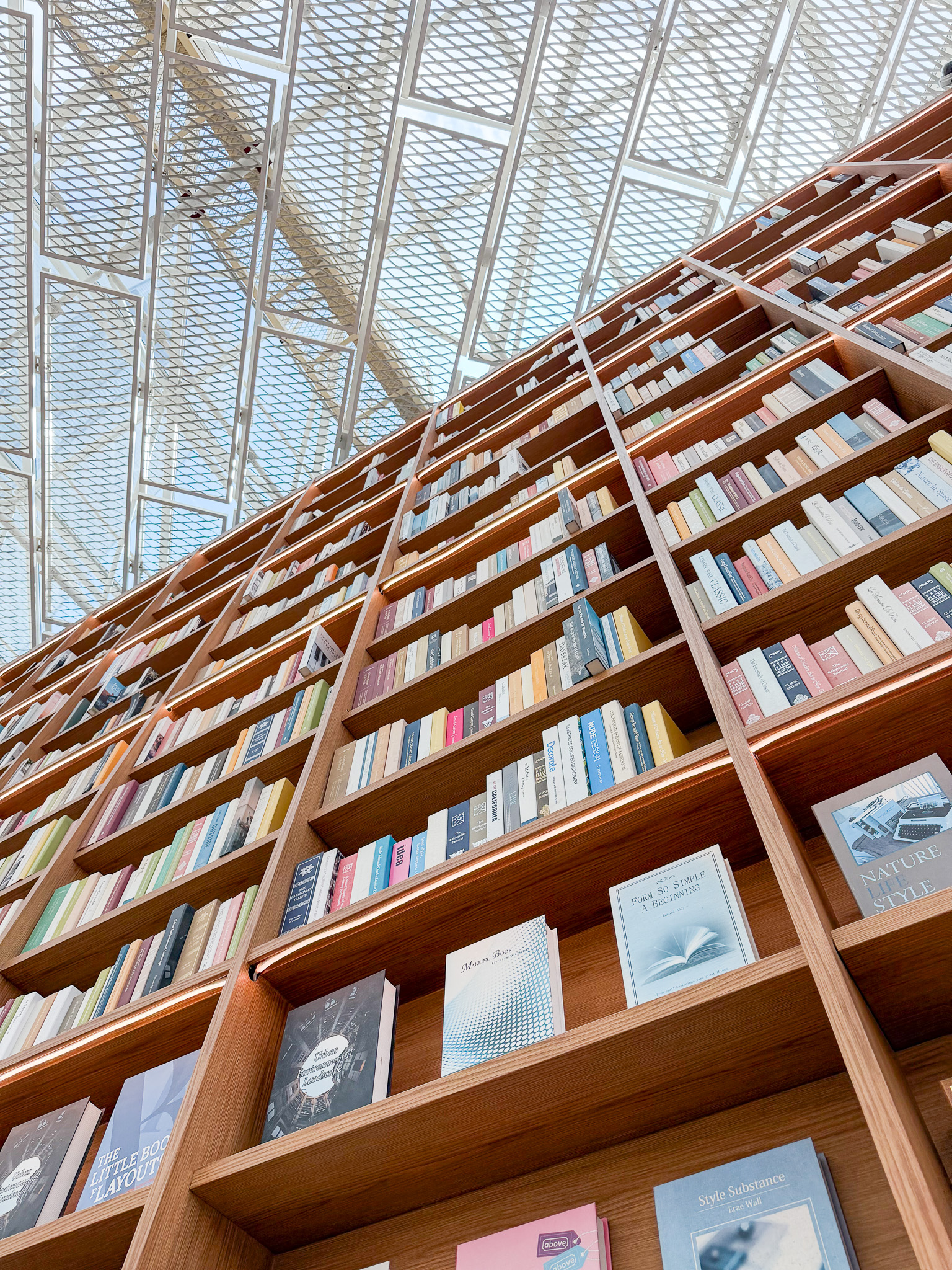
You’ve probably seen Starfield Library on Instagram, and yes, it’s visually impressive in person. The enormous bookshelves rise through the middle of COEX Mall and make the whole space feel unlike any shopping mall library we’d seen before.
We wouldn’t cross the entire city just to take one photo here, but combine it with shopping and lunch and it becomes a really easy half-day. And don’t overlook the COEX food court. We ended up eating there instead of leaving the mall for another restaurant and thought it was completely worth it. Tons of choices, easy, and it gave us more time to shop.
You can also add nearby Bongeunsa Temple if you want some culture in the same day.
🍜 What to Eat in Seoul
Our biggest food takeaway from Seoul: you don’t need to eat fancy to eat really well here.
Some of our favorite meals were dumplings, noodle soup, Korean BBQ and jook, and there’s so much good food at every price point. Rather than a list of restaurants, here’s how we’d actually approach eating in Seoul.
Eat at a Market, Day or Night
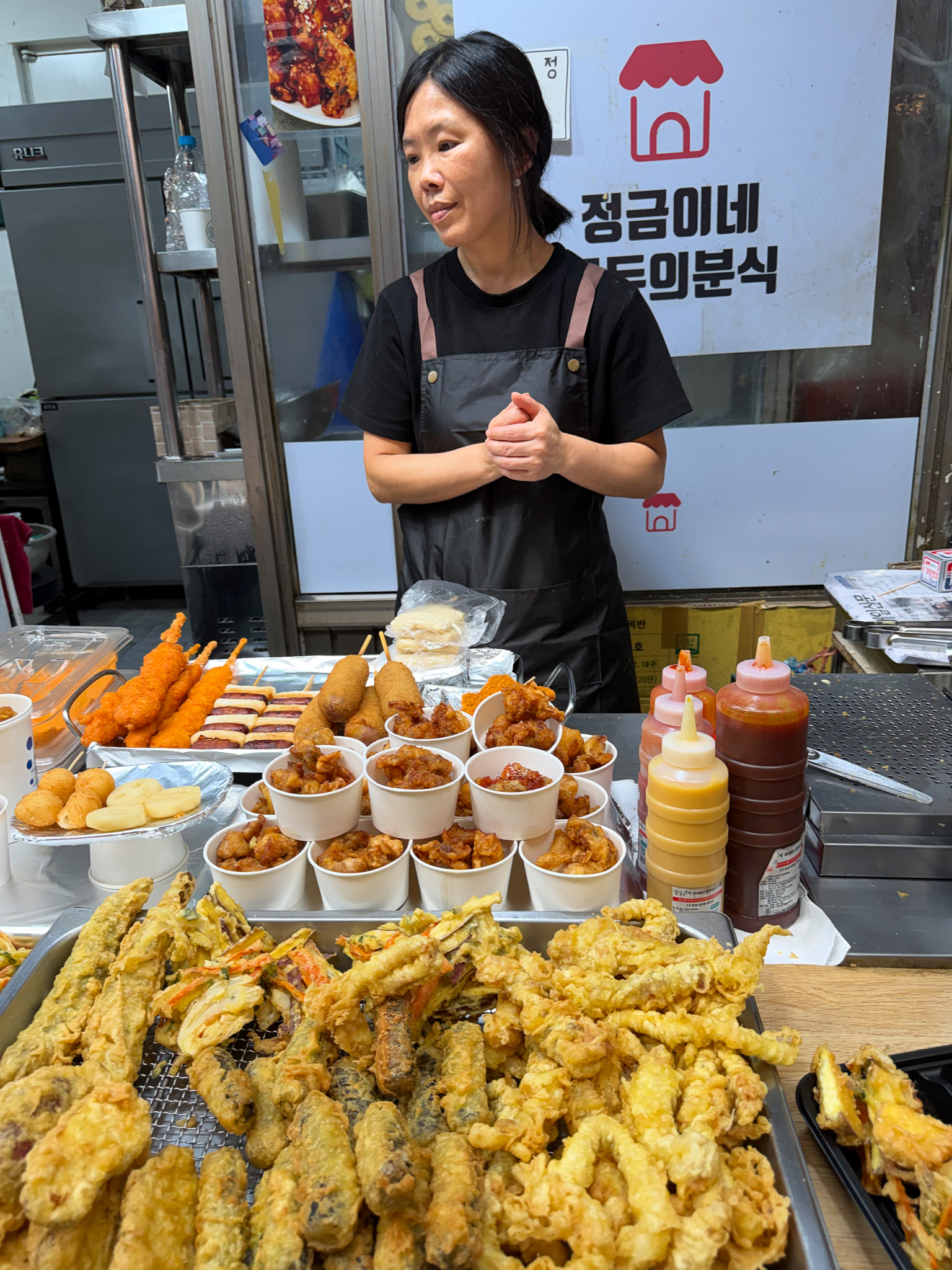
Markets were our favorite way to try a lot of different things at once, and they’re the easiest way to keep everyone in a group happy when nobody can agree on one restaurant.
Mangwon Market is the local one, with essentially zero tourist traps. Go for the dakgangjeong, sweet crispy Korean fried chicken, and the marshmallow soft serve.
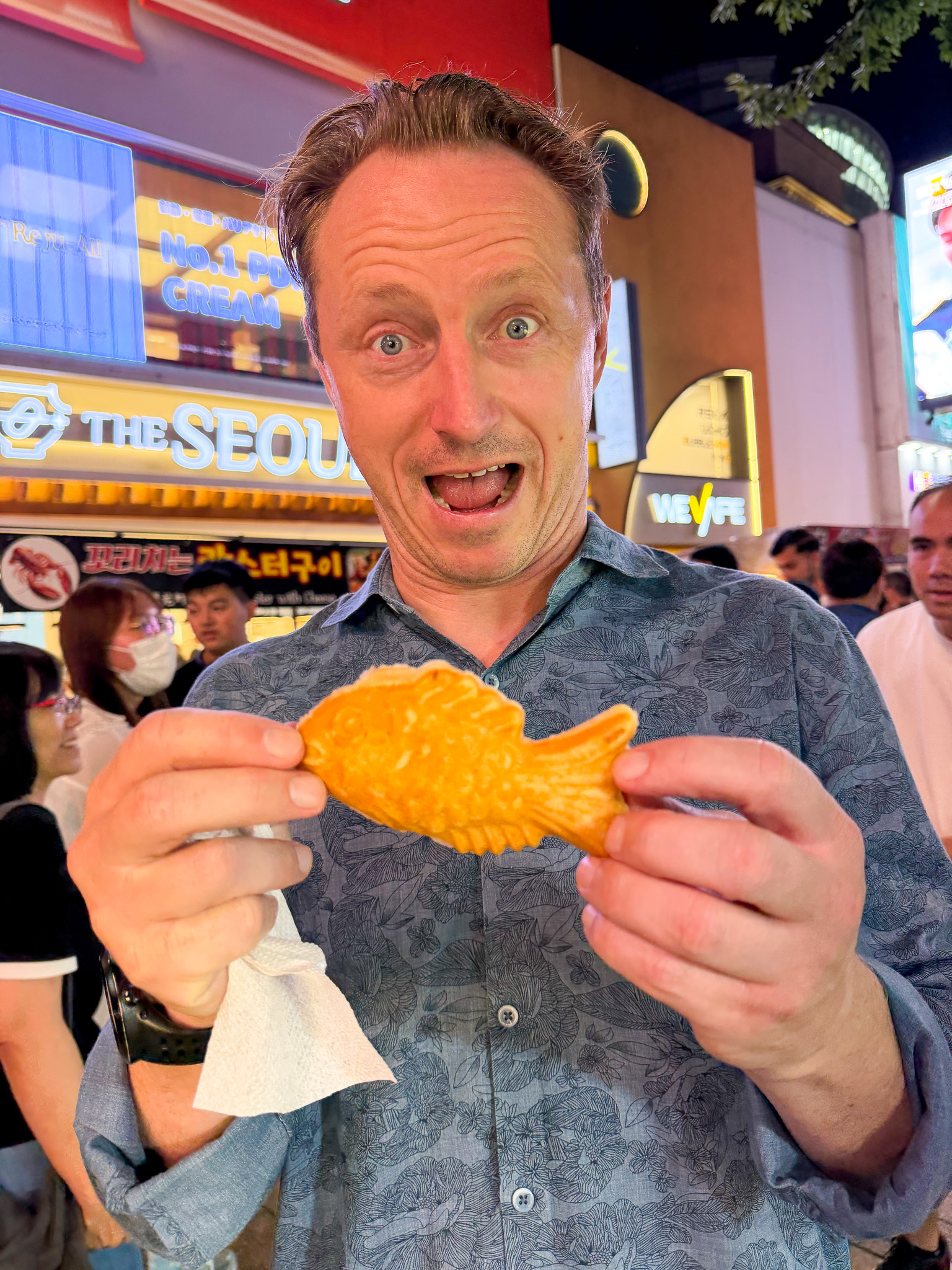
For night markets, Gwangjang Market is the famous one, Namdaemun Market is the sprawling classic, and you’ll also find pojangmacha street stalls set up around the city after dark. We loved Myeongdong Night Market, which ended up being our first dinner in Seoul. After a long travel day, grazing the stalls right outside our hotel was exactly what we wanted, and we worked through chicken skewers, dumplings, freshly pressed grapefruit juice and a fish-shaped pastry filled with sweet red bean.
If you’re staying in Myeongdong, it’s an incredibly easy first-night plan. Just bring cash, because most stalls take cards but not all of them.
The Meals We’d Prioritize
Korean BBQ is a must. We went to Jongsamyook, on a lively strip packed with restaurants, and loved the food and the atmosphere equally. The staff cooked everything at the table, we started with a mixed combination and then ordered more beef, and the soybean-paste stew alongside it was excellent. This was one of those meals where the whole experience was as fun as the food. Worth knowing: a lot of BBQ spots have a two-person minimum on certain cuts and the popular ones fill up early, so go before 6 PM or expect a wait.
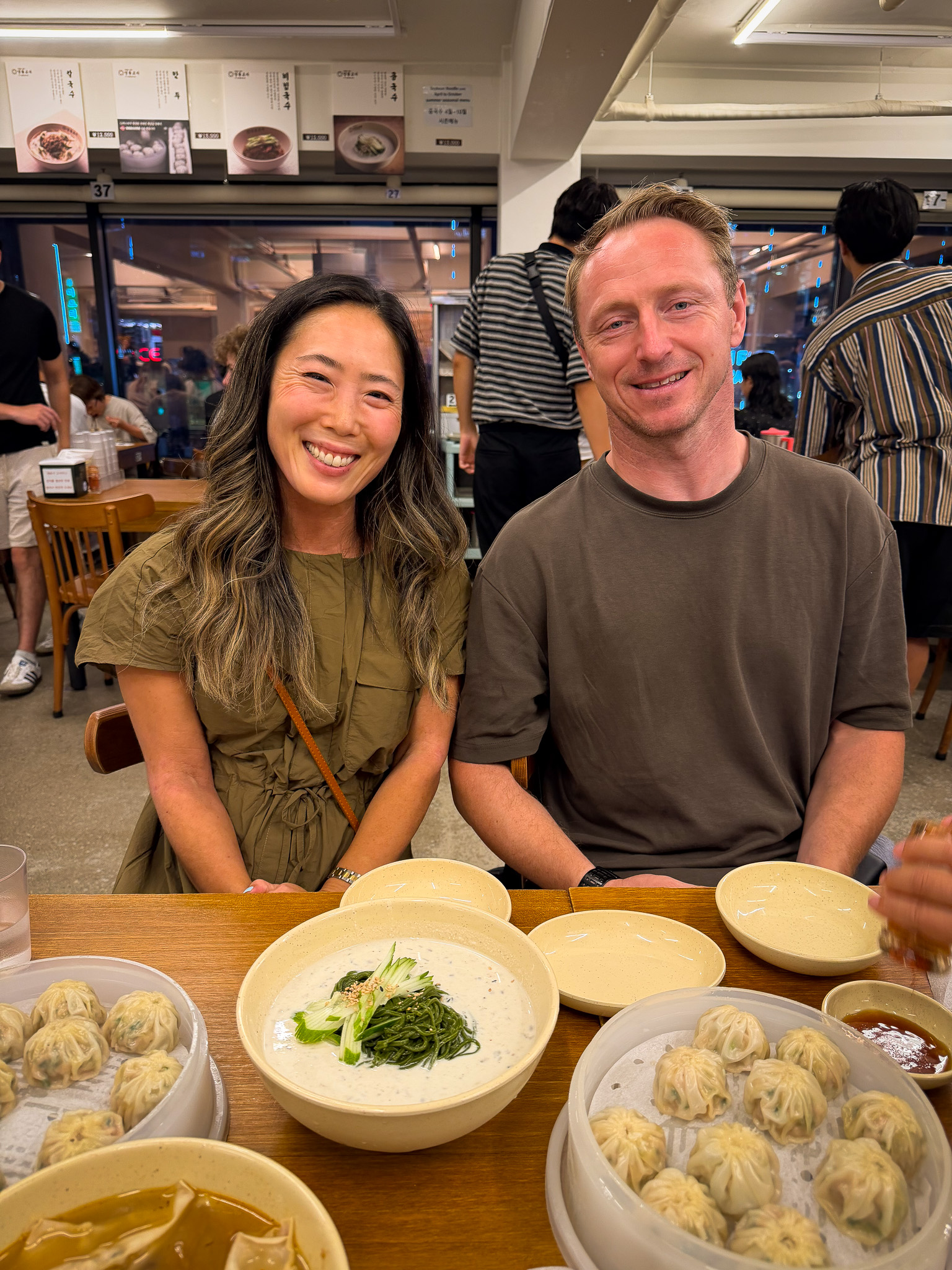
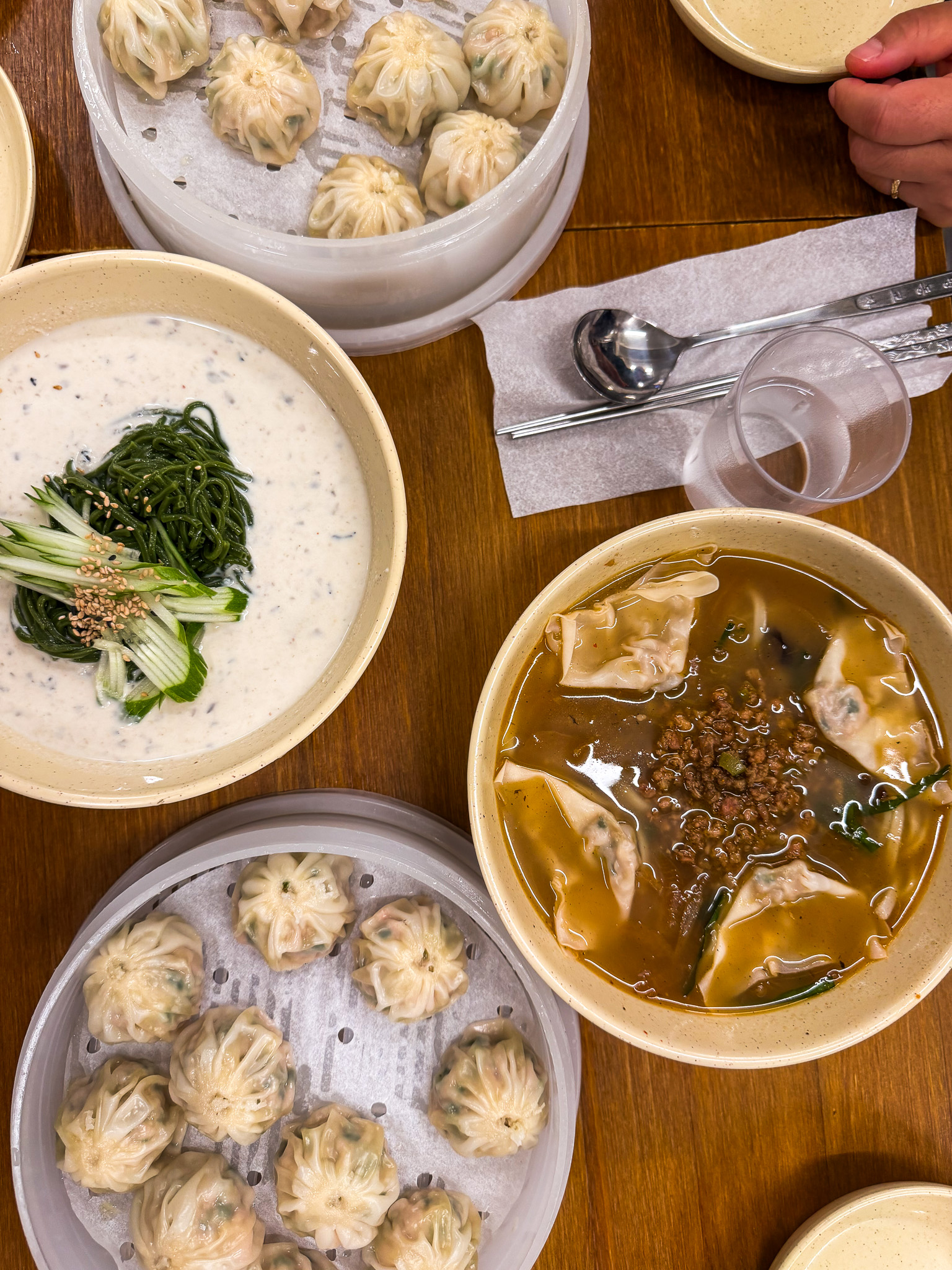
Eat local wherever you can. Myeongdong Kyoja is the one we’d tell you not to skip. Tiny menu, which we generally take as a very good sign. We ordered the dumplings, cold soybean noodles and their signature noodle soup, then ordered more dumplings, and then more dumplings. Three orders total 😂. Despite its Michelin recognition over the years, it still feels casual and unfussy.
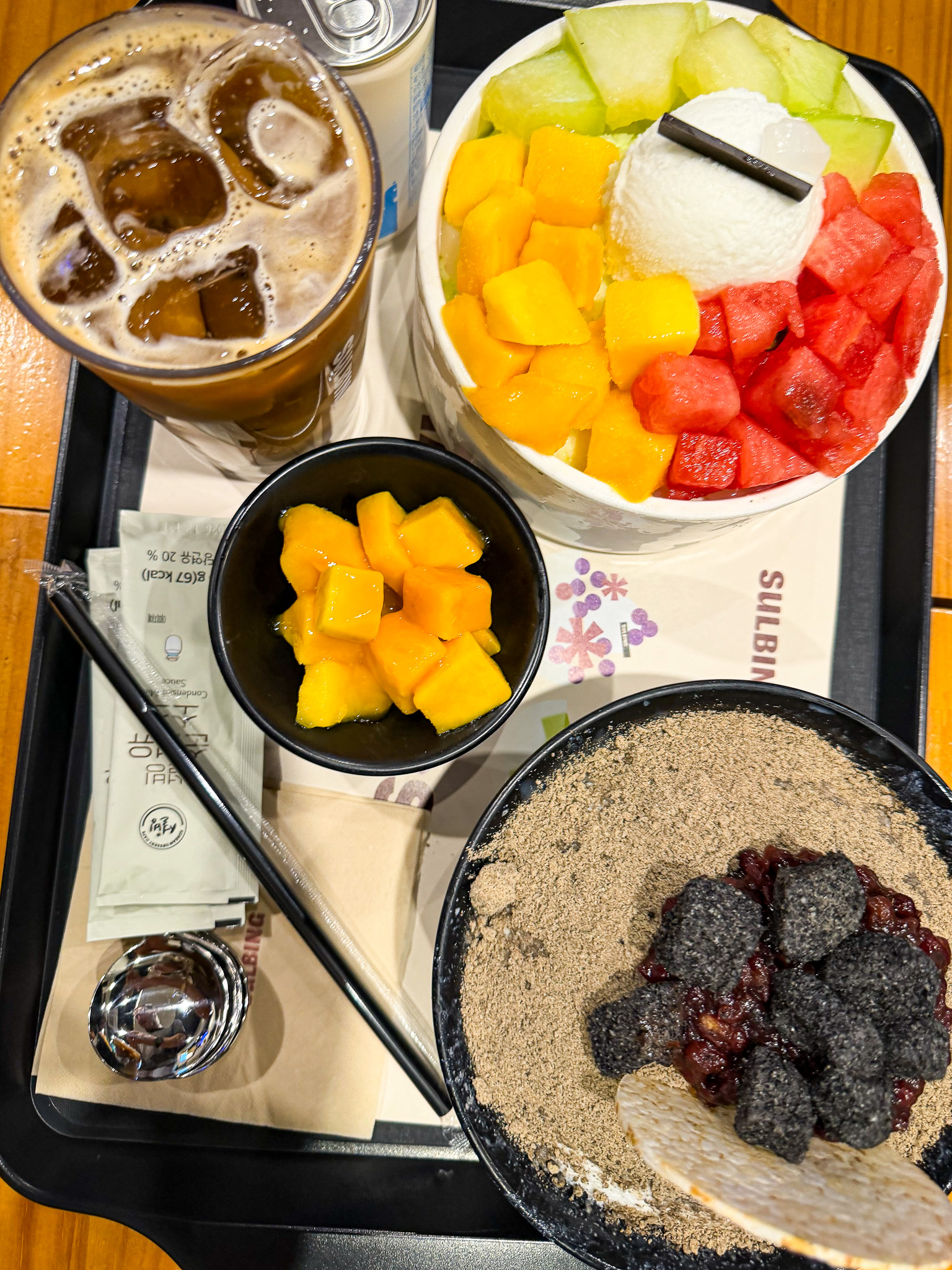
Don’t skip bingsu. Korean shaved ice is nothing like the crunchy snow cones we grew up with. It’s spun into an impossibly fine powder that melts the second it hits your tongue, and it’s the ideal antidote to a brutally hot afternoon of sightseeing. We had a fresh fruit one piled with mango, melon and watermelon plus ice cream, and you pour a sparkling milk soda over the top yourself. SO refreshing. We also had a black sesame and red bean one, which is more traditional and the mochi was so soft and the light sweetness of the red bean paired so well with the black sesame powder. Our favorite bingsu was at Sulbing hands down, and we heard great things about Samcheong Bingsu too.
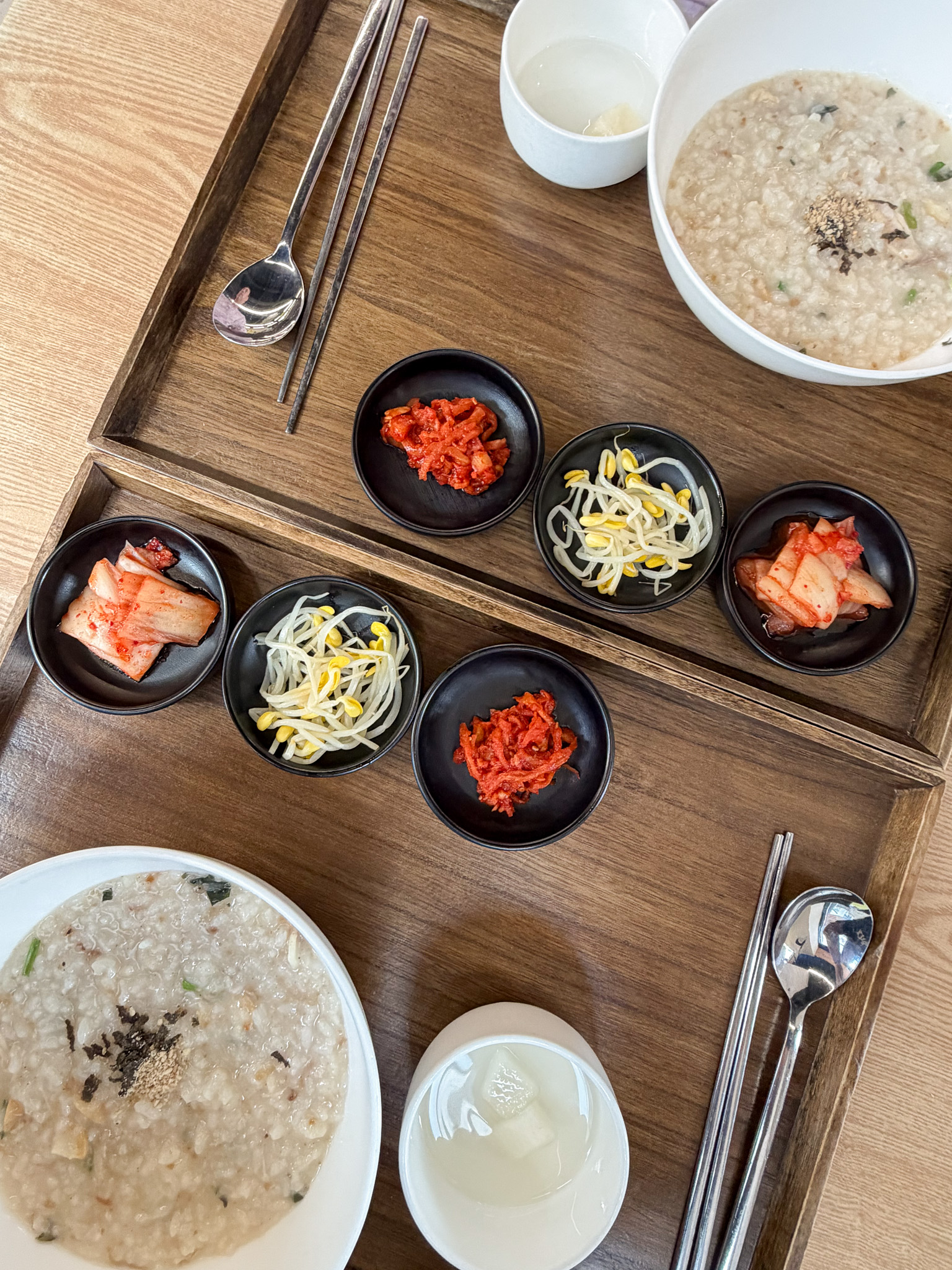
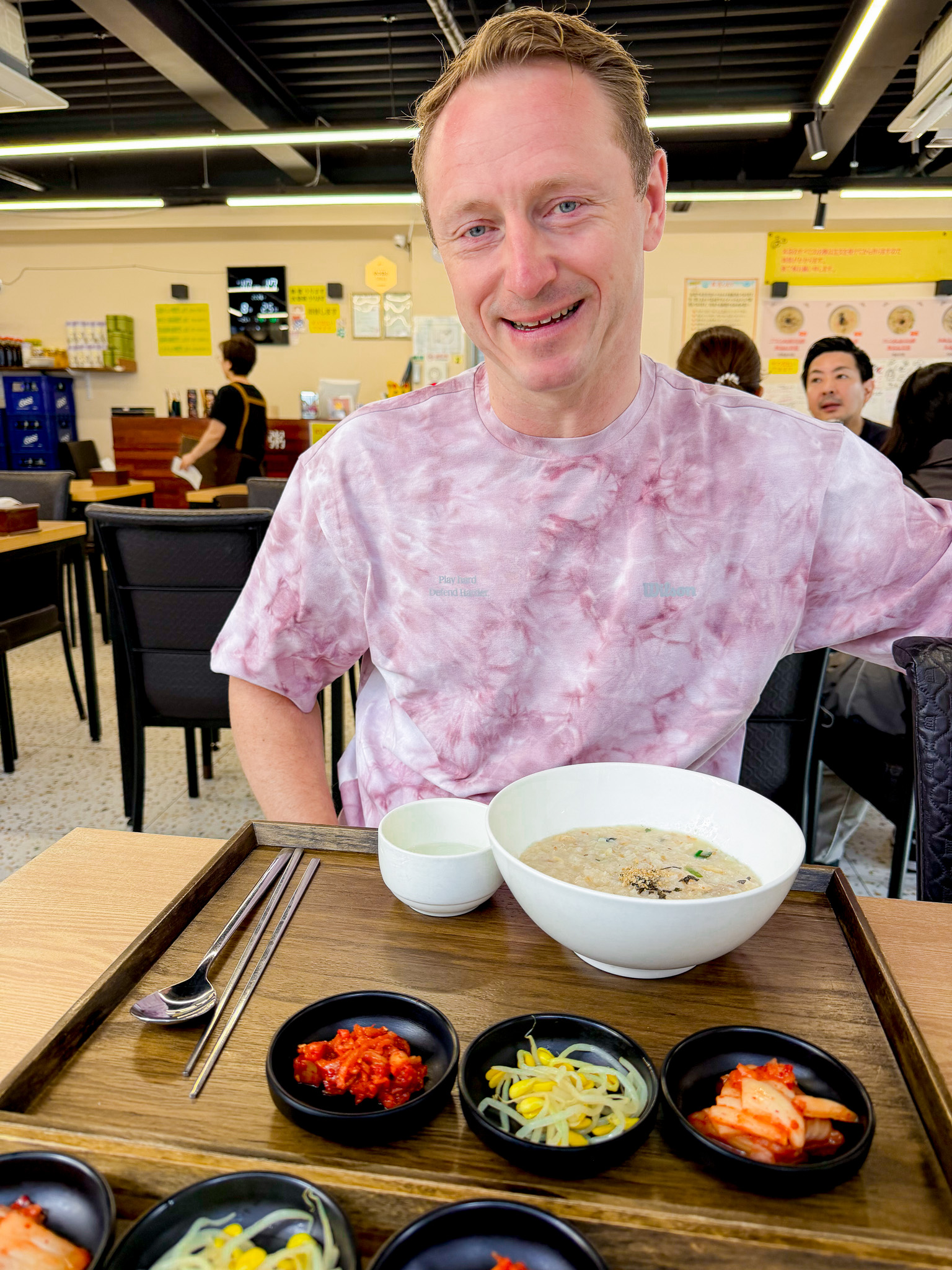
Try jook for breakfast. It’s a savory rice porridge and one of Korea’s classic comfort foods, the thing Koreans eat when they’re sick or want something soothing, which tells you everything about the vibe. Warm, savory, simple and SO good. We went traditional for breakfast more than once, and the chicken-and-ginseng jook at DAMI was especially good. Abalone jook is another popular version you’ll see on menus.
Is Korean Fine Dining Worth It?
If fine dining is part of how you like to experience a city, Seoul has plenty of options.
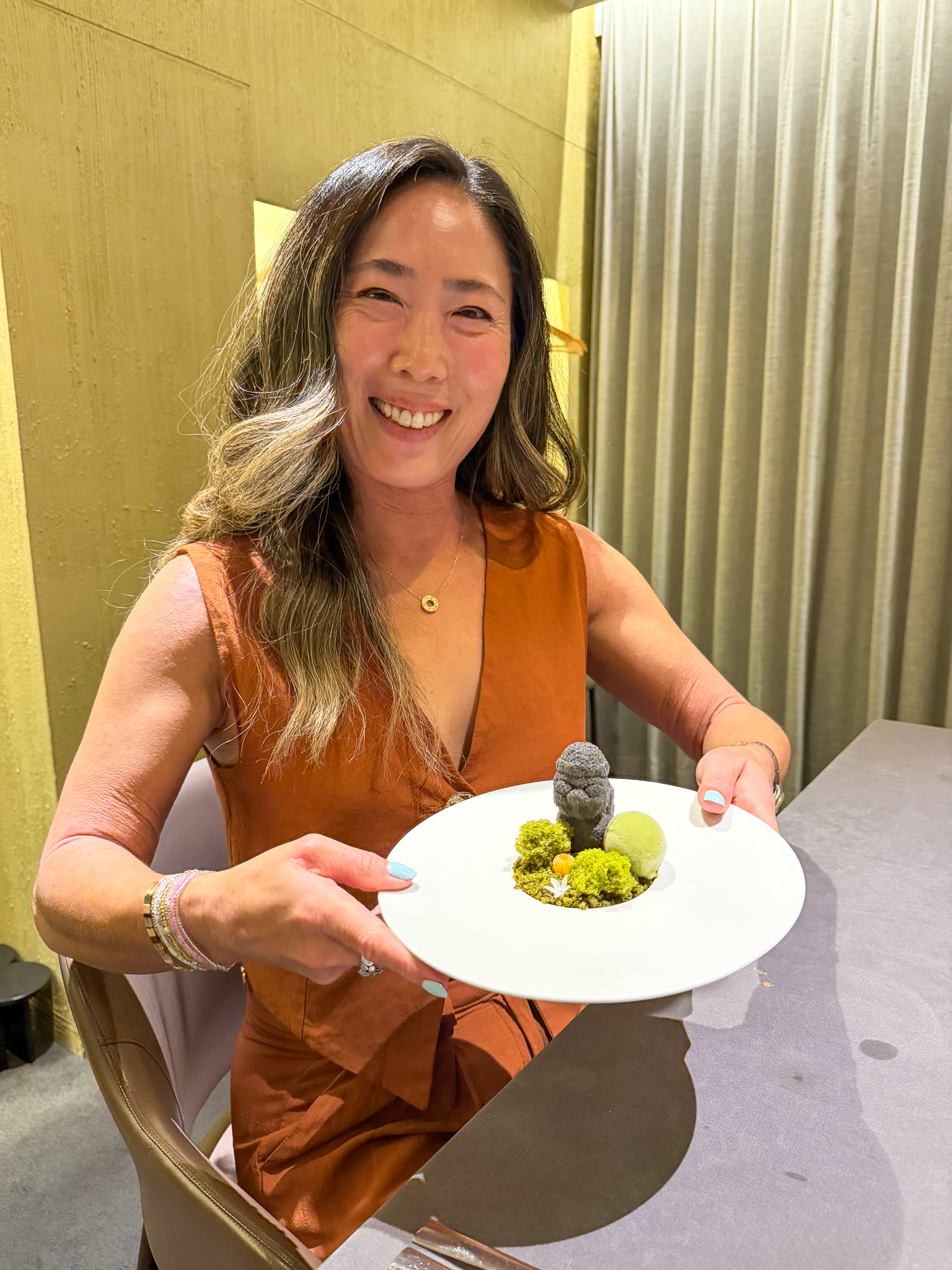
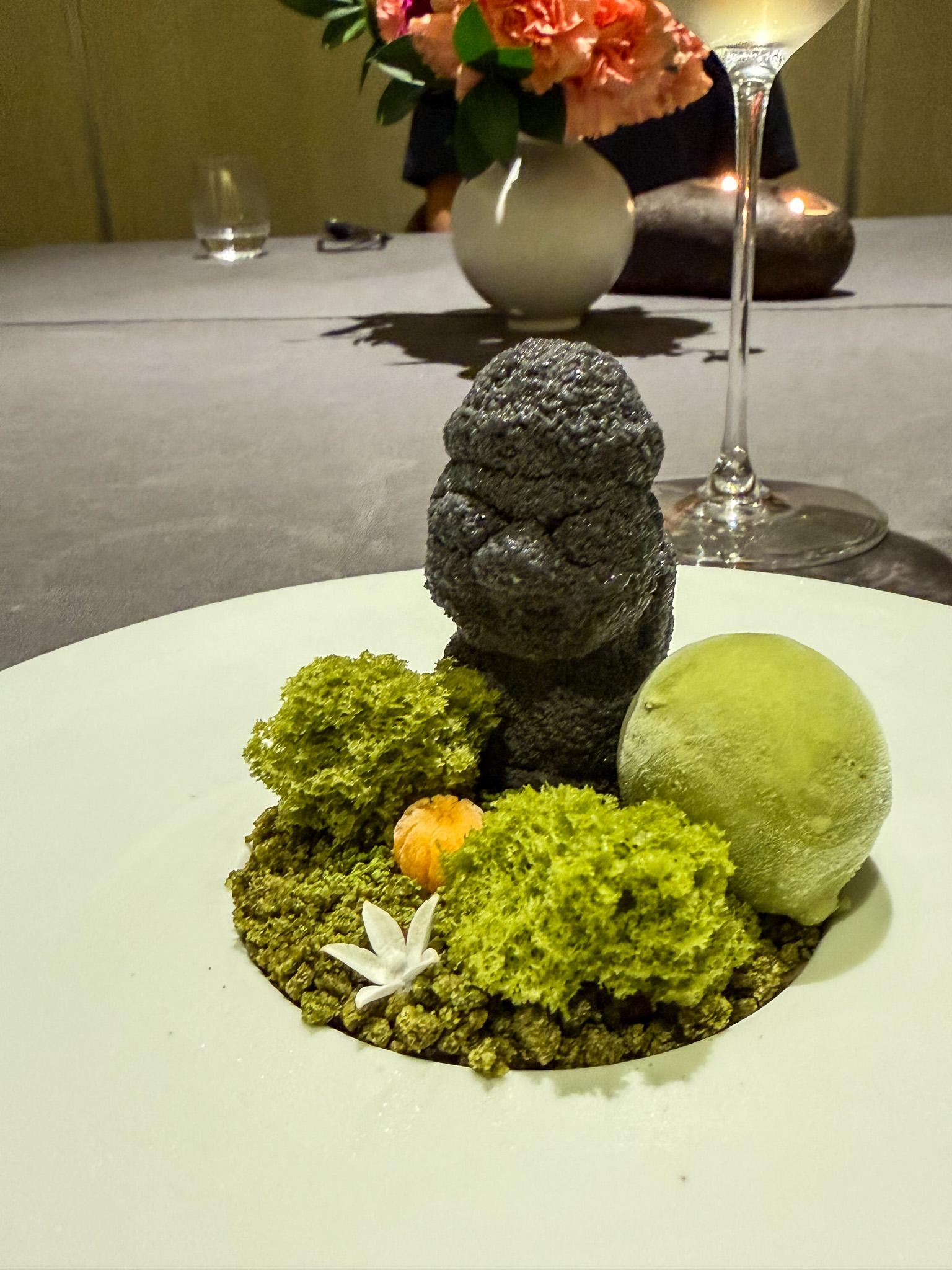
We did the tasting menu at Jungsik, where there were several standout dishes and the service was excellent. But at around $700 for four people without a wine pairing, it was a major splurge and wasn’t our favorite meal of the trip. We’re glad we tried contemporary Korean fine dining, but on a limited food budget we’d happily put that money toward a whole lot of casual Korean meals instead.
Still on Our List
Two we tried to get into and couldn’t:
- Ggupdang in Gangnam for the five-day cured grilled pork butt. No reservations, so arrive 15 to 20 minutes before opening to queue.
- Born & Bred for the Hanwoo beef tasting course, around ₩165,000 per person, with a basement speakeasy as well. Book six to eight weeks ahead, no walk-ins. We couldn’t get a reservation.
Friends also gave us great recommendations we simply didn’t have enough meals to try: Chicken in the Kitchen for super-crispy Korean chicken wings, Seowonjuk for abalone porridge, Sinsajeon for scallion pancakes and honey makgeolli, plus Wumok, Hannam Oriental Roast Chicken and Jeju Rooftop Black BBQ.
🚫 What We’d Skip in Seoul
Not everything that goes viral is worth rearranging your Seoul itinerary for.
Tongin Market’s lunchbox experience looked SO fun online. You buy traditional brass coins and exchange them for different foods to build your own lunchbox. Unfortunately, there weren’t nearly as many banchan options as we expected when we visited, and the food itself was just okay. We had much better casual meals elsewhere, so we’d skip it.
Dotori Garden was good but not something we’d travel across Seoul or wait in a huge line for.
Mom’s Touch is hugely popular here and we tried it for the fried chicken, but ours was only okay. There’s so much great Korean fried chicken in Seoul that we wouldn’t spend a meal on it again.
And we considered going to Lotte World Mall specifically for tennis shopping but skipped it after hearing the tennis selection wasn’t particularly special. With limited time, we were happy we spent those hours elsewhere.
📌 Things We Didn’t Get To But Would Still Consider
- Hike Bukhansan National Park: We planned to hike Baegundae Peak in Bukhansan National Park, but rain changed that plan. This was one thing we were genuinely disappointed to miss. Baegundae is the highest point in Bukhansan, and the views from the granite summit over Seoul and the surrounding mountain peaks are supposed to be stunning. The route is a proper hike rather than a casual city walk, so give it at least half a day once you include transportation.
- Bongeunsa Temple: We planned to visit Bongeunsa Temple after COEX but had accumulated too many shopping bags and changed course. It’s an historic Buddhist temple sitting among Gangnam’s modern towers, and it would be very easy to combine with Starfield Library and COEX.
- Hangang Park: Another one we’d save for next time. Our plan was to bring snacks and drinks from a convenience store for a makeshift pre-dinner and to watch the sunset.
- Ikseon-dong: This neighborhood of narrow hanok-lined streets is filled with cafés, restaurants and little shops. We didn’t get there, but it’s an easy addition if you want more traditional architecture mixed with modern Seoul café culture.
- Mangwon Market: We didn’t make it here either, but if we wanted another traditional market experience, we’d try Mangwon before returning to Tongin.
- N Seoul Tower: We prioritized other things, but if panoramic views are a priority for you, N Seoul Tower is still one of the classic first-trip options.
🗓️ Our Ideal 3-Day Seoul Itinerary
Knowing what we know now, we’d build three days around areas rather than trying to tick off individual attractions all over the city.
Day 1: Historic Seoul + Myeongdong. Start around 10 AM at Bukchon Hanok Village, then head toward Gyeongbokgung Palace. Catch the changing of the guard if the timing works, explore the palace and add Nuldam Space for your future-self letter. Head back toward Myeongdong for shopping, Olive Young or a Korean facial, then finish with Myeongdong Kyoja or Korean BBQ and wander the night market.
Day 2: Modern Seoul + Shopping. Head to COEX for Starfield Library, shopping and lunch, adding Bongeunsa Temple if you want. Then spend the afternoon in Seongsu. This is where we’d leave a big chunk of unstructured time for Korean brands, pop-ups, Blue Elephant, cafés and whatever else you stumble across.
Day 3: Pick Your Seoul. Hikers can spend the morning at Bukhansan. Shoppers could explore more of Myeongdong, Hongdae or Seongsu. Beauty lovers could book a personal color analysis or another K-beauty experience, while food-focused travelers could build the day around a traditional breakfast, markets and restaurants. Finish along the Han River, at N Seoul Tower or simply wandering a neighborhood you want more time in.
→ TIP: If you have a fourth day, don’t fill every hour before you arrive. Leave at least part of it open for whatever you discover during your first few days.
🚇 Getting Around Seoul
Seoul’s public transportation is excellent. Get a T-money card when you arrive and use it for the metro and buses.
There are sometimes tourist promotions offering free T-money cards at places like Incheon Airport Terminal 1 or Lotte Department Stores, so it’s worth checking before buying one. These promotions change, and otherwise regular T-money cards are inexpensive and easy to find.
The metro is extensive and much easier to navigate than it initially looks. We also used Uber for taxis several times. Taxis were relatively affordable, but Seoul traffic can be brutal, so don’t automatically assume driving will be faster.
→ TIP: Your T-money card also works on buses and metro in Busan and most other Korean cities, so don’t toss it if you’re continuing your trip.
Download These Apps Before You Go
Google Maps does not work well in South Korea for walking or driving directions because of local mapping restrictions. Download these instead:
- Naver Map or KakaoMap for directions, transit and store hours
- Papago for translation (it handles Korean far better than most alternatives)
- Kakao T as a taxi backup if Uber is being slow
→ TIP: Sort out data before you land. An eSIM was the easiest option for us, and Korea also has cheap SIM and pocket wifi pickup counters at Incheon.
💳 Cash & Credit Cards
We used credit cards for most things in Seoul, but you’ll still want some Korean won. Smaller food stalls and a few restaurants required cash, so we always kept some on hand.
If you need more, using a bank ATM is generally the easiest option.
→ TIP: There is no tipping in South Korea. Not at restaurants, not in taxis, not at the hotel. It’s genuinely not expected, and trying can be awkward.
🌡️ Visiting Seoul in August
We knew Seoul would be hot in August. We weren’t prepared for how hot and humid it would feel. Long stretches of outdoor sightseeing could get exhausting, although thankfully Korean stores have POWERFUL air conditioning. We became very good at strategically popping into shops or cafes for a break.
We also suddenly understood all those feather-light clothes we kept seeing. Quick-dry fabrics, sheer nylon, UV jackets and ultra-light pants and dresses make perfect sense in this climate.
→ TIP: If you’re visiting during summer, bring sunscreen, a hat, fan, water and lightweight clothes, and don’t schedule six straight hours of outdoor sightseeing. If your dates are flexible, spring (April to May) and fall (late September to November) are far more comfortable.
💡 A Few Things We Wish We’d Known Before Visiting Seoul
Most shops don’t open particularly early, so mornings are a good time for breakfast, palaces and other sightseeing. Group your itinerary geographically rather than zigzagging across the city, get a T-money card right away and keep a little cash on hand.
For shopping, don’t skip familiar global brands because many have Seoul-specific or Korea-only products, and leave more time than you think you’ll need to browse. For beauty, don’t be afraid to ask for help at Olive Young. For cafés, save a few favorites but don’t schedule every stop.
And most importantly, don’t feel like you have to chase everything you’ve seen on Instagram. A few of the viral places were some of our least memorable stops, while some of our favorite experiences were things we stumbled into or decided to do at the last minute.
🛂 Do You Need a K-ETA for South Korea?
This one is worth checking before you book, because it’s changing. US citizens are currently exempt from the K-ETA (Korea Electronic Travel Authorization) through December 31, 2026, so you can enter Korea on a valid US passport for stays of up to 90 days. The exemption has been extended several times, so just something to check before you travel.
What you do need is the e-Arrival Card. Korea replaced the paper arrival card with a digital version on January 1, 2026, and it applies to nearly all foreign travelers. It’s free and has to be completed within 72 hours before you arrive. We scanned the QR code and filled it in quickly while in the customs line, but it’s something you can also do ahead of time.
→ TIP: Entry rules here have changed repeatedly, so check the official K-ETA site (k-eta.go.kr) before your trip.
💭 Final Thoughts on Seoul
Seoul surprised us. We went in expecting crowds, neon signs and sensory overload and instead found a city that, despite its enormous size, often felt calmer and more manageable than we imagined. Four nights gave us enough time to experience several completely different sides of the city, but nowhere near enough time to feel finished with it.
Put Gyeongbokgung on your list. Walk through Bukchon. Eat Korean BBQ. Shop some Korean brands. Absolutely go to Olive Young. But leave room for the other stuff too. Go into the café that looks good. Try jook for breakfast. Make yourself a one-of-a-kind souvenir. Spend longer than planned shopping in Seongsu. Eat the piping-hot salt bread. Write a letter to yourself that somehow has to find you a year from now.
Those ended up being some of our favorite parts of Seoul.



Leave a Reply