Tokyo is one of those cities we could visit over and over and still barely scratch the surface. We’ve now been five times, some for work and some for fun, and every trip has shown us a completely different side of the city.
Japan is also personal for me. I’m fourth-generation Japanese American, so my family has been in the US for well over a century. I grew up very American, without the language and with only pieces of Japanese culture passed down. Visiting Japan as an adult has been really special and has given me a chance to connect more deeply with my heritage.
This guide covers what we’d prioritize for your first trip, plus some of our favorite neighborhoods to explore once you’ve seen the major sights.
🗾 Why Tokyo
If you’re wondering why we keep coming back to Tokyo, these are some of the things we love most about it.
- It’s incredibly clean and safe for such a massive city. Tokyo has roughly 37 million people across the greater metro area, yet it somehow feels remarkably clean, orderly and safe. What always surprises us is how few public trash cans there are. People generally carry their trash with them until they find somewhere to dispose of it.
- The food alone is reason enough to go. We’ve eaten incredibly well all over the world, and Tokyo is still one of our favorite food cities. You can have an $8 bowl of ramen one day and a $250 omakase the next, and some of the best things you’ll eat might come from a tiny neighborhood restaurant you stumbled into.
- There’s a level of consideration for other people that you notice constantly. Trains are quiet, people line up, public spaces feel orderly and even small interactions tend to be incredibly polite. It’s one of those things you start noticing almost immediately and really appreciate after spending time here.
- And the attention to detail is everywhere. You see it in the food, the packaging, the shops, the gardens and even the way things are presented. There’s so much care put into seemingly small things, and it’s something we notice every time we come back.
📅 When to Go to Tokyo
Tokyo is a year-round destination, but the season you choose will change your trip quite a bit.
- Autumn (late October to early December) would be our pick. The humidity finally breaks, skies are generally clear, and fall foliage in Tokyo usually peaks in late November, later than you might expect. The weather is also ideal for the amount of walking you’ll be doing.
- Spring (late March to April) is the famous one. Cherry blossoms in Tokyo typically bloom somewhere between late March and early April, but the exact timing shifts every year and full bloom doesn’t last long. If blossoms are the main reason you’re going, build in some flexibility and book far ahead.
- Winter (December to February) is underrated. It’s cold but generally dry and clear, crowds are lighter and you’ll find illuminations around the city.
- Summer (June to August) would be our last choice. The rainy season generally runs from June into July, and August can be extremely hot and humid. Typhoons are also more common later in summer into early fall.
Dates we’d avoid: Golden Week around late April/early May, Obon in mid-August and the New Year period. These are major domestic travel periods, so trains and hotels can fill up and some businesses close around New Year.
⏱️ How Many Days Do You Need in Tokyo?
For a first trip, we’d give Tokyo four to five days minimum, and we’d happily give it more. The city is spread out and transit time between neighborhoods adds up quickly, so trying to squeeze everything into two or three days means spending a lot of your trip just moving around.
Here’s how we’d roughly organize five days:
- Day 1: Arrive, get settled and spend the evening exploring Shinjuku. Don’t over-schedule your first day, especially with jet lag.
- Day 2: Meiji Jingu, Harajuku and Shibuya, ending at Shibuya Sky around sunset.
- Day 3: Asakusa in the morning, then a traditional cultural experience or Kappabashi in the afternoon.
- Day 4: Imperial Palace, Tokyo Station and Ginza, leaving the rest of the day open for shopping or another cultural activity.
- Day 5: Slow down with Kagurazaka or Yanaka and Nezu, or use this day for teamLab, a baseball game or something else you really want to do.
With only three days, prioritize the major neighborhoods and accept that you’re only scratching the surface. With a week or more, slow things down and add some of the unique experiences or day trips we mention later in this guide.
OUR TIP: If you can give Tokyo an extra day or two, use that time to get beyond the major sights. Some of our favorite discoveries have come from exploring neighborhoods we never would have prioritized on a first trip, like Nezu on our most recent visit.
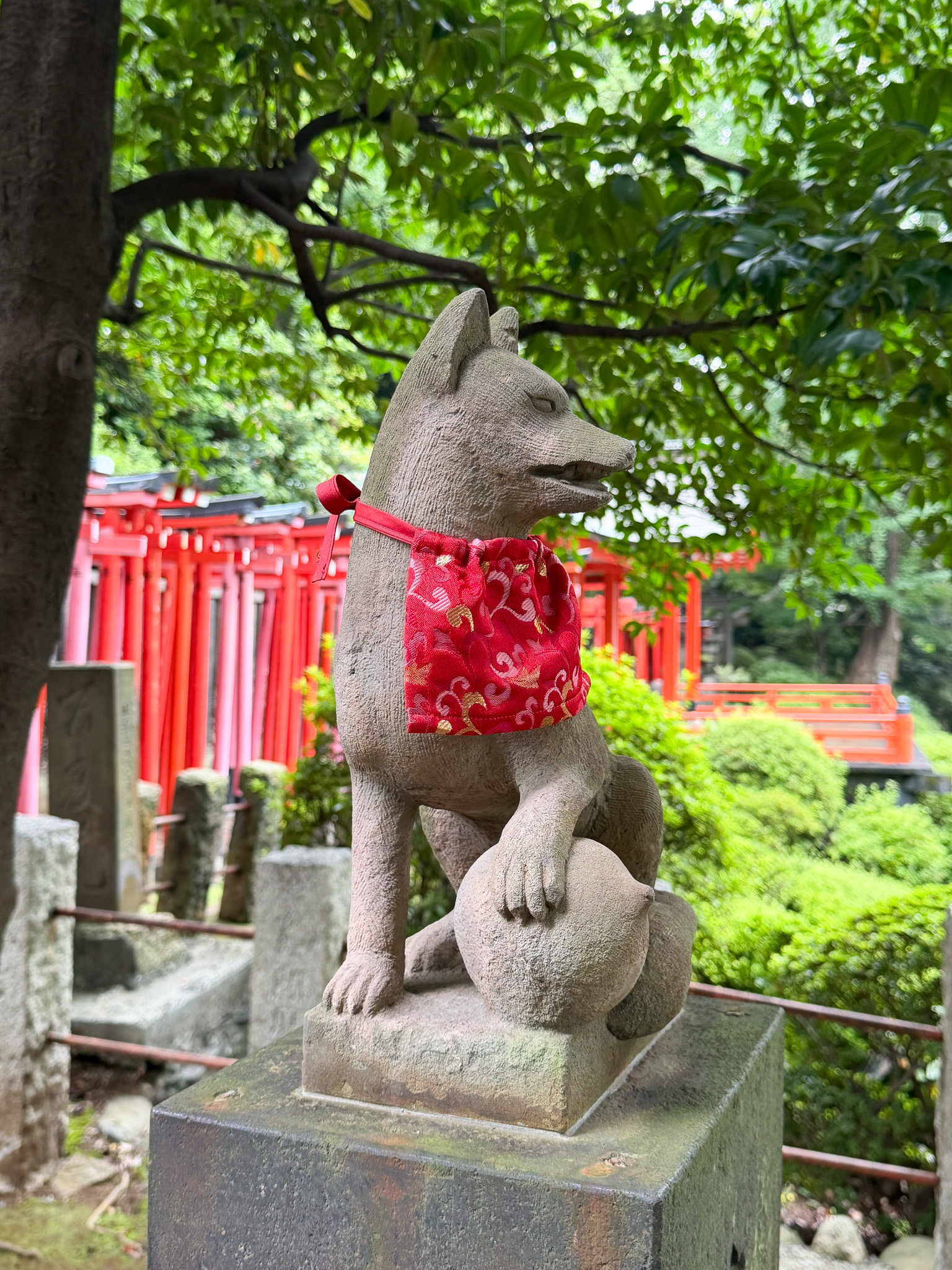
✈️ Getting to Tokyo
Tokyo has two major airports, Haneda (HND) and Narita (NRT). Haneda is much closer to central Tokyo, so we’d choose it when the flight options and prices make sense. Narita is farther out, but both are well connected to the city.
Register on Visit Japan Web Before You Fly
Before your trip, we’d recommend registering with Visit Japan Web, the Japanese government’s official pre-arrival system. It lets you complete your immigration and customs information ahead of time and generates a QR code to use when you land.
It’s not mandatory, and paper forms are still available, but we found it worth doing ahead of time. A few practical things to know:
- There’s no official app, so use the government website rather than one of the look-alike services that charge for something that’s free.
- Complete it before your travel day rather than waiting until you land.
- Screenshot your QR code so you’re not relying on airport Wi-Fi.
- You can add family members or travel companions to the same account.
Getting from the Airport to Shinjuku
Tokyo has two major airports, Haneda and Narita, and the best way to get to Shinjuku depends on which one you’re flying into and exactly where you’re staying.
We flew into Narita on our most recent trip and took the Airport Limousine Bus to Shinjuku, which took about 1 hour and 40 minutes and cost ¥7,200 for both of us (about $48 USD). Our friend who lives in Tokyo said this was the best option and we would definitely recommend it. We loaded our luggage underneath the bus, skipped navigating Tokyo’s train system with suitcases after a long flight, and got dropped off a short uber ride away from our hotel.
If you’re flying into Haneda, you have more options because the airport is much closer to central Tokyo. Trains, airport buses, taxis and Uber can all make sense depending on your hotel, how much luggage you have and the time of day. With two people and luggage, we’d definitely compare the Uber or taxi fare with the other options since the convenience of going straight to your hotel may be worth the extra cost.
🏨 Where to Stay in Tokyo
For a first trip to Tokyo, we’d recommend Shinjuku. It’s incredibly well connected to the rest of the city, but it’s also a destination in itself, with restaurants, cafés, shopping and nightlife all around you.
That said, where you stay within Shinjuku really matters. On our latest trip we stayed at The Knot Tokyo Shinjuku, and while the hotel itself was fine, we wouldn’t choose that location again. It was a 20+ minute walk to the main station, restaurants and shopping, and there wasn’t much immediately around us.
Based on our experience, we’d prioritize being walking distance to restaurants, shopping and things to do, while also staying close to a major train or subway station.
Our Shinjuku Hotel Picks
- JR Kyushu Hotel Blossom Shinjuku | Best Overall: This would be our top pick for a first trip, mainly because of the location. It’s just a few minutes from Shinjuku Station, giving you easy access to the rest of Tokyo while restaurants and things to do are right outside your door.
- Tokyu Stay Shinjuku | Best for Neighborhood + Value: If you want to feel more in the middle of Shinjuku, we’d choose this. It’s right by Shinjuku-Sanchome Station, close to Isetan and Shinjuku Gyoen and surrounded by restaurants and shopping. It’s also reopening after a major renovation in September 2026, and rooms include washer/dryers, a huge bonus if Tokyo is part of a longer Japan trip.
- BELLUSTAR TOKYO | Best Splurge: If you want to splurge, this luxury hotel occupies the upper floors of Tokyu Kabukicho Tower with incredible views over Tokyo. You’re right in the middle of Shinjuku’s restaurants and nightlife and still within walking distance of the main station.
OUR TIP: We’d prioritize location over the hotel itself. You’ll already be doing plenty of walking in Tokyo, so being able to step outside your hotel and immediately start exploring makes a huge difference.
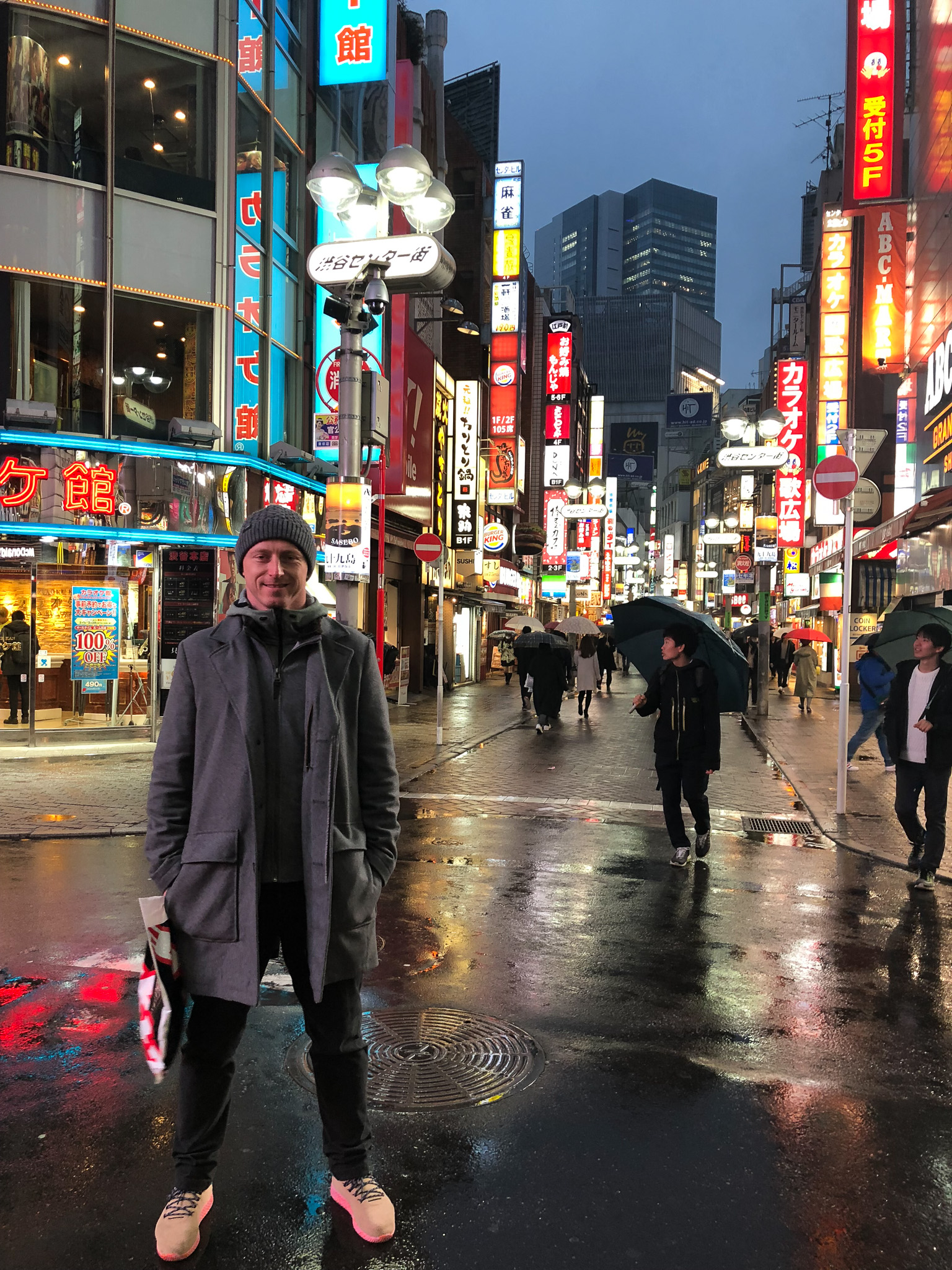
🚆 Getting Around Tokyo
Tokyo’s transit system looks completely overwhelming on a map and turns out to be surprisingly easy once you start using it.
- Get a Suica or PASMO card. Rather than buying individual tickets, load money onto a transit card and tap in and out. You can also use it at convenience stores, vending machines and plenty of other places around the city. If you have an iPhone, you can add Suica to Apple Wallet before your trip.
- Use Google Maps. It’s remarkably good in Tokyo and will tell you which train, platform and often even which station exit to use.
- JR and the subway are different systems. JR operates lines including the Yamanote Line, while Tokyo Metro and Toei operate the subways. You don’t really need to memorize the difference. With Google Maps and an IC card, getting between them is pretty seamless.
- Skip the JR Pass for a Tokyo-only trip. It’s designed for longer-distance rail travel and doesn’t make sense just for getting around the city. Even if you’re traveling elsewhere in Japan, compare the pass price with individual tickets before assuming it’s a better deal.
- Pay attention to station exits. This matters much more than you’d think. Stations like Shinjuku are enormous, and taking the wrong exit can add a lot of unnecessary walking.
- Use coin lockers. You’ll find them at stations all over the city, and they’re incredibly useful on your first or last day or anytime you don’t want to carry your bags around.
- If you’re continuing to Kyoto or Osaka, look into luggage forwarding. Known as takkyubin, it lets you send your suitcase ahead to your next hotel rather than hauling it onto trains and through enormous stations.
🙏 Japanese Etiquette to Know Before You Go
You don’t need to get everything perfect, and nobody expects a visitor to. But there are a few things worth knowing before your first trip.
- Carry your trash with you. Public trash cans can be surprisingly hard to find, so we usually keep a small bag with us for wrappers and bottles.
- Don’t tip. It’s not expected at restaurants, hotels or in taxis.
- Use the little tray at the register. If there’s a tray for cash or cards, place your payment there rather than handing it directly to the cashier.
- Keep your voice down on trains. Phone calls are generally avoided and conversations tend to stay quiet.
- Don’t eat while walking. If you buy something from a food stall, it’s generally better to eat it nearby before moving on.
- Take your shoes off when it’s indicated. You’ll encounter this in homes, some traditional restaurants, ryokan and certain temples.
- Two chopstick rules are especially important: don’t stand your chopsticks upright in rice or pass food directly from your chopsticks to someone else’s. Both gestures are associated with Japanese funeral traditions and are considered particularly inappropriate at the table.
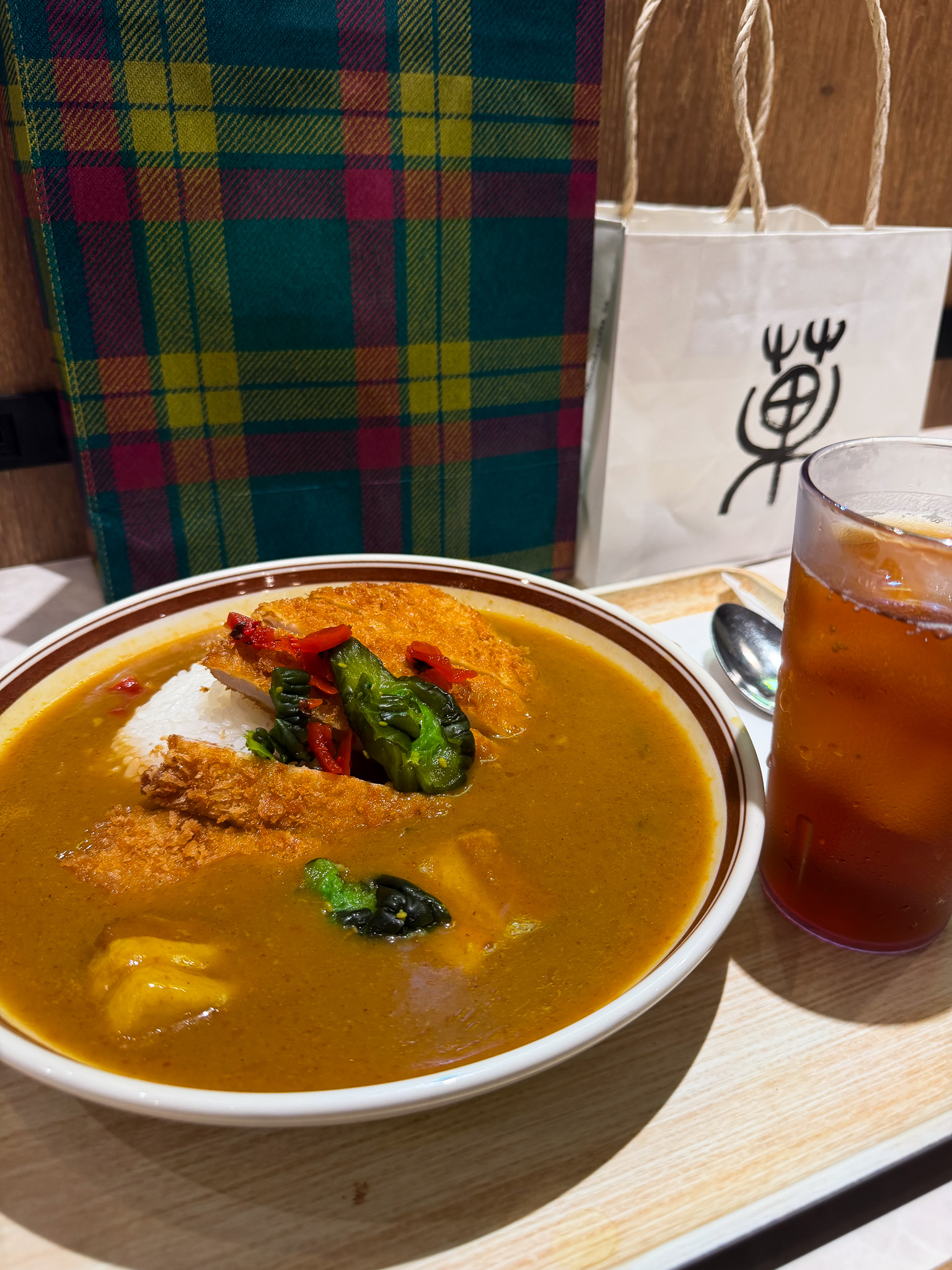
🗺️ Tokyo Neighborhood Guide
Tokyo is much easier to tackle when you stop thinking of it as one enormous city and start treating its neighborhoods almost like individual destinations. These are the areas we’d prioritize on a first trip and what we’d group together.
🌈 Meiji Jingu + Harajuku + Shibuya
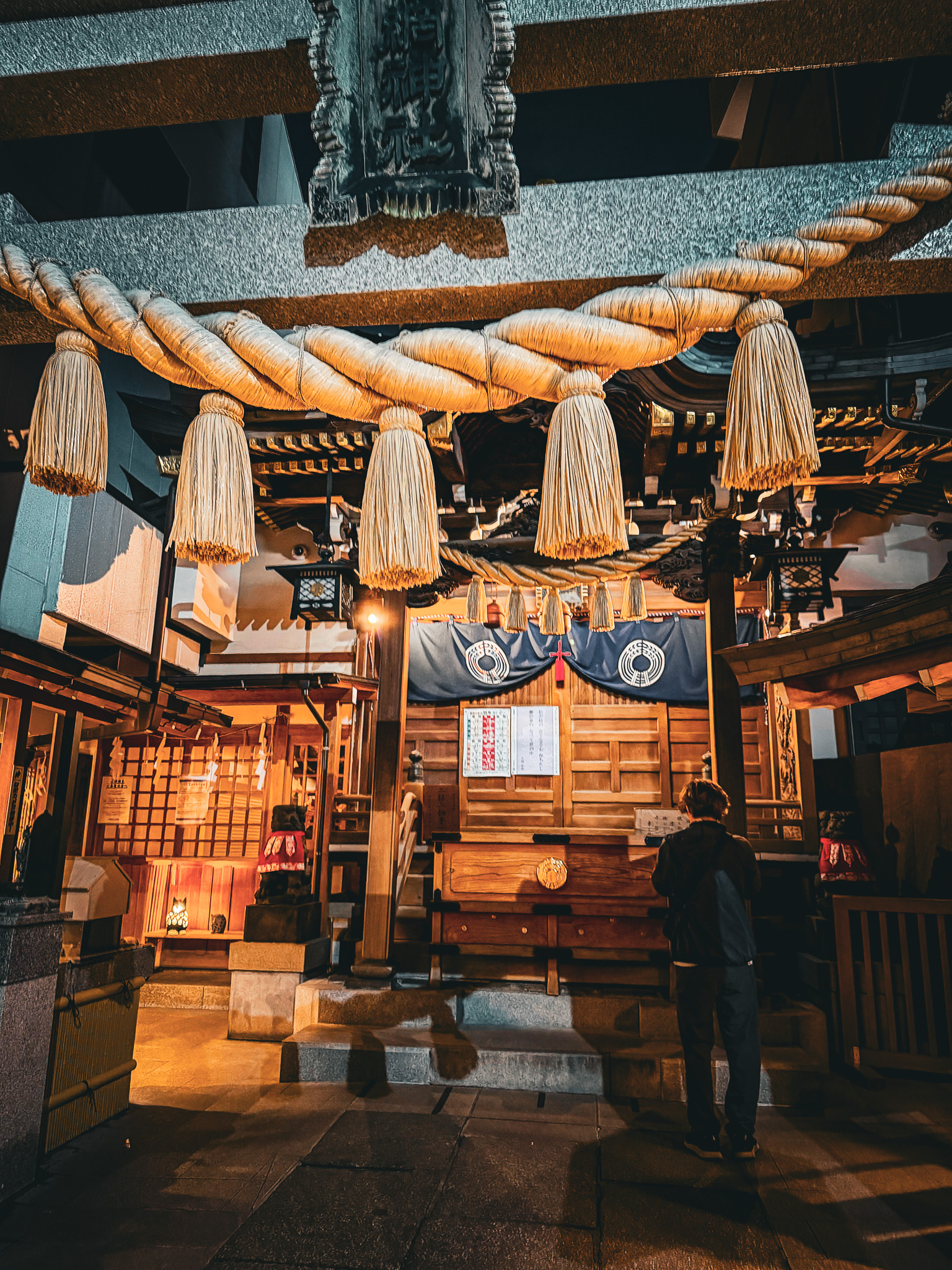
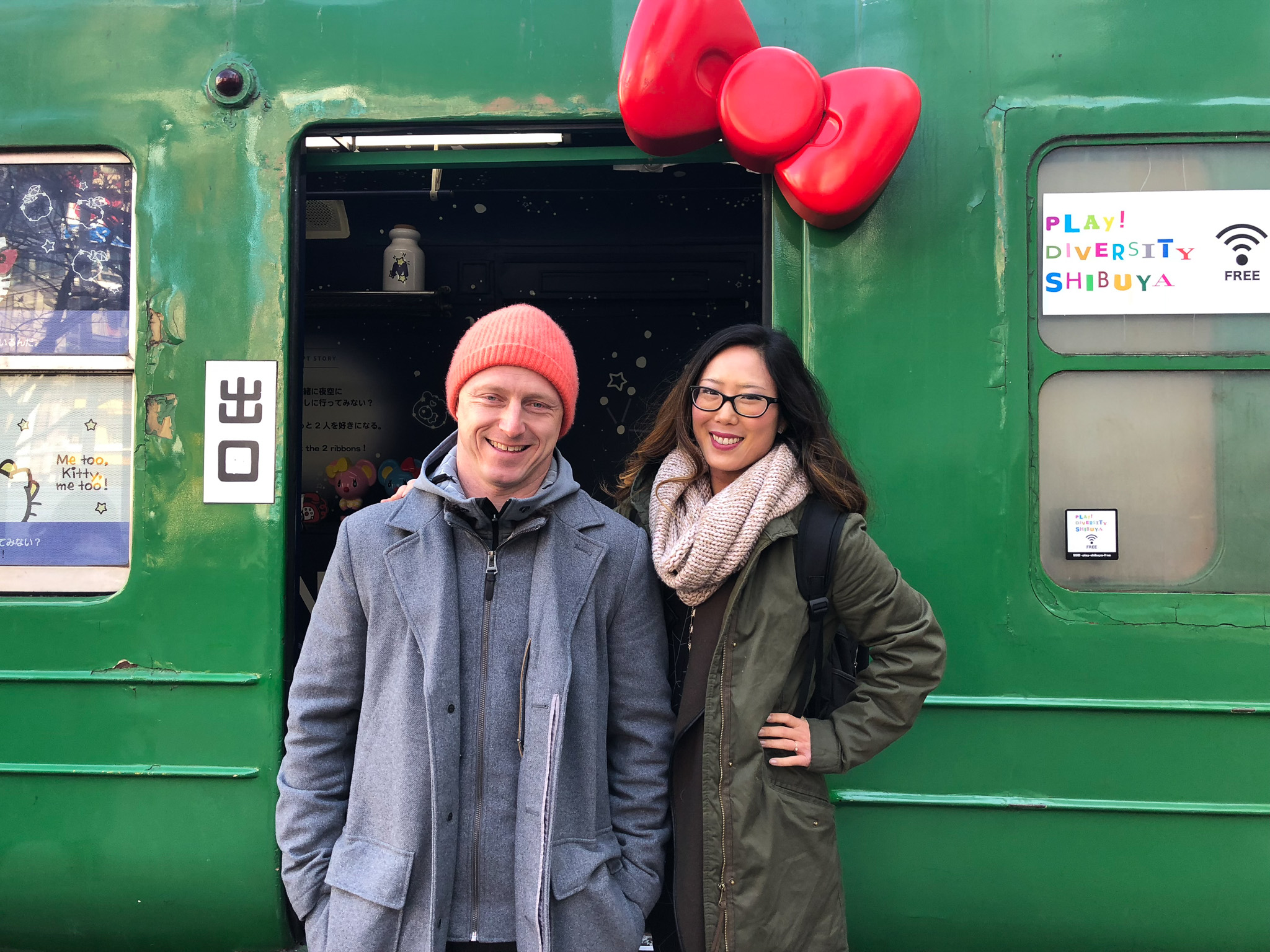
If it’s your first trip to Tokyo, we’d dedicate at least half a day to Meiji Jingu, Harajuku and Shibuya. They’re close enough to explore together but give you three completely different sides of the city: a peaceful Shinto shrine, Tokyo’s famous youth-fashion district and one of its busiest urban centers.
Meiji Jingu
Start with Meiji Jingu, one of Tokyo’s most important Shinto shrines. Completed in 1920, the shrine is dedicated to Emperor Meiji and Empress Shoken, whose reign marked Japan’s transformation from a feudal society into a modern nation.
The forested approach feels remarkably removed from the city around it, with enormous torii gates marking the entrance and photo-worthy rows of decorative sake barrels donated by brewers from around Japan lining part of the walkway.
At the main shrine, you can make an offering, purchase an amulet or charm, write a wish on an ema wooden plaque or draw an omikuji fortune. Admission to the main shrine grounds is free.
Harajuku
From Meiji Jingu, walk into Harajuku, a neighborhood that became internationally famous for Japanese youth fashion and its wildly creative street style.
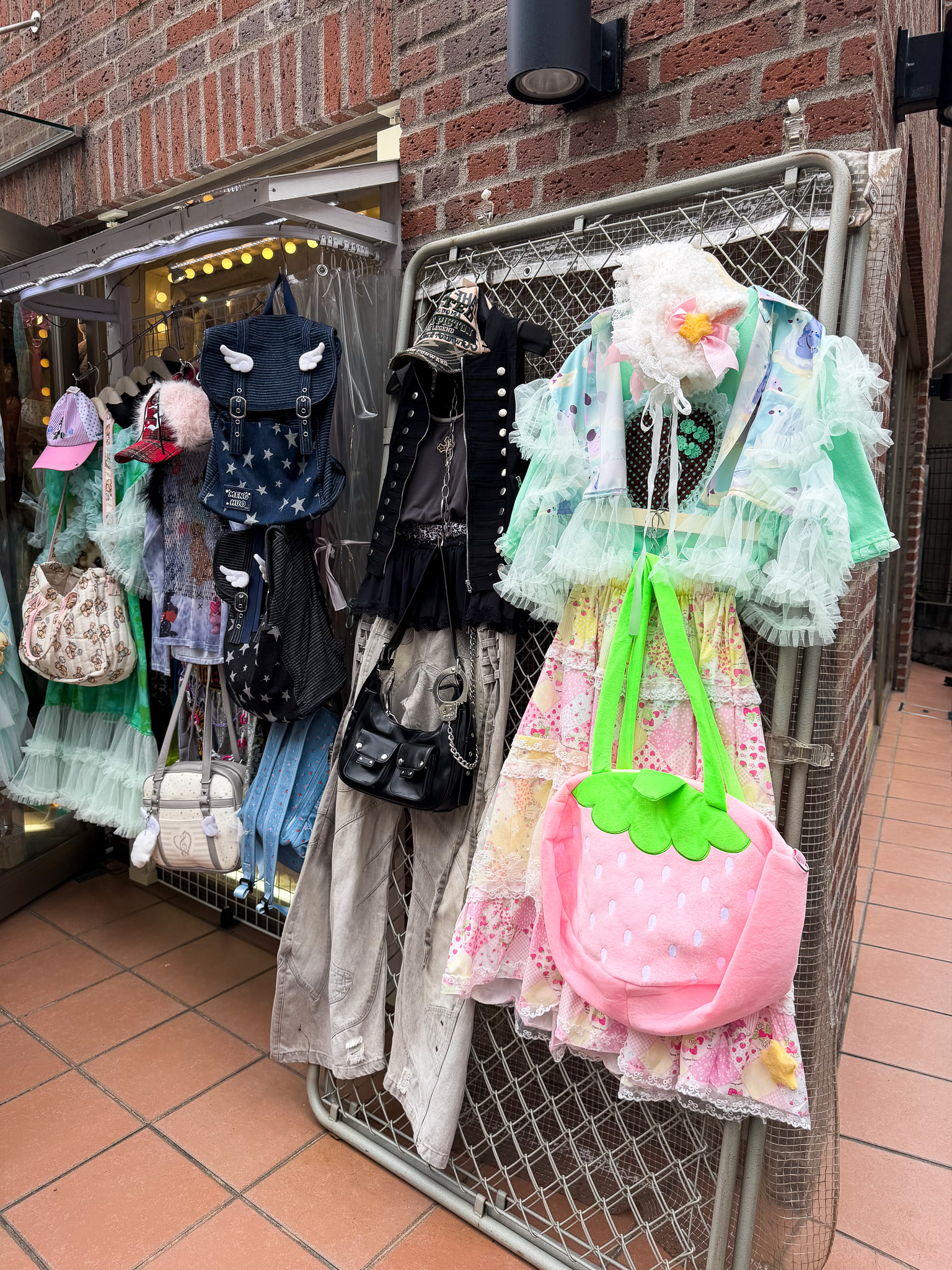
The famous Harajuku Girls weren’t one specific group or fashion trend. The term became shorthand outside Japan for the young people who gathered around Harajuku wearing styles ranging from Lolita and gothic fashion to punk, cosplay and decora. The area isn’t quite the street-fashion spectacle it once was, but it’s still interesting to see the neighborhood that helped put Japanese youth culture on the global map.
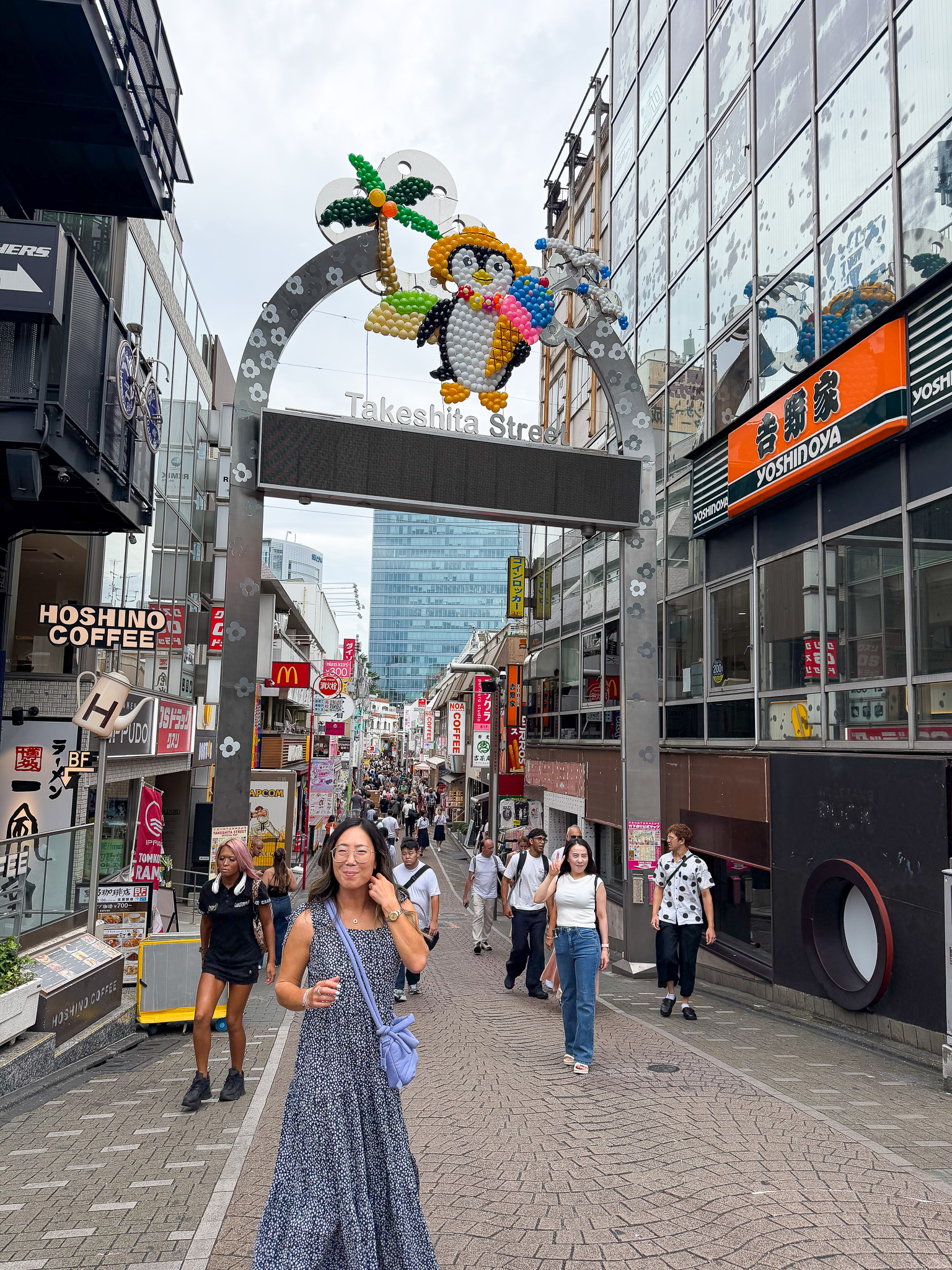
Walk down Takeshita Street at least once for the experience. It’s crowded and touristy, but this is where you’ll find the colorful shops and over-the-top snacks Harajuku is famous for, including the giant rainbow cotton candy that’s practically bigger than your head.
Then leave Takeshita Street behind and explore nearby Ura-Harajuku and Cat Street. We found this area much more interesting, with Japanese brands, vintage stores, boutiques and cafés mixed together.
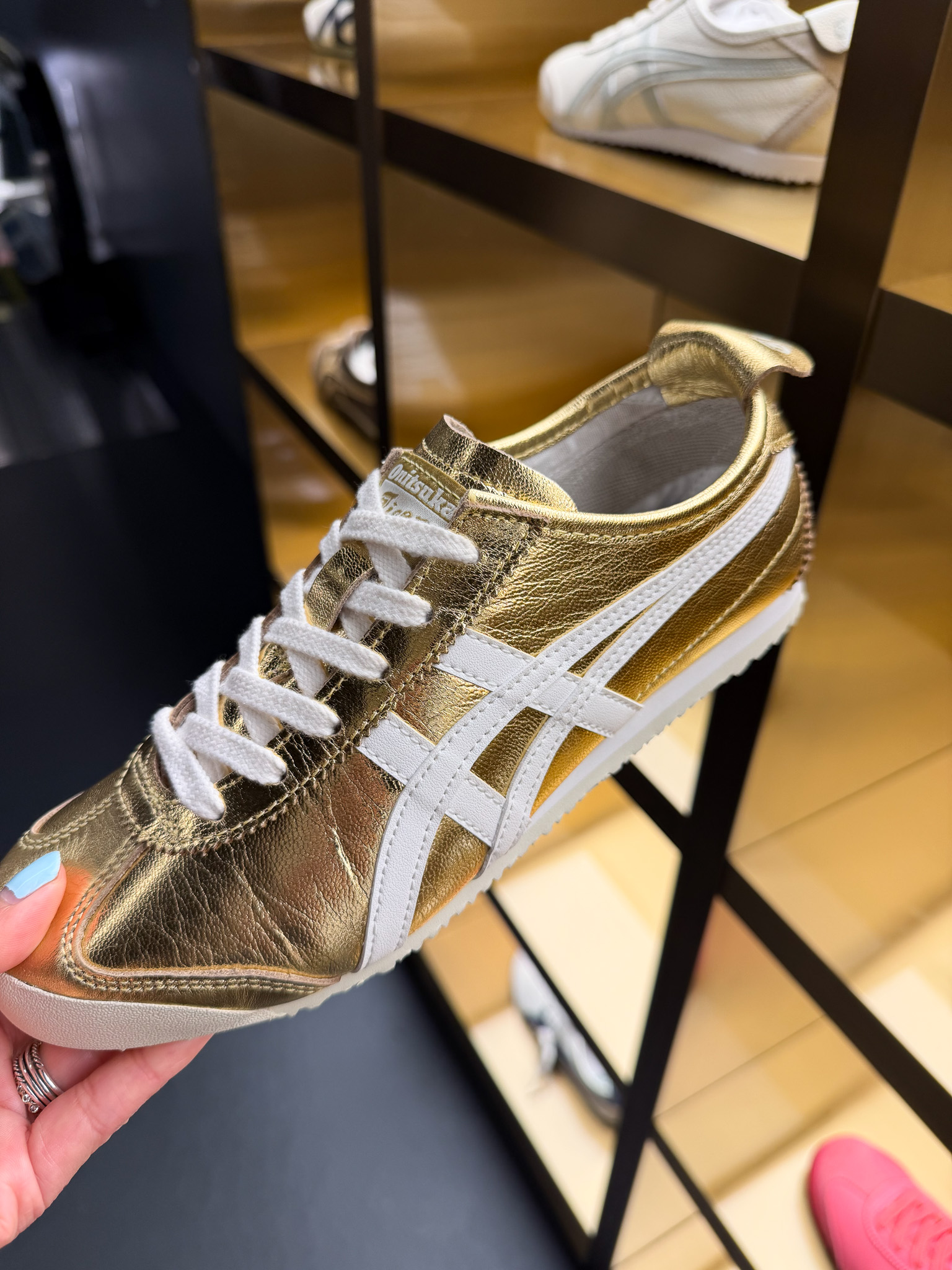
SHOPPING TIP: If Onitsuka Tiger is on your Japan list, this is a good area to look. The Japanese sneaker brand has become ridiculously popular, and there are several stores around Harajuku and Omotesando.
Shibuya Crossing + Shibuya Sky
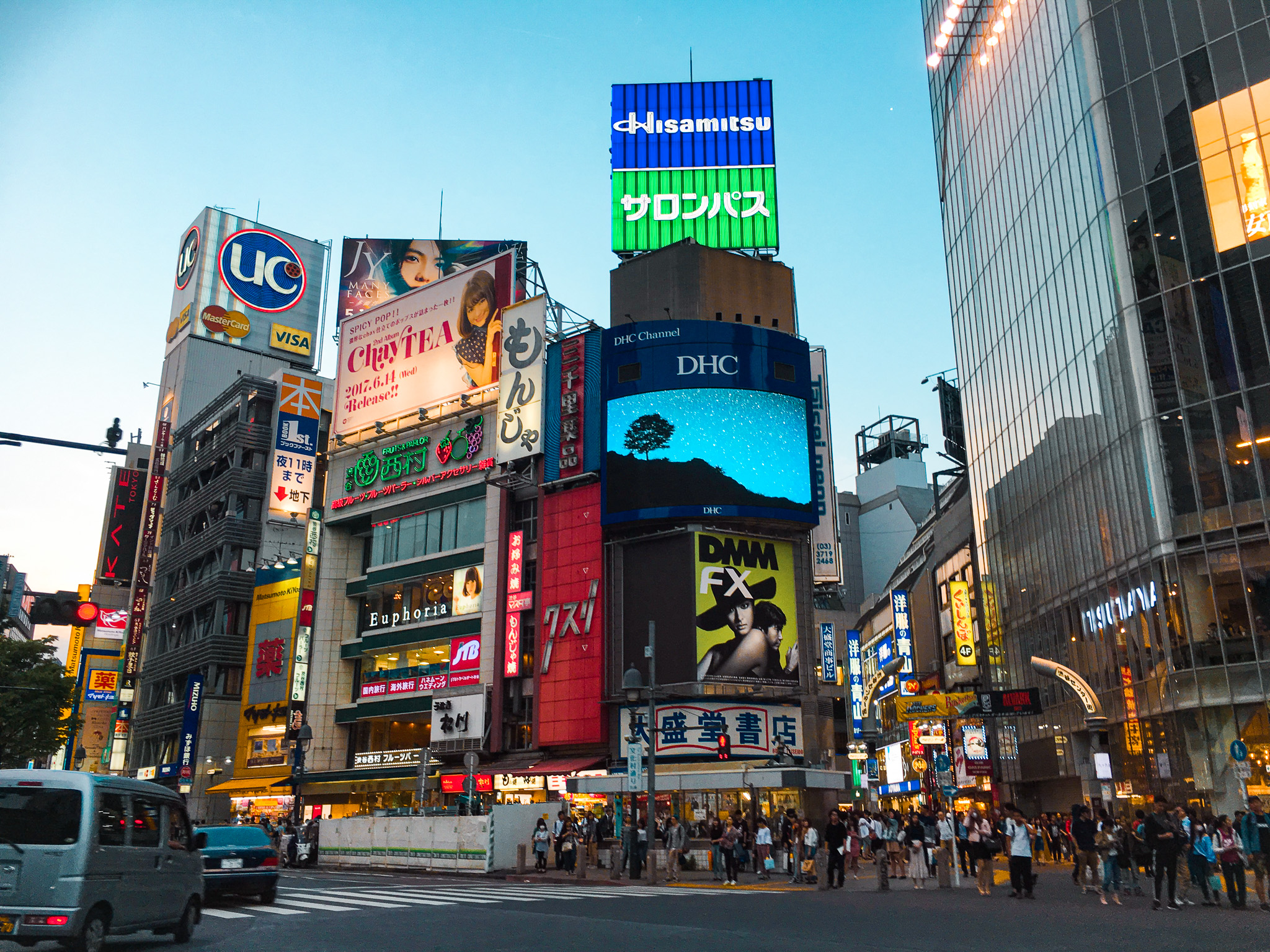
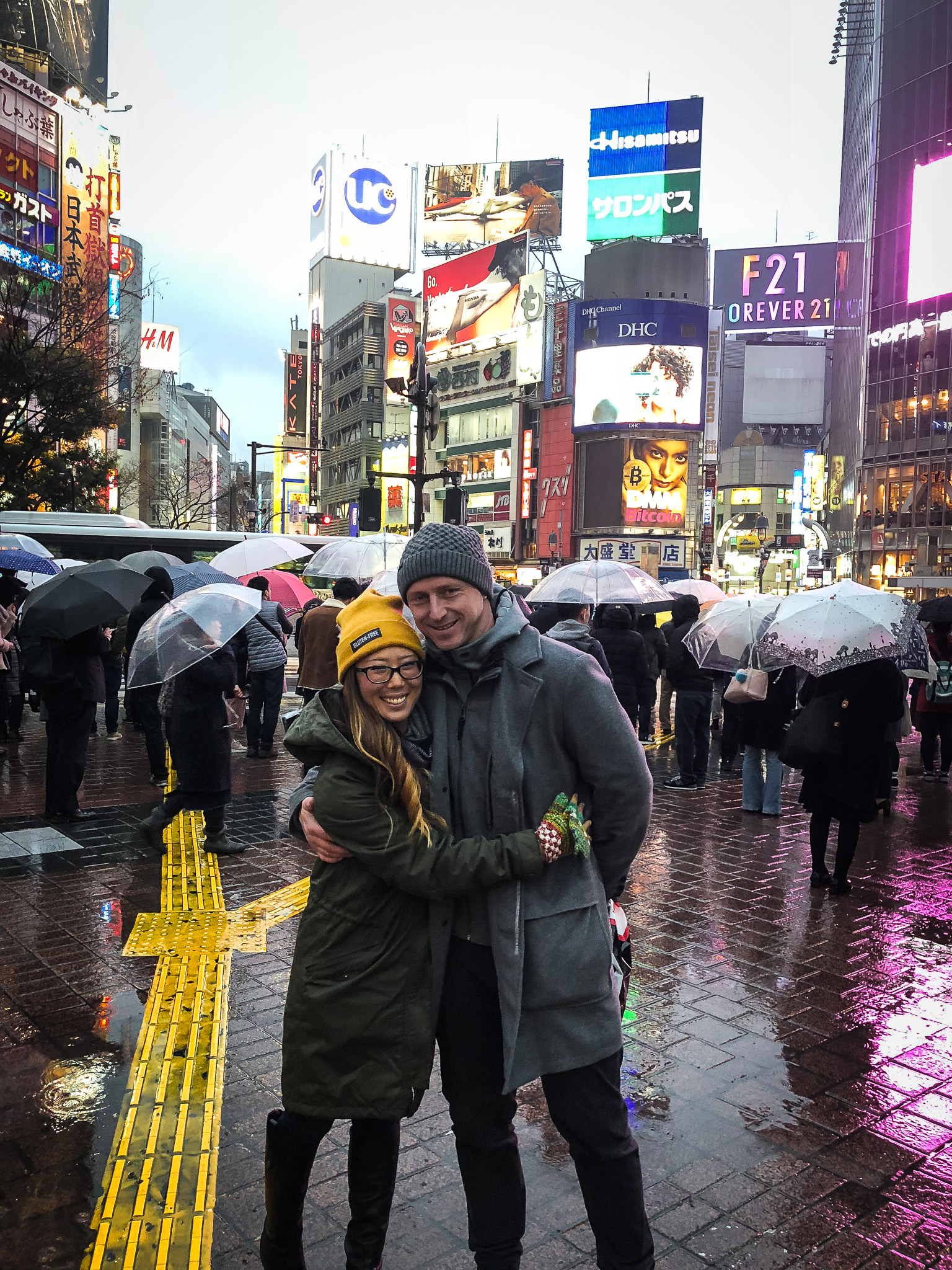
Continue toward Shibuya Crossing, one of those iconic Tokyo experiences we’d still recommend doing once. It’s kind of like the Times Square of Japan, with hundreds and sometimes thousands of people crossing the intersection from every direction when the lights change.
For a completely different perspective, head up to Shibuya Sky, a 360° open-air observation deck high above the crossing and Tokyo skyline. We’d book ahead, especially if you want to go around sunset.
Tokyu Food Show
Don’t miss Shibuya Tokyu Food Show, especially if you’re as interested in Japanese food as we are.
Japanese department-store food halls, known as depachika, are an experience in themselves. They’re usually found in the basement levels of major department stores and packed with beautifully presented sweets, sushi, prepared foods, fresh ingredients and specialty products. Go hungry and make this your lunch, or pick up snacks and edible souvenirs to take home.
OUR TIP: Start at Meiji Jingu and work your way through Harajuku toward Shibuya. That gives the day a natural flow without backtracking.
⛩️ Asakusa: Traditional Tokyo
For a completely different side of Tokyo, spend half a day in Asakusa, one of the best places to get a glimpse of what Tokyo was like before the skyscrapers and neon lights.
During the Edo period, Asakusa grew into one of the city’s major entertainment districts around Senso-ji Temple. Today it’s one of Tokyo’s most visited neighborhoods, but its temples, traditional shopping streets and cultural experiences still make it worthwhile on a first trip.
Kaminarimon Gate + Nakamise Shopping Street
Start at the enormous red Kaminarimon Gate, or Thunder Gate, one of Tokyo’s most recognizable landmarks and the grand entrance to Senso-ji.
From there, walk down Nakamise Shopping Street, a roughly 250-meter pedestrian street that has been serving visitors to the temple for centuries. Shops sell traditional sweets, rice crackers, fans, chopsticks, crafts and souvenirs, and while it’s undeniably touristy today, the tradition of shopping and snacking along the approach to Senso-ji goes back hundreds of years.
Senso-ji Temple
Nakamise leads directly to Senso-ji, Tokyo’s oldest Buddhist temple, whose history dates back nearly 1,400 years.
According to legend, two fishermen pulled a statue of Kannon, the bodhisattva of compassion and mercy, from the nearby Sumida River in 628. The temple was later built to honor Kannon and has remained one of Tokyo’s most important religious sites ever since.
Before entering, you’ll see visitors drawing omikuji fortunes and wafting incense smoke toward themselves from the large burner in front of the main hall. Take your time exploring the complex rather than treating the main hall as a quick photo stop.
OUR TIP: Come early in the morning if you want to experience Senso-ji and Nakamise before the biggest crowds arrive.
Try a Traditional Japanese Experience
Asakusa is also one of the best places in Tokyo to add a hands-on cultural experience rather than spending the entire day sightseeing.
Depending on what interests you, you can book a traditional tea ceremony, make your own chopsticks or create the incredibly realistic food samples you see displayed outside Japanese restaurants.
We love this as an option for a first trip because it gives you something completely different from another observation deck, temple or shopping district.
Tokyo Skytree
If you want another big Tokyo view, Tokyo Skytree is easy to pair with Asakusa and gives you a completely different perspective from Shibuya Sky.
It’s not something we’d say you have to do if you’re already visiting Shibuya Sky or the free Tokyo Metropolitan Government Building observation deck, but if observation decks are your thing, this is the big one. On a clear day, the views stretch far beyond central Tokyo.
Kappabashi Kitchenware Town
If you’re into cooking, Kappabashi Kitchenware Town is about a 10–15 minute walk from Asakusa and worth adding for Japanese knives, ceramics and cooking tools. Otherwise, we’d spend the extra time exploring Asakusa itself.
🌃 Shinjuku: Big-City Tokyo After Dark
Since this is also where we’d recommend staying, you don’t necessarily need to devote an entire sightseeing day to Shinjuku. Instead, explore it in the late afternoon and evening when the neighborhood really comes alive.
Shinjuku Gyoen
Start with Shinjuku Gyoen National Garden, a huge green escape surrounded by one of the busiest parts of Tokyo.
Originally part of a feudal lord’s residence during the Edo period, the grounds later became an imperial garden before opening to the public after World War II. Today you’ll find Japanese, English landscape and formal French gardens all within the park.
It’s particularly famous during cherry blossom season, but we’d visit outside spring too.
See Tokyo From Above
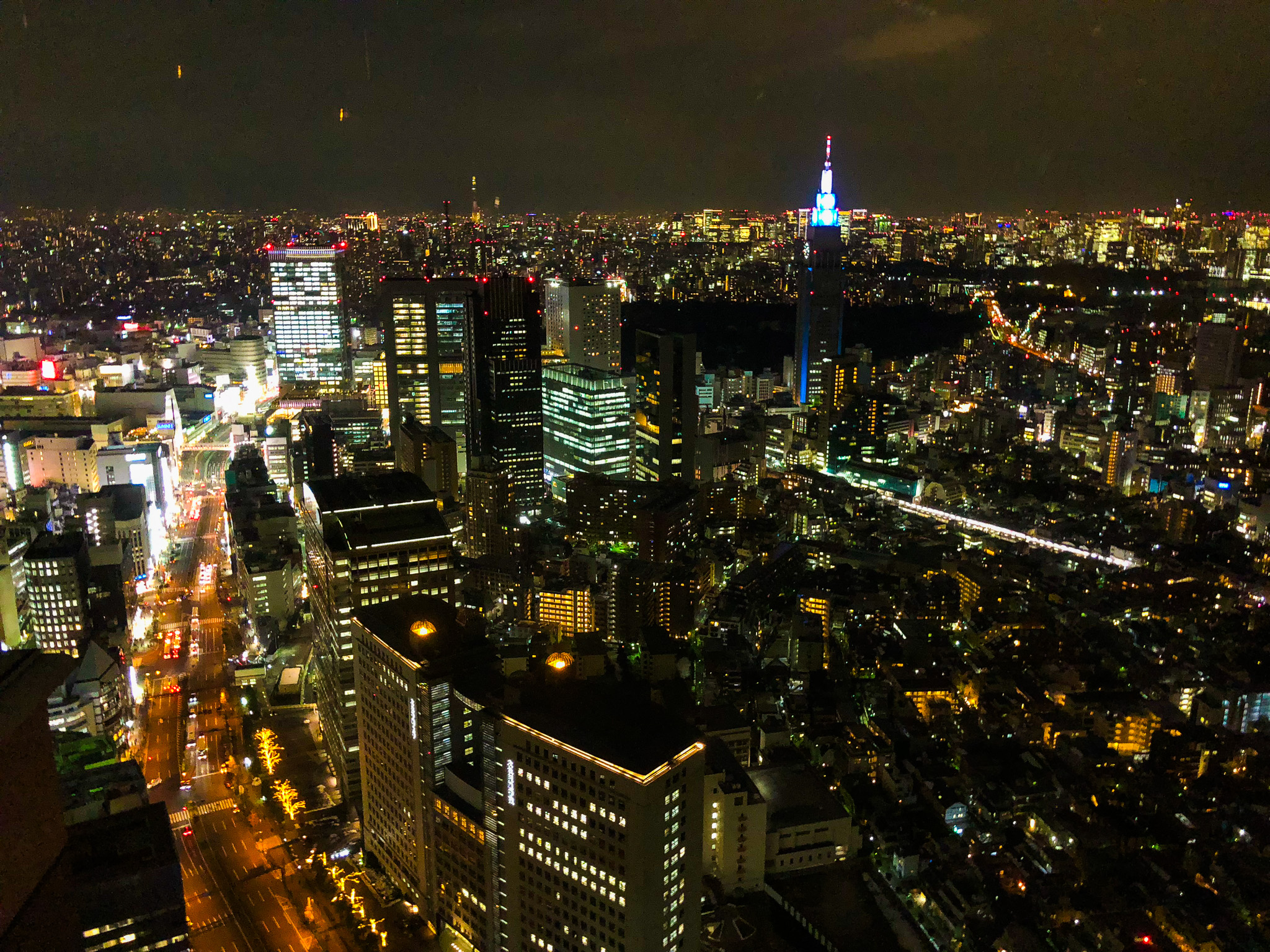
For a free city view, head to the observation deck on the 45th floor of the Tokyo Metropolitan Government Building in western Shinjuku. It’s an easy way to appreciate just how enormous Tokyo is without paying for another observation deck.
The building itself also becomes part of the show after dark, with a massive projection-mapping display on its façade.
Explore Shinjuku After Dark
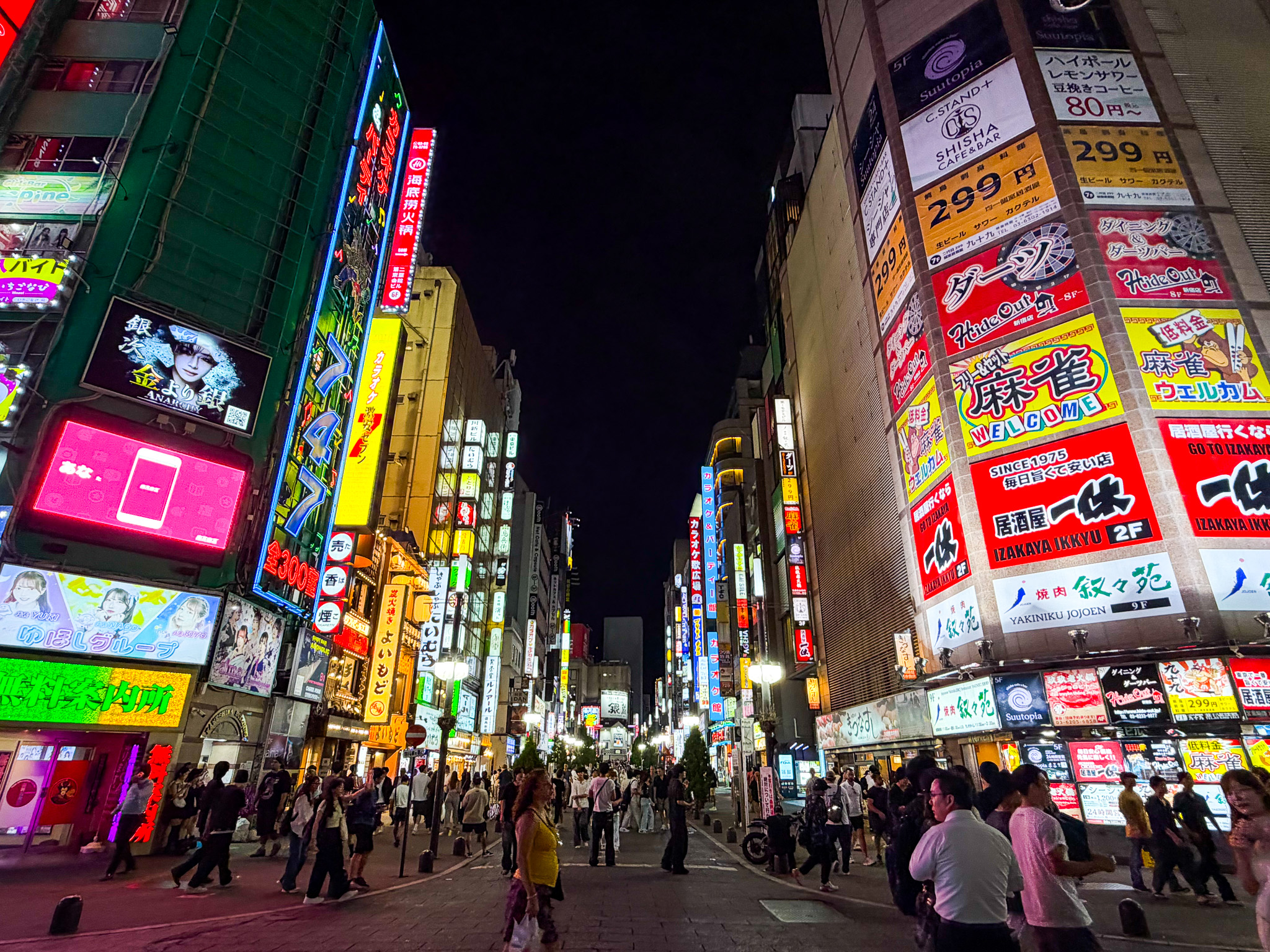
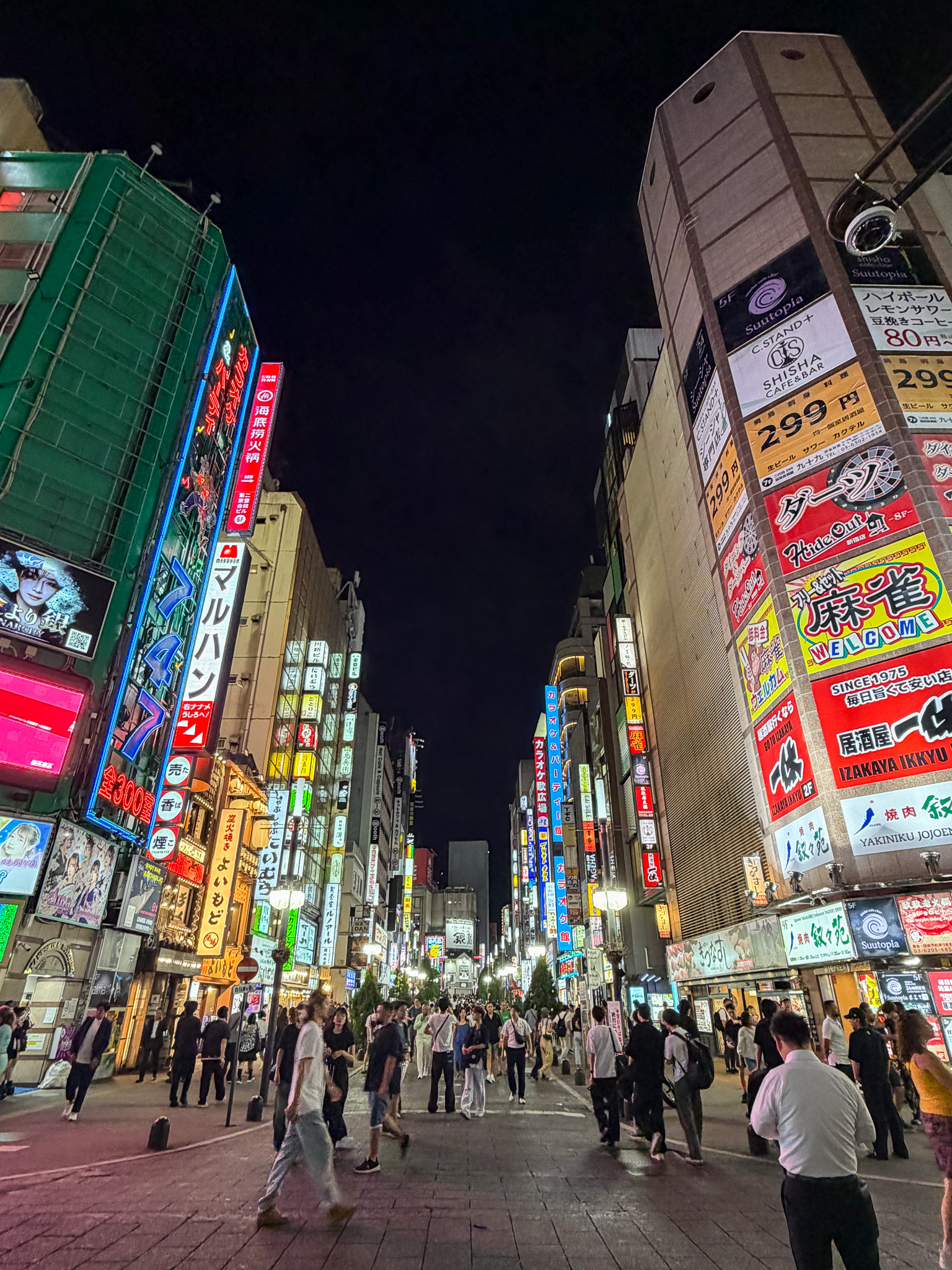
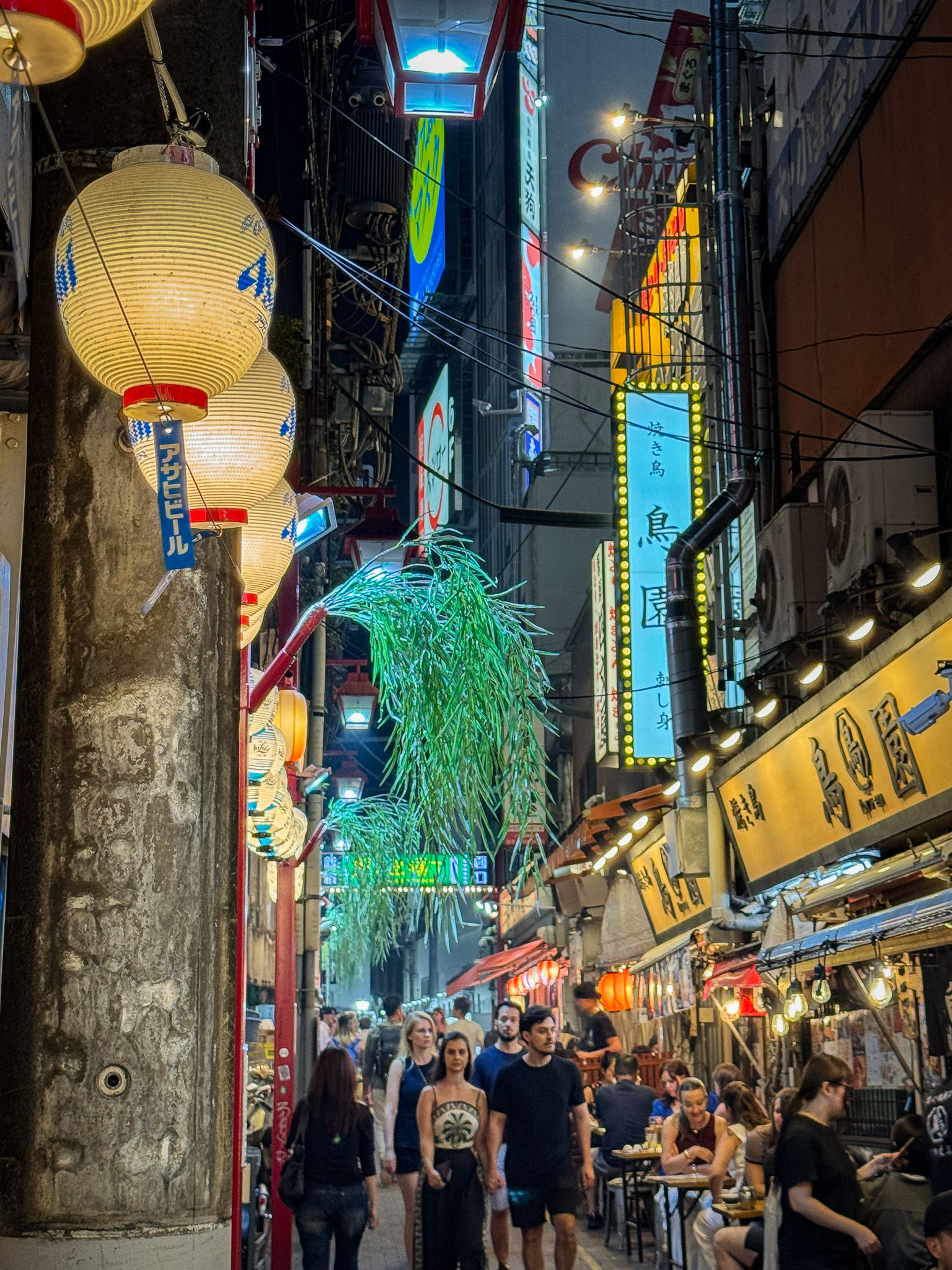
Once the sun goes down, wander the neon-lit streets around Kabukicho, Tokyo’s best-known entertainment district. Even if you’re not coming here specifically for nightlife, simply walking around is part of the experience.
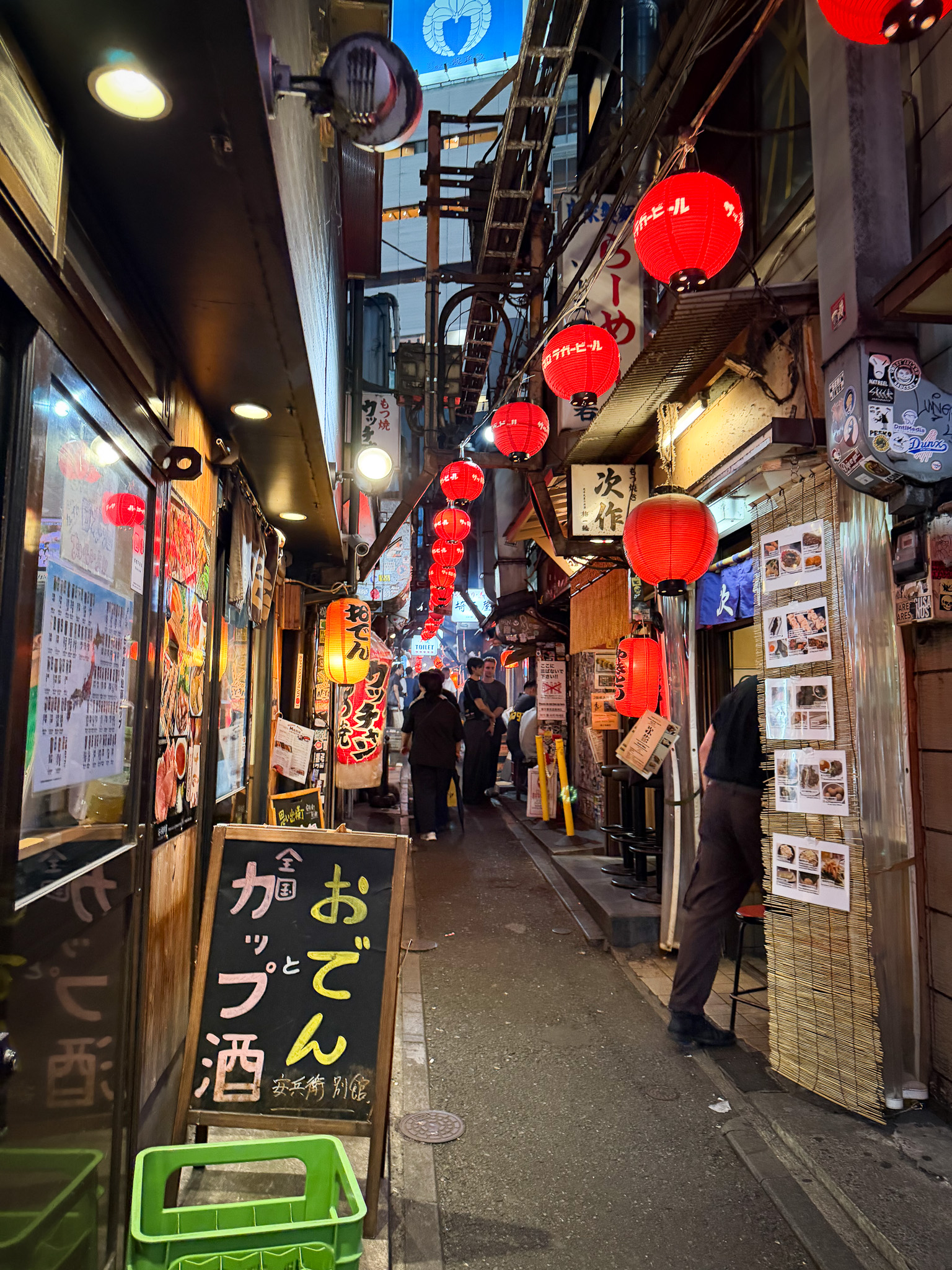
You’ll also see Omoide Yokocho and Golden Gai on almost every Tokyo itinerary. Both have roots in the tiny drinking and dining culture that developed around postwar Shinjuku, which helps explain why their cramped alleys feel so different from the modern city surrounding them.
We checked out both on our latest trip and found them much more touristy than we’d expected. Omoide Yokocho was packed with visitors, several restaurants charged cover charges and the yakitori we tried was only okay. Golden Gai was interesting to walk through, but virtually every tiny bar we peeked into was filled entirely with foreign tourists and most allowed smoking inside.
They’re still worth walking through for the history and unique character, but personally, we think there are much better places to actually eat and drink elsewhere in Tokyo.
🏯 Central Tokyo: Imperial Palace + Tokyo Station + Ginza
For a look at Tokyo beyond the neon and skyscrapers, spend a few hours exploring the historic heart of the city around the Imperial Palace and Tokyo Station, then continue into Ginza if you have time.
Imperial Palace
The Tokyo Imperial Palace sits on the former site of Edo Castle, the seat of the Tokugawa shoguns who ruled Japan for more than 250 years. When the emperor moved from Kyoto to Tokyo in 1868, the palace became the residence of Japan’s Imperial Family.
Most of the palace itself isn’t open to the public, but you can walk around the moats and massive stone walls or visit the Imperial Palace East Gardens, which are free to enter and contain remnants of the original Edo Castle.
Tokyo Station
From the palace, walk toward Tokyo Station. It’s much more than a transportation hub: the restored red-brick Marunouchi building dates to 1914 and is one of the city’s most recognizable pieces of architecture.
It’s also worth stepping inside. The station is practically a city of its own, packed with restaurants and specialty shops. If you’re a ramen fan, Tokyo Ramen Street brings several well-known ramen shops together beneath the station.
Ginza
From Tokyo Station, continue toward Ginza, Tokyo’s most famous upscale shopping district.
Ginza became a symbol of Japan’s modernization after a devastating fire in 1872 led to the neighborhood being rebuilt with Western-style brick buildings. Today, you’ll find striking contemporary architecture, galleries, historic Japanese businesses, restaurants and flagship stores alongside the luxury brands.
We wouldn’t necessarily make Ginza a destination on its own unless you love shopping, but it’s an easy addition while you’re exploring Central Tokyo.
OUR TIP: You don’t necessarily need a full day here. We’d combine the Imperial Palace, Tokyo Station and Ginza into a half-day and leave the rest of the day open.
🎟️ More Tokyo Experiences Worth Adding
Not everything worth doing in Tokyo fits neatly into a neighborhood itinerary. Depending on what you’re interested in, these are a few experiences we’d consider working into your trip.
- teamLab Borderless or teamLab Planets: If you’ve never experienced a teamLab digital art museum, we’d put one on your list. You don’t need to do both. Borderless in Azabudai Hills is designed around interconnected digital artworks that move between rooms, while Planets in Toyosu is a more physical experience where you walk barefoot through water and immersive installations. Both use timed-entry tickets, so book ahead.
- Karaoke: Japanese karaoke usually means renting a private room with your group rather than singing in front of an entire bar. Order drinks and food, pick your songs and stay for an hour or several. Even if you’re not normally a karaoke person, it’s a fun Tokyo night out and easy to add in Shinjuku or Shibuya.
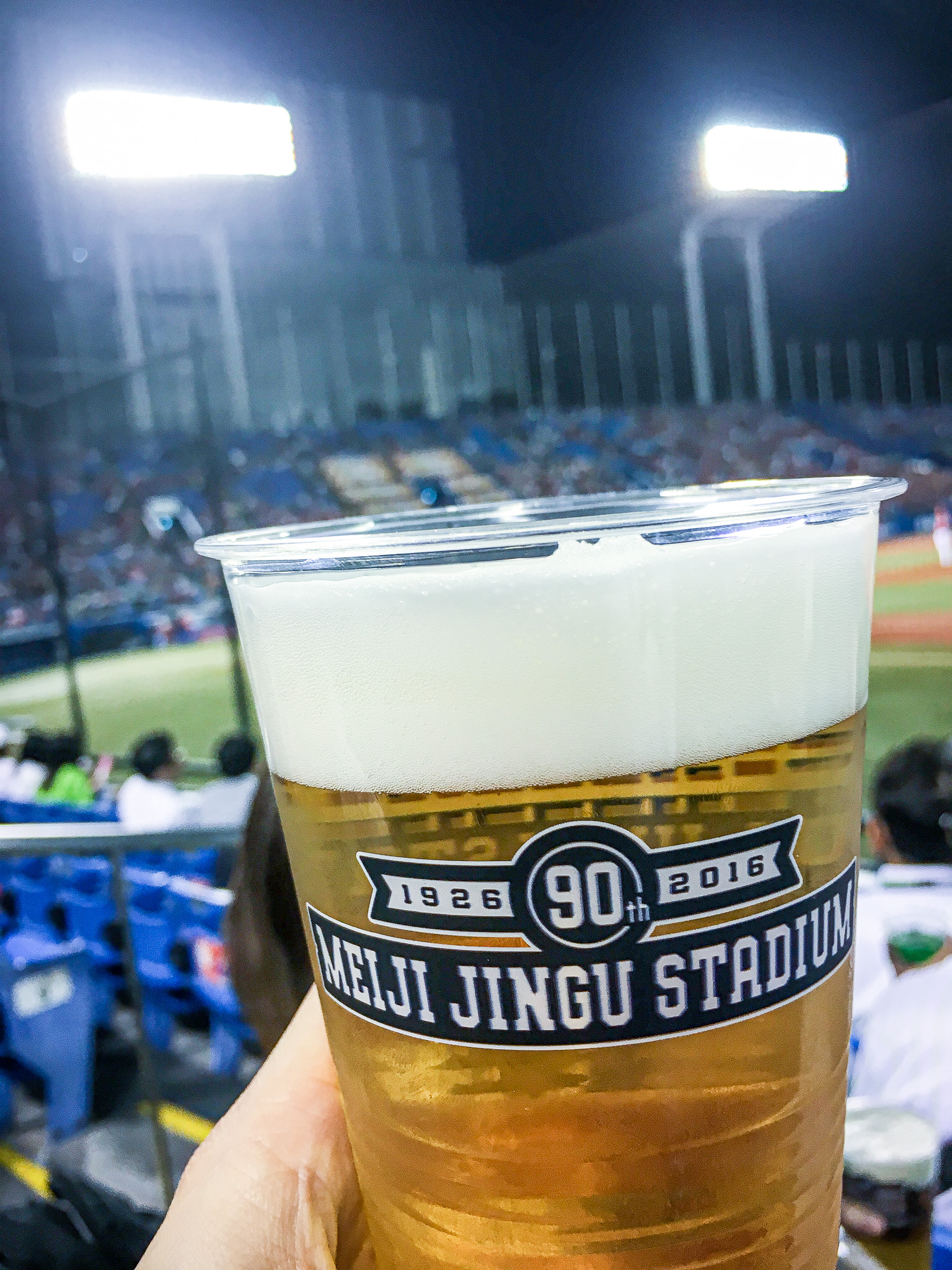
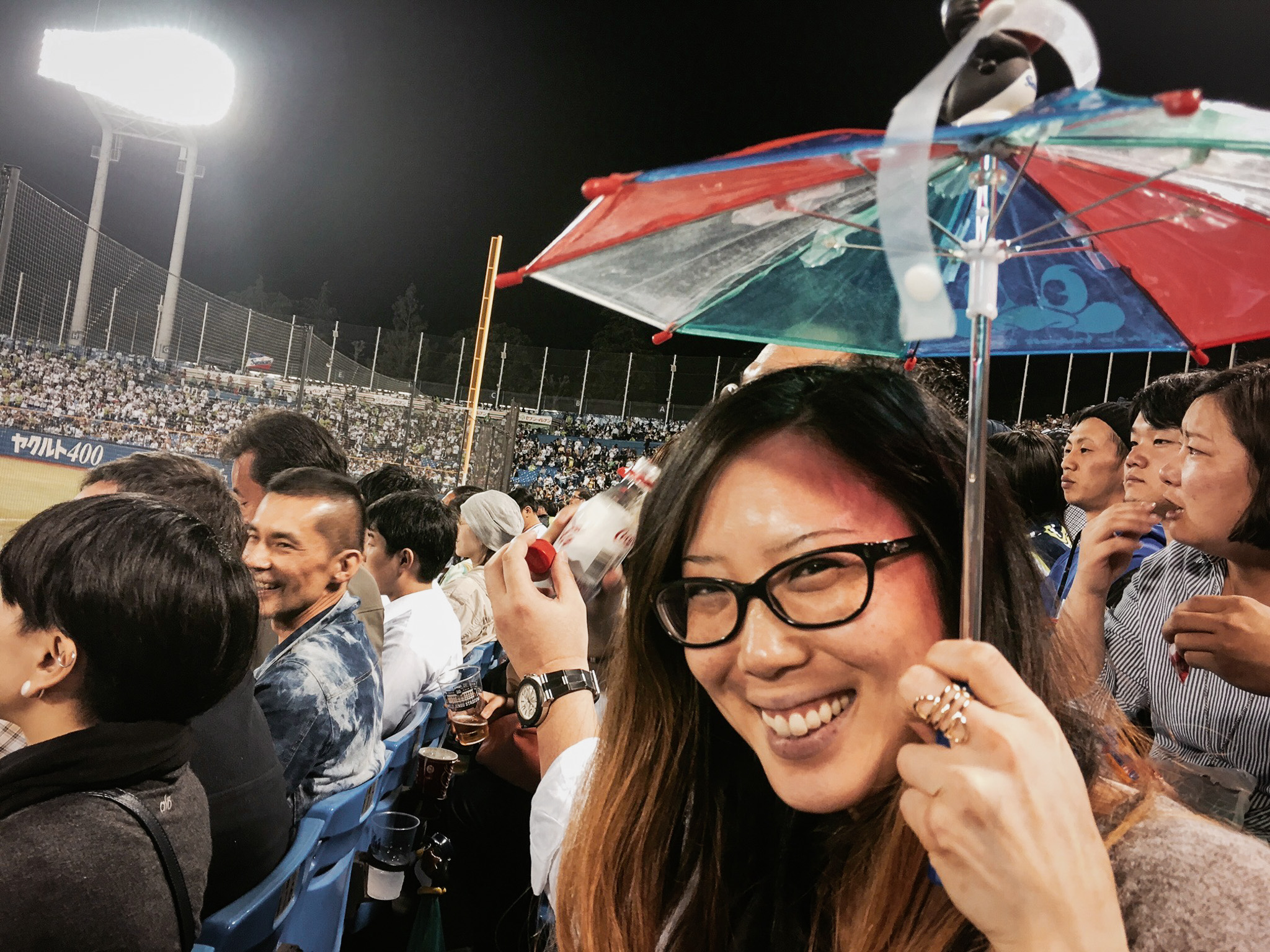
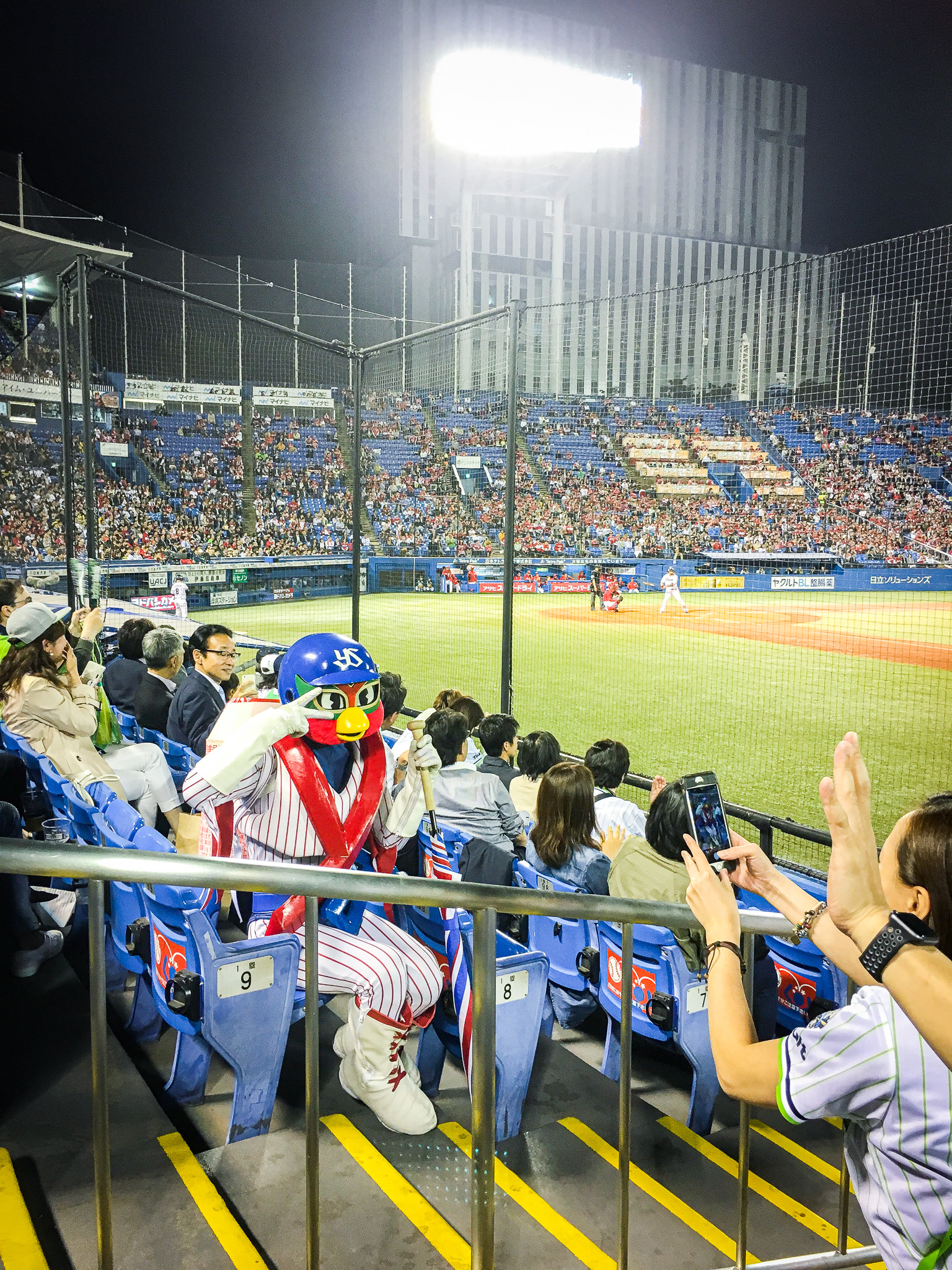
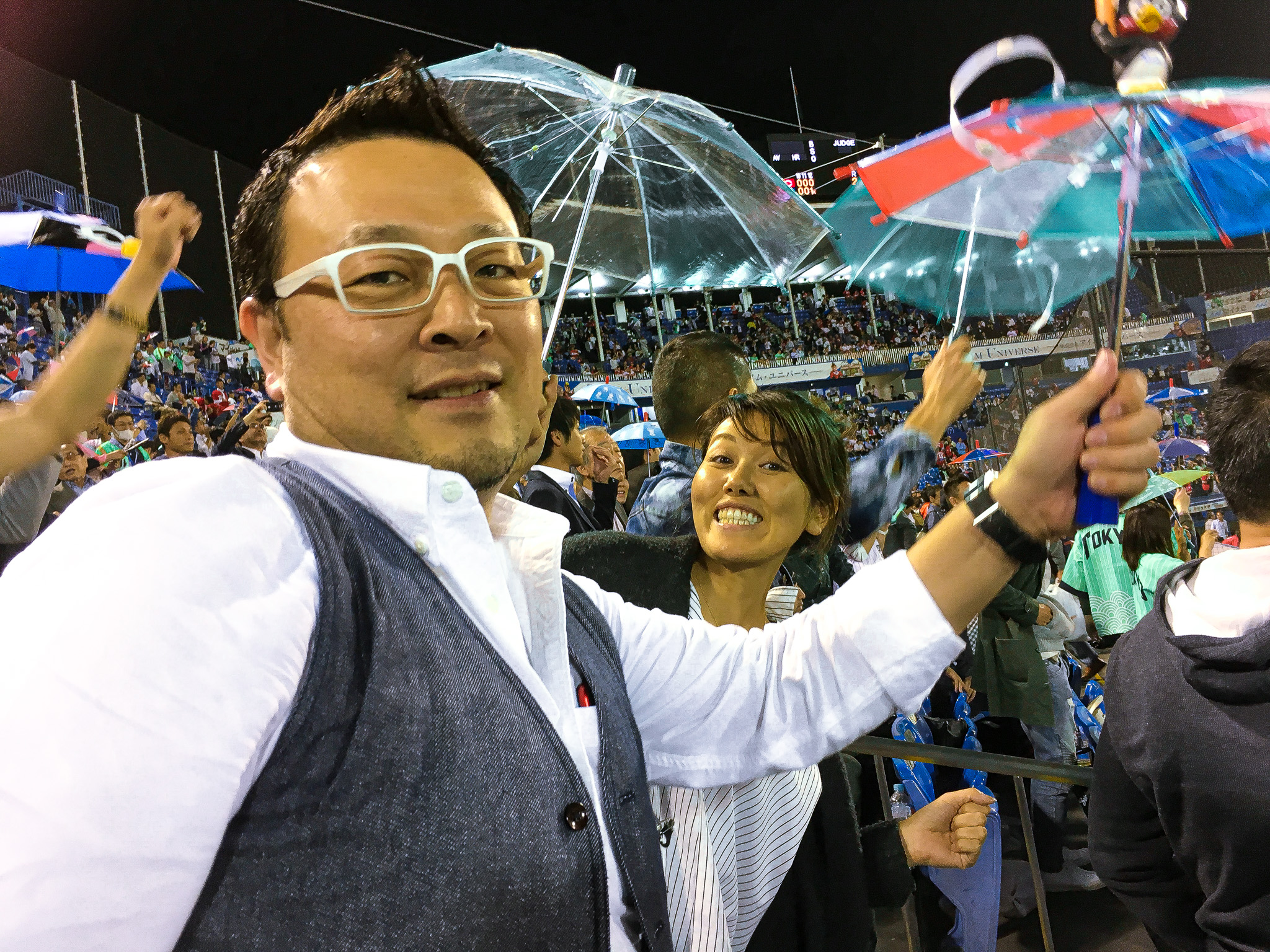
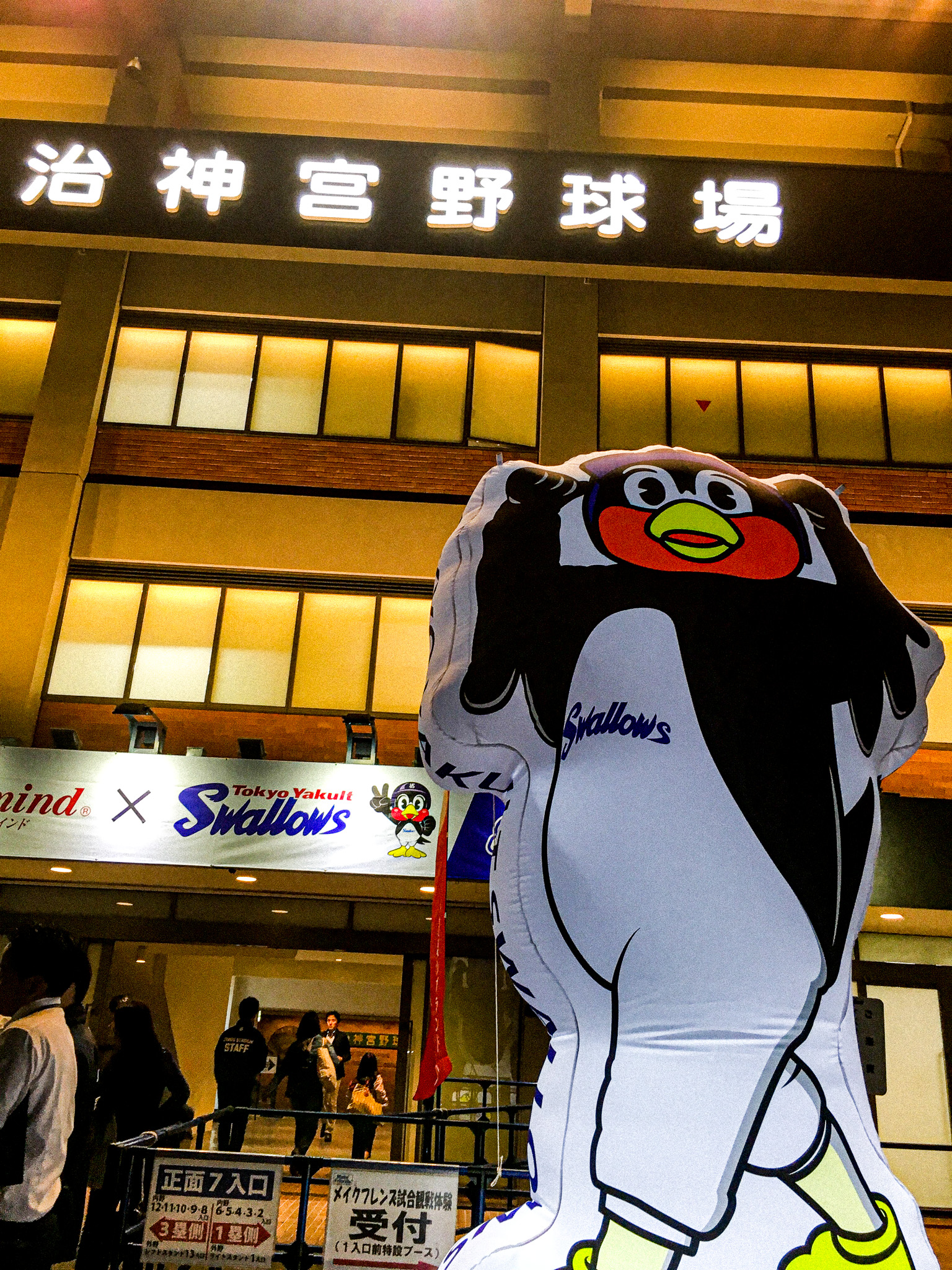
- See a baseball game: If you’re visiting during baseball season, go to a game. I went to a Tokyo Swallows game on one of my work trips, and it’s still one of my favorite experiences I’ve had in Japan. Japanese baseball has its own atmosphere, with organized cheering sections, beer sellers, songs, chants and plenty of food and drinks. In Tokyo, look for the Yomiuri Giants at Tokyo Dome or the Tokyo Yakult Swallows at Meiji Jingu Stadium.
- See Grand Sumo: Tokyo hosts Grand Sumo tournaments at Ryogoku Kokugikan in January, May and September, with each tournament running for 15 days. If your dates line up, this is one we’d seriously consider adding. Tickets can sell quickly, so check the schedule well ahead of your trip. Alternatively, you can also go to a sumo show for a demonstration. We didn’t have time for this, but our friend raved about it.
💎 Beyond the Major Sights: Tokyo Neighborhoods We Love
Once you’ve seen Tokyo’s major sights, we’d slow things down and explore some of the city’s smaller neighborhoods. These aren’t places we’d prioritize over Meiji Jingu, Shibuya or Asakusa on a first visit, but they’re where we’ve found some of the more interesting layers of Tokyo.
Kagurazaka: Old Tokyo Meets Little Paris
Once an important geisha entertainment district, Kagurazaka is still technically an active hanamachi, although today the remnants of that world are tucked among modern restaurants, shops and homes. If seeing geisha is a priority, Kyoto’s Gion is a better place to experience that tradition. In Kagurazaka, the appeal is more about noticing the neighborhood’s historic atmosphere as you wander its stone-paved alleys.
The point here isn’t one giant attraction. The neighborhood itself is the attraction. Wander the main sloping street, then duck into Hyogo Yokocho and Kakurenbo Yokocho, where stone paving, black wooden walls, tiny restaurants and hidden entrances give you that feeling of old Tokyo hiding behind the modern city.
Then walk up to Akagi Shrine, whose current complex was redesigned by renowned Japanese architect Kengo Kuma, creating an interesting mix of traditional shrine architecture and contemporary design.
Kagurazaka also has an unexpected French side. A longstanding French community, restaurants and bakeries have helped earn the neighborhood the nickname “Little Paris.” Grab a pastry at Pain des Philosophes, then switch cultures completely with traditional Japanese wagashi from Baikatei or Kogetsu.
Yanaka + Nezu: A Quieter Glimpse of Old Tokyo
For another quieter side of the city, combine Yanaka and Nezu. We did this on our latest trip and loved getting away from some of Tokyo’s busier neighborhoods. Yanaka escaped some of the destruction and redevelopment that transformed much of central Tokyo, helping preserve its narrow residential streets, temples and slower neighborhood feel.
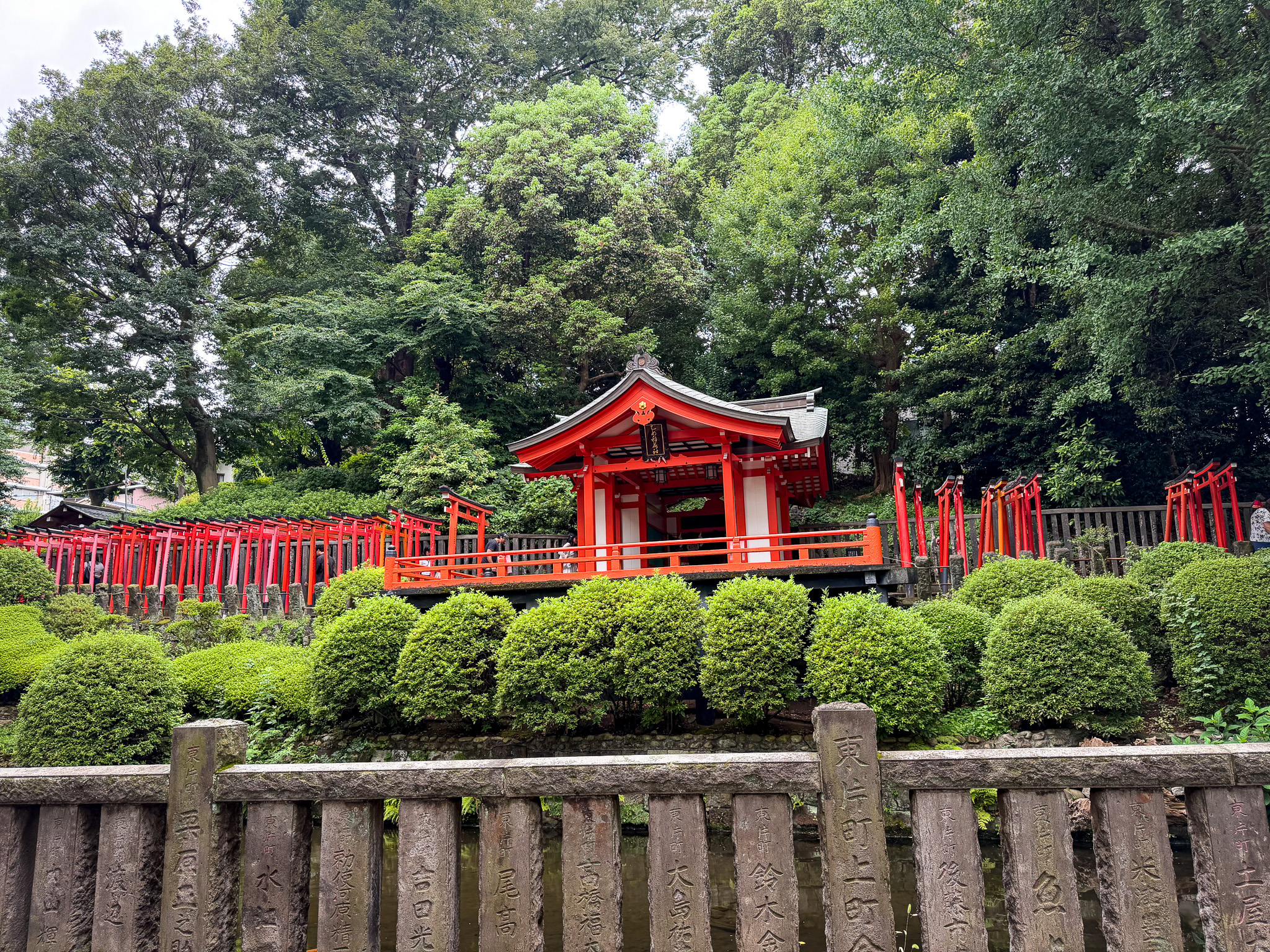
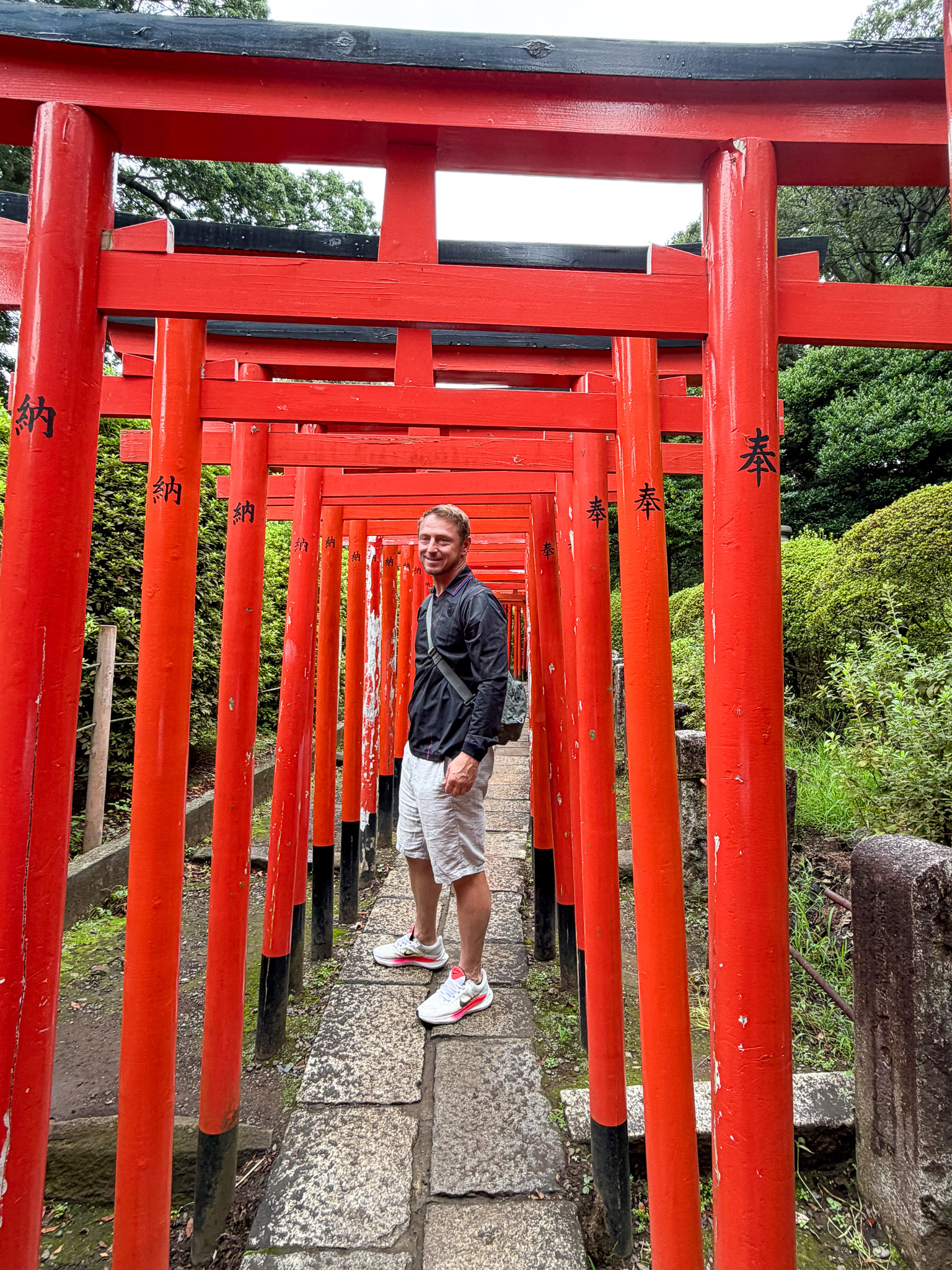
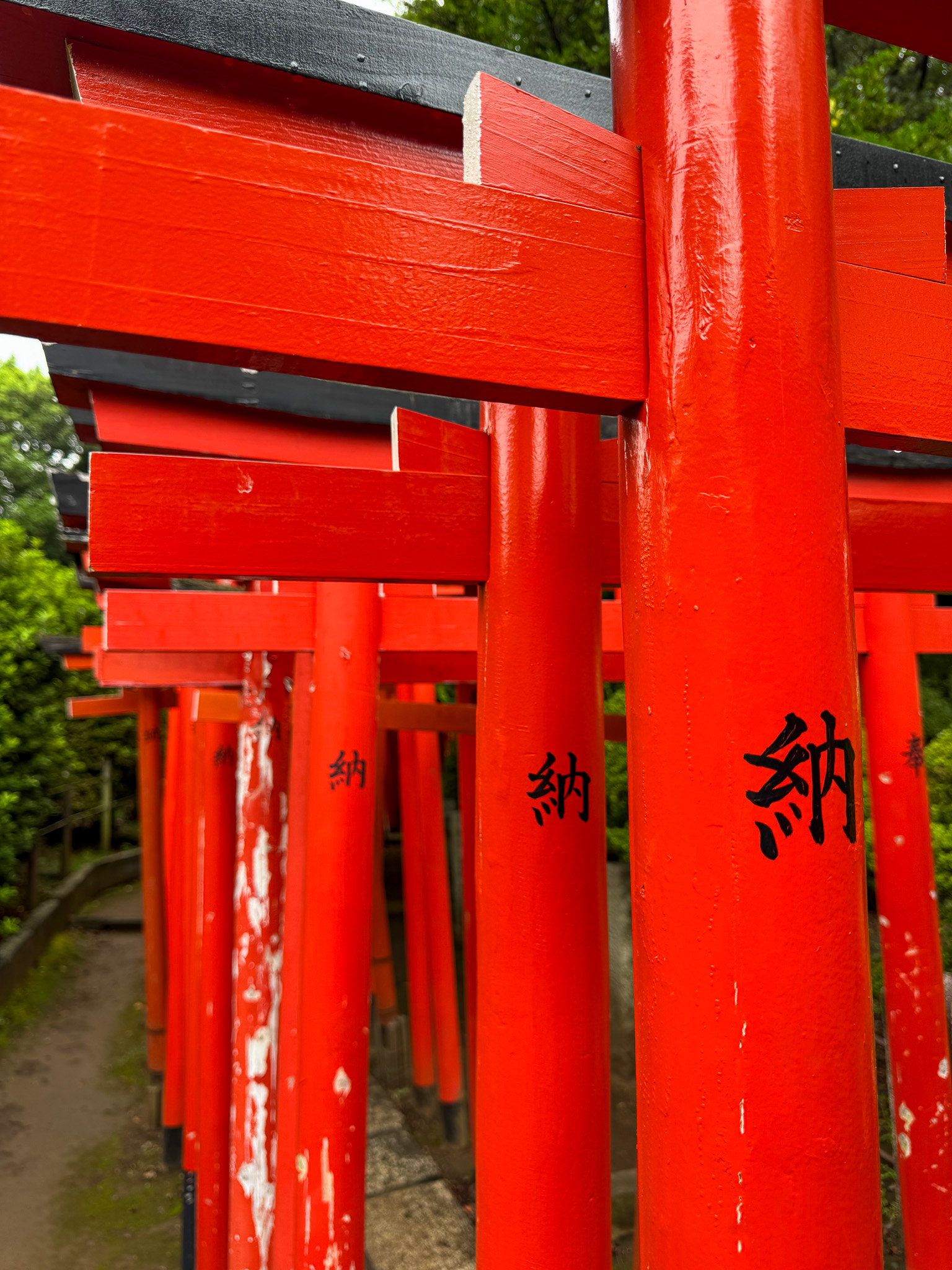
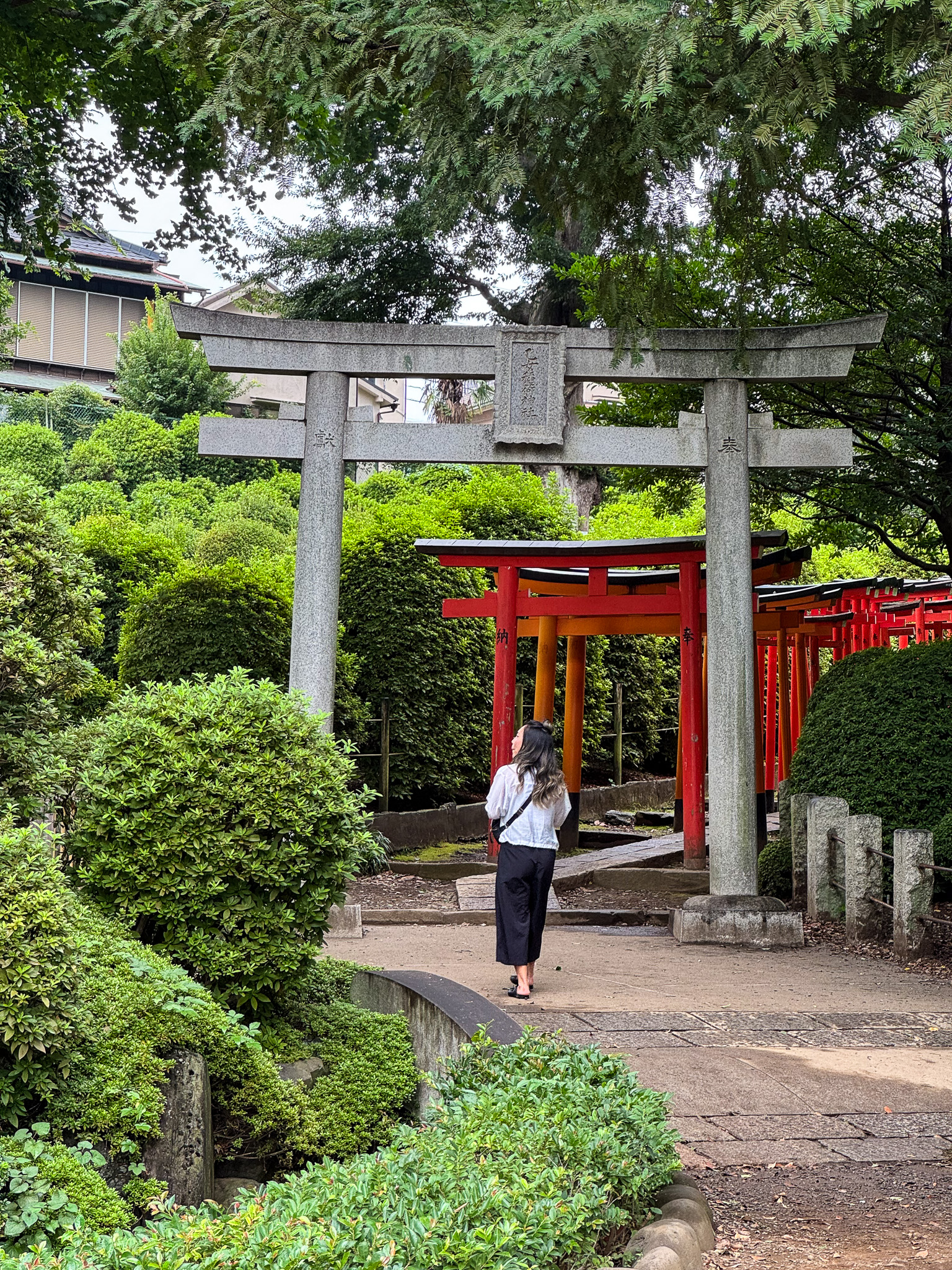
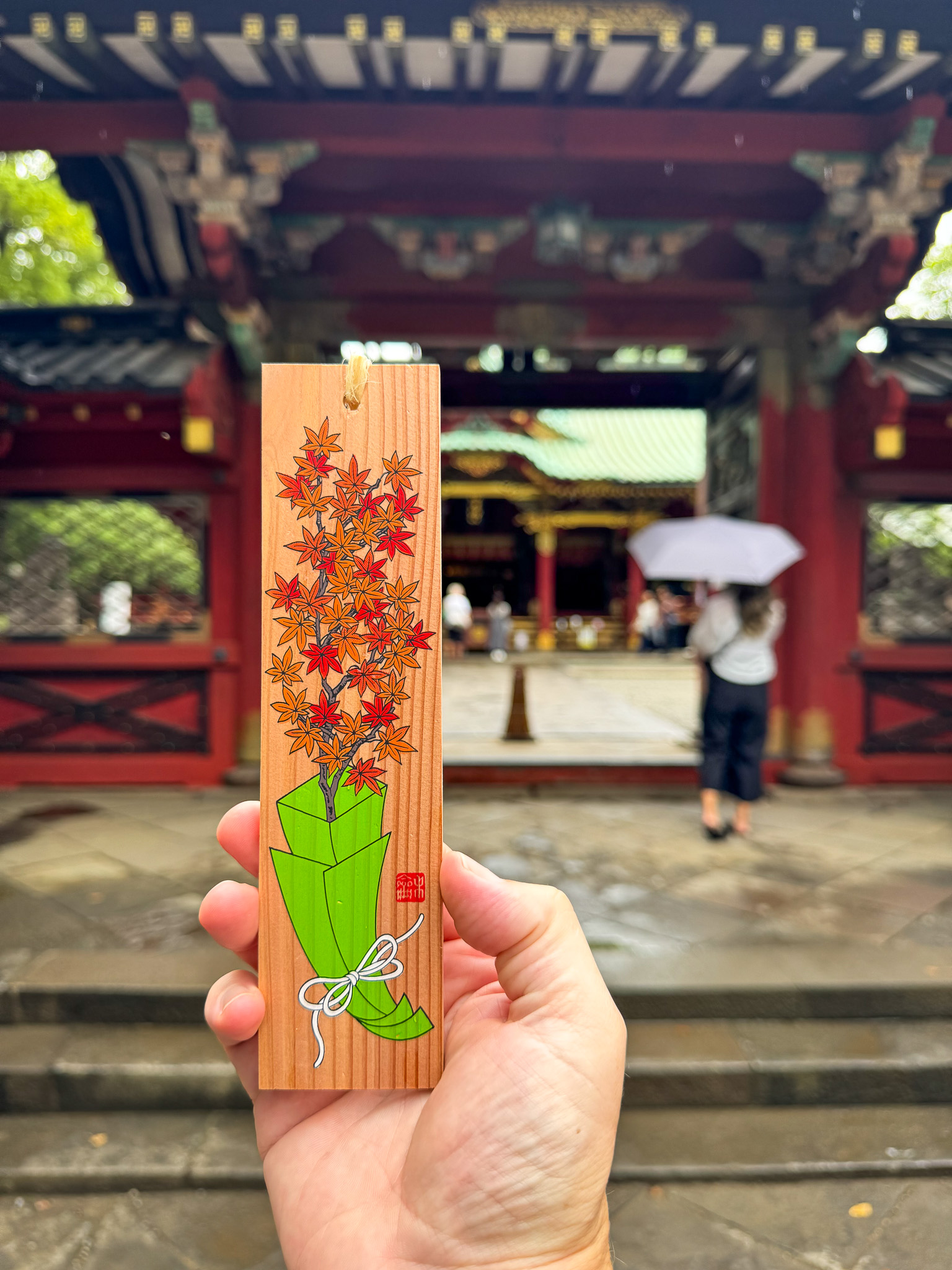
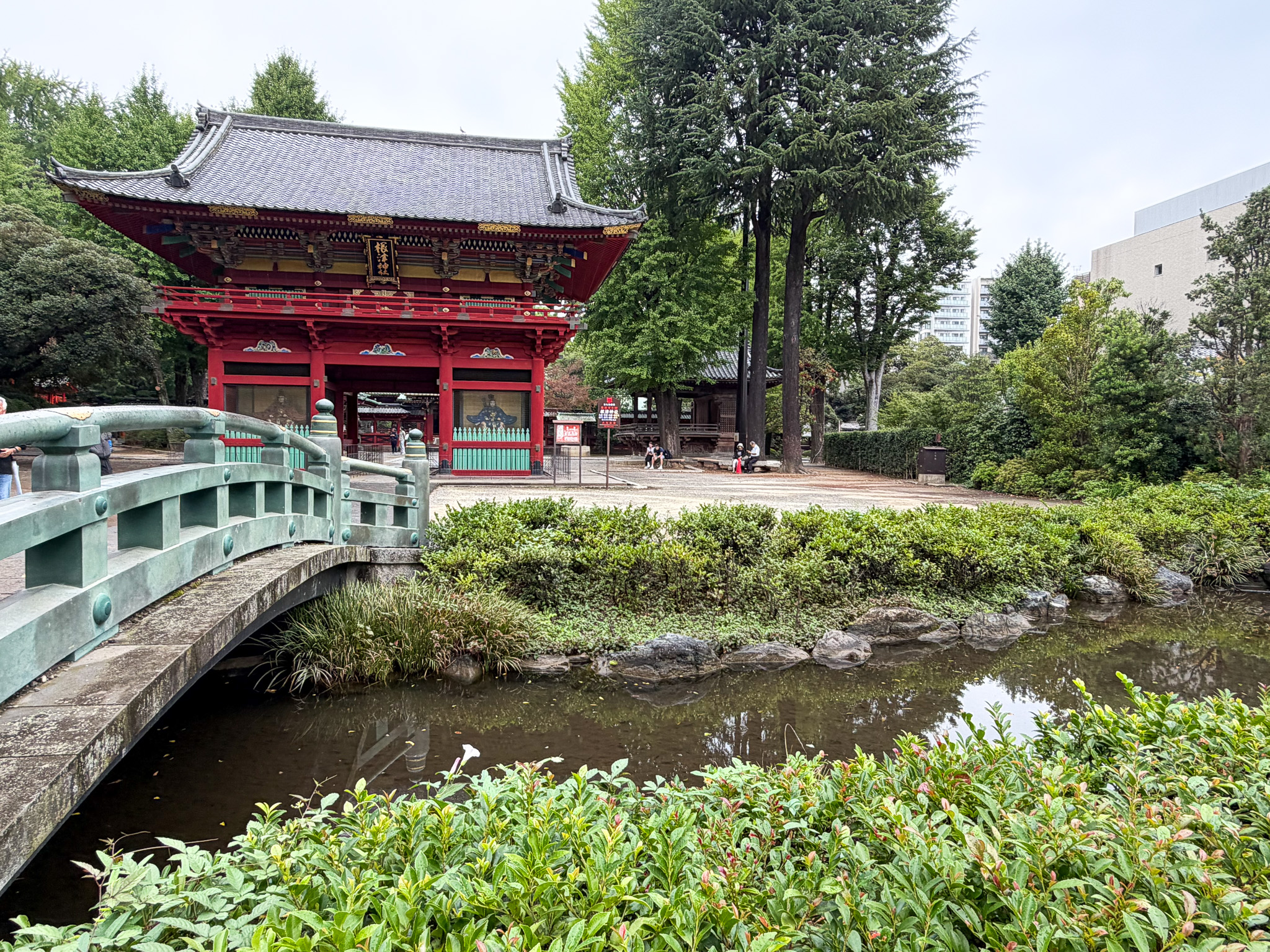
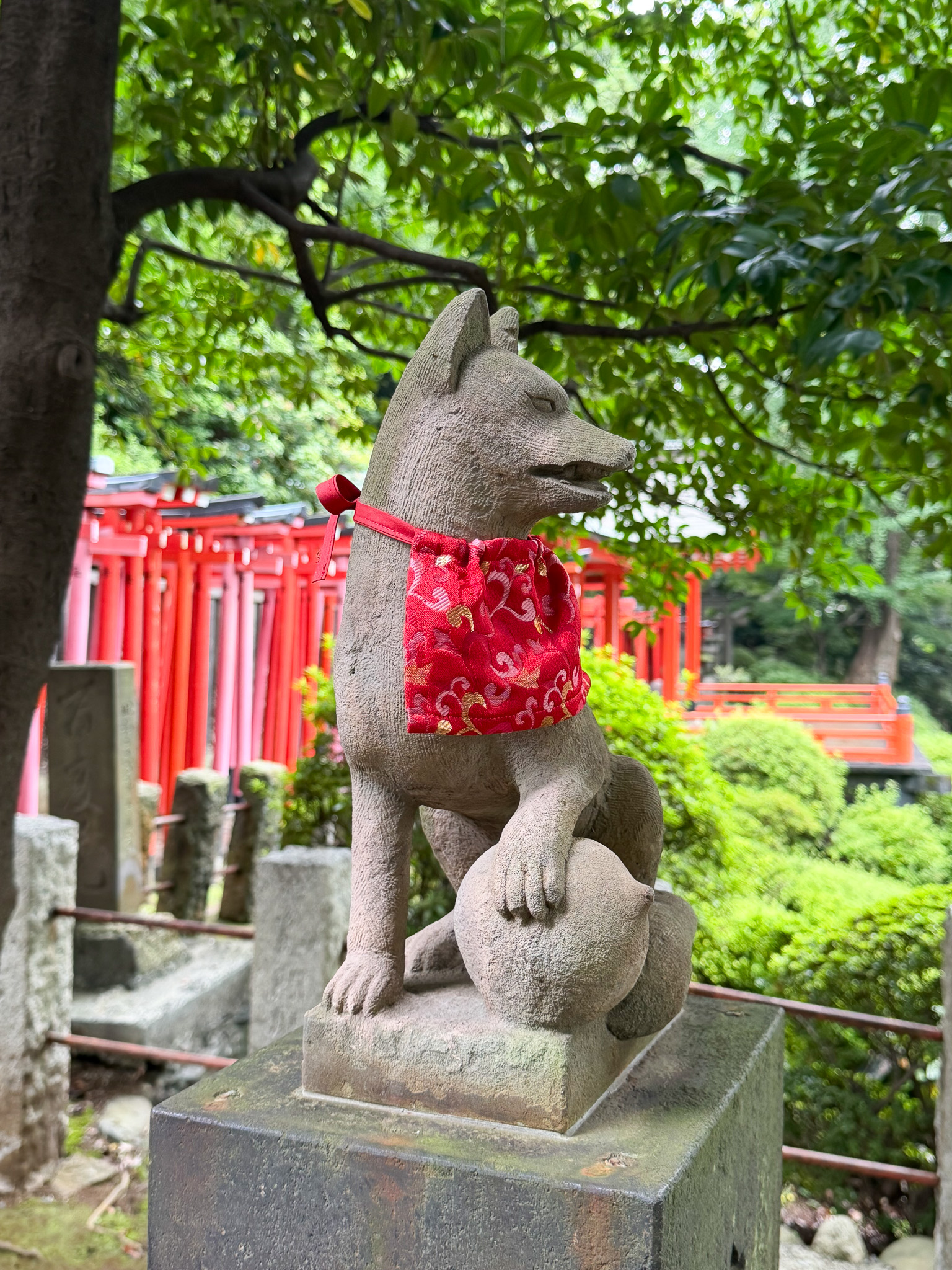
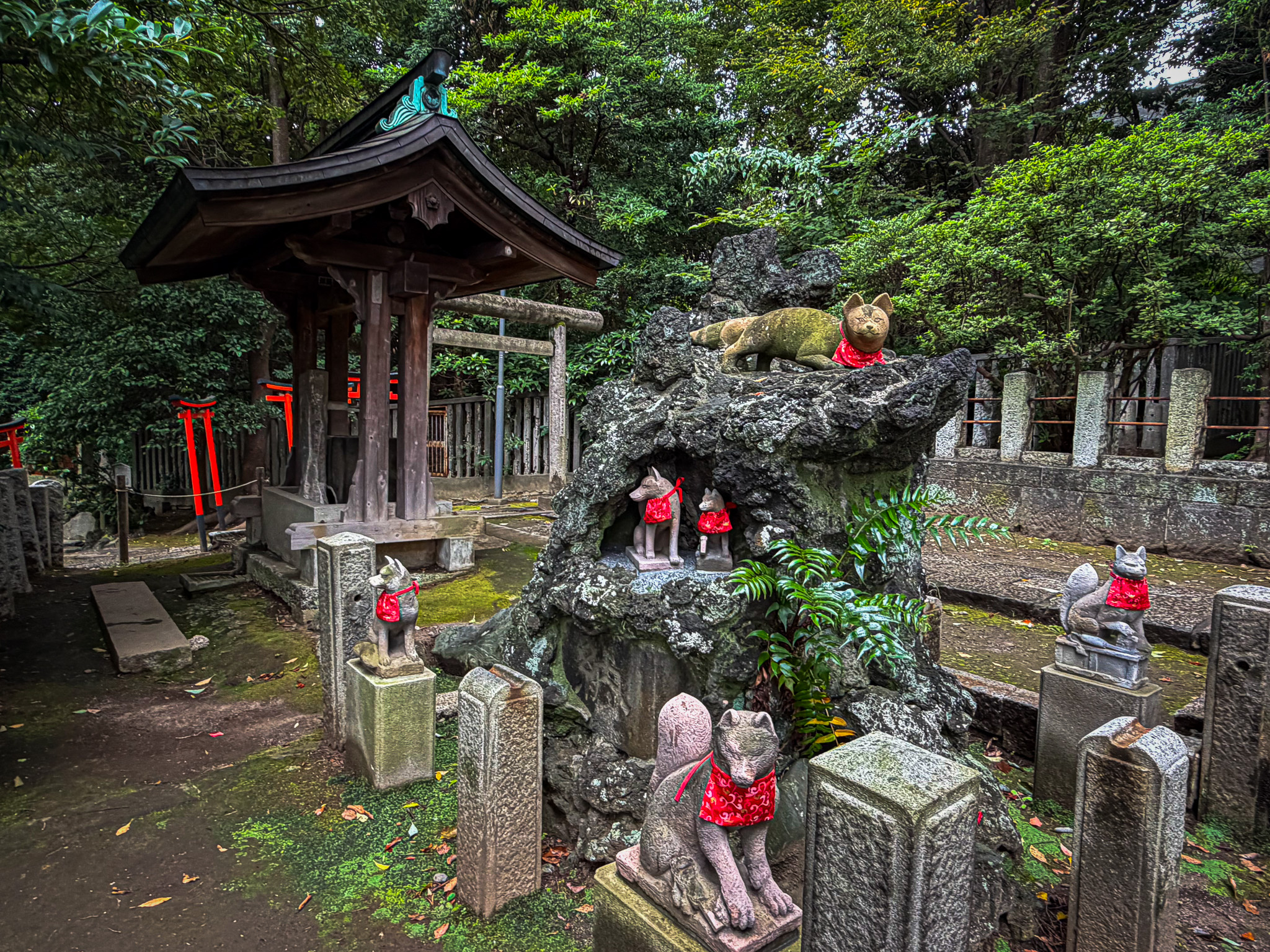
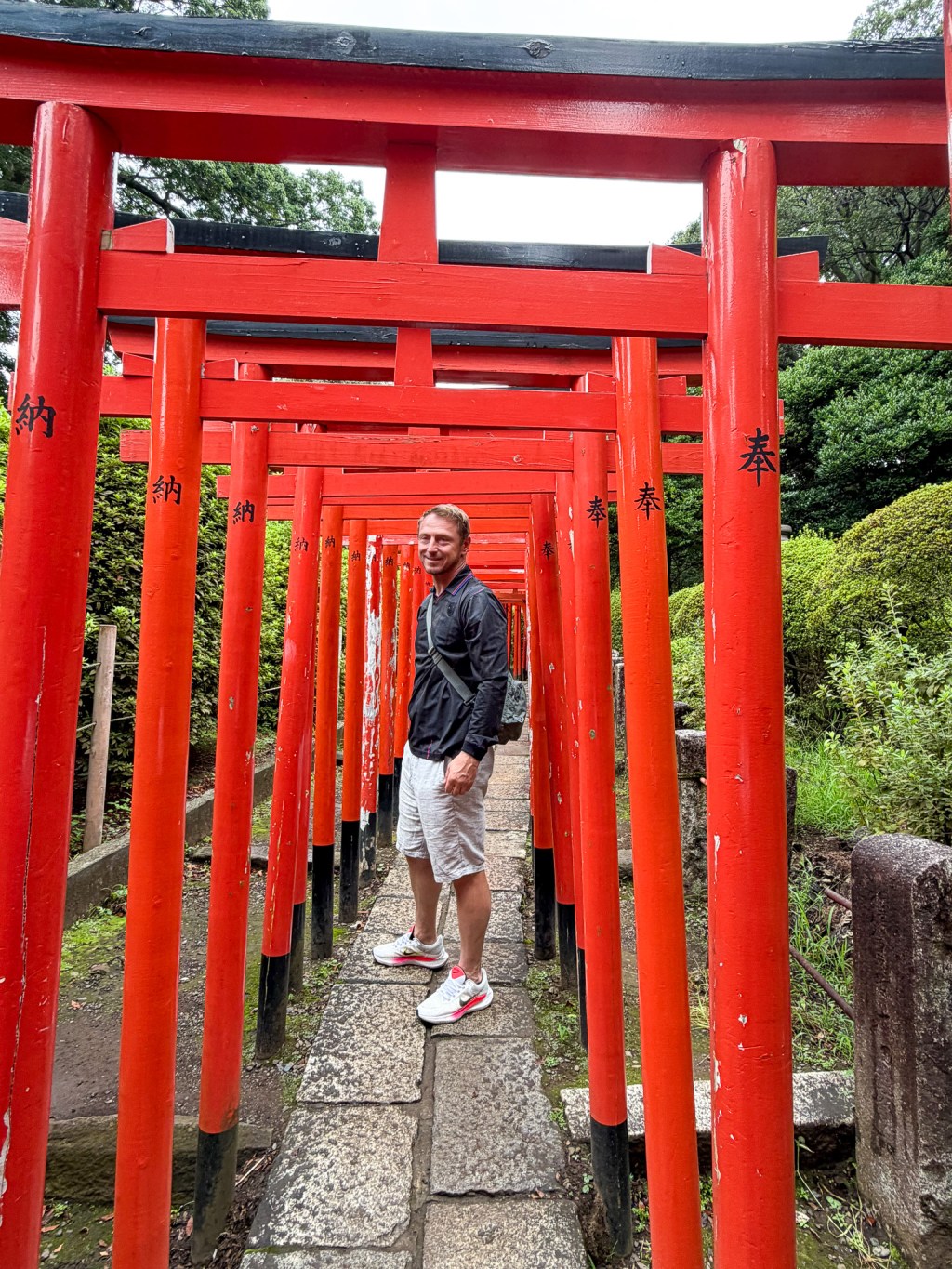
Start near Nippori Station and descend the Yuyake Dandan, or Sunset Stairs, toward Yanaka Ginza. Rather than chasing major landmarks, snack your way through the neighborhood, browse the small shops and keep an eye out for the cat motifs scattered throughout the area. From there, continue toward Nezu Shrine, one of Tokyo’s oldest Shinto shrines, known for its traditional architecture, gardens and photogenic pathway of smaller red torii gates.
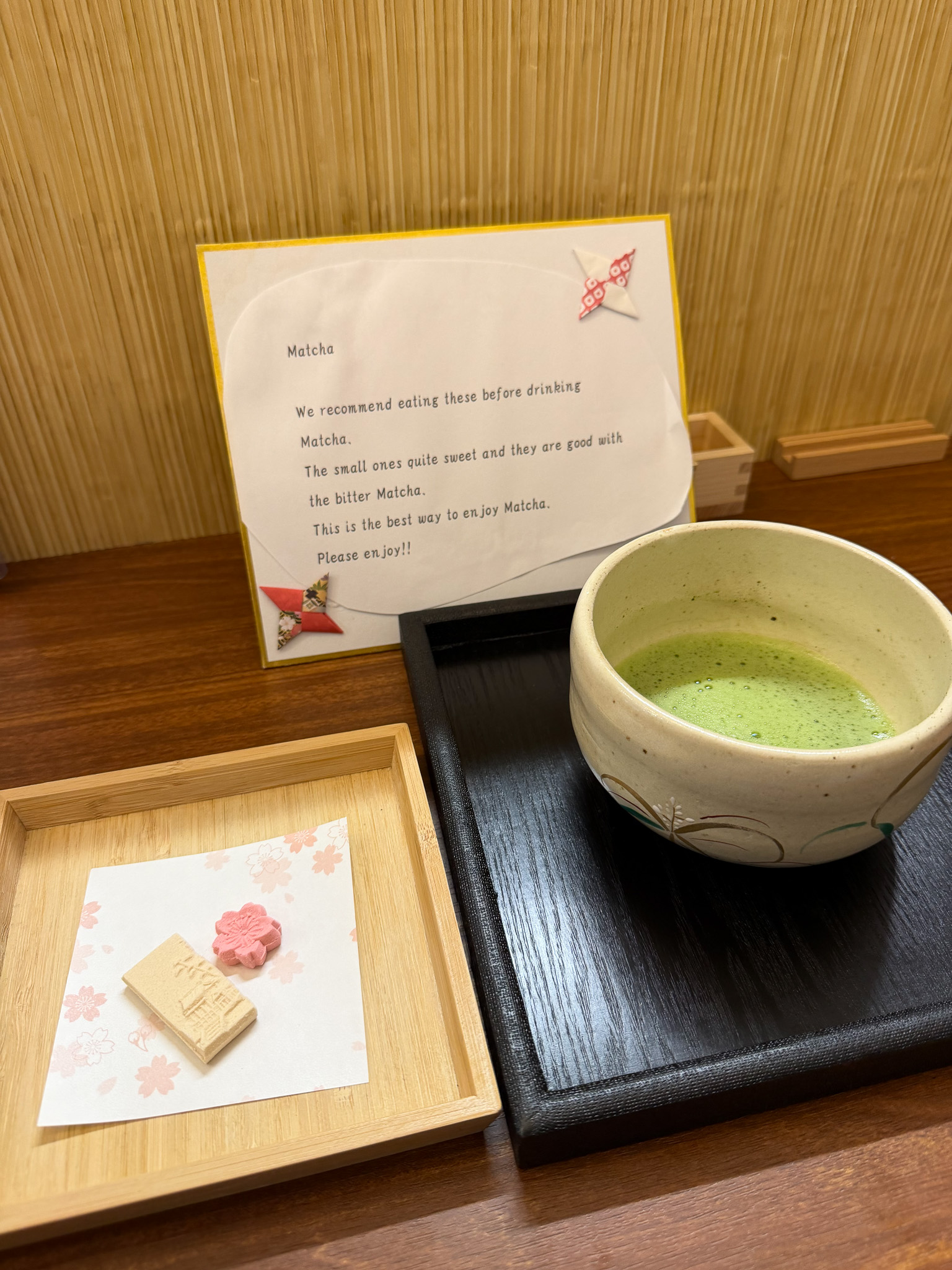
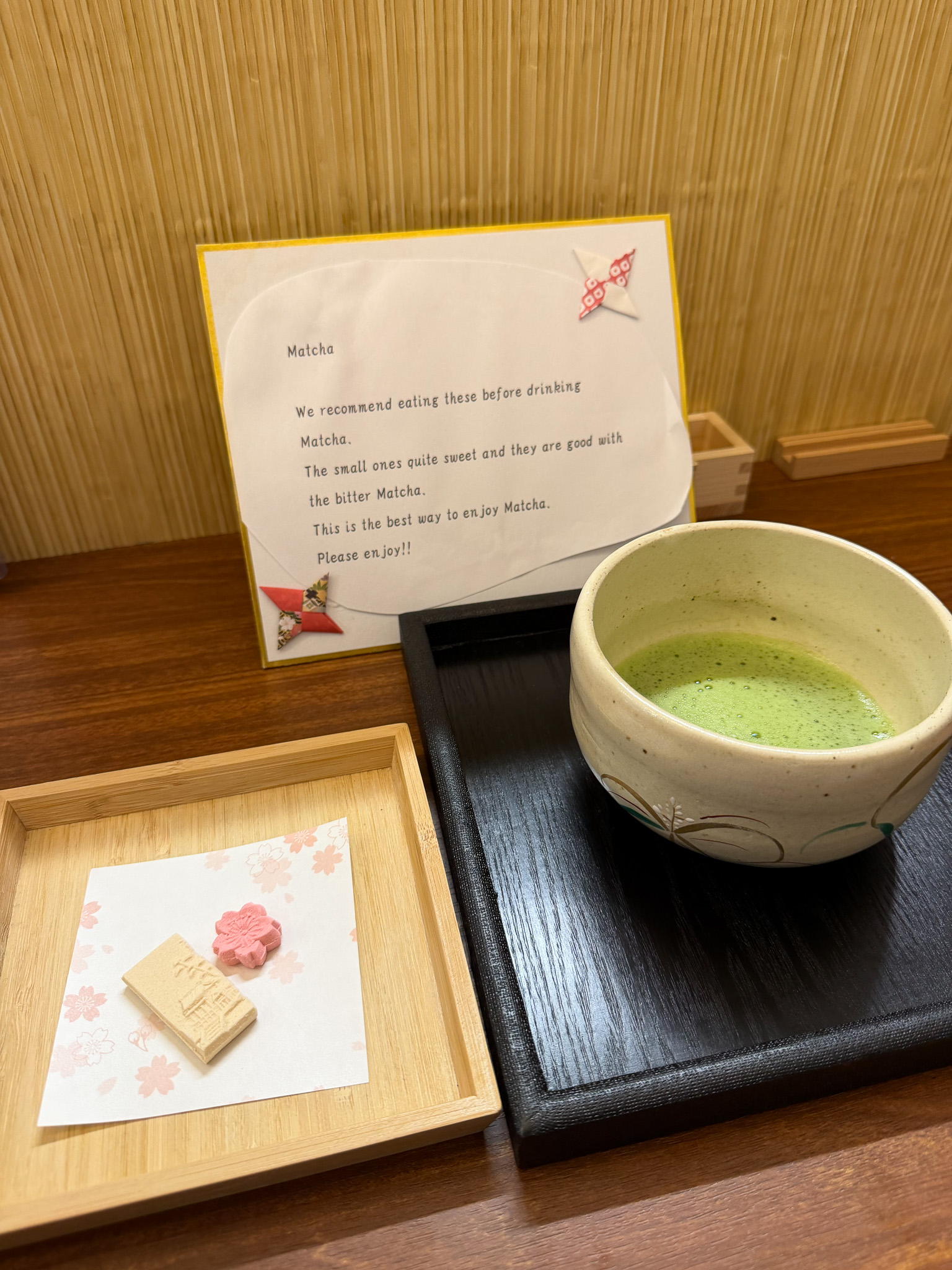
One of our favorite stops nearby was Hamashima Shoten (濱島商店), a tiny, charming shop serving mochi, matcha and shaved ice. They taught us how to whisk the matcha properly, and before we left they gave us little origami gifts. It was one of those small, unexpected experiences that made this part of Tokyo feel especially memorable.
If you’ve already experienced Tokyo’s headline sights and want to see a quieter side of the city, this is one of the combinations we’d choose.
🍣 What to Eat in Tokyo
Tokyo is one of those cities where eating can easily become the itinerary. You could spend weeks here and barely make a dent in the city’s food scene, from tiny ramen counters and neighborhood izakayas to some of the world’s most celebrated sushi restaurants.
Rather than chasing every viral restaurant, we’d focus on trying a variety of Japanese foods, make reservations for one or two meals that really matter to you, and leave plenty of room to stumble into neighborhood spots along the way.
🍣 Sushi + Omakase
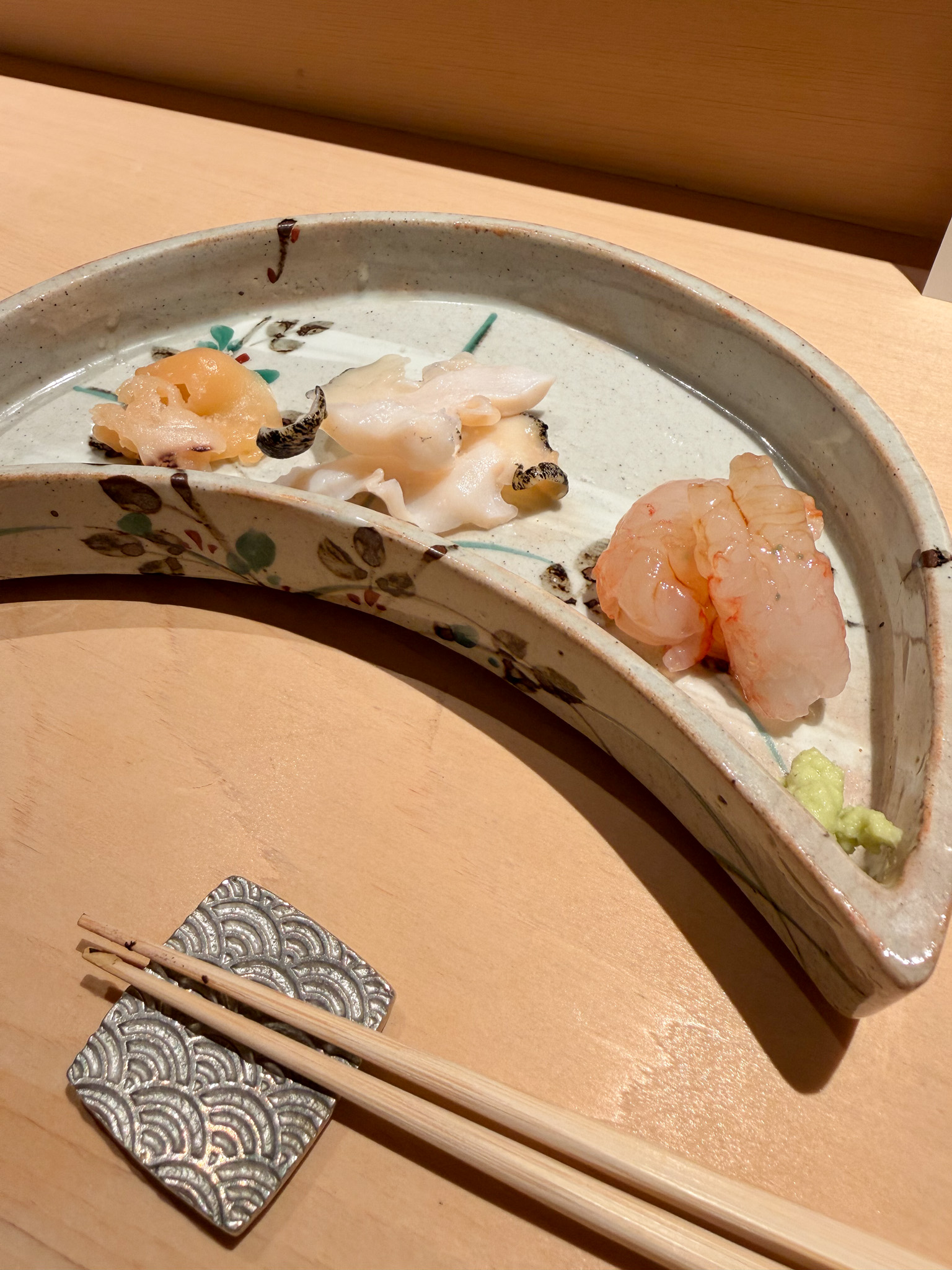
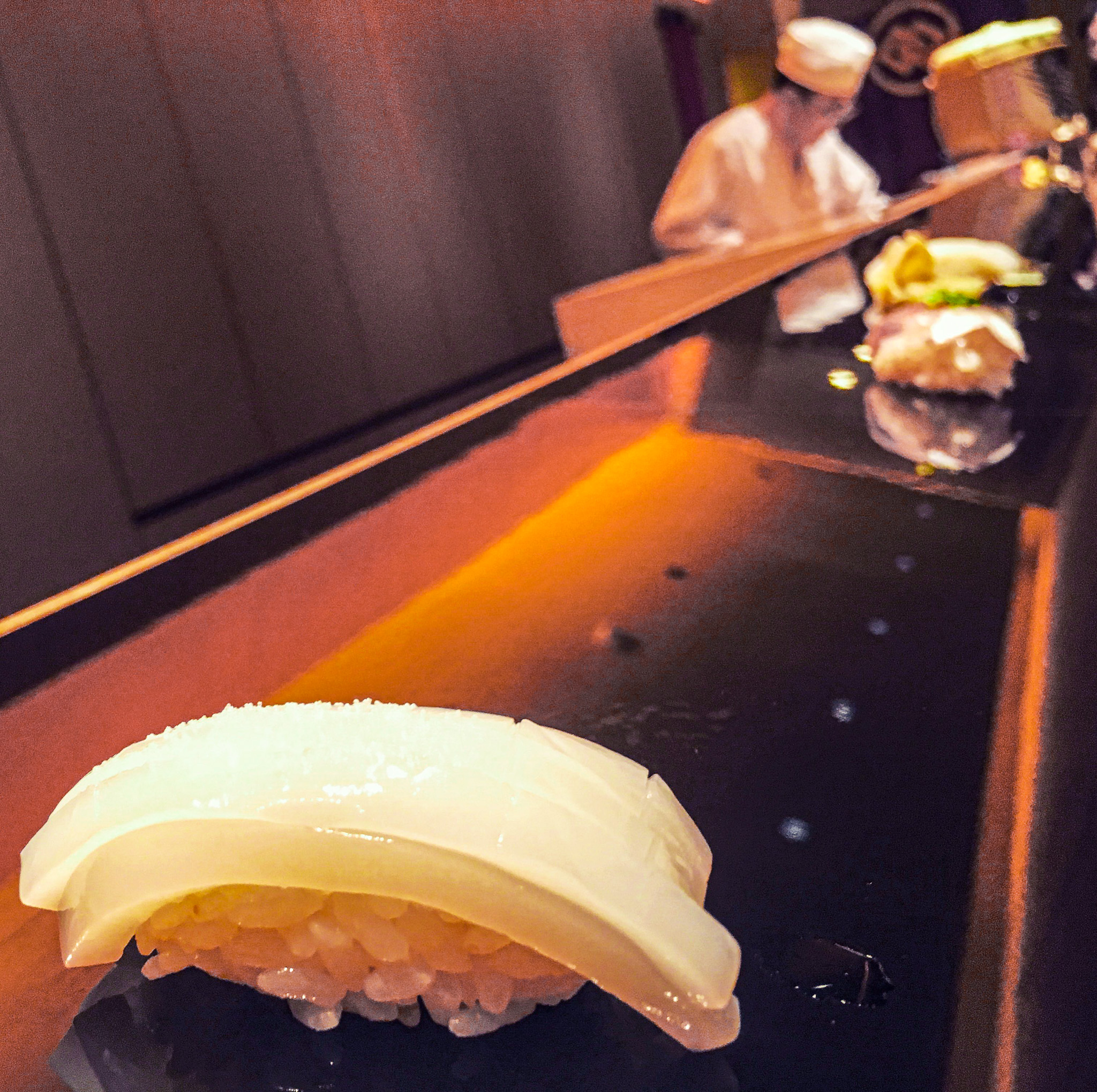
If there’s one meal we’d splurge on in Tokyo, it’s sushi. You don’t have to spend hundreds of dollars to eat great sushi here, but experiencing an intimate omakase, where the chef chooses and prepares each course in front of you, is pretty special.
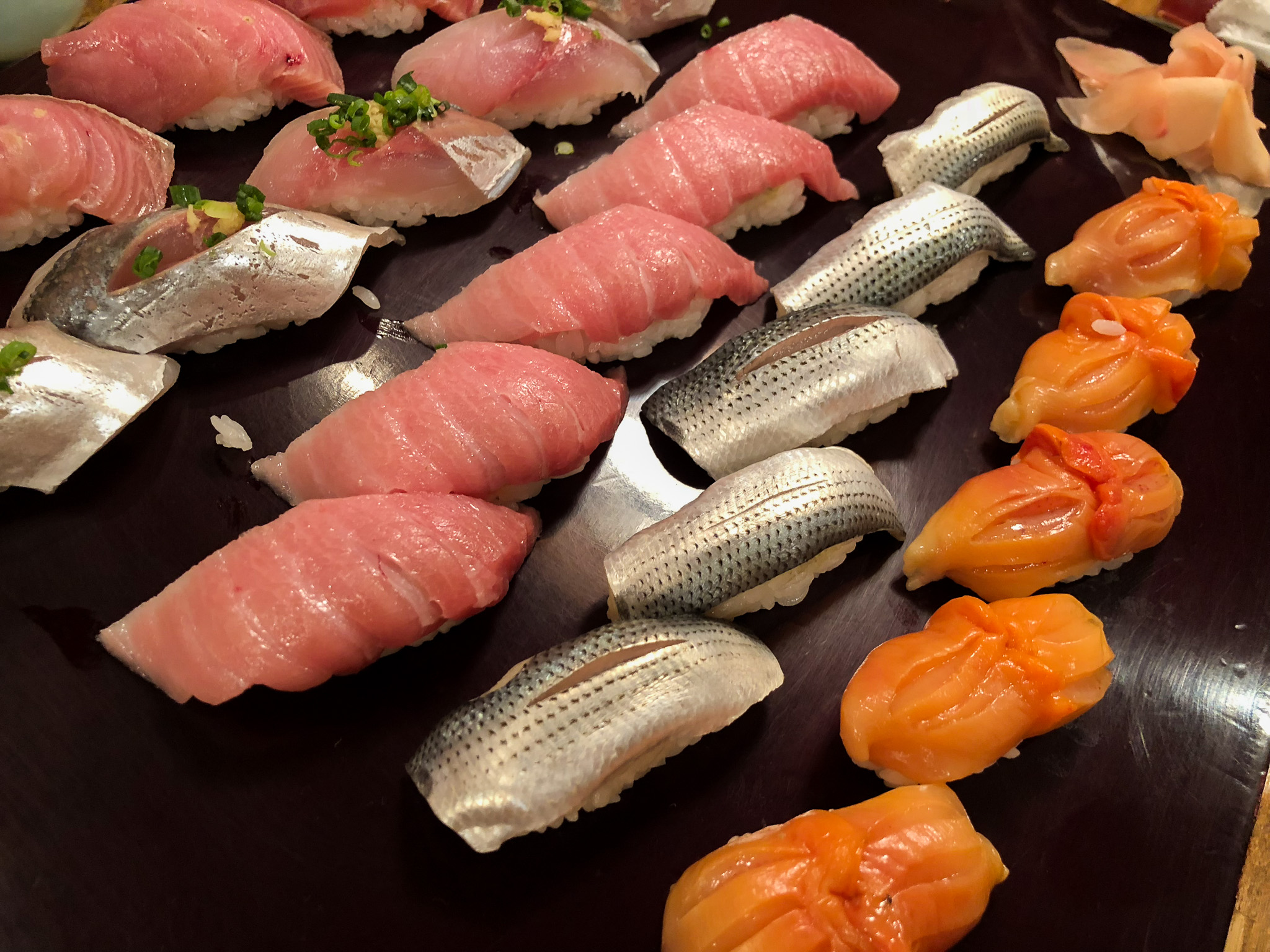
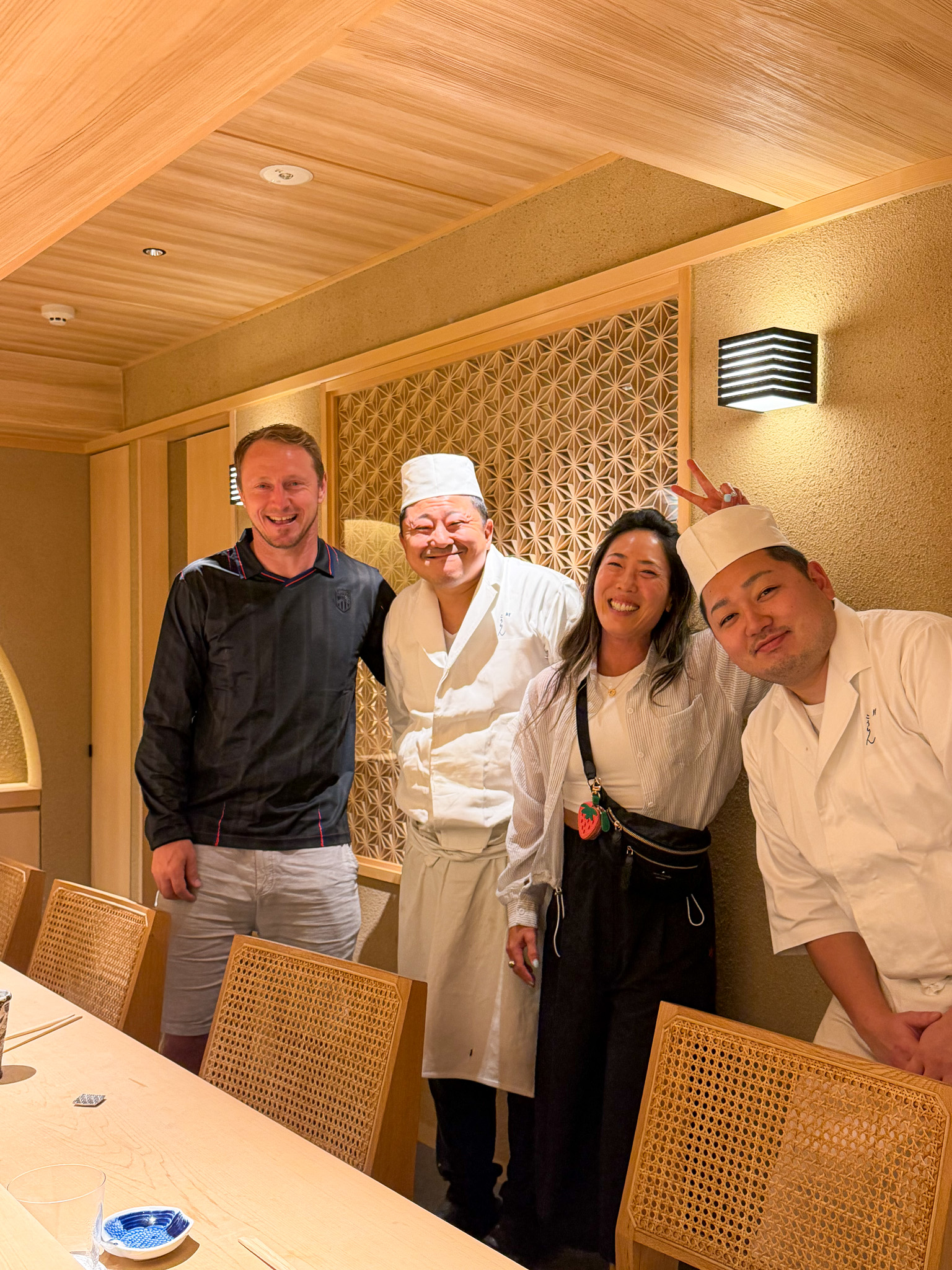
One of the biggest splurges of our latest trip was Sushi Korin in Nishiazabu, and we absolutely loved it. Expect to spend roughly $200–250 USD per person, but the experience felt worth it. We tried everything from barracuda and monkfish liver to some of the best sea bream we’ve ever had, but one of the highlights was tasting our way through different cuts of tuna, progressing from the leanest all the way to the richest, fattiest pieces.
The husband-and-wife team were incredibly warm, spoke excellent English and explained what we were eating throughout the meal. The craftsmanship was serious without the restaurant feeling stuffy, and we spent the evening talking with the chef, his apprentice, his wife and the other guests at the counter. If you’re looking for a high-end sushi experience where you can actually engage with the people preparing your meal, this was one of our favorites.
You’ll also see Tsukiji Outer Market recommended constantly for sushi and seafood. Just know that the wholesale fish market and famous tuna auction moved to Toyosu Market in 2018. The Outer Market remains packed with sushi restaurants, seafood and food stalls, but it’s become extremely touristy and we decided to skip it on our latest trip. If you do go, we’d arrive early and have a couple of specific places in mind rather than simply joining the longest line you see.
OUR TIP: You don’t need to spend $200+ to eat excellent sushi in Tokyo. We’d splurge on one omakase if it’s important to you, then balance it with casual sushi spots throughout the rest of your trip.
🍜 Ramen
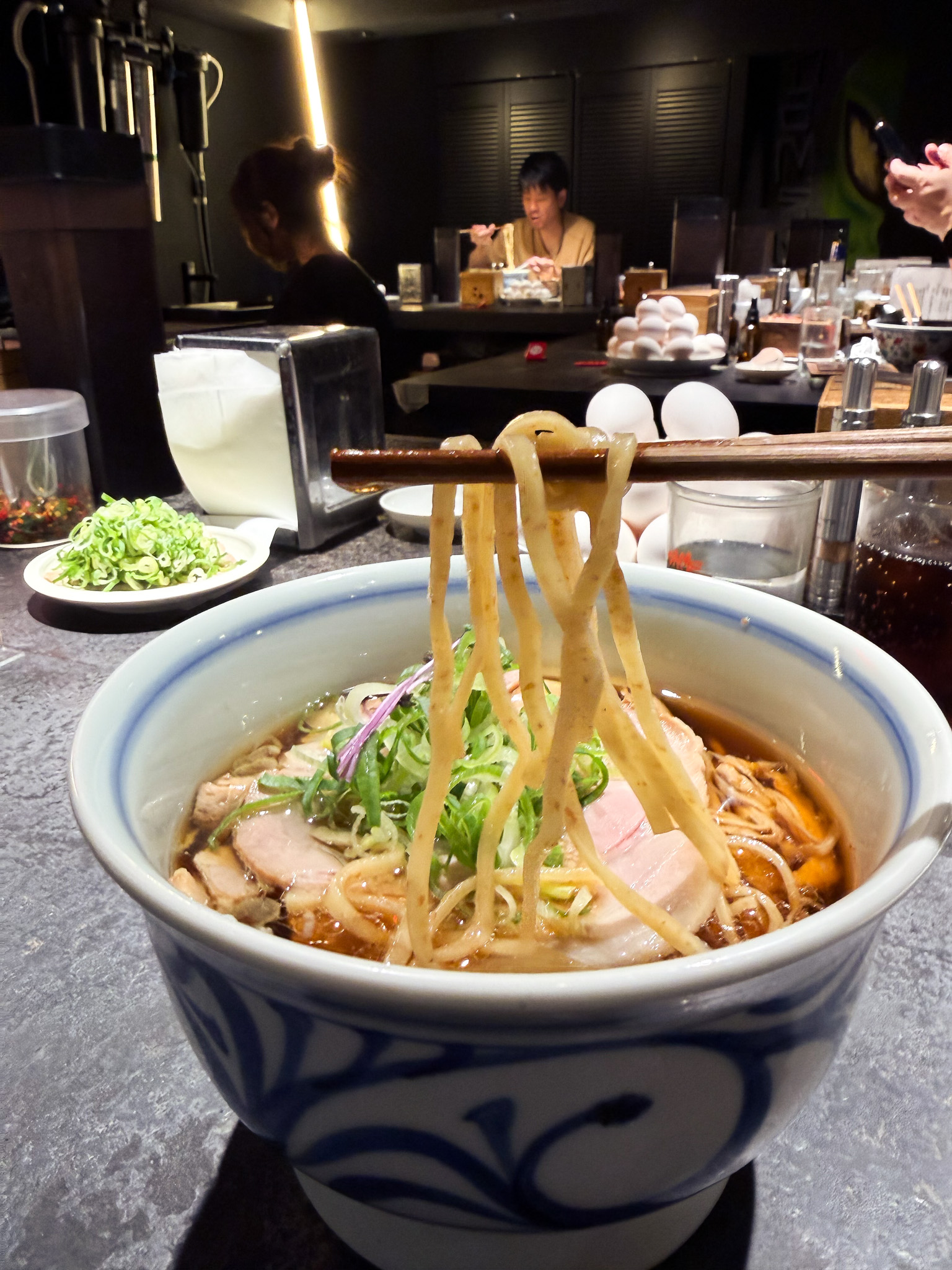
You can’t come to Tokyo without having at least one bowl of ramen, and we’d actually try a couple because the styles can be completely different. You’ll find everything from rich tonkotsu to soy-based shoyu, salt-based shio and tsukemen, where the noodles are served separately and dipped into a concentrated broth.
Tokyo has also taken ramen to an almost fine-dining level, and several shops have received Michelin recognition over the years.
A few to put on your radar:
- Soba House Konjiki Hototogisu Honten in Shinjuku is a former Michelin-starred ramen shop particularly known for its clam-based shio ramen. It’s also conveniently located if you’re staying in Shinjuku.
- Sosakumen Kobo Nakiryu in Otsuka is another former Michelin-starred shop, famous for its tantanmen.
- Fuunji Shinjuku is a great option if you want to try tsukemen, with thick noodles served separately from an intensely flavored dipping broth.
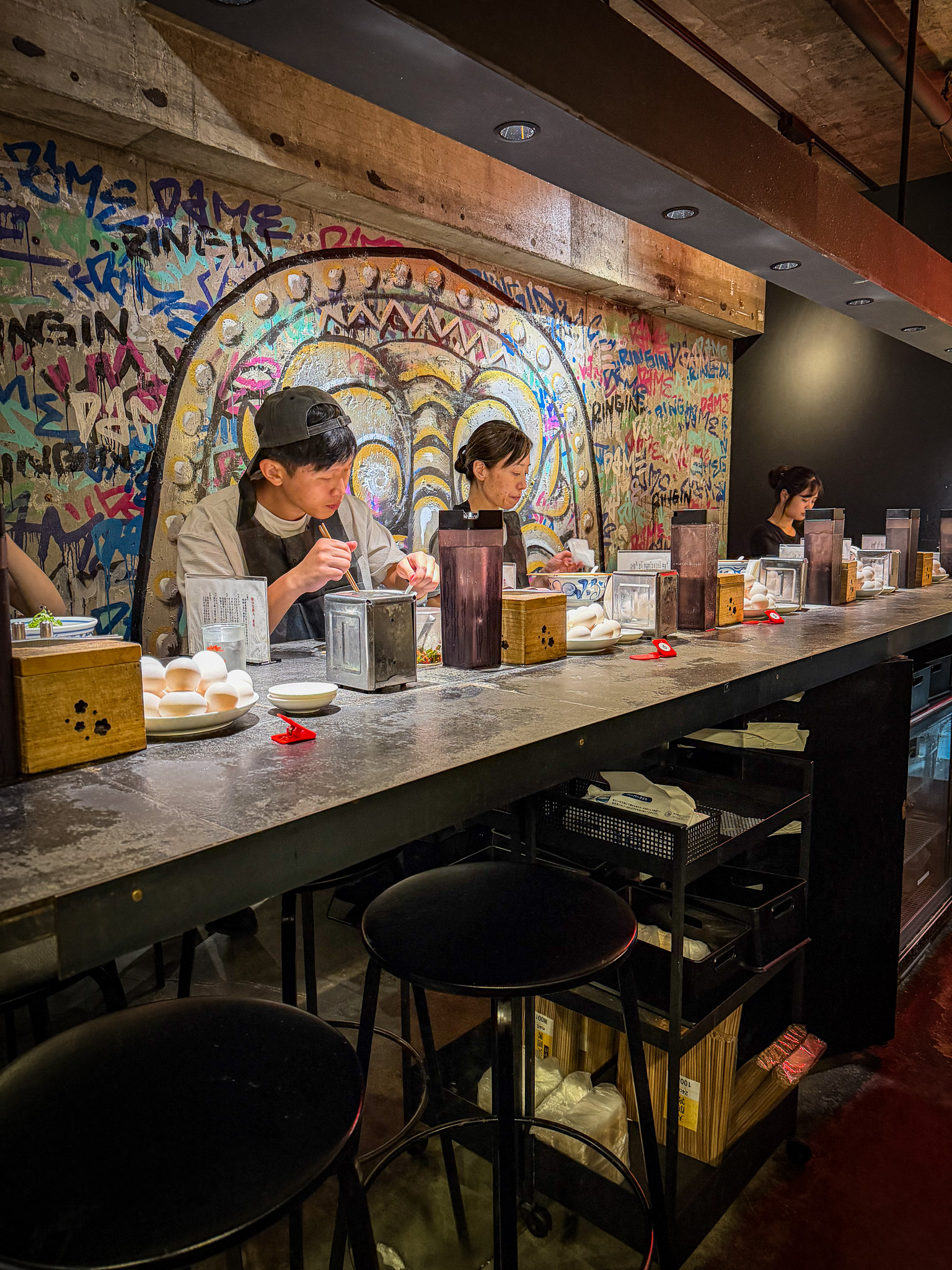
Many ramen shops use a ticket vending machine near the entrance. Pay at the machine, take your ticket and hand it to the staff when you sit down. Don’t worry if you’ve never done it before. It’s pretty easy once you see everyone else doing the same thing.
OUR TIP: Don’t assume the longest line on social media means the best ramen. Tokyo has thousands of ramen shops, and some of the most satisfying bowls come from tiny neighborhood counters.
🥩 Teppanyaki
If you haven’t tried teppanyaki, where meat, seafood and vegetables are cooked on a large iron griddle in front of you, it’s worth adding to your Tokyo food itinerary. The Japanese version is often quite different from American hibachi restaurants. It’s generally less about theatrical tricks and more about showcasing excellent ingredients and precise cooking, especially when you’re having Japanese wagyu.
If you want to make it a splurge, Omotesando Ukai Tei is a beautiful high-end option that would fit naturally into a Harajuku/Omotesando day. For something more casual, Teppan Baby in Shinjuku specializes in Hiroshima-style okonomiyaki, a savory Japanese pancake layered with cabbage, noodles, meat and other toppings, and is much easier on the budget.
🐷 Tonkatsu
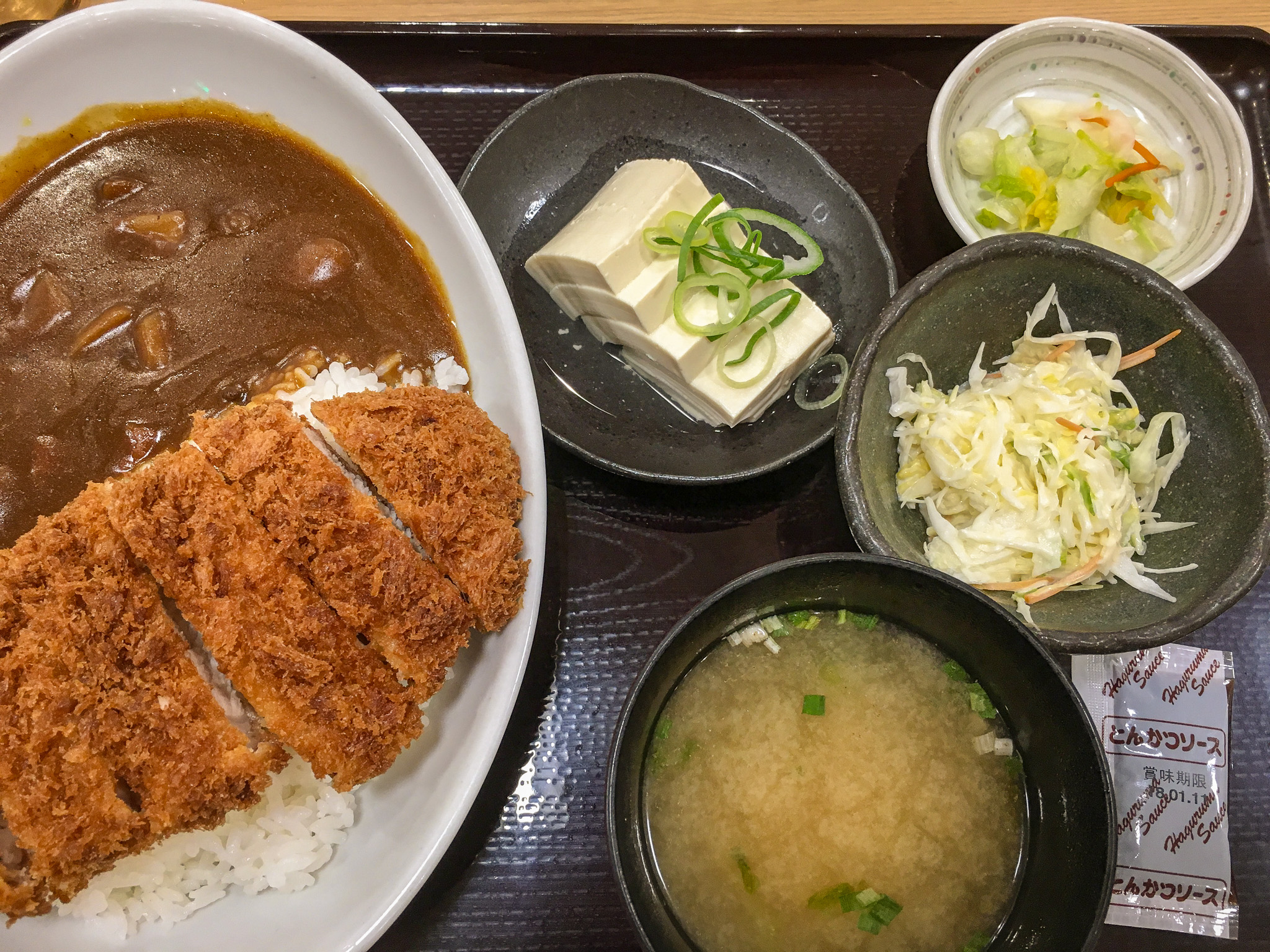
Tonkatsu is one of those deceptively simple Japanese meals we could eat over and over: a thick pork cutlet coated in crispy panko, fried and usually served with shredded cabbage, rice, miso soup and a sweet-savory tonkatsu sauce.
You don’t necessarily need a destination restaurant for this one. Find a busy neighborhood tonkatsu specialist and choose between hire, the leaner tenderloin, or rosu, the richer, fattier loin. Tonkatsu Maisen is also an easy, reliable option with multiple locations around Tokyo if you want a specific name to look for.
🍢 Yakitori + Izakayas
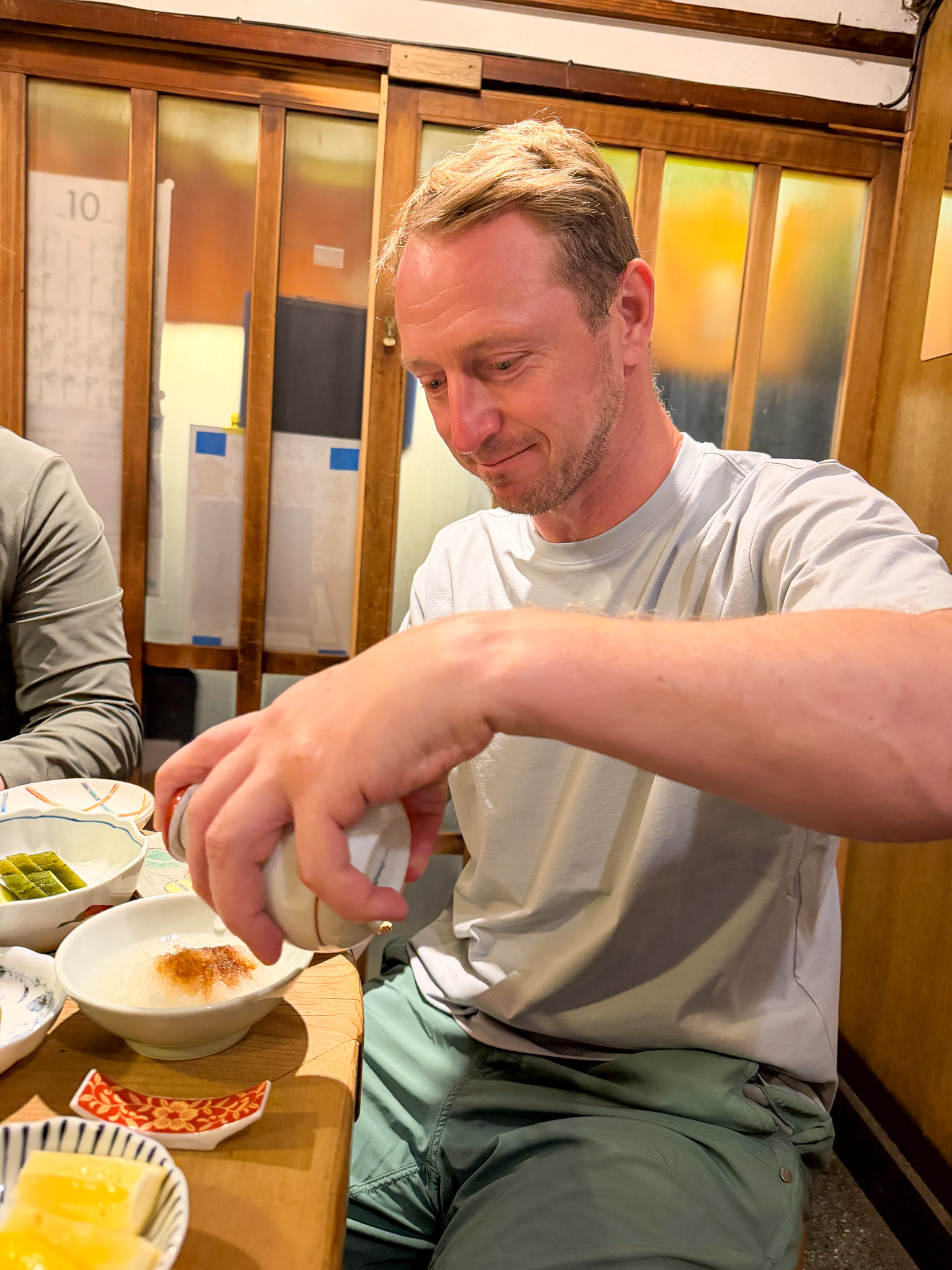
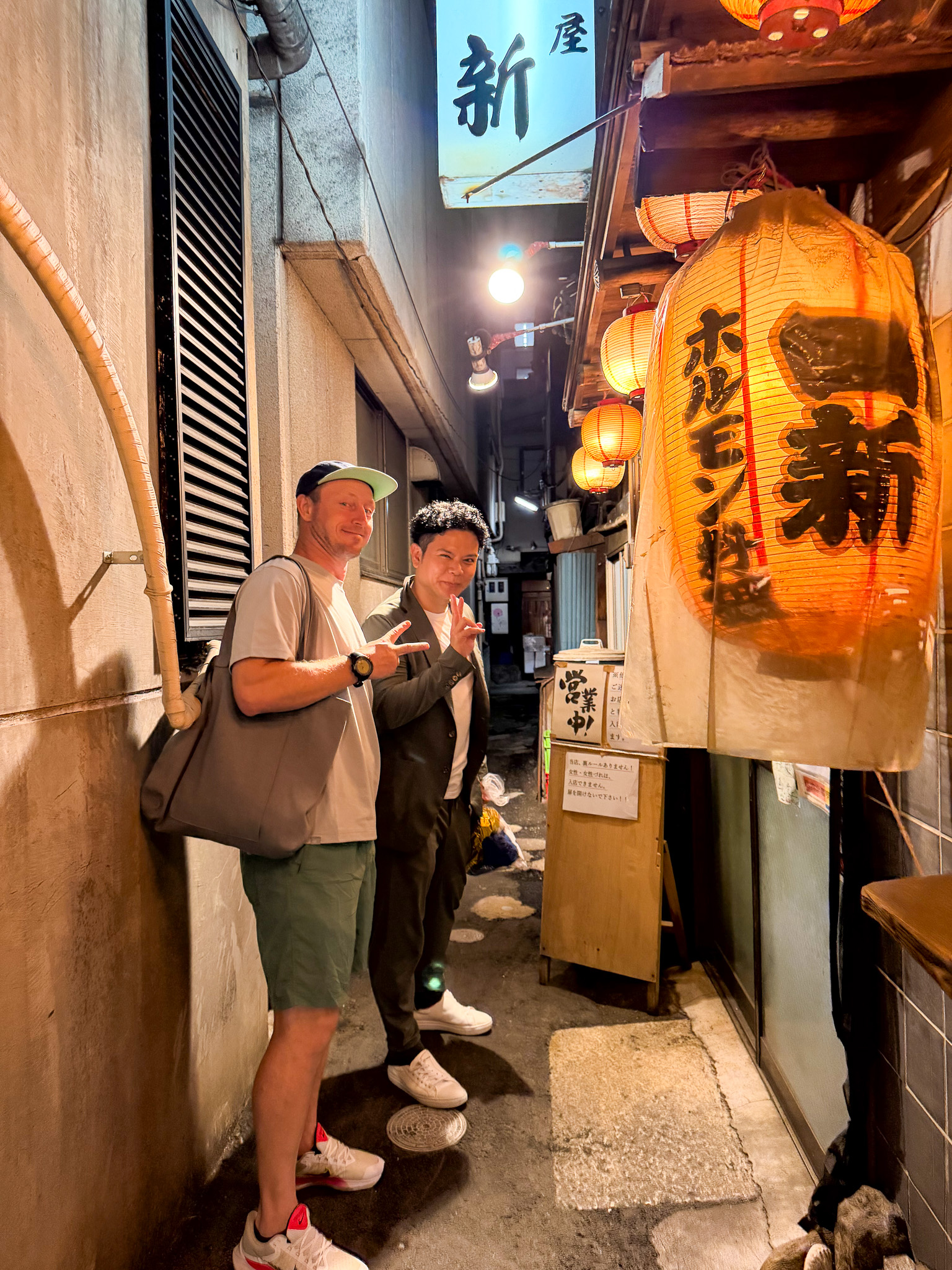
For a casual night out, find a good izakaya, Japan’s version of a casual pub where you order drinks and lots of small dishes to share. Yakitori, skewers of chicken grilled over charcoal, is a classic, but don’t stop there. Izakaya menus can include sashimi, grilled fish, tofu, vegetables and fried dishes.
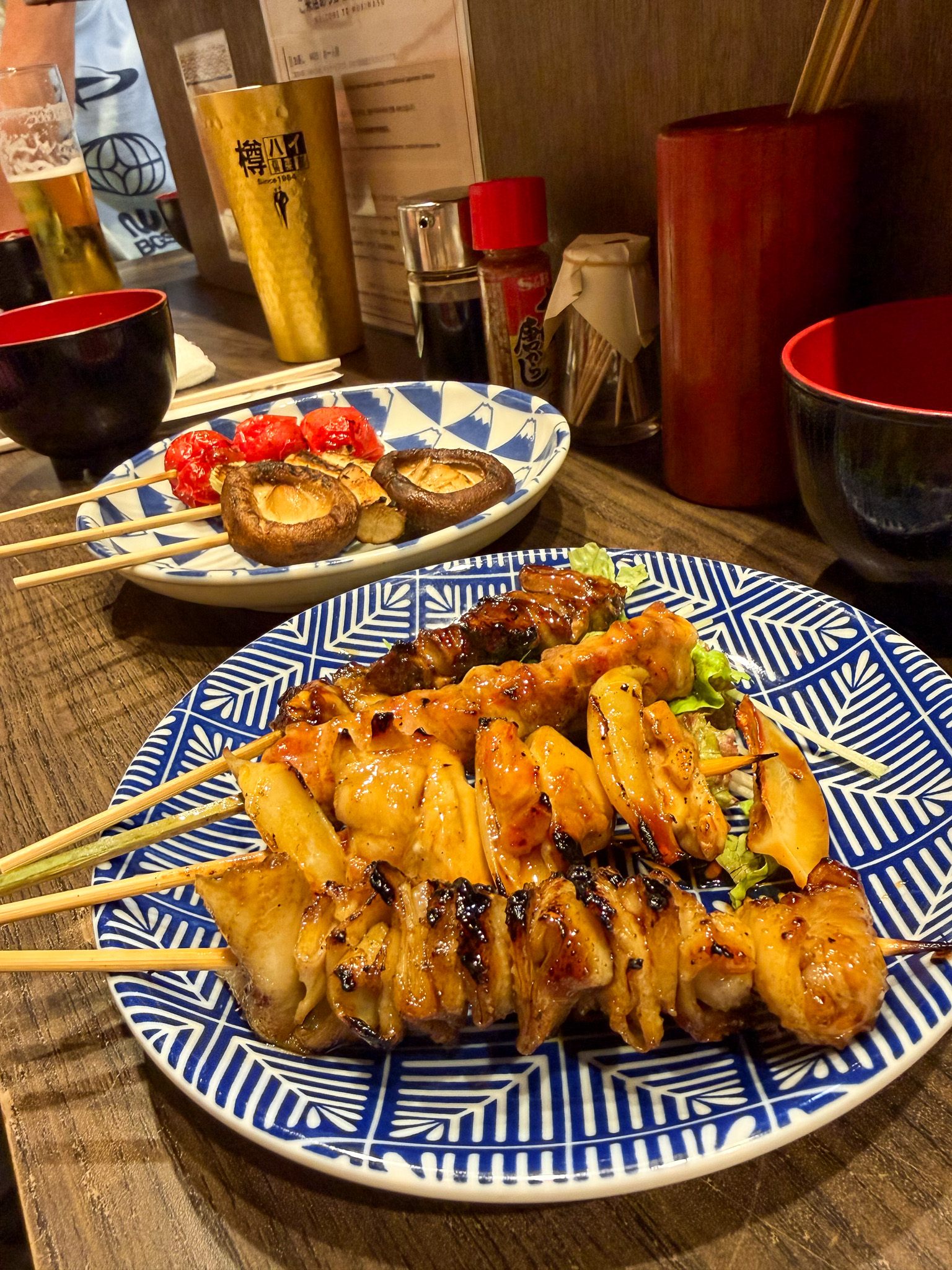
We’d encourage you to get away from the most famous tourist spots and try a neighborhood izakaya instead.
🍜 Soba + Udon
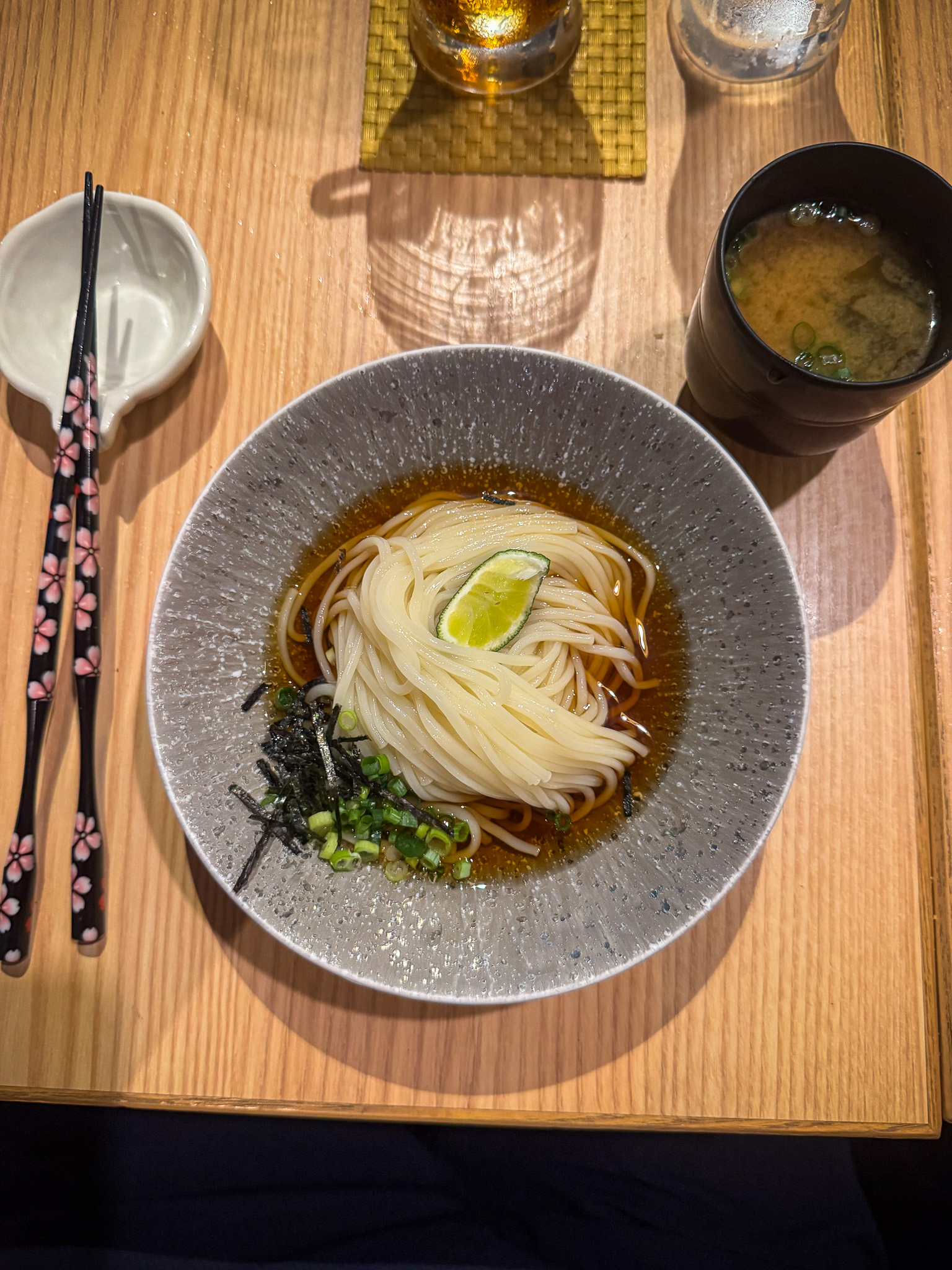
For something simpler, try soba or udon. Soba noodles are made primarily from buckwheat and can be served hot in broth or cold with a dipping sauce, while thick, chewy udon noodles make for one of Japan’s ultimate comfort foods.
They’re also great when you need a break from richer meals. And don’t overlook the tiny noodle shops in and around train stations. A quick bowl of noodles at a counter can be just as much a part of eating your way through Tokyo as a restaurant you’ve reserved months ahead.
🍱 Depachika + Convenience Stores
Not every meal needs to be a restaurant. The depachika we mentioned earlier are genuinely worth building a meal around. You’ll find sushi, bento boxes, yakitori, salads, pastries, sweets and beautifully packaged specialties from around Japan.
And then there are the konbini. 7-Eleven, FamilyMart and Lawson aren’t where we’d tell you to eat every meal, but they’re incredibly useful for breakfast, snacks and late-night food. Try an onigiri rice ball, egg salad sandwich or whatever seasonal snack catches your eye.
🍵 Matcha + Japanese Sweets
And save room for matcha and wagashi, traditional Japanese sweets often served alongside tea.
I drank a lot of matcha in Japan. THE MATCHA TOKYO is an easy option with multiple locations and everything from matcha lattes to matcha soft serve, but we’d also seek out smaller traditional tea and sweet shops as you explore.
OUR TIP: Don’t plan every meal before you arrive. Reserve the experiences that matter most to you, like a special omakase, but leave some meals open. Tokyo is one of the best cities we’ve visited for simply wandering into a small restaurant that looks good and seeing what happens.
🛍️ Shopping in Tokyo
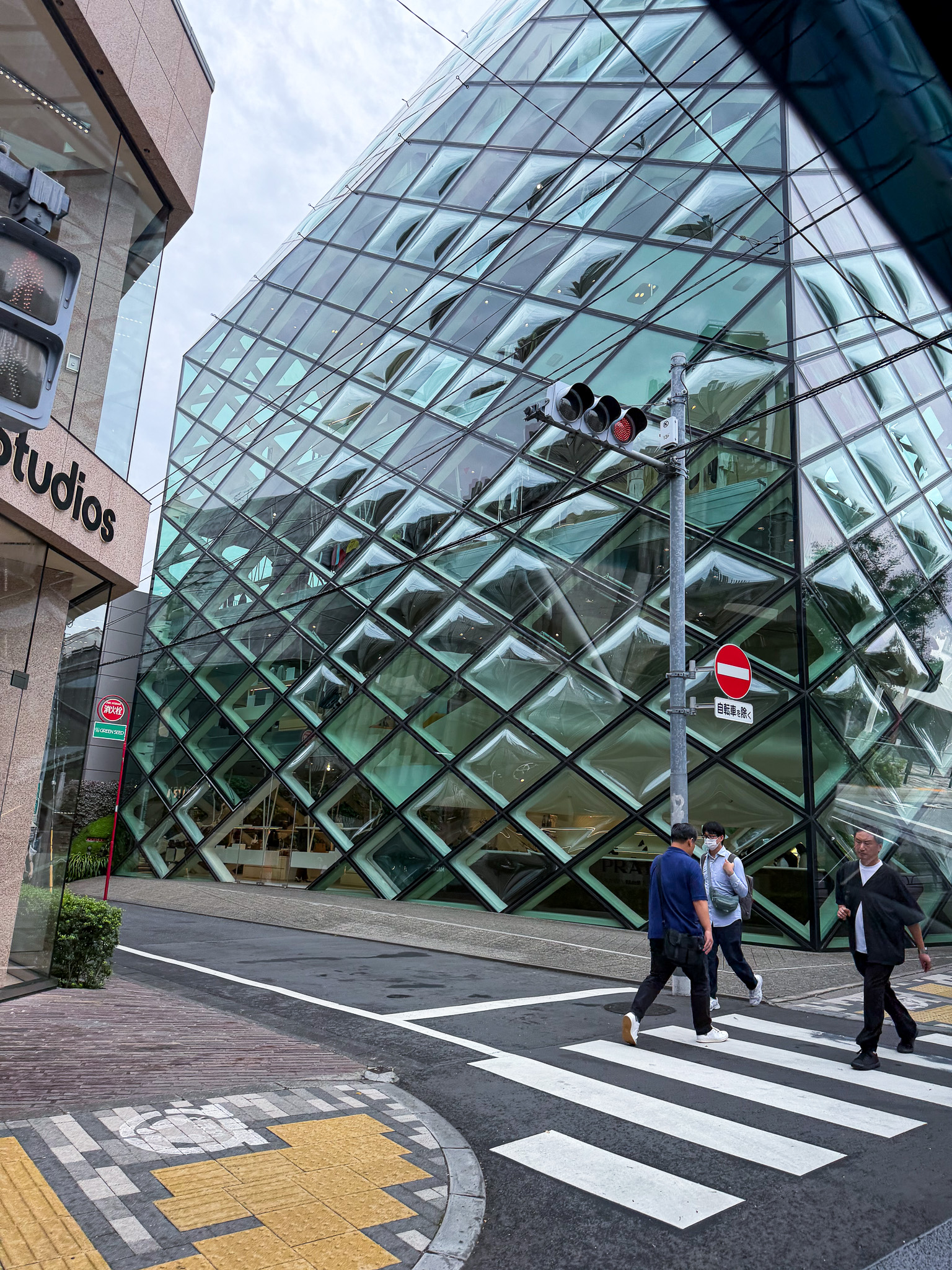
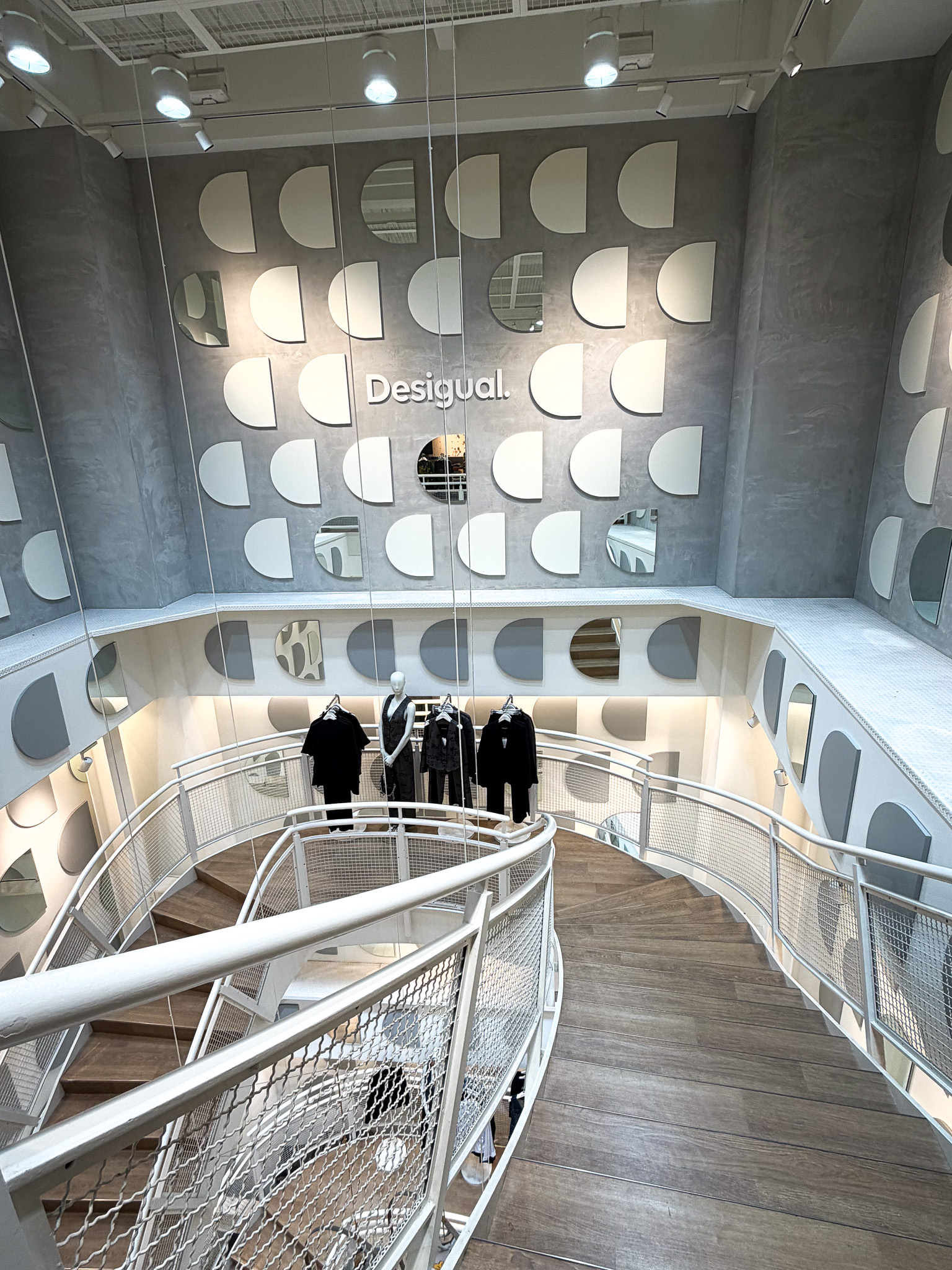
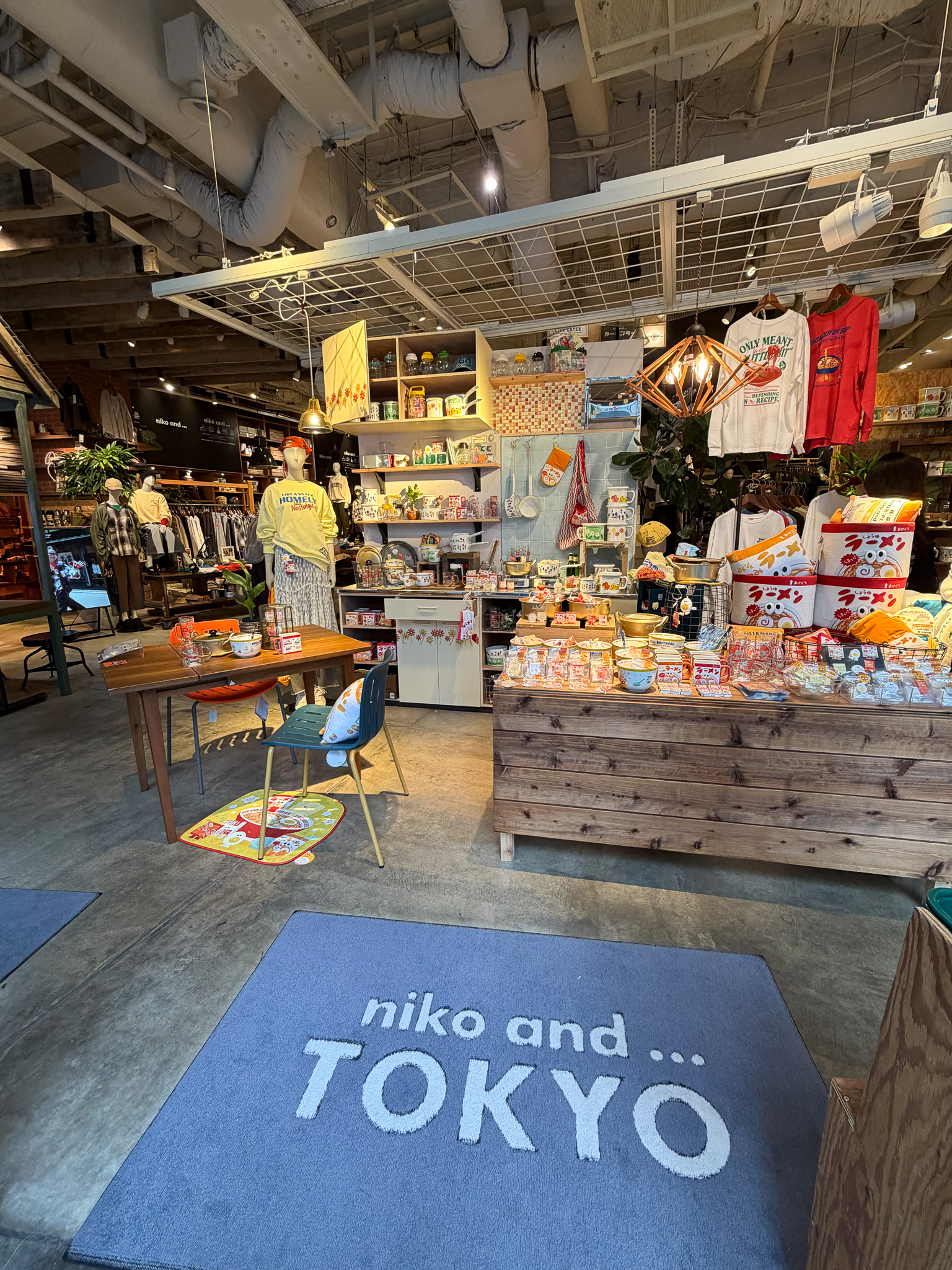
Even though we wouldn’t build an entire Tokyo itinerary around shopping, Tokyo is ridiculously fun to shop in. Japanese beauty products, stationery, clothing, kitchenware, snacks and small household goods are everywhere, and some of our favorite finds weren’t things we’d planned to buy at all.
Our Favorite Japanese Stores
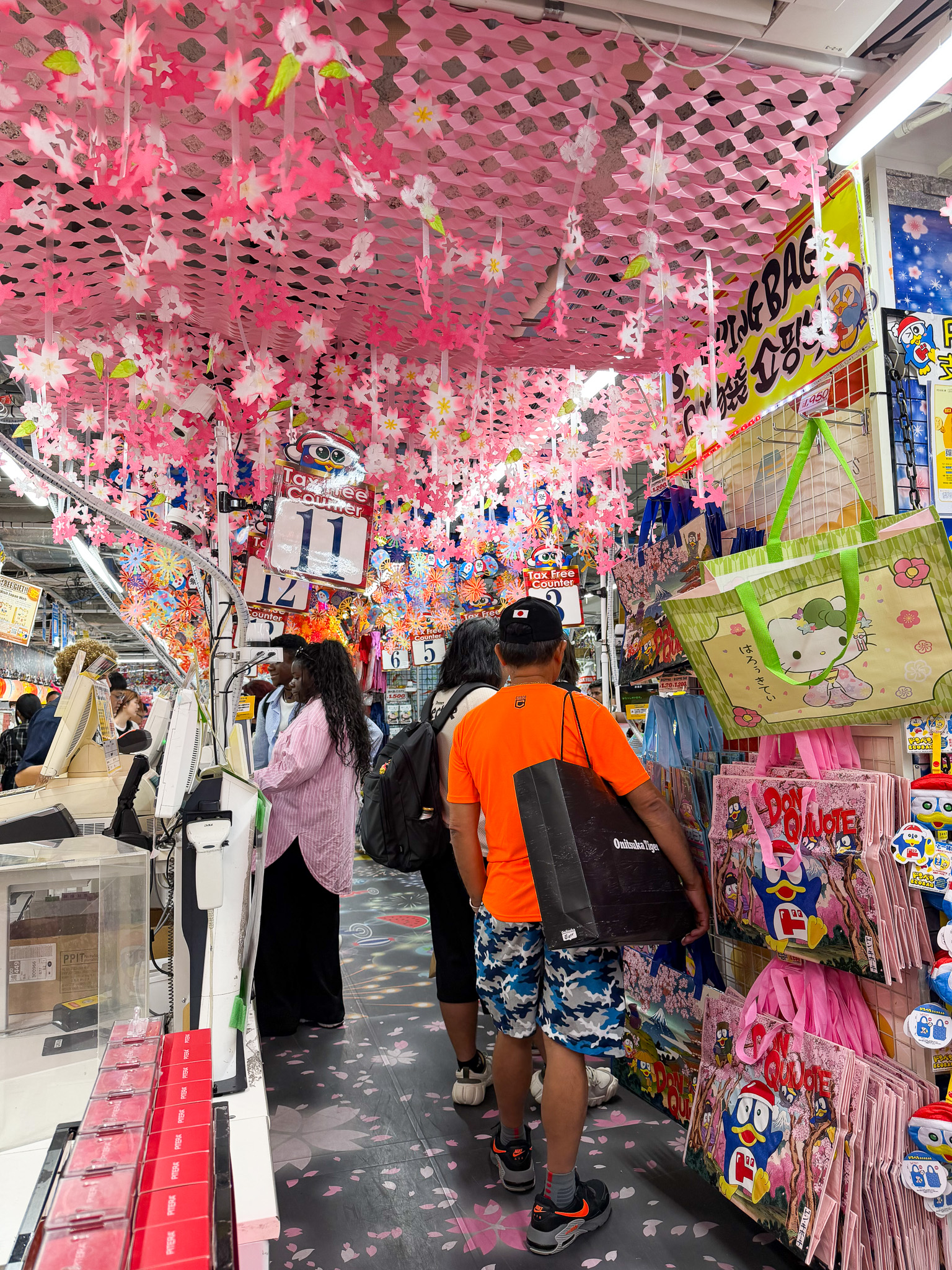
- Don Quijote: Everyone should experience Don Quijote, or Donki, at least once. It’s organized chaos, with cosmetics, snacks, electronics, luggage, souvenirs and seemingly everything else stacked from floor to ceiling. This is where we’d look for Japanese sunscreen, sheet masks, pimple patches, snacks and Matcha Kit Kats.
- MUJI: We found ourselves liking MUJI much more than Donki or 3COINS for simple, useful purchases. It’s calmer, easier to browse and particularly good for travel accessories, household items, clothing and gifts. If you’re a serious MUJI fan, the MUJI Ginza global flagship takes up six floors and is on another level from the smaller stores you’ll find around the city.
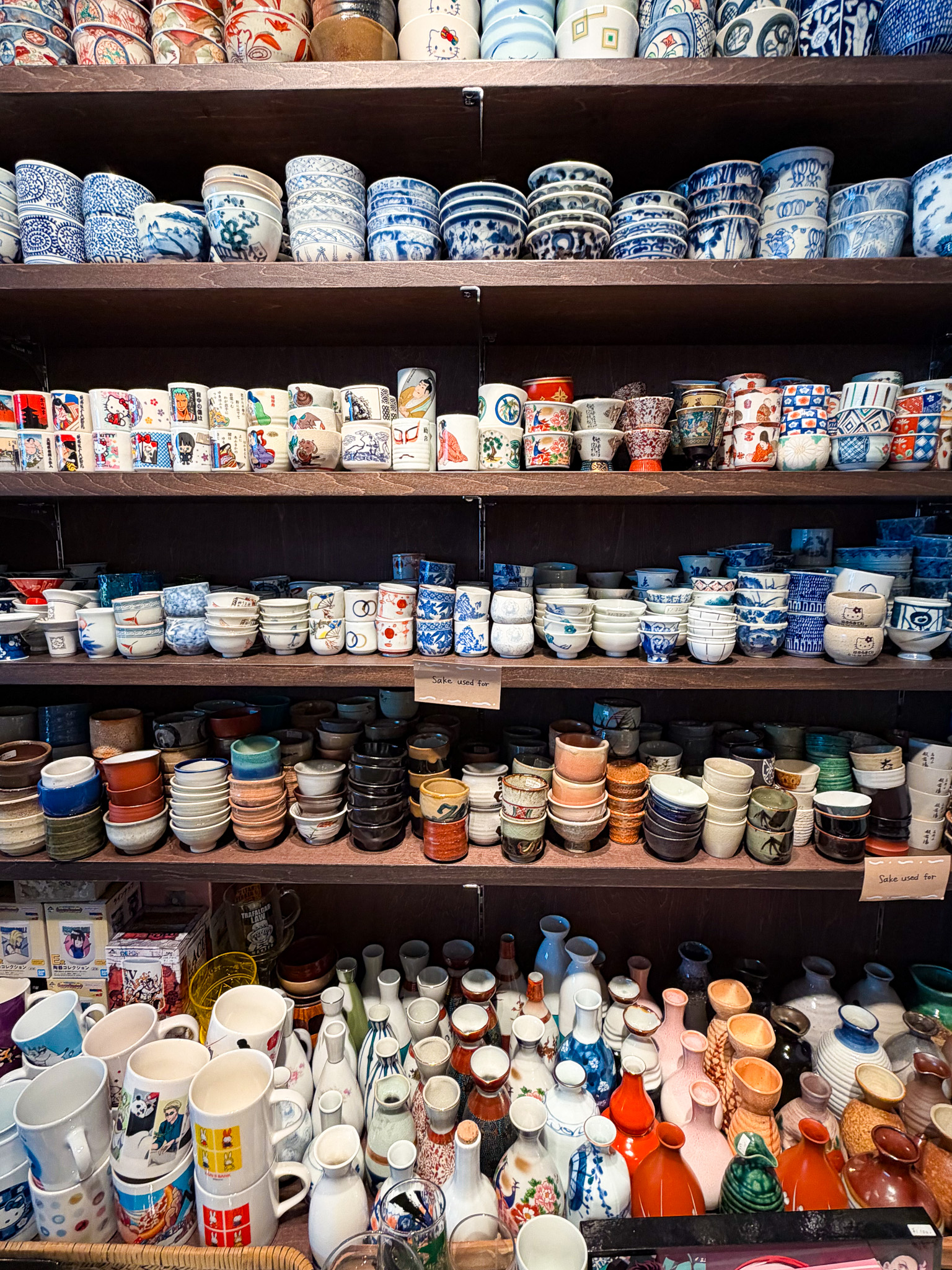
- LOFT: Our surprise shopping winner was LOFT, especially for stationery and gifts. If you’re looking for Japanese pens, notebooks, journals, stickers, planners or small gifts, we’d go here before MUJI. They had an incredibly impressive selection.
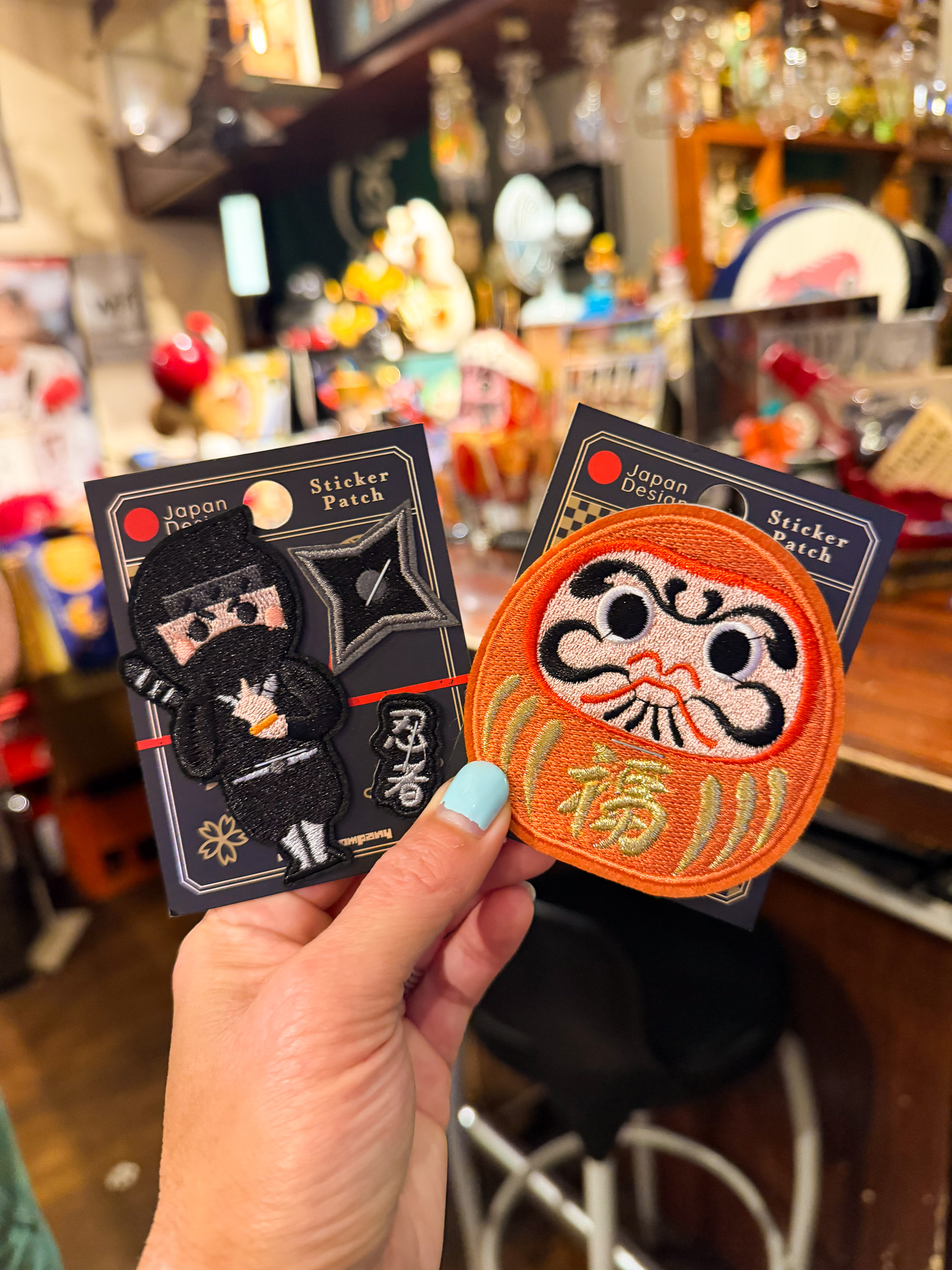
- BEAMS JAPAN: For something that feels uniquely Japanese, check out BEAMS JAPAN in Shinjuku. The multi-floor flagship brings together Japanese fashion, traditional crafts, art, regional specialties and contemporary design, making it a great place to find something from Japan that doesn’t feel like a typical souvenir.
- Hands: Another fun Japanese store to wander is Hands, especially if you like clever gadgets and things you didn’t know you needed. You’ll find stationery, travel gear, beauty products, DIY supplies, kitchen tools and quirky Japanese problem-solving products all under one roof.
Flagship Stores Worth Checking Out
We particularly enjoyed checking out Tokyo’s sportswear and sneaker stores, but there are some standout flagships beyond fashion too. A few worth putting on your radar:
- Onitsuka Tiger: This is THE Japanese fashion souvenir right now, and the stores were absolutely jam-packed. We didn’t end up getting a pair, but the color and shoe selection was so impressive that we completely understood the hype.
- UNIQLO Ginza: UNIQLO is Japanese, of course, but its massive 12-story Ginza flagship is in a completely different league from a typical store.
- New Balance Harajuku: One of our favorite stops, with a huge selection of shoes and apparel plus specialized shoe fitting and 3D foot scanning.
- adidas Brand Center Harajuku: Worth popping into if you’re into sneakers and sportswear, especially since it’s easy to combine with the other stores around Harajuku and Omotesando.
- Ginza Itoya: If you love stationery, this century-old Japanese store is worth a stop while you’re in Ginza. Its multi-floor flagship is filled with pens, paper, notebooks, art supplies and beautifully designed stationery.
- Nintendo TOKYO + Pokémon Center Shibuya: If you’re a Nintendo or Pokémon fan, you’ll find both inside Shibuya PARCO, making them an easy addition while you’re already exploring Shibuya. Nintendo TOKYO is packed with merchandise from franchises like Mario, Zelda and Animal Crossing, while the Pokémon Center is all things Pokémon.
OUR TIP: Save stores in Google Maps and work them into the neighborhoods you’re already exploring rather than building a whole day around shopping.
Tax-Free Shopping in Japan
Many, but not all, stores offer tax-free shopping to eligible international visitors, so carry your passport while shopping. During our September 2026 trip, participating stores generally removed the Japanese consumption tax at the time of purchase, and we found that participation varied even between different locations of the same brand.
Important: Japan’s tax-free shopping system changes on November 1, 2026. Under the new system, eligible visitors will pay the tax when they shop and receive the refund after departure is confirmed by Customs. If you’re traveling after that date, we’d check the current rules before you go.

💡 More Tokyo Tips to Know Before You Go
- Carry some cash. Japan is much more card-friendly than it used to be, but you’ll still encounter small restaurants, markets and shops that prefer or require cash.
- Get an eSIM before you go. You’ll be using Google Maps and translation apps constantly, so having data makes everything easier.
- Make reservations for the meals that really matter to you. Tokyo has an unbelievable amount of great food, but small restaurants and popular spots can fill quickly.
- Book timed-entry attractions ahead. Shibuya Sky and teamLab in particular can sell out, especially at popular times.
- You don’t need to speak Japanese. Tokyo is surprisingly manageable in English, and Google Translate or chat GPT are incredibly useful. A few polite words still go a long way.
- Leave room in your schedule to wander. Some of our favorite Tokyo experiences haven’t been major attractions at all. They’ve been stumbling into a tiny shop, café, izakaya or side street we hadn’t planned on visiting.
🚄 What to Add to Your Tokyo Trip
If you’re flying all the way to Japan, we’d strongly consider pairing Tokyo with at least one other destination. For a first trip, Kyoto, Osaka and Nara are the obvious additions, but there are a few others worth considering if you have more time.
- Kyoto: If it’s your first trip to Japan, Kyoto would be our top addition. Tokyo gives you the enormous modern metropolis, while Kyoto gives you a completely different side of Japan with historic temples and shrines, traditional neighborhoods, beautiful gardens and centuries of culture. We’d give it at least a few days.
- Osaka: Add Osaka if food is a major reason you’re coming to Japan. The city is known for its casual food culture, including takoyaki and okonomiyaki, and areas like Dotonbori are particularly fun after dark.
- Nara: An easy day trip from either Kyoto or Osaka. Japan’s first permanent capital is packed with important temples and shrines, including Todai-ji, plus the famous free-roaming deer of Nara Park. For most first-time visitors, we’d spend the day exploring and return to Kyoto or Osaka that evening.
- Mount Fuji + Kawaguchiko: If seeing Mount Fuji is high on your list, Kawaguchiko is one of the most popular day trips from Tokyo. On a clear day, you can get those classic Fuji views across Lake Kawaguchi, and the area is particularly beautiful during cherry blossom and fall foliage seasons. We’d keep some flexibility if possible because Fuji can disappear completely behind clouds, even when the weather in Tokyo looks fine.
- Hakone: A good option if you want to add an onsen and traditional ryokan experience, with the possibility of Mount Fuji views when the weather cooperates.
- Hiroshima + Miyajima: If you have enough time to continue farther west, Hiroshima’s Peace Memorial Park and Museum and nearby Miyajima make a meaningful addition to a longer Japan itinerary.
OUR TIP: For a first trip, a great combination would be Tokyo + Kyoto + Osaka, with Nara as a day trip. If you have more time, we’d encourage you to venture beyond this classic route. One of the things we love most about Japan is how different each destination feels, which is exactly why we keep coming back.
Final Thoughts
Tokyo can feel overwhelming to plan because there is so much to see, eat and experience, but you don’t need to do it all in one trip. Pick a few neighborhoods, leave some room to wander and don’t worry about checking off every “must-do.”
After five visits, we’re still discovering completely new sides of this city, and that’s a big part of why we keep coming back.
❓ Tokyo FAQ
- How many days do you need in Tokyo? For a first trip, we’d recommend at least four to five days. You can see several of the major sights in three days, but Tokyo is enormous and you’ll enjoy it much more if you aren’t racing from neighborhood to neighborhood.
- Is the JR Pass worth it for Tokyo? Not for a Tokyo-only trip. The JR Pass is designed for longer-distance travel around Japan and doesn’t cover Tokyo’s subway system. If you’re also visiting Kyoto, Osaka or other cities, compare the cost of individual train tickets with the pass before buying it.
- Do you need to speak Japanese in Tokyo? No. We don’t speak Japanese and have found Tokyo very manageable. Train stations and major attractions generally have English signage, and Google Translate helps enormously with menus and conversations. Learning a few basic phrases is still appreciated.
- Is Tokyo expensive? It can be, but it doesn’t have to be. Hotels and high-end experiences like omakase can get expensive quickly, but public transportation is reasonably priced and you can eat incredibly well without spending much. Tokyo is one of those cities where an inexpensive bowl of noodles or casual neighborhood meal can be every bit as memorable as a splurge.



Leave a comment