If you’re thinking about retiring or moving to Portugal, healthcare is probably near the top of your worry list. It was for us too. In the US, health insurance is so tied to your job that it’s one of the biggest things keeping people from retiring early. Leave your employer before Medicare kicks in at 65, and you’re often stuck buying your own plan at outrageous prices. When I was laid off, extending our health insurance through COBRA would have cost us over $2,000 a month. Add in surprise bills and the constant question of “is this in network?” and it’s easy to see why so many people feel stuck.
The good news: healthcare in Portugal is a completely different experience. You have two paths, and most expats end up using a mix of both: the public system (the SNS) and private health insurance. In this guide, we break down how each one works, what it costs, who qualifies, and what we’d recommend if you’re 55+ and planning your move.
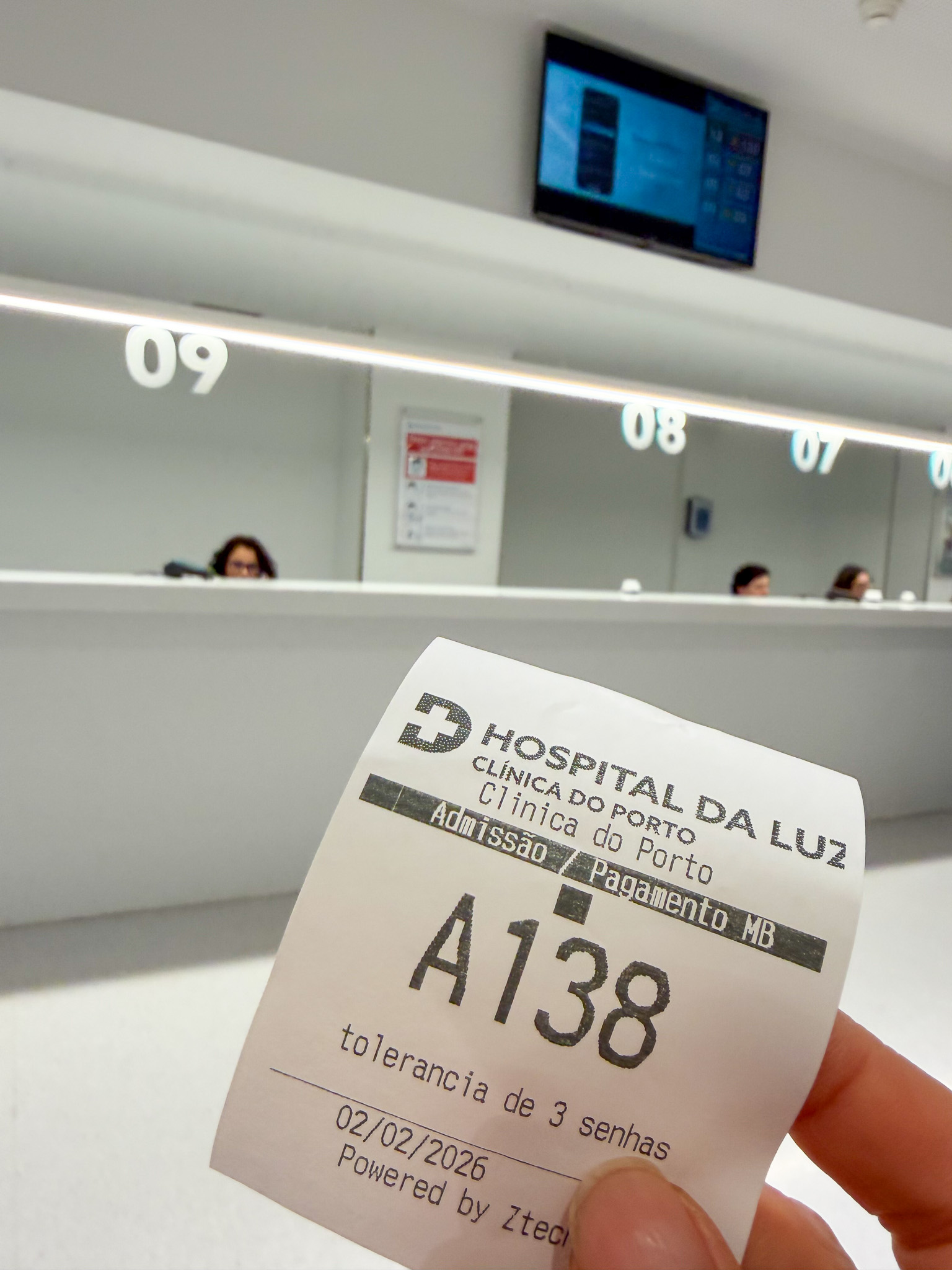

🏥 How the SNS (Public Healthcare) Works
The SNS (Serviço Nacional de Saúde) is Portugal’s national health service. Once you’re a legal resident, you can use it on the same basis as Portuguese citizens. It doesn’t matter if you’re working, self-employed, or retired: access depends on your residence status, not on paying into Social Security.
- Who qualifies: Anyone with a valid Portuguese residence permit. If you’re still waiting on your card, registration can be provisional for up to 180 days (this is what we did since our AIMA (immigration agency) appointments were so delayed).
- Your utente number: This is your SNS user number, and you’ll need it for everything. Get it at your local centro de saúde (health center) with your residence permit, passport, NIF, and proof of address. Since March 2025, some Espaço Cidadão offices can also issue your utente number, NIF, and NISS in one application.
- What it costs: GP visits, specialist visits with a referral, and hospital care are free. Primary care user fees (taxas moderadoras) were abolished in 2022. The main exception is walking into a hospital ER without a referral and not being admitted. Call SNS 24 (808 24 24 24) first and they can refer you, which waives the fee.
- Prescriptions: Many medications are subsidized, often leaving you paying just a few euros. Ask for the generic active ingredient, since brand names differ from the US.
⏳ The Catch: Family Doctors and Wait Times
In theory, you’re assigned a médico de família (family doctor). In practice, there’s a real shortage, and more than 1.3 million were without one in 2026. In Porto and Lisbon, expect long waits for a family doctor, specialists, and non-urgent procedures.
For example, I requested my first appointment with my new SNS family doctor on November 8, 2026. The earliest available slot? March 18, 2027, more than four months away.
That’s the trade-off: the SNS is excellent for emergencies, serious illness, and major hospital care, and it costs you next to nothing. The main downside is the shortage of doctors, which means longer waits for non-urgent care.
💳 How Private Health Insurance Works
Private insurance in Portugal is nothing like US insurance. Premiums are a fraction of what most of us paid back home, and it gets you into private hospitals and clinics like CUF, Lusíadas, and Hospital da Luz, usually within days instead of months.
For comparison, I can usually book a general consultation with a private doctor the same week.
- The big names: Médis, Multicare (from Fidelidade), and AdvanceCare-network insurers are the main local options. Allianz Care, Cigna, and similar international plans cost more but can include coverage outside Portugal.
- How you pay: Most local plans work with a small copay per visit at in-network providers, plus annual caps on certain services. Copays vary by plan, so compare them alongside the premium.
- Typical costs: Rough monthly estimates per person:
- Basic, hospital-only plan: from about €25 to €60
- Comprehensive plan: about €80 to €150
- Senior plans around age 65: about €110 to €180
- International plans: about €60 to €180+, rising steeply with age
These are ballpark figures. Your actual quote depends on age, plan level, and health history, so always get quotes directly.
What we pay: We paid about €3,200 for our first year of private coverage for both of us (roughly €135 per person per month), and we’re in our 40s. Expect higher premiums if you’re older.
⚠️ What 55+ Readers Need to Know
This is the part most guides skip, and it matters a lot.
- Entry age limits: Most Portuguese insurers cap the age at which you can join a standard plan, commonly at 60, 65, or 70. Once you’re in, many policies let you stay indefinitely as long as you keep paying. Translation: if you’re in your late 50s or early 60s, sign up sooner rather than later.
- Senior plans: Several insurers offer plans designed for older applicants, such as Médis Vintage, Multicare 60+, and Ageas Saúde Sénior. These generally accept new members between about 55 and 75.
- Pre-existing conditions: Expect exclusions, waiting periods (often 6 to 12 months), or higher premiums. Always declare your conditions honestly. An undeclared chronic condition can void your policy when you file a claim.
- Check the yearly limits: Every private plan has a maximum it will pay per year, with separate limits for hospital stays and for doctor visits and tests. Cheaper plans often have low limits. If a major surgery or cancer treatment costs more than your plan’s limit, you pay the difference yourself, which is why many expats would turn to the SNS for serious treatment anyway. Compare these limits, not just the monthly premium.

⚖️ SNS vs. Private Insurance at a Glance
| SNS (public) | Private insurance | |
|---|---|---|
| Who can use it | Legal residents with a utente number | Anyone who buys a policy (age limits apply) |
| Monthly cost | Free | About €25 to €180+, rising with age |
| GP visits | Free | Small copay |
| ER visits | Free with SNS 24 referral or if admitted | Covered at private ERs, with copay |
| Wait times | Long (my first family doctor appointment was 4+ months out) | Usually same week for a general consultation |
| English-speaking doctors | Hit or miss | Common, especially in Porto and Lisbon |
| Pre-existing conditions | Fully covered | Often excluded or surcharged |
| Serious illness / major surgery | Strong, no cost caps | Limited by annual caps |
| Prescriptions | Subsidized | Partial reimbursement on some plans |
The short version: the SNS is your safety net for big, serious things. Private insurance buys you speed, choice, and English-speaking doctors for everyday care.
🛂 Health Insurance and Your Visa (D7, D8)
You’ll need insurance before you ever get access to the SNS, because you can’t register until you’re a resident.
- For the visa application: You need travel medical insurance valid in Portugal, with at least €30,000 in medical coverage plus repatriation.
- For your AIMA appointment: You’ll need health insurance or proof of SNS coverage. Some AIMA agents reject travel insurance at this stage, so a Portuguese private health policy (with proof of payment and policy terms) is the safest option.
- After you get residency: Register for your utente number right away. Many expats keep their private policy too, which is exactly what we recommend below.
🇺🇸 What About Medicare?
If you’re and American and approaching 65, you’re probably wondering what happens to Medicare if you move. The short answer: Medicare generally doesn’t cover care you receive outside the US. So Medicare won’t pay for your doctor in Porto.
- Part A: Usually premium-free if you or your spouse have enough work history, so most people keep it for trips home or a possible future move back.
- Part B: This is the tough call. If you enroll while living abroad, you pay premiums for coverage you can’t use in Portugal. If you delay, you may face a permanent late enrollment penalty if you ever move back and sign up.
- Medigap and Medicare Advantage: These are tied to Part B and living in the US, so they don’t solve the Portugal problem either.
There’s no one right answer here. It depends on whether you see yourself returning to the US later in life. We’d suggest talking it through with a Medicare advisor who works with expats before you drop anything.
💊 Practical Tips for Healthcare in Portugal
- Call SNS 24 first (808 24 24 24) for anything non-life-threatening. They triage you by phone, can refer you to the right place, and the referral waives the ER fee.
- Use your pharmacist. Portuguese pharmacists are highly trained and can advise on minor issues. Many common meds are sold over the counter at much lower prices than in the US.
- Bring your records. Bring copies of your medical history and a list of your prescriptions by their generic names. Brand names often differ in Portugal.
- Sign up early. Insurance entry age limits are real. If you’re in your late 50s or early 60s, lock in a private policy sooner rather than later.
- Apps help. Private hospital groups like CUF and Lusíadas have apps for booking appointments, often with English-speaking doctors you can filter for.
- Dental and vision are mostly not covered by the SNS for adults. Some private plans include them, or you can pay out of pocket at prices well below US rates.
✅ Our Take: Use Both
For most Americans moving to Portugal, especially 55+, the best setup isn’t SNS or private. It’s both.
- Get private insurance before you move. You’ll need it for your AIMA appointment anyway (the visa application itself only requires travel insurance). Most private plans also have a waiting period (often around 90 days) before you can use much of the coverage, so the earlier you start, the sooner it’s actually useful. And joining before you hit an insurer’s age limit protects your options.
- Register with the SNS as soon as you’re a resident. It’s free, it covers pre-existing conditions, and it’s your backstop for serious illness or major surgery.
- Use private for everyday care (fast appointments, English-speaking doctors) and lean on the SNS for the big stuff.
Even with a solid private plan, most people pay far less for healthcare here than they did in the US. For a lot of our readers, that peace of mind is a big part of why Portugal works.
This guide is for general information only and isn’t medical, legal, or financial advice. Rules, prices, and insurer age limits change, so confirm details with your insurer, consulate, or AIMA before making decisions.
Enjoying our travel guides?
We love sharing our favorite finds, practical tips, and experiences from life abroad. If our guides have helped you plan your own adventures, you can buy us a coffee to support more content!
More on Moving to Portugal
Thinking about making the move yourself? Here are more posts from our own journey:
- D7 vs D8 Visa in Portugal: Which One Do You Actually Need?
- From Visa Application to Residence Card in Portugal: How Long It Actually Took Us
- What It Actually Cost Us to Move to Portugal (Spoiler: Nearly $40,000)
- Moving to Portugal: A Visa Process That Tested Our Sanity
- Why We Chose Portugal Over Spain








Leave a Reply